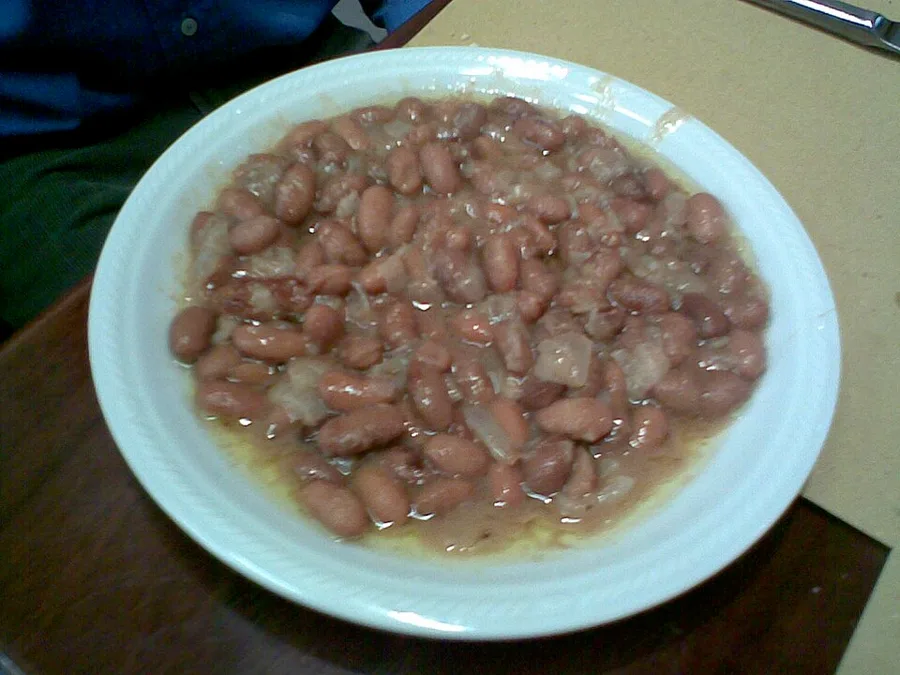
What is Lamon Beans?
Fagiolo di Lamon della Vallata Bellunese is a protected geographical indication, registered in 1996, covering four ecotypes of common bean grown on the Lamon plateau and in the Belluno valley in the Veneto, at the foot of the Dolomites.
The four have local names and distinct characters. Spagnolit is the smallest and roundest, with the thinnest skin and the sweetest flavour. Spagnolo is large and flattened with broad wine-red streaks. Calonega is elongated and mottled, the most widely grown today. Canalino is small, cylindrical and early-ripening.
What they share, and the reason the designation exists, is the skin. In a Lamon bean it is so fine and tender as to be barely perceptible: it does not separate during cooking and leaves none of the papery sensation that industrial borlotti do. The flesh is floury and turns creamy without a blender.
They are sold dried, and also fresh in the pod in September and October. Certified production is small, a few hundred tonnes a year, and that single figure explains almost everything that happens on supermarket labels.
What does it taste like?
Sweet, chestnut-like and mild, with none of the metallic edge that cheap dried beans carry. The dominant impression is textural: the skin dissolves, the interior is floury and smooth, and a well-cooked pot of them thickens its own liquid into something close to a sauce.
Fresh from the pod in September they taste greener and lighter, closer to a fresh borlotto but sweeter, and they cook in forty minutes.
The honest test is the plainest dish. Warm beans, raw sliced onion, olive oil, vinegar and salt, nothing else. A mediocre bean is exposed immediately; a Lamon carries the plate on its own. That, more than any recipe, is why people in Belluno pay for them.
How to use it
Soak for six to eight hours in plenty of cold water, less than most dried beans need. Skip the bicarbonate of soda entirely: it damages precisely the thin skin you paid for.
Cook from cold, unsalted water, on the lowest possible heat with the lid ajar. Ninety minutes for dried beans, forty for fresh from the pod. Salt goes in for the last ten minutes only, or the skins toughen, and the pot must never reach a rolling boil or the beans split.
Never throw away the cooking liquid. It is starchy, sweet and full of flavour, and it is the base of Venetian pasta e fagioli, where half the beans are puréed into it and half are left whole.
Three local dishes are worth copying. Bean and barley soup. Warm beans dressed with raw sliced onion, olive oil, vinegar and salt: a dish so plain it only works with a good bean. And fagioli in salsa: anchovies melted into oil with garlic and parsley, spooned over the beans and eaten on grilled polenta.
Outside tradition, they make an excellent purée finished with raw olive oil, and they are very good pan-fried with bitter radicchio and speck.
How long it keeps
Dried beans keep for a long time and change the whole while. Store them in an airtight jar in a cool dark cupboard at 15 to 20 C, away from steam and sunlight, and note the harvest year rather than only the date on the pack. As they age they keep losing moisture and the seed coat hardens, so soaking takes longer, cooking times stretch, and more skins split and slip off in the pot; the crimson streaks fade toward brown over a year and the beans dull all over. Beans from two different years cook at different speeds and are best not mixed in one pan.
Fresh pods are a short-season product that sits in the fridge drawer at 0 to 4 C for a few days, and shelled fresh beans freeze at minus 18 C for several months without much loss. Cooked beans keep in the fridge for three or four days, and they should stay in their own cooking liquid, because drained beans dry out and the skins wrinkle and tighten. They freeze well in that liquid too, in portions, for a few months.
Spot the real thing
The label to find is Fagiolo di Lamon della Vallata Bellunese IGP, usually on a cloth or jute bag with a consortium tag and one of four ecotype names: Spagnolit, Spagnolet, Calonega or Canalino. The beans themselves are large and plump for a borlotto, with a notably thin skin and a cream ground marked in bright crimson to purple streaks that look painted rather than speckled. Look for the harvest year on the bag, because it tells you more than anything else about how the beans will behave in the pot. In late summer they also appear fresh in streaked red pods.
Abroad the shelf will offer borlotti or cranberry beans, which are the same family grown at scale in Italy, China or the Americas: thicker skinned, duller in colour, and a fraction of the price. Pinto beans are uniformly tan and freckled, without the crimson. American Roman beans are the same as cranberry. Sorana and Controne beans from further south are white. An IGP bag from Lamon costs several times a supermarket bag of borlotti.
How to pronounce Lamon Beans
fah-JOH-lee dee lah-MOHN
Fagioli is four syllables with a soft 'g' as in 'gee' and a silent 'i' after it: fah-JOH-lee. Lamon takes the stress on the second syllable, lah-MOHN, with a clean short 'o', not 'LAY-mon'.
Lamon Beans compared
vsOrdinary borlotti (cranberry beans)
Same species, same look, different world. Commercial borlotti are grown on lowland plains in Italy, Argentina, China or the US, machine-harvested and often several years old by the time they are sold. The gap shows in the skin, which separates and floats during cooking, and in the time the pot needs. Note also that 'borlotto di Lamon' without the IGP wording refers to a seed type, not a place.
| This | Ordinary borlotti (cranberry beans) | |
|---|---|---|
| Skin | Very thin, stays attached, dissolves | Thicker, peels away and floats |
| Texture | Floury, creamy, thickens its own liquid | Firmer, more granular |
| Cooking time | About 90 minutes after soaking | 2 to 3 hours, depending on age |
| Where grown | Belluno mountains, 600-900 m | Lowland plains, often imported |
| Harvest | Hand-pulled, field-dried, hand-sorted | Fully mechanised |
| Price | EUR 8-15 per kg | EUR 3-5 per kg |
vsCannellini
Cannellini are the white kidney beans of Tuscany and Campania: a different bean for a different job. They hold their shape, stay neutral in flavour and suit dishes where the bean should stay a bean. Lamon collapses into creaminess and brings its own sweetness, which is what soups and simple dressed dishes want.
| This | Cannellini | |
|---|---|---|
| Appearance | Cream with wine-red streaks | Uniform white, kidney-shaped |
| Flavour | Sweet, chestnut-like, pronounced | Mild, neutral, faintly herbal |
| Behaviour in the pot | Breaks down, thickens the broth | Holds its shape, clear broth |
| Skin | Barely perceptible | Noticeable but tender |
| Best for | Pasta e fagioli, soups, dressed warm | Salads, tuna and beans, ribollita |
| Region | Veneto, Belluno province | Tuscany, Campania, Marche |
vsFresh in the pod vs dried
For six weeks in autumn Lamon beans are sold fresh, in streaked red pods, and they are a different ingredient: no soaking, forty minutes of cooking, a lighter and greener flavour. Dried beans are the year-round form and give the deeper, sweeter, more concentrated result that the classic dishes are built around.
| This | Fresh in the pod vs dried | |
|---|---|---|
| Season | Dried: all year | Fresh: September and October only |
| Soaking | 6 to 8 hours | None |
| Cooking | About 90 minutes | About 40 minutes |
| Flavour | Deeper, sweeter, more concentrated | Lighter, greener, more delicate |
| Yield | 1 kg dried serves 8 to 10 | 1 kg in pod gives 400-450 g of beans |
| Keeping | 2 years airtight, but buy the new crop | 3-4 days chilled; freeze shelled for 8 months |
Lamon Beans substitutes
- Fagiolo di Sorana IGP or Fagiolo di Controne
Two other Italian protected beans with unusually thin skins and creamy flesh. Sorana is white and delicate, Controne small and round. Both behave in the pot the way Lamon does.
1:1 - Good-quality fresh-crop borlotti
The realistic everyday substitute. Buy from a producer or a shop that states the harvest year, since age is what ruins borlotti. Expect a longer cook and a skin that separates.
1:1, allowing 30 to 60 minutes more cooking - Cranberry or Rosecoco beans
The same bean under other names in the US, UK and East Africa. Look for the current season's crop and cook them gently; they will hold their shape more than Lamon does.
1:1 - Pinto beans
Floury and mild, and they break down obligingly into soup. Less sweet and less aromatic, so season the broth a little harder.
1:1 - Tinned borlotti
For soups and dressed warm salads when time is short. Rinse them, and add them only in the last ten minutes, but accept that the cooking liquid, which is half the point of Lamon, will be missing.
2 x 400 g tins per 250 g dried
Where to buy it
Certified Lamon beans are hard to find outside Italy, and the reason is arithmetic: certified output is a few hundred tonnes a year. Italian specialists and mountain co-operatives sell direct, and importers such as Gustiamo in the US and Italian delicatessens in the UK carry small quantities. Expect 12 to 20 dollars for a 500 g pack in the US, roughly 11 to 18 dollars a pound, and 10 to 18 pounds in the UK.
The label must read Fagiolo di Lamon della Vallata Bellunese IGP with the EU mark. Anything sold as 'borlotto di Lamon' without the designation refers to a seed type and can have been grown anywhere: legal, common, and not the same thing.
Two further checks. Look for the harvest year: dried beans stiffen with age, and a three-year-old bean will never turn creamy no matter how long you cook it. And treat a price of a few euros a kilo as proof in itself that you are not buying the IGP.
Where to eat it in Italy
Lamon itself, in the third week of September, holds the Festa del Fagiolo, the one moment when fresh beans in the pod are easy to find, producers sell direct from the plateau, and the village kitchens serve soups and fagioli in salsa all weekend.
Through the winter, trattorie across the Feltre area and the Belluno valley keep them on the menu with polenta and mountain cured meats. Feltre, with its walled old town, is the practical base, and Belluno's October markets are the best place to buy from a grower and ask which year the crop is from.
Higher up, towards the Vette Feltrine and the Dolomiti Bellunesi national park, kitchen gardens still grow beans up maize stalks the way the whole plateau once did. It takes one look to understand the system.
Further reading
Frequently asked questions
What makes Lamon beans different from ordinary borlotti?
The skin above all. In a Lamon bean it is extremely fine, stays attached during cooking and becomes almost imperceptible, where a commercial borlotto sheds papery skins into the pot. The flesh is floury and creamy and the cooking time is shorter. It is a product of the mountain climate, not just the seed: the same seed grown on the plain loses the trait within a few generations.
Why are they so expensive?
Small mountain plots, hand harvesting, field drying and manual sorting, and low yields per hectare. Certified production is only a few hundred tonnes a year. The result is 8 to 15 euros a kilo against 3 to 5 for a standard borlotto.
Is 'borlotto di Lamon' the same as the IGP?
No. That wording names a seed type and says nothing about where the beans were grown: they may come from the Po valley or from abroad. Only the full phrase Fagiolo di Lamon della Vallata Bellunese IGP, with the EU mark, guarantees the area and the production rules.
How long do they need to soak and cook?
Six to eight hours of soaking in cold water, then about ninety minutes of very gentle cooking starting from cold, unsalted water. Add salt only in the last ten minutes. No bicarbonate of soda: it ruins the thin skin that is the whole point.
Does the age of dried beans matter?
Considerably. Beans harden as they age: this season's crop cooks in ninety minutes, a three-year-old bag may take three hours and never turn creamy. Look for a stated harvest year and buy no more than you will use within twelve months.
Sources
Where to check what you just read.
- 1
Il regolamento del 1° luglio 1996 che registra «Fagiolo di Lamon della Vallata Bellunese» come IGP: il nome protetto comprende la vallata, non il solo comune.
- 2
Il dossier ministeriale che descrive gli ecotipi uno per uno (Spagnolo o Ballotton, Calonega e gli altri), con dimensioni, peso del seme e giorni di maturazione.
Related foods
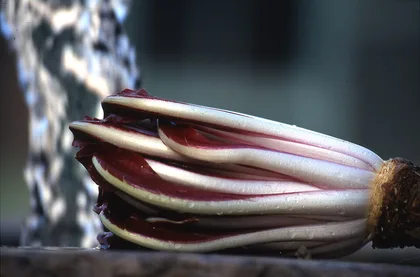 Vegetables and fruitTreviso RadicchioTreviso radicchio comes in two forms that are effectively different vegetables.
 CheeseAsiagoOne name covers two cheeses nobody would mistake for each other at the counter.
 Vegetables and fruitBassano White AsparagusBassano white asparagus is white because it never sees daylight: the spear grows inside a ridge of soil and…
 Vegetables and fruitFiolaro BroccoliFiolaro broccoli is not grown for its head but for the fioi, the side shoots that sprout along the stem.
 SweetsTiramisuNothing here goes near an oven. Savoiardi dipped in cold espresso, raw egg yolk whipped with mascarpone…Pasta and breadGnocchiGnocchi are small boiled dumplings, in their modern form made of potato bound with a little flour.
 WineProseccoProsecco is made from Glera grapes by the Martinotti tank method, not the traditional bottle method used for…
 CheeseGrana PadanoNine months is the floor the specification sets before a wheel may carry the name.