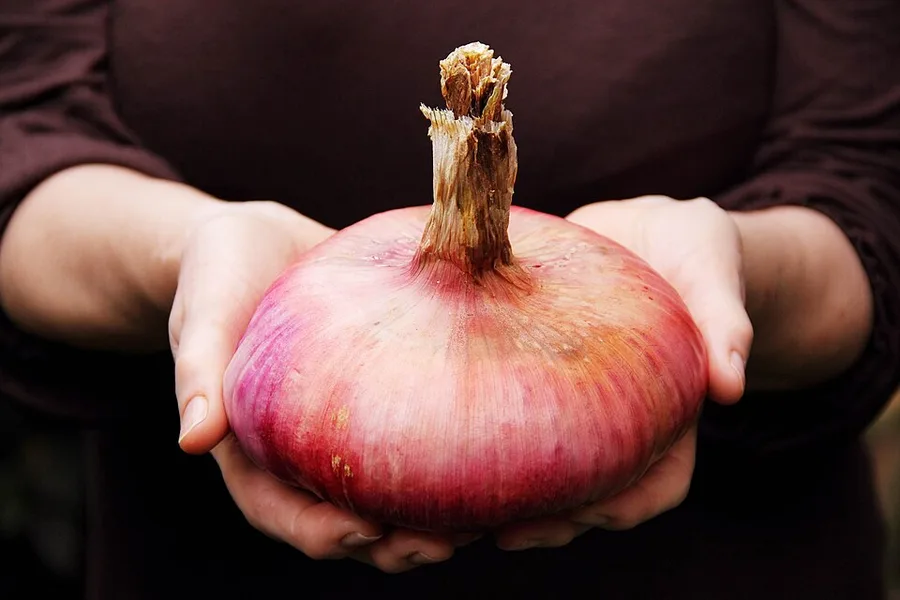
What is Acquaviva Red Onion?
This is a local ecotype of red onion grown at Acquaviva delle Fonti and in the neighbouring towns of the Murgia plateau, south of Bari. It carries no EU designation: it is listed among Puglia's traditional agri-food products and protected as a Slow Food Presidium, which here mostly guarantees that the seed is locally selected rather than bought in.
The bulb is the signature. It is markedly flattened: a disc 10 to 15 centimetres across and only a few centimetres tall, not a sphere, with violet-red outer skins and white flesh veined with pink. Normal weight is 200 to 500 grams, and the best bulbs pass a kilo. Sliced across, it gives rings the size of a saucer, thick and fleshy enough to hold together on a plate.
The second characteristic is sweetness. Sugar content is high and the sulphur compounds that make onions sting are low, so cutting one rarely brings tears and eating it raw leaves none of the harsh aftertaste of a standard onion. In Acquaviva the onion is not a base for a sofrito: it is a vegetable in its own right, served the way you would serve a tomato.
Seed selection stays with the growers. Each year the best bulbs are held back, replanted the following season to run to seed, and the seed is saved from those. That is why the onion has stayed as it is, and also why production remains small.
What does it taste like?
Sweet and juicy rather than sharp, with a clean mineral finish and only a faint onion bite at the end. The closest reference for an American palate is a Vidalia or a Walla Walla; for a British one, a Roscoff pink onion. It is noticeably sweeter than a supermarket red onion and much less aggressive.
Raw, the texture matters as much as the flavour: the rings are thick and crisp, and they snap rather than bend. That is why the local way of eating it is simply sliced with salt, oil and oregano, because anything more elaborate gets in the way.
Roasted whole it goes somewhere else entirely, collapsing into something jammy and almost caramel-sweet. Long-cooked in a pan it sweetens fast and, because of those sugars, catches and browns sooner than a yellow onion would.
How to use it
Raw first, because that is the whole point. Cut half-centimetre slices across the bulb, dress with salt, extra virgin olive oil and dried oregano, and eat with bread. Add tomato and mozzarella and you have the summer salad of the Murgia; put it alongside boiled fava purée and chicory and you have the region's oldest plate.
Roasted whole is the second use and the easiest. Leave the outer skins on, sit the bulb in a dish with a little oil, and give it ninety minutes at 180 degrees. It comes out collapsed and caramel-sweet: split it open and dress with oil and vinegar.
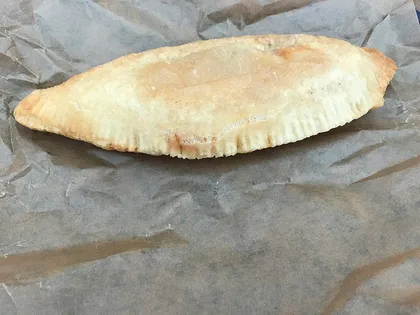
The local set piece is the calzone di cipolla: a kilo and a half of sliced onion stewed slowly in olive oil until it falls apart, mixed with black olives, salted anchovies and raisins, then sealed between two discs of dough and baked. It is eaten warm rather than hot.
Thick slices also grill well (brush with oil, turn once) and stew into a sweet-and-sour agrodolce with vinegar and a spoon of sugar to serve with cheese.
One practical warning: the sugars that make it good raw make it catch quickly in a hot pan. Keep the heat low and add a spoon of water as soon as it starts to colour.
How long it keeps
The honest note first: a sweet onion holds more sugar and more water than a standard one, and that is exactly why it keeps less well. Yellow and white storage onions run a year; this one manages three or four months, which takes a July harvest to about November. A braid hung in a cool, dark, airy room is the best arrangement, and the braid is functional: the air moving between the bulbs keeps the tunics dry. Whole bulbs do not go in the refrigerator, where the damp settles at the neck, and they do not go next to potatoes, because each pushes the other towards sprouting.
A cut half goes into a closed box in the fridge for about two days; after that the exposed rings dry, darken and turn sharp-smelling. Over months the bulb loses water through the papery skins, the flesh tightens, and eventually a shoot pushes up the middle. Keeping the crop past its natural span means changing it: pickled sweet and sour, cooked down with sugar and wine, or sliced raw and frozen for six months, fine for stews and calzoni but never crisp again.
Spot the real thing
Shape settles it before colour. An Acquaviva onion is flattened, wide and low, with a diameter at least twice its height, so a round or teardrop bulb is not this onion however red the skin. Size follows: good ones weigh 200 to 500 grams and often go past a kilo, so an 80 gram red onion is another variety. The outer tunics are wine red going violet, dry and papery, but the flesh underneath is white with pink rings rather than red to the core; uniformly purple flesh usually means a northern European onion.
Then use your eyes and nose. Cut in half it should not attack you: stinging eyes and a hard pungency mean the sweetness is missing. The bulb should feel firm with a tight, dry neck, since a thick, soft or still-green neck comes from an early lift. For an American shopper the closest reference point is a Vidalia, flat and sweet in the same way though yellow rather than red; cipollini are the same shape at a quarter of the size. Crates and braids should name the grower or cooperative, because cipolla rossa pugliese says nothing.
How to pronounce Acquaviva Red Onion
chee-POL-lah ROS-sah dee ah-kwah-VEE-vah
Cipolla begins with a soft 'ci' as in 'cheese': chee-POL-lah, with the double 'l' held. Acquaviva is four syllables, stress on the third: ah-kwah-VEE-vah, and the 'cqu' is simply a lengthened 'kw'. The full name ends delle Fonti, DEL-leh FON-tee, meaning 'of the springs'.
Acquaviva Red Onion compared
vsTropea onion (Cipolla Rossa di Tropea Calabria IGP)
Italy's other famous sweet red onion, and the one people abroad have heard of. The signature Tropea is the long torpedo-shaped bulb grown on Calabrian coastal sand; the Acquaviva is a broad flat disc from clay soil on a plateau. Both are sweet. They are used differently, and they are not interchangeable on a plate.
| This | Tropea onion (Cipolla Rossa di Tropea Calabria IGP) | |
|---|---|---|
| Shape | Flat disc, wider than tall | Elongated torpedo (also flat and bell types) |
| Size | 200-500 g, up to 1 kg | 80-200 g |
| Soil | Red clay, Murgia plateau, 300 m | Coastal sand, Calabria, sea level |
| Protection | Slow Food Presidium, regional PAT | IGP since 2008 |
| Typical use | Raw in thick rings, roasted whole, calzone | Raw in salad, jam, preserved in oil |
| Availability | Almost entirely local | Exported, sold internationally |
vsStandard supermarket red onion
The everyday red onion: usually a Dutch, Spanish or New Zealand storage variety bred for yield and shelf life. It is smaller, rounder, sharper and keeps for the best part of a year. Acquaviva trades that keeping quality for sweetness and size.
| This | Standard supermarket red onion | |
|---|---|---|
| Shape | Broad and flattened | Round or slightly oval |
| Weight | 200-500 g | 80-150 g |
| Pungency | Low, eats raw comfortably | Medium to high |
| Tears when cut | Rarely | Usually |
| Keeps | 3-4 months braided | 8-12 months |
| Best raw | Yes, that is the point | Better soaked in cold water first |
vsCipolla di Giarratana (Sicily)
The closest structural relative in Italy: another giant flattened sweet onion, grown around Giarratana in the Ragusa hills. Giarratana is bigger still, with bulbs of a kilo and a half quite normal, but pale straw rather than red, and it is almost always eaten cooked or grilled rather than raw.
| This | Cipolla di Giarratana (Sicily) | |
|---|---|---|
| Colour | Violet-red skin, white flesh | Pale straw skin, white flesh |
| Weight | 200-500 g | 500 g to 2 kg |
| Shape | Flat disc | Flat disc, larger |
| Harvest | Late May to July | July to August |
| Classic use | Raw, roasted, onion calzone | Grilled in slices, baked, salads |
Acquaviva Red Onion substitutes
- Vidalia, Walla Walla or other US sweet onions
The best available match in North America: same low pungency, same thick juicy rings, same willingness to be eaten raw. Slightly less colour on the plate, which matters only visually.
1:1 by weight - Tropea onion
Sweet and Italian, but smaller and more slender, so you get narrower rings. For a raw salad this is the nearest Italian stand-in; for roasting whole it is too small.
2 or 3 Tropea per Acquaviva bulb - Roscoff pink onion (AOP, Brittany)
Widely sold in the UK and the closest European equivalent: mild, sweet, pink-fleshed and good raw. Slightly firmer, so slice a touch thinner.
1:1 by weight - Cipolla di Giarratana or other large flat sweet onions
Perfect for the roasted-whole and grilled preparations. Not red, so a raw salad loses its colour, and the flavour is a little more vegetal.
1:1 by weight, allow longer in the oven - Standard red onion, tamed
If it is all you have, slice it and soak the slices in cold water for 15 minutes, then drain and dry. That pulls out much of the pungency, though not the size or the crunch.
3 or 4 onions per Acquaviva bulb
Where to buy it
Realistically, in Puglia and nowhere else. This is not an export onion: it holds less well than a storage variety, travels badly, and the total area planted runs to a few hundred hectares. In season it is on market stalls across the province of Bari at 1.50 to 3 euro per kilo loose, or 3 to 5 euro per kilo braided, since the braiding is all hand work. A twenty-bulb braid weighs about four kilos and costs 12 to 20 euro.
Elsewhere in Italy it appears in specialist greengrocers in summer at roughly double that. Abroad it is a rarity: an Italian deli might get a few braids in July at 8 to 14 dollars a pound in the US or 10 to 18 pounds a kilo in the UK.
What does travel is the seed, sold by several Italian seed houses. If you have a vegetable garden, growing it is easier than finding it: sow in a seedbed in autumn, transplant in late winter, lift in June.
When buying, judge by shape rather than colour: broad and flattened, at least twice as wide as tall, with a tight dry neck. A round bulb with red skin is a different onion.
Where to eat it in Italy
Acquaviva delle Fonti itself, where the onion calzone is sold in the bakeries of the old centre all year and the town's onion festival fills the streets at the end of summer, though dates move, so check before travelling.
June and July are the better months for the raw product, when the new braids appear on the stalls and the bulbs still have a soft neck. That is also when trattorie across the Murgia put it on the table sliced with tomato and oregano.
The natural circuit takes in Sammichele di Bari, Gioia del Colle and Santeramo in Colle, which cook the same way, and pairs the onion with the rest of the plateau's larder: fava purée with chicory, Altamura bread, a piece of caciocavallo.
In Bari, the market stalls in the centre carry it in season, and the trattorie of the old town serve it raw in salads and stewed into focaccia.
Frequently asked questions
When is the Acquaviva onion in season?
Mature bulbs are lifted from late May through July, with the bulk of the harvest in June. Fresh spring onions from the same crop come earlier, in March and April. Braided bulbs then last until October or November, after which the season is over until the following year.
Why does it not make you cry?
Because it is very low in the volatile sulphur compounds released when an onion is cut, the ones that irritate the eyes, and high in sugars. The same chemistry is why it can be eaten raw without the harsh aftertaste of a standard onion.
How is it different from a Tropea onion?
Shape and use. The classic Tropea is a long torpedo grown on Calabrian coastal sand and carries an IGP; the Acquaviva is a broad flat disc from the clay of the Murgia plateau, with no EU designation. Both are sweet, but Tropea suits jams and preserving in oil, while Acquaviva is built for thick raw rings and roasting whole.
How long does it keep?
Three to four months braided in a cool, dark, airy place, far less than a yellow storage onion, which manages the best part of a year. More sugar and more water mean a shorter life. That is the trade for the sweetness.
Can I buy it outside Italy?
Very rarely. It does not ship well, it does not keep, and production is tiny, so almost all of it is eaten in Puglia. The practical answer abroad is a Vidalia, a Walla Walla or a Roscoff pink onion, or growing it yourself, since the seed is sold by Italian suppliers.
Related foods
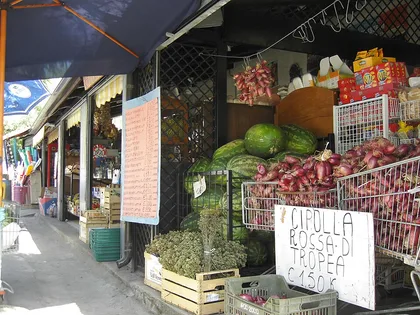 Vegetables and fruitTropea Red OnionTropea red onions are grown on a narrow strip of sand along Calabria's Tyrrhenian coast, and they are sweet…
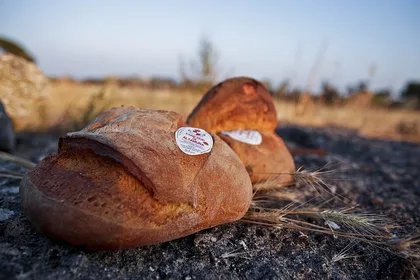 Pasta and breadPane di AltamuraPane di Altamura is a durum-wheat sourdough from the Murgia plateau in Puglia, and in 2003 it became the…
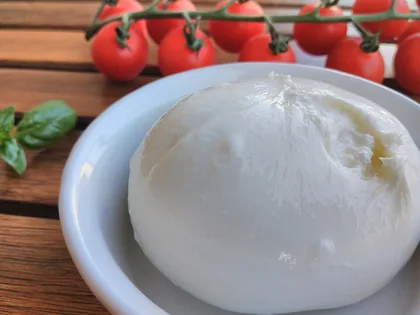 CheeseBurrataIt began as a way of using offcuts: leftover shreds of pasta filata, drowned in cream and sealed inside a…
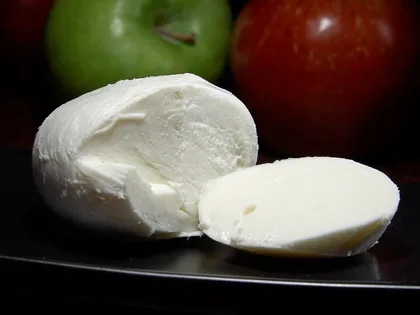 CheeseMozzarellaThe name is a verb before it is a cheese: mozzare means to lop off, which is what the cheesemaker does by…
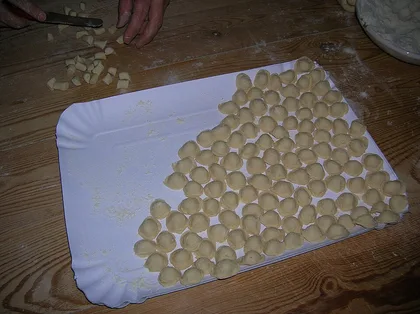 Pasta and breadOrecchietteOrecchiette are Puglia's handmade pasta: semolina and water, no egg, dragged with a knife and flipped over a…
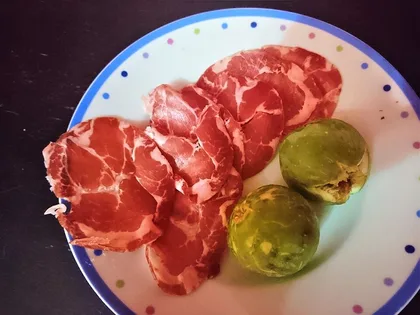 Cured meatsCapocolloCapocollo is the pork neck muscle, salted whole and aged in casing.
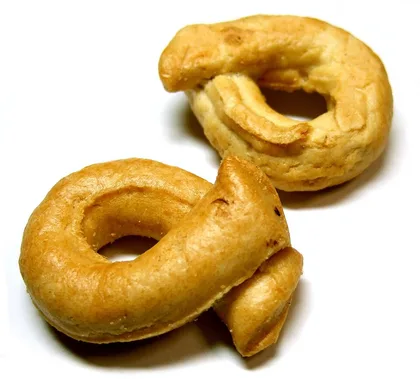 Pasta and breadTaralliTaralli are small, crunchy savoury rings from Puglia in southern Italy, made from just flour, dry white wine…
 Pasta and breadPanzerottiThe oven never comes into it. A hand-sized half-moon of pizza dough, tomato and mozzarella sealed inside…