What is Canicattì Table Grape?
Uva da tavola di Canicattì has been a protected IGP since 2003, and it covers a single variety: Italia, a white table grape created in 1911 by crossing Bicane with Muscat of Hamburg.
Everything about it is large. Bunches are loose and heavy, typically 400 to 800 grams. Berries are oval and over two centimetres long, with thick resistant skin and firm flesh that cracks under the tooth rather than dissolving. There are seeds, and that is a deliberate trade-off: no seedless selection matches this combination of crunch and aroma.
Colour runs from pale green in September to golden amber in the bunches picked in November and December. Sugar rises through the season, and so does the perfume.
That perfume is the signature. Italia grapes smell clearly of muscat, floral and almost like the wine, before you taste anything, a legacy of the Muscat of Hamburg parent, and it is what separates them from the anonymous table grapes of the global trade.
What distinguishes Canicattì is not the variety, which is also grown in Puglia and Basilicata. It is the calendar: here the harvest runs into December, and in some years into January.
What does it taste like?
The first impression is texture. The skin resists slightly, then the berry snaps, and the flesh is firm rather than juicy-soft, closer to eating a crisp pear than a supermarket seedless grape.
The flavour is sweet and floral, with a distinct muscat lift that lingers, and the thick skin adds a faint tannic edge that keeps it from being simply sugary. Late-picked amber bunches are noticeably sweeter and more perfumed than the pale September ones.
Serve them cool but not cold. Straight from the fridge the aroma disappears entirely, and around 15°C is where the muscat comes back.
How to use it
Say it plainly: these grapes are for eating fresh, and most cooking wastes them.
Rinse the bunch briefly under cold running water just before serving, never a long soak, and pat it dry. Serve at cellar temperature, around 15°C. Cold from the fridge, the muscat aroma vanishes, and this is the single most common mistake.
The best pairing is cheese. A semi-aged Sicilian pecorino, a ricotta salata, a caciocavallo: the crunch and the perfume clear the palate of fat better than any chutney.
In savoury dishes they go into salads with raw fennel and tuna, alongside roast pork or quail, and on bruschetta with fresh ricotta. Halve the berries and pick out the seeds first.
On the sweet side, the traditional Sicilian use is mosto cotto, grape juice reduced to a dark syrup, then used in baking and to soak biscuits. Italia also makes good jellies, preserves and granita.
A winter trick worth knowing: whole berries frozen on a tray and served still frozen are a two-second dessert, and they work in a glass of sparkling wine in place of ice.
And then there is the use that supports the entire late-harvest business: twelve grapes at midnight on 31 December, one for each month of the coming year.
How long it keeps
In the vegetable drawer of the fridge a bunch holds one to two weeks. Keep it in its perforated punnet or an open container, because sealed in an airtight box it makes condensation and grey mould starts at the point where each berry joins the stem. Do not wash it before putting it away: water strips the bloom and the fruit softens faster without it, so rinse the bunch, or just the part you want, shortly before serving. Look through it every couple of days and pull out bruised or split berries: botrytis travels from one berry through a bunch in about three days.
At room temperature grapes hold three or four days, and that is where they should be eaten: chilled, the muscat aroma disappears, so take them out half an hour beforehand. For the long term, berries pulled off the stem freeze well spread on a tray and then bagged, keeping six months; they work eaten frozen but collapse on thawing, so they are no use in a salad. The traditional route is drying: bunches hung in a dry, airy room become raisins in three or four weeks.
Spot the real thing
The bunch should be large and loose, the berries spaced rather than pressed together, and the berries themselves oval, big and all the same size. That evenness comes from thinning on the vine, not sorting in a warehouse. Take the bunch by the stem and shake it gently: berries that fall mean time in store, and the stem tells the same story when it is dry and brown instead of green. The skin should carry a dull whitish film, the pruina, a natural wax the berry makes for itself and the best indicator of freshness. Glossy grapes have been washed or rubbed.
Colour depends on the month, not on quality: Italia grapes are pale green in September and amber-yellow by November and December, and that golden tone means advanced ripening with more sugar and aroma. Smell the bunch, because the muscat note should be there. On packs, look for the European IGP logo and the words Uva da tavola di Canicattì. Italia grapes are also grown in Puglia and Basilicata, excellent and cheaper, but they are not this denomination, and out of season foreign shelves carry southern hemisphere fruit.
How to pronounce Canicattì Table Grape
OO-vah dee kah-nee-kat-TEE
Uva is two syllables, OO-vah. Canicattì carries a written accent on the final i, and that is where the stress falls: kah-nee-kat-TEE, with the double T held. The variety name, Italia, is ee-TAH-lyah.
Canicattì Table Grape compared
vsOrdinary supermarket table grapes (Thompson, Crimson, Red Globe)
The seedless varieties that dominate world trade are bred for shipping, uniformity and convenience. They are reliable and inoffensive and almost entirely without aroma. Italia is the opposite trade: seeds and a thicker skin in exchange for crunch and perfume.
| This | Ordinary supermarket table grapes (Thompson, Crimson, Red Globe) | |
|---|---|---|
| Seeds | Yes | None |
| Aroma | Pronounced muscat | Neutral to faint |
| Skin | Thick, slightly tannic | Thin and soft |
| Texture | Firm, snaps | Softer, juicier |
| Season | August to December | Year-round by rotating origins |
| Price | EUR 2-8/kg | EUR 1.50-3/kg |
vsWine grapes
A different job entirely, and the differences are structural rather than a matter of quality. Wine grapes are small, tightly packed, thin-skinned and very high in sugar and acid; table grapes are large, loose-bunched and bred to be handled, transported and eaten by hand.
| This | Wine grapes | |
|---|---|---|
| Berry size | Over 20 mm, oval | 10-15 mm, round |
| Bunch | Loose, thinned by hand | Compact, left alone |
| Sugar at harvest | Moderate, around 14-16 Brix | High, 20-26 Brix |
| Skin | Thick, for transport | Thin, for extraction |
| Training | Overhead pergola (tendone) | Vertical trellis or bush |
| Yield per hectare | High | Deliberately restricted |
vsUva di Mazzarrone IGP
Sicily's other protected table grape, from the hills between Catania and Ragusa. Mazzarrone covers several varieties, white and red, and its season peaks earlier. Canicattì is the specialist in one variety and in the late window that runs to Christmas.
| This | Uva di Mazzarrone IGP | |
|---|---|---|
| Varieties | Italia only | Italia, Victoria, Red Globe and others |
| Zone | Agrigento and Caltanissetta provinces | Catania and Ragusa provinces |
| Peak season | September to December | July to October |
| Speciality | Late harvest under covers | Broad varietal range |
Canicattì Table Grape substitutes
- Italia grapes from Puglia or Basilicata
The same variety from Italy's other big table-grape regions, and an excellent grape in its own right. The season ends earlier, in October, so it does not cover the Christmas window.
1:1 - Muscat of Alexandria / Zibibbo table grapes
The closest match for the perfume, sold fresh around the Mediterranean and in parts of California. Smaller berries and a softer texture, but the aroma is right.
1:1 - Muscat Hamburg (black muscat)
One of Italia's parents, dark-skinned and strongly perfumed. Sweeter and less crunchy; use it where aroma matters more than bite.
1:1 - Cotton Candy or Muscat Beauty seedless
Modern aromatic seedless grapes bred in California. They deliver perfume without seeds, at the cost of the thick skin and the snap.
1:1 - Crisp green pear with a muscat wine reduction
Off-piste, but it works on a cheese board out of season: pear supplies the texture, a spoonful of reduced Moscato supplies the aroma.
1 pear per 200 g of grapes
Where to buy it
This is a domestic Italian and European product rather than an export one. In Italy it is in every greengrocer from September, at 2 to 4 euros a kilo, rising to 4 to 8 for the November and December bunches when nothing else Italian is left on the market. Elsewhere in Europe, Italian grocers carry it in autumn at 5 to 8 euros a kilo.
In the US the IGP is effectively unavailable: Italia grapes are not a commercial import, and the aromatic slot is filled by Californian muscat-flavoured seedless varieties. In the UK, Italian delicatessens occasionally list it in autumn at 4 to 8 pounds a kilo.
What to check on the bunch: berries all the same size, firm and tightly attached to the stem. Shake it gently, and if berries drop it is old. The whitish dusty film on the skin is bloom, a natural wax and the best sign of freshness; a shiny, polished bunch has been handled or washed. And smell it: no muscat, no ripeness.
Colour depends on the month. Pale green is correct in September; golden amber is correct in December, and it means more sugar, not age. On the label, look for the EU IGP mark and the wording Uva da tavola di Canicattì, because Italia grapes from Puglia are good, but they are a different thing.
Where to eat it in Italy
Canicattì itself, in the province of Agrigento, where between September and December farm shops along the provincial roads sell bunches cut the same morning.
Castrofilippo, Naro and Racalmuto, where the overhead pergolas cover the hills for kilometres. In autumn, with the plastic sheeting stretched taut over the vines, the landscape is unmistakable and worth the drive on its own.
Canicattì holds its grape festival at the end of summer, which is when the smallest growers show their selections and when the first pickings are tasted alongside the sweets made with grape must.
The area is half an hour from the Valley of the Temples at Agrigento, and Racalmuto, the town of the writer Leonardo Sciascia, is next door, so the food trip folds easily into a cultural one.
Go in October or November. Sugar is at its peak, the bunches have turned amber, and the covered pergolas are still loaded. Arrive in December and you get the last and sweetest pickings, at the highest prices of the year.
Recipes with it
Further reading
Frequently asked questions
What kind of grape is a Canicattì grape?
It is the Italia variety, a white table grape created in 1911 by crossing Bicane with Muscat of Hamburg. Large oval berries, thick skin, firm flesh, seeds, and a clear muscat aroma. The Canicattì IGP covers this one variety only.
Why is it harvested as late as December?
Because of the plastic sheeting stretched over the pergolas. Late covers keep autumn rain and night humidity off the bunches, which would otherwise split the berries and start botrytis. Under cover the fruit can hang for weeks past technical ripeness, pushing the harvest into December and sometimes January.
Do Canicattì grapes have seeds?
Yes, and that is a feature of the variety rather than a fault. Seedless grapes are different selections, and none of them combines this berry size, this crunch and this muscat aroma.
Why are December grapes golden rather than green?
Because they are riper. Italia grapes move from pale green in September to golden amber late in the season, and the colour tracks sugar and aroma. An amber December bunch is the best of the year, not the oldest.
Should I wash off the white film on the skin?
That is bloom, a natural wax the berry produces, and it should stay on as long as possible: it protects the fruit and shows the bunch has not been handled or polished. Rinse under cold running water only just before serving.
Sources
Where to check what you just read.
- 1
Il disciplinare dell'«Uva da tavola di Canicattì IGP»: varietà Italia obbligatoria, comuni ammessi fra Agrigento e Caltanissetta, calibro e grado zuccherino.
- 2Consortium · interested partyConsorzio di tutela dell'Uva da tavola di Canicattì IGP
La scheda prodotto del consorzio: il minimo di 17 gradi Brix e le caratteristiche di grappolo e acino richieste per la certificazione.
Related foods
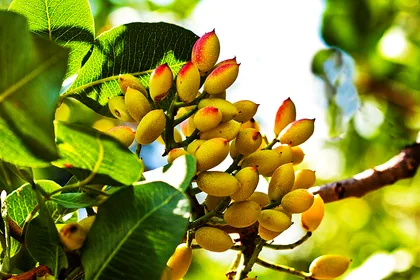 Vegetables and fruitBronte PistachioBronte pistachios grow on the lava fields of Etna, are picked by hand in odd-numbered years only, and have a…
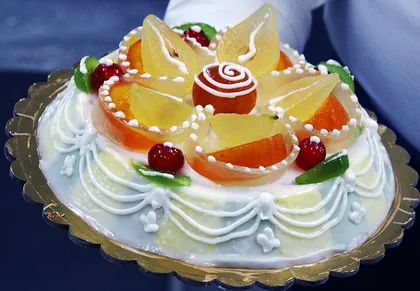 SweetsCassata SicilianaCassata siciliana is a layered Palermo cake: sponge soaked in liqueur, sweetened sheep's-milk ricotta studded…
 SweetsCannoliIt has to be filled when you order it, and anywhere that fills them in advance has already lost: the fried…
 Pasta and breadAranciniArancini are deep-fried Sicilian rice balls: saffron rice moulded around a filling of meat ragù and peas, or…
 SweetsGelatoGelato is not ice cream translated. It carries less fat (4-8% against 10-18%), holds far less air (20-35%…
 CheeseRicottaRicotta is not a cheese. It is a dairy product made from whey, the liquid left over after cheese has been…
 Fish and seafoodBottargaFifteen grams a head is enough, and that is not meanness: bottarga is the salted, pressed, air-dried roe sac…