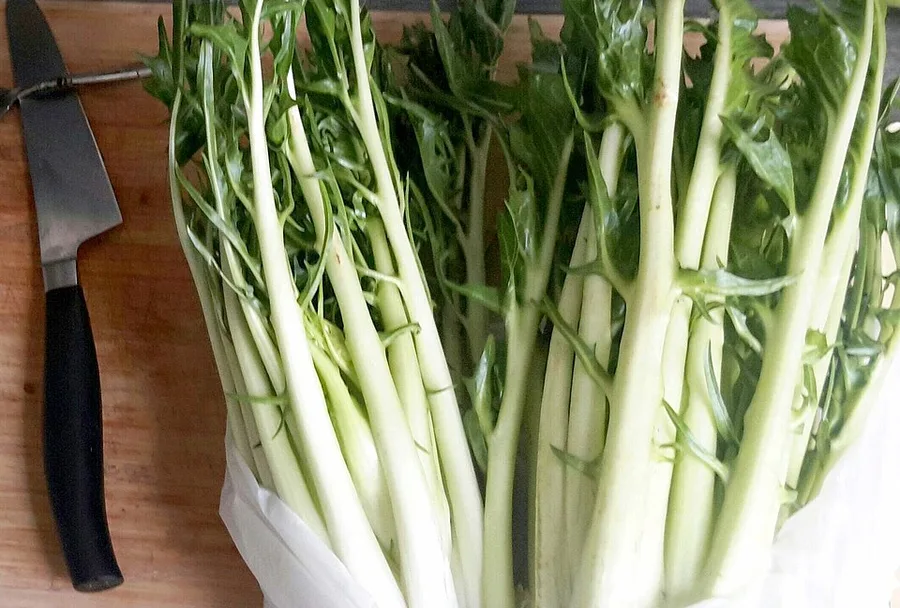
What is Puntarelle?
Puntarelle are not a vegetable in their own right, but a part of one. The plant is Cichorium intybus var. foliosum, the same species as every cultivated chicory, in the jagged-leaf Catalogna variety also sold as cicoria asparago or cicoria di Galatina. What you eat is the cluster of immature flowering shoots hidden inside the head: hollow tubes, white at the base and pale green at the tip, snapping crisp when fresh.
A whole head is really two ingredients stacked together. The outer leaves are long, dark, deeply serrated and far too bitter to eat raw; they get boiled and sautéed. The inner shoots, sheltered by those leaves, are milder, sweeter and structurally hollow, which is the property the entire dish depends on.
Sliced lengthwise into strips two or three millimetres wide and dropped into ice water, each strip curls tightly on itself, because the inner and outer surfaces of the hollow wall lose water at different rates. That curl is not decoration. It is what gives the dressing something to cling to, and it is why a straight-cut chicory salad never tastes like puntarelle even when the ingredients are identical.
One head yields roughly a third of its weight in cleaned shoots. That ratio explains everything about how they are sold and what they cost.
What does it taste like?
Bracingly bitter, but green-bitter rather than harsh: closer to dandelion or the pale heart of a radicchio than to the medicinal bitterness of raw endive. Underneath the bitterness there is a clean vegetal sweetness and a lot of water, so the first impression is more refreshing than aggressive.
The texture is the memorable part. The hollow walls shatter between the teeth with an audible snap, somewhere between celery and a very crisp cucumber, and the curled strips stay separate rather than clumping. Cold weather changes the flavour measurably: shoots harvested after a frost in January are noticeably sweeter than the same variety cut in November.
Then there is the dressing, which is at least half the experience. Pounded salted anchovy, raw garlic, white wine vinegar and olive oil produce something salty, sharp and deeply savoury that runs into the hollow curls. The finished plate tastes like a Caesar salad stripped of cheese, cream and sweetness, with the bitterness turned up.
How to use it
If you have a whole head, start by peeling off the dark outer leaves and setting them aside. Break the inner cluster apart, cut away the hard base, then split each shoot lengthwise into strips two or three millimetres wide. A knife works; in Rome most people use a tagliapuntarelle, a wooden or plastic frame strung with steel wires that you push the shoot through to get even strips in one motion. They cost a few euros in any Roman market.
Drop the strips into a bowl of water with ice in it and leave them for one to two hours. They curl, they go glassy, and a good part of the bitterness leaches into the water. Change the water once halfway through if you want them milder. Then drain them properly and dry them in a salad spinner, because wet strips will slide the dressing straight off.
Make the dressing while they soak. Pound the garlic with a pinch of salt, work in the anchovies until they become a paste, whisk in the vinegar, then the oil in a thin stream, and finish with plenty of black pepper. Taste before adding any salt; the anchovies bring a lot. Dress the puntarelle at the last possible moment and serve immediately: after half an hour they wilt and the whole point is lost.
The outer leaves are the second dish. Boil them in salted water for 10 to 15 minutes, squeeze them dry and fry them in olive oil with a smashed garlic clove and a dried chilli. That is cicoria ripassata, and it means one head feeds you twice.
How long it keeps
An untrimmed head keeps four or five days in the vegetable drawer, wrapped in a barely damp cloth or left in its perforated bag. Leave the base uncut until you use it, and leave the outer leaves on: they are the wrapper the plant grew for itself, and the inner bunch stays crisp long after the outside has gone limp. Once you have cut the shoots into strips, they live in a bowl of cold water in the refrigerator for about two days, with the water changed every twelve hours. Curling in cold water is what gives puntarelle their shape.
Past that point the strips slowly go translucent and lose their snap as water moves through the cut walls, and the soaking water turns cloudy with released sap. Drain and spin them dry before dressing, because a wet strip sheds the anchovy sauce instead of holding it. Raw puntarelle do not freeze: ice crystals rupture the cell walls and what thaws is pulp. The outer leaves are the exception, and boiled, squeezed and frozen in portions they hold six months and go into a pan straight from frozen.
Spot the real thing
Buy the whole head where you can, and judge it by weight and base. A good one feels heavy for its size, meaning a dense bunch of shoots inside rather than air, and the cut across the stem should be pale and moist rather than brown and dried out. The outer leaves should be dark green and stiff. Bend one of the outer shoots: it should break with an audible snap, and one that folds without breaking has been out of the ground a while. The shoots themselves should be closed, firm and white-green at medium thickness, since the very fat ones are often spongy inside and the thin ones give almost nothing once trimmed.
Pre-cut puntarelle sold in water are judged differently: the water should be clear rather than cloudy, the strips tightly curled and glossy, the cut edges free of brown rims. Ask when they were cut. Outside Italy the plant turns up at markets as Catalogna or asparagus chicory, and it is not dandelion, escarole, Belgian endive or radicchio. The season runs roughly November to March, and a head loses more than half its weight in trimming.
How to pronounce Puntarelle
poon-tah-REL-leh
Four syllables, stress on the third: poon-tah-REL-leh. The double 'l' is held slightly longer than an English one, as in 'tall lamp' rather than 'taller'. The final 'e' is always pronounced, and the two standard English mistakes are swallowing it ('punta-RELL') and turning it into a diphthong ('poon-ta-RELL-ay'). The singular is puntarella, but Italians use the plural almost exclusively, because you never eat just one. The word comes from punta, meaning tip or point: the tip of the shoot.
Puntarelle compared
vsCommon chicory (cicoria)
Same species, different part of the plant, opposite treatment. Puntarelle are the hollow inner shoots and are eaten raw in a vinegar and anchovy dressing; ordinary chicory (the leaves, whether cultivated catalogna or wild cicoria di campo) is boiled and then sautéed with garlic and chilli. Buying a head gives you both, and Roman kitchens use both.
| This | Common chicory (cicoria) | |
|---|---|---|
| Part eaten | Hollow inner flowering shoots | Outer leaves and stalks |
| Cooking | Raw, never cooked in the classic dish | Boiled, squeezed dry, then pan-fried |
| Bitterness | Sharp, tamed by an ice-water soak | Stronger; the boiling water carries it off |
| Texture | Snapping, hollow, tightly curled | Soft, silky, collapsed |
| Dressing | Anchovy, garlic, white wine vinegar, olive oil | Olive oil, whole garlic clove, dried chilli |
| Season | November to March only | Cultivated nearly year round; wild in late winter |
| Rome market price | 9–14 €/kg cleaned, 2–3.50 €/kg whole head | 1.50–3 €/kg cultivated |
| Usable yield | About one third of the head | Almost all of it, minus the root |
vsBelgian endive (witlof)
The closest thing to puntarelle you can buy year round anywhere in the world, and the substitute worth reaching for first. Both are chicories, both are pale and bitter and eaten raw, but endive is a forced root grown in darkness, so it is solid, layered and much milder, and it will not curl.
| This | Belgian endive (witlof) | |
|---|---|---|
| How it is grown | Field-grown, shoots form naturally in winter | Roots forced in the dark to make a tight bud |
| Shape | Hollow green-white spears | Solid pale torpedo of overlapping leaves |
| Bitterness | Green, grassy, pronounced | Cleaner and milder, faintly sweet |
| Curls in ice water | Yes, that is the point | No; strips stay flat |
| Crunch | Snapping and hollow | Dense and layered |
| Availability | Rare outside Italy, four months a year | Year round, every supermarket |
| As a substitute | Not applicable | Cut hearts lengthwise into 3 mm strips, ice water 30 min |
vsReady-cut puntarelle vs a whole head
In Rome you can buy them either way, and the price gap looks outrageous until you do the arithmetic. Cleaned strips cost around four times as much per kilo as a whole head, but a head gives up only a third of its weight in shoots, so the real premium is for roughly twenty-five minutes of knife work, plus you lose the outer leaves, which are a second dish.
| This | Ready-cut puntarelle vs a whole head | |
|---|---|---|
| Price per kg | 9–14 € cleaned and curled | 2–3.50 € whole head |
| Edible yield | 100% | About 33% as shoots, the rest as greens |
| Real cost per portion | Roughly comparable | Roughly comparable |
| Work at home | Drain, dry, dress | 20–30 minutes of splitting and slicing |
| Texture | Good for one to two days in water | Best possible, cut to order |
| Outer leaves | Not included | Included: boil and sauté them |
| Best for | Weeknights, small quantities | Cooking for a table, and for the second dish |
Puntarelle substitutes
- Belgian endive hearts, cut into strips
The default substitute outside Italy, and a good one. Trim the base, quarter the heads lengthwise and slice into strips 3 mm wide, then soak in ice water for 30 minutes. They will not curl, but they firm up and lose their soapy edge. Use only the paler inner leaves; the outer ones go limp under the dressing.
1:1 by weight, about 4 heads replace 400 g of cleaned puntarelle - Radicchio di Treviso tardivo
The best match for flavour if you can find it in winter. The late variety is forced in spring water, which leaves it with long, curled, hollow-ribbed spears and a bitterness very close to the real thing. Use the white ribs and pale leaf, and shred it just before dressing so it does not bleed colour.
1:1 by weight - Curly escarole hearts
Widely stocked and cheap. Discard the dark outer leaves entirely and use only the blanched yellow heart, torn rather than sliced. It gives you the bitterness and the pale colour but less snap, so serve it very cold and dress it at the table.
1:1, using roughly half of each head - Celery hearts plus a little endive
A reconstruction rather than a substitute, and better than it sounds. Pale inner celery stalks sliced thin lengthwise supply the hollow crunch, endive supplies the bitterness. Peel the celery strings first and give the mix 20 minutes in ice water.
3 parts celery heart to 1 part endive, by weight - Dandelion greens
Closest on bitterness, furthest on texture: there is no crunch at all. Use only young leaves, chop them coarsely, and combine with sliced celery or fennel for structure. Common in North American farmers markets in early spring, which is the wrong season but the right flavour.
1:1 by weight, mixed half and half with something crisp - The dressing, including a vegetarian version
This part transfers perfectly, whatever greens you use: 4–6 salt-packed anchovy fillets rinsed and boned, 1 garlic clove, 1–2 tbsp white wine vinegar, 4–5 tbsp olive oil, black pepper, pounded in a mortar or mashed with a fork. For a vegetarian version replace the anchovies with rinsed salted capers, pitted Taggiasca olives, or a teaspoon of light miso or crumbled nori dissolved into the oil: you are replacing umami, not just salt. Do not swap the vinegar for lemon: the Roman version depends on the sharper edge.
One quantity dresses 400 g of greens, serving 4
Where to buy it
In Italy they are everywhere from November to March: markets, greengrocers and supermarkets all carry both whole heads and tubs of pre-cut strips sitting in water. Outside Italy they are genuinely hard to find, and the season is the same short winter window.
In the United States, look at Italian markets in New York, Boston, Philadelphia and the Bay Area, and at California farmers markets from December through February, where a handful of specialist growers plant them for chefs. Expect roughly $6 to $10 per pound for whole heads, more where they are sold trimmed. Some seed catalogues list the variety as Catalogna Puntarelle or asparagus chicory, which is the reliable route if you have a garden: it is an easy autumn sowing.
In the UK they turn up at Italian delicatessens, at a few London greengrocers, and in seasonal vegetable boxes from suppliers who work with Italian growers. Prices run about £8 to £14 per kilo. If none of that is available, a Belgian endive from any supermarket plus the anchovy dressing gets you most of the way there.
Wherever you buy, judge a whole head by weight and by the cut at its base: heavy for its size, pale and moist at the stem, outer leaves stiff rather than floppy.
Where to eat it in Italy
Rome, in winter, and effectively nowhere else. Between November and March puntarelle appear as a contorno on trattoria blackboards across Testaccio, Trastevere, San Lorenzo and Pigneto, usually for 5 to 8 euros. A trattoria offering them in July is serving something else, and the same test applies to Roman artichokes.
The markets are worth as much as the restaurants. Campo de' Fiori is the picturesque one, the covered Mercato di Testaccio is where Romans actually shop, and Mercato Trionfale near the Vatican is the biggest. At all three you can watch stallholders pushing shoots through wire cutters and see basins of strips curling in cold water, which is the best free spectacle Roman produce offers.
In the old Jewish quarter around Via del Portico d'Ottavia they usually share a menu with carciofi alla giudia, the other vegetable that defines the Roman winter and spring. Further south, in the Salento region of Puglia where the seed variety takes its name, the same plant is on every market stall, but there it is mostly boiled and eaten as greens, so do not expect the Roman salad.
Recipes with it
Frequently asked questions
What season are puntarelle available?
November through March, with December to February the peak. Light frosts reduce the bitterness and improve the texture, so midwinter heads are sweeter than early ones. By late March the plant bolts and the shoots turn fibrous, which is why the season ends abruptly rather than tapering off.
How do you get the bitterness out of puntarelle?
Slice them into thin strips and soak them in ice water for one to two hours, changing the water once. Some of the bitter compounds leach out and the strips curl tightly at the same time. Do not try to remove the bitterness completely: it is the character of the dish, and the anchovy dressing is built to balance it, not to hide it.
How do you pronounce puntarelle?
poon-tah-REL-leh, four syllables with the stress on the third and the final 'e' clearly sounded. Hold the double 'l' a beat longer than in English. The name comes from punta, meaning tip, and the singular puntarella exists but is almost never used.
Can puntarelle be cooked?
They can, though the classic Roman dish is strictly raw. Tossed in a hot pan with garlic and oil for two minutes they stay crisp and lose some bitterness, and they work well in pasta with anchovies and breadcrumbs. The outer leaves are the opposite: those are almost always boiled and then sautéed.
What can I use instead of anchovies?
Rinsed salted capers, pitted Taggiasca olives, or a teaspoon of light miso or crumbled nori worked into the oil. The job is to replace umami rather than salt, so a plain garlic vinaigrette will taste thin by comparison. Keep the garlic, white wine vinegar, olive oil and black pepper exactly as they are.
Related foods
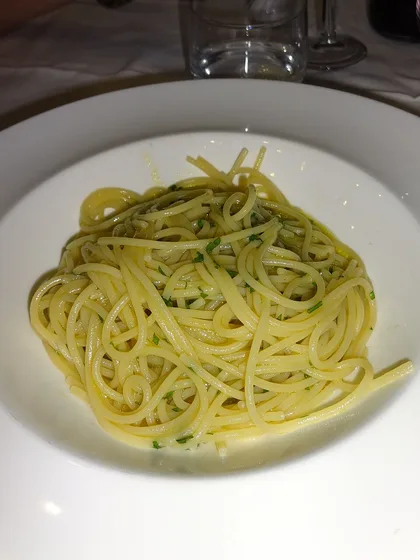 Fish and seafoodColatura di Alici (Italian Anchovy Sauce)Colatura di alici is the amber liquid that drains from anchovies packed in salt in chestnut barrels at…
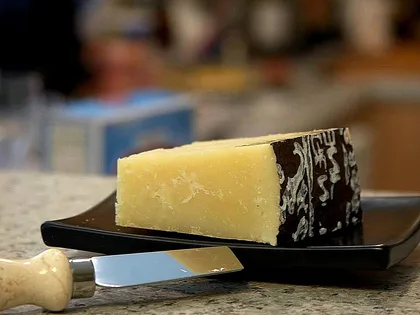 CheesePecorino RomanoPecorino Romano DOP is a hard, dry-salted sheep's milk cheese aged at least five months, made in Sardinia…
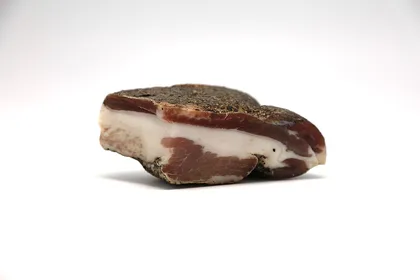 Cured meatsGuancialeGuanciale is cured pork jowl: unsmoked, rubbed with salt and pepper, aged for one to three months.
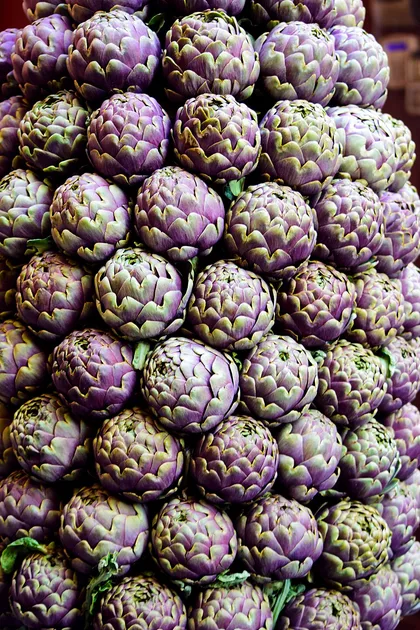 Vegetables and fruitRomanesco ArtichokeThe Romanesco is Rome's artichoke: round, large and completely spineless.
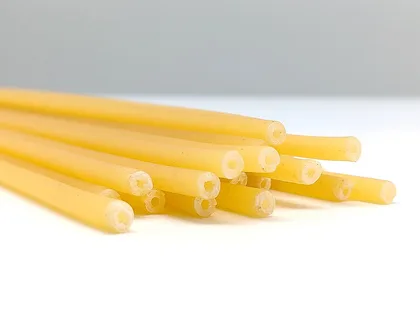 Pasta and breadBucatiniBucatini are thick spaghetti with a hole running through the middle.
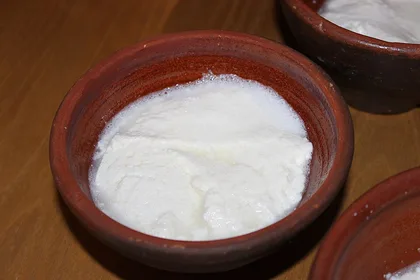 CheeseRicottaRicotta is not a cheese. It is a dairy product made from whey, the liquid left over after cheese has been…
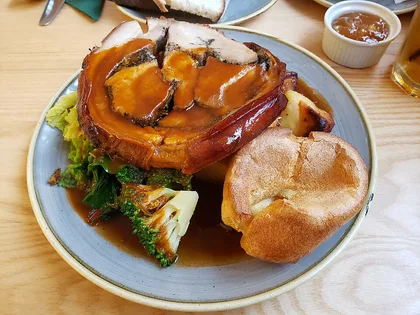 Cured meatsPorchettaSix to eight hours in a wood oven to reach two opposite textures in one piece of meat: skin that shatters…
 Pasta and breadRigatoniWide ridged tubes of durum semolina, cut straight across. The ridges and the square cut are engineering, not…