What is Romanesco Artichoke?
Carciofo Romanesco del Lazio is a protected geographical indication, registered in 2002. It covers two local ecotypes, Castellammare and Campagnano, and their clonal selections, grown in the provinces of Rome, Viterbo and Latina.
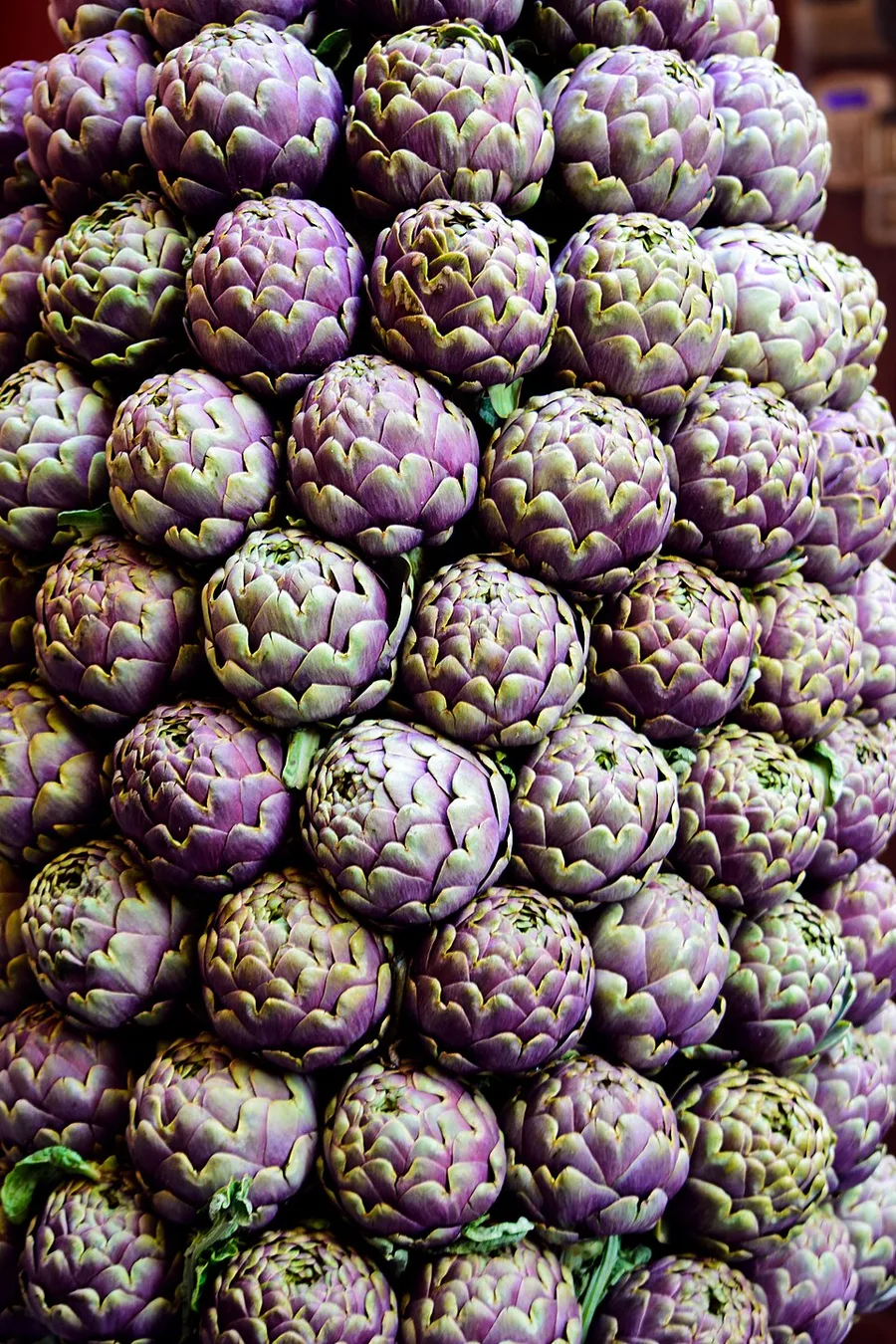
The head is spherical and tightly closed, large at 300 to 450 grams for the apical one, green with violet shading at the base of the bracts. The bracts are broad, fleshy and packed together, and in heads cut at the right moment the choke inside is barely developed.
The defining feature is that it has no spines at all: no hooks on the bracts, none on the leaves. That changes the work in the kitchen completely: you can prepare one bare-handed in a minute, and the edible yield is far higher than from any spiny variety.
Roman vocabulary distinguishes two things that get muddled abroad. The cimarolo is the apical head, the one at the top of the main stem: biggest, most tender, first to ripen, and the only one suitable for carciofi alla giudia. Mammola is the Roman name for the round spineless artichoke in general, used in markets as a synonym for cimarolo. The lateral heads that follow are smaller and go to preserving in oil, frying and sauces.
This is the artichoke with the greatest cultural weight in Italy, because two of Rome's best-known dishes depend on its shape. Without a round, closed, spineless head, carciofi alla giudia simply cannot be made.
What does it taste like?
Clean, green and nutty, with the characteristic pleasant bitterness of a good artichoke and a mineral finish. Milder and sweeter than a spiny Sardinian artichoke, less grassy than a Californian globe, with a fuller and rounder flavour than a small purple violetto.
The texture is the case for it. The bracts stay tender well towards the outside, the heart is dense and creamy rather than fibrous, and the peeled stem eats like a continuation of the heart. Fried the Jewish-Roman way, the outer bracts turn brittle and crisp like autumn leaves while the centre stays soft.
One thing worth knowing: artichokes contain cynarin, which temporarily suppresses the sweetness receptors on the tongue. Whatever you drink straight afterwards will taste sharper and thinner than it really is. That is chemistry, not a fault in the wine.
How to use it
Cleaning is quick because nothing pricks. Pull off two or three rings of outer bracts, cut two fingers off the top, peel the stem with a vegetable peeler, and drop everything into water with lemon juice. Do not leave it soaking for hours or the flavour leaches out.
Carciofi alla romana: spread the bracts open, pack the centre with chopped mentuccia, garlic and salt, stand the heads upside down in a narrow pan with oil and water halfway up, cover, and cook gently for forty minutes. Mentuccia is Calamintha nepeta, not garden mint, and with peppermint you get a different dish.
Carciofi alla giudia: apical heads only. Trim in a spiral down to the heart, keeping the flower shape, then fry once in plenty of oil at moderate heat to cook the inside. Drain, press the head down upside down to open the bracts, then fry again very hot for a few seconds. The outside shatters like a dry leaf; the heart stays soft.
Vignarola is the spring stew that puts them in context: artichokes, fresh broad beans, peas, romaine lettuce and guanciale, cooked down slowly.
Also battered and fried, baked with eggs into a tortino, stewed into a sauce with lamb offal, or laid on pizza bianca. The peeled stem is as tender as the heart: never discard it.
How long it keeps
Buy them with the stem on and leave it on: a trimmed head dries from the cut. In the fridge, stand them in the salad drawer wrapped loosely in a damp cloth or a paper bag, or stand the stems in a glass of water like flowers, and they hold three to five days with the bracts still closed. Do not wash or trim until you are ready to cook. Once cut, the flesh browns within a minute, so drop everything into water acidulated with lemon.
An artichoke is a flower bud and it keeps trying to open. Over days the bracts loosen and splay, the tips dry and darken to brown, the stem goes woody and hollow at the cut, and the internal choke develops from soft down into wiry fibre. The head loses weight steadily as it dries. Freezing raw does not work, but blanched or cooked hearts freeze well, four to six months in a sealed bag, and Roman cooks also keep them under oil after cooking. In a shop, a bunch tied together with the stems long is the fresher offer.
Spot the real thing
The Romanesco is round, almost spherical, with a flattened or slightly hollow top rather than a point, and it has no thorns at all: the bract tips are blunt and rounded, so you can hold the head in a bare hand. The bracts are soft and tightly packed, green washed with violet, and the head sits on a long thick stem that is left attached, because the stem is as tender as the heart. The choke inside is minimal on a young head. The whole thing feels heavy and squeaks when squeezed.
What most shops abroad sell is the Green Globe, the Californian type: conical rather than round, with tough fibrous outer bracts, sharper tips and a substantial hairy choke to remove. Provençal and Venetian violets are the other thing on the counter, small, pointed and purple, and they are eaten raw. Season narrows the field further, since the Roman one runs from February to May. Look for Carciofo Romanesco del Lazio IGP on the crate or tag, with cimarolo or mammola marking the large flat topped apical head. Expect $4 to $8 each abroad.
How to pronounce Romanesco Artichoke
kar-CHOH-foh roh-mah-NEH-skoh
Carciofo has a soft 'ci' as in 'church': kar-CHOH-foh. Romanesco is stressed on the third syllable, roh-mah-NEH-skoh, with a hard 'sc' before 'o'. Cimarolo is chee-mah-ROH-loh and mammola is MAM-moh-lah, stressed on the first. Carciofi alla giudia: kar-CHOH-fee AL-lah joo-DEE-ah.
Romanesco Artichoke compared
vsVioletto (Sant'Erasmo, Chioggia, Tuscan and Ligurian types)
The small purple artichokes of the northern lagoons and the Tyrrhenian coast are a different tool. They are elongated, harvested young, more bitter and more perfumed, and they are the ones eaten raw and shaved. The Romanesco is bigger, rounder, milder and built to be cooked whole.
| This | Violetto (Sant'Erasmo, Chioggia, Tuscan and Ligurian types) | |
|---|---|---|
| Shape | Round, tightly closed | Elongated, tapering, often open |
| Weight | 300-450 g apical head | 60-150 g |
| Colour | Green with violet at the base | Strongly purple |
| Spines | None | Small spines on some ecotypes |
| Flavour | Nutty, moderately bitter | Sharper, more aromatic, more bitter |
| Best use | Stuffed, braised, fried whole | Raw in salad, fried small, in oil |
vsSpinoso Sardo and other spiny artichokes
The gap here is practical more than gastronomic. Spiny varieties taste intense and are prized for preserving in oil, but they are armed, they oxidise fast, and after trimming barely a third of what you paid for is left. A Romanesco takes a minute to clean and gives you about half.
| This | Spinoso Sardo and other spiny artichokes | |
|---|---|---|
| Spines | None at all | Sharp hooks on bracts and leaves |
| Preparation | One minute, bare hands | Slow, gloves advisable |
| Edible yield | 45-55% of purchased weight | 30-35% |
| Choke | Slight in early heads | Well developed |
| Flavour | Nutty and moderate | Intense, markedly bitter |
| Alla giudia | The only right choice | Impossible: the shape is wrong |
vsCarciofo di Paestum IGP
A close relative rather than a rival: the Tondo di Paestum is a Campanian selection out of the Romanesco family. It is smaller, tighter, dimpled at the tip and several weeks earlier. Either can stand in for the other, with an adjustment for size.
| This | Carciofo di Paestum IGP | |
|---|---|---|
| Head | Larger, round, no dimple | Smaller, tight, dimple at the apex |
| Weight | 300-450 g | 150-300 g |
| Season | February to May | Late February to late April |
| Spines | None | None |
| Where | Coastal Lazio and the Pontine plain | Piana del Sele, Campania |
| Classic dish | Alla giudia, alla romana, vignarola | Roasted on embers, stuffed, raw |
Romanesco Artichoke substitutes
- Carciofo di Paestum IGP
The nearest relative and the obvious swap. Smaller, so use more heads for the same weight and take a few minutes off the cooking time.
4 Paestum heads per 3 Romanesco - Green Globe artichokes (California, Brittany)
Widely available and structurally similar, but coarser and with a full choke to scoop out. Fine for braising and stuffing; unreliable for alla giudia, where the bracts must open into a flower.
1 large globe per Romanesco - Baby artichokes
The best supermarket answer for frying and for raw preparations, since they have almost no choke. Trim harder than feels right and hold them in lemon water.
4 or 5 baby heads per Romanesco - Violetto or purple artichokes
Sharper and more perfumed. Good shaved raw with lemon and pecorino, and good fried, but too small to stuff and too bitter to braise the Roman way without adjusting.
3 violetti per Romanesco - Artichoke hearts in oil, drained
The off-season option for pasta, tarts and pizza. Drain thoroughly, pat dry, add no salt: the brine did that.
One 280 g drained jar per 4 fresh heads
Where to buy it
Fresh Romanesco artichokes rarely leave Italy, and the season is short. In Lazio they are sold by the head: 1.20 to 2.50 euro each for cimaroli, half that for lateral heads, or 4 to 8 euro per kilo, with prices highest in February and again in late May. Elsewhere in Italy add about fifty per cent.
Abroad the realistic purchase is hearts preserved in oil from Italian producers, sold by delicatessens and importers such as Eataly and Gustiamo in the US and Italian specialists in the UK. Expect 8 to 14 dollars or 7 to 12 pounds for a 280-300 gram jar, which works out at roughly 12 to 20 dollars per pound of drained artichoke.
Look for the full wording Carciofo Romanesco del Lazio IGP with the EU mark. Carciofo romano, mammola and cimarolo on their own describe a type, not a certified origin.
Buying fresh, judge weight against volume, take heads with at least ten centimetres of stem, and squeeze: a fresh artichoke squeaks. Reject any whose bracts have begun to splay open.
Where to eat it in Italy
Rome, and specifically the Ghetto, where Jewish-Roman cooking invented carciofi alla giudia and the restaurants along via del Portico d'Ottavia have been frying them for generations. Carciofi alla romana, by contrast, are on every trattoria menu in the city from March to May, from Testaccio to Trastevere.
Ladispoli, on the coast north of Rome, holds the country's oldest artichoke festival in April: fried, roasted and stuffed cimaroli eaten in the middle of the fields that grew them.
Sezze and Priverno, down on the Pontine plain, run their own spring festivals, and at Velletri and in the Castelli Romani you can look for carciofi alla matticella, cooked whole over a fire of vine prunings. That is the rarest version and the hardest to find.
Timing is everything. March and April are when the cimarolo is on the table, and the cimarolo is the reason to make the trip. By June the Romanesco season is over and whatever is on the menu came from somewhere else.
Recipes with it
Further reading
Frequently asked questions
What is the difference between a cimarolo and a mammola?
The cimarolo is the apical head at the top of the main stem: biggest, most tender, first to ripen, and the only one suitable for carciofi alla giudia. Mammola is the Roman name for the round spineless artichoke in general, used in markets as a synonym. The lateral heads that come afterwards are smaller and go to frying and preserving.
When are Romanesco artichokes in season?
February to May, peaking in March and April. On the earliest stretches of coast a few cimaroli appear in late January; by late May only lateral heads are left. From June to January there is no fresh Romanesco, whatever a menu claims.
Why does it have no spines?
Because of the variety group. Romanesco types have been selected for centuries for spineless bracts and a round closed head. It is not a matter of harvesting young or trimming. The practical effect is a one-minute preparation and an edible yield of 45 to 55 per cent, against 30 to 35 for spiny varieties.
Do I need mentuccia for carciofi alla romana?
Yes, and it is not a detail. Mentuccia romana is Calamintha nepeta, far less sweet and more aromatic than garden mint. Peppermint turns the dish into something else. If you cannot find it, parsley and garlic are a safer choice than the wrong mint.
Why do artichokes ruin the taste of wine?
Cynarin temporarily blocks the sweetness receptors on the tongue, so anything drunk immediately after tastes sharper and thinner. Dry, saline, unoaked whites cope best: Frascati Superiore, Bellone and Malvasia puntinata are the local answers.
Sources
Where to check what you just read.
- 1
Il regolamento del 21 novembre 2002 che iscrive «Carciofo Romanesco del Lazio» fra le IGP ortofrutticole.
- 2
La piattaforma varietale ammessa (Castellammare e Campagnano con i rispettivi cloni) e le caratteristiche richieste al capolino, foro all'apice compreso.
Related foods
 Vegetables and fruitPaestum ArtichokeThe Paestum artichoke is round, tightly closed, completely spineless and dimpled at the tip: it takes a…
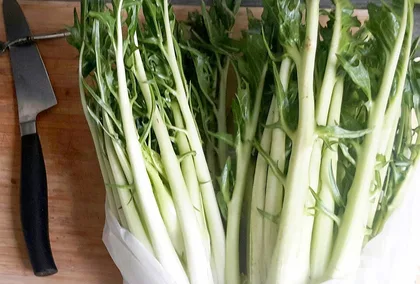 Vegetables and fruitPuntarelleInside a head of jagged-leaf Catalonian chicory sits the part Rome actually pays for: the hollow inner…
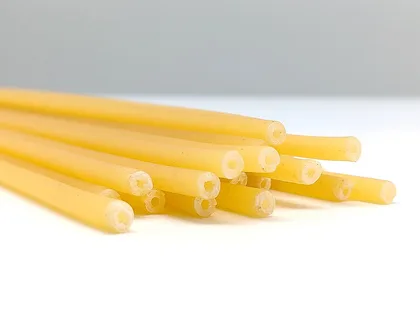 Pasta and breadBucatiniBucatini are thick spaghetti with a hole running through the middle.
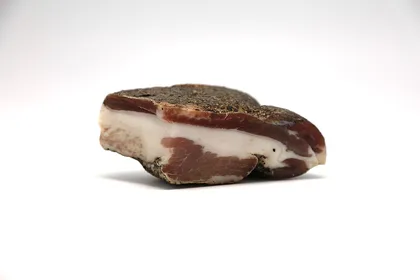 Cured meatsGuancialeGuanciale is cured pork jowl: unsmoked, rubbed with salt and pepper, aged for one to three months.
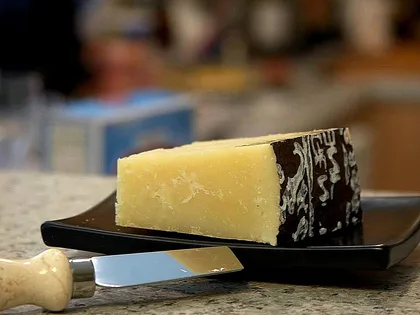 CheesePecorino RomanoPecorino Romano DOP is a hard, dry-salted sheep's milk cheese aged at least five months, made in Sardinia…
 CheeseRicottaRicotta is not a cheese. It is a dairy product made from whey, the liquid left over after cheese has been…
 Cured meatsPorchettaSix to eight hours in a wood oven to reach two opposite textures in one piece of meat: skin that shatters…
 Pasta and breadRigatoniWide ridged tubes of durum semolina, cut straight across. The ridges and the square cut are engineering, not…