What is Comacchio Eel?
The European eel, Anguilla anguilla, has a life cycle that sounds made up. It spawns in the Sargasso Sea, in the middle of the Atlantic. The larvae drift on the currents for one to three years until they reach Europe, where they become glass eels, transparent and six or seven centimetres long, and push up the river mouths into brackish lagoons.
There the eel stays for years, yellow-bellied, feeding and growing. Then it changes: the back darkens, the flanks turn metallic, the eyes enlarge, the gut atrophies. This is the silver eel, ready to return to the Atlantic, spawn once and die.
Two practical consequences follow. Nobody has ever observed European eels spawning in the wild, and the species cannot be bred in captivity at commercial scale, so every farmed eel on earth began as a wild-caught glass eel. And the fishery at Comacchio is built entirely on the migration, because an eel heading for the sea has to pass through one place.
Comacchio produces two things. Fresh seasonal eel, grilled over embers or stewed. And marinated eel, roasted on spits then packed in vinegar, is the historic product shipped across Italy for centuries and now a Slow Food Presidium.
What does it taste like?
Rich. Silver eel can carry more than twenty per cent fat, and the flesh is dense, white and unctuous, closer to pork belly than to any lean fish. There is no fishiness and no iodine; the flavour is deep, slightly sweet and faintly earthy from the brackish water.
Grilled over embers, the fat drips away and the outside caramelises while the inside stays soft. It is one of the very few fish that behaves like meat on a barbecue.
The marinated version tastes completely different. Roasting first, then weeks in wine vinegar, water, salt and bay leaves, cuts the richness and firms the flesh: what you get is cold, sharp, savoury and slightly smoky, eaten in small pieces with bread or polenta. The register is closer to soused herring or escabeche than to anything Italians usually eat.
Anyone who knows Japanese unagi will recognise the texture and be surprised by the direction of the seasoning. Japan sweetens eel with soy and mirin; Comacchio sours it with vinegar. Same fat, opposite strategy.
How to use it
Eel is a fat fish and every traditional treatment is built around that fat: fierce heat, acid, and nothing creamy anywhere near it.
Over embers is the most direct route. Thick sections on the grill, salt, a bay leaf between the pieces, and the fat dripping onto the coals. Serve with polenta and something sharp on the side.
Stewed is the Comacchio home version: a soffritto, tomato, long slow cooking, white polenta alongside. Risotto made with a stock from the heads is the lagoon variant.
Marinated eel is eaten cold, as an antipasto, with bread or grilled polenta. Do not warm it: heat undoes what the vinegar firmed up and you end up with something slack.
Two warnings. Raw eel blood contains a protein toxin that irritates skin, eyes and mucous membranes and is destroyed by heat, which is why eel is always cooked and never served raw anywhere in the world. And the skin is thick and rubbery; it is usually removed before cooking, except over coals, where it protects the flesh and is left on.
How long it keeps
Fresh eel is a same-day fish. If it has to wait, one day in the fridge, already gutted, wrapped in paper rather than sealed in plastic, which holds moisture against the skin. Cut into steaks it freezes for two or three months, and the limit is the fat rather than the flesh: a silver eel is very fatty, that fat oxidises in the freezer, and past three months the flavour turns and takes on a rancid edge no cooking removes. The fishmonger and the date on the label are the reference for anything beyond that.
A sealed jar or tin of marinated eel keeps twelve to eighteen months somewhere cool and dark, to the date printed on it. Once it is open it goes into the fridge with the pieces always under the liquid, and it is worked through over two or three weeks; any piece standing above the marinade dries at the edge and darkens within a day. When the liquid runs low, top it up with wine vinegar and water in the same proportion as the original, never with water alone, which dilutes what is holding the pieces.
Spot the real thing
Fresh eel is bought alive or just killed. The skin glossy and slippery, the body firm and reacting to the hand, the eye full and domed; a slack body, dull skin and a muddy smell that will not shift are signs of time spent out of the water. It helps to know which life stage you are looking at. A yellow eel has a yellowish belly, a small eye and leaner flesh. A silver eel has a dark back, metallic flanks, a large eye and far more fat, and it is the autumn fish, built for the grill and for marinating.
On the marinated product, check three things: the pieces should be compact rather than flaking, the marinade clear rather than cloudy, and bay leaf visible in the jar. The label should give the zone of origin, and traditional producers reference the Slow Food Presidium. The words anguilla marinata alone say nothing about where the fish came from, which may be a farm at the other end of Europe. Abroad you meet smoked eel from the Netherlands or Denmark, London jellied eel, or Japanese unagi, all different preparations.
How to pronounce Comacchio Eel
ahn-GWEE-lah dee koh-MAHK-kyoh
In anguilla the 'gu' is one sound, 'gw' as in 'penguin', and the double 'l' is held: ahn-GWEE-lah, stress in the middle. Comacchio has the stress on MAK; the 'cch' is a hard k and the final 'chio' is one syllable, 'kyoh', never 'chee-oh'.
Comacchio Eel compared
vsCapitone
The same species under a different name and a different tradition. In central and southern Italy, capitone means a large female eel (females grow well past a kilo and a half while males stay small) and it is the fish of Christmas Eve, above all in Naples, where it is fried in pieces or marinated. Comacchio uses the same animal but focuses on the autumn silver-eel run and on roasting and souring. The Christmas trade is also a real driver of demand for large eels, which is worth knowing given the state of the stock.
| This | Capitone | |
|---|---|---|
| Species | Anguilla anguilla | Anguilla anguilla, identical |
| What the name means | The eel of the Comacchio lagoons | A large female eel, mainly in the south |
| Size | Silver eels, roughly 300 g to 1 kg | Often over 1.5 kg |
| Season | October to December | Christmas Eve, by tradition |
| Typical cooking | Spit-roasted, then vinegar-marinated | Fried in pieces, or marinated |
| Served | Cold as antipasto, or hot with polenta | Hot, on Christmas Eve |
vsUnagi (Japanese eel)
The comparison most English speakers already have. Unagi is Anguilla japonica, a different species with the same extraordinary life cycle and the same conservation problem: it is listed as Endangered. Japan grills it as kabayaki, glazed repeatedly with a sweet soy and mirin tare, and serves it hot over rice. Comacchio roasts it plain, drains the fat and sours it in vinegar, then serves it cold. Both traditions exist because eel fat needs something strong to push against; they simply chose opposite directions.
| This | Unagi (Japanese eel) | |
|---|---|---|
| Species | Anguilla anguilla | Anguilla japonica |
| IUCN status | Critically Endangered | Endangered |
| Cooking | Roasted on spits over wood fire | Grilled, steamed, glazed repeatedly |
| Seasoning | Vinegar, salt, bay | Soy, mirin, sugar, sake |
| Served | Cold, with bread or polenta | Hot, over rice |
vsSmoked eel
Northern Europe's answer to the same problem. Dutch, German, Danish and British smokehouses hot-smoke eel over oak or beech, which cooks it and preserves it in one step, giving a warm, sweet, oily fillet usually eaten with brown bread and horseradish. Marinated Comacchio eel goes the other way: fire first, then acid, producing something sharper, firmer and more austere. Smoked eel is easier to find and easier to like; marinated eel is the older technique and keeps far longer.
| This | Smoked eel | |
|---|---|---|
| Preservation | Roasting, then vinegar marinade | Hot smoking over hardwood |
| Flavour | Sharp, savoury, faintly smoky | Sweet, rich, strongly smoky |
| Texture | Firm, the fat drained off | Soft, silky, fat retained |
| Eaten with | Polenta, bread, a sharp red | Rye bread, horseradish, beer |
Comacchio Eel substitutes
- Mackerel in vinegar (sgombro in scapece)
The closest substitute for marinated eel, and a far better choice for the stock: an oily fish, fried or grilled first, then steeped in vinegar with bay. Same technique, same role on the plate, a fraction of the cost.
1:1 by weight - Smoked eel
Same species, different preservation, and much easier to buy in the UK and the Netherlands. Richer and sweeter, so serve it with something sharp. Look for suppliers who can document the source, since eel traceability varies enormously.
1:1, but serve smaller portions - Unagi kabayaki, frozen
The most available eel product worldwide, sold ready-glazed. Reheat gently and rinse off some of the glaze if you want it closer to the Italian register. Note that Japanese eel is also an endangered species.
1:1 by weight - Soused herring or rollmops
For the marinated eel's place on the table rather than for its flavour: cold, acidic, oily, eaten in small pieces with bread. Cheap, abundant and from well-managed stocks.
2 herring fillets per 100 g of eel - Grilled sardines or mackerel over embers
For the fresh, fire-cooked version. Both are oily enough to behave the same way over coals, both take salt and bay leaf, and both come from far healthier populations.
1:1 by weight
Where to buy it
Start with the conservation reality: the European eel is Critically Endangered on the IUCN Red List, glass eel recruitment has collapsed to a small fraction of 1970s levels, the species is on CITES Appendix II, and EU rules impose national management plans and closed seasons. This is an occasional food, not a weekly one, and glass eels should be left alone entirely.
If you do buy it, buy traceable. In Italy, the Slow Food Presidium producers at Comacchio sell marinated eel in jars and tins, and specialist delicatessens stock it seasonally. In the UK and the Netherlands, established smokehouses sell hot-smoked eel and some can document their source. In the US, Japanese suppliers sell frozen glazed unagi, and a few importers carry European marinated eel.
Prices: fresh eel runs 12 to 22 euros a kilo, more like 20 to 30 for wild lagoon fish in season, roughly 6 to 15 dollars per pound, or 10 to 26 pounds per kilo. Marinated eel in jars runs 40 to 60 euros a kilo, so 9 to 16 euros for a 200 to 300 gram jar.
On the label, look for the origin of the fish and, for the traditional product, the Presidium reference. The words marinated eel alone say nothing about where the fish came from, and most eel sold in Europe is farmed, which still means wild-caught glass eels at the start of the chain.
Where to eat it in Italy
Comacchio itself: a small town built on water, with canals instead of streets and the seventeenth-century Trepponti bridge at its centre. The Manifattura dei Marinati is both a museum and a working plant: in season you can see the fires lit and the spits turning in the long hall of hearths. The Museo Delta Antico holds the cargo of a Roman ship found in the lagoon.
In autumn the town runs an eel festival across several weekends, which is the simplest way to eat the whole repertoire, from the grill to the jar. Boat trips leave for the old fishing stations and the isolated casoni out in the lagoons, where flamingos are now permanent residents.
Twenty kilometres away are the beaches of the Lidi di Comacchio; inland is Ferrara, whose Renaissance cooking has nothing to do with eel and is worth a day on its own. All of it sits inside the Po Delta Park.
Recipes with it
Further reading
Frequently asked questions
What is a lavoriero?
The fixed trap that made the lagoon fishery possible: a chevron-shaped structure of channels and grids, points facing the sea, historically built of wood and reed and later in brick. It exploits the autumn migration: eels heading for the Atlantic swim into the funnel and end up in holding chambers. The design is documented from the sixteenth century.
When is the eel season?
Autumn. Silver eels, those that have completed the transformation and are heading back to the Atlantic, run between October and December, sometimes into January, and move mainly on dark, stormy nights. Glass eels come the other way between February and April, and that fishery is now tightly restricted.
Is the European eel endangered?
Yes, seriously so. It is listed as Critically Endangered on the IUCN Red List, glass eel recruitment has fallen to a small percentage of 1970s levels, it is on CITES Appendix II, and the EU requires national eel management plans and closed periods. There is no captive breeding: even farmed eels start from wild-caught glass eels. Treat it as a rare, deliberate purchase, buy traceable product, and avoid glass eels altogether.
What is the difference between anguilla and capitone?
None, biologically. Capitone is the name used in central and southern Italy for a large female eel, which can exceed a kilo and a half while males stay small. The capitone belongs to Christmas Eve, especially in Naples, where it is fried or marinated. At Comacchio the same fish is roasted on spits and preserved in vinegar.
Can eel be eaten raw?
No. Eel blood contains a protein toxin that irritates skin, eyes and mucous membranes, and it is destroyed by heat. That is why every eel tradition in the world, including the vinegar marinade at Comacchio, where the pieces are roasted over fire first, which cooks the fish before anything else happens to it.
Related foods
 Oil and preservesBalsamic VinegarTwo different products share the name. Traditional Balsamic Vinegar DOP is cooked grape must aged at least…
 Pasta and breadPiadina RomagnolaNo yeast and no waiting: flour, water, salt and lard, rolled thin and cooked dry on a hot plate for two…
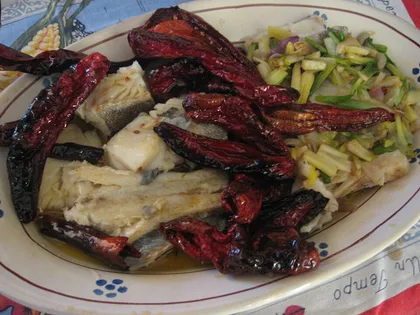 Fish and seafoodBaccalàBaccalà is North Atlantic cod preserved in salt. It is not the same thing as stoccafisso, which is the…
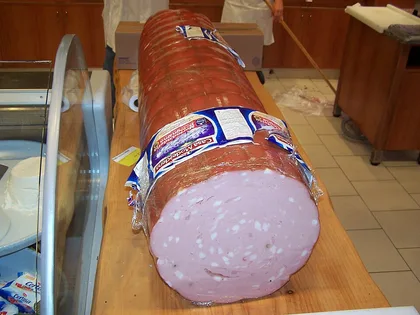 Cured meatsMortadellaThe white cubes are not just any fat: they are jowl, the firmest part of the pig, and they stay whole…Cured meatsPancettaPancetta is Italian cured pork belly: salt, pepper and warm spices, dried for months, never smoked.
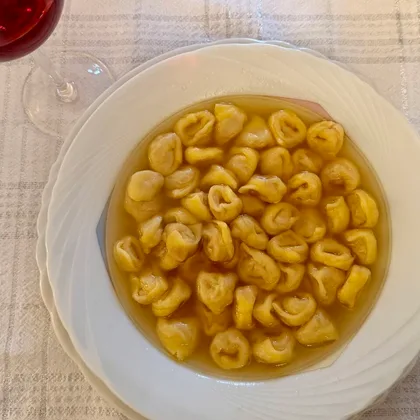 Pasta and breadTortelliniTortellini are tiny ring-shaped egg pasta parcels filled with pork, prosciutto, mortadella and Parmigiano…
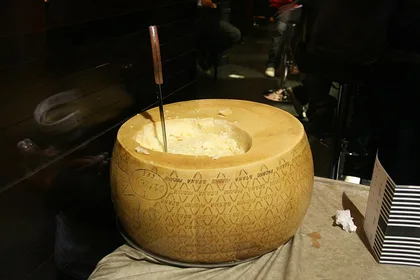 CheeseGrana PadanoNine months is the floor the specification sets before a wheel may carry the name.
 CheeseParmigiano ReggianoThree ingredients and no additives of any kind are permitted: raw cow's milk, salt and calf rennet, from five…