What is Coppia Ferrarese?
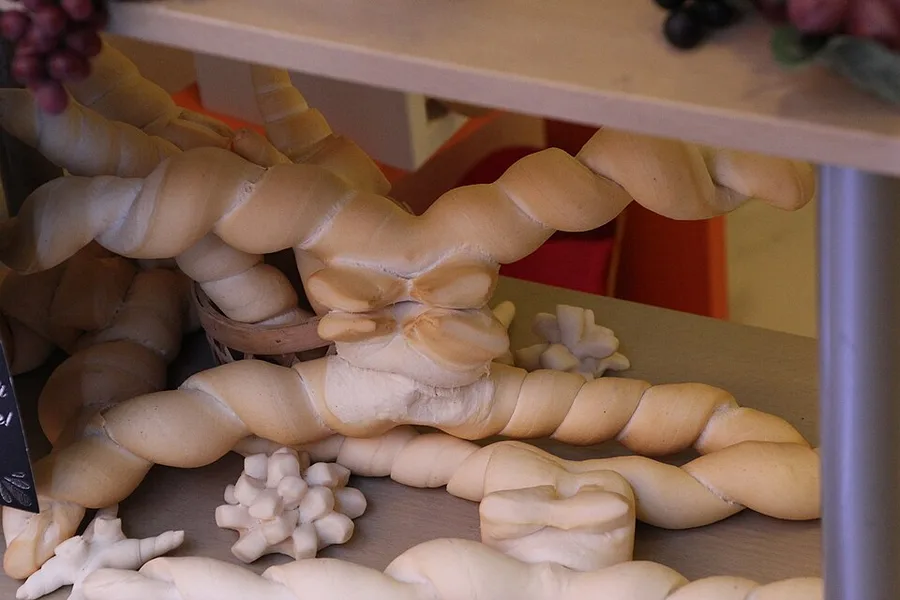
Coppia ferrarese, called ciupeta in the local dialect, is a hard-dough soft-wheat bread enriched with lard. Two triangular strips are rolled into tapered ropes, joined at the middle and twisted, producing a loaf with a dense central knot and four thin arms radiating outwards. Sizes run from 80 to 250 grams.
It is built backwards compared with almost every other bread. The four arms are essentially pure crust, dry and shattering; the crumb exists only in the knot, which locals call the mowl or the soul of the loaf. Anyone who prefers crust takes an arm, anyone who prefers crumb takes the centre, and in Ferrara households the division is negotiated.
Lard is what makes it possible. It gives the dough enough plasticity to be twisted without tearing and produces a crust that crumbles rather than cracks, something olive oil alone will not do. Since 2001 the bread has been protected as a PGI and can only be made in the province of Ferrara.
What does it taste like?
Savoury, faintly rich, and above all dry. There is no sourness to speak of and very little sweetness: this is a plain wheat flavour with the round, slightly nutty note that lard leaves behind, closer to a good cracker than to a country loaf.
The experience is dominated by texture, and by the fact that a single piece of bread gives you two entirely different ones. Snap an arm and it shatters, leaving coarse crumbs and a clean break. Break the knot open and you get a compact, fine-grained white crumb that is soft without being fluffy.
It is a bread that tastes of very little on its own and becomes excellent the moment something wet or fatty arrives: cured pork, a meat sauce, a spoonful of the dark gravy from a salama da sugo. That is precisely what it was designed for.
Day-old, it dries further and becomes something between a breadstick and a rusk, which is a legitimate second life rather than a decline.
How to use it
Do not try to make a sandwich. The shape makes it impossible and no one in Ferrara has ever attempted it. This is table bread: you break it with your hands and eat it alongside the plate.
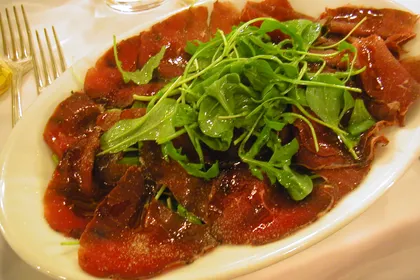
The classic partner is salama da sugo, Ferrara's signature dish, a cured pork sausage packed with red wine and spices, simmered for hours until it collapses into a dark, almost gravy-like mass and served with mashed potato. The dish has no crunch anywhere in it, and the coppia supplies all of it while mopping up the sauce. Cured ham, coppa and the local salame do the same job with less ceremony.
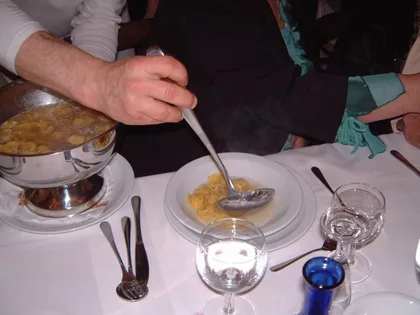
With the city's pasta, pumpkin cappellacci in meat ragù, or the sweet-crusted macaroni pie called pasticcio ferrarese, the coppia sits beside the plate for the scarpetta at the end. Arms snapped into a bowl of cappelletti in brodo behave exactly like croutons, but better.
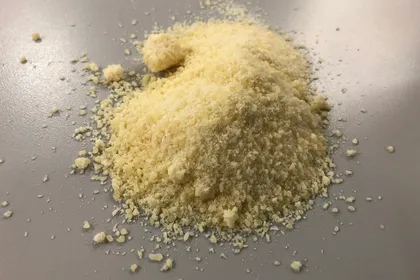
Stale, cut the knot into slices and toast it. Grind the arms into breadcrumbs, which come out unusually savoury thanks to the lard, and use them for coating vegetables or fish. Ferrara's own leftover dish is panata, a soup of grated stale bread, egg, parmesan and broth.
One use that translates anywhere: snap the arms and serve them instead of breadsticks with butter and an anchovy.
How long it keeps
It lives at room temperature in a paper bag or an open basket, never in plastic, where the trapped moisture softens the horns within an hour and removes the only thing that makes this bread different from any other. The day it is baked is its day. On the second the horns are still good while the knot begins to dry; from the third the bread has moved on to toasting and grating, and in the damp winter air of the Po plain that progression runs faster, which is why Ferrara bakeries fire twice a day.
The fridge is the wrong place, as it is for all bread: at 4 C the starch retrogrades quickly and the coppia turns leathery rather than dry, which is the worse of the two outcomes. It does freeze, with one precaution: freeze it the same day and in a rigid box, since the horns snap at the slightest knock. Straight from frozen, eight minutes at 180 C brings the brittleness back almost intact. Broken, fully hardened horns keep for weeks in a sealed jar and become the household stock for breadcrumbs and soups.
Spot the real thing
The shape is the first test. The four horns should be slim, clearly separated and slightly curled at the tips, while a fat central knot with stubby arms means the dough was too wet or the twisting was rushed. The colour is an even golden blond with the tips a shade darker, and the surface matt and smooth: this bread is never brushed, so shine is out of place. Snap a horn and it should crack audibly and break clean, leaving coarse crumbs; if it bends instead, it has taken up moisture or it was baked two days ago.
Cut through the knot and the crumb is white, tight and full of very small even holes, which is the opposite of the open irregular crumb of a long-fermented high-hydration loaf. That is what hard dough does, and it is the point of the bread rather than a fault. On the bag, the IGP mark and the words Coppia Ferrarese are what certify it; twisted breads sold elsewhere in Emilia under similar names are not covered. Outside Italy it is a bakery-only item, because the horns do not survive shipping.
How to pronounce Coppia Ferrarese
KOP-pyah feh-rrah-REH-zeh
The double 'p' in coppia is held a beat longer than a single one, as in 'top part' said quickly, and this is what separates coppia from copia. The 'ia' is a single glide, 'pyah', not 'pee-ah'. In ferrarese, both 'r' sounds are tapped and the single 's' between vowels is voiced, so it comes out as a 'z': feh-rrah-REH-zeh, never 'ferra-REESE'. Stress falls on the first syllable of coppia and the third of ferrarese. The dialect name ciupeta is choo-PEH-tah.
Coppia Ferrarese compared
vsGrissini
Both are Italian breads that solved the same problem, how to make bread that is mostly crust and keeps for days, and both use fat in the dough. The differences are shape, scale and role. Grissini are thin sticks from Piedmont, eaten as a nibble before the meal and made in industrial quantities. The coppia is a single loaf that happens to include crisp parts, sits on the table throughout the meal, and is shaped by hand one piece at a time.
| This | Grissini | |
|---|---|---|
| Region | Ferrara, Emilia-Romagna | Turin and Piedmont |
| Form | One loaf, knot plus four arms | Individual sticks, 20-80cm |
| Crumb | Present in the central knot | None at all |
| Fat | Lard, minimum 5% of flour | Olive oil or lard, varies |
| Shaping | Hand-twisted, one at a time | Hand-pulled or extruded |
| Role at table | Table bread for the whole meal | Aperitivo and antipasto |
| Protection | IGP since 2001 | None (Rubatà and Stirati are traditional types) |
vsOrdinary Italian table bread (pane comune)
A standard bakery loaf is a wet dough leavened quickly with brewer's yeast and baked into a soft, open crumb inside a thin crust. The coppia inverts every one of those choices: low hydration, lard, a laminating pass through rollers, hand shaping, and a bake that deliberately dries out most of the loaf. One is designed to be soft; the other is designed to be crisp and to last.
| This | Ordinary Italian table bread (pane comune) | |
|---|---|---|
| Hydration | Low: a stiff, leather-like dough | Moderate to high, slack dough |
| Fat in dough | Lard and olive oil | Usually none |
| Processing | Passed through a laminating roller | Mixed and left to rise |
| Crust to crumb | Mostly crust | Mostly crumb |
| Sandwiches | Impossible: the shape forbids it | The main use |
| Price per kilo | EUR 4-6 | EUR 2.50-3.50 |
vsMichetta (rosetta)
Two northern Italian answers to the same brief, a roll that is more crust than crumb, reached by opposite routes. The michetta is hollow: a soft, wet dough shaped into five petals and blown open by steam, leaving an empty chamber. The coppia is solid: a stiff, lard-enriched dough twisted into arms that simply dry out. The michetta collapses within hours; the coppia is still good the next day.
| This | Michetta (rosetta) | |
|---|---|---|
| How it loses crumb | Dough is dried out by shape | Steam inflates a hollow centre |
| Dough | Stiff, with lard | Soft, no fat, high hydration |
| Holds up for | A full day, often two | Three or four hours |
| Can be filled | No | Yes: the hollow is the point |
| Home city | Ferrara | Milan |
Coppia Ferrarese substitutes
- Grissini stirati or rubatà
The nearest thing available almost anywhere. They give you the crisp, lard-inflected snap of the arms, though nothing replaces the soft knot. Buy the hand-pulled kind if you can: the extruded supermarket sticks are a different and duller product.
About 3 grissini per 100g of coppia - The heel and ends of a good baguette
Free, and structurally closer than most people expect: dry, crust-heavy, with a small amount of crumb attached. Dry the ends in a low oven for ten minutes to get all the way there.
1:1 by weight - Taralli
Southern Italy's hard, fat-enriched ring bread. The savoury lard-and-flour flavour is very close and the shelf life is even longer; the texture is denser and more compact than the coppia's shattering arms.
1:1 by weight - Home-made lard breadsticks
The realistic home route. Make a stiff dough at about 45% hydration with type 0 flour, 5% lard, a little malt and a small amount of yeast, roll it thin, twist strips and bake at 230C until dry through. You will not get the shape, but you will get the eating.
1:1 by weight - Vegetarian: olive oil hard-dough breadsticks
Replace the lard with the same weight of a mild olive oil. The dough is slightly harder to twist and the crust crumbles a little less cleanly, but the result is closer than any butter version.
1:1, lard swapped for oil by weight
Where to buy it
Any bakery in the province of Ferrara, where it is baked twice a day because it stops being at its best after a few hours. In Bologna and Modena the better bread shops carry it, but usually a day behind. Look for the PGI mark and the wording Coppia Ferrarese on the bag, because twisted bread sold elsewhere under similar names is not the certified product.
Outside Emilia-Romagna it becomes a specialist item at over 9 euros per kilo. Outside Italy, essentially nothing: the thin arms snap in transit and no importer has found a way to ship it that makes economic sense. Do not order it online from abroad expecting an intact loaf.
In Ferrara itself a single 150-200 gram coppia costs 60 cents to a euro, or 4 to 6 euros per kilo. For reference, that is roughly 5 to 7 dollars or 4 to 6 pounds per kilo, which is expensive for bread by weight and reflects the fact that every piece is twisted by hand.
If you are shopping abroad, buy hand-pulled grissini from an Italian deli instead, at 6 to 10 dollars or 4 to 7 pounds for a 250 gram box.
Where to eat it in Italy
Ferrara is a compact Renaissance city about half an hour by train from Bologna, and you can cross it on foot in thirty minutes: the Este castle with its moat, the medieval arcades of via delle Volte, the streets of the old Jewish ghetto. Every bakery in the centre sells the coppia, and the traditional trattorie put it on the table without being asked.
Winter is the season for salama da sugo, which is when the bread makes the most sense. Late May brings the Palio di Ferrara, which the city claims as the oldest in Italy, and the whole centre turns out for it.
Forty kilometres east, Comacchio sits in the lagoon on a set of small bridges and lives on eel: marinated, grilled and, in October, celebrated with a festival. Two days covering Ferrara and the Po delta will show you a cuisine that looks nothing like the rest of Emilia.
The city is an easy day trip from Bologna, Venice or Ravenna, all within an hour and a half by regional train.
Recipes with it
Further reading
Frequently asked questions
Why does coppia ferrarese have that shape?
It began as a court bread, where appearance mattered as much as flavour: two rolled ropes of dough twisted around a central knot. The shape is also functional, since it maximises surface area and therefore crust. The name comes from the Latin copula, meaning pair.
Why is there almost no crumb?
The dough is stiff and low in water and is passed repeatedly through a laminating roller until it is compact. The four thin arms then dry out completely during baking and end up as pure crust. Crumb survives only in the central knot, where the thickness protects it.
Does coppia ferrarese contain lard?
Yes, at least five per cent of the flour weight, as required by the PGI specification. It is not optional: lard makes the dough plastic enough to twist without tearing and gives the crust its crumbling texture. The bread is therefore not suitable for vegetarians who avoid animal fats.
What is ciupeta?
The dialect name for the same bread. In Ferrara you will hear both ciupeta and coppia at the bakery counter; the legally protected wording is Coppia Ferrarese IGP.
How long does it keep?
It is best on the day it is baked. The arms are still good on day two while the knot dries out, and from day three it belongs in soup or in the breadcrumb jar. Store it in paper or an open basket: plastic softens the arms within an hour and removes the entire point.
Sources
Where to check what you just read.
- 1
Il regolamento del 17 ottobre 2001 che iscrive «Coppia Ferrarese» come IGP: la protezione europea del pane ferrarese parte da qui, non dal 2012.
- 2
Il disciplinare in PDF: farina, strutto e lievito madre obbligatori, pesi ammessi, forma dei quattro corni e tempi di commercializzazione.
- 3
La scheda regionale: ingredienti ammessi, peso fra 80 e 250 grammi e la provincia di Ferrara come unica zona di produzione.
Related foods
 Pasta and breadCappellettiCappelletti are Emilia-Romagna's filled egg pasta, folded into the shape of a little hat and served in broth…
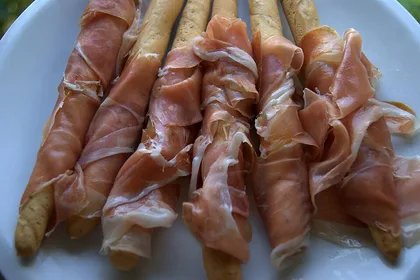 Pasta and breadGrissiniGrissini are Turin's breadsticks: bread reduced to almost pure crust, dried in the oven until it snaps.
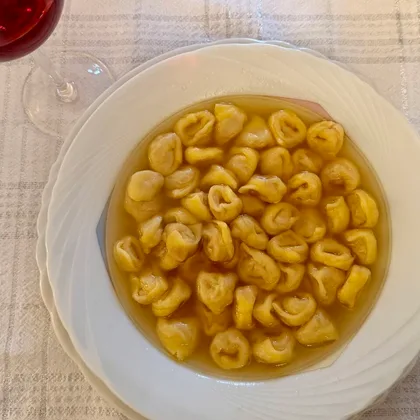 Pasta and breadTortelliniTortellini are tiny ring-shaped egg pasta parcels filled with pork, prosciutto, mortadella and Parmigiano…
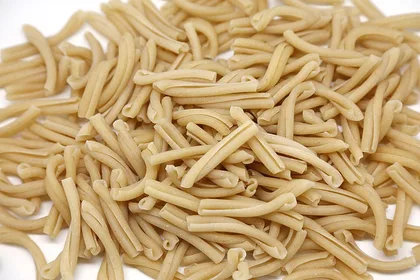 Pasta and breadStrozzapretiStrozzapreti are hand-rolled Romagnolo pasta: strips of semolina-and-water dough twisted between the palms…
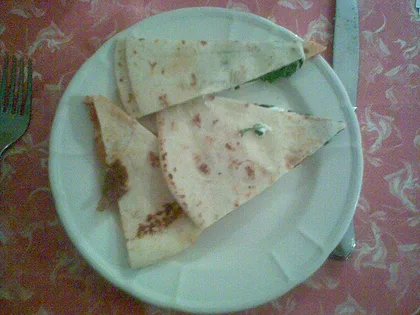 Pasta and breadPiadina RomagnolaNo yeast and no waiting: flour, water, salt and lard, rolled thin and cooked dry on a hot plate for two…
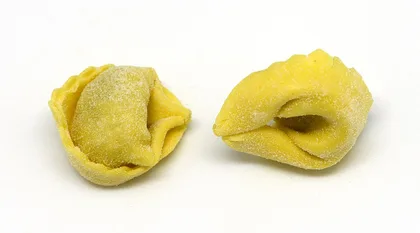 Pasta and breadTortelloniSeven-centimetre squares of egg pasta filled with ricotta and parsley, folded into a little hat.
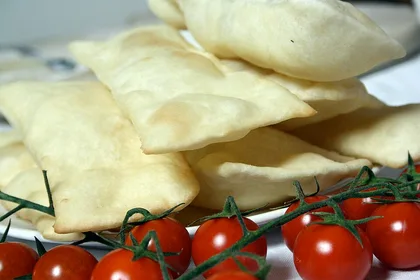 Pasta and breadGnocco FrittoEat it within a minute of the pan, because once it deflates it is over: a diamond of leavened dough fried in…