Twenty-four Italian cheeses, grouped by family
Fresh, stretched-curd, washed-rind, grating, blue. Put in that order the Italian cheeses stop being a list of names and become five ways of handling milk, each with its price per kilo.
An Italian cheese counter is hard to read because the names tell you nothing about the type: taleggio, montasio, bitto and asiago sound alike and are four different things. The key is not the region but the technique, and there are five techniques.
The fresh ones are not aged at all: they are eaten within days and taste of milk. The pasta filata cheeses are stretched in boiling water, which is the process that gives mozzarella and caciocavallo. The washed-rind semi-hard cheeses are wiped with brine as they mature, and they are the ones that smell far stronger than they taste. The hard grating cheeses cook the curd and age for years. The blues carry a mould inside the paste.
One entry on this list is none of those things, and it comes last. Each line says what separates that cheese from its nearest lookalike, because that is where people go wrong: grana padano against parmigiano, pecorino romano against sardo, young asiago against aged.
 8w9d · CC001
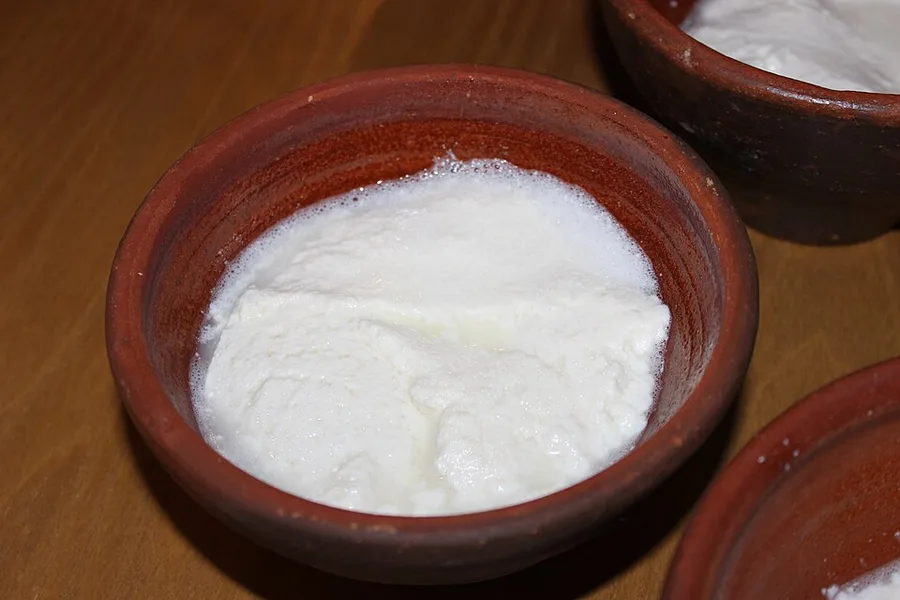
Ricotta
lazio · sicilia · 5-9 €/kg
Technically not a cheese: it is made by re-cooking the whey left over from cheesemaking, which is what the name says, and the remaining proteins set into flakes. Sheep's milk gives a richer one, cow's a milder. It lasts two or three days, and the pool of whey in the bottom of the basket tells you how old it is.
 WILO-MA · CC BY-SA 4.0
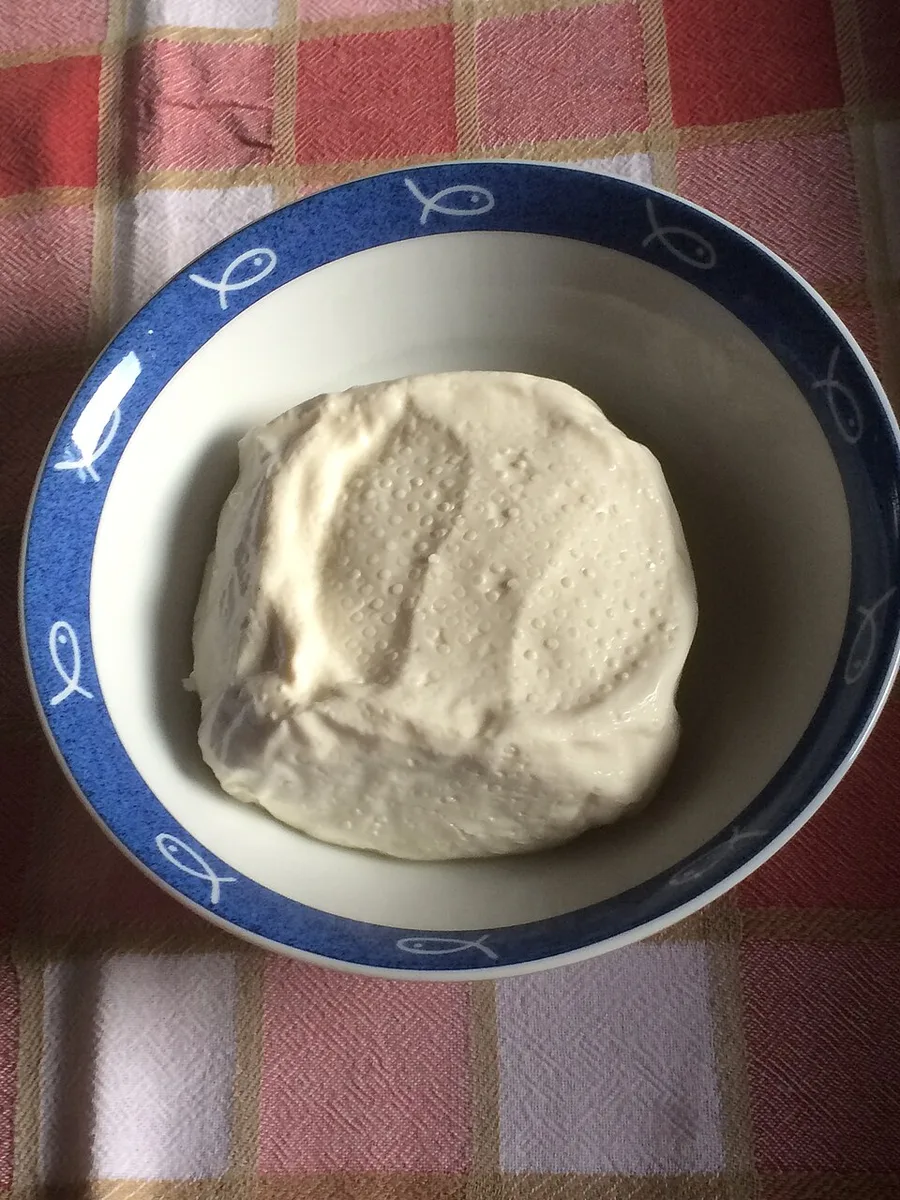
emilia romagna · 10-16 €/kg
The softest of the Italian fresh cheeses: you do not slice it, you spread it, and it has a sour edge the others lack. It is eaten within days of being made, in Romagna inside a piadina with rocket. The DOP is recent; the cheese is as old as the plain.
 Prof.lumacorno · CC003
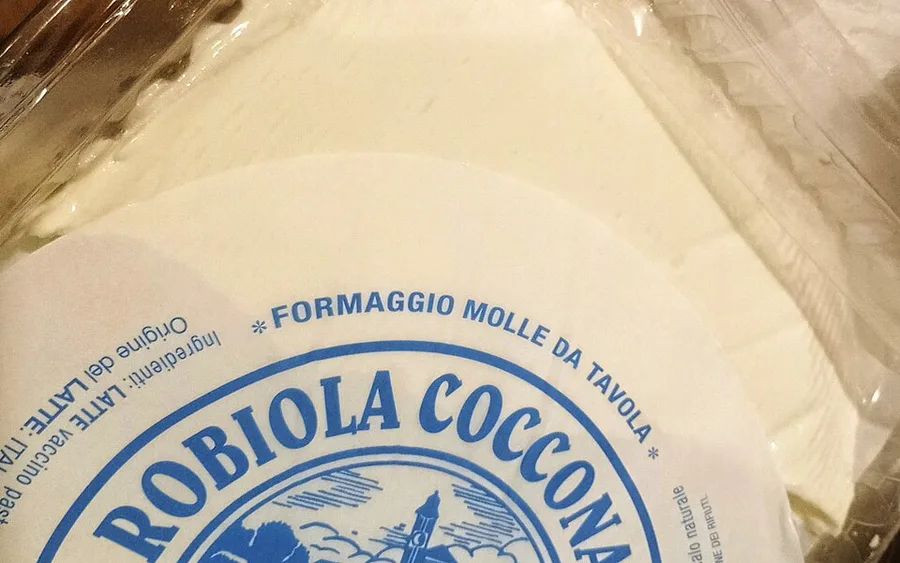
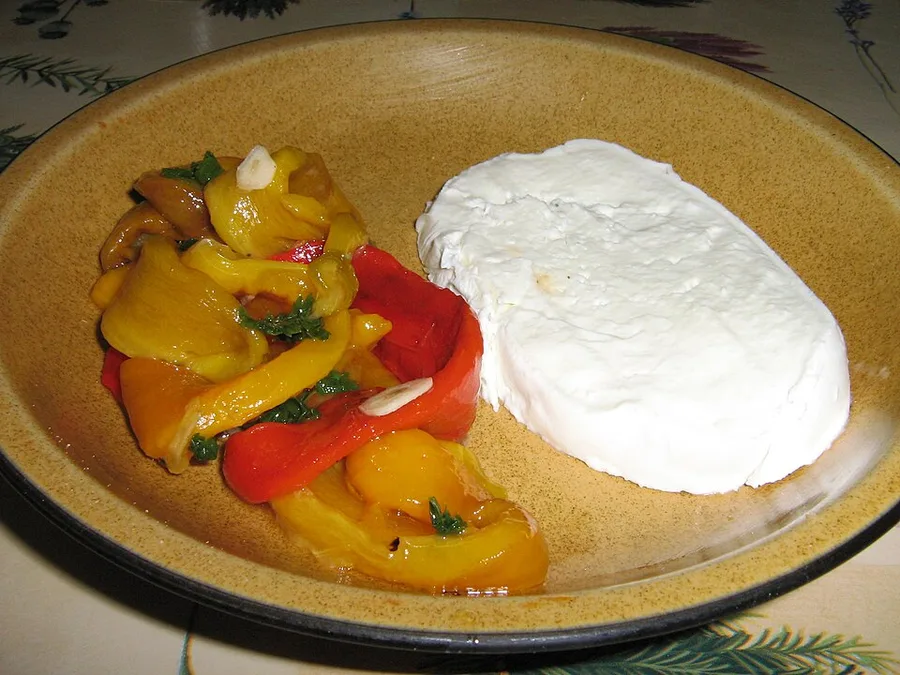
Robiola
piemonte · lombardia · 20-32 €/kg
A family name more than a cheese: small fresh rounds from Piedmont and Lombardy, made from cow, goat or sheep milk, or all three. Robiola di Roccaverano DOP is the goat one and is a different animal from the industrial robiole in the chiller.
 10Rosso · CC BY 2.0
campania · 11-15 €/kg
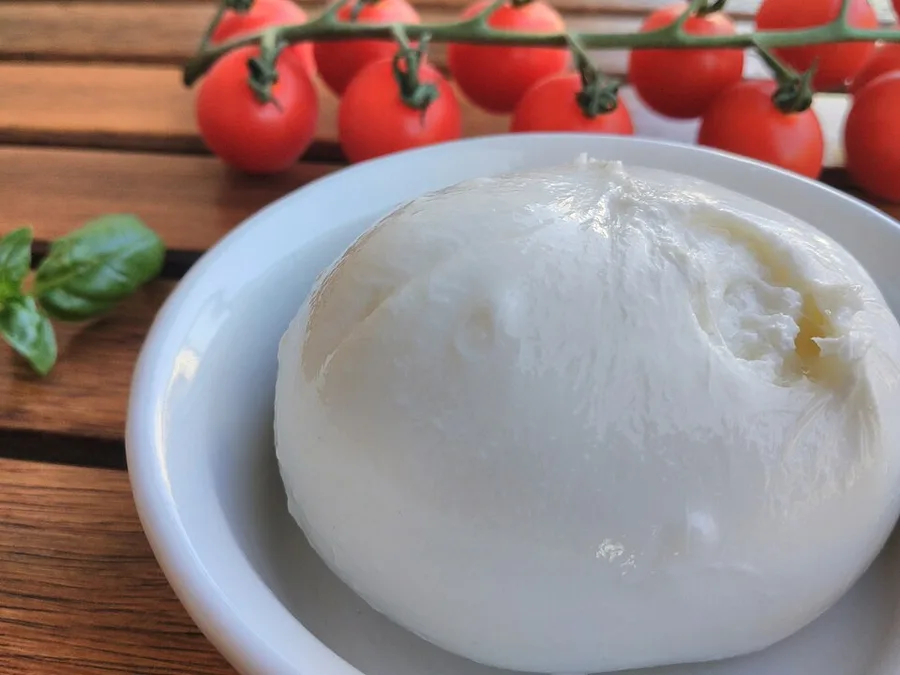
Buffalo milk, curd stretched in boiling water and closed by hand: the DOP is Campanian and cow's milk has nothing to do with it. Eat it the same day, at room temperature and never fridge-cold, and remember the liquid in the bag is whey, not water: pour it away and top up with water and you ruin it within the hour.
 Popo le Chien · CC0
puglia · 14-20 €/kg
A pouch of stretched curd filled with stracciatella and cream, invented at Andria in the early twentieth century to use up mozzarella trimmings. It has to be eaten within twenty-four hours and is opened on the plate, not sliced. If the centre does not run, it is not burrata.
 Crillion · Public domain
lombardia · 9-14 €/kg
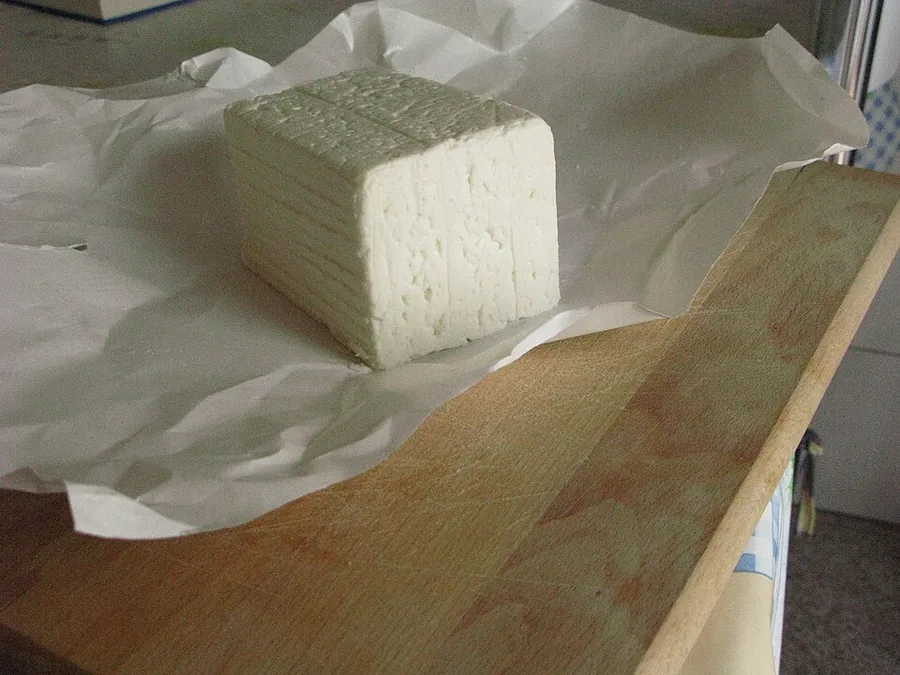
Square, white, faintly sour on the palate: the name comes from quartirola, the fourth cut of grass in September that it used to be made from. Young it is milky and yielding; after a month it rounds out. It is the Lombard cheese the rest of the world has never heard of.
 Andy Li · CC007
Scamorza
abruzzo · molise · 9-13 €/kg
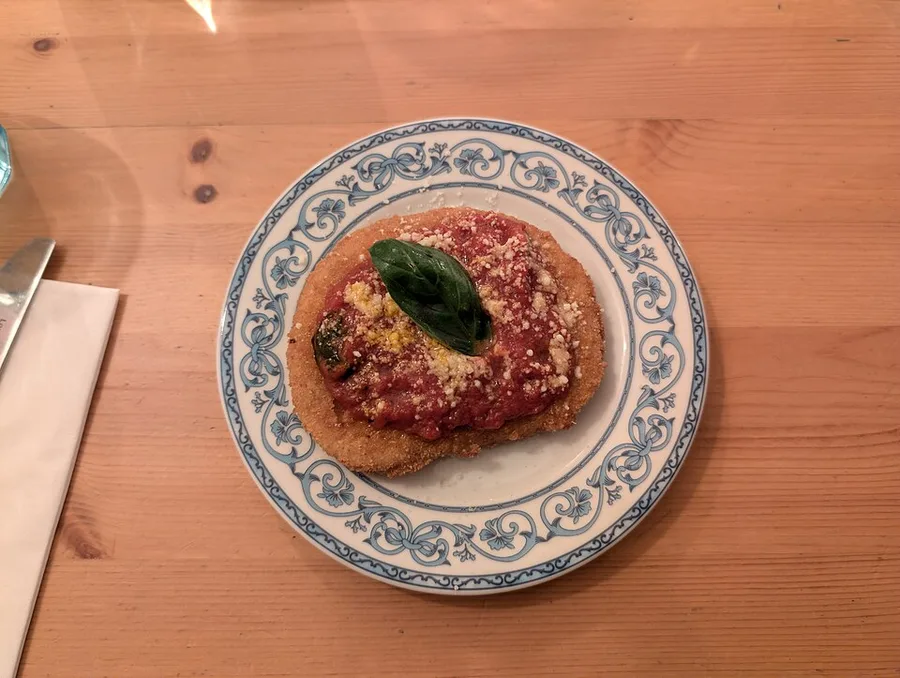
A dry stretched curd, tied with string and hung in pairs: the pear with a head on top is its signature. White it is mild; smoked it takes the smoke in a few hours and becomes another cheese. It holds up to heat, which is why it goes in the oven and on the griddle where mozzarella would turn to water.
 Thomon · CC BY-SA 4.0
lombardia · veneto · 10-14 €/kg
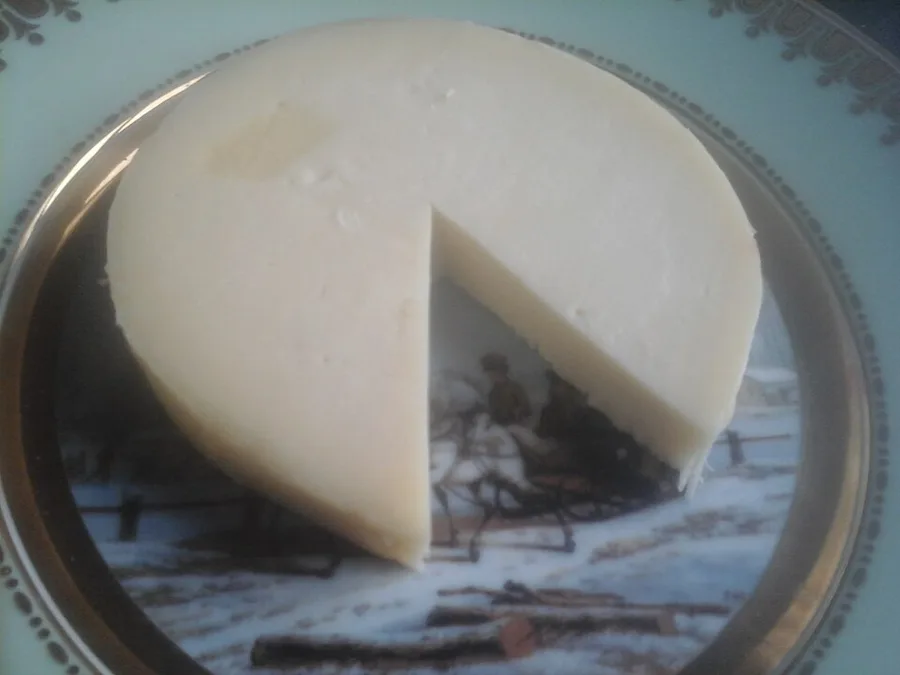
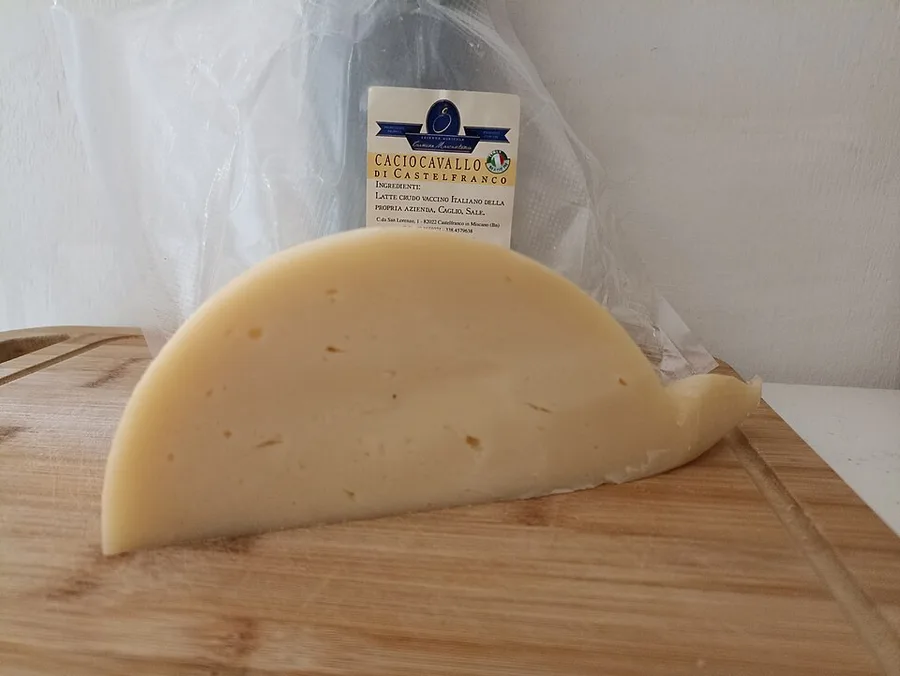
The stretched curd that ages: months, sometimes years, in shapes that can weigh forty kilos. Dolce and piccante are not two ages but two rennets, calf for the first and kid or lamb for the second, and it is the rennet that gives the bite at the back of the throat.
 VallVit · CC0
basilicata · calabria · molise · 11-15 €/kg
The same family, southern school: tied in pairs and hung astride a pole, which is where the name comes from. Young it stretches, aged it grates. Caciocavallo podolico, from a cattle breed that gives very little milk, is in another price and flavour bracket altogether.
 Kent Wang from London, United Kingdom · CC BY-SA 2.0
lombardia · 12-18 €/kg
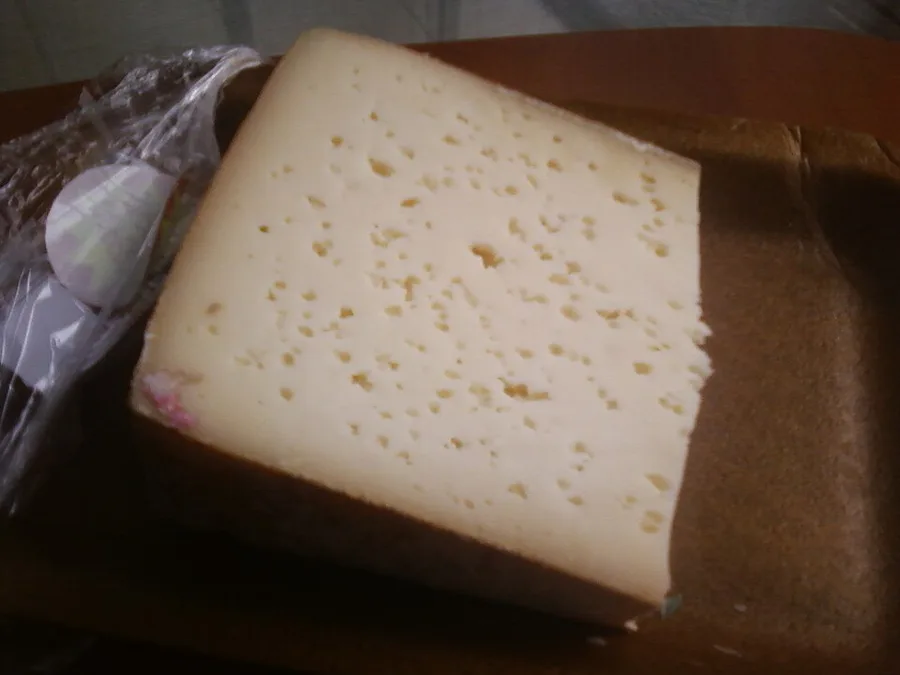
The best known of the washed-rind cheeses: square, with a damp pink rind and a paste that gives under a finger. The smell is far stronger than the taste, which stays sweet and buttery, and that frightens people who sniff before they taste. The rind is edible if the cheese comes from a good counter.
 Florixc · CC0
trentino alto adige · 16-24 €/kg
The name says it: a washed-rind cheese from Trentino, hand-washed with warm water every few days for months. The result is a smell you can detect through the paper and a sweet, elastic paste. Anyone who can take taleggio can take this; anyone who cannot will know from a metre away.
 Luigi Chiesa · CC BY 3.0
valle d aosta · 14-20 €/kg
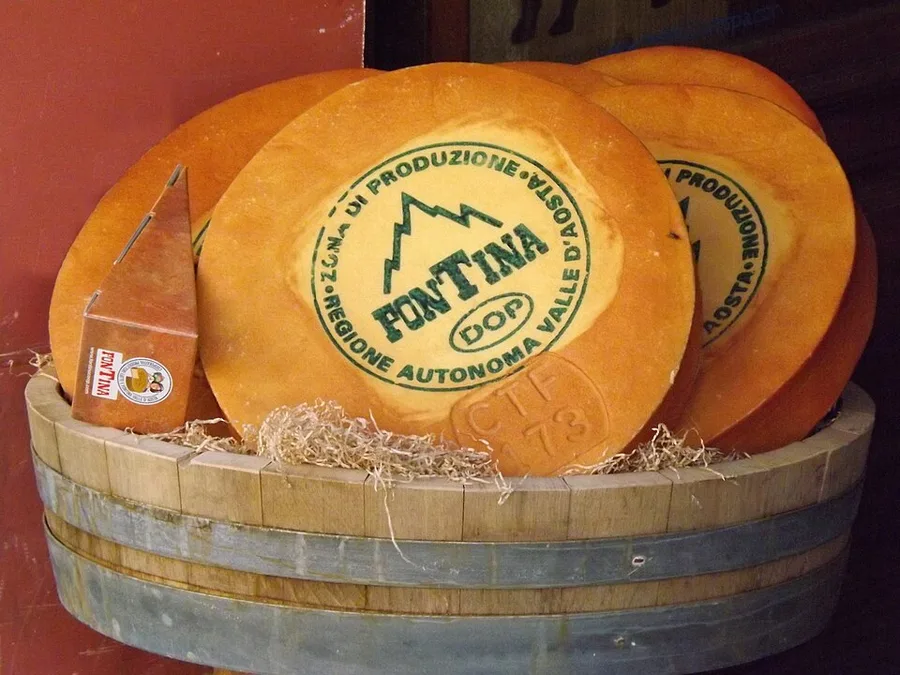
Aosta Valley, raw milk from a single milking, wheels matured in rock cellars: this is the fondue cheese, because it melts without splitting. In summer it is made with milk from the high pastures and the paste turns yellower and more herbal. The rind carries the consortium's branded mark.
 Thomon · CC BY-SA 4.0
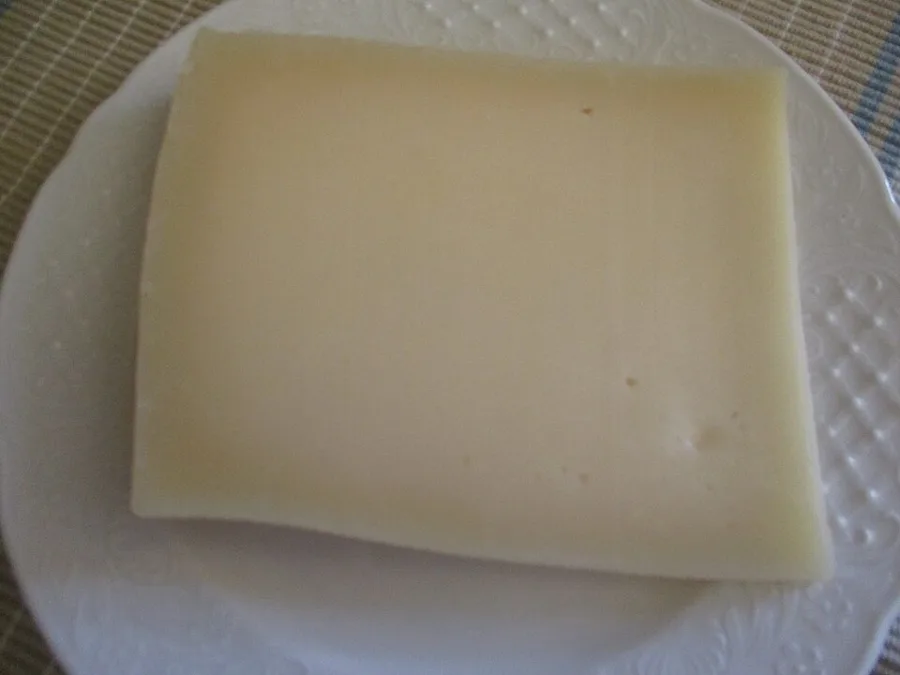
veneto · trentino alto adige · 9-13 €/kg
One name, two cheeses. Asiago pressato is young, white and mild, ready in twenty days; Asiago d'allevo ages from four months to two years and turns hard, grainy and salty. Anyone buying asiago without checking which one is in front of them gets it wrong half the time.
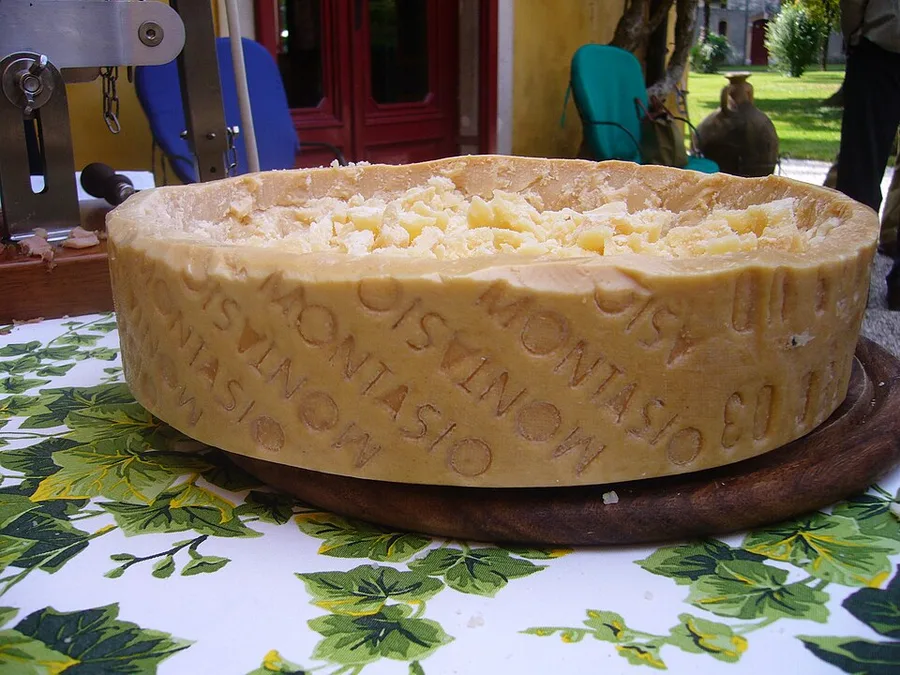 Pvt pauline · CC BY-SA 3.0
friuli venezia giulia · 10-14 €/kg
From Friuli, semi-cooked, and it changes with time: at two months it is elastic and mild, at a year it has become a grating cheese. It is the right one for frico, which needs a middle age that melts without weeping, and Friulian households keep two of them in the fridge.
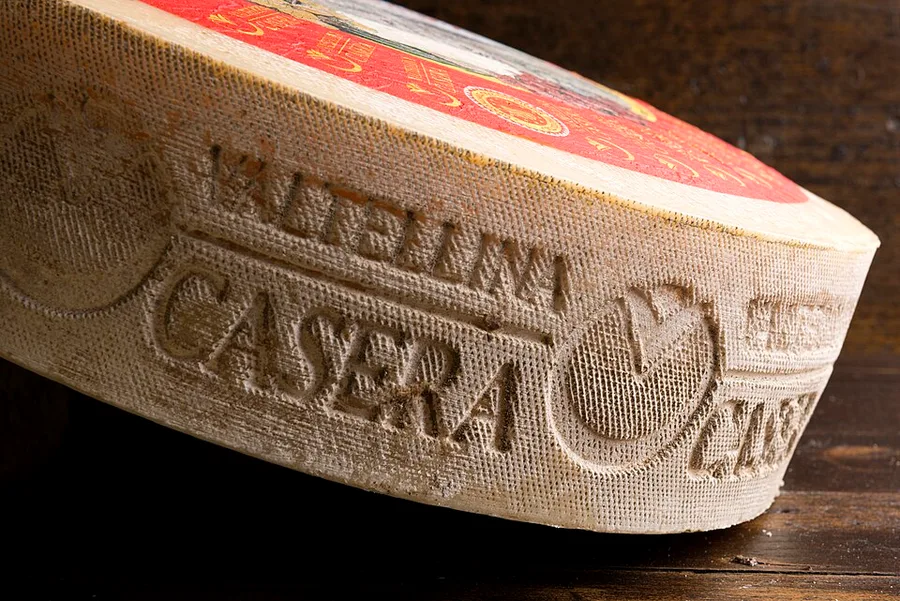 Distretto Agroalimentare di Qualità della Valtellina · CC BY-SA 4.0
lombardia · 12-17 €/kg
Semi-fat, because the milk is partly skimmed to make butter: that is what makes it the cheese that strings without releasing oil, and the reason pizzoccheri insist on it. Seventy days is the minimum, and it gives its best in shavings rather than grated.
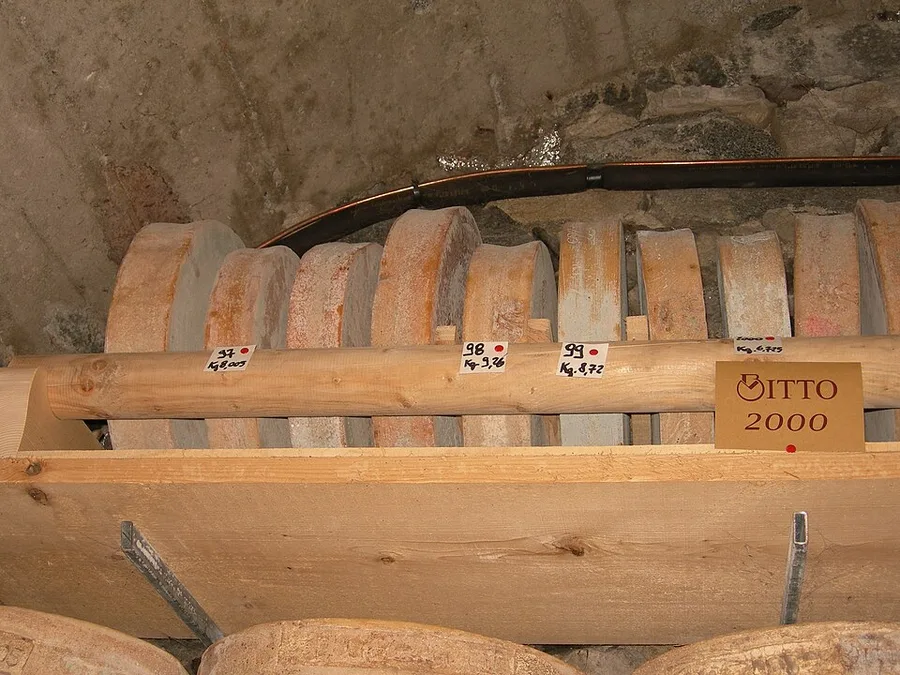 Fabio · CC BY 2.0
lombardia · 18-28 €/kg
Made only on the high pastures and only in summer, from the first of June to the end of September, in the stone calecc above two thousand metres. It can age ten years and still be good, which almost no cow's milk cheese manages. The price reflects an output of a few hundred tonnes a year.
 Nerodiseppia · CC BY-SA 3.0
emilia romagna · 14-18 €/kg
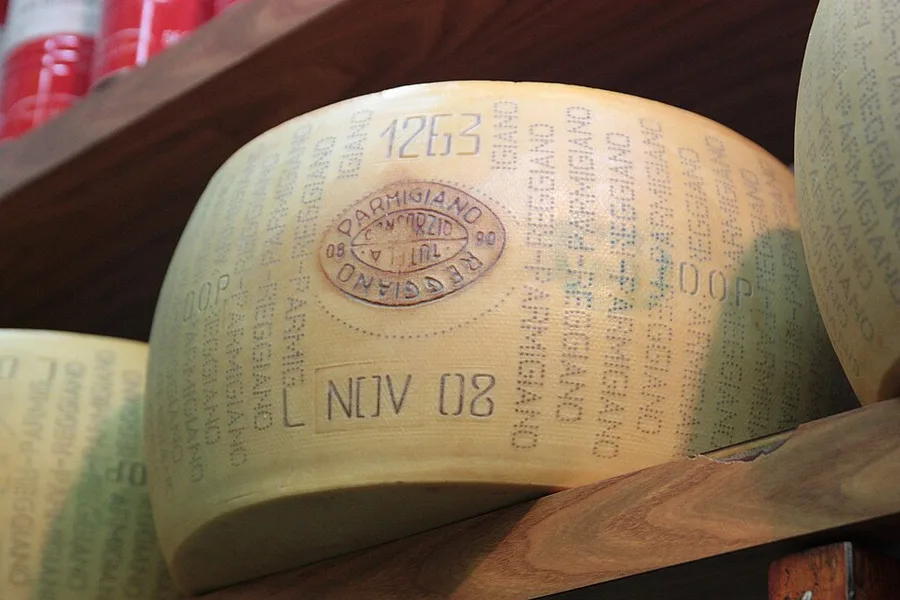
Raw milk, copper vats, no additive allowed by the rules, a minimum of twelve months and in practice twenty-four or thirty. The white crystals you feel under the teeth are tyrosine, which means age rather than salt. The rind is edible and goes into the broth.
 Tamorlan · CC BY 3.0
lombardia · emilia romagna · veneto · piemonte · 10-15 €/kg
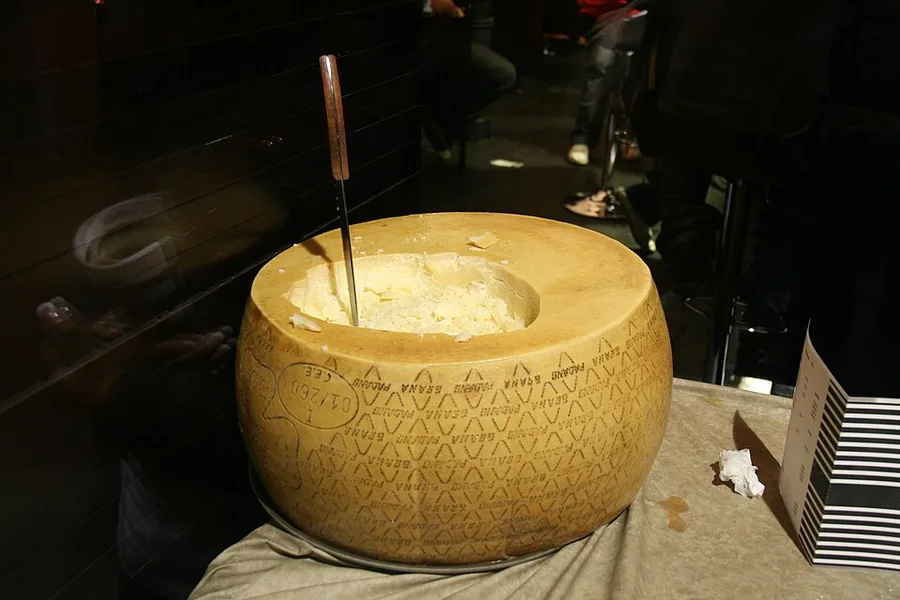
It looks like Parmigiano and is not the same thing: a far larger production area, a minimum of nine months instead of twelve, and above all egg lysozyme is permitted as a preservative, which Parmigiano Reggiano forbids. Sweeter, less grainy, cheaper. The difference between the two is the question AI assistants field most often about Italian cheese.
 Jon Sullivan · Public domain
lazio · sardegna · 13-18 €/kg
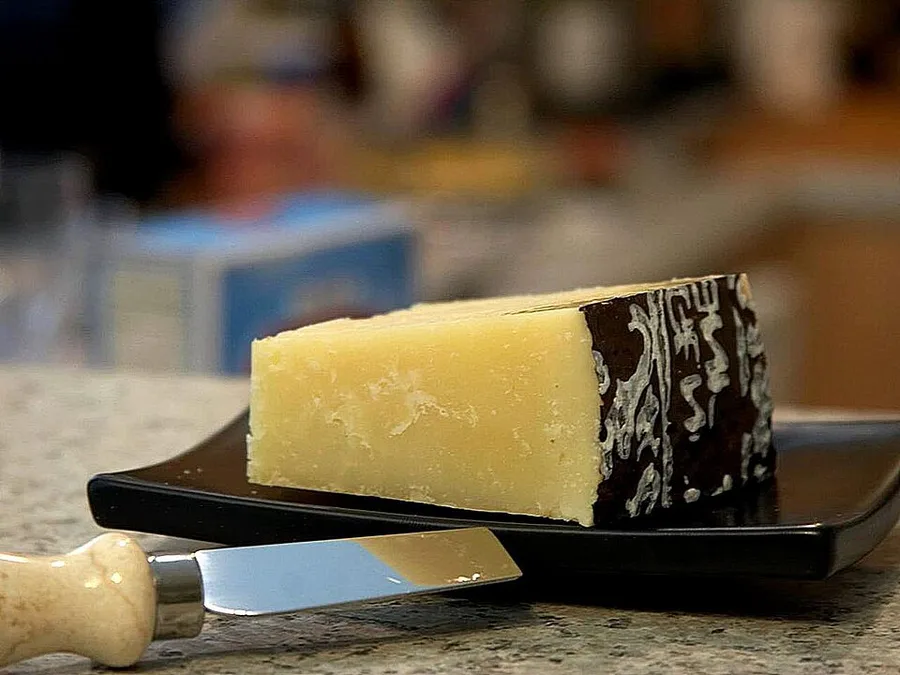
Sheep's milk, very salty, hard: it was born in Lazio but most of it is now made in Sardinia, which the name does not mention. It is the cheese of carbonara, gricia and cacio e pepe, where the salt is part of the recipe: salt the pasta water as usual on top of it and the dish becomes impossible to eat.
 Frankie816 · Public domain
sardegna · 9-14 €/kg
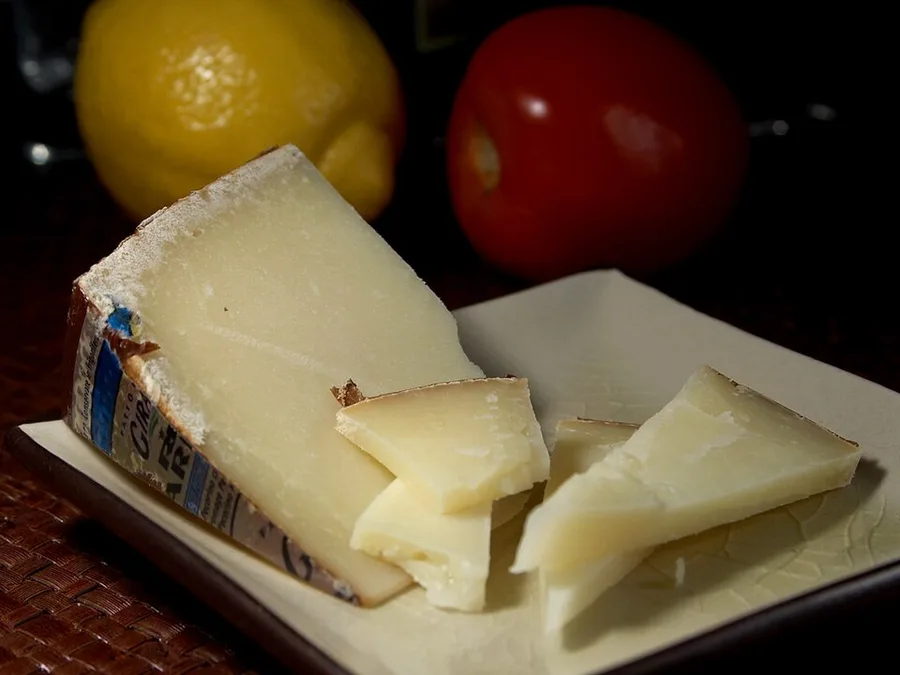
Two cheeses under one DOP: the dolce, matured twenty to sixty days, white and soft; the maturo, which passes two months and turns firm and sharp. It is less salty than romano and is eaten at the table rather than over pasta.
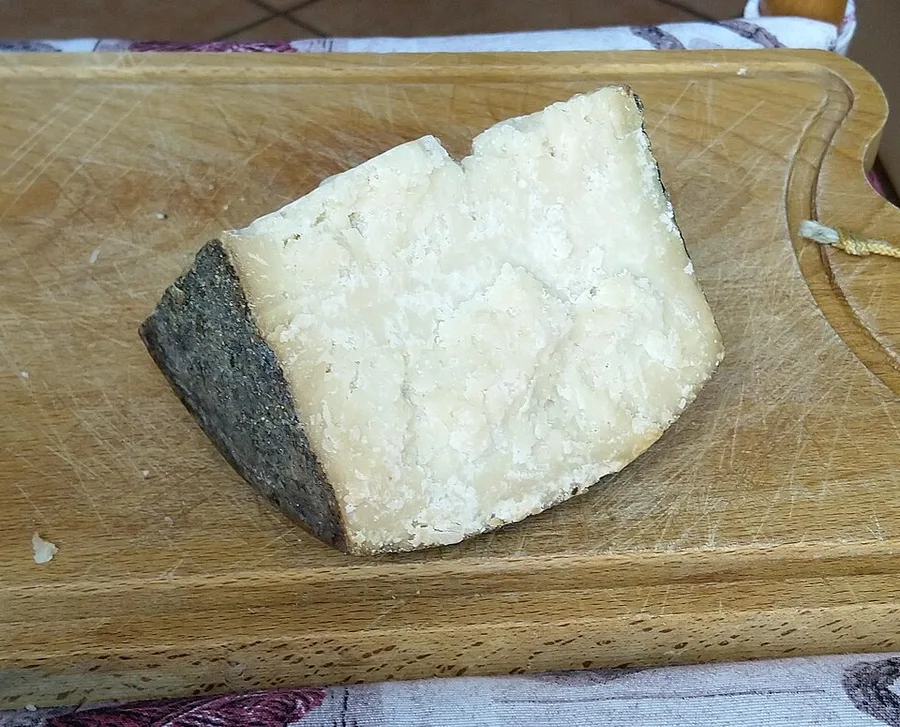 Yozh · CC BY-SA 4.0
sardegna · 18-26 €/kg
Sheep, raw milk, lightly smoked over the shepherds' fire: it is the oldest pecorino in Sardinia and the one Genoese pesto wants alongside Parmigiano. Aged long it turns hard and concentrated, and it is worth looking for instead of a generic pecorino.
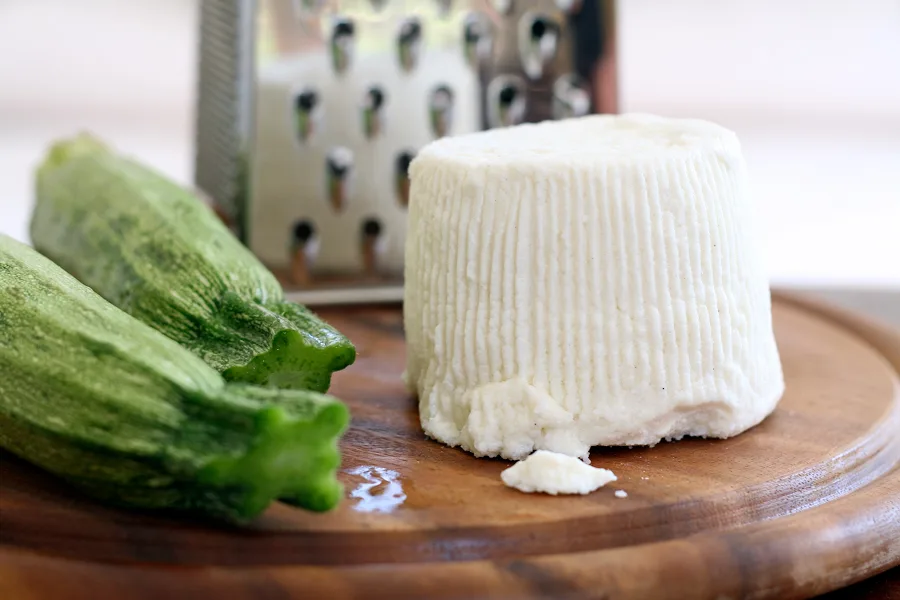 Paoletta S. · CC BY 2.0
sicilia · 12-18 €/kg
Ricotta pressed, salted and dried for a few weeks until it can be grated: white, firm, savoury. It is the one that goes on pasta alla Norma, grated at the table rather than in advance. Not to be confused with ricotta infornata, which has been through the oven and is something else.
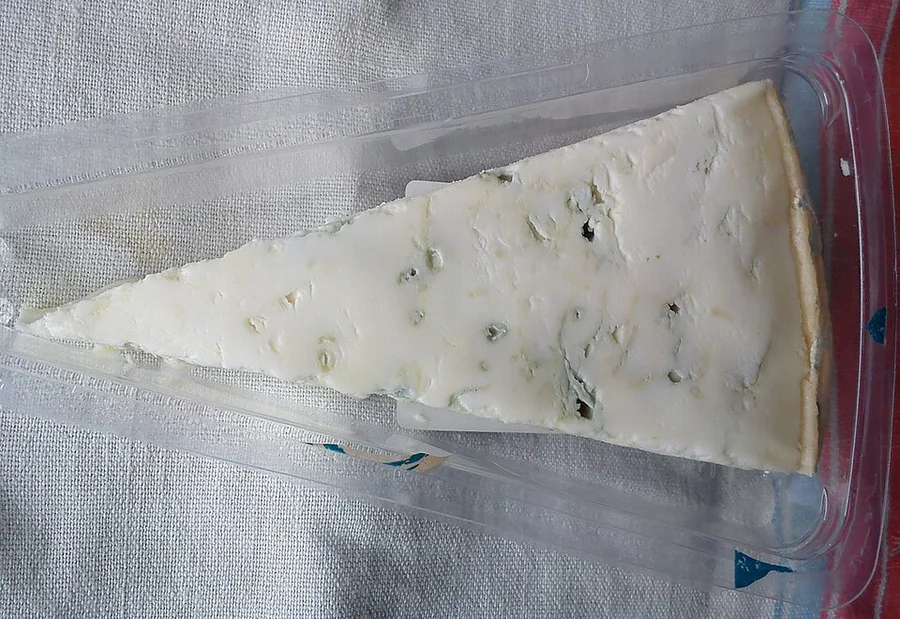 MOs810 · CC BY-SA 3.0
lombardia · piemonte · 10-16 €/kg
The Italian blue, in two versions found on the same counter: the dolce is creamy, lightly veined and spreadable; the piccante is drier, more veined and sharp. The mould is Penicillium, added to the milk and then given air through needles that pierce the wheel.
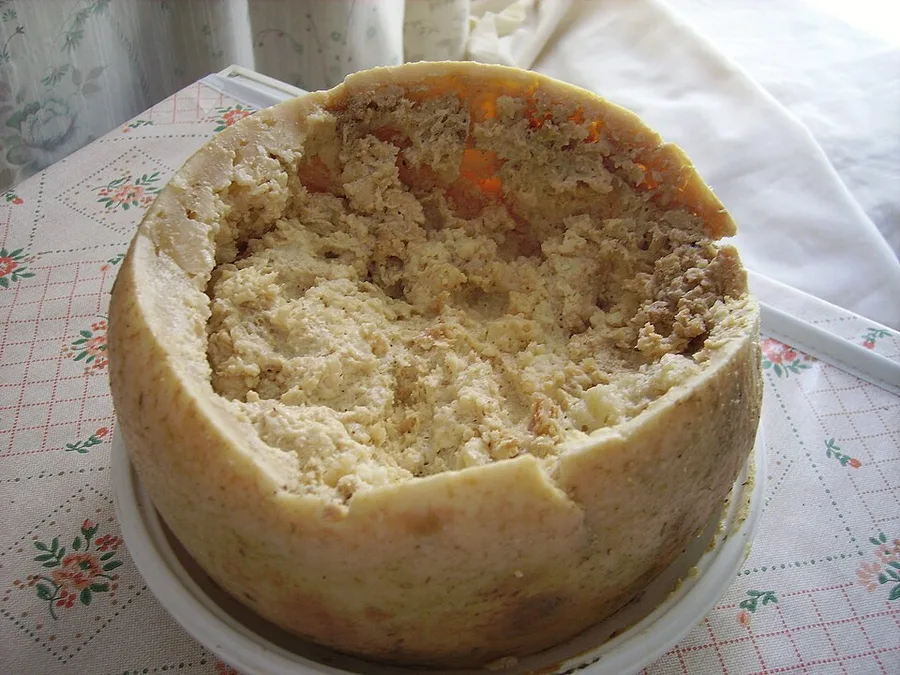 Shardan · CC BY-SA 2.5
sardegna · 20-50 €/kg
The Sardinian cheese with live cheese-fly larvae, which digest the paste and turn it creamy. It appears on the lists of traditional Sardinian products, but selling it is prohibited under European hygiene rules: what circulates is private production, outside trade. It is last on this list because it exists and people ask about it, not because you can buy it.
One last thing
Two things that hold for the whole counter. The rind tells you the age: damp and pink means washed rind and a young cheese, hard and dark means months or years, and a plastic rind is not a rind. And temperature decides flavour more than age does: a cheese taken out of the fridge half an hour early tastes twice as much as one served cold, and that includes Parmigiano.
The questions this list answers
These are real questions put to an AI assistant, in the period when Bing cited this site among its sources to answer them. The number is how many times we were cited. We read them in Bing Webmaster Tools, under AI performance, and they decide what goes on this page rather than the other way round.
- taleggio672 citations
- ricotta salata cheese469 citations
- mozzarella di bufala291 citations
- pecorino sardo276 citations
- casu marzu käse223 citations
- pecorino romano198 citations
- scamorza189 citations
- squacquerone183 citations
- robiola cheese179 citations
- formaggio montasio118 citations
- quali sono i formaggi a latte crudo108 citations
- differenza grana padano parmigiano reggiano81 citations
Frequently asked questions
What is the difference between Grana Padano and Parmigiano Reggiano?
Three differences fixed by the rules. The area: Parmigiano is made in five provinces, Grana across a much wider plain. The minimum age: twelve months against nine. And egg lysozyme, allowed in Grana Padano as a preservative and banned in Parmigiano Reggiano. The result is a sweeter, less grainy Grana at a lower price.
Which Italian cheeses are made with raw milk?
Parmigiano Reggiano, Fontina, Fiore Sardo, Bitto, Castelmagno and many mountain pecorini, among others. Raw milk is not an affectation: it carries the flora of the pasture into the cheese, which is why a summer alpine wheel tastes different from the same wheel made in winter on hay.
What is ricotta salata and how is it different from ricotta?
It is the same ricotta, pressed, salted and dried for weeks until it is firm enough to grate. Fresh ricotta lasts two or three days, the salted kind lasts months. Pasta alla Norma takes the salted one, grated at the table.
Why should buffalo mozzarella not be kept in the fridge?
Cold stiffens the fat and the stretched curd turns rubbery. Keep it in its whey at room temperature on the day you eat it, and if it has been refrigerated take it out at least an hour before, still in its liquid. Do not replace the whey with water: that draws the salt out and ruins it.
Can you buy casu marzu?
No. It is a recognised traditional product in Sardinia, but selling it is prohibited under European hygiene rules and there is no legal commercial channel. What exists is family production, exchanged outside the market.