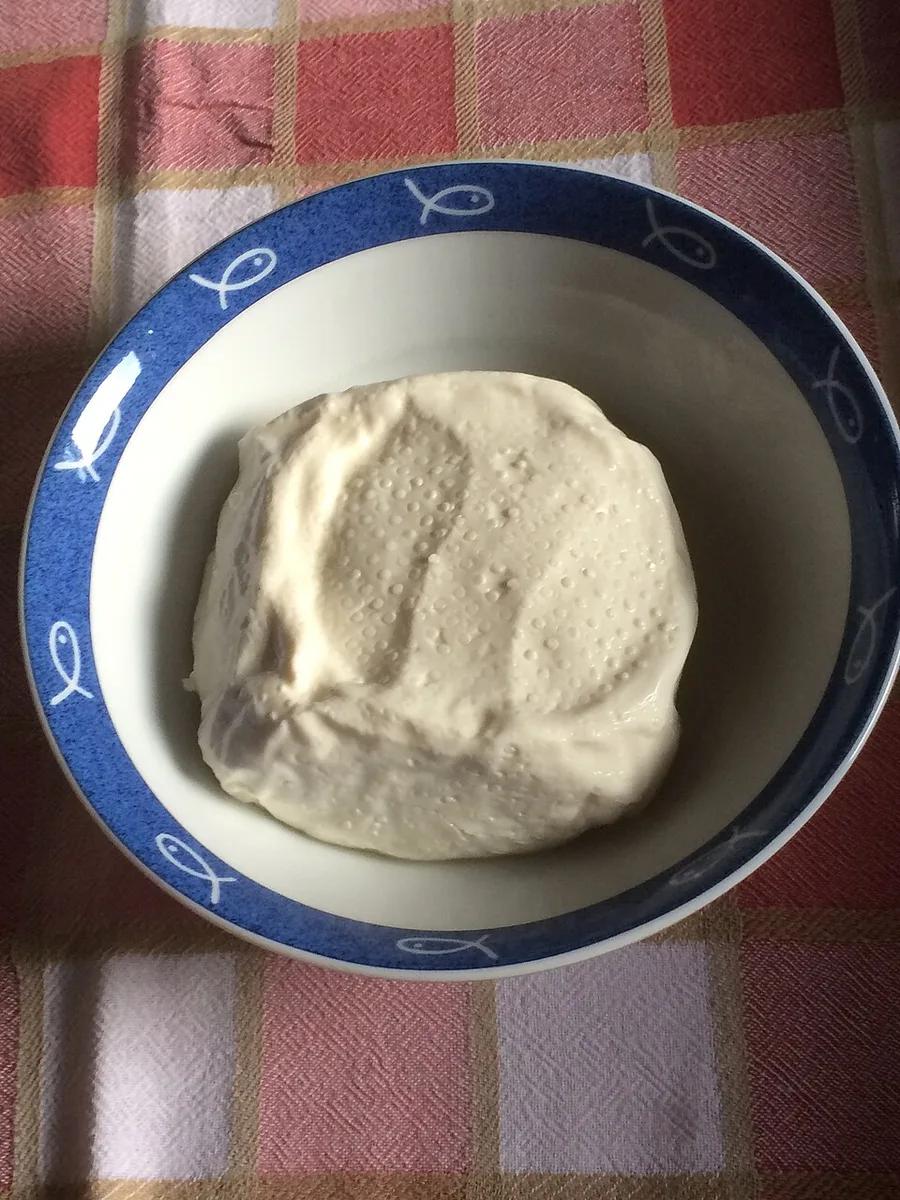
What is Squacquerone di Romagna?
Squacquerone is a rindless, unripened soft cheese made from whole cow's milk across Romagna: the provinces of Ravenna, Forlì-Cesena, Rimini and Bologna, plus part of Ferrara. It is pearly white, glossy, spoonable, sweet with a distinct lactic tang and a faint bitter edge on the finish.
The name is dialect. Squaquaròn comes from squacquerare, meaning to lose consistency, to spread, a literal description of a cheese that will not stand up. Pieces run from 100 grams to two kilos and have no shape of their own.
It was granted DOP status in 2012, one of very few genuinely fresh Italian cheeses to receive European protection. The specification sets the zone, the permitted cow breeds (Italian Friesian, Brown Alpine, Romagnola) and requires a substantial share of the herd's feed to come from the area.
Technically it is defined by absence. The curd is never cooked, never pressed, never given a rind and never given time: ripening is one to four days. It is a cheese that lives for three days and has to be perfect for all three.
What does it taste like?
Fresh milk and yoghurt, with a clean sour-cream tang that arrives early and a sweetness underneath it. There is a mild, almost almond-like bitterness right at the end that distinguishes it from every other fresh Italian cheese, and it should be gentle rather than sharp.
The texture is the point. It is looser than cream cheese, looser than crescenza, closer to a very thick crème fraîche or a drained yoghurt: it slumps rather than spreads, and it clings to hot flatbread instead of sitting on top of it. There is no rind, no skin and no elasticity at all.
Salt is low. Fat is moderate. Eaten cold from the fridge it is muted and slightly chalky; at room temperature it becomes creamy and aromatic, which is why every piadina kiosk in Romagna keeps it just cool rather than cold.
How to use it
Piadina, first and always. Warm the flatbread on a dry pan or griddle, spread it generously with squacquerone, more than feels sensible, because the bread is dry and the cheese is what makes it work, and pile on rocket. Add prosciutto crudo for the version sold on every Adriatic beach. In a crescione, also called a cassone, the flatbread is folded into a half moon around the filling and cooked with it inside.
Beyond the piadina, spoon it onto toasted bread with fresh or caramelised figs and honey, drop it onto a pizza the moment it comes out of the oven, or serve it with bitter greens like chicory and radicchio.
It makes an instant pasta sauce: off the heat, slacken it with a little pasta water and toss with tagliatelle or strozzapreti, then add walnuts, speck or roast squash. Above roughly 60C it splits and turns grainy, so never boil it and never grill it on its own.
Take it out of the fridge twenty minutes before eating. Cold, it is chalky and says almost nothing.
How long it keeps
Fridge, between 2 and 4°C (36 to 39°F), in its own tub or a sealed container, and used within three or four days of opening. The use-by date on the pack is deliberately short and is the reference: this is not a cheese built to be kept.
Bought loose from a counter, hold it in an airtight container with its own whey, which limits the surface in contact with air. Keep it away from cured meats and aged cheeses, because it takes on surrounding smells remarkably fast. What happens across those days is easy to watch: whey separates into a yellowish layer, the surface loses its gloss, the edges tighten, and the lactic note sharpens.
Freezing is not an option. It thaws into a watery part and a grainy part and will not come back together. It is not a cheese that is aged, and it is not kept under oil. Take it out twenty or thirty minutes before serving: cold it is dense and mute, at room temperature it slackens and turns creamy.
Spot the real thing
It should be pearly white and glossy, with no rind and no skin over it. A thin film of whey on the surface is normal; a separated yellowish pool means the tub has been sitting. On a spoon it is creamy and spreads slowly of its own accord. If it stands up on the plate the way crescenza does, it is not squacquerone.
The label should read Squacquerone di Romagna DOP and carry the consortium logo, next to a production date and a use-by date only a few days apart. A use-by twenty or thirty days out belongs to a different cheese. The nose is lactic, fresh and faintly acidic, with yogurt and cream behind it.
Watch for squacquerone written without the DOP, increasingly common in supermarkets: it names a style, not a specification, and often covers a generic fresh cheese made anywhere. On a counter abroad the neighbours are stracchino and crescenza, both firmer and sliceable, and cream cheese, which is thicker, sweeter and set with gums.
How to pronounce Squacquerone di Romagna
skwah-kweh-ROH-neh
Four syllables, stress on the third. 'Squ' is 'skw' as in 'squash'; 'cque' is 'kweh', a single hard k followed by a w-glide; the final 'e' is pronounced, never silent. Romagnoli themselves shorten it to 'squaquaròn' in dialect, which is where the name came from.
Squacquerone di Romagna compared
vsStracchino and Crescenza
The three are constantly treated as synonyms and are not. Stracchino is a Lombard family name for soft fresh cheeses, said to come from stracche, the tired cows coming down from summer pasture. Crescenza is the best-known member of that family: firmer, butterier, sweeter, and it holds a block shape. Squacquerone is Romagnolo, far wetter and tangier, ripens in one to four days rather than ten to fifteen, and collapses. Only Squacquerone di Romagna carries a DOP.
| This | Stracchino and Crescenza | |
|---|---|---|
| Region | Romagna and Bologna | Lombardy, now made nationwide |
| Protection | DOP since 2012 | None, they are generic names |
| Ripening | 1 to 4 days | About 10 to 15 days |
| Texture | Slumps, spoonable, will not hold shape | Holds a block, sliceable at the edges |
| Acidity | Marked lactic tang | Mild, sweeter, more buttery |
| Moisture | Very high | High but lower |
| Classic use | Piadina with rocket | Focaccia filling, pizza topping, on bread |
| Shelf life once bought | 3-4 days | 1-2 weeks |
vsCream cheese
The substitution most non-Italians reach for, and it changes the dish. Cream cheese is stabilised, much fattier, denser and sweeter-tasting, and it holds its shape under a knife. Squacquerone has no gums or stabilisers, more water, more acidity and no structure. In a piadina, cream cheese sits as a layer; squacquerone soaks in.
| This | Cream cheese | |
|---|---|---|
| Ingredients | Milk, culture, calf rennet, salt | Milk, cream, culture, usually stabilising gums |
| Fat | Moderate | High |
| Texture | Loose, spoonable, slumping | Dense, sliceable, holds shape |
| Flavour | Lactic tang, sweet, faintly bitter finish | Rich, mild, slightly sweet |
| Behaviour on hot bread | Melts into it | Softens but stays a layer |
| Shelf life | Days | Weeks |
vsRobiola
Another Italian fresh cheese frequently offered as an equivalent. Robiola is a broad category from Piedmont and Lombardy, sometimes cow, sometimes a cow-goat-sheep blend, and generally firmer, more structured and often with a thin bloomy or washed surface after a week or two. Squacquerone never develops any surface at all.
| This | Robiola | |
|---|---|---|
| Milk | Cow only | Cow, goat, sheep or a blend |
| Surface | None: no rind, no skin | Often a thin bloomy or washed rind |
| Ripening | 1 to 4 days | Days to several weeks |
| Texture | Spoonable and loose | Firmer, sometimes sliceable |
| Flavour | Lactic, sweet, mildly bitter finish | Wider range: milky to markedly tangy or barnyard |
| Protection | DOP | Two DOPs exist for specific robiole, most are generic |
Squacquerone di Romagna substitutes
- Stracchino or Crescenza
The closest thing on most shelves and the right first choice. It is firmer and less acidic, so loosen it with a spoonful of whole milk or plain yoghurt per 200 g before filling a piadina. BelGioioso makes a widely distributed Crescenza-Stracchino in Wisconsin; Italian delis in the UK carry imported crescenza.
1:1, loosened with milk - Fresh ricotta whipped with crème fraîche
A good improvised version: whip 150 g fresh whole-milk ricotta with 50 g crème fraîche and a pinch of salt until smooth. You get the tang and the slump, and it holds up in a hot flatbread.
3 parts ricotta to 1 part crème fraîche - Full-fat quark or fromage frais
Widely sold in the UK and Germany and closer in acidity than cream cheese. It is leaner, so stir in a tablespoon of double cream per 200 g to restore the richness.
1:1, plus a little cream - Labneh, lightly thinned
Not Italian, but structurally very close: strained yoghurt has the same loose body and lactic tang. Thin it with a little milk and use less salt elsewhere, since labneh is usually saltier.
1:1 - Cream cheese, only with adjustment
The default swap abroad and the least faithful. Beat 200 g with 2 tablespoons of plain yoghurt and 1 tablespoon of milk to bring down the density and add acidity. Even then it will layer rather than soak in.
1:1 after loosening - Vegetarian: microbial-rennet fresh cheeses
Squacquerone di Romagna DOP is never vegetarian: the specification calls for calf rennet. Many fresh Italian-style cheeses sold in the UK and US are made with microbial rennet and say so on the label; quark and most cream cheeses are vegetarian by default. Check the ingredients rather than assuming.
1:1
Where to buy it
This is a hard cheese to buy outside Italy, for a structural reason rather than a commercial one: its legal ripening period is one to four days, and a shelf life measured in days does not survive transatlantic logistics. In the US, occasional air-freighted DOP wheels appear at Eataly and a few specialist importers at $18 to $26 per pound; otherwise, look for domestically made fresh stracchino-crescenza, which several Italian-American creameries produce well.
In the UK, Italian delicatessens and a small number of online importers list it seasonally at roughly £18 to £28 per kilo. London producers of fresh Italian-style cheeses make credible versions weekly, and a fresh local crescenza will always beat an old imported squacquerone.
Wherever you buy, look at the production date rather than the expiry date, and check the label for the words Squacquerone di Romagna DOP and the Consorzio logo. A best-before date three or four weeks away means it is a different cheese wearing the name.
Where to eat it in Italy
The piadina kiosks of Romagna are the obvious answer and genuinely the best one. On the coast: Rimini, Cesenatico, Cervia, Ravenna. Inland: Cesena, Forlì, Faenza. The bread is cooked to order on a flat testo, and you can watch the cheese being spread.
Brisighella and the hills above Faenza have small dairies that sell directly, and agriturismi that serve squacquerone with piadina made in the house, a noticeably different thing from the kiosk version, thicker and more rustic.
Cervia and several riviera towns hold piadina festivals through the summer. In Bologna, the delicatessens of the Quadrilatero sell it by the spoonful, often served with figs and mortadella.
One practical tip: ask what day it was made. In Romagna this is a completely normal question and nobody takes offence.
Recipes with it
Further reading
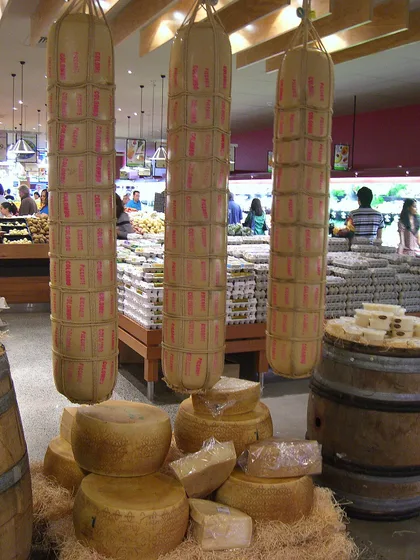 ExplainerWhich Italian cheeses contain no lactoseItaly sets a legal threshold, and long-aged cheeses clear it on their own, with no treatment involved.
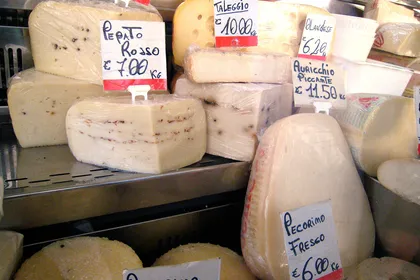 GuideHow long food keeps once openedThe date on the label describes the sealed package. After that, four things govern everything: water, salt…
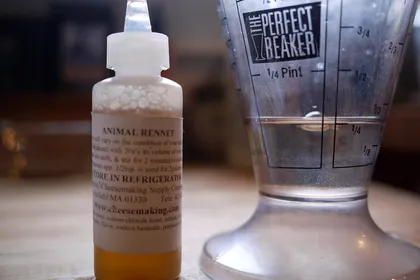 InvestigationWhich Italian cheeses are vegetarianWe counted what rennet the 43 cheeses in our atlas declare: 35 out of 43 say animal, none say otherwise.
Frequently asked questions
Is squacquerone the same as stracchino or crescenza?
No. Stracchino is a Lombard family of fresh soft cheeses and crescenza is its best-known member: firmer, sweeter, and it holds a block shape for a week or two. Squacquerone is from Romagna, much wetter and tangier, ripens in one to four days and will not hold any shape. Only squacquerone has DOP protection.
How long does it keep?
Three or four days from purchase, refrigerated at 2-4C. Its legal ripening window is one to four days, and after that the acidity climbs and the paste separates. It cannot be frozen: it thaws grainy and watery.
Is squacquerone vegetarian?
No. The DOP specification requires calf rennet. Several non-DOP fresh Italian-style cheeses in the UK and US are made with microbial rennet and state it on the label; quark and most cream cheeses are vegetarian.
Can you cook with it?
Not on its own over heat. Above about 60C it splits and goes grainy. Use it off the heat as an instant pasta cream, or spoon it onto pizza and hot toast after cooking.
How do you pronounce squacquerone?
skwah-kweh-ROH-neh, with the stress on the third syllable and the final 'e' clearly pronounced.
Sources
Where to check what you just read.
- 1
Il regolamento del 24 luglio 2012 che registra «Squacquerone di Romagna» come DOP nella classe dei formaggi.
- 2
I numeri che definiscono la cremosità: grasso sulla sostanza secca fra 46 e 59%, umidità fra 58 e 69%, pH fra 4,75 e 5,35, e le province della zona.
- 3Consortium · interested partyAssociazione Squacquerone di Romagna DOP
L'elenco nominativo dei caseifici autorizzati a produrre la DOP: sono pochissimi, ed è il modo più rapido per capire se quello che avete in mano lo è davvero.
Related foods
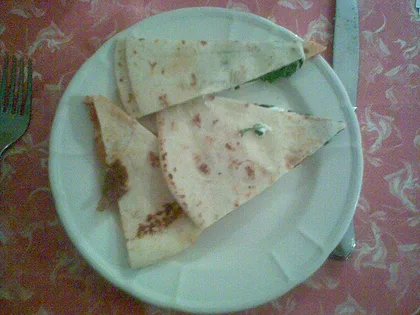 Pasta and breadPiadina RomagnolaNo yeast and no waiting: flour, water, salt and lard, rolled thin and cooked dry on a hot plate for two…
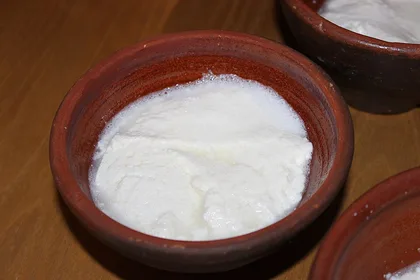 CheeseRicottaRicotta is not a cheese. It is a dairy product made from whey, the liquid left over after cheese has been…
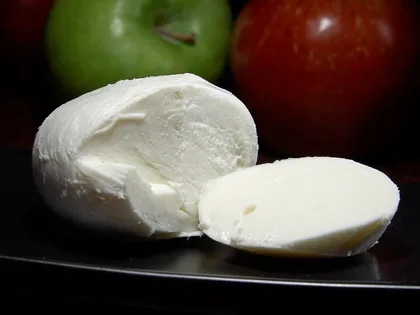 CheeseMozzarellaThe name is a verb before it is a cheese: mozzare means to lop off, which is what the cheesemaker does by…
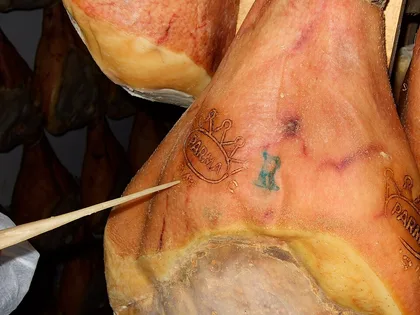 Cured meatsProsciutto di ParmaProsciutto di Parma DOP is Italian ham made from three things only: pork, sea salt and at least 400 days.
 CheeseGrana PadanoNine months is the floor the specification sets before a wheel may carry the name.
 CheeseParmigiano ReggianoThree ingredients and no additives of any kind are permitted: raw cow's milk, salt and calf rennet, from five…
 Cured meatsMortadellaThe white cubes are not just any fat: they are jowl, the firmest part of the pig, and they stay whole…Cured meatsPancettaPancetta is Italian cured pork belly: salt, pepper and warm spices, dried for months, never smoked.