Italian cured meats: twenty of them, told apart
Pancetta, guanciale, lonzino, coppa, capocollo: different names for different pieces of the same animal. Here they are lined up by cut and by process, from raw ham to boiled trotter, with what each one costs per kilo.
Almost every Italian salume makes sense once you answer two questions in the right order: which part of the animal is it, and what was done to it. Everything else, which is to say the names, changes from one province to the next and confuses people who live here: coppa and capocollo are the same muscle under two names, Calabrian soppressata and Veneto soppressa are two different things under nearly the same name, and lonzino resembles a ham only because it too is a whole muscle.
The first question is the cut. The hind leg gives the raw hams and, from the heart of it, culatello. The loin gives lonzino. The neck gives coppa and capocollo. The cheek gives guanciale, the belly pancetta, the back fat lardo. The trimmings, minced, give the salami. Two entries on this list are not pork at all: bresaola is beef.
The second question is the process, and it splits three ways. Raw cured, salted and air-dried for months or years. Cased, where the meat is minced and packed into a gut. And cooked, which in Italy is a family of its own: mortadella, zampone, porchetta. This list follows that order, and every entry names the thing that separates it from the one above.
 Scott Brenner · CC BY 2.0
emilia romagna · 26-34 €/kg
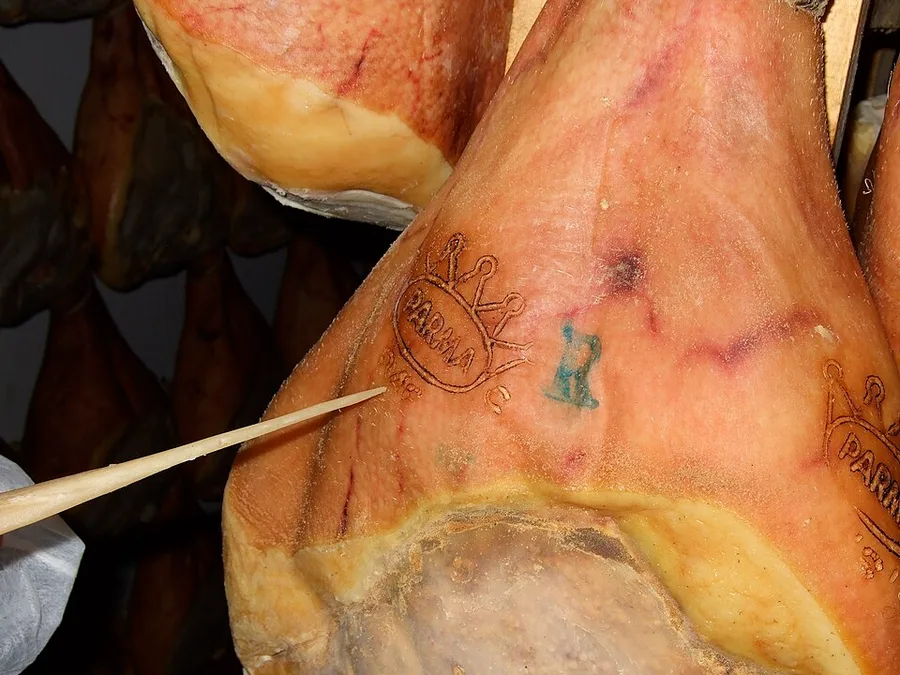
The hind leg, salt and air, and nothing else: the rules forbid preservatives, so a Parma ham contains meat and sea salt. Twelve months is the floor; the ones worth the money have twenty or thirty. The five-pointed ducal crown is fire-branded into the rind, and without it the ham is not Parma.
 Naturpuur · CC BY-SA 4.0
friuli venezia giulia · 22-30 €/kg
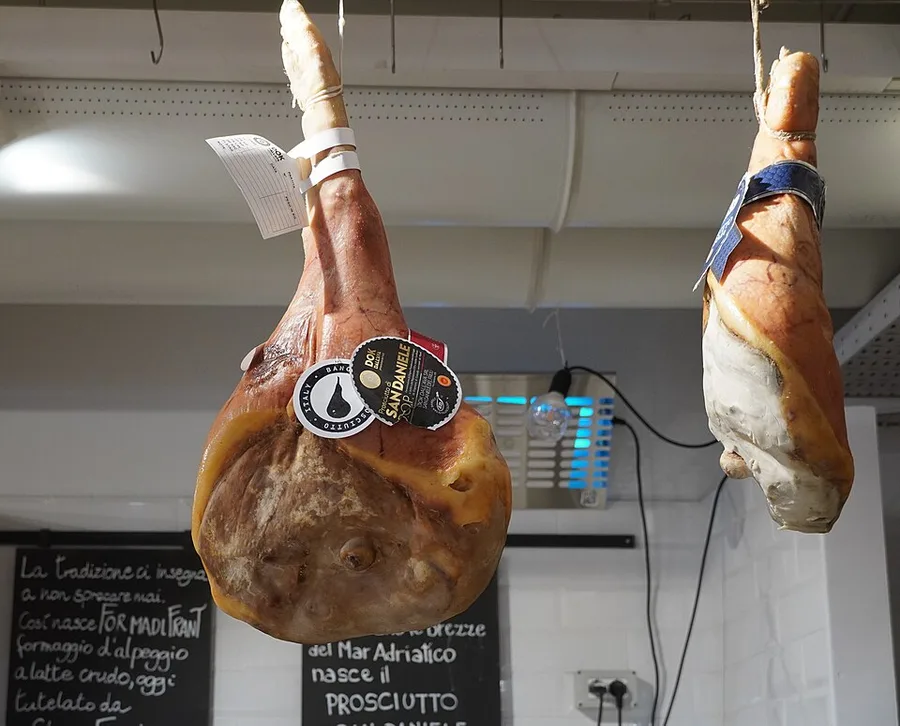
The same raw material as Parma, a different climate and a visible signature: the trotter stays on and the leg is pressed, so the ham is flat like a guitar. The air coming down from the Carnic Alps meets the Adriatic air and the result is sweeter. Thirteen months minimum.
 Francesco P · CC BY-SA 2.0
emilia romagna · 60-90 €/kg
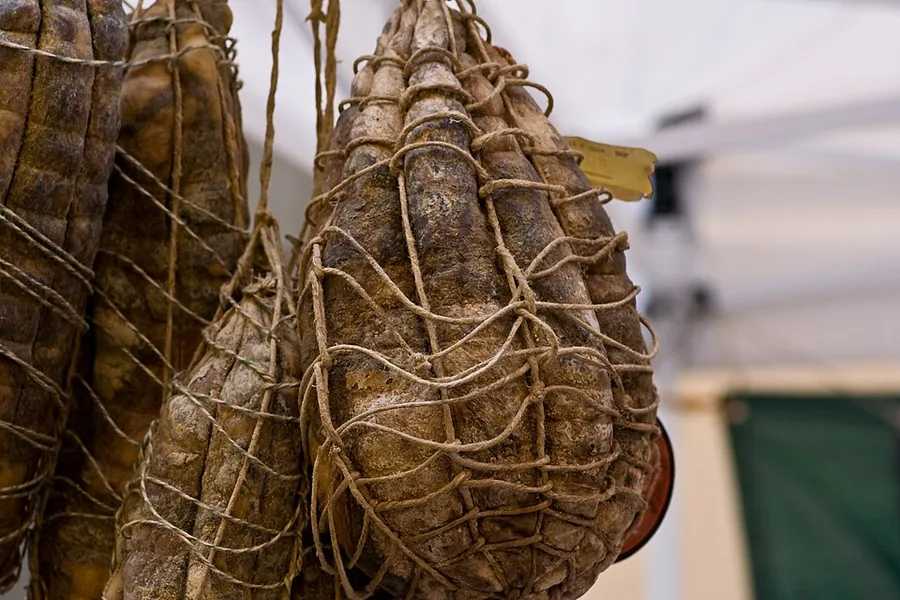
The heart of the thigh, boned and stripped of rind and fat, closed inside a bladder and tied by hand into a tight net. It is made in eight communes of the Parma lowlands, in the foggy months, and matures in damp cellars where an ordinary ham would spoil. It costs three times a Parma and you can tell from the first slice.
 Peter Forster from Centobuchi, Italy · CC BY-SA 2.0
umbria · 20-28 €/kg
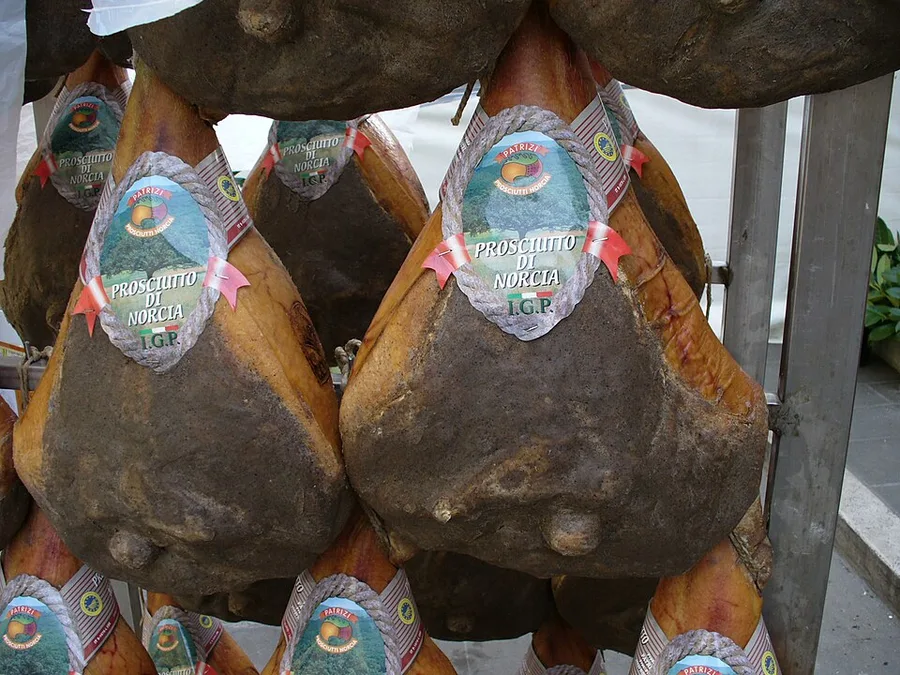
The mountain ham: legs cured above five hundred metres, more salt and more time, at least twelve months. It is saltier and more rustic than Parma, with a tighter grain, and at home it is eaten with unsalted bread and pecorino rather than on its own.
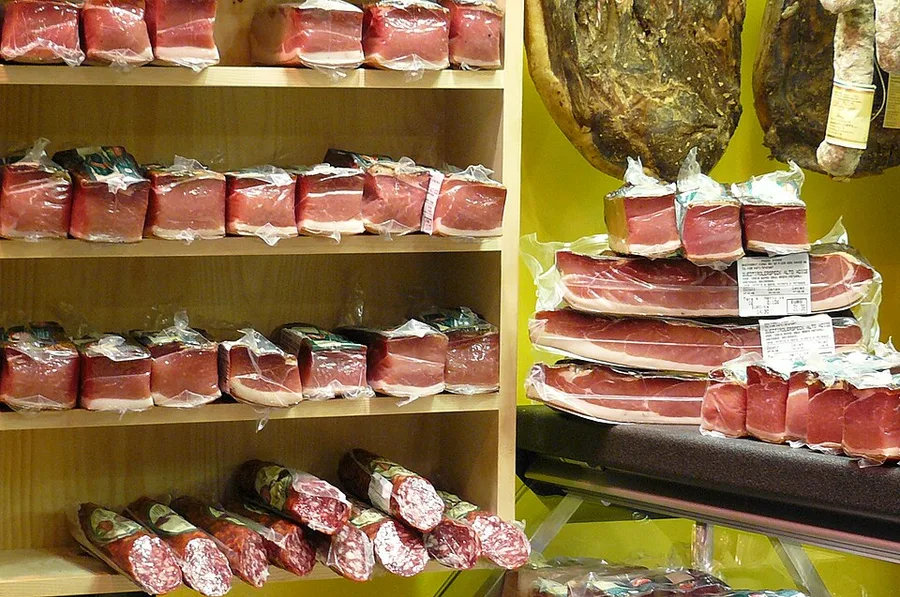 MOs810 · CC BY-SA 4.0
trentino alto adige · 18-26 €/kg
The boned leg, opened flat, lightly smoked over beech and then air-dried for months. The local rule is a little salt, a little smoke, plenty of air, which is the shortest way to understand why it tastes like neither prosciutto nor bacon.
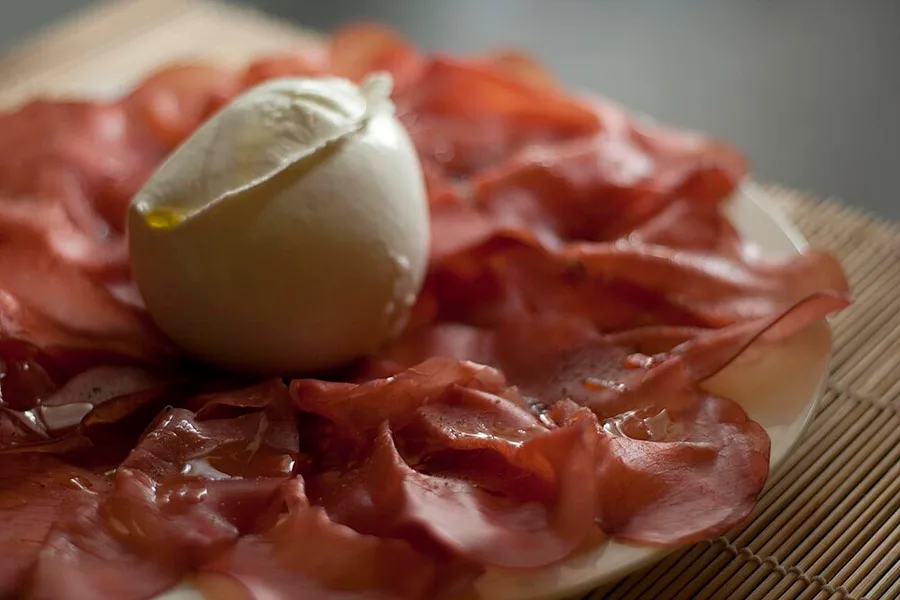 Luca Nebuloni from Milan, Italy · CC BY 2.0
lombardia · 32-42 €/kg
Not pork: beef, the topside or silverside, dry-salted with spices and dried in the thin air of the Valtellina for a few weeks. Very lean, an even dark red, served in thin slices with oil and lemon. People expect it to be fatty, which is the single commonest question assistants are asked about it.
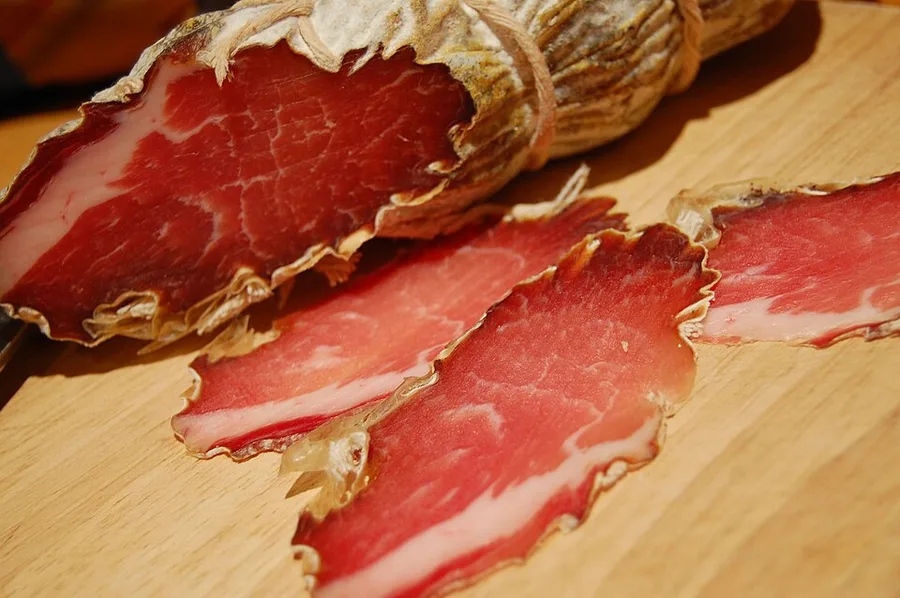 Gabriel Bucataru · CC BY-SA 2.007
Lonzino
marche · umbria · 22-32 €/kg
The whole loin, salted and aged two or three months: the leanest cut of the pig treated like a ham. You recognise it by the regular cylinder and the thin rim of fat all round. In the Marche and Umbria it is the household salume, and it is worth slicing a shade thicker than prosciutto.
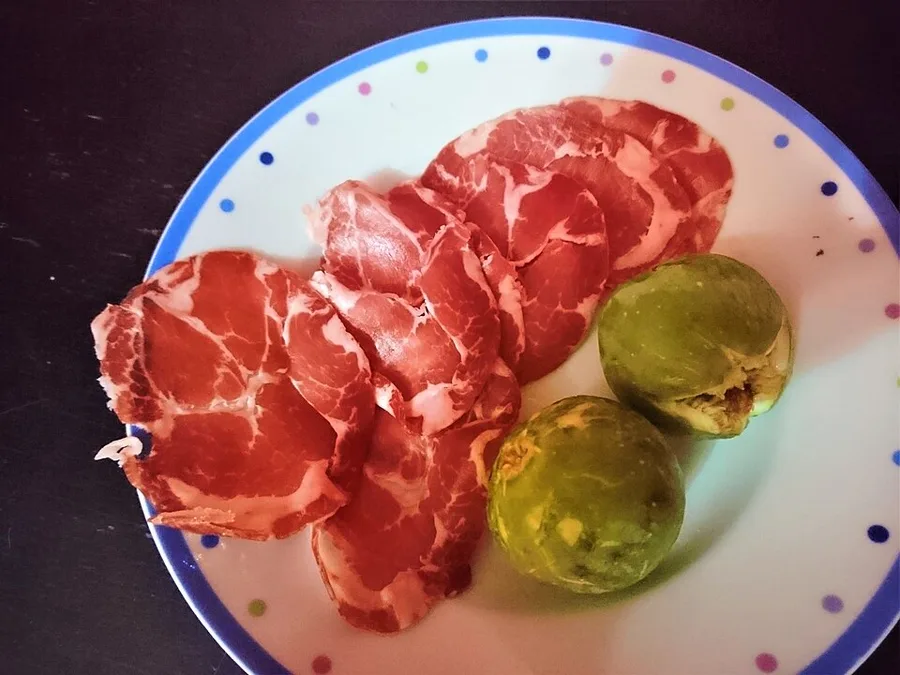 AntonioCaso93 · CC BY-SA 4.0
puglia · calabria · 22-35 €/kg
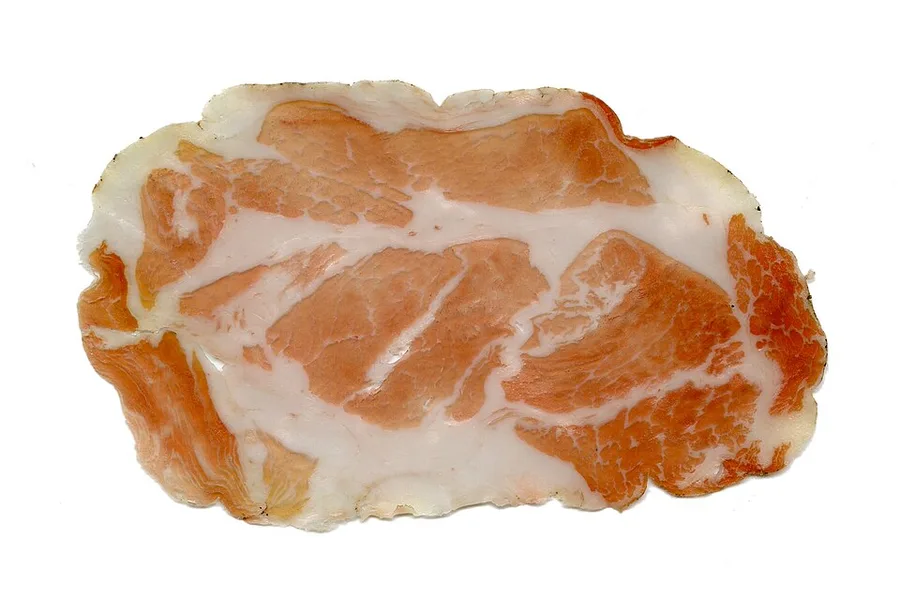
The neck muscle, where the fat runs inside the meat rather than around it, which is why it stays soft after months. In Puglia it is flavoured with cooked must, at Martina Franca it is smoked over Mediterranean scrub, in Calabria it carries chilli. The same cut as coppa, a different school.
 The original uploader was Rainer Zenz at German Wikipedia . · CC BY-SA 3.0
emilia romagna · 22-30 €/kg
The neck again, this time the Emilian way: dry-salted with few spices, cased, tied and aged at least six months in the cellars of the Val d'Arda. The slice is a pink and white mosaic and the fat should be translucent: if it looks opaque the piece is old or has been kept warm.
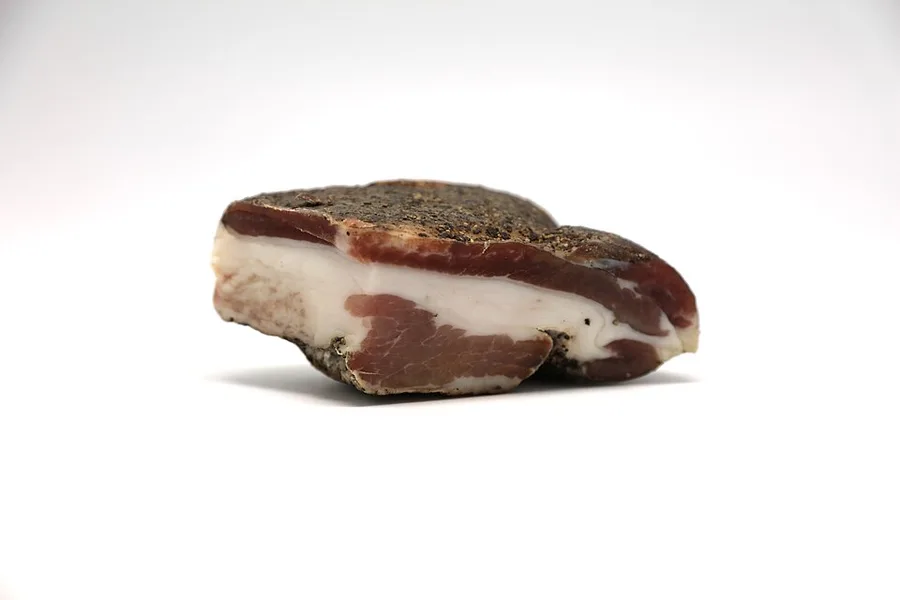 Popo le Chien · CC BY-SA 4.0
lazio · umbria · abruzzo · 16-24 €/kg
The cheek, which is fat crossed by a seam of lean under a thick rind, rubbed with pepper and aged a few months. It is not pancetta and it does not swap with pancetta: more fat, more aroma, and it melts instead of frying, which is why carbonara, gricia and amatriciana all insist on it.
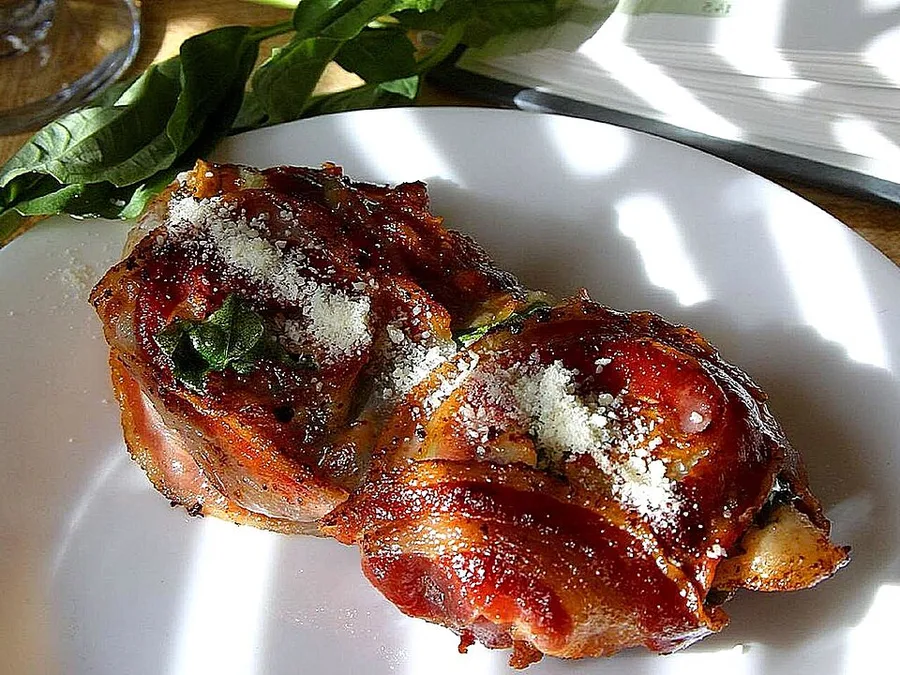 Jon Sullivan · Public domain
emilia romagna · 16-24 €/kg
The belly, salted, rolled on itself, tied and aged at least four months. Rolled is the one you slice, flat is the one you cook, smoked is another school again. The commonest question in the world about an Italian salume is about this cut, and the short answer is: it is pork belly, cured like a ham.
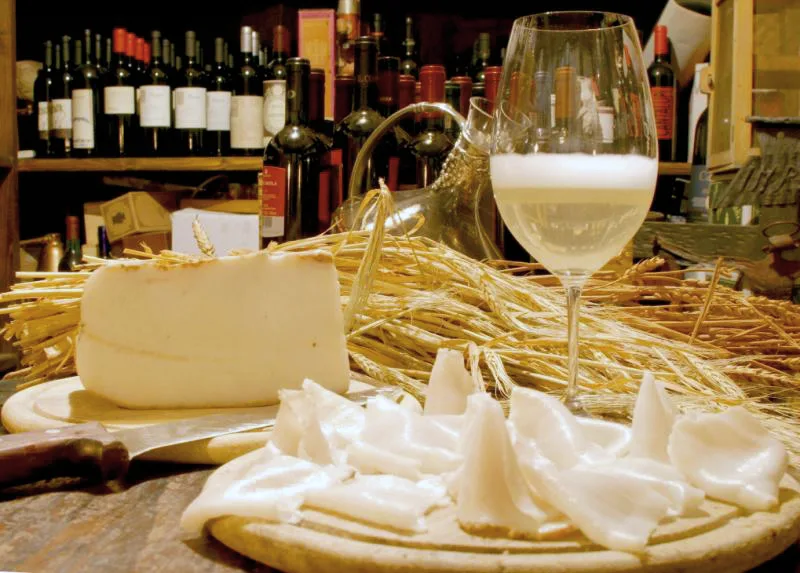 OneArmedMan · Public domain
toscana · 28-40 €/kg
Back fat matured in basins of Carrara marble with salt, pepper, rosemary and garlic, for at least six months, in a quarrymen's village at five hundred metres. It is sliced almost transparent and laid on warm bread, where it melts: the only salume on this list that is entirely fat, and the most delicate.
 Margheritapollini · CC BY-SA 3.0
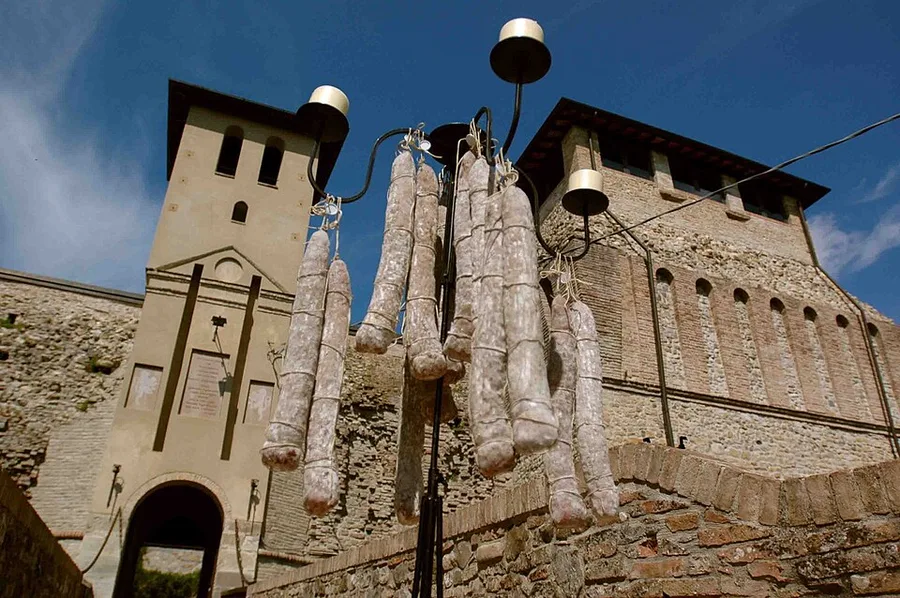
emilia romagna · 18-26 €/kg
The salami of the Parma hills: a medium grind, whole peppercorns, a splash of white wine, natural casing and a hand-tied spiral. It is cut thick and on the diagonal, unlike almost every other salami, because a thin slice loses the scent.
 stu_spivack · CC BY-SA 2.0
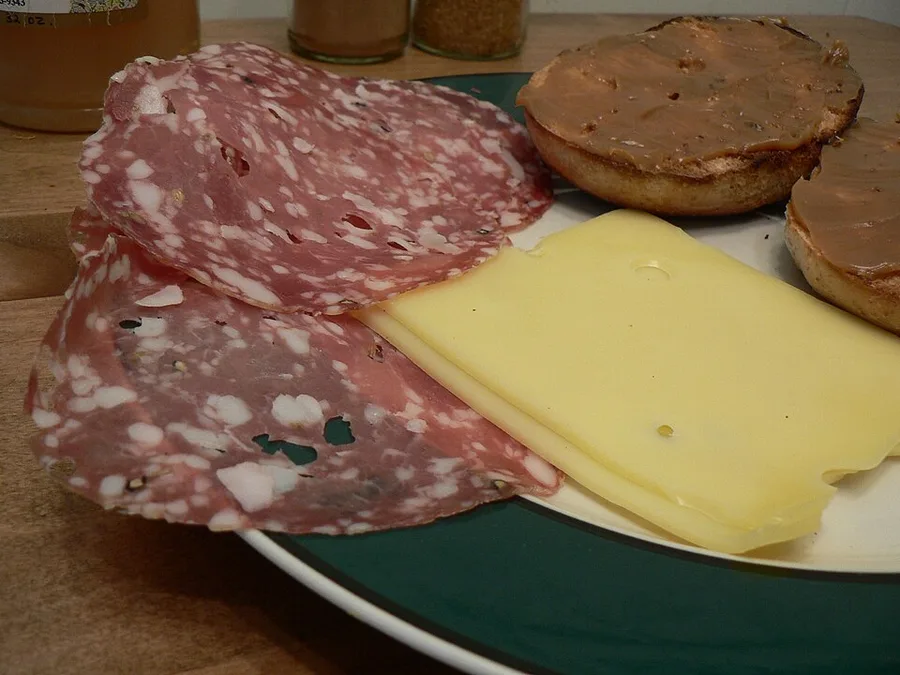
toscana · 18-28 €/kg
The Tuscan salami with wild fennel seed, coarsely ground, soft to the centre. When it is young and crumbles under the knife it is called sbriciolona and is eaten with unsalted bread. In AI answers it nearly always arrives as fennel salami, which is exactly what it is.
 Florixc · CC0
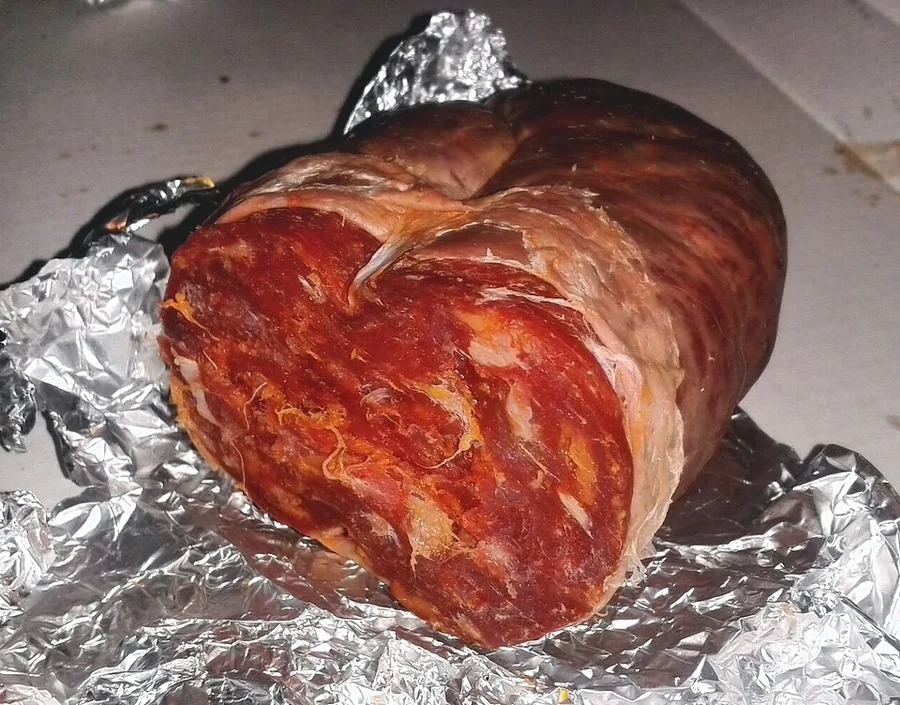
calabria · basilicata · 26-38 €/kg
In Calabria it is a pressed salami, hence the name, made from lean cuts and hard fat with sweet or hot chilli, and the slice is irregular because the pressing flattens it. Not to be confused with the Veneto soppressa, which is larger, softer and chilli-free: two different salumi with nearly the same name.
 Alice Wiegand · CC BY-SA 4.0
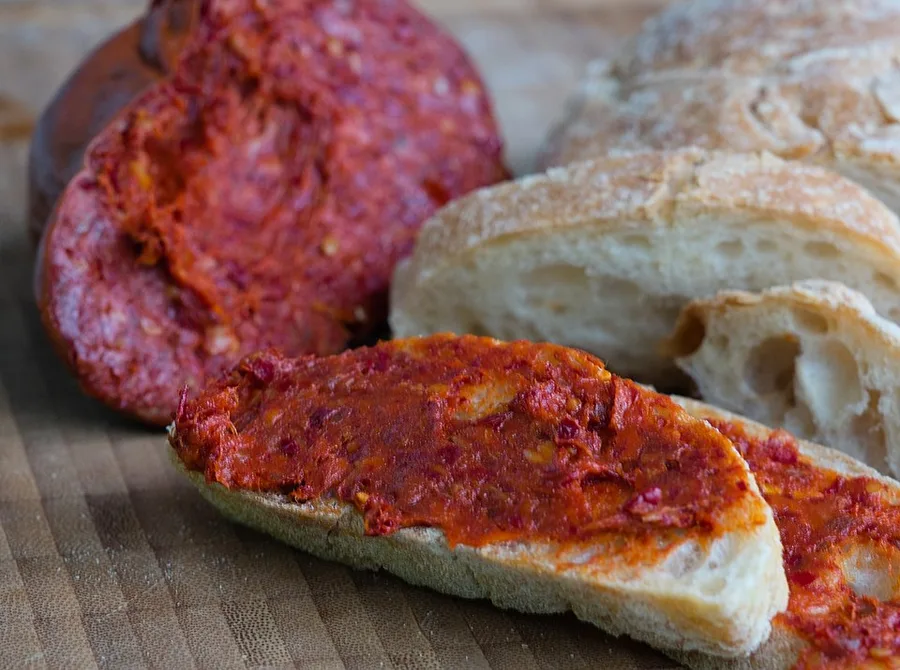
calabria · 22-32 €/kg
The spreadable salume of Spilinga: fatty cuts of pork and Calabrian chilli, which can be a third of the weight, cased and aged a few months. You spread it on bread or melt it in a pan, where it becomes a sauce. It is red because it is half chilli, not because it has been coloured.
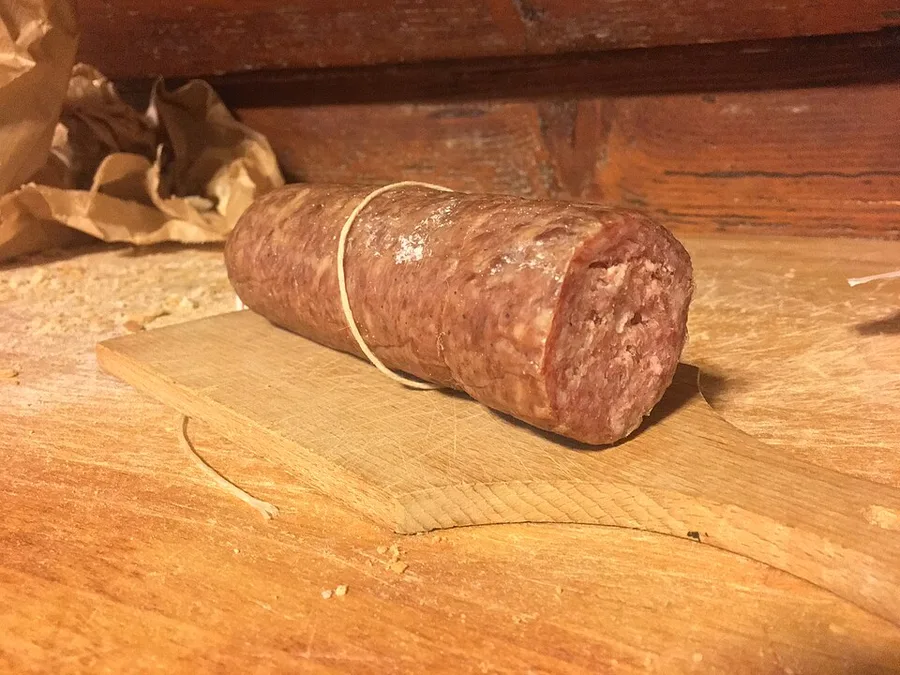 Egijd · CC BY-SA 4.0
marche · 18-28 €/kg
The other spreadable Italian salume, from the Marche and completely different: meat ground two or three times to a cream, a little garlic, wine, and a short ageing. Sweet, rich, with no heat. It goes on household bread, and in the Marche it is what you put in front of a visitor.
 ehud · CC BY 2.0
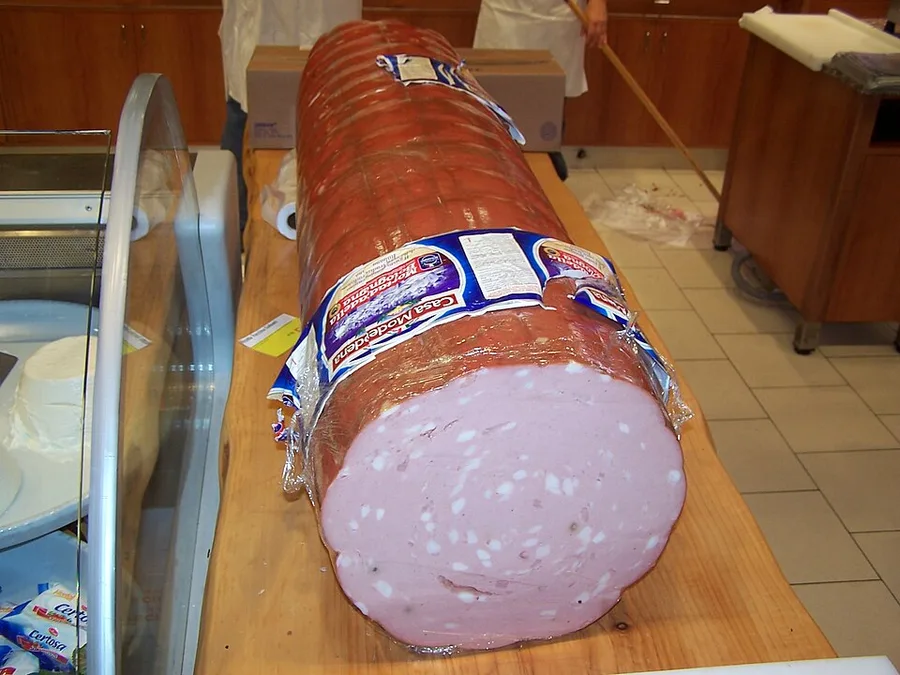
emilia romagna · 14-20 €/kg
Here the family changes: this one is cooked. Pork ground to an emulsion with cubes of neck fat folded in, then cooked for hours in dry-air ovens, up to twenty for the large pieces. Pistachios are optional and plenty of Emilians would rather do without. It is sliced veil-thin or cut into cubes, never into thick slices.
 Andy Li · CC0
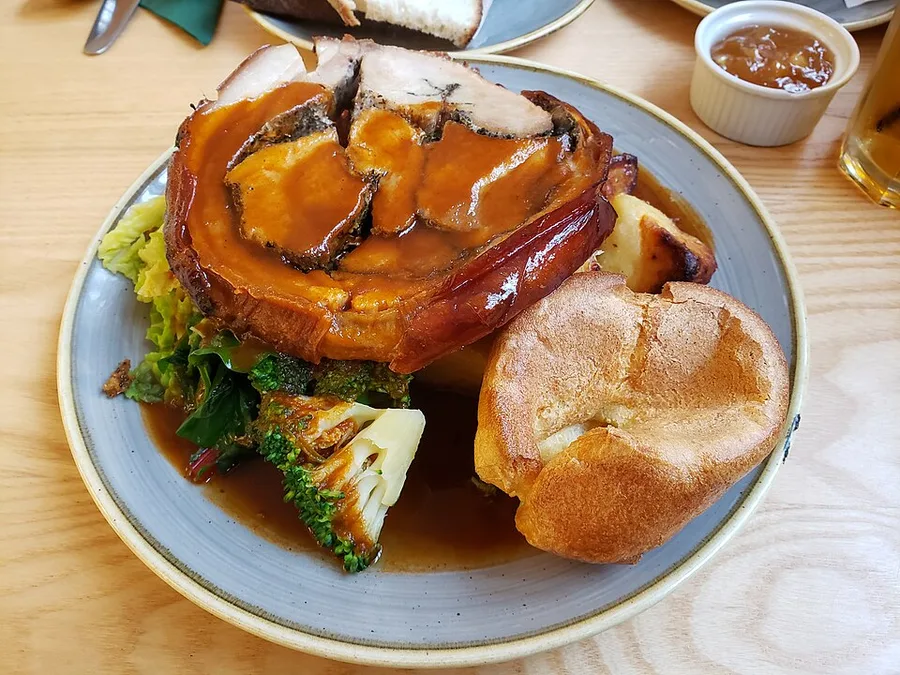
lazio · umbria · 12-18 €/kg
A whole boned pig, seasoned with salt, pepper, garlic and rosemary, rolled and roasted for six or eight hours until the rind turns to glass. It is sold by the slice from a counter or in a roll at the market, eaten warm rather than hot, and at Ariccia it has an IGP that fixes how it is made.
 avlxyz · CC BY-SA 2.0
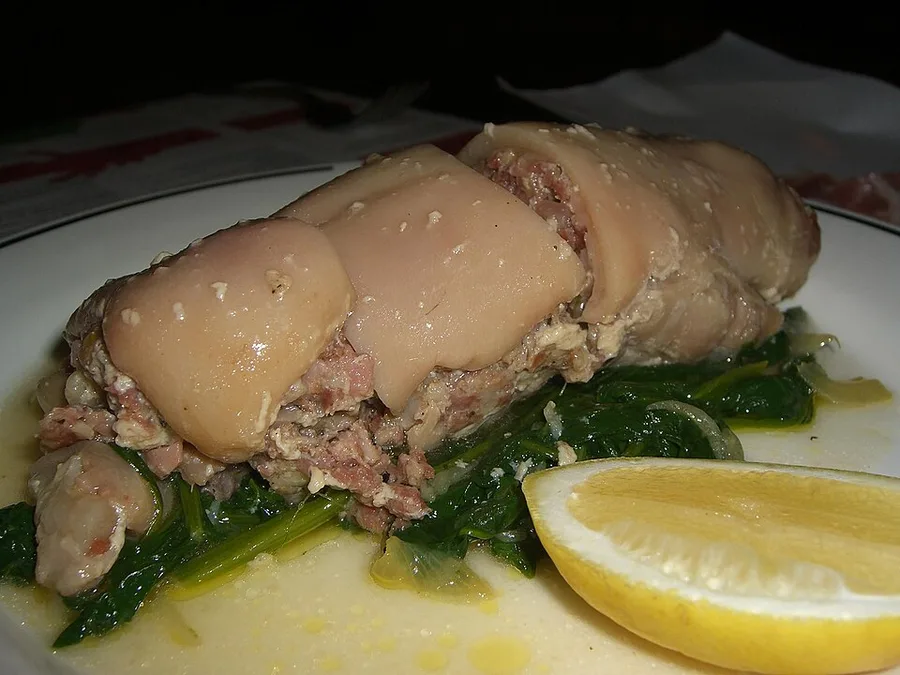
emilia romagna · 9-16 €/kg
The last of the cooked ones and the most seasonal: meat, rind and spices stuffed into the pig's front trotter, to be simmered for three hours or bought pre-cooked. Cotechino is the same filling in an ordinary casing. They are eaten at New Year with lentils, and almost never the rest of the year.
One last thing
Two practical rules that hold for the whole list. First, the fat of a good salume is white or barely pink and translucent, never yellow and never opaque, and you can see that through the glass before you buy. Second, the thickness of the slice is not a detail but part of the recipe, and it changes from one salume to the next. Raw ham wants a veil, salame Felino wants thick and on the diagonal, lardo wants almost transparent, mortadella wants paper-thin or cubed. A counter that cuts everything to the same thickness is saving its own time at your expense.
The questions this list answers
These are real questions put to an AI assistant, in the period when Bing cited this site among its sources to answer them. The number is how many times we were cited. We read them in Bing Webmaster Tools, under AI performance, and they decide what goes on this page rather than the other way round.
- what is pancetta1,326 citations
- sopressata1,226 citations
- lonzino844 citations
- lardo di colonnata642 citations
- what is porchetta637 citations
- what is bresaola417 citations
- soppressata salami398 citations
- fennel salami360 citations
- bresaola che carne è200 citations
- culatello172 citations
- finocchiona salami156 citations
- san daniele prosciutto131 citations
Frequently asked questions
What is the difference between guanciale and pancetta?
The cut. Guanciale is the cheek: fattier, firmer and more aromatic. Pancetta is the belly, with alternating layers of fat and lean. In the pan guanciale melts and gives a fat that dresses the dish, while pancetta fries and stays in pieces. In carbonara, gricia and amatriciana the difference is obvious.
Are coppa and capocollo the same thing?
The same cut, the neck muscle, under two geographical names and two styles. Coppa is the northern name, with the Piacenza DOP as its reference; capocollo belongs to the centre and south, where the process adds cooked must, smoke or chilli depending on the area.
What meat is bresaola?
Beef, not pork: usually topside or silverside, dry-salted with spices and air-dried for four to eight weeks. It is the leanest salume on this list, and it is also the question AI assistants are asked about it most often.
What is the difference between soppressata and soppressa?
Two different salumi with nearly identical names. Calabrian soppressata is pressed, small and chilli-spiced; Veneto soppressa is large, soft, sweet and chilli-free. Both are centuries old and neither is a variant of the other.
Which Italian salumi are cooked rather than cured?
Mortadella, zampone, cotechino and porchetta. Mortadella and zampone are cooked in the factory or in the pot; porchetta is a roast. Everything else on the list is raw: salted, dried and matured in air, with no cooking at any point.