Twenty-two Italian desserts, and the month you eat them
Panettone, zeppole, pastiera, cassata, cotognata, cantucci. Nearly every Italian sweet has a date: here they are in calendar order, from September to September, with what they cost and why they exist on that particular day.
The calendar explains Italian desserts better than geography does. Almost all of them come from a feast and a prohibition: you make the sweet because Lent starts tomorrow, because it has ended, because it is the village saint's day, because the wheat is in. The consequence is that many exist only in those weeks, and anyone looking for them in August finds the industrial version.
The other rule is the larder. The north has butter, cream and eggs, so it makes rich leavened cakes and custards; the centre works almonds, honey and dried fruit; the south handles ricotta, citrus and cooked wheat, and fries. Panettone and cassata are not two versions of one Christmas cake, they are two different countries.
The list starts in autumn, when fruit is preserved for winter, crosses Christmas and Carnival, reaches Easter and ends with the sweets eaten all year. Every line gives the date and the thing to know before buying.
 OppidumNissenae · CC BY-SA 4.0
sicilia · puglia · 2-4 €/kg
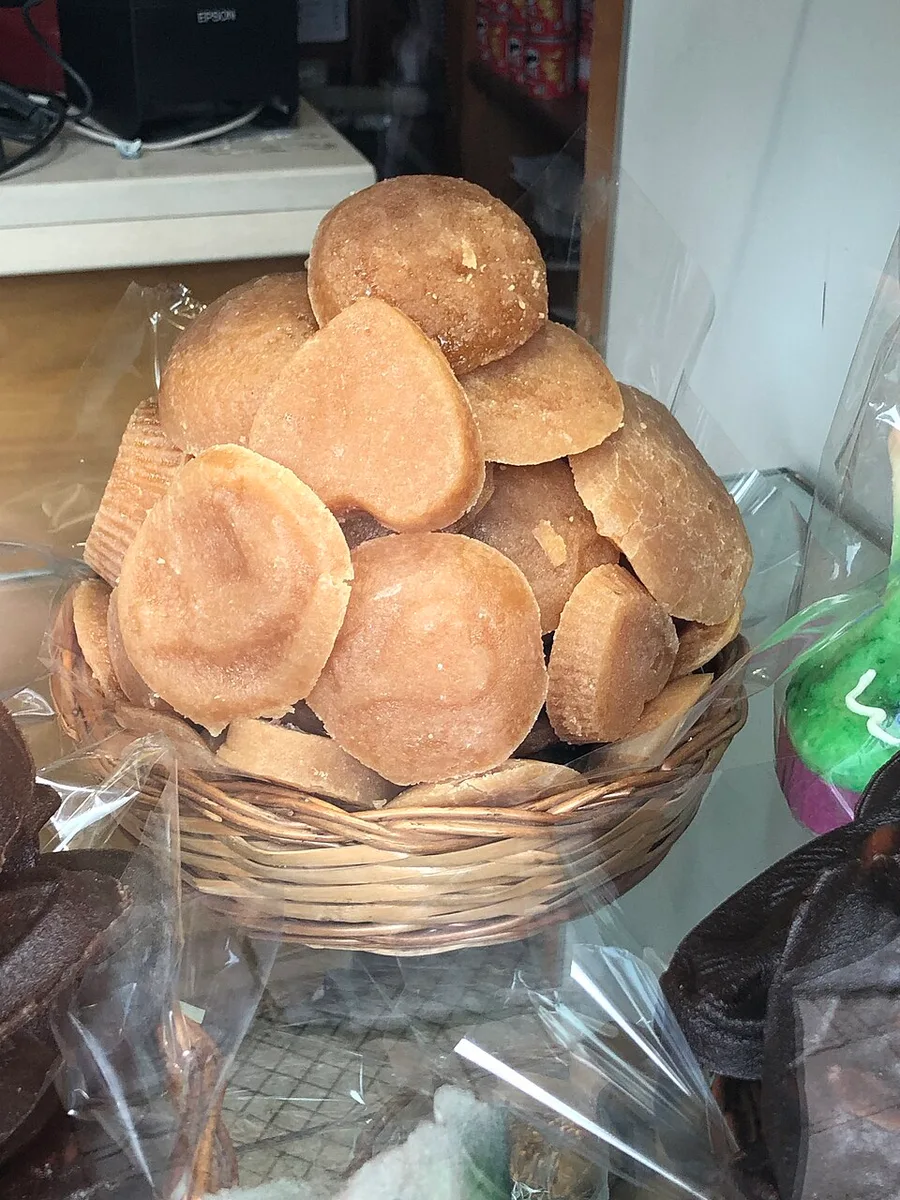
October. Quince pulp cooked with sugar until it sets, poured into wooden or terracotta moulds and left to dry for weeks: it becomes a firm paste cut into squares. It is made in Sicily, in Puglia and across rural Italy, and it keeps a year in a tin.
toscana · campania · 4-8 €/kg
October and November, and here they count as a dessert: roast chestnuts in the squares, castagnaccio made with chestnut flour, rosemary and pine nuts, necci cooked between two irons. The flour goes rancid quickly, so this really is a seasonal sweet and does not work in spring.
 Lucarelli · Public domain
toscana · 32-48 €/kg
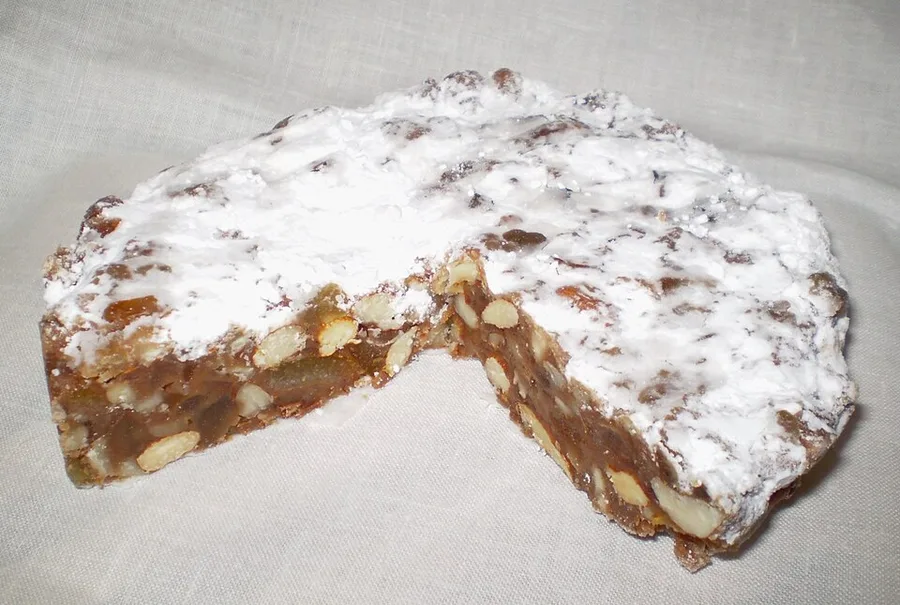
December, Siena. A low, very dense disc of candied fruit, almonds, honey and spices with barely any flour: it began as a medieval travelling and apothecary's sweet, and the IGP now fixes its form. The black one carries pepper, the white one is dusted with icing sugar. It is cut into very thin wedges.
 Ricciarally · CC0
toscana · 28-42 €/kg
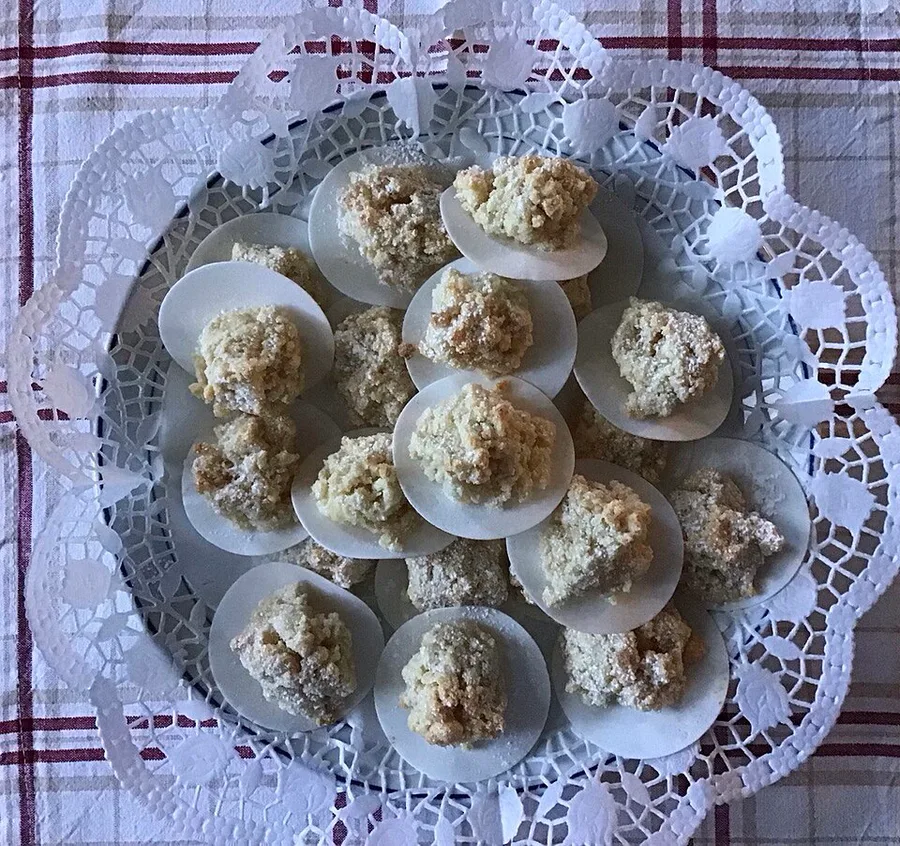
December, Siena again. Almond-paste biscuits, soft inside and cracked on top, lozenge-shaped, with an IGP that requires at least twenty per cent almonds. They keep a fortnight and should be eaten soft: once hard they are a different biscuit.
campania · 18-30 €/kg
December, and the confusion is in the name: Neapolitan mostaccioli are spiced diamonds covered in chocolate, the Calabrian and Apulian ones are hard biscuits with cooked must or honey, sometimes shaped into figures. The same root, the Roman mustaceum made with must, three different sweets.
 Steve-081 · Public domain
campania · 18-28 €/kg
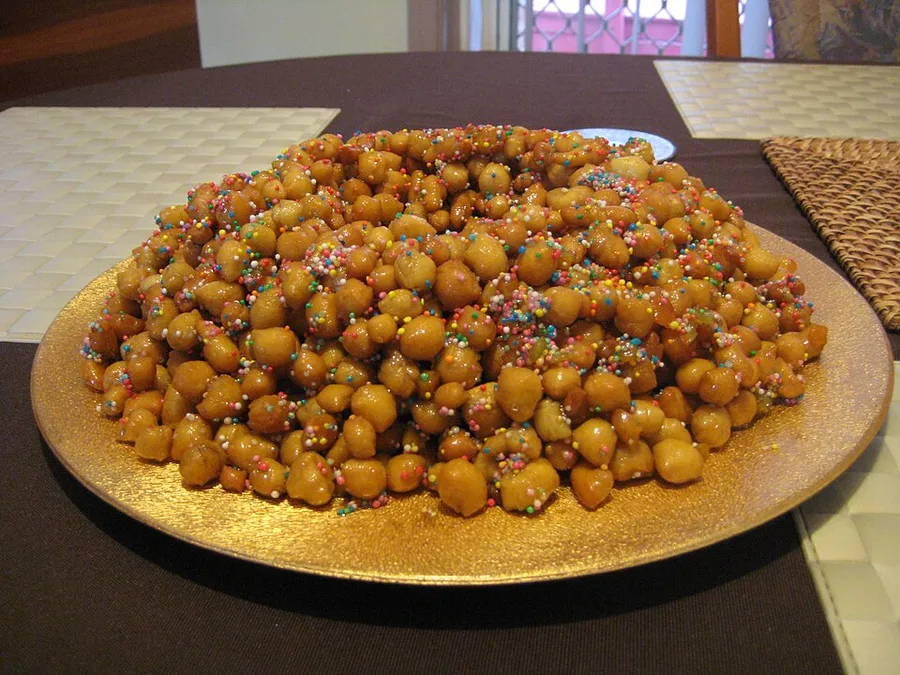
December, Naples. Hazelnut-sized balls of fried dough rolled in warm honey and heaped into a ring with coloured sprinkles. They are made on 23 December and eaten for a week, because the honey preserves them. Puglia's equivalent is cartellate, with a different shape entirely.
 Florixc · CC0
puglia · 20-32 €/kg
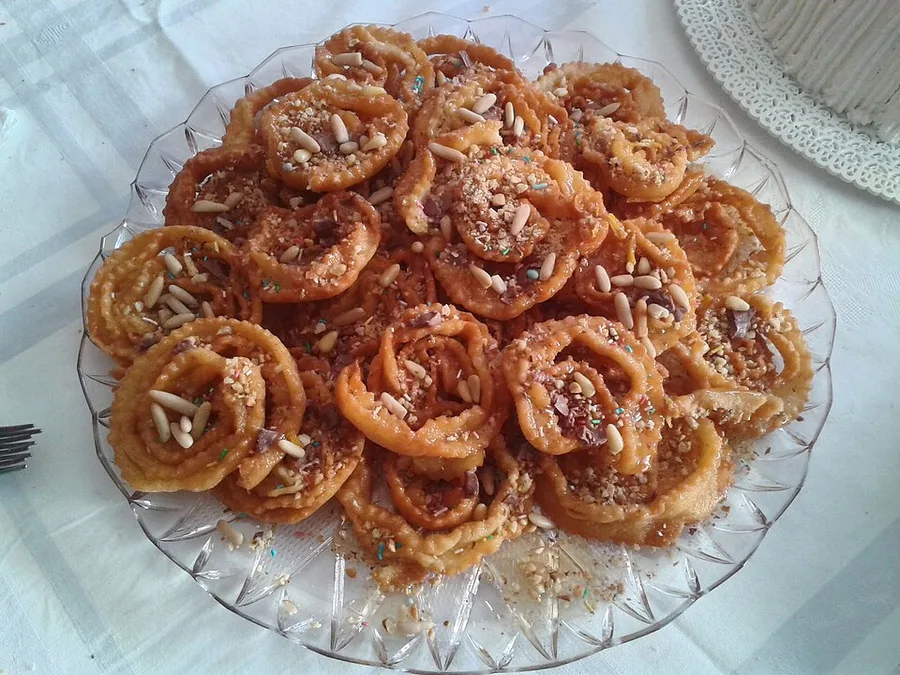
December, Puglia. Ribbons of thin dough rolled into roses, fried and then dipped in vincotto or warm honey. They are made in families by the dozen, which explains why they happen once a year: every rose is rolled by hand.
 Hartung · Public domain
lombardia
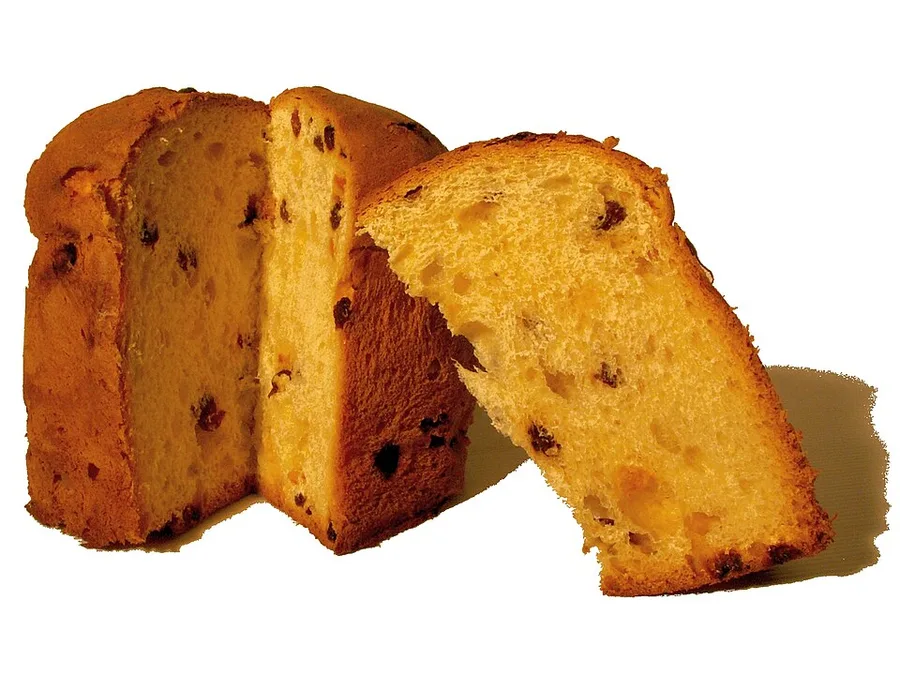
December, Milan. Leavened with a sourdough starter, two doughs, thirty or forty hours of work and a crumb that pulls apart in threads. The gap between an artisan and an industrial one shows in the ingredients: butter against margarine, starter against baker's yeast, real flavourings against vanillin. It is hung upside down straight from the oven or it collapses.
 Kuebi = Armin Kübelbeck · CC BY-SA 3.009
Pandoro
veneto
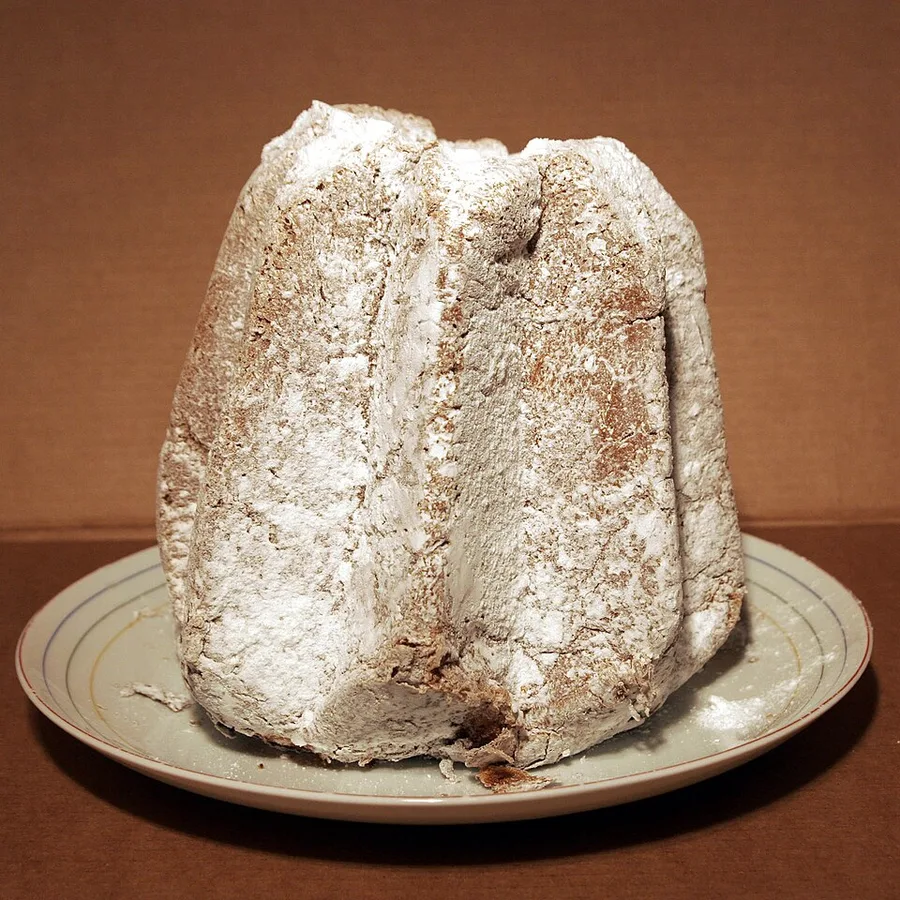
December, Verona. The other leavened cake, without raisins or candied peel, an eight-pointed star, with a great deal of butter and a yellow, dry crumb. Warm it for a few minutes before serving and slice it horizontally to rebuild the star. The sachet of icing sugar goes into the bag and gets shaken, not sprinkled on top.
liguria · 18-28 €/kg
December, Genoa. The panettone Genoa had before panettone: low, dense, with raisins, pine nuts, candied peel and fennel seed, in a tall leavened version or a flat one raised with baking powder. Tradition has the youngest at the table cut it, and a slice kept until the feast of San Biagio.
- 11
Torrone
lombardia · campania · 13-23 €/kg
December, Cremona and half of Italy. Honey, sugar, egg white and almonds or hazelnuts, cooked in a bain-marie for hours and poured between two wafers. Hard or soft is a question of how far the honey is cooked, not of a different recipe. The one from Bagnara Calabra has an IGP and is darker and more spiced.
 Petar43 · CC BY-SA 4.0
friuli venezia giulia · 18-28 €/kg
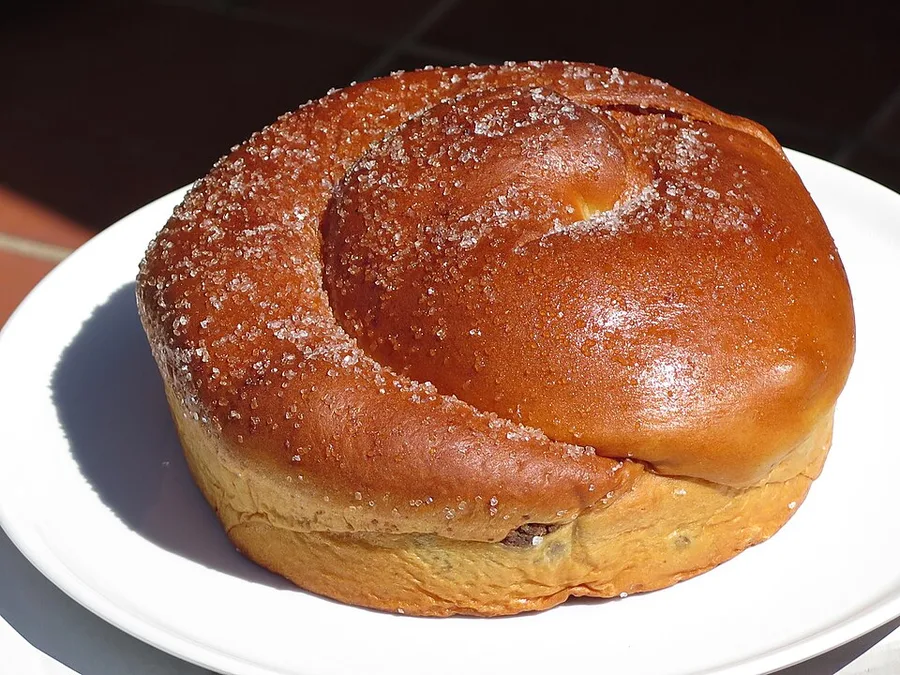
December and feast days, eastern Friuli. A spiral of leavened dough wrapped round a filling of walnuts, raisins, pine nuts, chocolate and grappa, baked and then left to rest for days. It is a border sweet and tastes like one: closer to a Slovenian cake than an Italian one, because that valley has been both.
 Marco Varisco · CC BY-SA 2.0
toscana · umbria · 20-35 €/kg
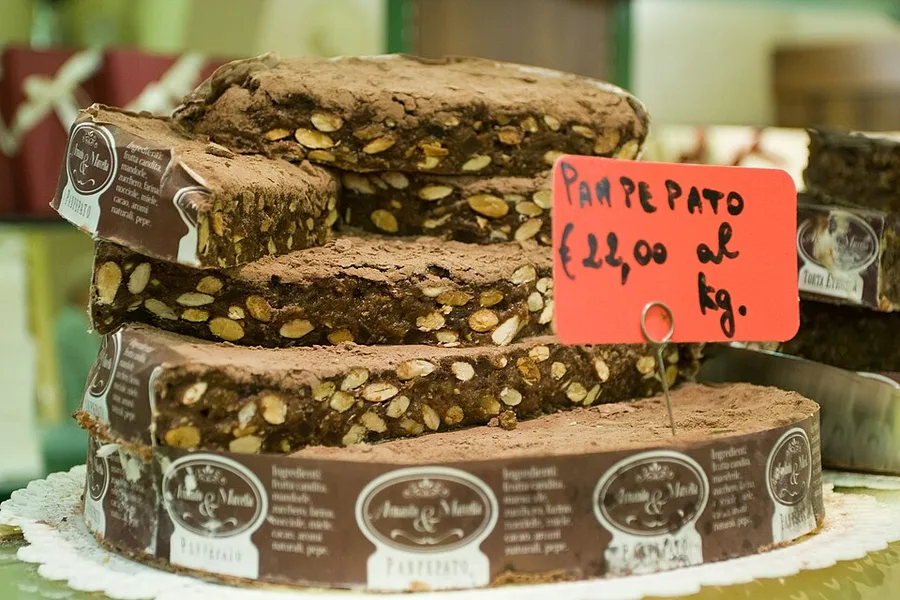
December, Umbria and northern Lazio. The dark relative of panforte: walnuts, hazelnuts, almonds, honey, cooked must, cocoa and black pepper, with little or no flour, baked in small rounds. The pepper is not an affectation, it is in the name, and you feel it at the end of the bite.
abruzzo · 18-30 €/kg
December, Pescara. A dome of semolina and almonds covered in dark chocolate, invented in the 1920s to imitate the rough peasant bread of Abruzzo, baked in a wood oven and dark on top. D'Annunzio wrote verses for it, which is why the cake made a career.
 Salvatore Capalbi · CC BY-SA 2.015
Zeppole
campania · 6-10 €/kg
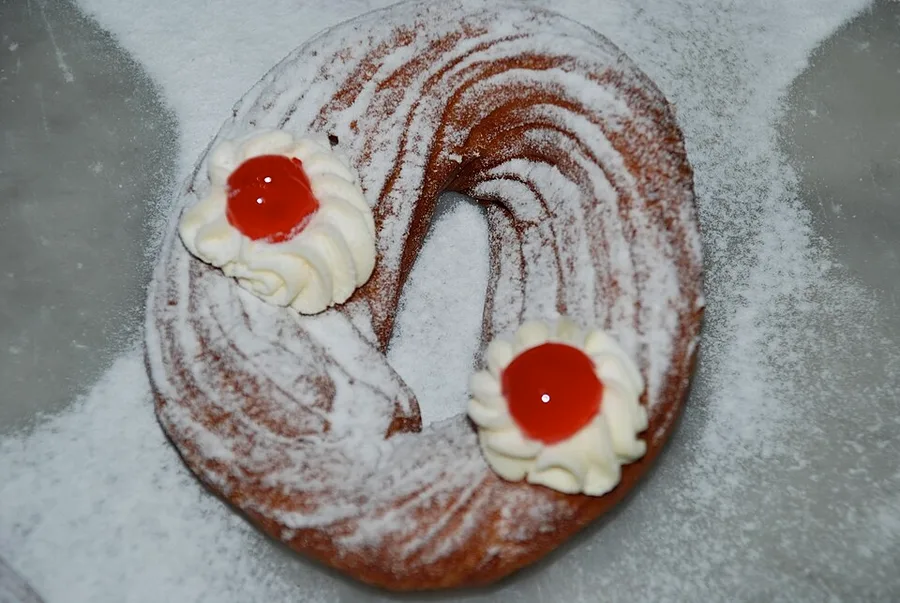
19 March, Saint Joseph's day, Naples. Rings of choux pastry fried in lard or baked, with a swirl of pastry cream and a cherry in syrup on top. They appear in late February and vanish at the end of March, and they are filled to order: a zeppola filled two hours ago has already gone soft.
lombardia · 5-12 €/kg
Easter. The same leavened dough as panettone in the shape of a dove, without raisins, with an almond glaze and sugar nibs on top. The same rule applies: the ingredients list tells you everything, and a colomba that costs the same as a white loaf has not had thirty hours of proving in it.
 Mattia Luigi Nappi · CC BY-SA 3.017
Pastiera
campania · 18-28 €/kg
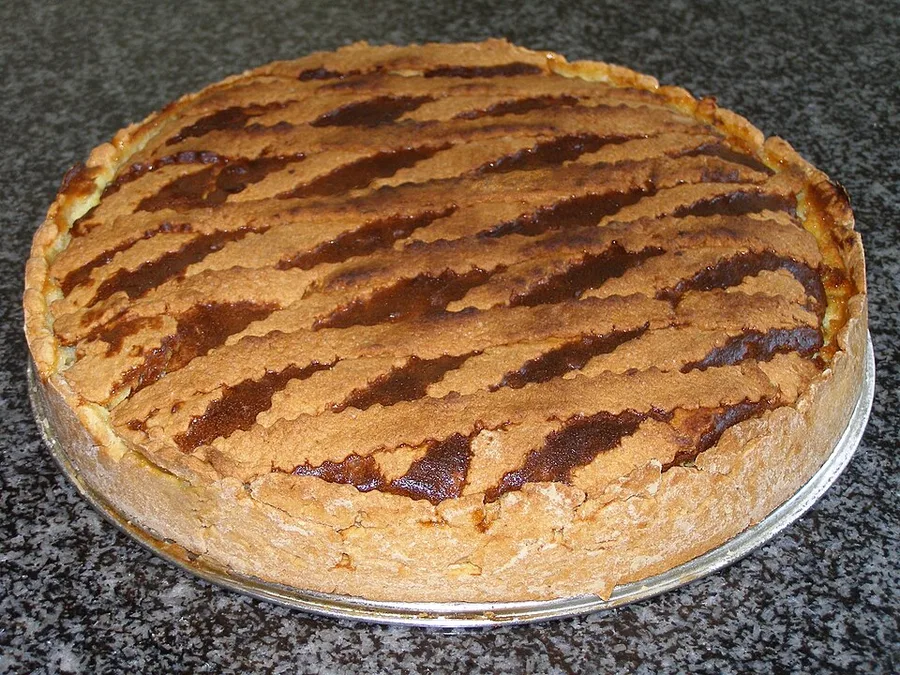
Easter, Naples. Wheat cooked in milk, sheep's ricotta, eggs, candied peel and orange flower water inside a lard shortcrust, with seven strips crossed on top. It is made on Maundy Thursday to be eaten on Sunday: the twenty-four hours of rest are not tradition, they are the recipe.
 EraclitoPantaRei · CC0
sicilia · 28-45 €/kg
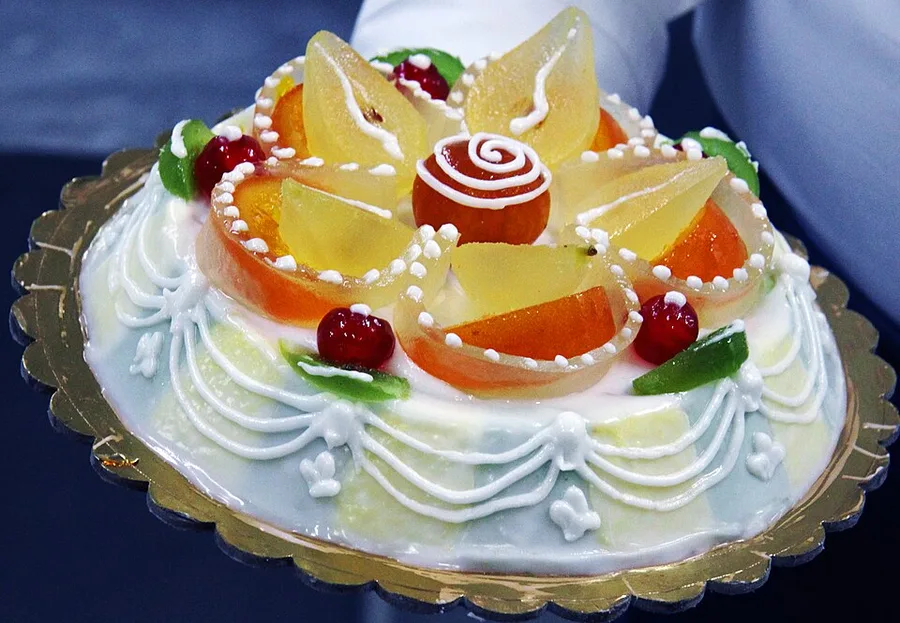
Easter, Palermo. Sweetened sheep's ricotta inside a band of sponge and green marzipan, closed with a sugar glaze and crowned with candied fruit. The modern form dates from 1873 and is owed to a Palermo pastry chef; the green comes from pistachio rather than dye when it is properly made.
 Asdalol · CC0
lazio
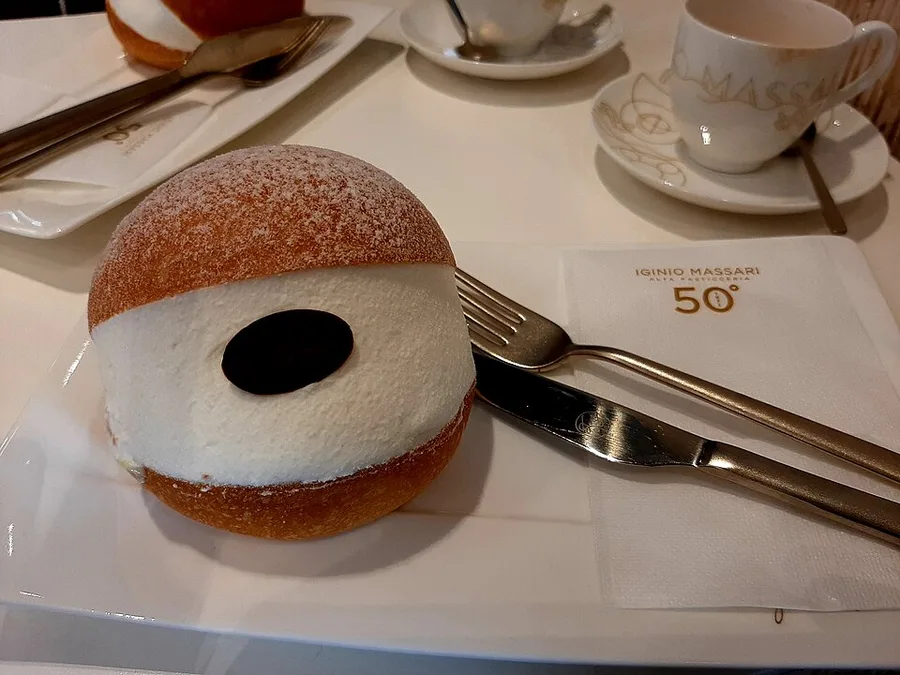
All year, Rome, though historically a Lenten bun. A sweet orange-scented roll cut on the diagonal and filled with unsweetened whipped cream. It is filled to order and eaten within the hour: the cream gives up water and the bread goes soggy from inside.
 Alpha · CC BY-SA 2.0
campania · 12-18 €/kg
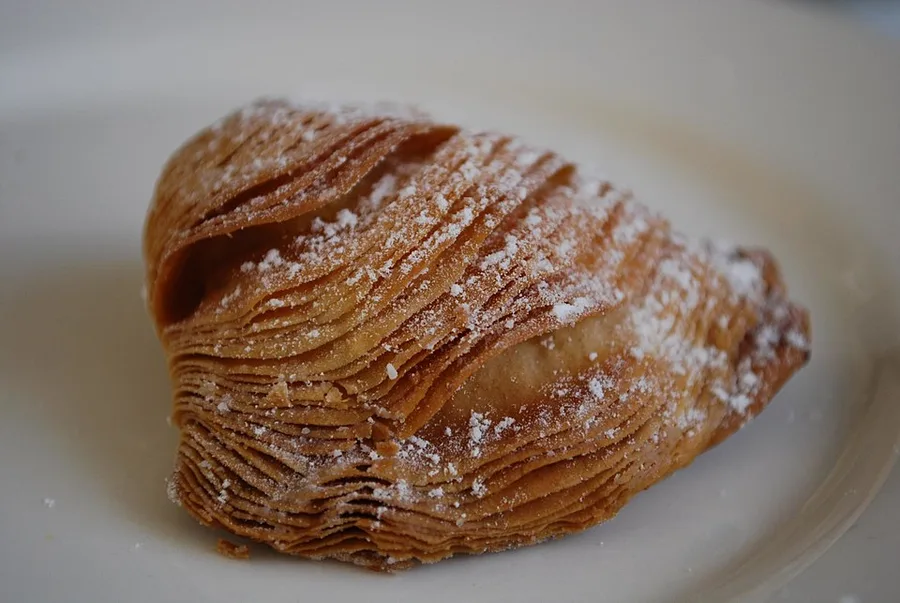
All year, Naples, and in the morning. The riccia is a shell of forty or fifty paper-thin layers, crisp, filled with semolina, ricotta and candied peel; the frolla is the same filling in a smooth shortcrust case. It is eaten warm, straight from the oven, and an hour later it is a different pastry.
 Stefano Mortellaro from Catania, Italy · CC BY 2.0
sicilia · 8-14 €/kg
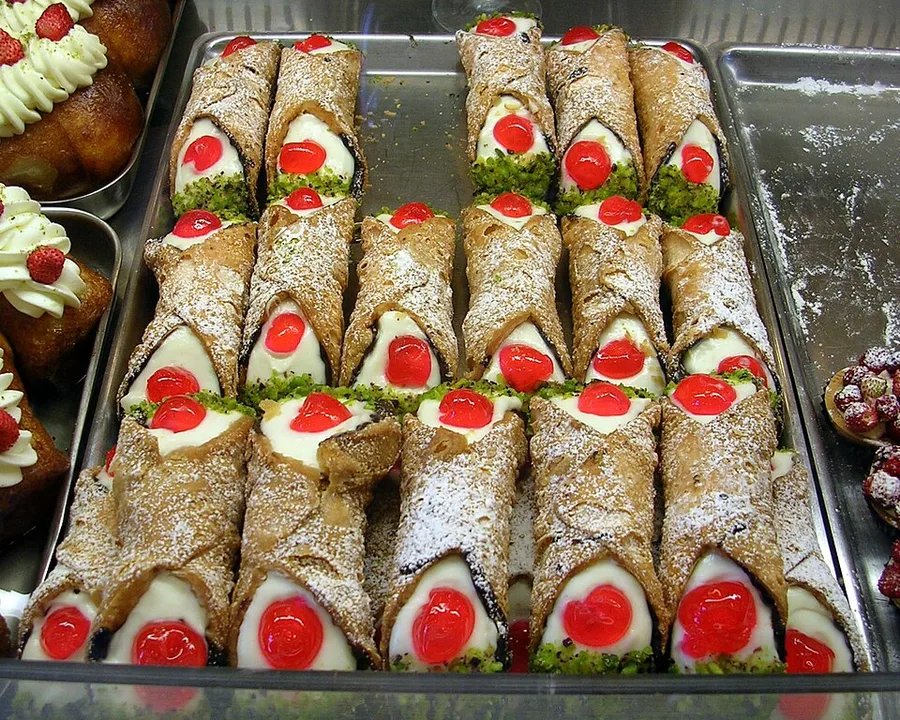
All year, Sicily, though born for Carnival. The shell is fried and keeps; the ricotta goes in when you order: a cannolo already filled in the display case is a soft cannolo, and it is the quickest test of a Sicilian pastry shop.
 Matteo Bertini · CC BY-SA 2.0
toscana · 14-24 €/kg
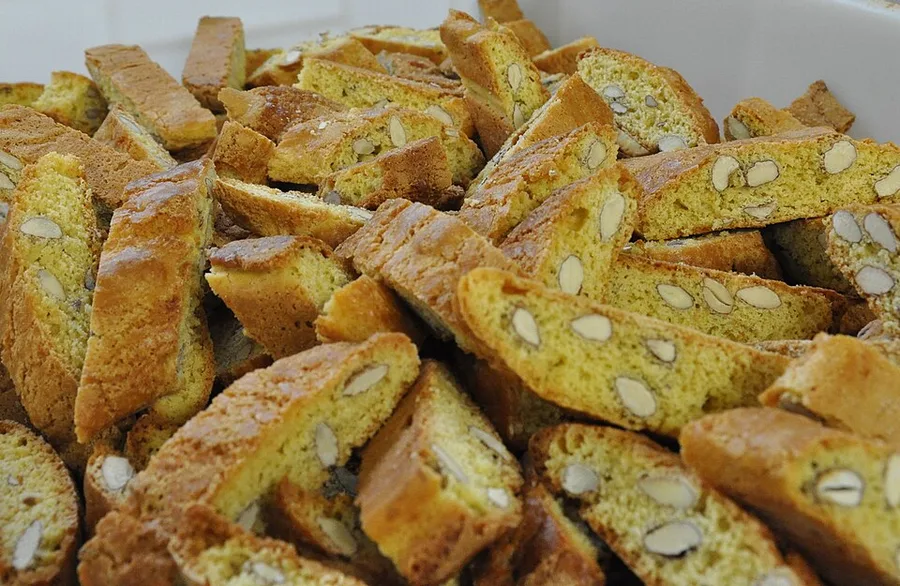
All year, Tuscany. Almond biscuits baked twice, hence the hardness and the keeping: they are dipped in Vin Santo at the end of a meal. The IGP for Cantuccini Toscani fixes the almond percentage and the use of butter, which separates them from the biscotti di Prato, which contain none.
One last thing
One note that holds for every Christmas and Easter leavened cake. The price is not a whim: an artisan panettone costs thirty or fifty euro a kilo because inside it there are two doughs, thirty hours and real butter, while the six-euro one contains margarine and baker's yeast. You can tell before tasting, by turning the box over and reading the order of the ingredients, which by law runs from most to least. If butter comes after sugar and the word flavourings appears, you know what you are holding.
The questions this list answers
These are real questions put to an AI assistant, in the period when Bing cited this site among its sources to answer them. The number is how many times we were cited. We read them in Bing Webmaster Tools, under AI performance, and they decide what goes on this page rather than the other way round.
- zeppole600 citations
- cotognata590 citations
- cantuccini556 citations
- mostaccioli260 citations
- sfogliatella riccia175 citations
- sfogliatella154 citations
- maritozzi con la panna126 citations
- what is panforte123 citations
- panforte99 citations
- cassata siciliana ricetta60 citations
- granita54 citations
- torta sbrisolona ricetta originale40 citations
Frequently asked questions
When are zeppole eaten?
On 19 March, Saint Joseph's day, in Naples and across the south. Pastry shops make them from late February to the end of March. Outside those weeks you will only find frozen or industrial ones, which is why the zeppola is a sweet worth waiting for.
What is the difference between panettone and pandoro?
Panettone is Milanese, contains raisins and candied peel, has a stringy crumb and a dark dome; pandoro is from Verona, has no fruit, is an eight-pointed star, carries more butter and has a drier, yellower crumb. Two different leavened cakes, not two versions of one.
What is panforte?
A medieval Sienese sweet: a low, extremely dense disc of candied fruit, almonds, honey and spices with barely any flour. It holds an IGP, is cut into thin wedges and keeps for weeks. Umbrian panpepato is its darker relative, with cocoa and black pepper.
Why are cannoli filled to order?
Because the ricotta is wet and within an hour it softens the fried shell, which is the only thing that makes a cannolo what it is. In a serious pastry shop the shells sit empty in the case and the piping bag stays behind the counter.
Which Italian desserts are available all year?
Sfogliatella, cannoli, maritozzo, cantucci, tiramisu, granita and gelato. Everything else on this list has a real season: quince paste and chestnuts in autumn, the leavened cakes and spices in December, zeppole in March, pastiera, colomba and cassata at Easter.