Eighteen Italian breads, from the loaf to the sheet
Altamura, Matera, carasau, piadina, tigelle, focaccia, grissini, taralli. Italian bread changes every fifty kilometres because the wheat, the oven and the required shelf life change: here they are lined up by exactly that, with the price per kilo.
Italian bread makes sense by how long it had to last rather than by how it looks. A bread that had to survive a week in the countryside has a crust three millimetres thick, weighs a kilo and has a dense crumb: that is Altamura and Matera. A bread eaten the same day is light and hollow, like the Milanese michetta. A bread that travelled in a shepherd's bag is dry and thin as paper, and that is Sardinian carasau.
The second thing that changes everything is the flour. The south works durum semolina, which gives the yellow crumb and the sweetness of the Apulian and Lucanian loaves; the north and centre use soft wheat, which gives paler, lighter breads. In between sits Tuscany, where bread carries no salt, which looks like a mistake to everyone who is not Tuscan and is in fact the reason it carries very salty cured meats and sauces.
The third is the oven. A wood oven at three hundred degrees gives a crust an electric one cannot, and that is why the breads on this list that travel best are the dry ones: carasau, grissini, taralli. The last entries, indeed, are not table bread at all but bread you carry around.
 Nikotota · CC BY-SA 4.0
puglia · 3.5-5 €/kg
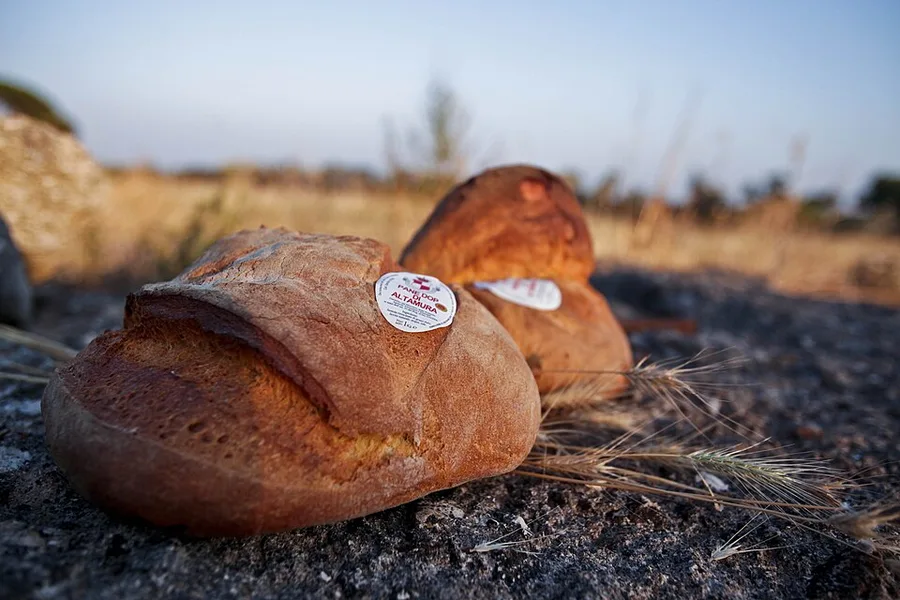
The only bread in Europe with a DOP: re-milled durum semolina from the Murge, sourdough, a wood oven and a crust at least three millimetres thick. A kilo loaf keeps for a week without going fully hard, which is exactly the job it was built for. The tall folded shape is called a priest's hat.
 Kars Alfrink · CC BY 2.0
basilicata · 3-5 €/kg
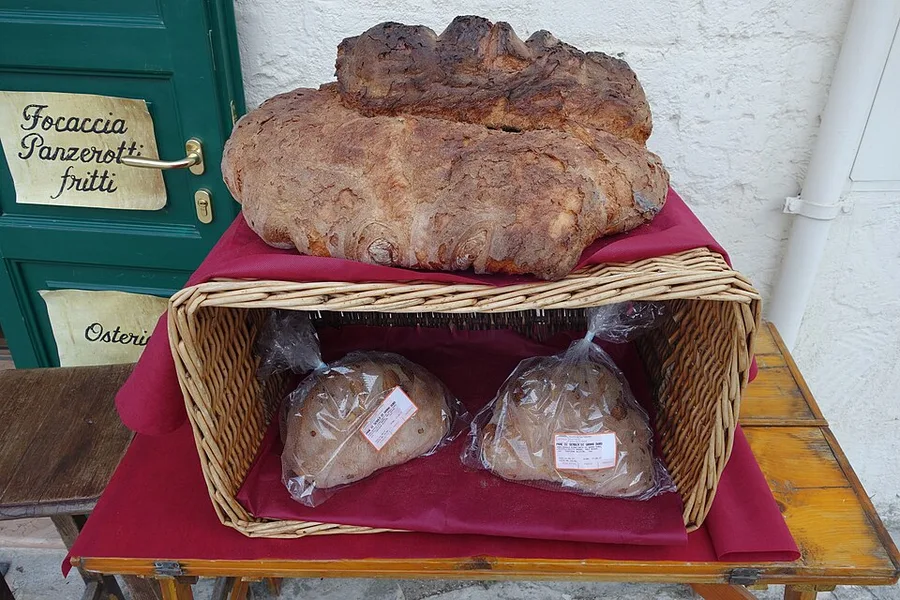
The Lucanian cousin, with a horn or crest on top and the same logic: semolina, natural leaven, a thick crust and a week of life. The real difference is the shape, designed to be recognised in the neighbourhood's shared oven, where each family stamped its dough with its initials.
 Luigi Mancini at Italian Wikipedia · CC BY-SA 3.0
lazio · 3.5-5 €/kg
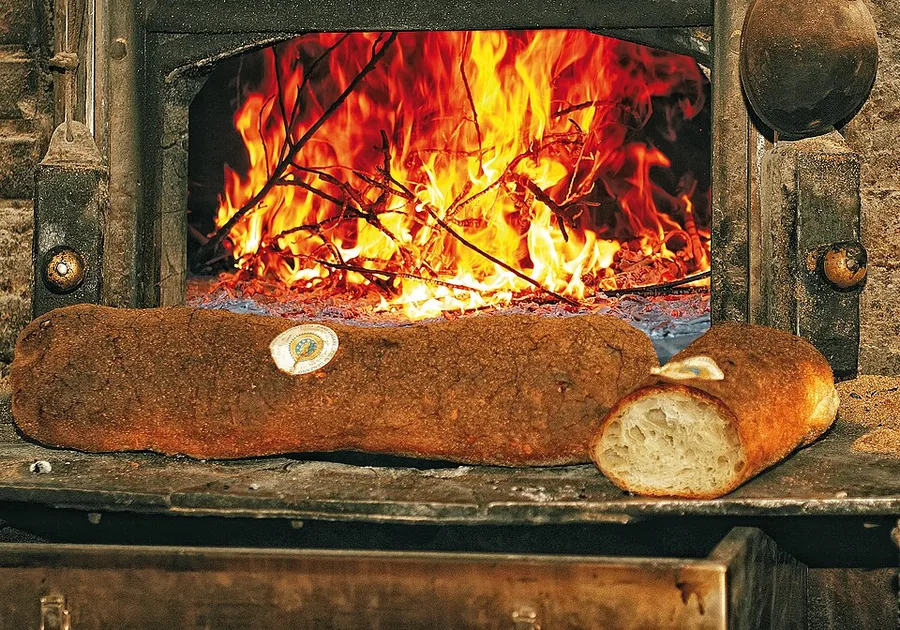
The bread of the Castelli Romani, dusted with bran before baking, which is why the crust is dark and matte. Soft wheat, a wood oven, loaves from half a kilo to two kilos. It is the bread Rome buys for bruschetta, because the crumb carries oil without collapsing.
 Gianni Careddu · CC BY-SA 4.0
emilia romagna · 5-7 €/kg
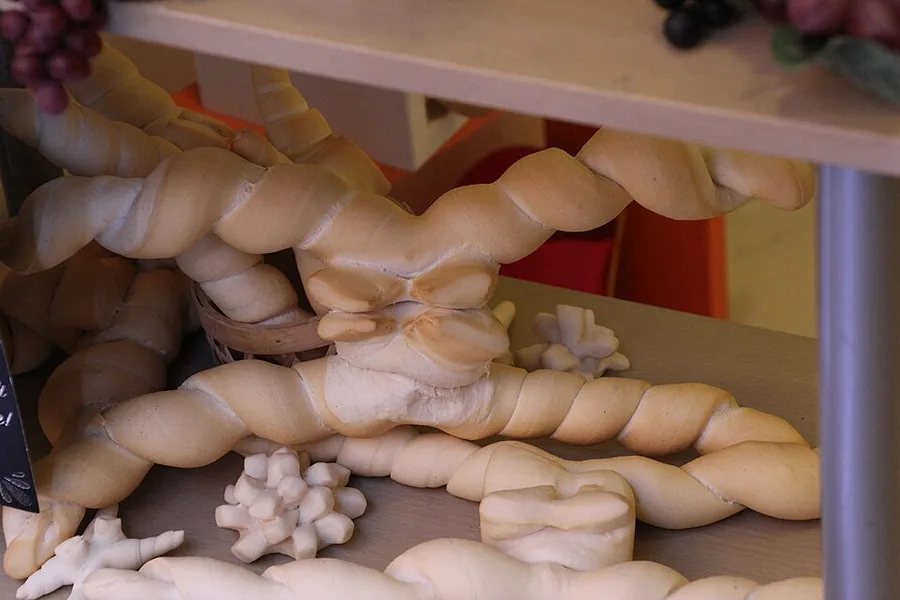
The strangest bread in Italy: two ribbons of dough twisted and joined in the middle, almost all crust and barely any crumb, with lard in the dough. It is broken on the plate and eaten with salami; the four curls come away one at a time. IGP since 2001, and the shape is documented from the Renaissance.
lombardia · 4-6 €/kg
Milanese, rosette-shaped, hollow inside: five petals around an empty centre, because the dough is turned over and the crust sets before the crumb can fill it. It lasts half a day and then it is over, which is why the michetta belongs to a neighbourhood bakery and not to a supermarket.
 Luigi Chiesa · CC BY 3.0
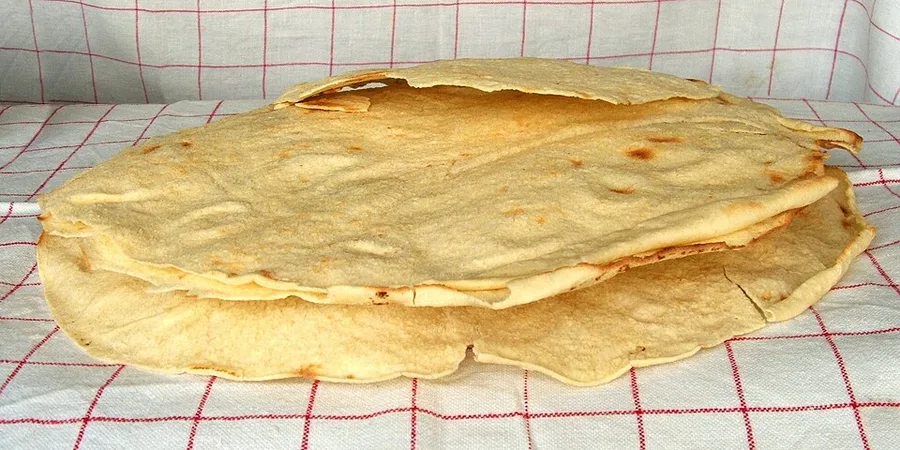
sardegna · 6-12 €/kg
Sardinian, paper-thin, baked twice: it goes into the oven, balloons, is cut into two discs and goes back to toast. It was made for transhumant shepherds because it keeps for months. Wet it with water or broth and it softens in thirty seconds, which is how it becomes pane frattau.
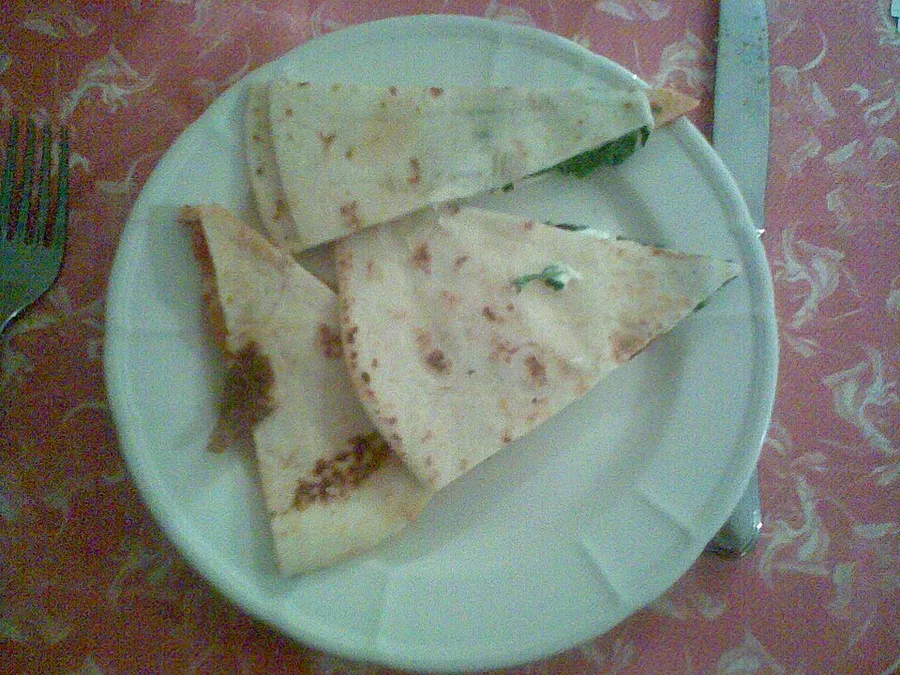
puglia
From the Salento, round, with almost no crumb: you split it and fill it, and it is the sandwich of the region. The version with black olives worked into the dough is called uliata. There is also a larger, taller Apulian puccia, which is a different thing: the one you stuff is this one.
 Xaura · CC BY-SA 3.0
emilia romagna
From Romagna, unleavened or barely so, cooked on a testo for two minutes a side. The IGP separates the classic, thicker version from the Rimini one, thin and wide. Lard is in the historic dough and oil is the modern alternative: it changes the crumble, and in Romagna the argument is conducted patiently.
 Nerodiseppia · CC BY-SA 3.009
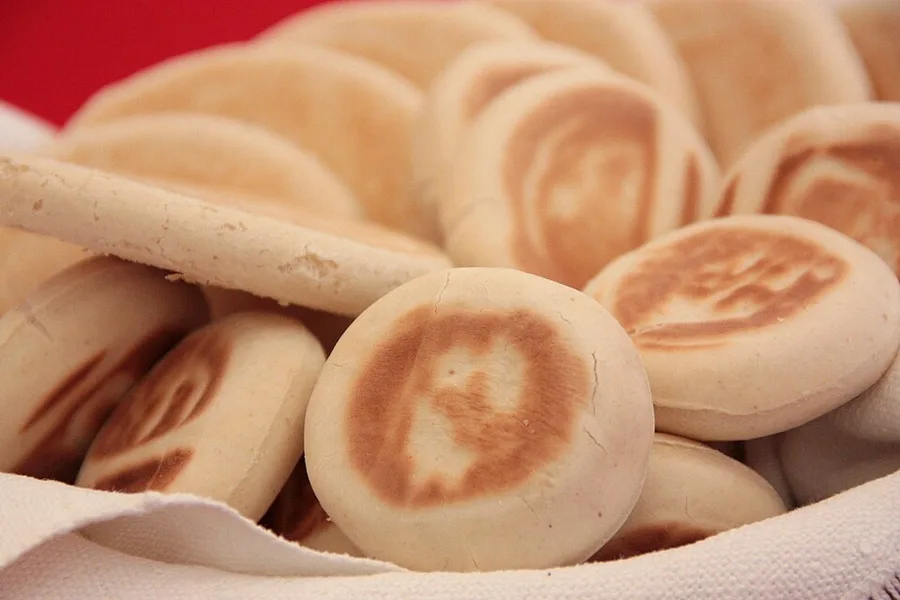
Tigelle
emilia romagna · 6-10 €/kg
Modenese discs of eight centimetres cooked between two plates, split open and filled with cunza, a paste of lardo, garlic and rosemary. The proper name is crescentine: the tigella was the terracotta disc they were cooked on, and the name of the tool took over from the name of the bread.
marche · 8-12 €/kg
From Urbino, with eggs and pepper in the dough and a layering obtained by spreading lard, rolling up and rolling out again. It comes off the plate in layers that separate when you slap it on the board, and it is filled hot with Carpegna prosciutto and casciotta. It is not a piadina, in dough or in technique.
 Nerodiseppia · CC BY-SA 3.0
emilia romagna · 5-8 €/kg
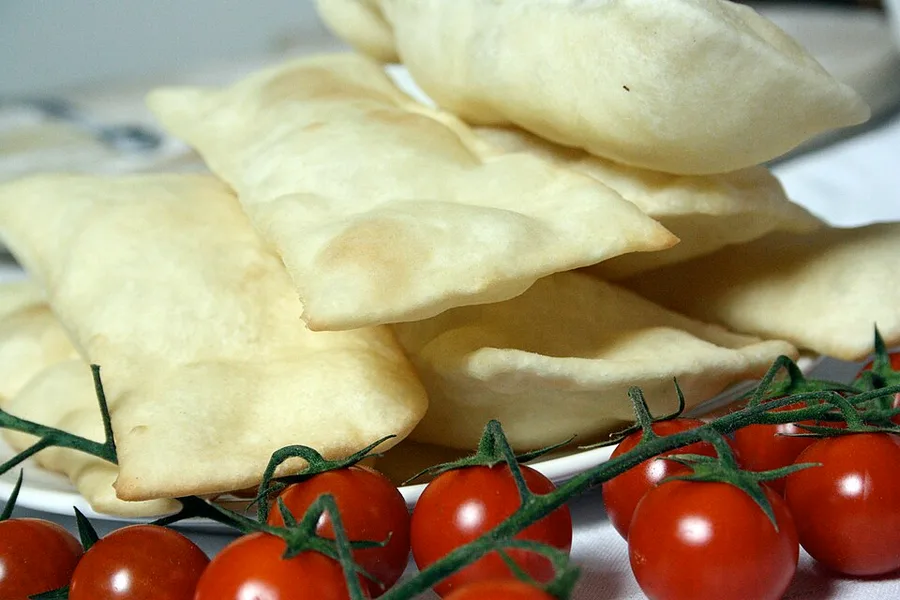
Emilian: diamonds of leavened dough fried in lard, which puff up and stay hollow. They are served scalding with cured meats, which melt slightly inside. The name changes with every province, torta fritta in Parma, crescentina in Bologna, and the argument about it never ends.
- 12
Focaccia
liguria · 8-14 €/kg
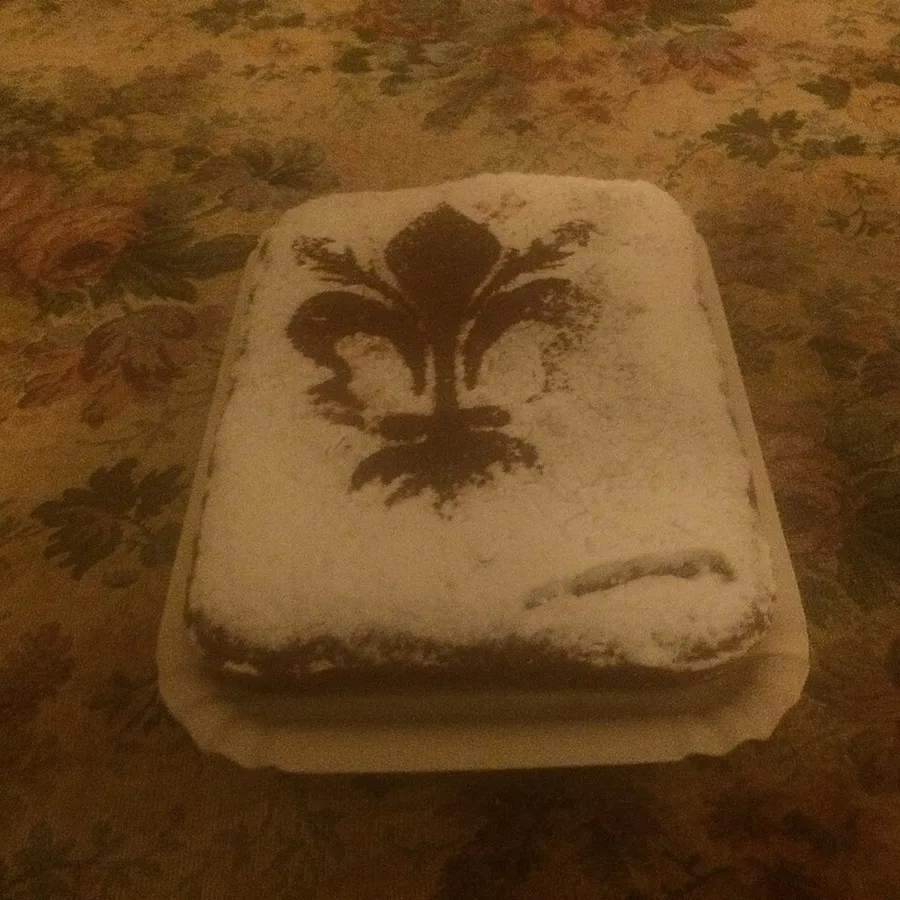
The Ligurian one is two centimetres deep, oily, salted on top and dimpled with the fingers so the oil and brine pool in the hollows. In Genoa it is eaten for breakfast dipped in cappuccino, which to non-Ligurians sounds like a provocation and is not.
 WILO-MA · CC BY-SA 4.0
toscana · 8-14 €/kg
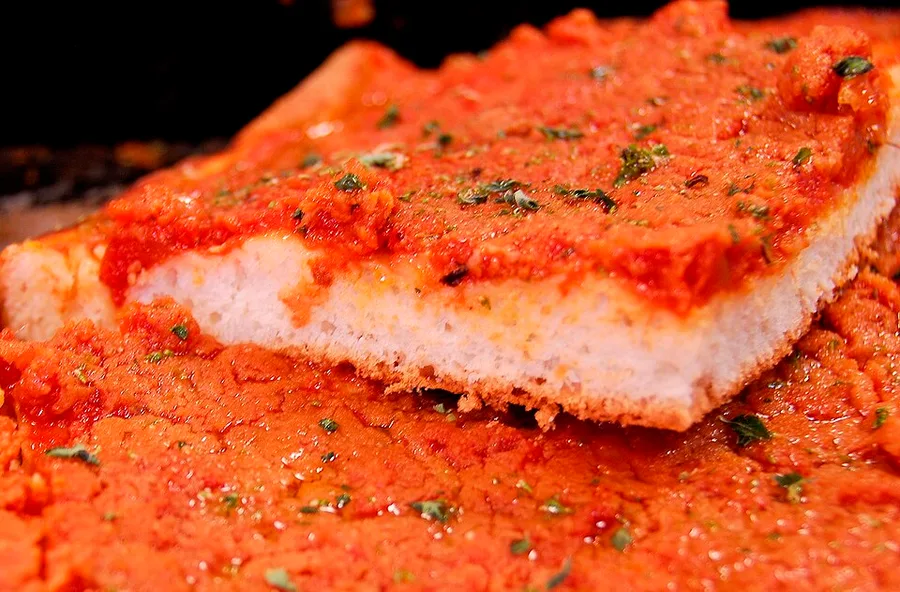
The Tuscan one, thinner and drier than Ligurian focaccia, with coarse salt on top and no brine. In autumn it becomes schiacciata con l'uva, with canaiola grapes and sugar, the only sweet bread on this list. The word just means flattened, and the shape describes the method.
 Rino Porrovecchio · CC BY-SA 2.0
sicilia · 8-14 €/kg
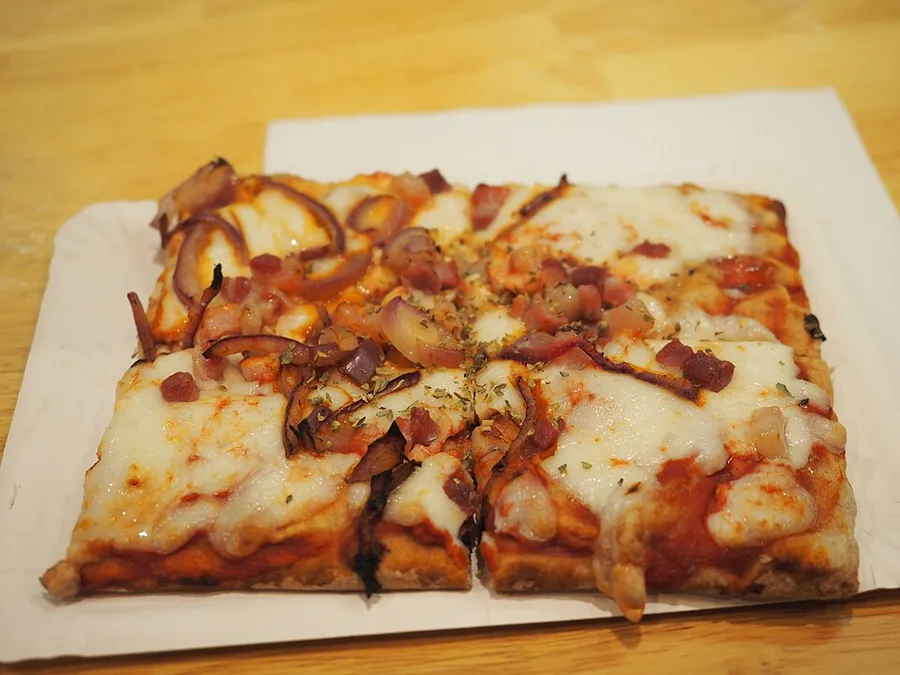
Palermitan, thick and spongy, dressed on top with onion, anchovy, tomato, caciocavallo and breadcrumbs, never mozzarella. It is sold by the tray from street carts and eaten at room temperature, which makes it genuine street food rather than thick pizza.
 JIP · CC BY-SA 4.0
lazio · 12-22 €/kg
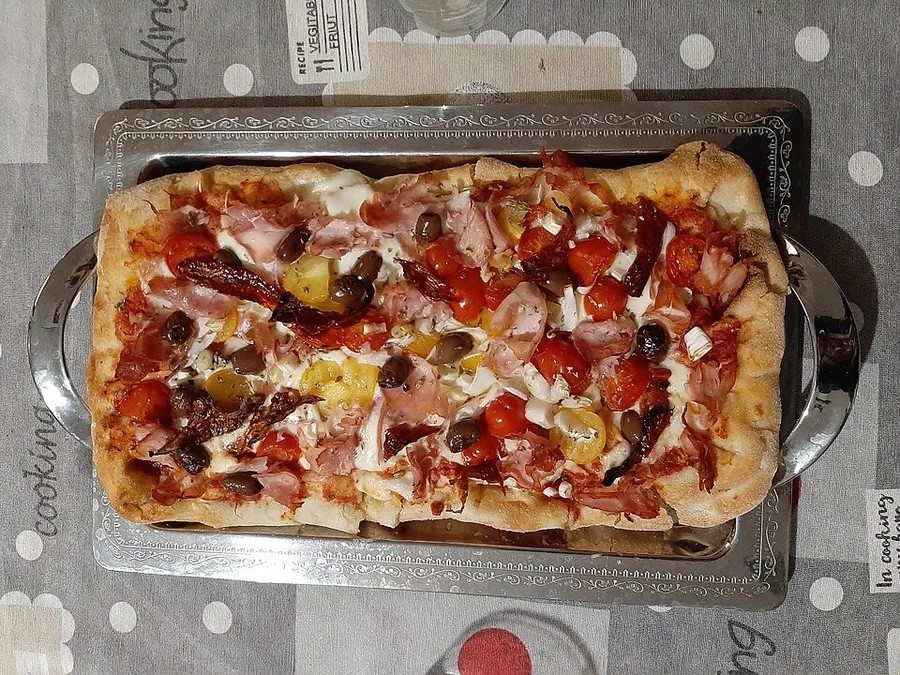
Roman, baked in a tray, cut with scissors and sold by weight: it is the city's standing lunch. The dough is very wet and long-matured, and the difference between a serious counter and an ordinary one shows in the base of the slice, which has to be crisp rather than soft.
 Ensahequ · CC BY-SA 4.0
lazio · 2.5-4 €/kg
Roman and recent, despite the ancient-sounding name: a dough of wheat, rice and soya flour, very wet, long-matured, oval. It is lighter and crisper than a pizza, and it is a product of the last few decades sold with a backstory older than it is.
 opera propria · CC BY-SA 3.017
Grissini
piemonte · 12-20 €/kg
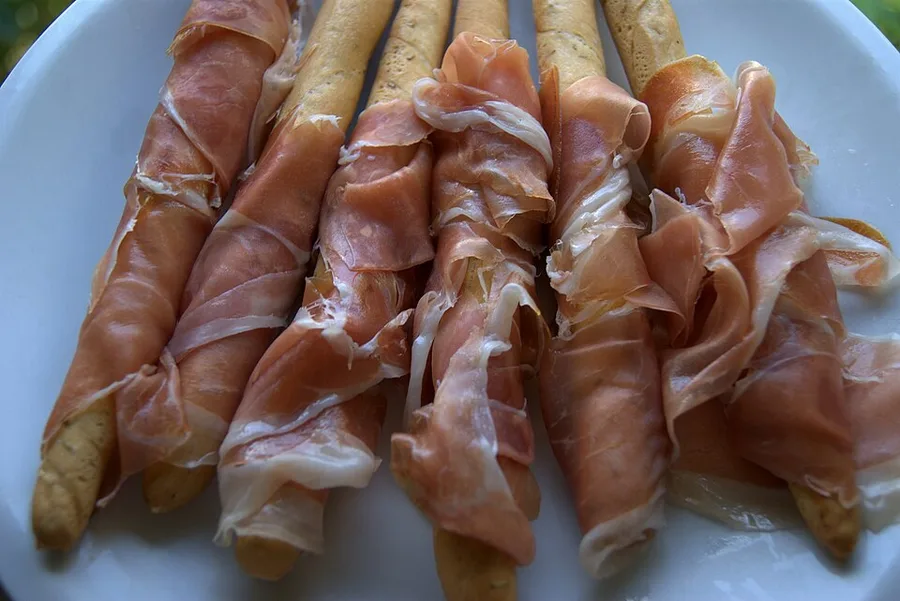
From Turin, invented in the seventeenth century as a bread easy on the stomach of a sickly child duke, so tradition says. The rubatà is hand-rolled, irregular and knobbly; the industrial one is extruded and straight. The gap between them is the gap between bronze-die pasta and teflon.
 Haragayato · Public domain18
Taralli
puglia · 8-14 €/kg
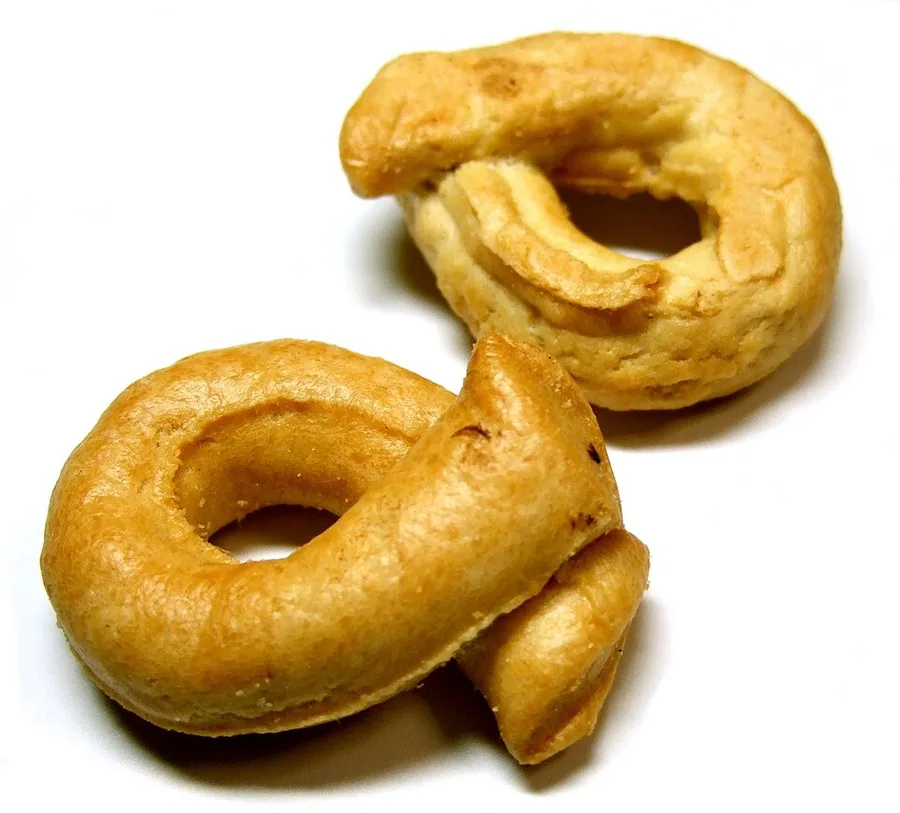
Apulian rings of semolina dough, boiled and then baked, which is the step that gives the glossy surface and the glassy snap. With fennel, with pepper, with white wine, with onion. They keep for weeks in a tin and they are what people carry home from Puglia along with the oil.
One last thing
Two practical notes. Southern semolina bread does not belong in the fridge, where the crumb stales within hours: a paper or cloth bag in the larder keeps it far better, and a cut Altamura loaf still holds four or five days. And stale bread is not thrown away in Italy: panzanella, pappa al pomodoro, ribollita, acquacotta, meatballs and canederli all come from three-day-old bread, which is the reason those recipes exist at all.
The questions this list answers
These are real questions put to an AI assistant, in the period when Bing cited this site among its sources to answer them. The number is how many times we were cited. We read them in Bing Webmaster Tools, under AI performance, and they decide what goes on this page rather than the other way round.
- taralli738 citations
- Altamura bread characteristics premium quality476 citations
- tigella234 citations
- altamura bread135 citations
- tuscan schiacciata bread95 citations
- pane di matera95 citations
- what is grissini91 citations
- what is schiacciata51 citations
- what is taralli27 citations
Frequently asked questions
Which Italian bread has a DOP?
Pane di Altamura, recognised in 2003 and still the only bread in Europe with a protected designation of origin. The rules fix durum semolina from the Murge, sourdough, a wood oven and a crust at least three millimetres thick. Other protected Italian breads, such as Matera and Genzano, hold the IGP.
Why is Tuscan bread made without salt?
The historical explanations usually offered involve salt taxes and rivalries between maritime cities, and none of them is proven. What matters is the use: unsalted bread goes with cured meats, pecorino and very savoury sauces, and in those combinations salted bread would cover everything. It is also the base of panzanella, ribollita and pappa al pomodoro.
What is the difference between focaccia and schiacciata?
Ligurian focaccia is two centimetres deep, oily, and brushed with a brine of water and salt that pools in the dimples. Tuscan schiacciata is thinner, drier and salted only on top. They are two different breads, not two names for one.
Why are taralli boiled before baking?
Boiling gelatinises the starch at the surface: in the oven that film dries and gives the gloss and the glassy snap that a baked-only tarallo lacks. It is the same principle as a bagel, applied to a dough of semolina and oil.