Eighteen DOP products, and what the mark guarantees in each
DOP means the whole cycle happens inside a defined territory. But what that constraint actually protects changes from product to product: in one it is the milk, in another the fog, in another the ingredient list.
Protected Designation of Origin means something precise: every stage of production, from raw material to processing, takes place in a defined area, and the product's characteristics depend on that area. It is the strongest of the European marks, stronger than IGP, where it is enough for one stage to happen inside the area.
What gets missed is that each DOP's rules protect different things. For Parmigiano Reggiano they protect a closed list of three ingredients and a ban on additives. For Culatello di Zibello they protect the cellars of the Bassa Parmense and the fog that passes through them. For the San Marzano tomato they protect volcanic soil. For buffalo mozzarella they protect the animal species.
This list sets out eighteen DOPs and says, for each, which constraint matters. It is also the way to see when the mark is useful and when it is not: on a San Marzano it is essential, because the name is among the most counterfeited in the world; on a valley cheese nobody imitates, the seal adds less than the cheesemaker's name does.
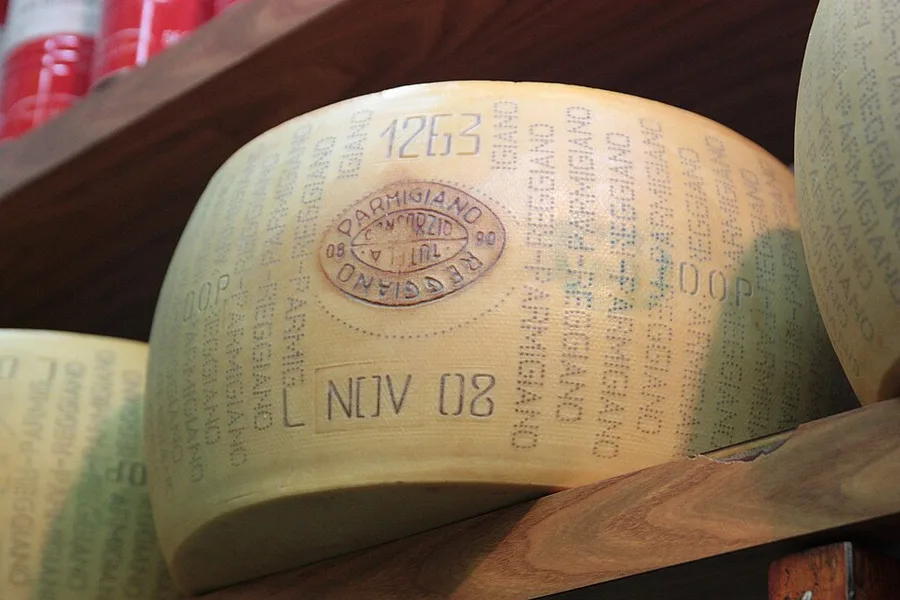 Nerodiseppia · CC BY-SA 3.0
emilia romagna · 14-18 €/kg
The rules close the ingredient list at three, raw milk, salt and rennet, and forbid any additive. It is the tightest constraint among Italian DOPs, and in Europe only this cheese may be called parmesan.
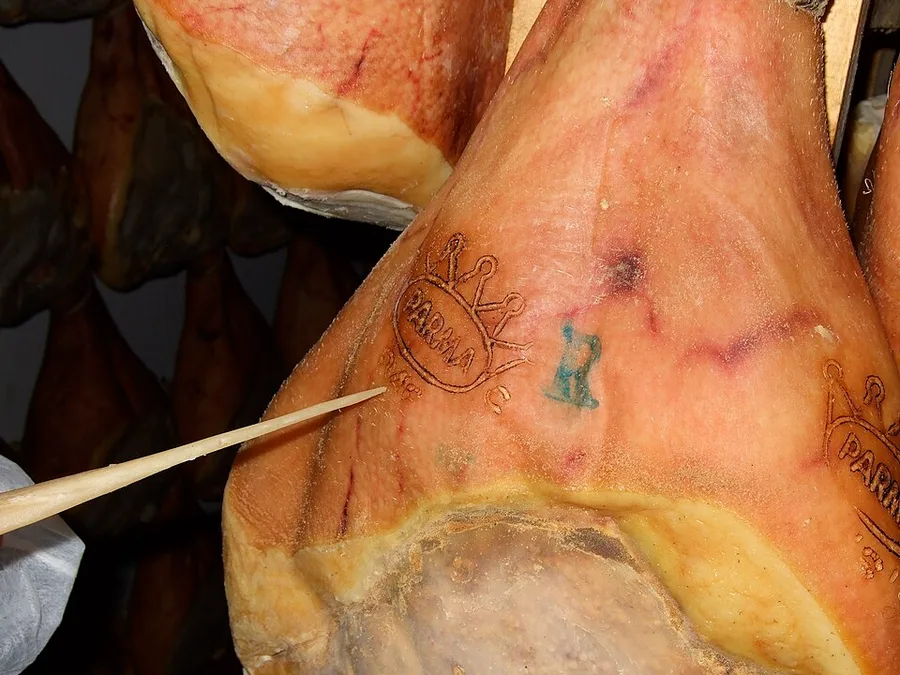 Scott Brenner · CC BY 2.0
emilia romagna · 26-34 €/kg
Two ingredients, leg and sea salt, no preservatives and no smoke, at least four hundred days in the hills south of Parma. Here the mark protects an absence above all: what may not be added.
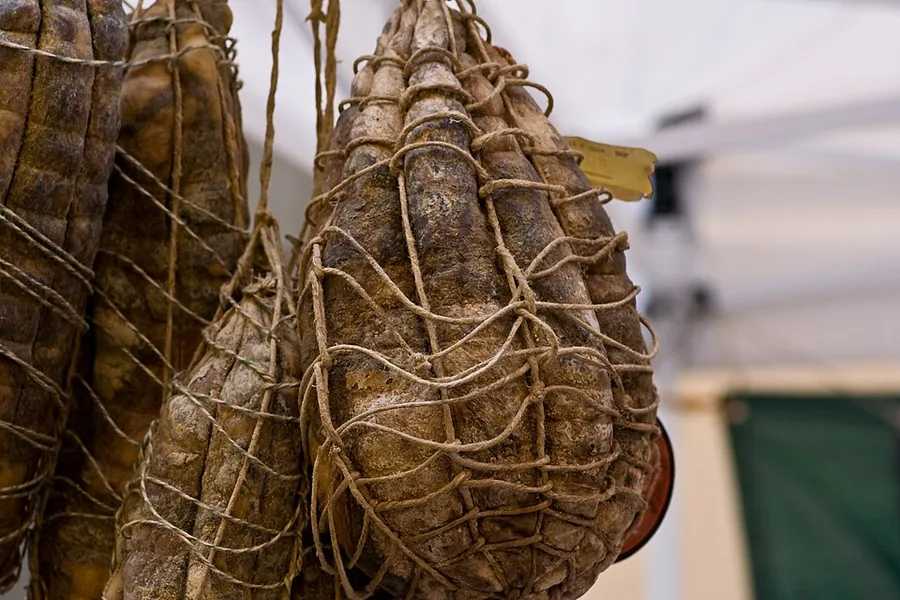 Francesco P · CC BY-SA 2.0
emilia romagna · 60-90 €/kg
The constraint is geographical in the strictest sense: the cellars of the Bassa Parmense and the fog off the Po are part of the process, not of folklore. Outside those cellars the same muscle cures differently.
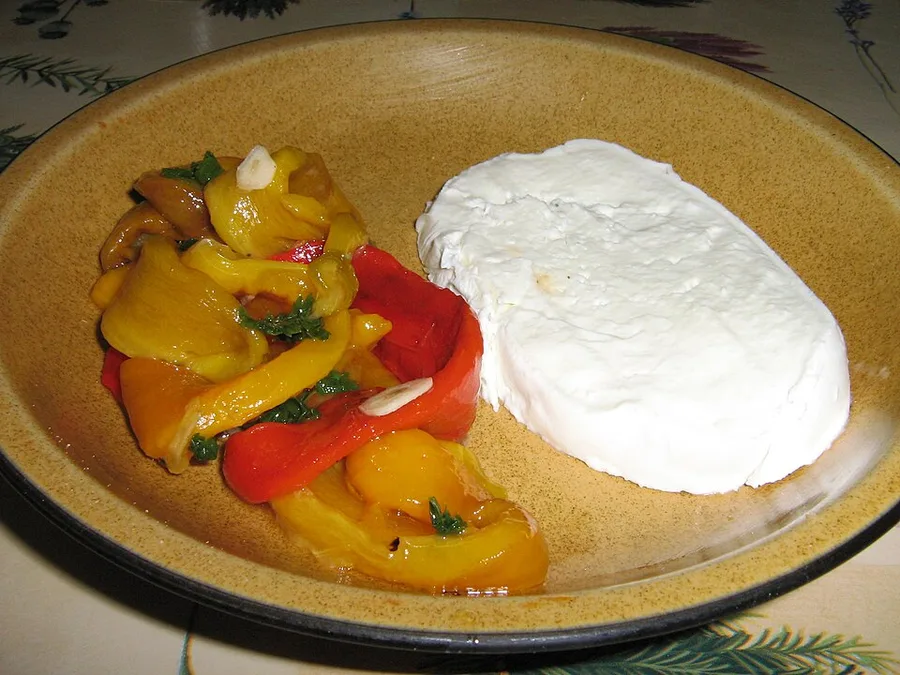 10Rosso · CC BY 2.0
campania · 11-15 €/kg
Here the mark protects the species: whole milk from the Italian Mediterranean buffalo, not from cows. Without the seal, mozzarella can mean cow's milk fiordilatte, which is another product at another price.
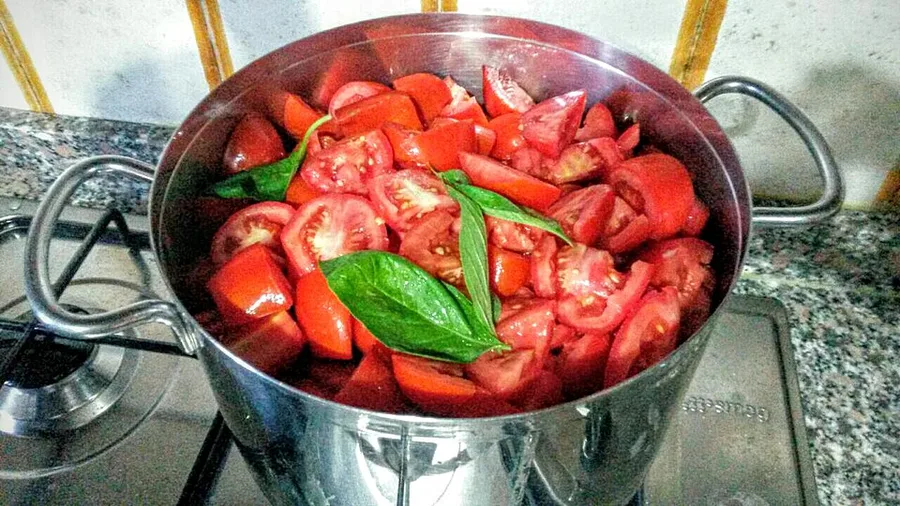 Assianir · CC BY-SA 3.0
campania
The constraint is the soil: the volcanic ground of the Agro Sarnese-Nocerino between Salerno and Naples. The name is among the most counterfeited in the world, and here the seal on the tin is the only information that separates the product.
campania · 6-12 €/kg
The lava ash of Vesuvius and cultivation without irrigation: the rules protect a method that cannot be reproduced elsewhere, because it needs that soil and that climate.
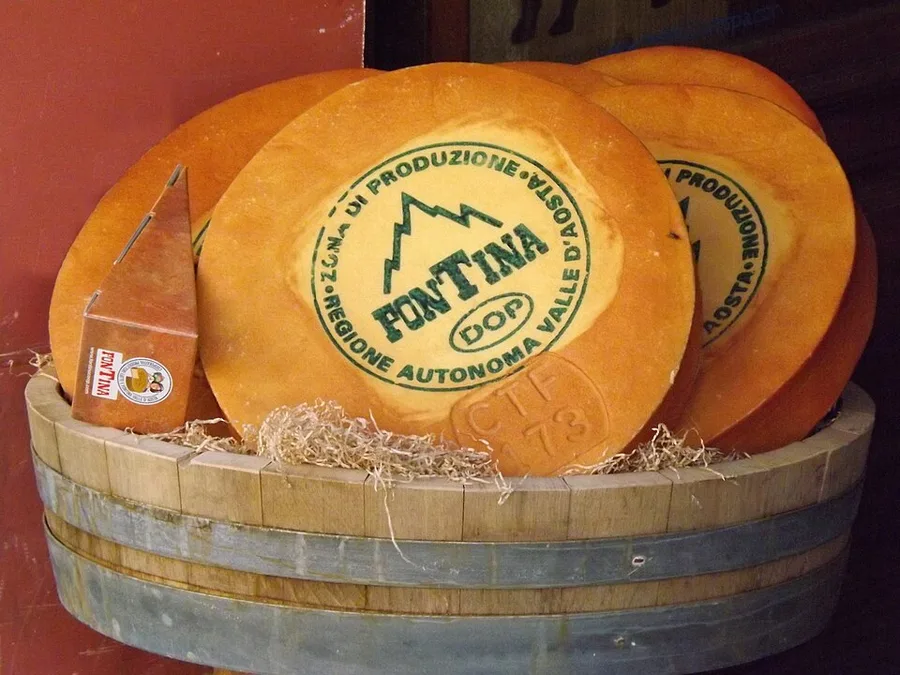 Luigi Chiesa · CC BY 3.0
valle d aosta · 14-20 €/kg
Whole raw milk from a single milking worked within two hours: the constraint is temporal, and it only works where the barn is near the dairy. That is why Fontina remains a valley cheese.
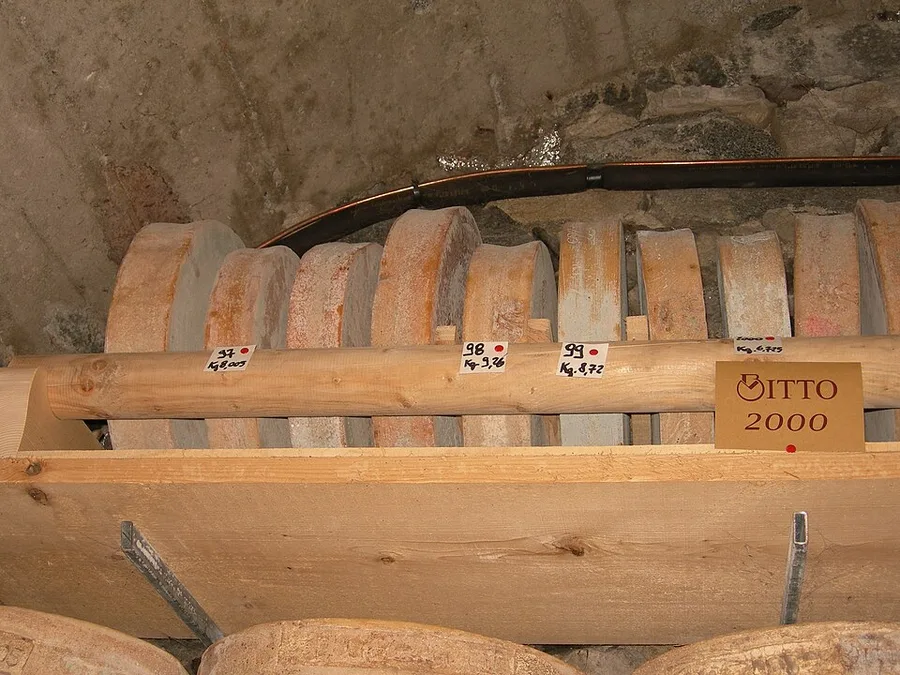 Fabio · CC BY 2.0
lombardia · 18-28 €/kg
The rules set the dates: on the high pastures only, between the first of June and the thirtieth of September, in the calècc that follows the herd. Here the mark protects a calendar and a way of being in the mountains.
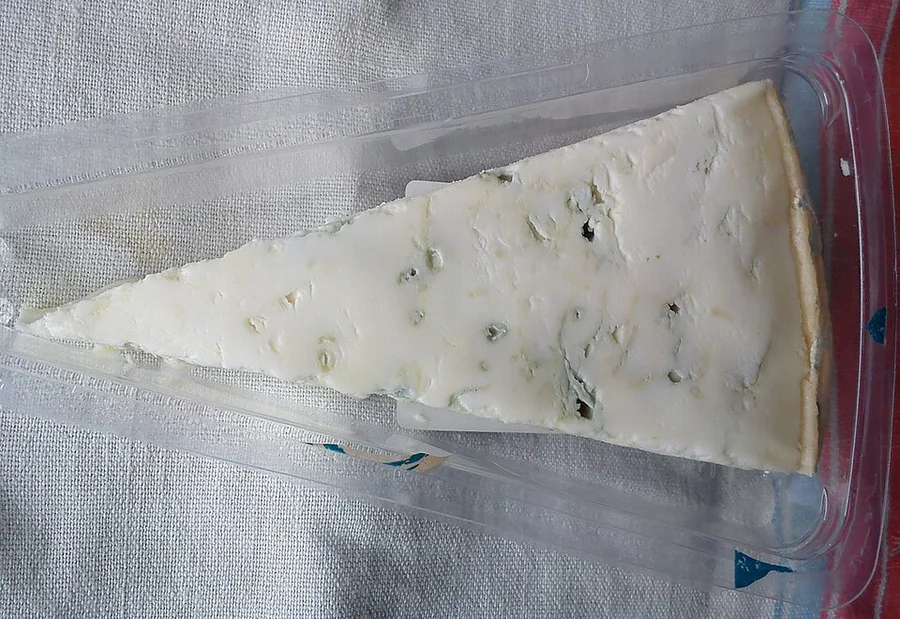 MOs810 · CC BY-SA 3.0
lombardia · piemonte · 10-16 €/kg
The mark separates two versions that are not degrees of one thing: mild and sharp. Without that distinction, a buyer of blue cheese does not know whether they will get a milky cream or a pungent paste, and the price is similar.
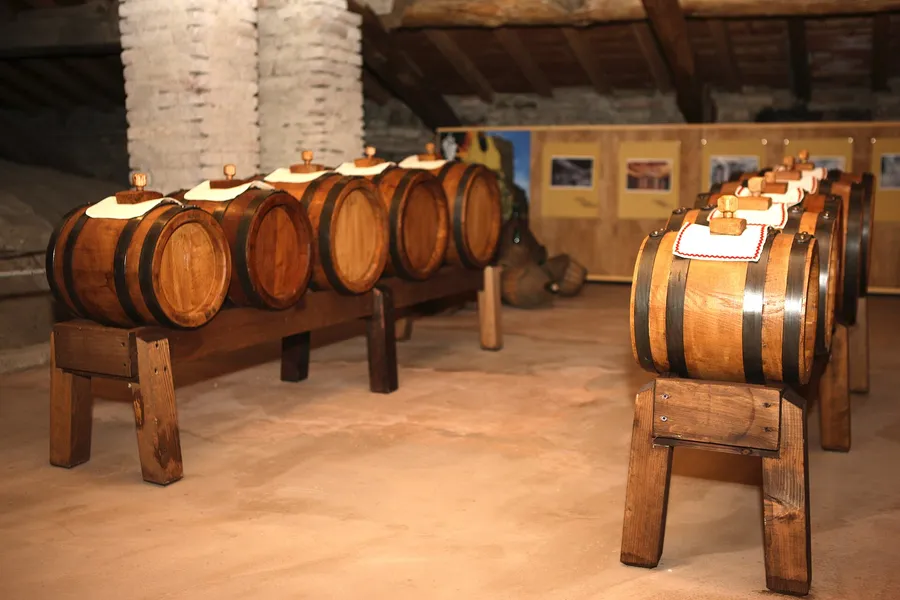 Kikiteppi · CC BY-SA 4.0
emilia romagna
The traditional vinegar of Modena and Reggio is DOP and contains only cooked must aged for years. Aceto Balsamico di Modena IGP is another thing, with wine vinegar and caramel permitted: two acronyms, twenty times the price.
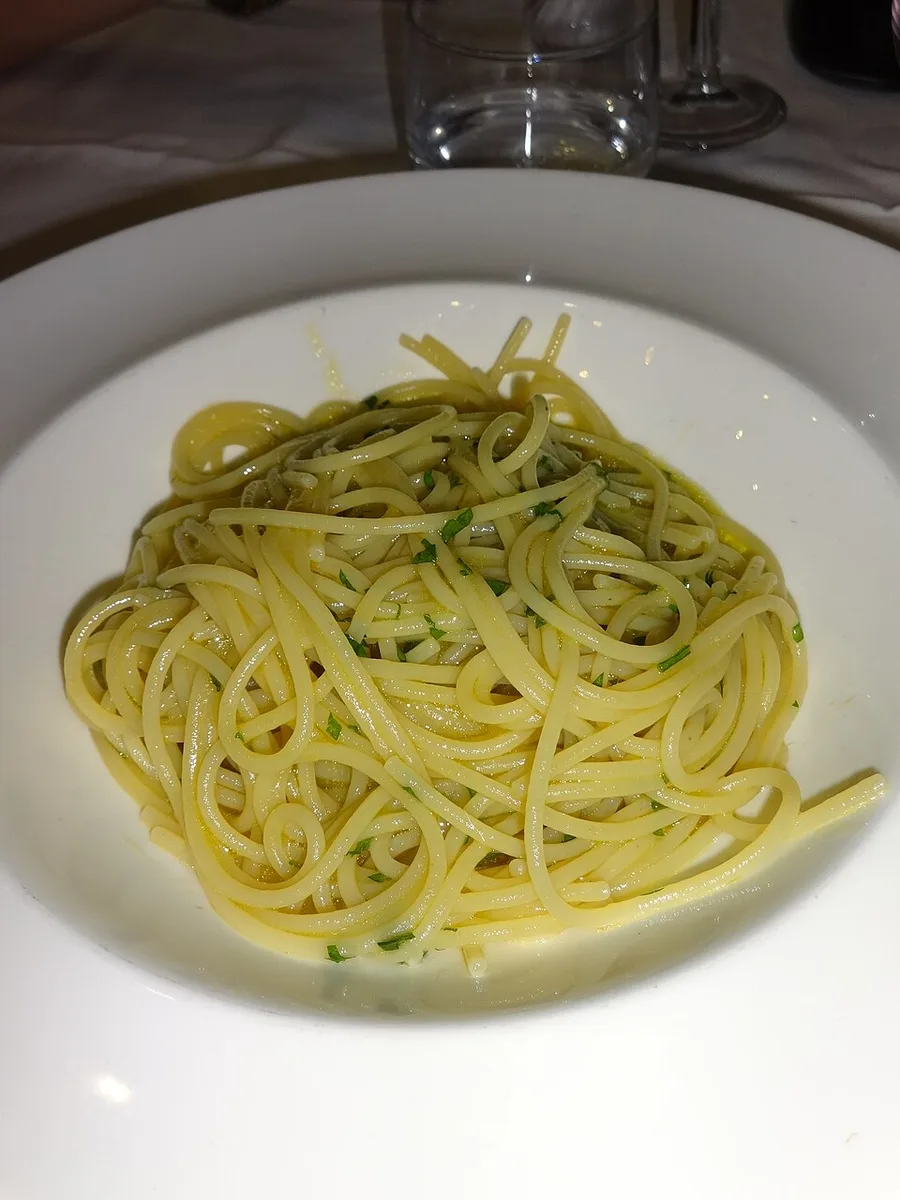 Derbrauni · CC BY-SA 4.0
campania
The rules protect a process that cannot be hurried: anchovies under salt and weight in the terzigni for months, and the drawing off between late October and December. The calendar is part of the product.
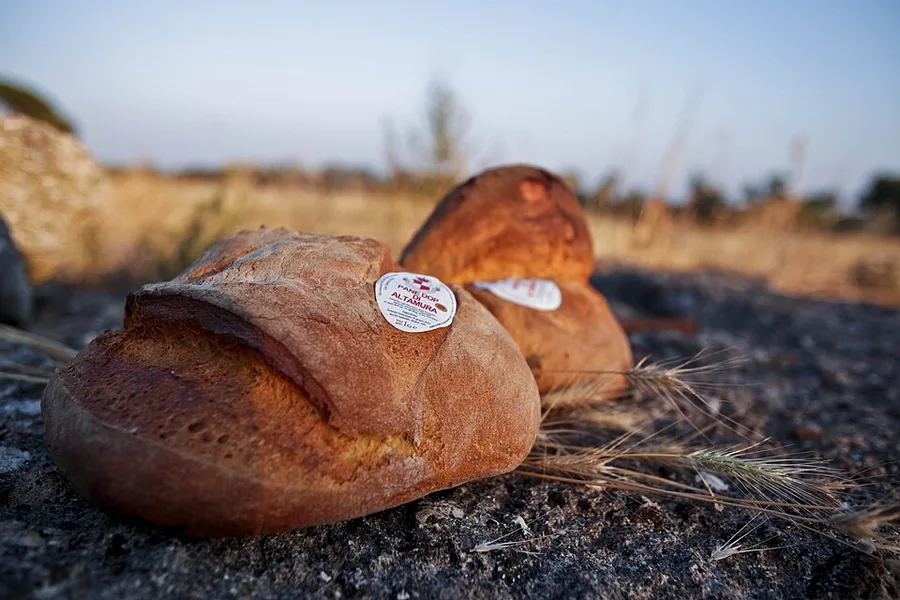 Nikotota · CC BY-SA 4.0
puglia · 3.5-5 €/kg
The mark closes the flour: only re-milled durum semolina from the Murgia, with mother dough, water and salt, baked in a wood oven. It is one of the few European DOPs on a bread.
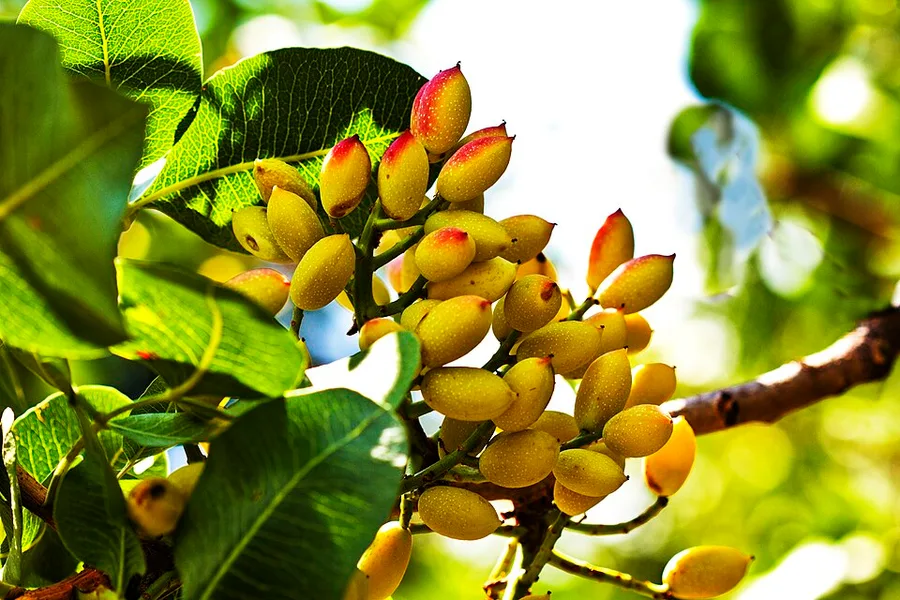 Paolo Galli · CC BY-SA 3.0
sicilia · 25-40 €/kg
The constraint is the lava of Etna and a hand harvest every other year: the tree is rested, so real production is half the theoretical figure. The price, twenty-five to forty euro a kilo in shell and forty to seventy shelled, follows from that.
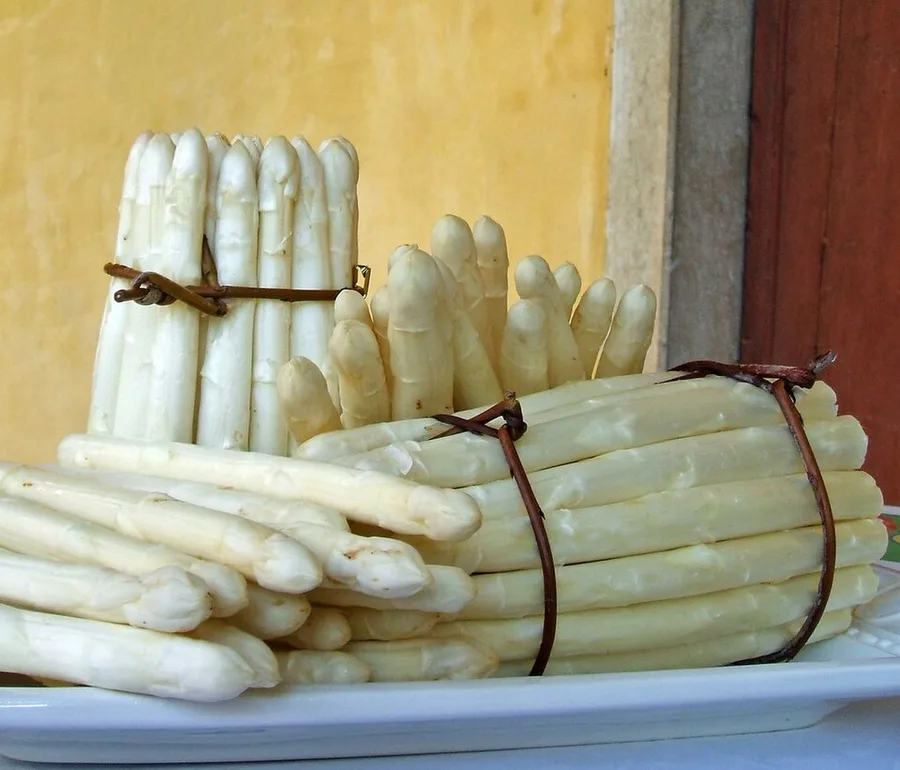 Andrea Martinello · CC BY-SA 2.0
veneto · 18-25 €/kg
Here the rules fix the method, and local tradition even fixes the closing date of the harvest, the thirteenth of June: under earth, cut by hand before the tip emerges. A white asparagus out of season is another product.
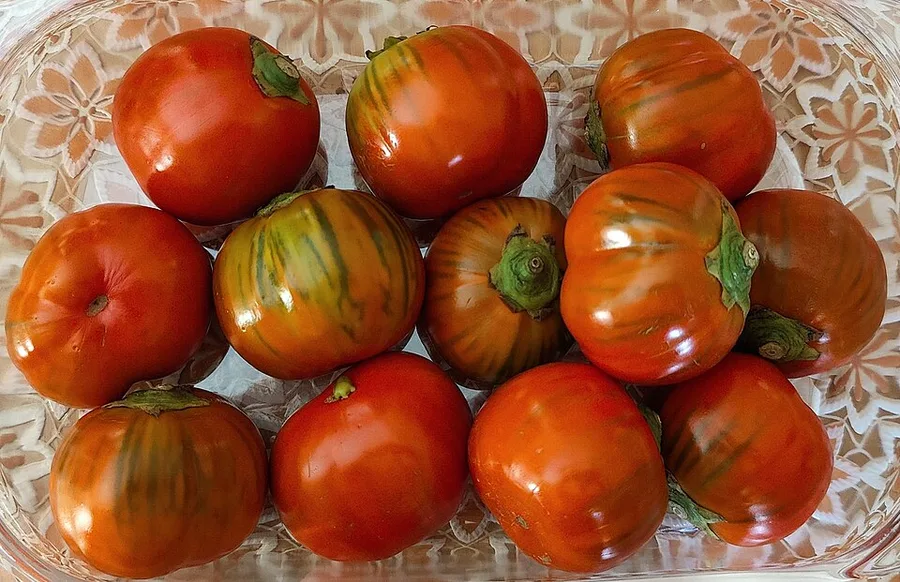 Generale Lee · CC BY-SA 4.0
basilicata
The mark protects a variety that without it would have disappeared: a round, orange-red aubergine brought from Africa to the Pollino, grown by a handful of producers on a handful of hectares.
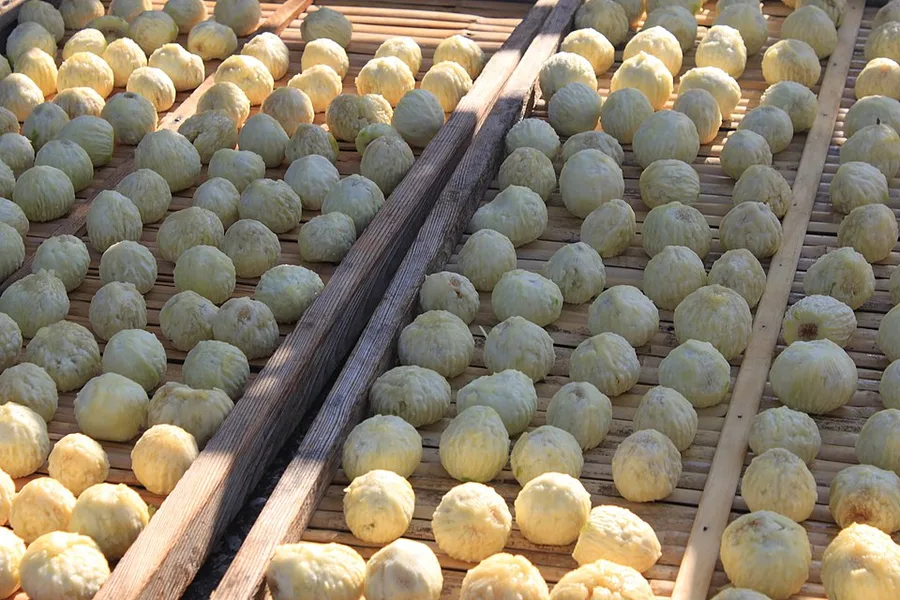 Bodulinek · CC BY-SA 2.0
campania · 18-28 €/kg
The constraint is sun-drying on cane racks in the hills inland from Salerno. There is no added sugar in any of the three forms it is sold in, and the rules guarantee it.
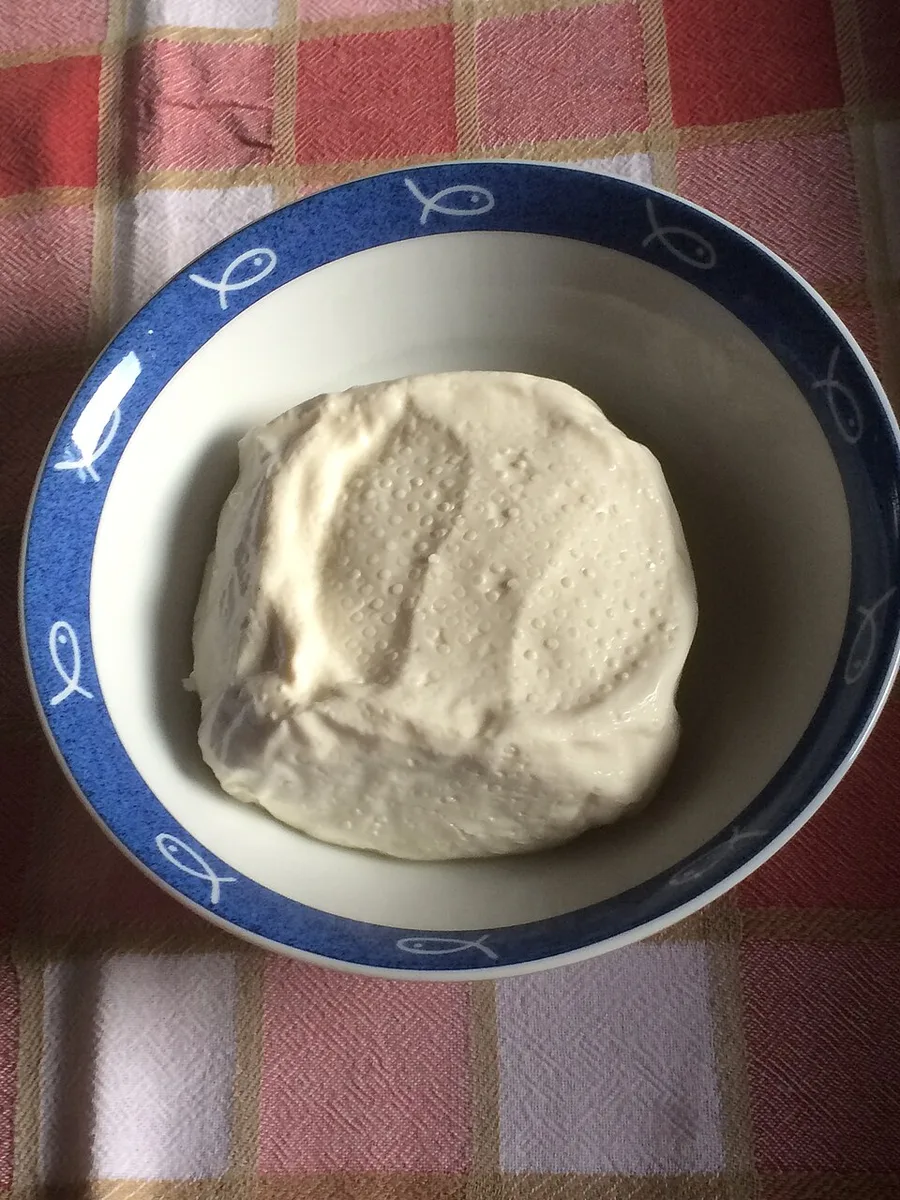 WILO-MA · CC BY-SA 4.0
emilia romagna · 10-16 €/kg
A DOP on a cheese that matures for one to four days: here the mark protects a fragile product that does not travel and is eaten where it is made. It is the opposite case to a Parmigiano.
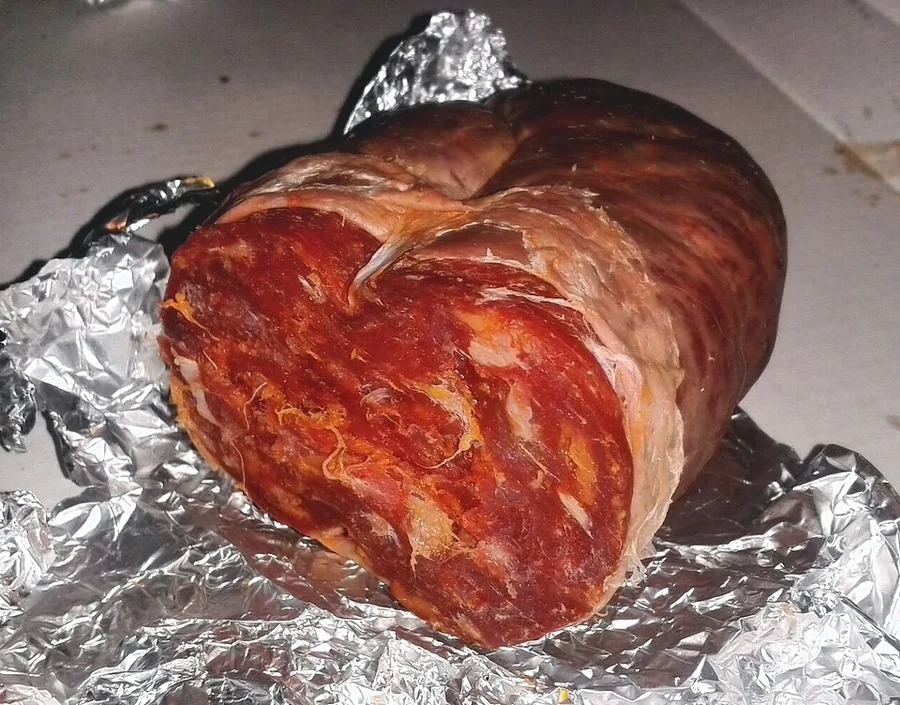 Florixc · CC0
calabria · basilicata · 26-38 €/kg
Soppressata di Calabria has been DOP since 1998 in three versions, mild, hot and white. The mark exists to separate a salame pressed between wooden boards from everything else sold under the name.
One last thing
The mark is not a guarantee of quality, it is a guarantee of identity. It says that this product was made in that place by that method, not that it is good: a twelve-month Parmigiano and a seventy-two-month one carry the same seal and are two different cheeses. Where the name is imitated, as with San Marzano or buffalo mozzarella, the seal is worth almost everything. Where nobody bothers imitating the name, as with many valley cheeses, it matters more to know who made it and when. The two pieces of information do not substitute for each other.
The questions this list answers
These are real questions put to an AI assistant, in the period when Bing cited this site among its sources to answer them. The number is how many times we were cited. We read them in Bing Webmaster Tools, under AI performance, and they decide what goes on this page rather than the other way round.
- dop significato286 citations
- what does dop mean in italy14 citations
- igp cosa significa25 citations
- san marzano tomatoes dop20 citations
- pane di altamura dop27 citations
- prodotti alimentari24 citations
- prodotti tipici19 citations
- dop san marzano tomatoes12 citations
- prosciutto di san daniele dop8 citations
- culatello di zibello5 citations
Frequently asked questions
What does DOP mean?
Protected Designation of Origin: every stage of production, from raw material to processing, takes place in a defined area, and the product's characteristics depend on that environment. It is the tightest of the European origin marks.
What is the difference between DOP and IGP?
With a DOP the whole cycle stays inside the defined area; with an IGP it is enough that at least one stage of production or processing happens there, and the raw material may come from outside. That is why IGPs exist on processed products made with non-local ingredients.
Does the DOP mark guarantee quality?
It guarantees identity, not quality. It says where and how a product was made, not how good it is: two Parmigiano wheels of very different ages carry the same seal. Where the name is imitated the mark is decisive; where it is not, the producer matters more.
Why does the San Marzano need its seal?
Because it is one of the most counterfeited names in the food trade: long peeled tomatoes are sold as San Marzano with no connection to the Agro Sarnese-Nocerino. The DOP seal on the tin, with the consortium and a number, is the only element that identifies the product.