Sixteen IGP products, and why IGP is not a lesser DOP
Bresaola, speck, finocchiona, lardo di Colonnata, mortadella, burrata, Castelluccio lentils, Langhe hazelnut, pizzoccheri, cantucci. A mark that protects a process instead of a soil.
The IGP is often read as a second-class DOP, and it is not: it protects something different. With a DOP the whole cycle stays inside the defined area; with an IGP it is enough for one stage of production or processing to happen there. It is a technical distinction, not a ranking of merit.
Bresaola makes the difference clear. Bresaola della Valtellina IGP is beef salted and cured in the dry air of the Valtellina, and the air is the point; the meat may come from outside, because the valley does not raise enough cattle. Demanding a DOP would have meant either a different product or no product at all.
The same holds for lardo di Colonnata, where what counts is the marble trough of the Canaloni and the six months inside it; for speck, where what counts is cold smoking below twenty degrees and the air; for mortadella, where what counts is slow cooking in dry-air ovens. In all three the mark protects a gesture, and the gesture is what makes the product.
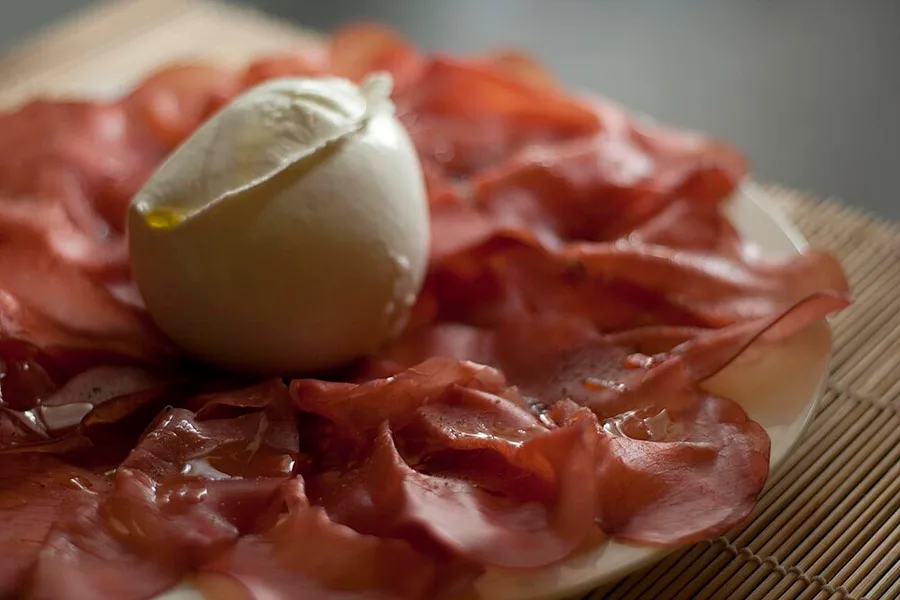 Luca Nebuloni from Milan, Italy · CC BY 2.0
lombardia · 32-42 €/kg
Beef dry-salted and cured four to eight weeks in the dry air of the Valtellina. The mark protects the air and the method: the meat may come from outside, because the valley does not raise enough cattle.
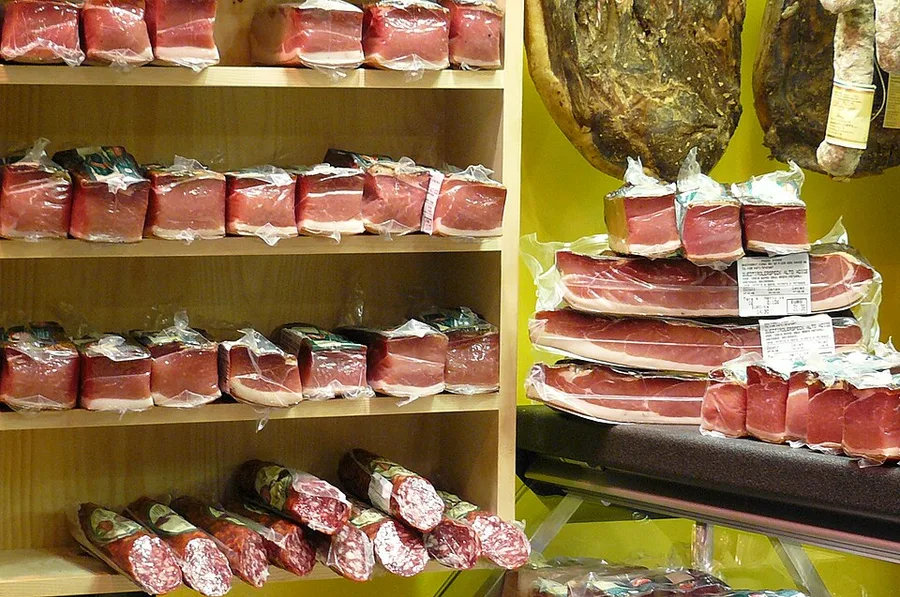 MOs810 · CC BY-SA 4.0
trentino alto adige · 18-26 €/kg
A boned leg, salted with spices, cold-smoked over beech below twenty degrees, then air-dried. The rules fix the temperature of the smoke, which is the constraint that makes speck what it is.
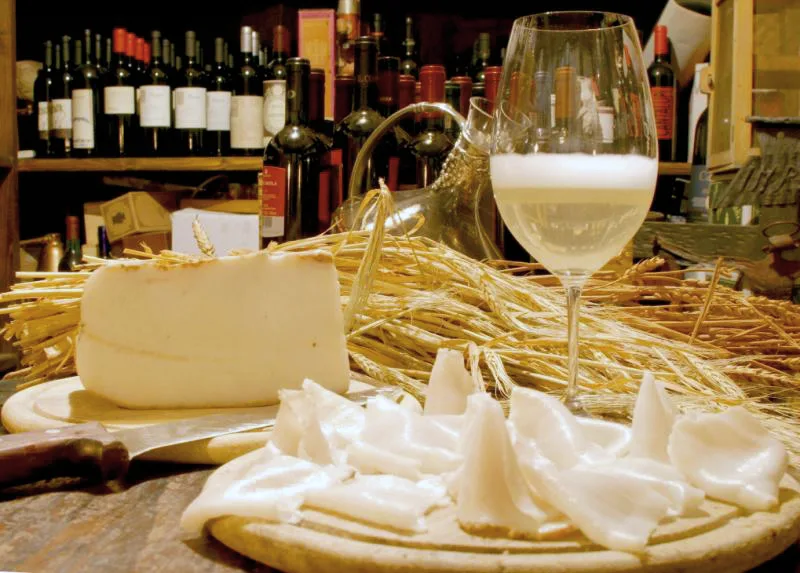 OneArmedMan · Public domain
toscana · 28-40 €/kg
Six months minimum in the marble troughs of the Canaloni, rubbed with garlic and layered with salt, pepper, rosemary and spices. Here the mark protects a container: the marble, which stays cool and damp.
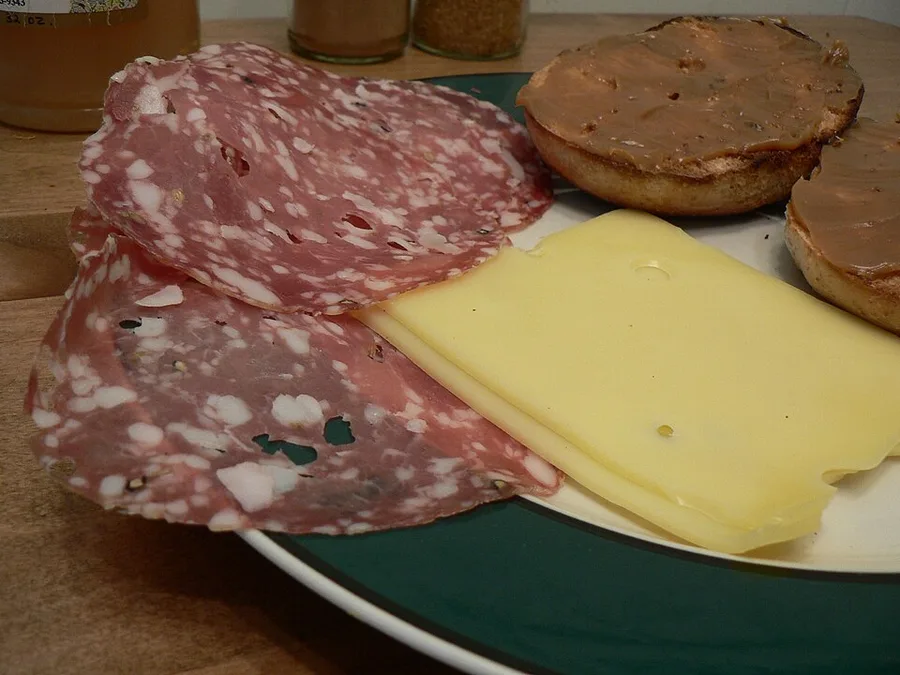 stu_spivack · CC BY-SA 2.0
toscana · 18-28 €/kg
The Tuscan wild fennel salame, seed or flower, IGP since 2015. The mark brought order to a name that covered dozens of different products, and it fixed both the grind and the fennel.
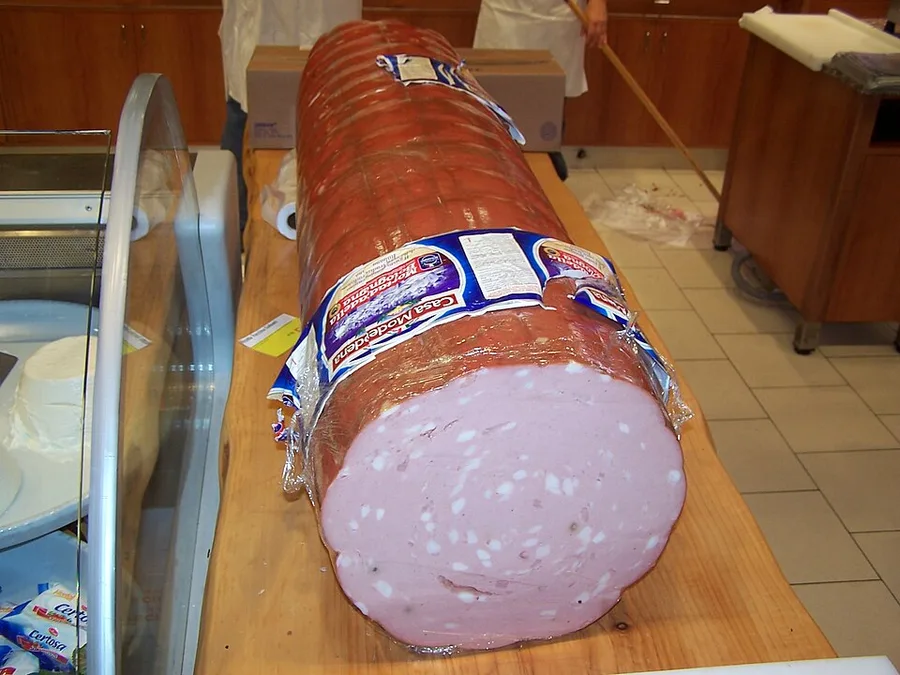 ehud · CC BY 2.0
emilia romagna · 14-20 €/kg
Very fine pork with squared cubes of throat fat, cooked slowly in dry-air ovens. The constraint is the cooking, not where the pigs were raised: without those hours in the oven it is not mortadella di Bologna.
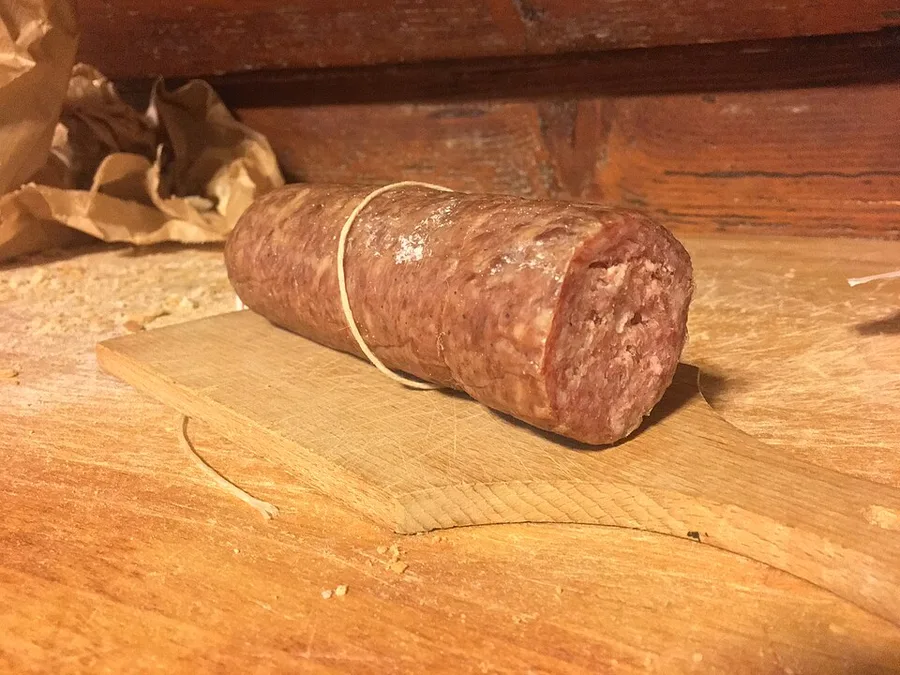 Egijd · CC BY-SA 4.0
marche · 18-28 €/kg
The spreadable salame of the Marche, IGP since 2009: a very fine grind and a fat percentage set by the rules, because that is what makes it spreadable rather than sliceable.
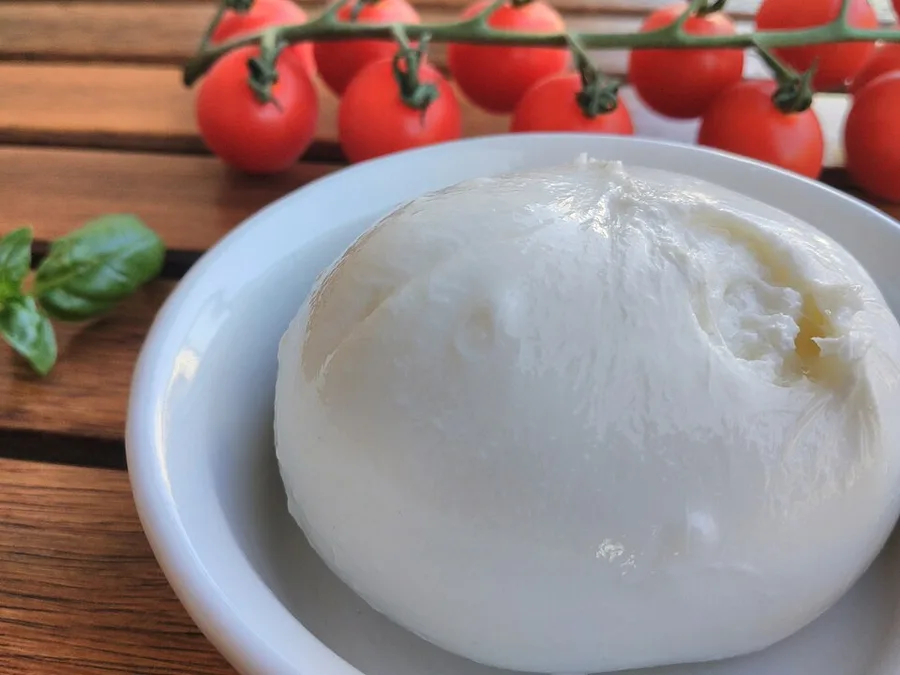 Popo le Chien · CC0
puglia · 14-20 €/kg
A pouch of stretched curd filled with stracciatella and cream, born in Andria in the nineteen twenties to use up the trimmings of spinning. The mark protects the technique, because cream can be bought anywhere.
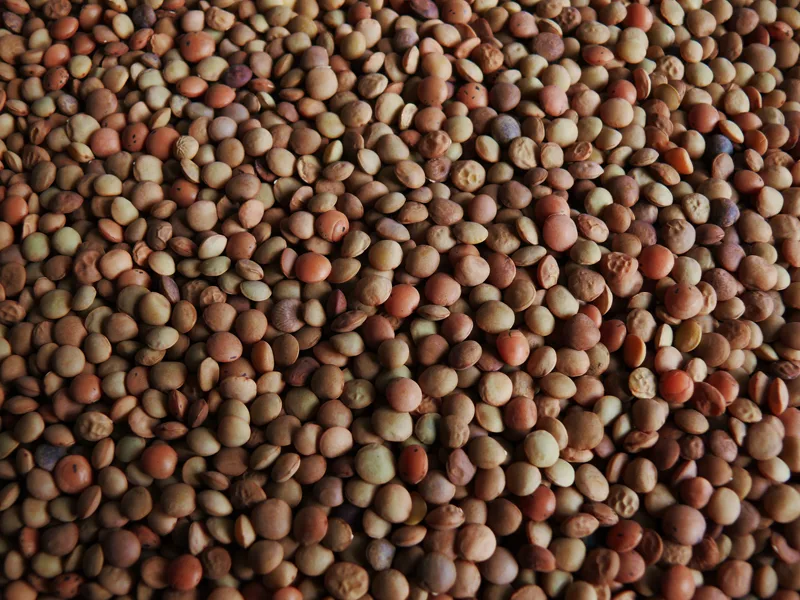 Zyance · CC BY-SA 2.5
umbria · 18-25 €/kg
They grow at thirteen hundred metres on the Pian Grande, and altitude is the constraint: an extremely thin skin, no soaking, twenty or thirty minutes' cooking. A lowland lentil under the same name would be another thing.
 fugzu · CC BY 2.0
toscana · 4-8 €/kg
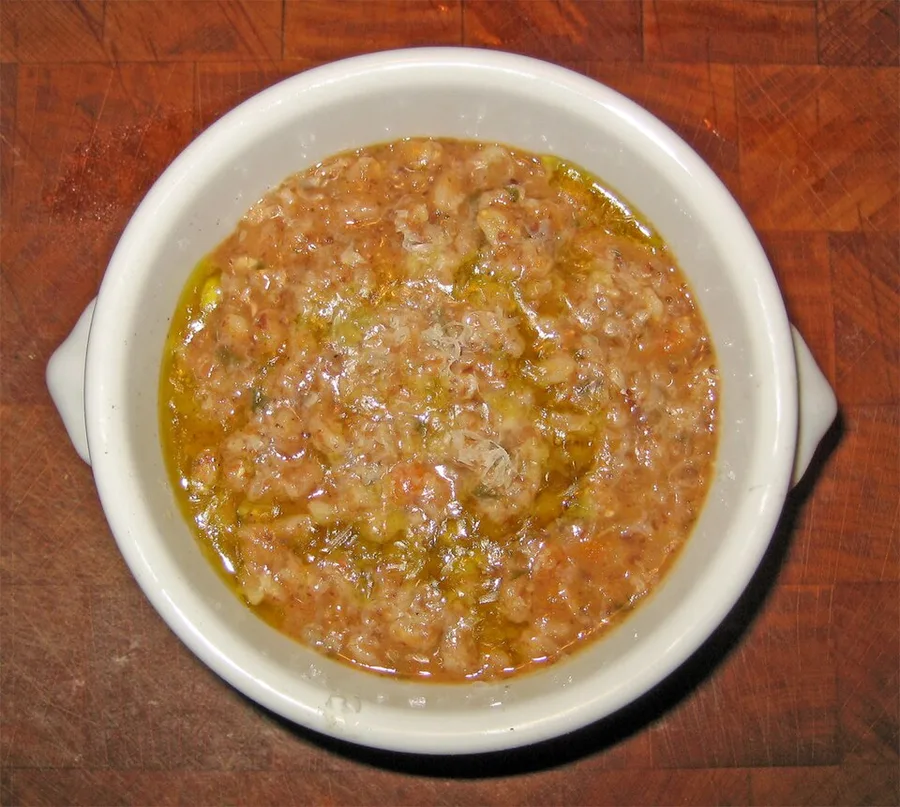
Hulled farro grown in a cold, rainy valley above Lucca. The mark protects the variety and the area, and the difference shows in the timing: this farro wants hours of soaking and does not break up.
 WINELINKITALY - Barbara D'Agapiti · CC BY-SA 2.0
piemonte · 6-10 €/kg
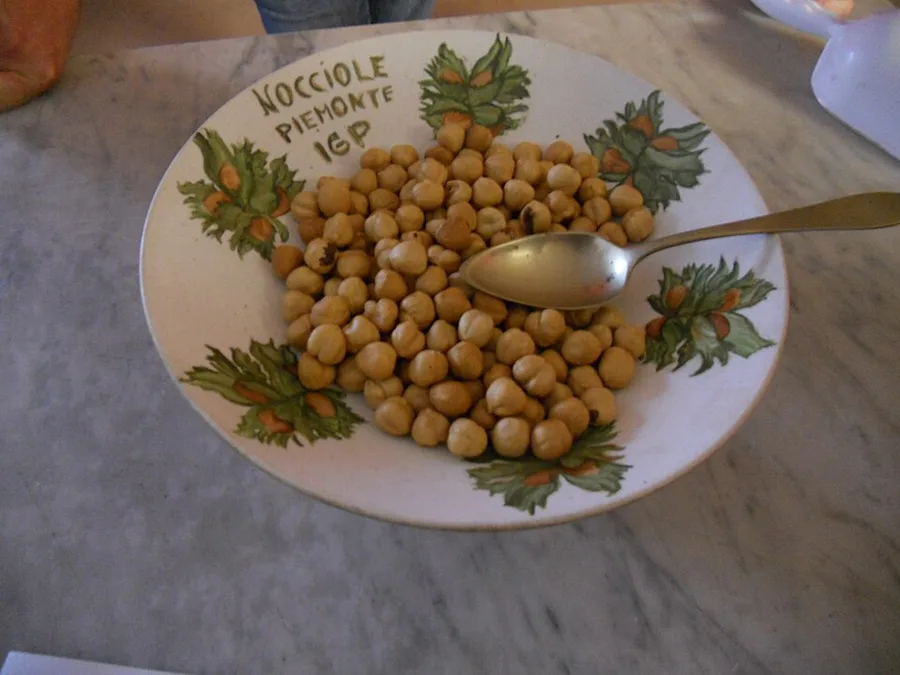
A single cultivar, the Tonda Gentile Trilobata: a forty-five per cent shelled yield and a skin that comes away by itself in roasting. Here the IGP protects one precise botanical variety.
sicilia · 1.2-2.5 €/kg
Three varieties, Tarocco, Moro and Sanguinello, and a climatic phenomenon: anthocyanins form only where the nights are cold. The mark defines the area because it is the area that makes the colour.
 Nnaluci · CC BY-SA 3.0
lombardia · 8-14 €/kg
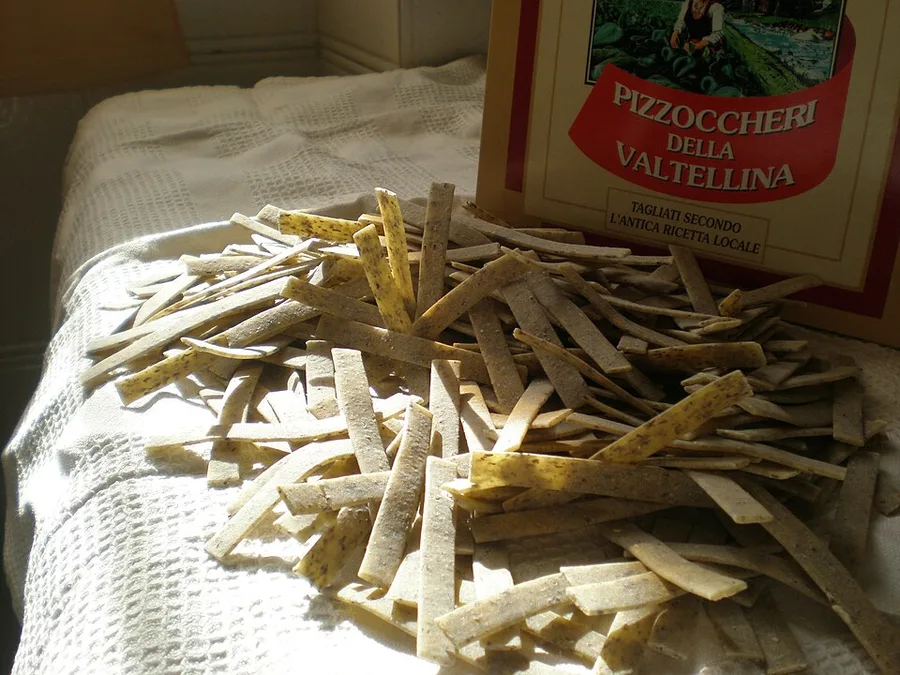
Buckwheat pasta from the Valtellina, IGP. The rules fix the share of buckwheat, which is the point: below a certain level you get a dark tagliatella rather than a pizzocchero.
 Matteo Bertini · CC BY-SA 2.0
toscana · 14-24 €/kg
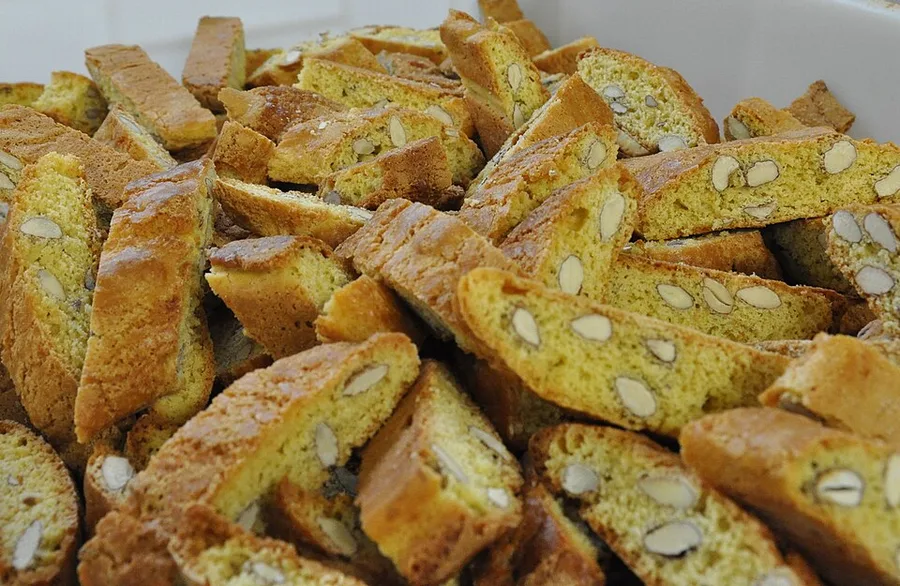
Almond biscuits baked twice, IGP. The second baking is the constraint, and it is also the reason for the hardness and the keeping: without it they are soft biscuits and another product.
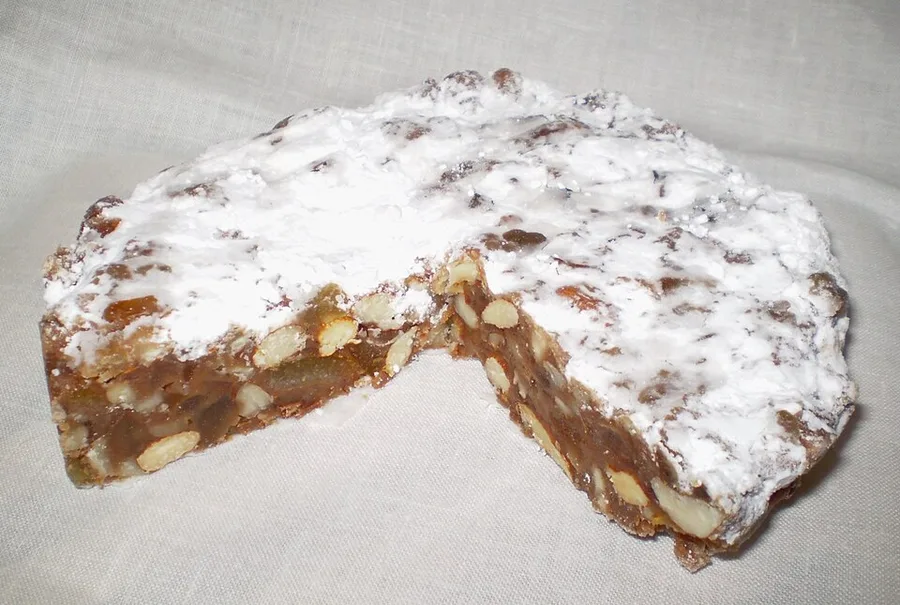 Lucarelli · Public domain
toscana · 32-48 €/kg
From Siena: honey, sugar, almonds, candied peel and spices, almost no flour. The mark protects the proportions of a medieval sweet, where flour is a binder rather than the main ingredient.
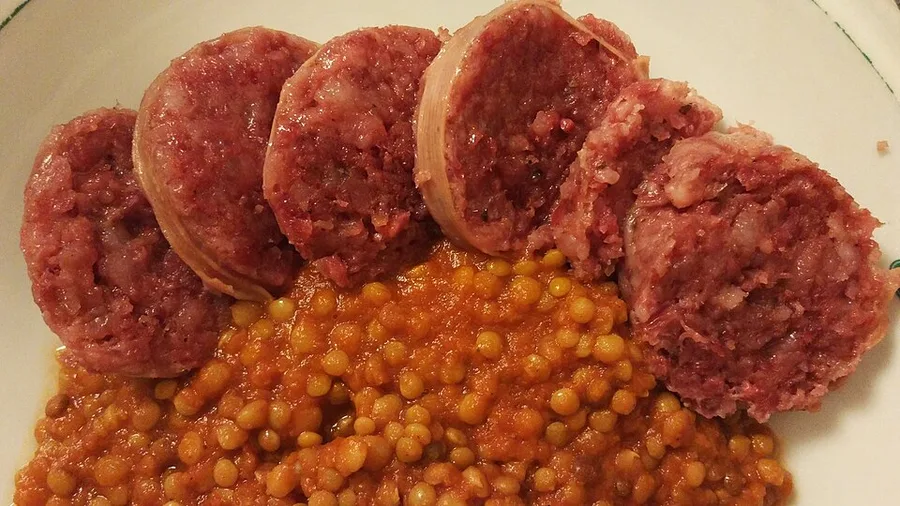 Popo le Chien · CC BY-SA 3.0
emilia romagna · 12-20 €/kg
Meat, fat and rind in the proportion that gives it both its name and its gelatinous texture. The rules fix that proportion, which is precisely what separates a cotechino from any other sausage.
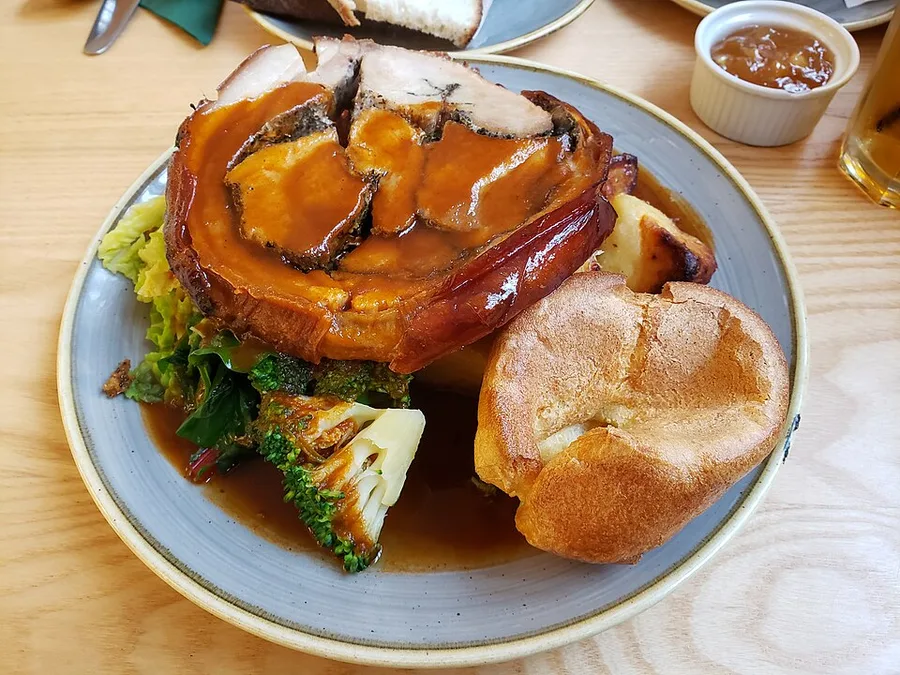 Andy Li · CC0
lazio · umbria · 12-18 €/kg
Pork boned, seasoned and rolled, cooked six to eight hours: at Ariccia it is IGP. The mark protects the process and the area of processing, not the origin of the pig.
One last thing
One case explains the difference between the two marks on its own: balsamic vinegar. The Tradizionale of Modena and that of Reggio Emilia are DOP, contain only cooked must aged for years in a battery of casks, and are sold in hundred-millilitre bottles. Aceto Balsamico di Modena is IGP, a blend of cooked must and wine vinegar with caramel permitted, made in a short time. Both are legitimate and registered, and twenty times the price lies between them. Anyone who reads only the three letters on the label has not read anything yet.
The questions this list answers
These are real questions put to an AI assistant, in the period when Bing cited this site among its sources to answer them. The number is how many times we were cited. We read them in Bing Webmaster Tools, under AI performance, and they decide what goes on this page rather than the other way round.
- igp cosa significa25 citations
- dop significato286 citations
- what is bresaola417 citations
- lardo di colonnata642 citations
- nocciola piemonte igp36 citations
- fennel salami360 citations
- finocchiona salami156 citations
- cantuccini556 citations
- what are castelluccio lentils1,017 citations
- arancia rossa di sicilia16 citations
- speck italian meat9 citations
- bresaola che carne è200 citations
Frequently asked questions
What does IGP mean?
Protected Geographical Indication: at least one stage of production, processing or preparation takes place in the defined area, and the product owes its reputation or one of its characteristics to that origin. The raw material may come from elsewhere.
Is IGP worth less than DOP?
It protects something different, not something lesser. A DOP ties the whole cycle to a territory, an IGP ties one decisive stage: for bresaola that is curing in the air of the Valtellina, for lardo di Colonnata the marble trough. In many products it is the processing rather than the raw material that makes the difference.
Why is bresaola IGP and not DOP?
Because the Valtellina does not raise enough cattle to sustain production, and part of the beef comes from outside. What the valley gives is the dry air and the method of salting and curing, and that is exactly what the IGP protects.
What is the difference between DOP and IGP balsamic vinegar?
The Tradizionale of Modena and of Reggio Emilia is DOP: cooked must only, aged for years in casks of different woods. Aceto Balsamico di Modena IGP is a blend of cooked must and wine vinegar, caramel permitted, ready in a short time. They are two distinct and legitimate products, with prices twenty times apart.