What to eat in Modena
Modena eats tortellini in capon broth, gnocco fritto and crescentine with cured meats, zampone and cotechino IGP with lentils, and drinks Lambrusco cold even in December. Above all of it sits Aceto Balsamico Tradizionale DOP, aged twelve or twenty-five years in a battery of barrels: not the three-euro supermarket bottle, and that difference is the reason to come.
Modena sits between two cities that resemble it too closely: Bologna is twenty-five minutes away by train, Reggio Emilia fifteen. The border is real, though. All three roll pasta by hand, but Modena's broth is capon and its tortellino is smaller than Bologna's; pork here becomes zampone and cotechino, two protected names made only in this province; and the condiment the city invented takes twenty-five years and an attic.
Aceto Balsamico Tradizionale di Modena DOP is made from grape must cooked over direct heat, fermented and then drawn off each year along a battery of five, seven or even nine barrels of different woods (oak, chestnut, cherry, mulberry, juniper, ash), each adding aroma and letting water evaporate. You take only from the smallest barrel, and only as much as the next one can replace: a hundred litres of must yield three or four after twelve years. It comes in two versions, affinato at twelve years and extravecchio at twenty-five, and it is bottled only in the hundred-millilitre flask Giorgetto Giugiaro designed in 1987. Aceto Balsamico di Modena IGP is a different thing: cooked must plus wine vinegar, sixty days of rest at minimum, E150d caramel permitted. It costs between three and fifteen euro; the twelve-year traditional runs sixty to ninety euro for a hundred millilitres and the extravecchio goes past a hundred. Near-identical names on the label, no relation in the bottle.
The province then falls into three bands: the sandy plain makes Lambrusco di Sorbara, pale and taut, which cuts the fat of gnocco fritto better than any white; the Castelvetro hills make Grasparossa for boiled meats; the Apennines around Zocca and Guiglia make borlengo.
The dishes of Modena
Tortellini in capon broth
The Modena filling takes browned pork loin, raw ham, mortadella, Parmigiano Reggiano, egg and nutmeg, closed in a square of pasta four centimetres across and no more. The broth is made with capon, which gives more fat and more scent than hen, and it is served clear. At Castelfranco Emilia the legend of the innkeeper peering through a keyhole has been a matter of civic dispute for a century.
Parmigiano with traditional balsamic
Not a dish but the gesture that explains the city: shards of Parmigiano Reggiano aged at least thirty months and a few drops of the traditional vinegar, spooned on, never poured. The extravecchio is as thick as syrup, sweet and sour at once, and it is used raw: cooking it means wasting it. The other classic landings are vanilla ice cream, strawberries and boiled meats.
Gnocco fritto
Diamonds of lard-enriched leavened dough fried in lard, which puff up in ten seconds and have to be eaten scalding, torn open and filled with prosciutto, coppa or culatello. The names confuse everyone: what Modena calls gnocco fritto is torta fritta in Parma and crescentina fritta in Bologna. It goes with cold Lambrusco, not water.
Crescentine, known as tigelle
Seven-centimetre discs of leavened dough cooked between two hot plates until they split in half. The correct name is crescentine: the tigelle were the terracotta discs heated in the hearth and stacked with chestnut leaves between them, but the name of the tool beat the name of the bread. Inside goes cunza, lard pounded with garlic and rosemary, which melts against the hot bread under a handful of Parmigiano.
Zampone and cotechino di Modena IGP
Two sausages with the same mixture, lean pork, rind and jowl, minced and spiced, in two different containers: a boned front trotter for zampone, a casing for cotechino. Legend places their birth in 1511 at Mirandola, under siege by the troops of Julius II. They are served with lentils or mash, and New Year in Modena does not exist without them.
Cotechino in galera
A skinned cotechino wrapped in a wide slice of beef and one of raw ham, tied and braised slowly in Lambrusco: the name comes from the cage of meat holding it prisoner. It is cut in thick slices and served with the reduced cooking juices. It is the December dish of any serious trattoria.
Bollito misto with its sauces
The trolley arrives with short rib, brisket, tongue, head, hen and cotechino kept hot in their broth, and the waiter carves in front of you. There are three or four sauces: green with parsley and anchovy, mostarda, red sauce, and in Modena a drop of balsamic on the tongue.
Borlengo of the Apennines
A very liquid batter of water, flour and salt poured into a wide pan and cooked until it is as thin as paper and as crisp as a wafer. It is brushed with cunza, covered in Parmigiano, folded in four and eaten with the hands. It belongs to Guiglia, Zocca and Montese, and you will barely find it in the city.
Local products
Modena's Parmigiano Reggiano DOP comes both from the plain dairies towards Carpi and Soliera and from the mountains above five hundred metres, which work to an extra rulebook and a longer ageing. Prosciutto di Modena DOP comes from the hills, salted more firmly than Parma's; beside it sit the cured meats nobody exports, coppa di testa, ciccioli, salame da sugo, cappello del prete.
Two protected names end up mostly in dessert: the Vignola cherry, picked between late May and June, and the amarene brusche di Modena, a dark sour cherry preserve cooked without pectin. Lambrusco splits into three opposite denominations: Sorbara pale and taut, Grasparossa di Castelvetro dark and tannic, Salamino di Santa Croce in between. Drink them cold and young.
Sweets and pastries
Torta Barozzi has been made in Vignola since 1887 at Pasticceria Gollini and is named for the architect Jacopo Barozzi, who was from there: low, very dark, flourless, with almonds, peanuts, coffee and cocoa, and the recipe has been registered and secret for over a century. The everyday sweet is bensone, a dry ring cake with lemon zest made expressly to be dunked in Lambrusco at the end of a meal; alongside it are amaretti and zuppa inglese, soaked in alchermes and Sassolino.
In June the city distils: nocino is made with unripe walnuts picked around 24 June, the night of San Giovanni, steeped in alcohol with sugar, cinnamon and cloves until Christmas, and at Spilamberto the Ordine del Nocino Modenese judges the homemade versions.
Where to try them
Start at the Mercato Storico Albinelli on via Luigi Albinelli, opened in 1931 in iron and glass around Giuseppe Graziosi's fountain: fresh pasta stalls rolling sheets in full view, butchers, fish, and the Schiavoni counter where people eat a roll standing up mid-morning. Above the market, Trattoria Aldina does lunch only and you queue on the stairs; on Mondays the street market takes over the Novi Sad area.
For cured meats, Salumeria Giuseppe Giusti in vicolo Squallore claims 1605 on its sign and keeps the four-table Hosteria Giusti behind it, bookable weeks ahead; Da Danilo on via Coltellini is the home of the boiled meat trolley, and Massimo Bottura's Osteria Francescana is on via Stella. For vinegar you leave town: Acetaia Giusti opens its historic lofts to visitors, Villa San Donnino and Acetaia Malpighi run vertical tastings of twelve against twenty-five years, and Acetaia Pedroni at Nonantola keeps the Osteria di Rubbiara next door, where you do not choose the menu and you finish with the house nocino. At Spilamberto the Museum of Traditional Balsamic, run by the Consorteria founded in 1967, explains the battery better than any label.
When to go
On 31 January the Fiera di San Geminiano fills the centre for the patron saint, and zampone and bollito come back to the table without being a concession to visitors. Late May and June are the Vignola cherries; 24 June is nocino, and at Spilamberto the Palio di San Giovanni judges the Consorteria's batteries.
The date that matters most is the last Sunday in September: Acetaie Aperte opens the private lofts of the province, the only day to get inside producers who otherwise take no visitors. September also brings the tortellino festival at Castelfranco Emilia. From November to February the real season arrives, fog, boiled meats, cotechino in galera, Grasparossa, and August is the month to avoid.
Food tours and classes here
Guides that cover this city
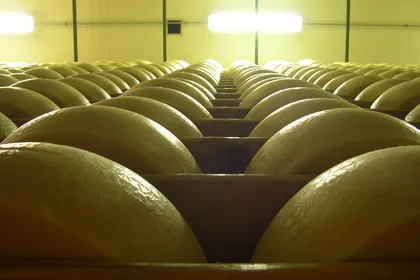 ExplainerGrana Padano vs Parmigiano ReggianoSame family, same rennet, raw milk in both. The real differences are written in the rules: the zone, silage…
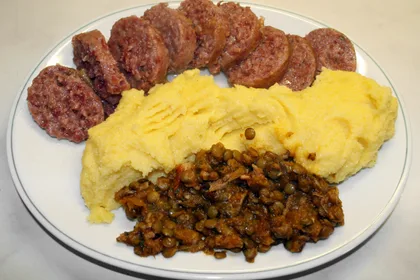 ExplainerCotechino and zampone: the real differenceThe two PGI specifications call for the same mixture and the same numbers.
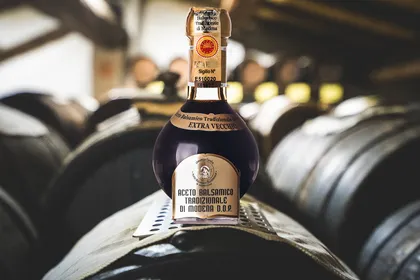 GuideTraditional balsamic vs balsamic of ModenaTraditional balsamic vinegar (DOP) ages for at least 12 years; balsamic vinegar of Modena (IGP) for at least…
Frequently asked questions
What is the difference between Aceto Balsamico Tradizionale di Modena DOP and Aceto Balsamico di Modena IGP?
They are two different products with nearly identical names. The Tradizionale DOP contains only cooked grape must, aged by decanting along a battery of barrels of different woods for at least twelve years (affinato) or twenty-five (extravecchio), and costs from sixty euro upwards per hundred millilitres. The IGP is cooked must plus wine vinegar, sixty days of rest and E150d caramel permitted: it costs between three and fifteen euro. On the label, the word that decides is Tradizionale.
What dish is Modena known for?
Tortellini in capon broth are the feast-day dish and the measure of any trattoria. Day to day, gnocco fritto and crescentine with cured meats matter more, and from December to February zampone and cotechino IGP with lentils.
Tigelle or crescentine: what are they really called?
The correct name for the bread is crescentina modenese; the tigelle were the terracotta discs used to bake it in the hearth. In everyday use, menus included, tigella has won. Do not confuse it with the Bolognese crescentina, which is fried dough, that is, what Modena calls gnocco fritto.
Modena or Bologna for tortellini?
The two schools differ on real details: in Modena the tortellino is smaller, the broth is capon and the filling leans on browned loin; in Bologna the recipe registered with the Chamber of Commerce in 1974 fixes exact proportions. Modena, on the other hand, is the only one of the two where it makes sense to give half a day to the vinegar lofts.