Sixteen Italian vegetables with a protected name, and what it protects
Romanesco artichoke, Tropea onion, San Marzano, piennolo, Bassano asparagus, Treviso radicchio, peperone crusco, puntarelle. In vegetables the mark names a place: when the place is a strip of sand, it names the flavour too.
With vegetables a protected name guards something very concrete, more so than with processed foods: a soil, an altitude, a swing between day and night temperatures. The Tropea onion is sweet because it grows on a strip of sand along the Tyrrhenian coast; the blood orange is red because the nights on Etna are cold; the piennolo tomato has a thick skin because it grows on lava ash without a drop of water.
That makes the mark more useful here than elsewhere. A peeled tomato can be packed in any plant, and San Marzano is among the most counterfeited names in the world: without the DOP seal, what you buy is a long tomato and nothing more. The same goes for late Treviso radicchio, which is not grown in a field but in tanks of spring water, in the dark.
At the end of the list are four vegetables with no European mark that are worth the detour: the peperone crusco of Senise, the broccolo fiolaro of Creazzo, the black celery of Trevi, Roman puntarelle. They are no worse; their growing area is simply too small for anyone to have bothered registering them.
 Assianir · CC BY-SA 3.0
campania
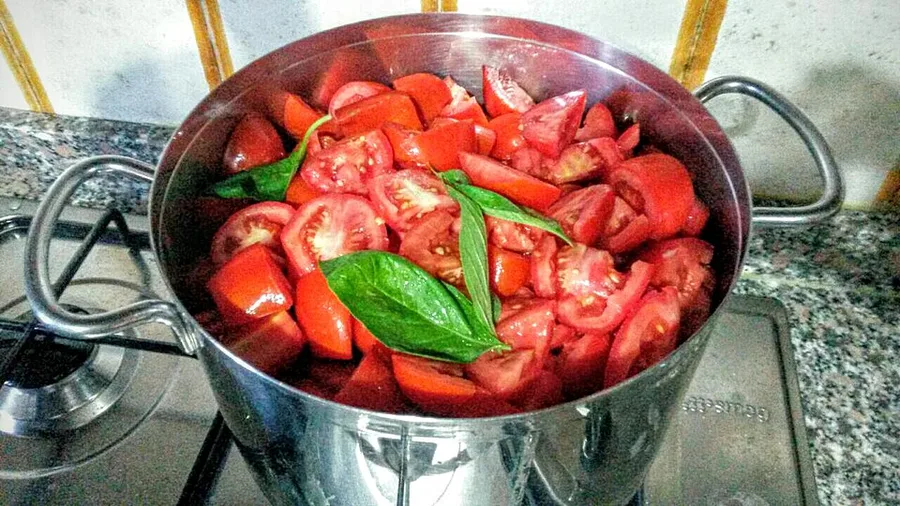
A long peeling tomato, thin skinned, with few seeds, grown on volcanic soils between Salerno and Naples. The name is among the most counterfeited in the world: without the DOP seal on the tin, what you buy is just a long tomato, grown anywhere.
campania · 6-12 €/kg
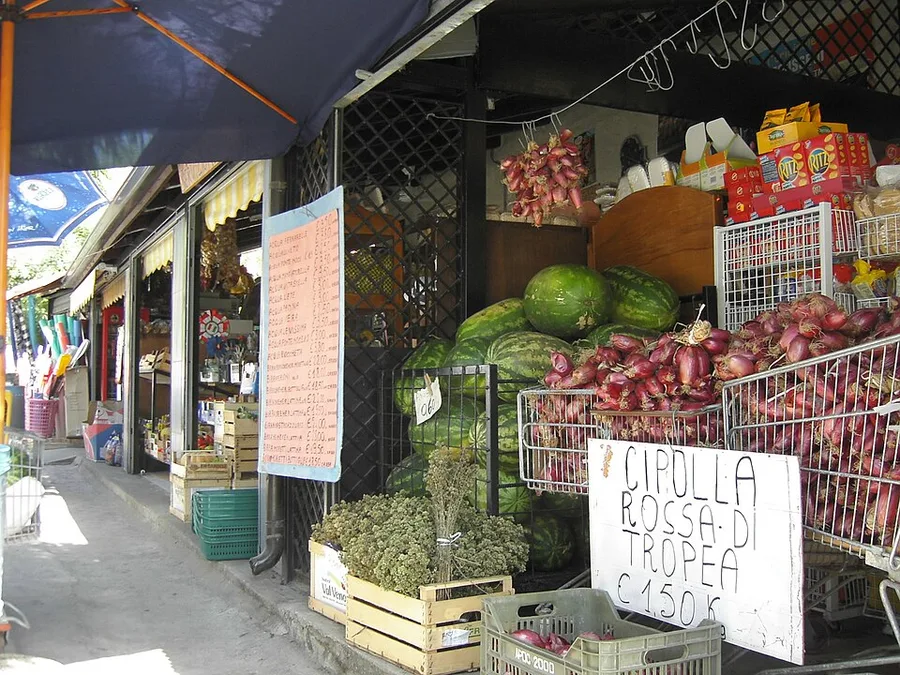
It grows on the lava ash of Vesuvius without a drop of water. It is picked in whole bunches in July and hung in the cellar: a thick skin and high acidity keep it good until winter, and the piennolo is that hanging bunch itself.
 kajikawa · CC BY 3.0
calabria · 2.5-4.5 €/kg
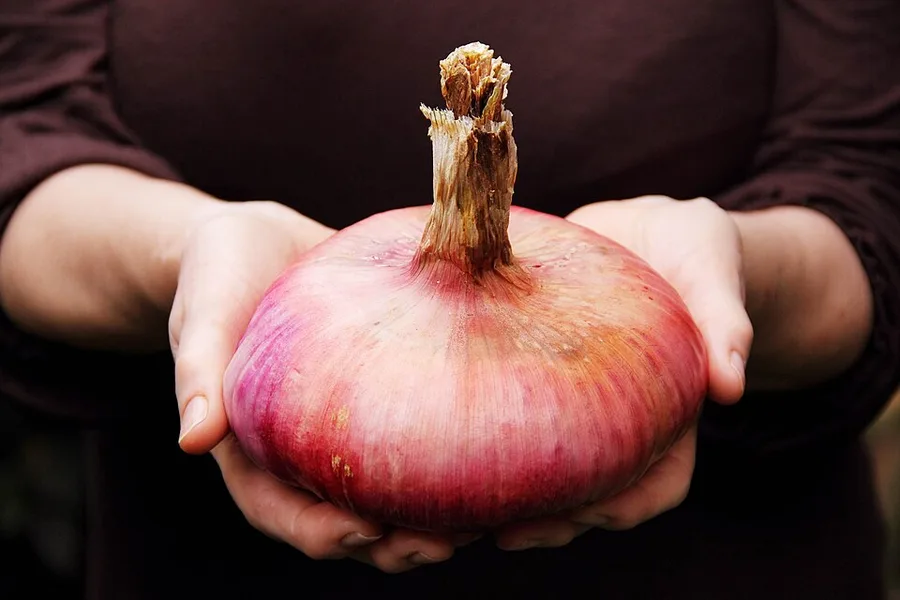
Purple skins, white flesh veined with red, on a strip of sand along the Calabrian Tyrrhenian coast. It is so mild it can be eaten raw in slices, and that sweetness comes from the sandy soil and the climate: the same variety grown elsewhere does not give it.
 Massimiliano Ruggieri · CC BY-SA 4.0
puglia · 1.5-3 €/kg
Broad, flattened like a disc, sweet enough to eat raw with salt and oil. It grows on the Murgia near Bari in red earth and is picked between late May and July: the onion of Apulian focaccia and baked dishes.
 Marica Massaro · CC BY-SA 4.0
abruzzo · 20-30 €/kg
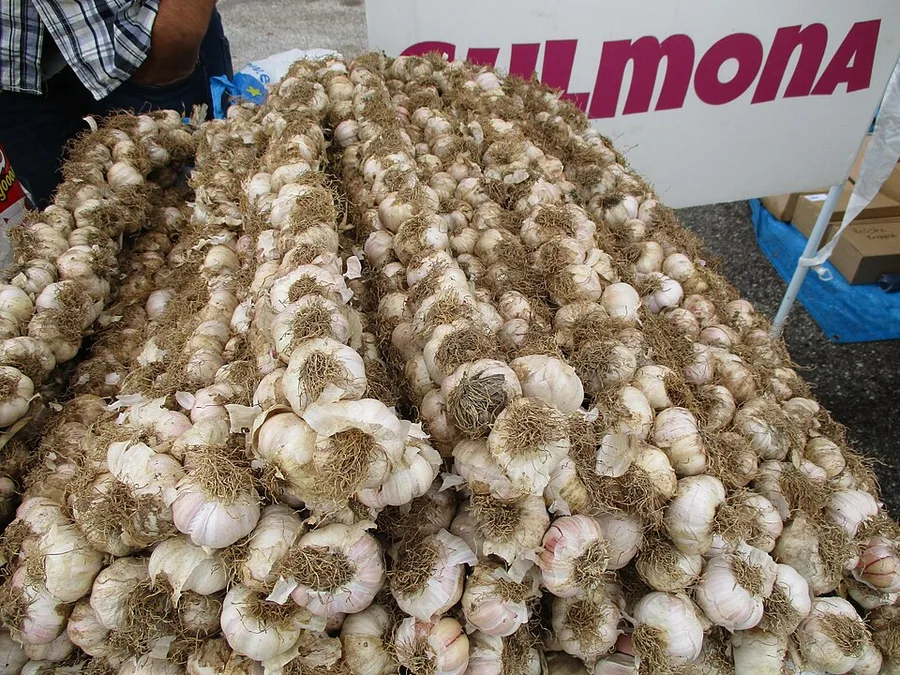
A white outer skin with red cloves underneath: you only find out by opening it. It grows in the Valle Peligna, is harvested between late June and mid-July and sold in plaits. Its essential oil content is high, so a dish needs less of it.
 Stefano Pellicciari · CC BY-SA 2.0
lazio
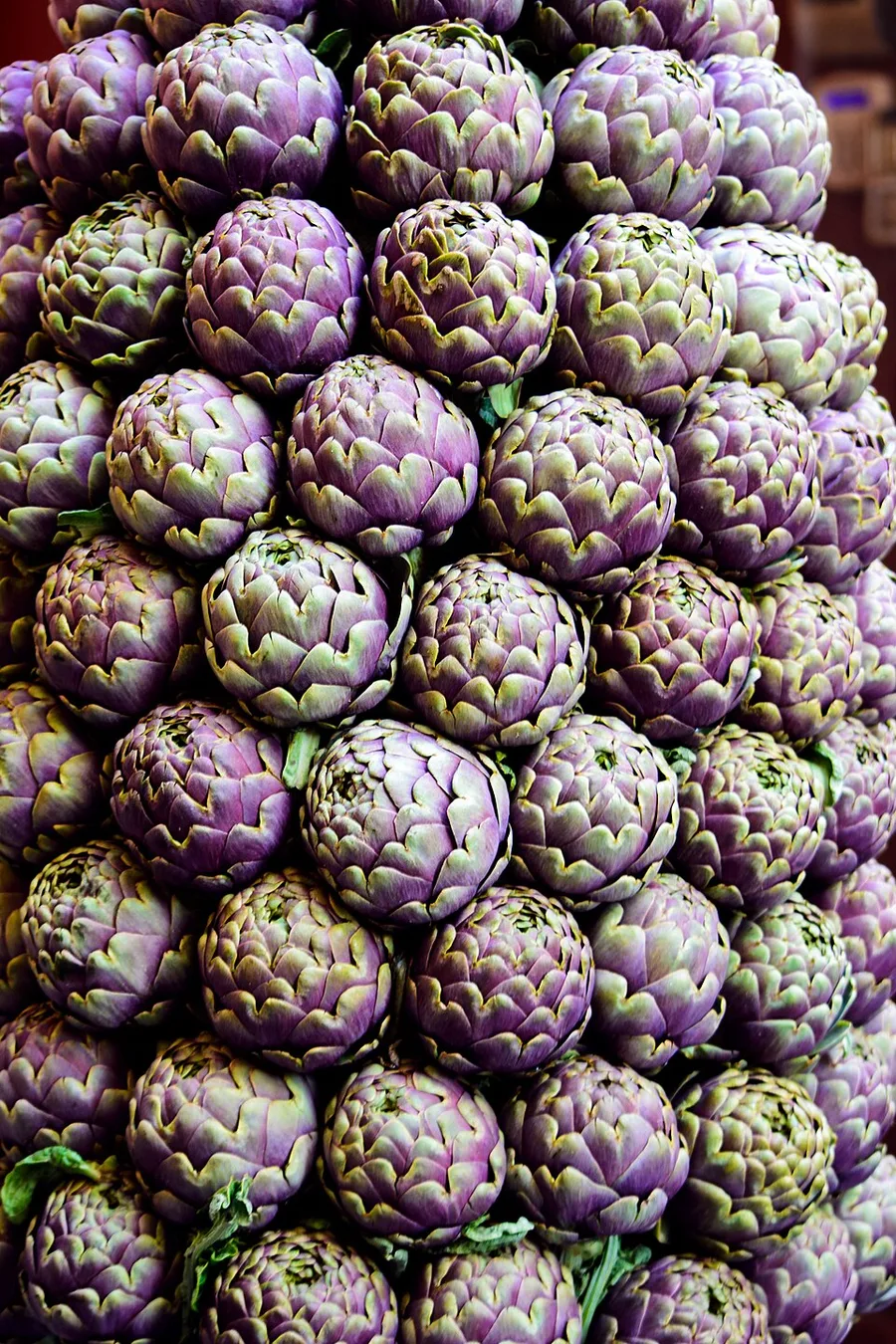
Round, large, with no spines at all. The top head, the cimarola or mammola, is the one used for carciofi alla giudia and alla romana, picked from February to May along the Lazio coast. The other heads are good, but not for those two recipes.
 Katiuscia Noseda · CC BY-SA 2.0
campania
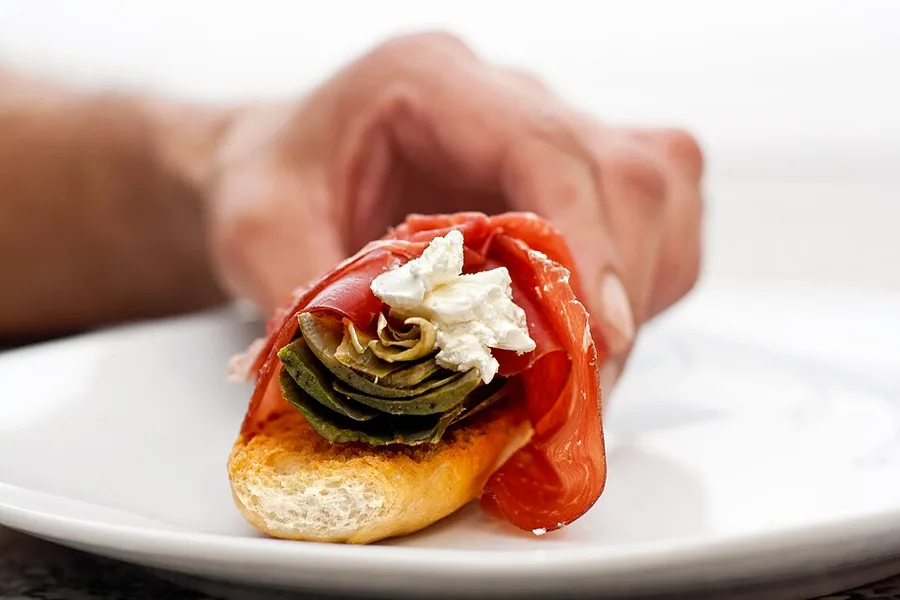
Round, closed, spineless, with a dimple at the top: it cleans in a minute and almost all of it is edible. It grows on the Piana del Sele, where the mild climate ripens it earlier than the rest: by March it is already on northern market stalls.
 Andrea Martinello · CC BY-SA 2.0
veneto · 18-25 €/kg
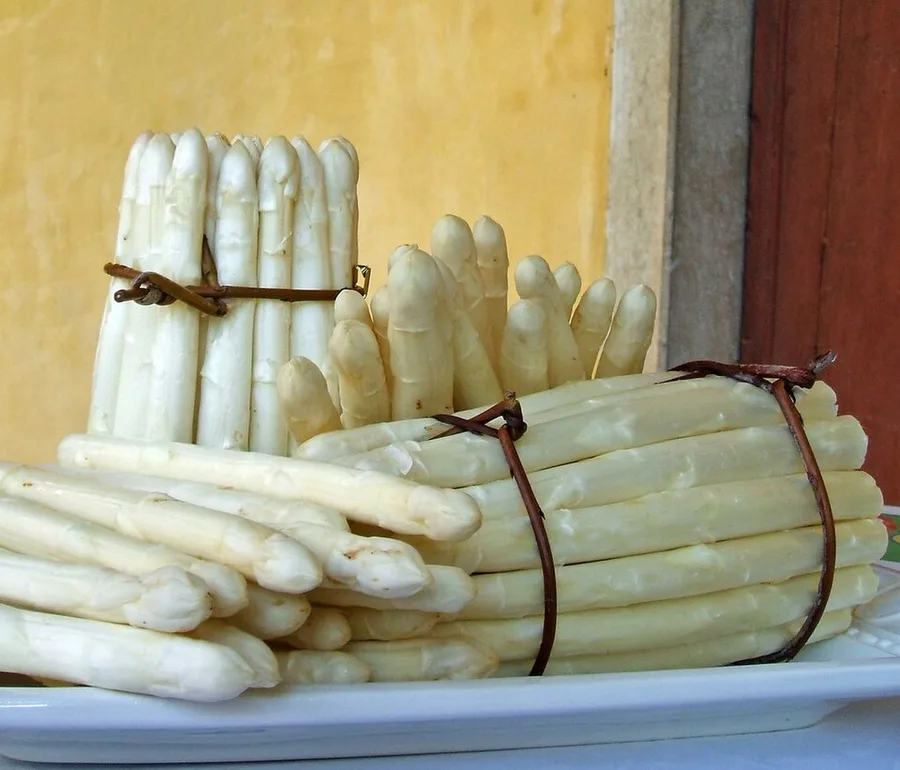
White because it never sees light: it grows under a mound of earth and is cut by hand before the tip emerges. It is harvested from mid-March to the thirteenth of June on the Brenta plain: that date is Saint Anthony's day, set by local tradition rather than by the rules.
 Zetagroup · CC BY-SA 3.0
veneto · 8-15 €/kg
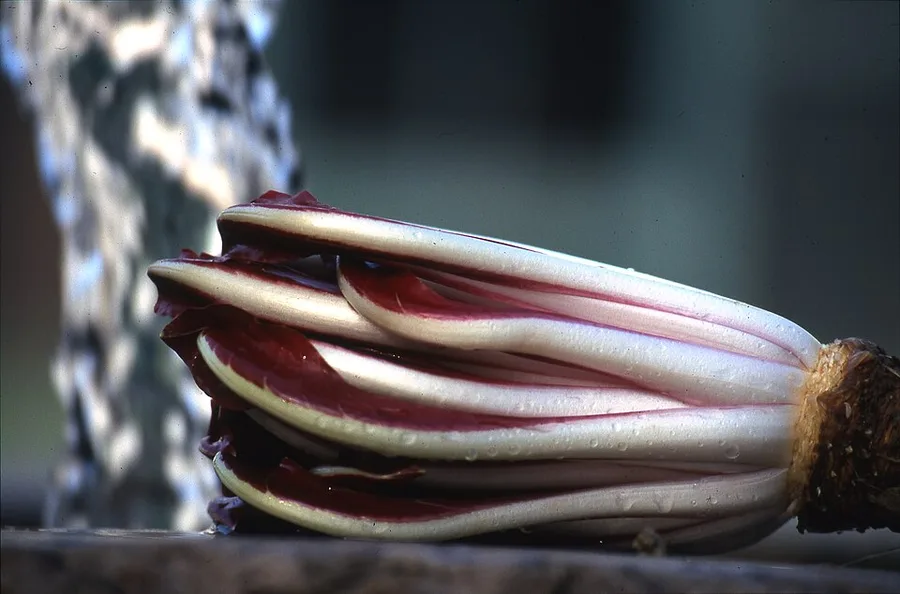
Two types that are two different vegetables. The late one is not grown in the field: it is grown in tanks of spring water, in the dark, where the plant lifted after the frosts puts out new leaves. It costs three times the early kind, and the shape shows it.
 Generale Lee · CC BY-SA 4.0
basilicata
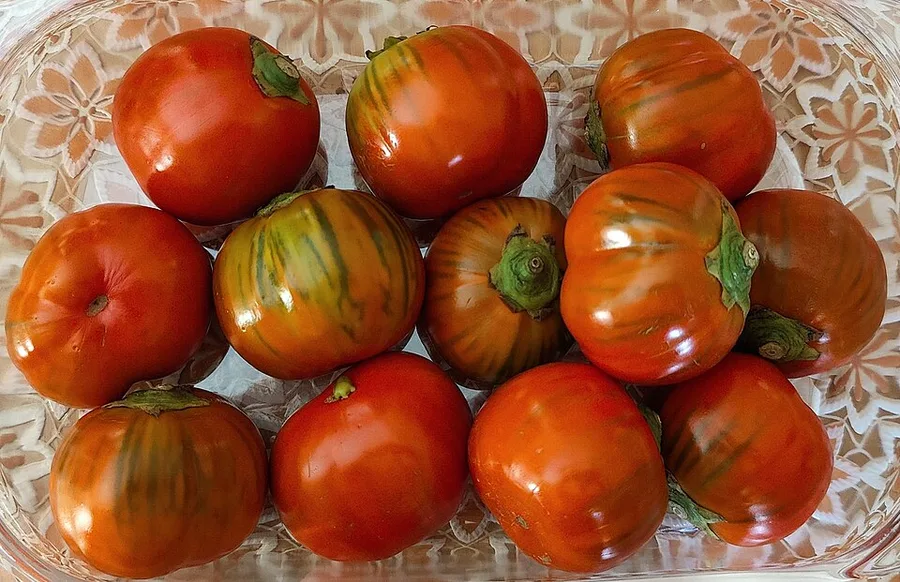
It does not look like an aubergine: round, ribbed, orange-red, exactly like a tomato. It came from Africa, reached the Pollino with people returning from the colonies, and it is hot and faintly bitter: it is not used like an ordinary aubergine.
basilicata · 25-45 €/kg
A sweet pepper from Senise, sun-dried and then fried for two or three seconds in hot oil, which turns it crisp and glassy. It is not hot and it is not a spice: it is eaten whole, like a crisp, or crumbled over pasta.
calabria · 1.2-2.5 €/kg
Above a thousand metres, on the acid granite soils of the Calabrian plateau. Thick skin, very little water, a yellow and firm flesh: it does not break up and does not soak up oil, so it stands up to frying and roasting better than a lowland potato.
 Lichinga · CC BY-SA 4.0
veneto
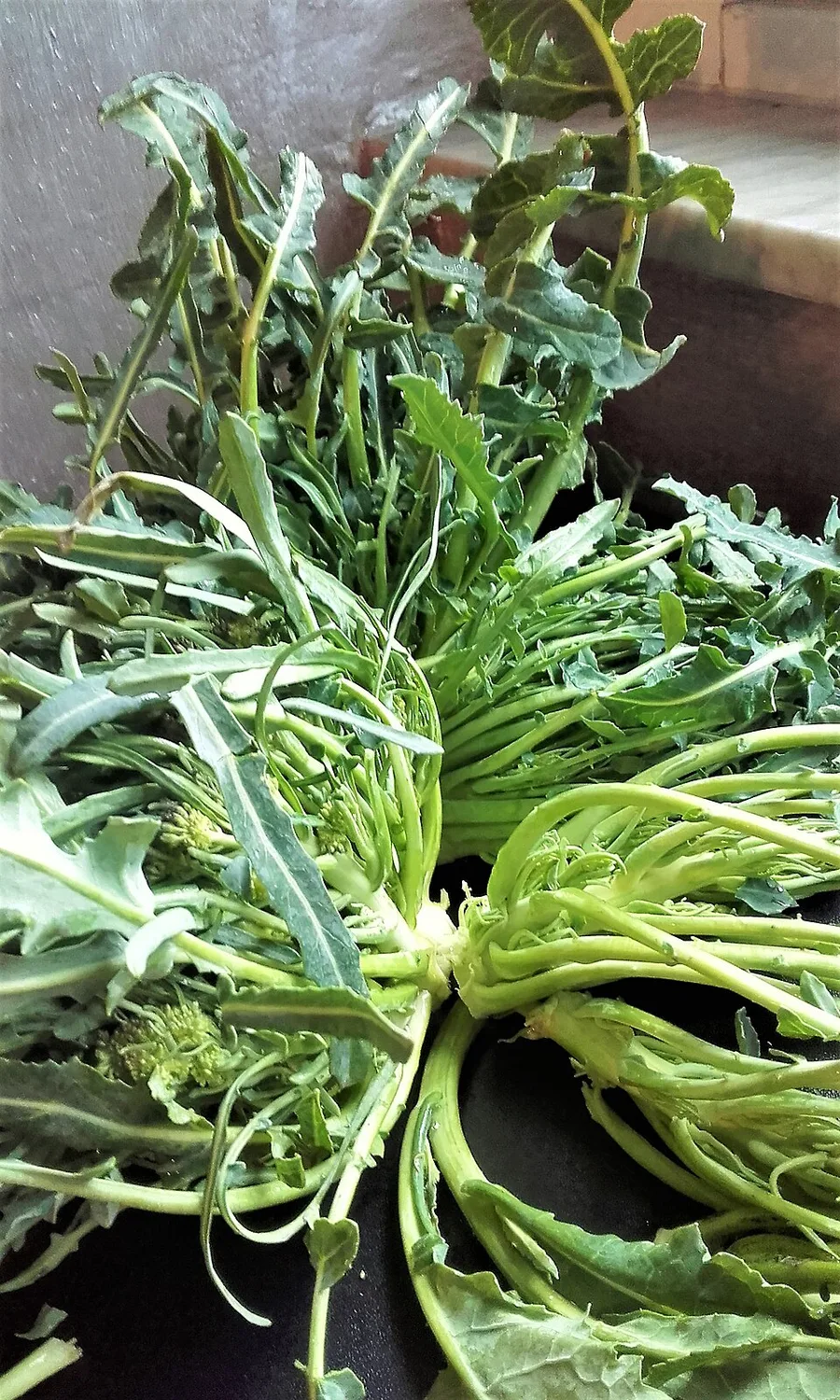
It is not eaten for the central head but for the fioi, the side shoots along the stalk. It is picked only after the first frost, which is what makes it sweet: before the cold it is another vegetable, and everyone in Creazzo knows it.
umbria
It is not black: it is a very dark green, almost blue. It has no strings, reaches a metre tall and grows on a valley floor of a few dozen hectares below the town, from seed the growers keep themselves. It is eaten raw in pinzimonio, or stuffed.
campania · 1.5-3 €/kg
In Naples this turnip never reaches its root: what matters are the flowering shoots, the green sprouts picked before the flower opens. They are tossed in a pan with garlic and chilli, and with sausage they make the dish that bears their name.
 JP · CC0
lazio · 2-3.5 €/kg
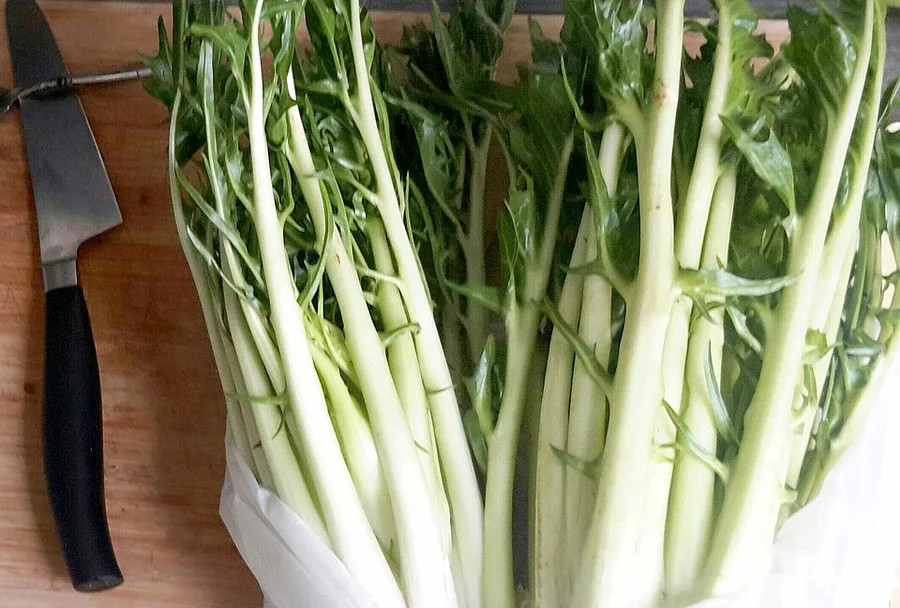
Inside a head of jagged catalogna chicory hides the part that in Rome is worth the price of the whole: the inner shoots, hollow and white-green. They are cut into strips and curled in iced water, then dressed with anchovy, garlic and vinegar.
One last thing
With vegetables the season matters more than the mark, and where it matters the rules say so, where it is enough, tradition does. Bassano asparagus is cut until the thirteenth of June and no later, by local tradition; the broccolo fiolaro is picked only after the first frost; the romanesco artichoke gives its mammola between February and May; the piennolo is harvested in July and hung for the winter. Buying one of these outside its window means buying another product under the same name, grown somewhere else or under glass. The question at the stall is not whether it is DOP, it is when it is from.
The questions this list answers
These are real questions put to an AI assistant, in the period when Bing cited this site among its sources to answer them. The number is how many times we were cited. We read them in Bing Webmaster Tools, under AI performance, and they decide what goes on this page rather than the other way round.
- peperone crusco836 citations
- cipolla rossa di tropea84 citations
- carciofo romanesco63 citations
- cosa sono le puntarelle60 citations
- tropea onion50 citations
- san marzano tomatoes dop20 citations
- friarielli cosa sono16 citations
- dop san marzano tomatoes12 citations
- aglio rosso di sulmona12 citations
- pomodori del piennolo7 citations
- cipolla rossa6 citations
- what is puntarelle3 citations
Frequently asked questions
What is peperone crusco?
A sweet pepper from Senise, in Basilicata, sun-dried and then fried for two or three seconds in hot oil, which makes it crisp and glassy. It is not hot and it is not used as a spice: it is eaten whole like a crisp, or crumbled over pasta and salt cod.
Why is the Tropea onion sweet?
Soil and climate: it grows on a strip of sand along the Calabrian Tyrrhenian coast, and that combination gives bulbs low in pungent compounds and high in sugars. It is why the same variety grown elsewhere is not the same thing, and why the IGP defines a very narrow coastal band.
How do you recognise a real San Marzano?
By the DOP seal on the tin, which carries the consortium and a number. The name is among the most counterfeited in the world, and long peeled tomatoes are sold as San Marzano with no connection to the Agro Sarnese-Nocerino. The real tomato has a thin skin, few seeds, and peels with the fingers.
What are puntarelle?
The inner shoots of a variety of catalogna chicory, hollow and crisp, which in Rome are cut into strips with a special tool and curled in iced water. They are dressed with anchovy, garlic, vinegar and oil pounded together. The season is winter, November to March.