Sixteen excellent Italian products with no European mark at all
Peperone crusco, puntarelle, friarielli, black celery of Trevi, raw shoulder, Nebrodi provola, salame Milano, Madonie manna, citron. No DOP, no IGP, and no problem.
A European mark is not a prize for quality: it is a legal instrument for defending a name when somebody imitates it. Where nobody imitates, or where the producing area is too small for the procedure to be worth the trouble, the mark never arrives. That says nothing about the product.
This list holds sixteen cases of that kind. Some are tiny in scale, like the manna of Castelbuono, gathered by a few mannaroli in the Madonie, or the black celery of Trevi, grown on a valley floor of a few dozen hectares from seed the growers keep themselves. Others are so ordinary locally that nobody thought of registering them: puntarelle in Rome, friarielli in Naples.
There are also two separate categories. PAT, Traditional Agri-food Products, are regional lists that recognise a tradition without protecting the name. And Slow Food presidia, which are private conservation projects on productions at risk of disappearing: Friulian pitina, the goat violin, the menaica anchovies.
basilicata · 25-45 €/kg
A sweet pepper from Senise, sun-dried and fried for two seconds, crisp and glassy. No mark, and eight hundred and thirty-six citations among the questions reaching assistants: the most asked-about Lucanian product on this site.
 JP · CC0
lazio · 2-3.5 €/kg
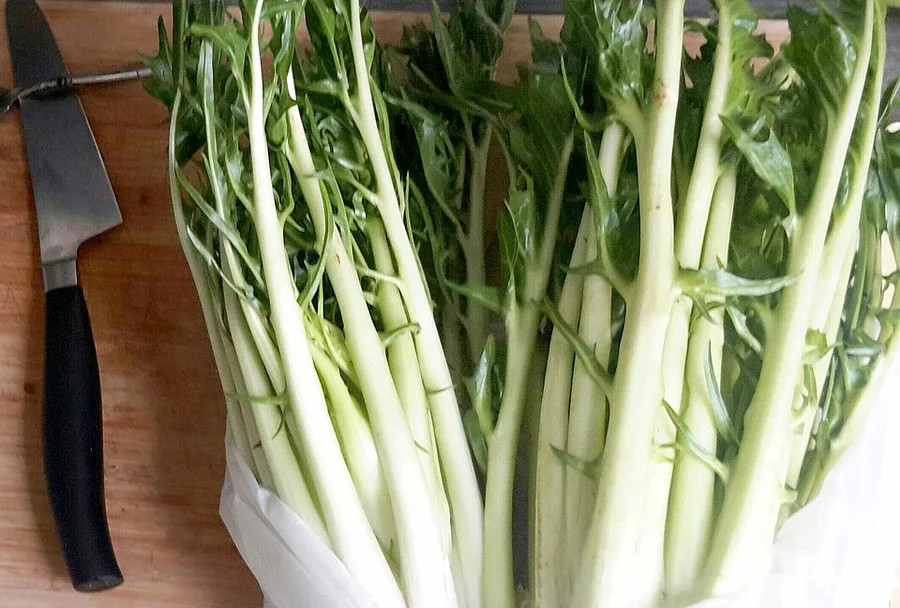
The inner shoots of a catalogna chicory, cut into strips and curled in iced water. In Rome they are an everyday winter vegetable, and nobody has ever felt the need to register the name.
campania · 1.5-3 €/kg
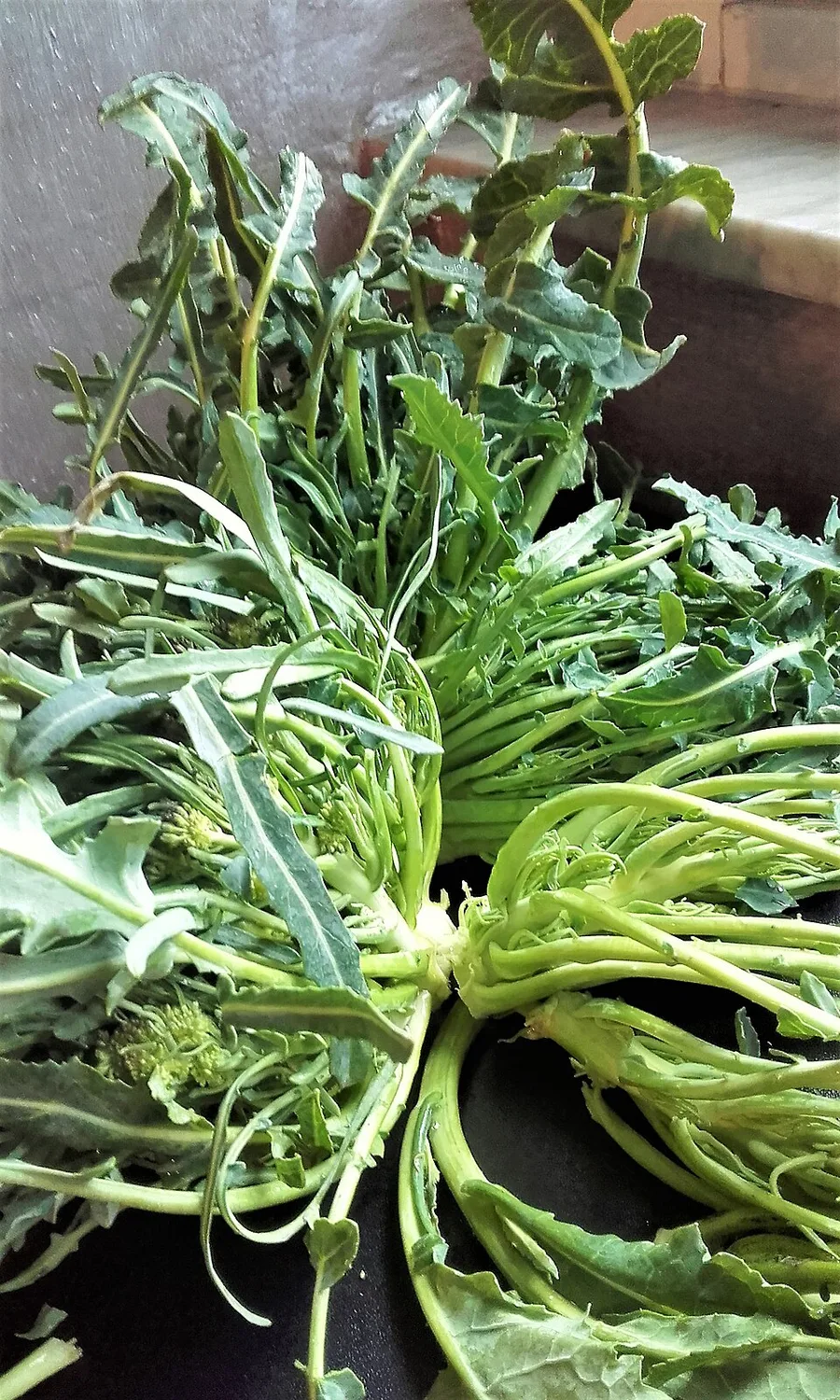
The flowering shoots of a turnip, picked before the flower opens and tossed with garlic and chilli. The name causes confusion outside Campania, because in other regions it means green chillies.
umbria
Very dark green, stringless, a metre tall, grown on a valley floor of a few dozen hectares from seed the growers pass down. The scale is too small for a mark to make sense.
 Lichinga · CC BY-SA 4.0
veneto
You do not eat the central head but the fioi, the side shoots, and it is picked only after the first frost, which is what makes it sweet. Creazzo, province of Vicenza, and a few dozen growers.
 Massimiliano Ruggieri · CC BY-SA 4.0
puglia · 1.5-3 €/kg
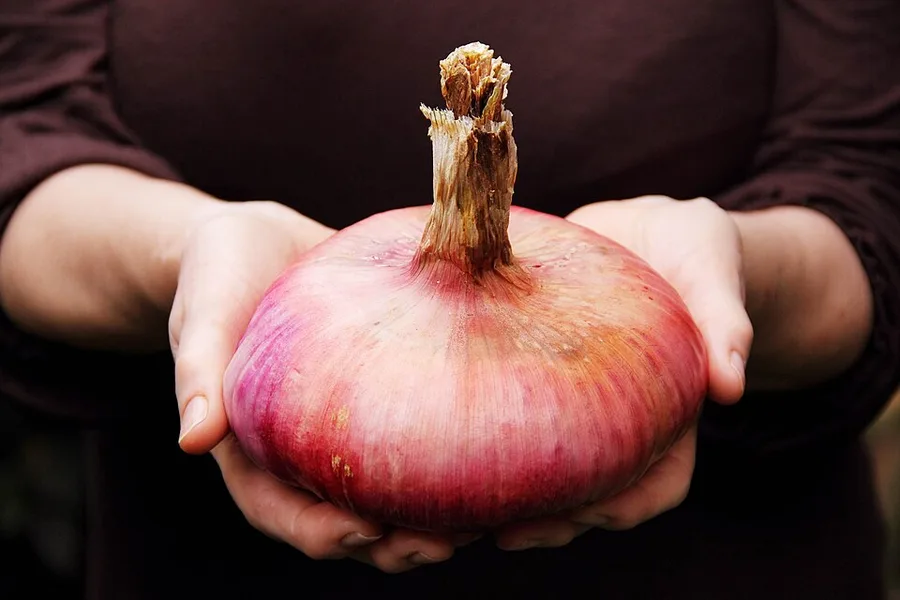
Broad, flattened, sweet enough to eat raw with salt and oil. It grows in red earth on the Murgia near Bari, and the neighbouring Tropea onion, which has the IGP, is far better known at the same quality.
 Longo73 · CC BY-SA 4.0
emilia romagna · 28-42 €/kg
The shoulder treated the way culatello is, in the same Bassa parmense, at half the price and with more character than a ham. Culatello has the DOP, the raw shoulder does not, and the difference is not in the care taken.
lombardia · 12-18 €/kg
The best-selling salame in Italy, with its three-millimetre rice-grain grind, and no mark: the name describes a method used across the whole Po valley rather than a defined place.
campania · 14-20 €/kg
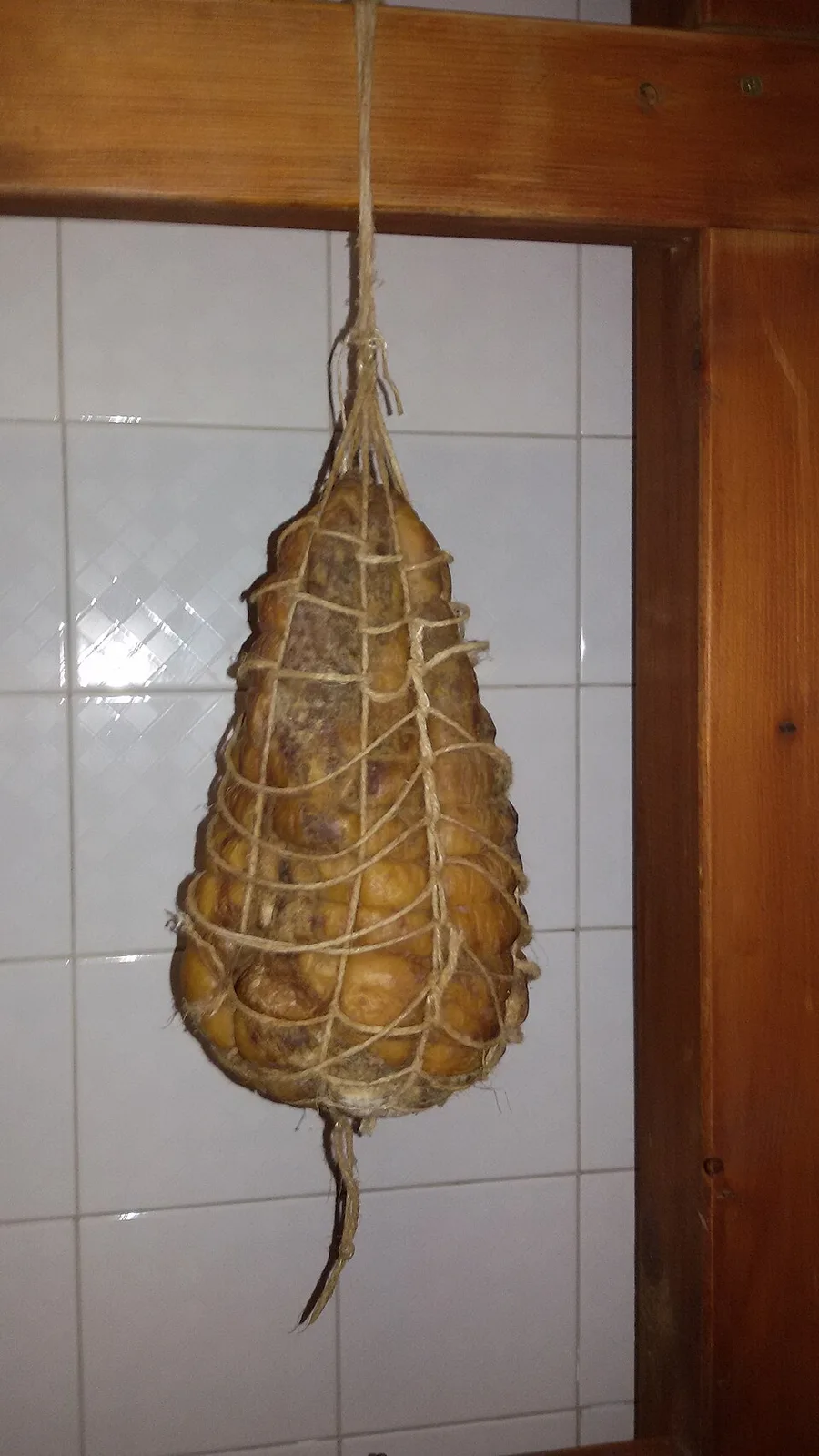
Half a metre long, thin, with chilli and a pass of cold smoke. It is the salame of casatiello and of the feast-day sandwich, and the name remains a local tradition with no registration.
 8w9d · CC0
sicilia · 12-16 €/kg
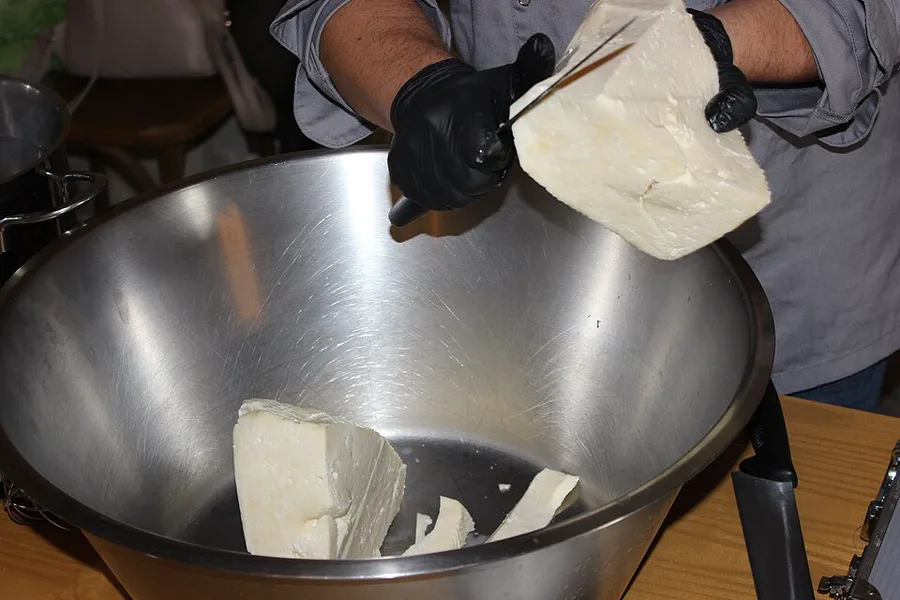
A stretched-curd cheese of raw milk from the mountains behind Messina, spun by hand and tied in pairs, with a brief straw smoking. No European mark, and a production that barely leaves the province.
toscana · 16-24 €/kg
The fresh Tuscan pecorino of March milk, often with a rind rubbed with tomato preserve and, in the traditional versions, vegetable rennet. A seasonal product on a small scale.
 Nicola Quirico · CC BY-SA 3.0
sicilia · 18-26 €/kg
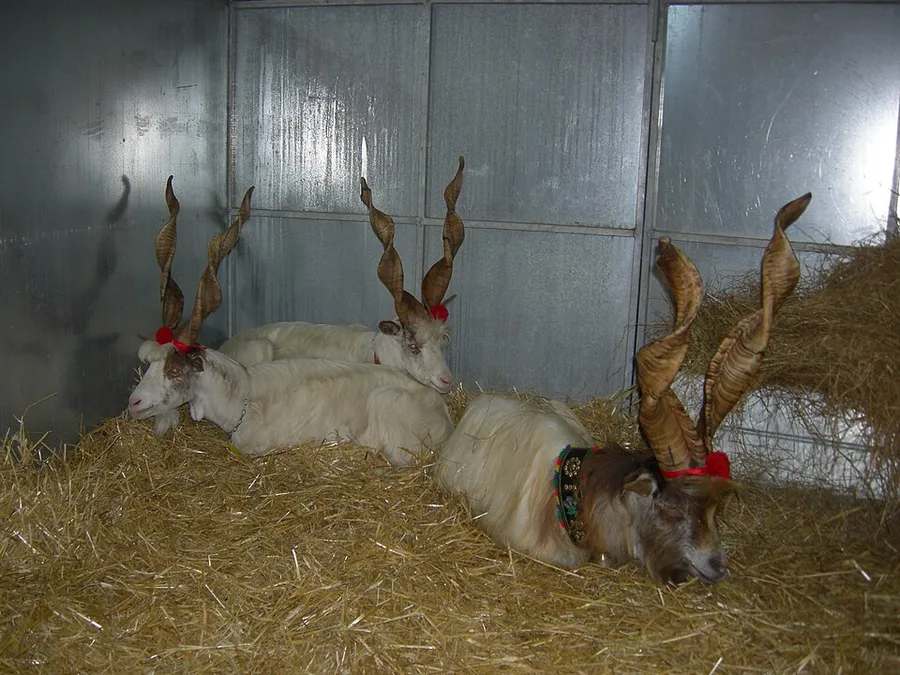
The corkscrew-horned goat of the Agrigento area, down to a few hundred head and brought back by a handful of breeders. There is no mark here: there is a breed somebody decided not to lose.
sicilia
Ash tree sap drawn out through cuts and air-dried into white stalactites, only at Castelbuono and Pollina. The remaining mannaroli can be counted, and it is the most fragile product on this site.
calabria
What is eaten is the albedo, the white layer under the skin, and every summer rabbis come to select fruit for Sukkot. A single variety, on one strip of Calabrian coast, and no registration.
 Holapaco77 · CC BY-SA 4.0
friuli venezia giulia
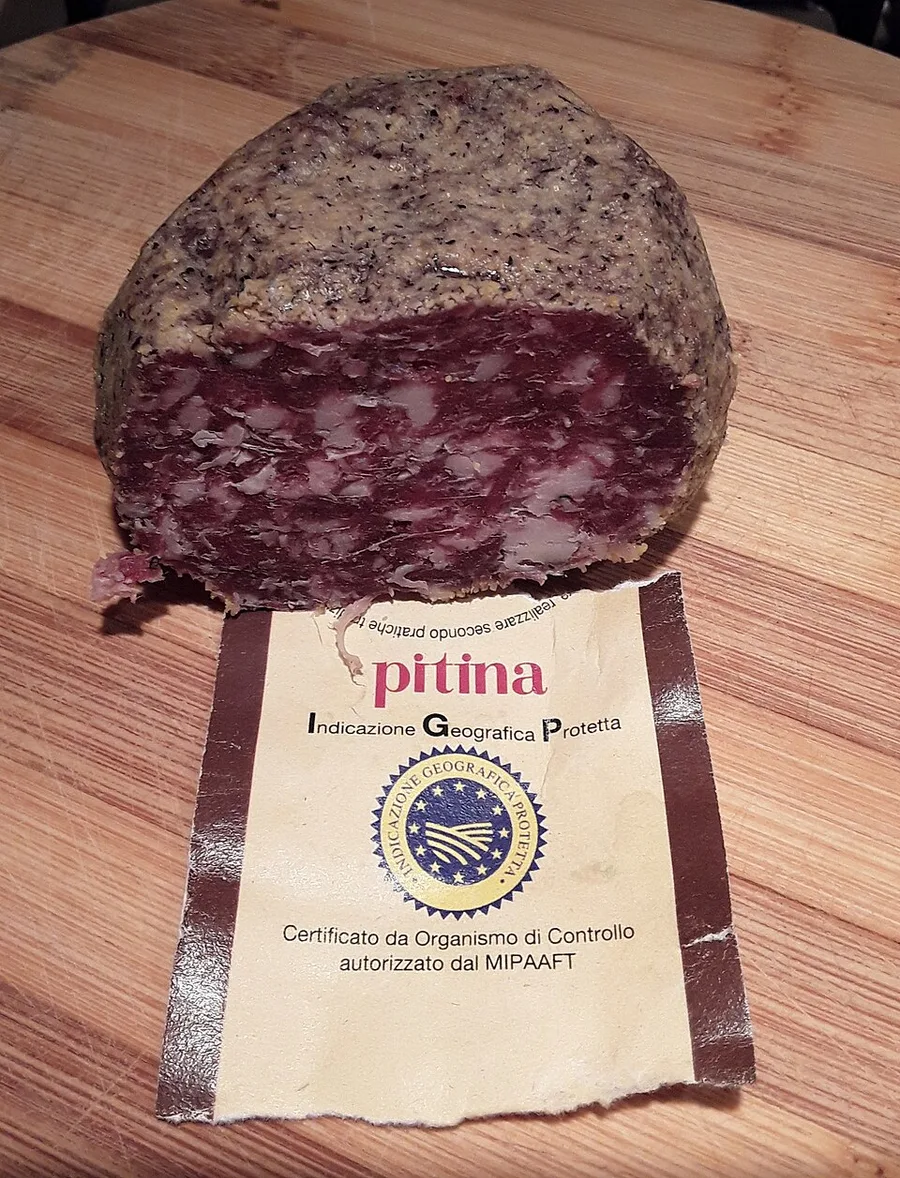
A patty of game or mutton smoked above the hearth and rolled in maize flour: a Slow Food presidium, not an IGP. A presidium is a private conservation project rather than a European mark.
campania · 55-90 €/kg
Caught in the Cilento with a wide-mesh net that takes only the large anchovies: a handful of boats, a handful of nights a year. This too is a presidium, and the scale alone explains why there are no rules to register.
One last thing
It is worth knowing what the two acronyms that often appear beside these products actually are. PAT, Traditional Agri-food Products, are regional lists: they record that a process has existed in an area for at least twenty-five years, but they do not protect the name and impose no production rules. Slow Food presidia are private projects on productions at risk, with a protocol agreed between the association and the producers. Neither is a European denomination, and neither should be read as a quality mark. They are signals that somebody is looking after that product, and in many cases that is the only thing keeping it alive.
The questions this list answers
These are real questions put to an AI assistant, in the period when Bing cited this site among its sources to answer them. The number is how many times we were cited. We read them in Bing Webmaster Tools, under AI performance, and they decide what goes on this page rather than the other way round.
- peperone crusco836 citations
- cosa sono le puntarelle60 citations
- friarielli cosa sono16 citations
- salame milanese35 citations
- salame milan21 citations
- Salame Milano6 citations
- what is puntarelle3 citations
- capra girgentana8 citations
- soppressata59 citations
- mocetta76 citations
- violino di capra160 citations
- alici di menaica18 citations
Frequently asked questions
Is a product without DOP or IGP of lower quality?
No. The European mark exists to defend a name where there is a risk of imitation, and obtaining it requires a consortium willing to go through a long procedure. Where the area is small or nobody cares about the name, registration never happens, and the product stays what it was.
What are PAT?
Traditional Agri-food Products: lists kept by the regions, recording processes practised consistently in an area for at least twenty-five years. They do not protect the name and impose no production rules: they are a census rather than a protection.
What is a Slow Food presidium?
A private project of the Slow Food association on a production at risk of disappearing, with a protocol agreed between the association and the producers. It is not a public mark and has no legal force over the name, but it is often the only structure holding a tiny production together.
Why is salame Milano not registered?
Because the name describes a technique, the three-millimetre rice-grain grind, practised across the whole Po valley rather than in a defined territory. There is a DOP for Salamini italiani alla cacciatora, which is a format, and for salami tied to a place such as Varzi and Felino.