Twelve pairs of Italian products everybody mixes up
Salt cod and stockfish, guanciale and pancetta, soppressata and soppressa, mozzarella and fiordilatte, ricotta and salted ricotta, coppa and lonza, cotechino and zampone. Twelve confusions that change the dish.
Some confusions are harmless and some change the result in the kitchen. Swapping guanciale for pancetta in a carbonara gives a different sauce, because cheek fat renders slowly and stays creamy while belly fat dries. Swapping salt cod for stockfish means getting a two-day soak wrong.
Nearly all these pairs come from one of two causes. The first is a travelling name: Calabrian soppressata and Vicenza soppressa are named for the same verb, to press, and are two distinct products; lonza is the loin across most of Italy and the capocollo in some areas. The second cause is a generic product that took a specific name: mozzarella for fiordilatte, parmesan for Parmigiano.
This list sets the pairs side by side and says what actually changes: not the name, but the cut, the animal, the time or the way it is cooked. Where the swap can be made, we say so; where it cannot, we say why.
 MoDs92 · Public domain01
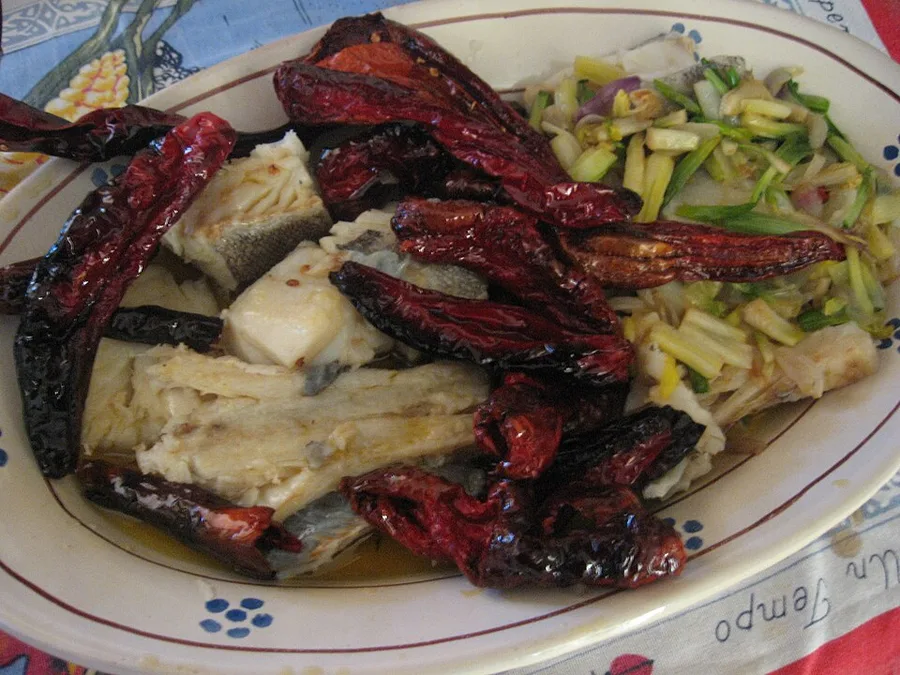
Baccalà
veneto · 14-22 €/kg
Salted cod: it must be desalted in running or frequently changed water for two or three days. Stockfish is the same fish air-dried without salt and wants a different soak. In the Veneto it is called bacalà, and half the confusion starts there.
 Popo le Chien · CC BY-SA 4.0
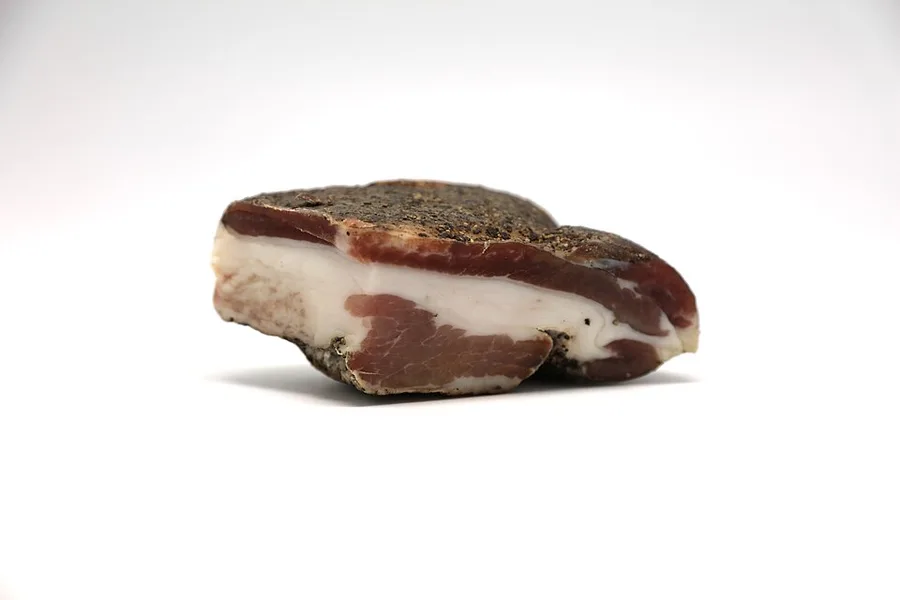
lazio · umbria · abruzzo · 16-24 €/kg
The cheek: a compact fat that renders slowly and stays creamy. Pancetta is the layered belly, and its fat dries sooner. In carbonara and amatriciana the difference shows in the sauce, not in the taste of the meat.
veneto · 17-25 €/kg
A large DOP salame from heavy Vicenza pigs, not hot, to be cut thick. The Calabrian and Lucanian soppressata is another product, coarsely ground and often hot: the same verb, two things.
 Jon Sullivan · Public domain
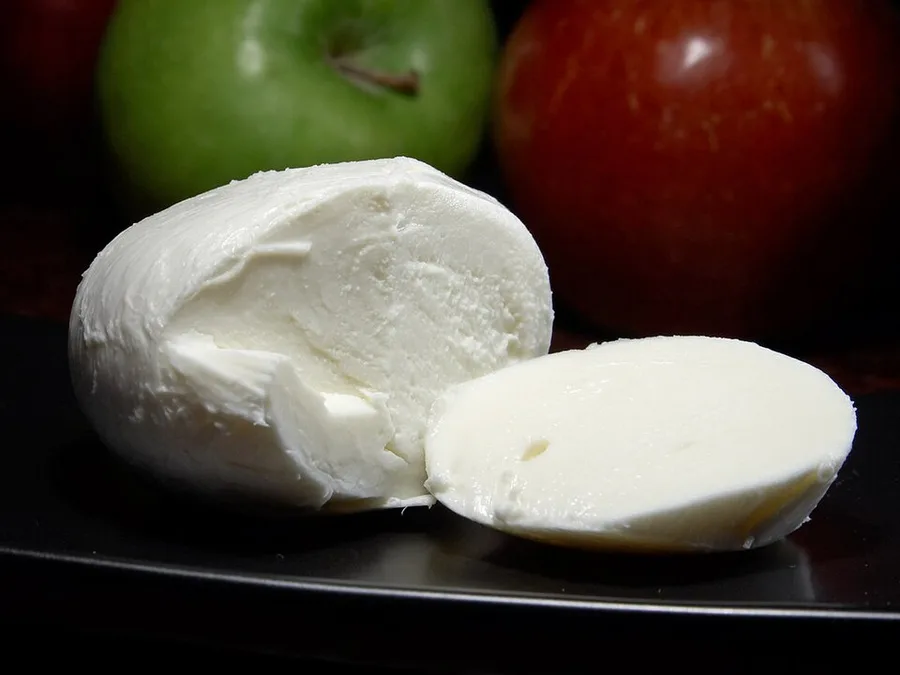
campania · puglia · 12-18 €/kg
Two products live under the name: cow's milk fiordilatte and Mozzarella di Bufala Campana DOP, from Italian Mediterranean buffalo milk. Price, acidity and shelf life all differ, and it pays to ask at the counter.
 8w9d · CC005
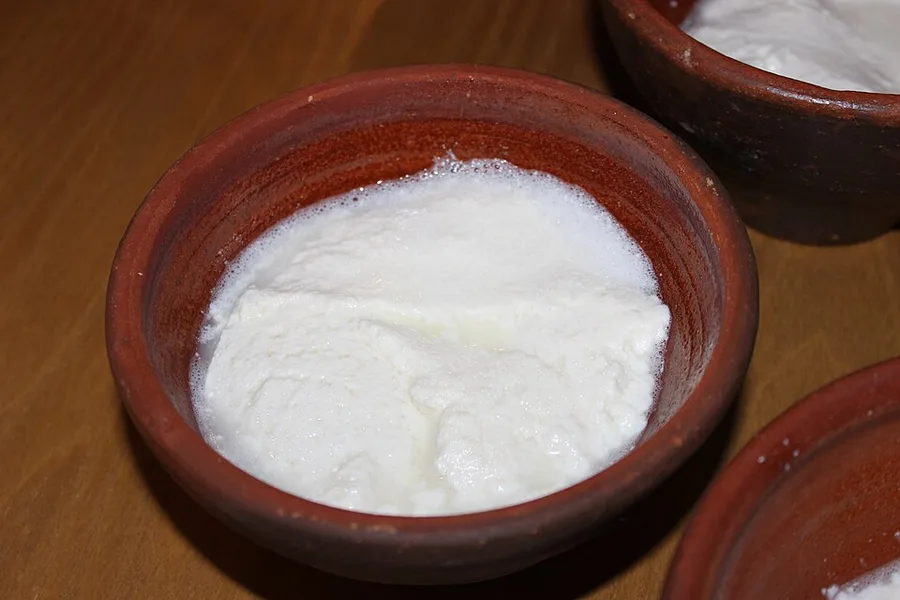
Ricotta
lazio · sicilia · 5-9 €/kg
A whey product, not a cheese: it keeps for very little and tastes of milk. Salted ricotta is the same thing salted, pressed and aged three months, for grating: two products with two opposite uses.
 AntonioCaso93 · CC BY-SA 4.0
puglia · calabria · 22-35 €/kg
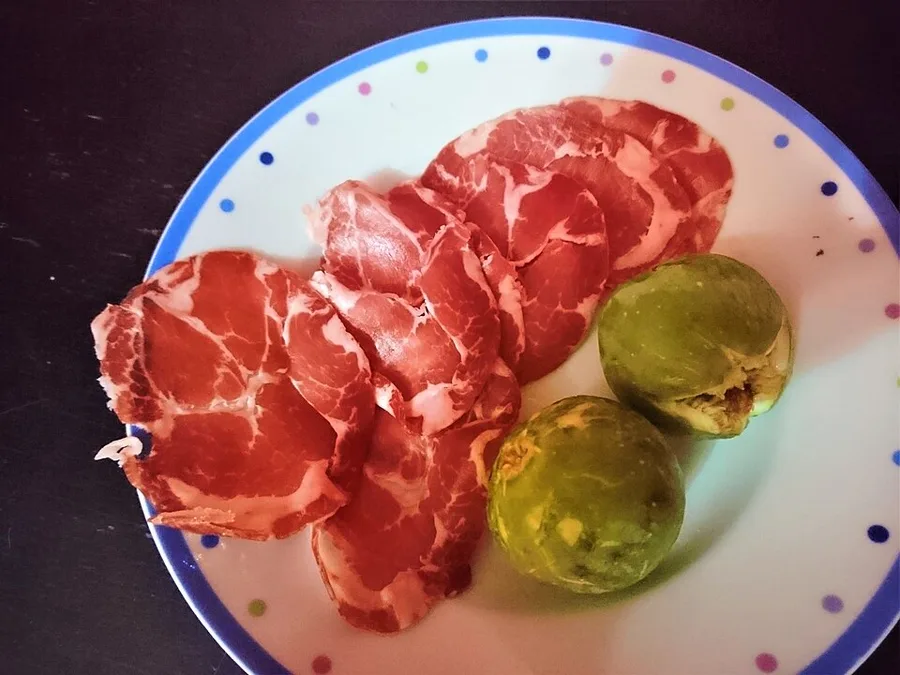
The neck muscle, called coppa in Emilia and in some areas lonza. Lonzino, by contrast, is the loin, another cut: when ordering a lonza it is worth asking which of the two is meant.
 Popo le Chien · CC BY-SA 3.0
emilia romagna · 12-20 €/kg
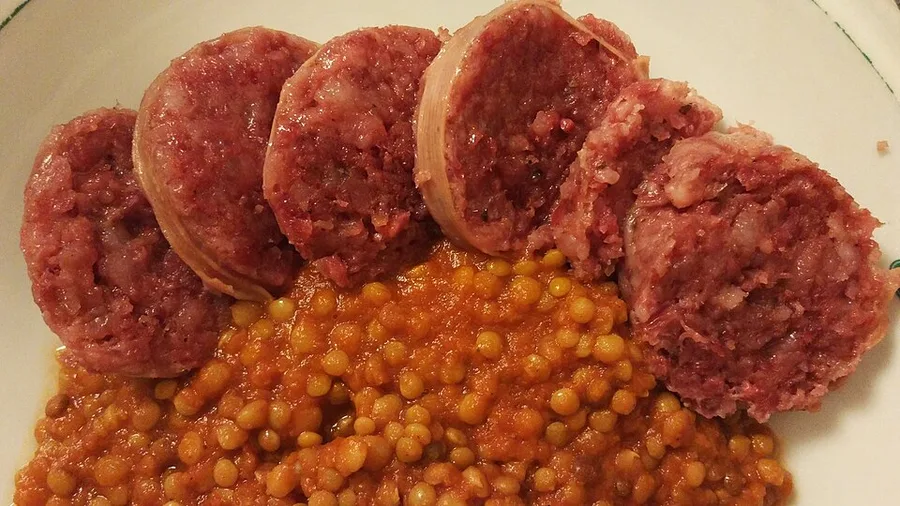
Meat, fat and rind in a casing, to be simmered. Zampone has the same mixture inside the hollowed front trotter: the slice is firmer and the cooking slightly longer, because the skin is thicker.
 Tamorlan · CC BY 3.0
lombardia · emilia romagna · veneto · piemonte · 10-15 €/kg
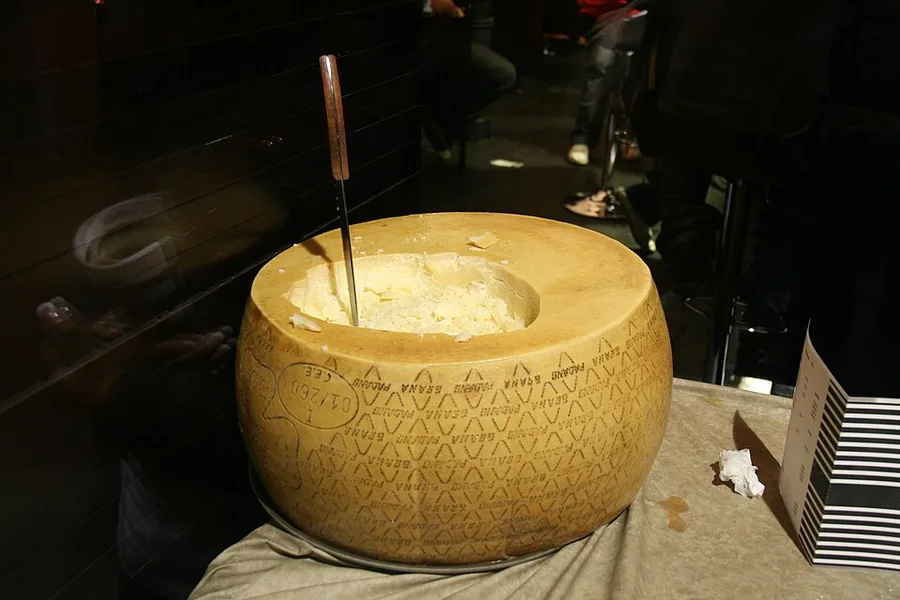
Raw partly skimmed milk, nine months minimum, the whole Po valley. Parmigiano Reggiano covers five provinces, starts at twelve months and has a closed ingredient list: it is more savoury and costs more.
 Jon Sullivan · Public domain
emilia romagna · 16-24 €/kg
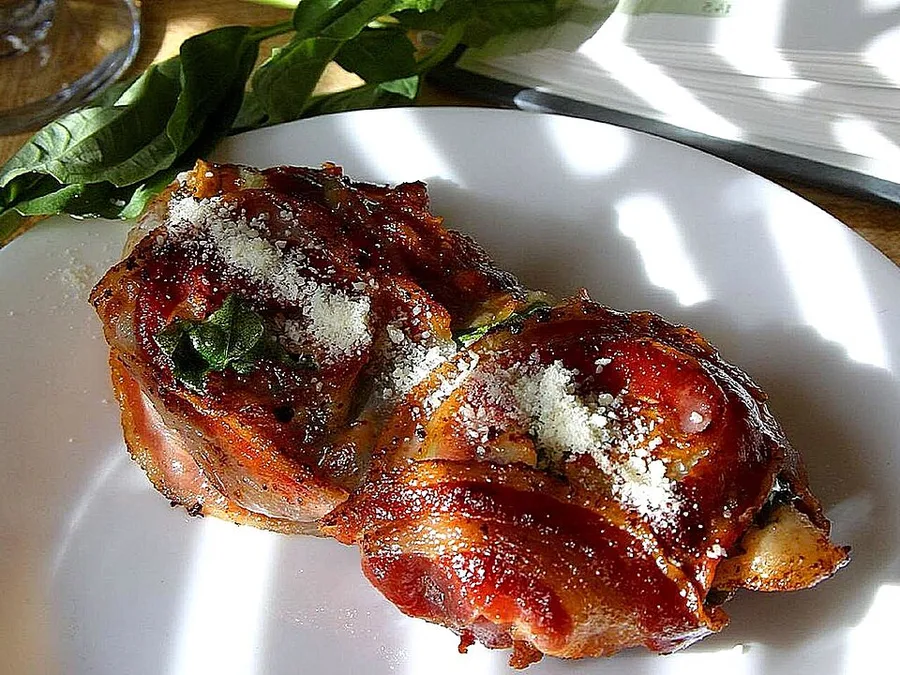
Belly rolled and cured at least four months, DOP, made to be sliced thin and eaten raw. Flat pancetta is the cooking cut: you can pan-fry either, but with one of the two it is a waste.
 WILO-MA · CC BY-SA 4.0
toscana · 8-14 €/kg
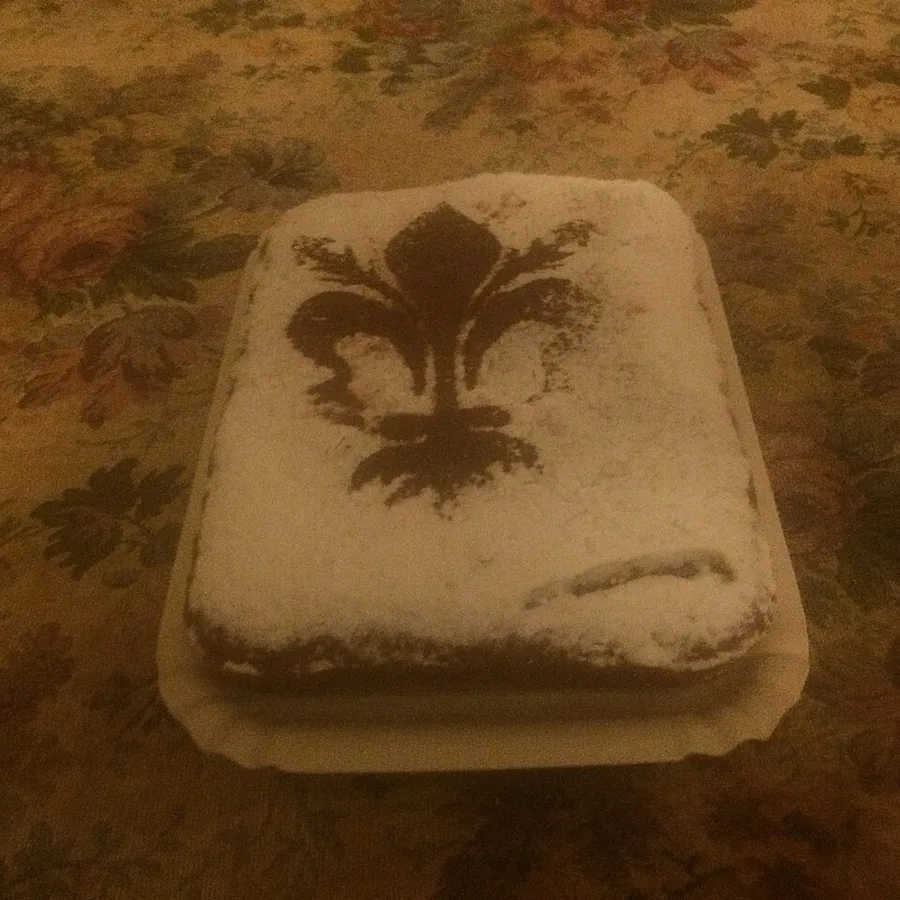
Tuscan, thin and crisp, with oil and coarse salt on top. Genoese focaccia is two centimetres tall and carries a brine of water, salt and oil poured on before baking: two different breads and two different gestures.
 Benoît Prieur · CC0
puglia · 6-10 €/kg
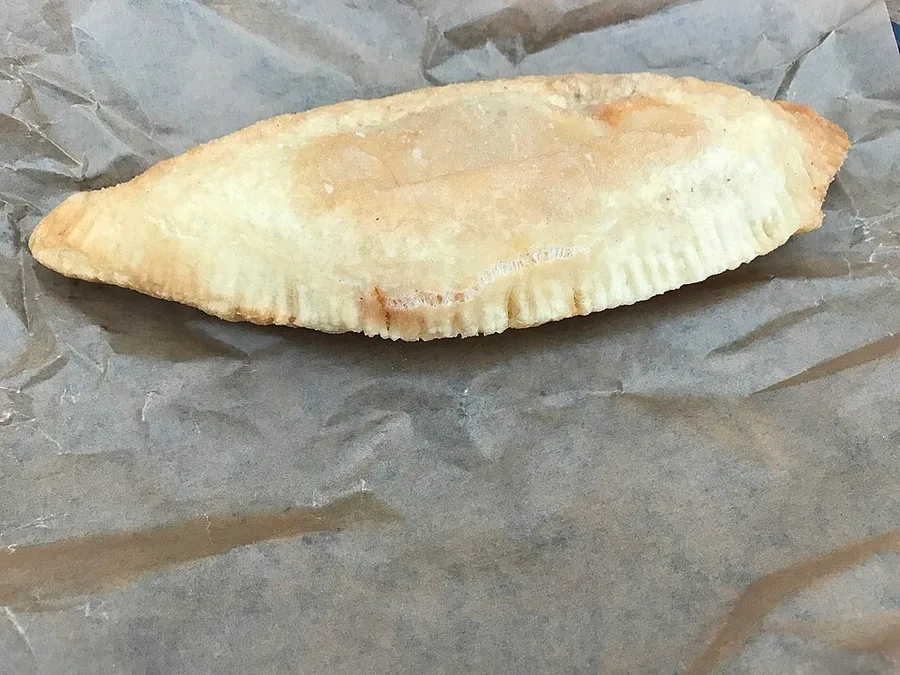
A half-moon of pizza dough deep-fried. A calzone is the same idea baked, and that changes everything: panzerotto dough stays soft and puffed, calzone dough dries and crusts.
piemonte · 10-15 €/kg
In Piedmont toma is a category covering dozens of valley cheeses, and the DOP codifies only part of them. A tomino, by contrast, is a small fresh cheese, not a miniature toma.
One last thing
One last confusion that involves not two products but two marks, and costs more than all the others: Aceto Balsamico Tradizionale di Modena DOP and Aceto Balsamico di Modena IGP. The first is cooked must aged for years in a battery of casks, sold in hundred-millilitre bottles at essential-oil prices. The second is a blend of cooked must and wine vinegar, caramel permitted, made in a short time. Neither is a fake, and twenty times the price lies between them: the difference is three words on the label, traditional and DOP.
The questions this list answers
These are real questions put to an AI assistant, in the period when Bing cited this site among its sources to answer them. The number is how many times we were cited. We read them in Bing Webmaster Tools, under AI performance, and they decide what goes on this page rather than the other way round.
- differenza grana padano parmigiano reggiano81 citations
- what is pancetta1,326 citations
- sopressata1,226 citations
- what is soppressata284 citations
- differenza parmigiano reggiano grana padano29 citations
- sopressa veneta89 citations
- what is ricotta salata cheese36 citations
- mozzarella di bufala291 citations
- baccalà alla vicentina ricetta originale88 citations
- soppressata meaning34 citations
- is pancetta pork12 citations
- italian sounding6 citations
- what is pancetta?50 citations
- ricotta salata cheese469 citations
- soppressa6 citations
Frequently asked questions
What is the difference between salt cod and stockfish?
The method of preservation. Baccalà is salted cod; stockfish is the same fish air-dried without salt. The first must be desalted in water for two or three days, the second soaked with the water changed every six to eight hours. In the Veneto stockfish is called bacalà, hence the mix-up.
Can pancetta be used instead of guanciale?
It can, and the dish changes. The cheek has a compact fat that renders slowly and stays creamy; the belly has alternating layers and its fat dries sooner. In carbonara and amatriciana the difference shows in the texture of the sauce.
Are mozzarella and fiordilatte the same thing?
No: fiordilatte is cow's milk, Mozzarella di Bufala Campana DOP is from Italian Mediterranean buffalo milk. In many regions mozzarella is used as a generic name for both, which is why it is better to ask at the counter which one you are buying.
Are coppa, capocollo and lonza different cuts?
Coppa and capocollo are the same neck muscle, with different names and spices between Emilia and the south. Lonza in most regions is the loin, the same cut the Marche call lonzino, but in some areas lonza means the capocollo: it is worth asking.