What is Soppressa Vicentina?
Soppressa Vicentina is a big salami, from one kilo up to eight, made from heavy pigs born, raised and slaughtered in the province of Vicenza in north-eastern Italy. The mince is ground coarse, stuffed into a wide natural casing and tied by hand with string in a cage of vertical and circular loops. The protected name is spelled sopressa, with one p, which is how the Veneto dialect says it; standard Italian doubles both consonants, and both spellings appear on labels.
What sets it apart is not a spice or a length of ageing but the meat itself. Most salami is made from trimmings. Soppressa is made from whole primal cuts (leg, shoulder, loin, coppa) with belly and jowl supplying the fat. Using the leg means giving up a prosciutto, which is an economic decision before it is a culinary one, and it explains both the price and the texture: soft and sweet rather than dry and stringy.
Fat makes up roughly a third of the mix and is never emulsified. The wide grinding plate leaves clean white cubes visible in the red, and during ageing that fat softens until it is almost creamy. This is the technical reason the slices are cut thick: cut it paper-thin and it falls apart in your hand.
European DOP protection came in 2003 and wrote down what Vicentine families had done at home every January. The consortium counts a few dozen producers, nearly all of them small.
What does it taste like?
Sweet, soft and gently spiced, much closer to a fresh, fatty salami than to the hard, salt-forward stuff most people picture. The first thing you notice is texture: the coarse grind and the soft fat make it yield rather than snap, and it melts against the roof of the mouth.
The seasoning is unusual for a salami. Cinnamon and clove sit far in the background, giving a faint warmth that most tasters cannot identify but do notice. Black pepper is present in both ground and cracked form, so you get an occasional sharp hit. Garlic may or may not be there, depending on the producer and the valley.
Age changes it considerably. A two-month soppressa is pink, moist and mild. A twelve-month piece from an eight-kilo casing turns brick red, concentrates into something nutty and almost sweet, and develops the faint mushroom note that comes from the white mould on the outside. Neither version is smoky: nothing in this product ever meets fire.
How to use it
Cut it by hand, on the diagonal, four to six millimetres thick. That will look too thick if you are used to prosciutto; it is not. The coarse grain and soft fat need body to hold together, and thin slices simply disintegrate. Discard the first slice along with the casing.
The classic serving is on grilled polenta. Cut slabs of firm polenta, char them on a grill or in a dry pan, and lay the cold soppressa on top so the heat softens the fat into the cornmeal. In the foothills of Vicenza this is not a recipe, it is what dinner looks like.
It also cooks well, which few people outside the Veneto know. Dice it into a pasta sauce for thick bigoli, stir it into a risotto with fresh peas, or warm slices in a pan with a splash of vinegar and serve them over radicchio. During the grape harvest, valley kitchens cook it with fragola grapes until they collapse into a sweet-sour sauce.
On a board, keep the company quiet. Soppressa is sweet and delicately spiced, and it disappears next to chilli sausage or smoked meats. Young cheese, pickled vegetables and bread are all it wants.
How long it keeps
A whole soprèssa is wide, and width is what governs it: the middle dries far more slowly than the surface, which is why the cure runs for months and why the finished salame stays soft. Hung in a cool larder at 10 to 15 C with some humidity it goes on losing water for weeks, the casing shrinking and creasing against the meat and the flavour concentrating. A chalky white bloom develops on natural casing in those conditions and is brushed back with a dry cloth; anything you want a judgement on belongs to the producer or the shop.
Cut, the exposed face is broad and dries quickly, so cover it with the flap of casing or a sheet of paper, keep the piece at 4 to 12 C and reckon on two to four weeks. Over that time the large pieces of fat shift from white to ivory as they oxidise and the aroma turns nuttier and less garlicky. Vacuum packs carry the maker's date, and once opened the thick slices darken at the rim within a couple of hours. Freezing coarsens the fat and is not how it is kept.
Spot the real thing
Size gives it away before anything else. The Vicenza soprèssa is a short fat cylinder, eight to fifteen centimetres across, held in a cage of string running lengthwise and wound around, in a natural casing that wrinkles as it dries. Cut, the face is broad and coarsely marbled, soft pink lean with large irregular pieces of white fat, and the slices are cut thick because the texture is yielding rather than firm. The seasoning is mild and aromatic, garlic and pepper with warm spice behind it, and there is no chilli anywhere in it. Look for the Soprèssa Vicentina DOP mark.
The name is the trap. In American delis soppressata almost always means the southern kind from Calabria or Basilicata: narrow, pressed flat, deep red and hot with chilli. Tuscan soprassata is not a salame at all but a head cheese, gelatinous and studded with lemon zest. Anything sold simply as sopressata in a supermarket is likely domestic. The DOP version is uncommon outside Italy, sold by the piece, and priced well above the sliced deli product.
How to pronounce Soppressa Vicentina
so-PRESS-sah vee-chen-TEE-nah
Stress on PRESS in the first word and on TEE in the second. The 'ce' in Vicentina is soft, as in 'chess': vee-chen-TEE-nah, never 'vee-sen-teena'. In the Veneto you will hear the shorter dialect form, so-PRESS-ah, with a single s sound in the middle.
Soppressa Vicentina compared
vsSoppressata calabrese
These two are not variants of one product: they are different foods that happen to share a name, and the confusion is total. Soppressa Vicentina comes from the far north-east: large, coarse, sweet, spiced with cinnamon and clove, aged from two months to a year. Soppressata calabrese comes from the deep south: small, pressed flat between boards, red with chilli, aged for a few weeks. If you order one expecting the other you will be surprised in both directions. Both names derive from the same verb, to press, but only the Calabrian one is actually pressed today.
| This | Soppressata calabrese | |
|---|---|---|
| Region | Veneto, province of Vicenza | Calabria |
| Size | 1–8 kg, round in section | 250–600 g, pressed flat |
| Heat | None: no chilli at all | Chilli, from mild to fierce |
| Spices | Pepper, cinnamon, clove, rosemary | Chilli, pepper, sometimes fennel |
| Ageing | 2–12 months | 30–60 days |
| Slice | Thick, 4–6 mm | Thin |
| Protection | DOP since 2003 | Soppressata di Calabria DOP |
vsOrdinary Italian salami
A standard supermarket salame is built from trimmings, ground medium or fine, tied in a synthetic or reconstituted casing and aged fast. Soppressa uses whole cuts including the leg, is ground on a plate twice as wide, is tied by hand in natural gut and takes months. The difference you can see is grain size; the difference you can feel is that soppressa stays soft where a normal salami goes firm and chewy.
| This | Ordinary Italian salami | |
|---|---|---|
| Meat | Whole cuts: leg, shoulder, loin, coppa | Trimmings and off-cuts |
| Grind | Coarse, 6–7 mm plate | Fine to medium, 3–5 mm |
| Casing | Natural, wide, hand-tied | Often synthetic, machine-netted |
| Pig origin | Province of Vicenza, by law | Anywhere, often imported |
| Texture | Soft, yielding, almost creamy fat | Firm, springy, drier |
| Slicing | Thick by design | Thin |
vsGeneric Veneto sopressa (non-DOP)
The word sopressa on its own is not protected, and much of the Veneto makes an excellent version outside the DOP rules: Treviso, Padua, Verona, the Belluno mountains. What the DOP adds is the origin of the pig: only Soppressa Vicentina requires animals born and raised in the same province where the salami is made. Everything else varies producer by producer rather than by label.
| This | Generic Veneto sopressa (non-DOP) | |
|---|---|---|
| Pig origin | Born and raised in Vicenza province | Unrestricted |
| Recipe | Fixed by the disciplinare | Producer's own |
| Spicing | Pepper, cinnamon, clove, rosemary; garlic optional | Varies: some use only salt and pepper |
| Typical price | 17–25 €/kg at source | 12–18 €/kg |
| Availability abroad | Rare | Rarer still |
Soppressa Vicentina substitutes
- Salame Felino IGP
The closest widely exported Italian salami in register: sweet, low on spice, coarse-ish grind, natural casing. It is firmer and drier than soppressa, so slice it a little thinner than you would the original.
1:1 - Any coarse-ground sweet salami (Genoa, Milano-style but coarse)
Look for visible fat cubes and a short ingredient list. Avoid anything with fennel, chilli or smoke, which pull it away from the Veneto profile entirely.
1:1 - Sopressa from Treviso, Padua or Belluno
If you find any Veneto sopressa outside the DOP, take it: same tradition, same coarse grain, same instruction to cut thick. Belluno versions are often slightly smokier because of mountain curing rooms.
1:1 - Fresh coarse pork salami, briefly aged
Some US and UK charcutiers make short-aged, soft, coarse pork salami that behaves the way soppressa does on the plate. Ask for something under two months, and eat it the day you buy it.
1:1 - Pork-free: coarse beef or venison salami
No cured beef reproduces the sweetness of Vicentine pork, but a coarsely ground beef salami with pepper and no chilli, sliced thick over grilled polenta, gets the eating experience right even if the flavour is leaner.
1:1, with a drizzle of olive oil for the missing fat
Where to buy it
In Italy, buy from producers in the province of Vicenza or from delicatessens in Vicenza, Bassano del Grappa and Marostica. Look for the full name Sopressa Vicentina DOP and the consortium reference, because the word sopressa alone guarantees nothing, since the whole Veneto uses it.
Outside Italy it is genuinely scarce, far less exported than Milano or Felino salami. US importers list it occasionally at 22 to 34 dollars per pound; UK Italian delicatessens ask 32 to 48 pounds per kilo. Buying a whole piece from a Vicentine producer, shipped within Italy or the EU, costs far less.
Buy whole rather than sliced: soppressa oxidises fast once cut, and pre-sliced packs are cut too thin for the product to make sense. A one-and-a-half kilo piece, kept properly, lasts months.
Where to eat it in Italy
The foothill towns between Schio, Thiene, Marostica and Bassano del Grappa, where soppressa with grilled polenta is the default plate in any osteria. Marostica has its giant chessboard square, Bassano its Palladian wooden bridge over the Brenta, so the eating fits easily around the sightseeing.
In the Berici hills to the south (Barbarano, Nanto, Lonigo, Costozza di Longare) the local version usually comes without garlic. Costozza is worth the detour for the covoli, natural caves linked to Renaissance villas by masonry air ducts, used for centuries to cool rooms and to age cured meat and cheese.
North, in the Valdastico, the Val Leogra and up onto the Asiago plateau, soppressa is served alongside mountain cheeses made in summer dairies. Village festivals between late winter and spring put it at the centre, and many farm producers sell directly from the door.
Further reading
Frequently asked questions
Is soppressa the same as soppressata?
No. Soppressa Vicentina is a large, sweet, coarse-ground salami from the Veneto, spiced with pepper, cinnamon and clove and aged for two to twelve months. Soppressata calabrese is a small, flattened, chilli-hot salami from Calabria aged for a few weeks. The names share a root but the products have almost nothing in common.
Why is soppressa sliced so thick?
Because of how it is made. The mince is ground on a wide plate and the fat stays soft through ageing, so a thin slice loses its structure and crumbles. Four to six millimetres, cut on the diagonal, is the traditional thickness.
What does the DOP actually guarantee?
That the pigs were born, raised and slaughtered in the province of Vicenza, that the salami uses whole cuts rather than trimmings, that it is stuffed into natural casing and hand-tied, and that ageing runs from a minimum of two months for small pieces up to twelve for the largest. Origin of the animal is the part almost no other salami guarantees.
Does it contain garlic?
Sometimes. The rules permit garlic but do not require it. Producers in the foothills tend to include it, producers in the Berici hills tend not to, and many make both. The label always says.
How do you pronounce soppressa vicentina?
so-PRESS-sah vee-chen-TEE-nah. The 'ce' is soft as in 'chess', and the stress falls on PRESS and on TEE.
Sources
Where to check what you just read.
- 1
L'atto del marzo 2003 che registra la DOP: il nome ufficiale è «Sopressa Vicentina», con una sola p, e vale solo per la provincia di Vicenza.
- 2
Da qui si scarica il disciplinare: peso minimo dei suini, tagli ammessi nell'impasto, spezie consentite e tempi di asciugatura e stagionatura.
- 3Consortium · interested partyConsorzio di tutela
L'elenco ristretto dei salumifici autorizzati e la distinzione fra la DOP e la sopressa vicentina generica venduta con lo stesso nome.
Related foods
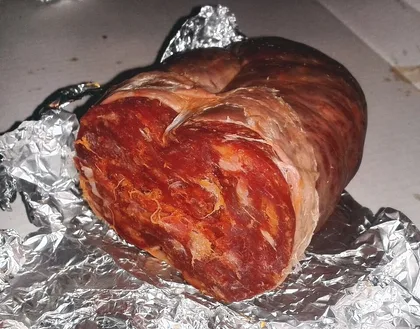 Cured meatsSoppressataSoppressata is a coarse-ground dry salami from southern Italy, pressed flat between boards while it dries…
 CheeseAsiagoOne name covers two cheeses nobody would mistake for each other at the counter.Cured meatsSalame MilanoSalame Milano is the salami most of the world pictures when it hears the word: large diameter, mild, evenly…
 SweetsTiramisuNothing here goes near an oven. Savoiardi dipped in cold espresso, raw egg yolk whipped with mascarpone…Pasta and breadGnocchiGnocchi are small boiled dumplings, in their modern form made of potato bound with a little flour.
 WineProseccoProsecco is made from Glera grapes by the Martinotti tank method, not the traditional bottle method used for…
 CheeseGrana PadanoNine months is the floor the specification sets before a wheel may carry the name.
 CheeseProvoloneProvolone is a stretched-curd cow's milk cheese from northern Italy, rope-tied and hung to age in shapes from…