Sixteen Italian fresh pastas, and what they are eaten with
Tajarin, pici, orecchiette, trofie, pizzoccheri, culurgiones. They differ by flour, by egg and by the movement of the hand, and each was invented for a particular sauce: here in order, from plain to filled, with the price per kilo.
A fresh pasta is read from three things. The flour, which in the north is soft wheat and in the south durum semolina, with Tuscany and the Marche in between. The egg, present in northern pastas and almost always missing in the south, where water and semolina were enough. And the gesture: rolled with a pin, wrapped on a rod, dragged with a knife, pinched between two fingers.
The sauce follows from those three. An egg sheet rich in yolks wants butter or a long ragu, because it is already rich; a water-and-semolina pasta, rough and neutral, wants bitter greens, fish or tomato. That is why orecchiette go with turnip tops and tajarin with truffle, and not the other way round.
The first nine entries are plain pastas, the last seven are filled. Every line gives the flour, the gesture and the dish the shape was invented for.
 Popo le Chien · CC001
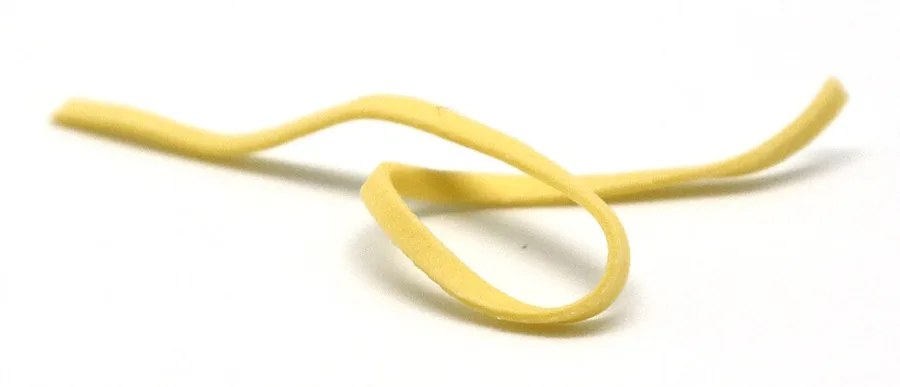
Tajarin
piemonte · 12-18 €/kg
Piedmontese, the extreme of egg pasta: twenty or forty yolks to a kilo of flour, no whites, knife-cut at two millimetres. The leftover whites were used to fine wine in the barrels, and the yolks ended up here. They are dressed with butter and truffle or with roasting juices, never with a covering sauce.
 Popo le Chien · CC0
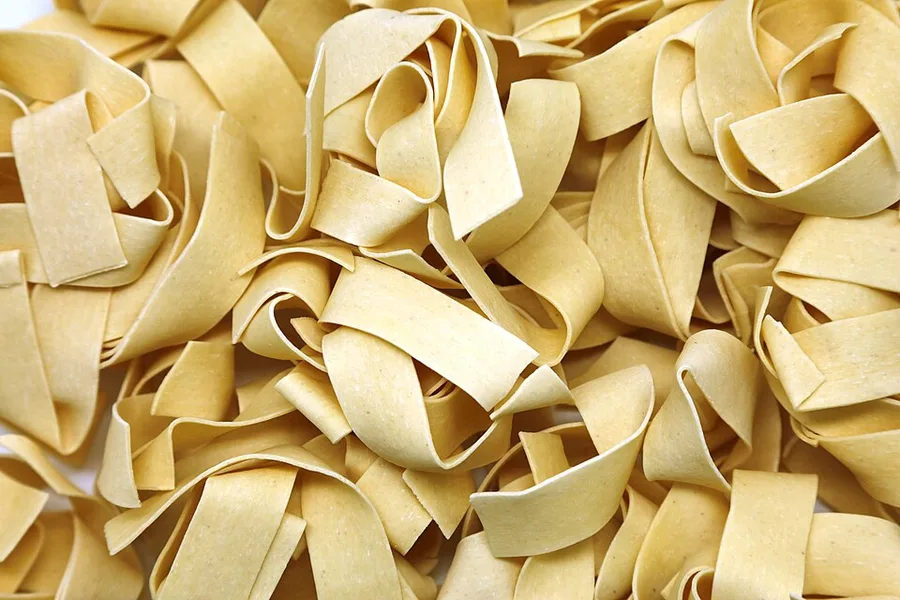
toscana · 8-16 €/kg
Tuscan, two or three centimetres wide because they have to carry game sauces: hare, wild boar, duck. The width is not decorative, it is gripping surface. Beyond a certain size egg pasta turns heavy, which is why pappardelle stay thin despite being broad.
 Popo le Chien · CC003
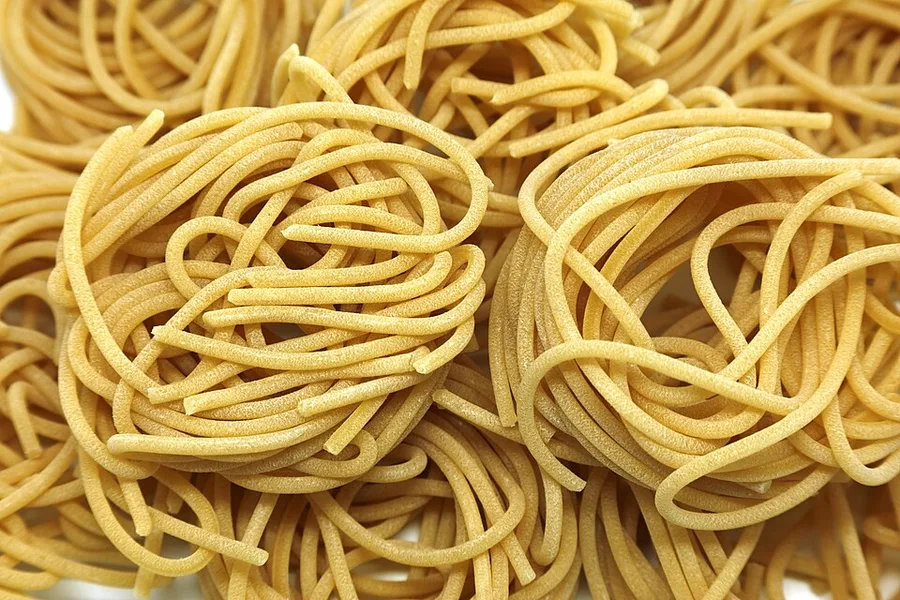
Pici
toscana · 8-14 €/kg
From Siena, water and flour, rolled out one at a time under the palm: thick, uneven, never identical. The classic dressing is aglione, or the toasted breadcrumbs of pici all'ucciola, which is poverty cooking that says so.
 Original uploader was Signorealex at it.wikipedia · Public domain
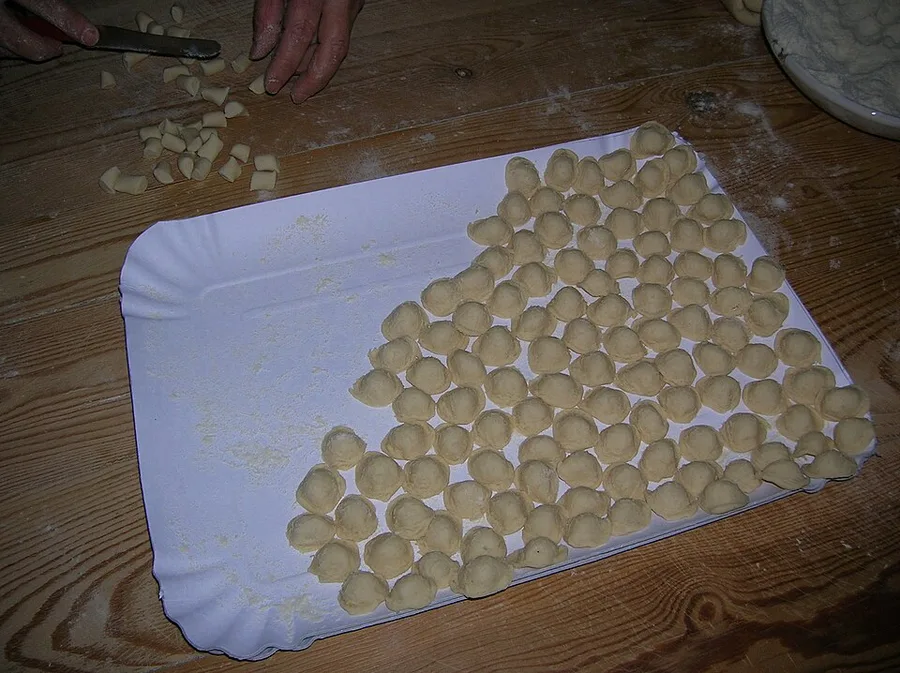
puglia · 5-9 €/kg
Apulian, semolina and water, dragged with a blunt knife and flipped over the thumb: the centre stays thin and the rim thick, so they cook unevenly, and that is the point. With turnip tops, where the pasta cooks in the same water as the greens.
 Popo le Chien · CC005
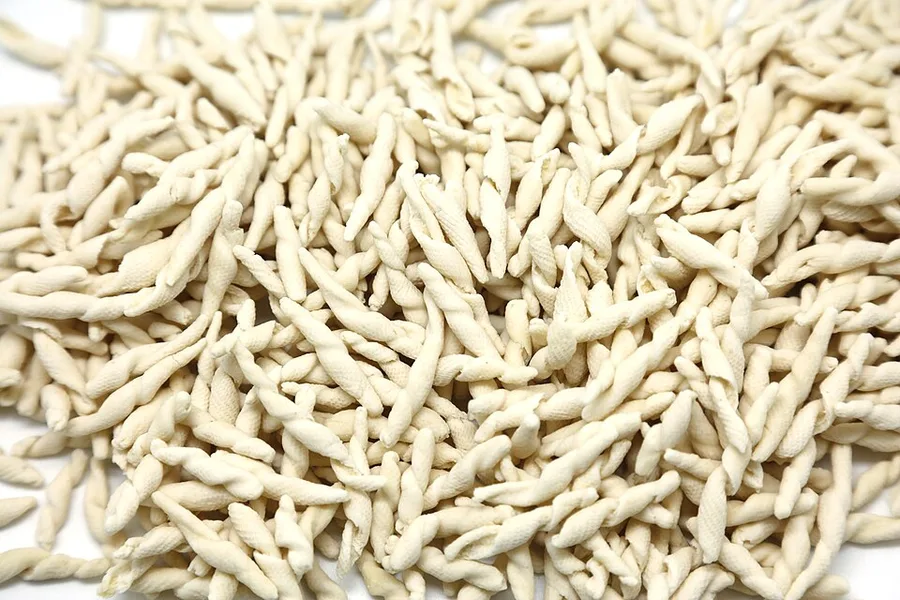
Trofie
liguria · 8-12 €/kg
Ligurian, short and twisted with a flick of the palm, water and flour. They are boiled with potatoes and green beans in the same pot and dressed with mortar pesto: the twist exists because pesto, which is a cream rather than a sauce, has to stay on.
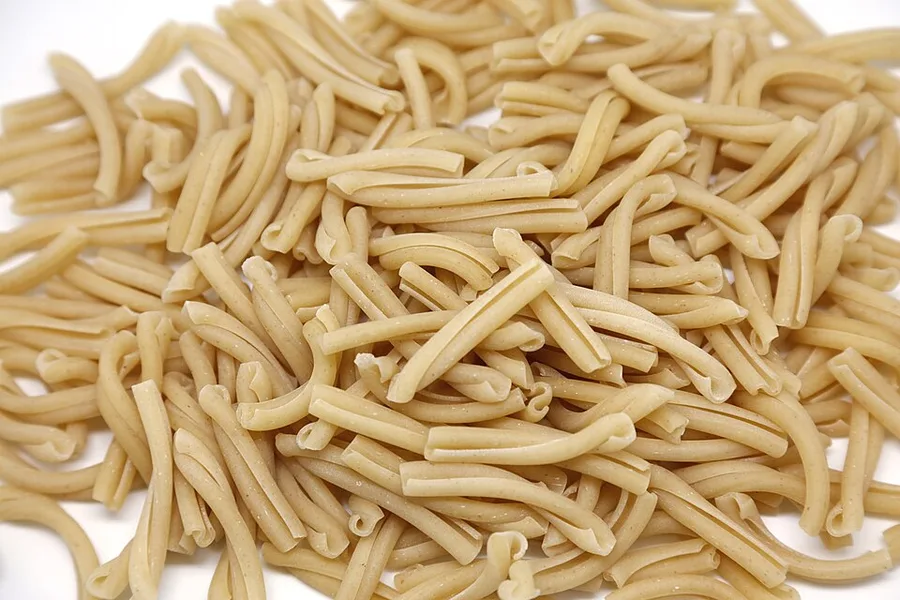 Popo le Chien · CC0
emilia romagna · 7-11 €/kg
From Romagna and Umbria, rolled between the palms into short twisted cylinders. The name carries a nineteenth-century anticlerical story no document supports; the shape, by contrast, exists to hold short meat sauces.
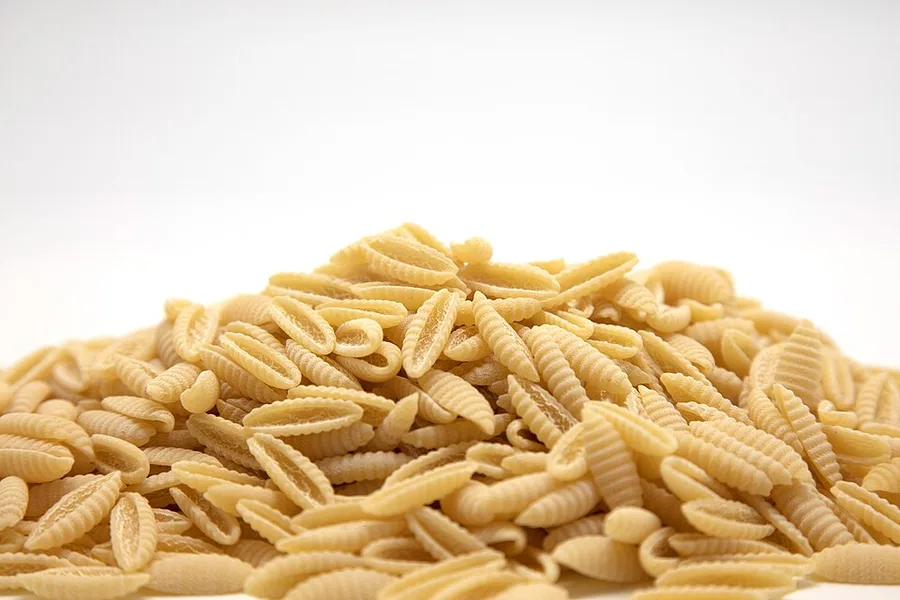 Popo le Chien · CC0
sardegna · 2.4-4.6 €/kg
Sardinian, small and ridged, often kneaded with saffron that turns them yellow. They are shaped on the ciuliri, a rush basket that leaves the ridges. The dish is alla campidanese, with crumbled fresh sausage, tomato and pecorino.
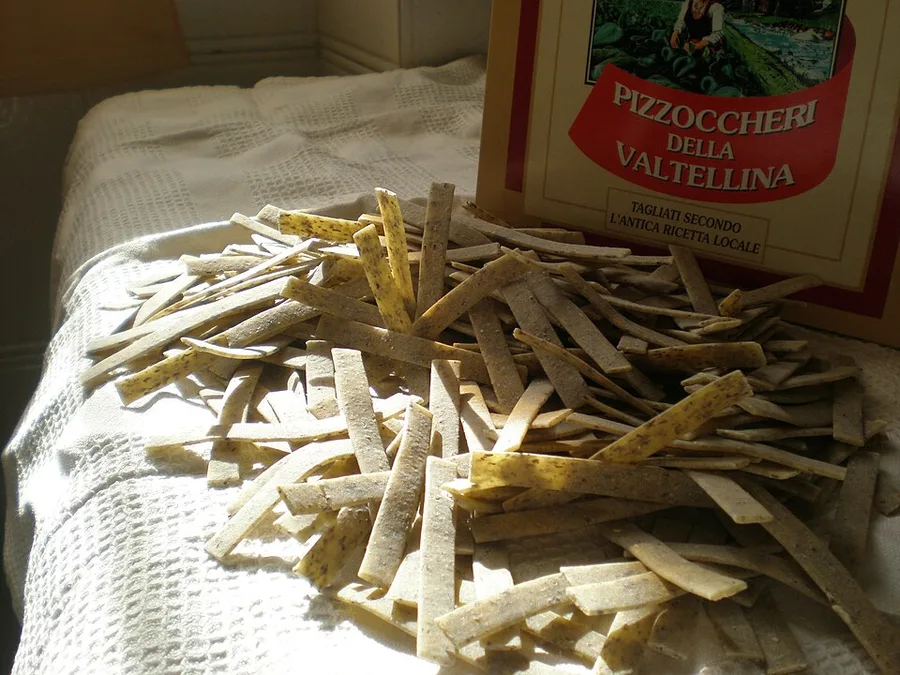 Nnaluci · CC BY-SA 3.0
lombardia · 8-14 €/kg
From the Valtellina, the only pasta on this list made with buckwheat, eighty per cent buckwheat to twenty of wheat. They are boiled with potatoes and cabbage and layered with Valtellina Casera and garlic butter: never stirred in the pot.
- 09
Gnocchi
veneto · lombardia · 5-8 €/kg
Not pasta, and here because everyone treats it as such: old floury potatoes boiled in their skins, mashed boiling hot, with as little flour as possible. The one rule that saves them is exactly that: every extra spoonful of flour is a step towards rubber.
 Nirhan · CC BY-SA 4.0
trentino alto adige · 12-18 €/kg
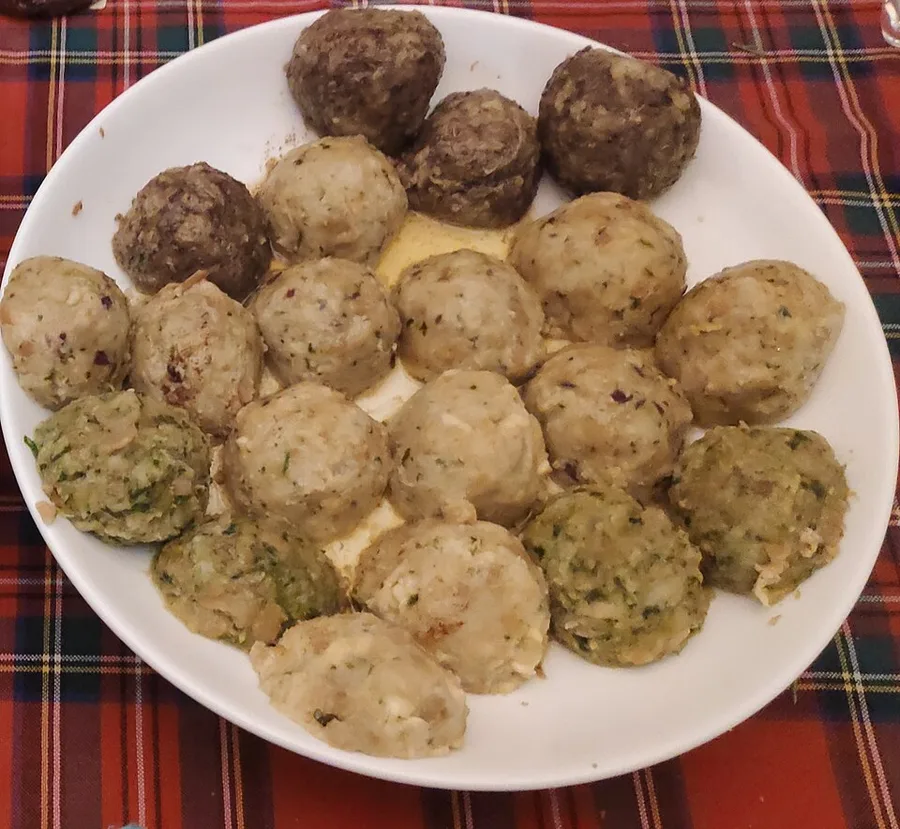
From Alto Adige, balls of stale bread soaked in milk with speck and herbs, served in broth or dry with butter. The bread is cubed and never grated, and the water must only shiver: a full boil splits them within two minutes.
 Nick.mon · CC0
emilia romagna · 22-34 €/kg
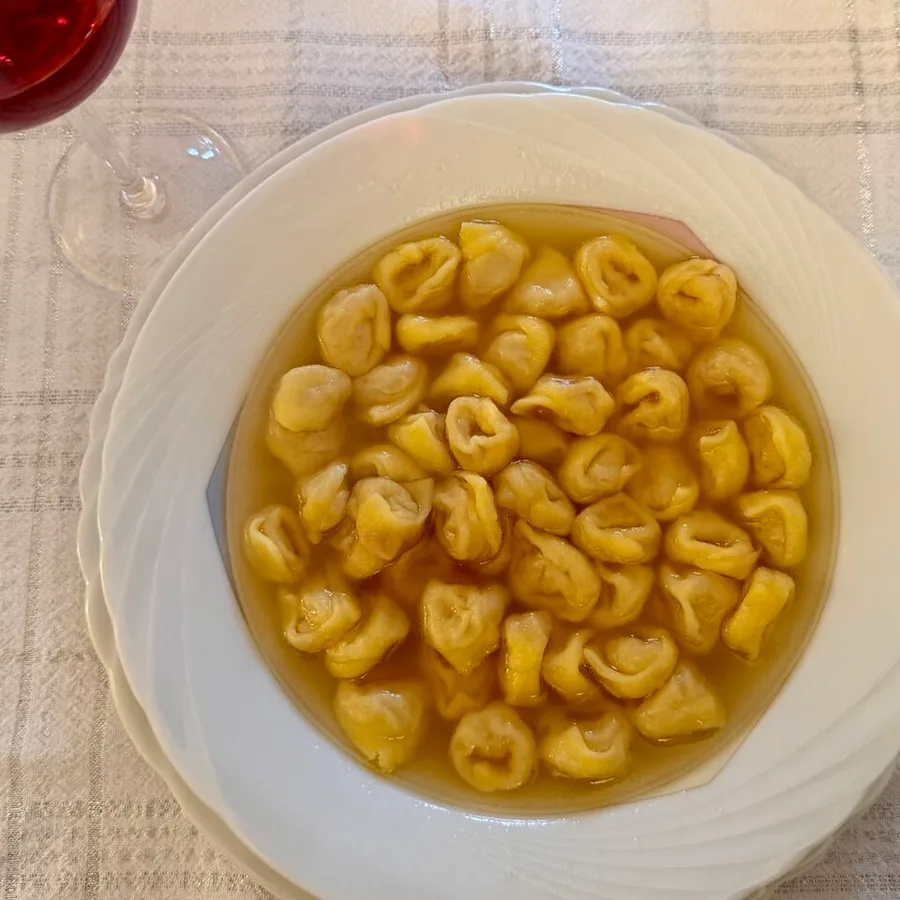
Bolognese, very small, closed around the little finger: the filling recipe has been lodged with the chamber of commerce since 1974, browned pork loin, prosciutto, mortadella, Parmigiano, egg and nutmeg. The sheet goes under a millimetre and they are counted in pieces, thirty or forty a head.
 Nerijp · CC BY-SA 3.0
emilia romagna · 16-24 €/kg
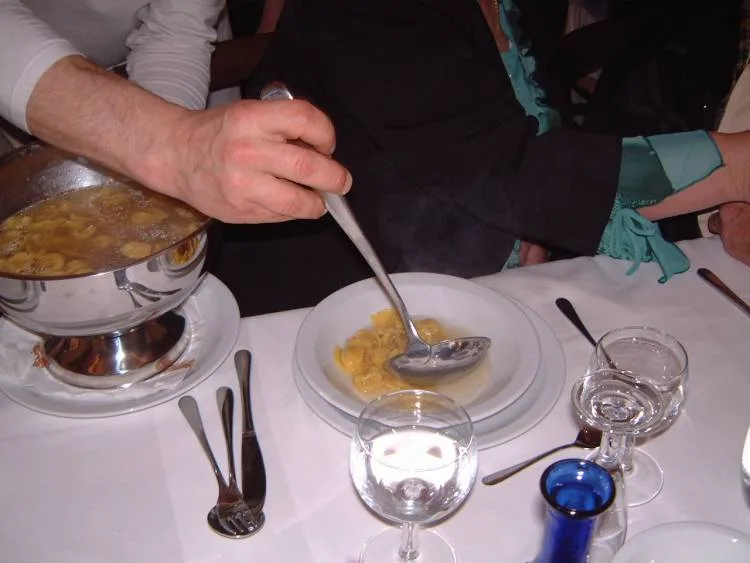
From Romagna and the Marche, larger than tortellini and built on a different base: often cheese or white meats instead of pork. They start from a wider square or disc, and the fold is a hat. In Romagna the broth is capon, and the argument with Bologna never ends.
 Popo le Chien · CC0
emilia romagna · 14-22 €/kg
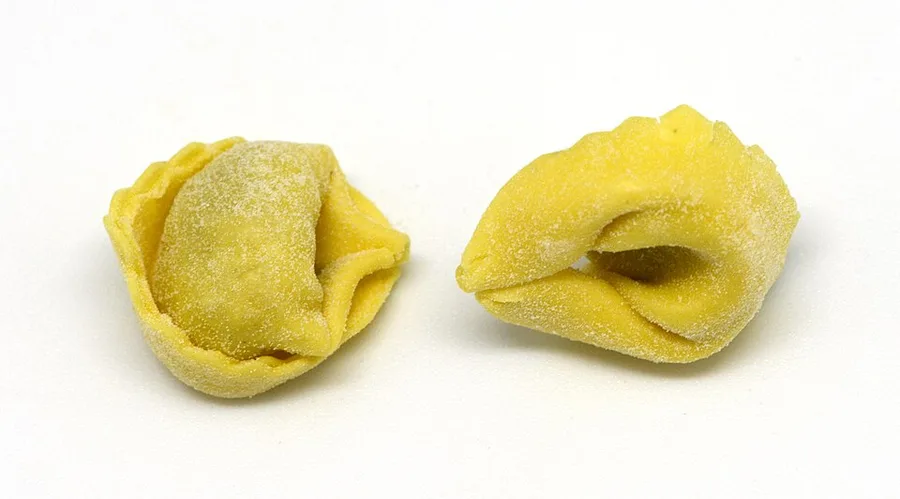
The large Emilian format, filled with ricotta and parsley or with chard: not a grown-up tortellino but another recipe, a meatless one. It is dressed with butter and sage or a plain tomato sauce, because the filling is delicate and a ragu would bury it.
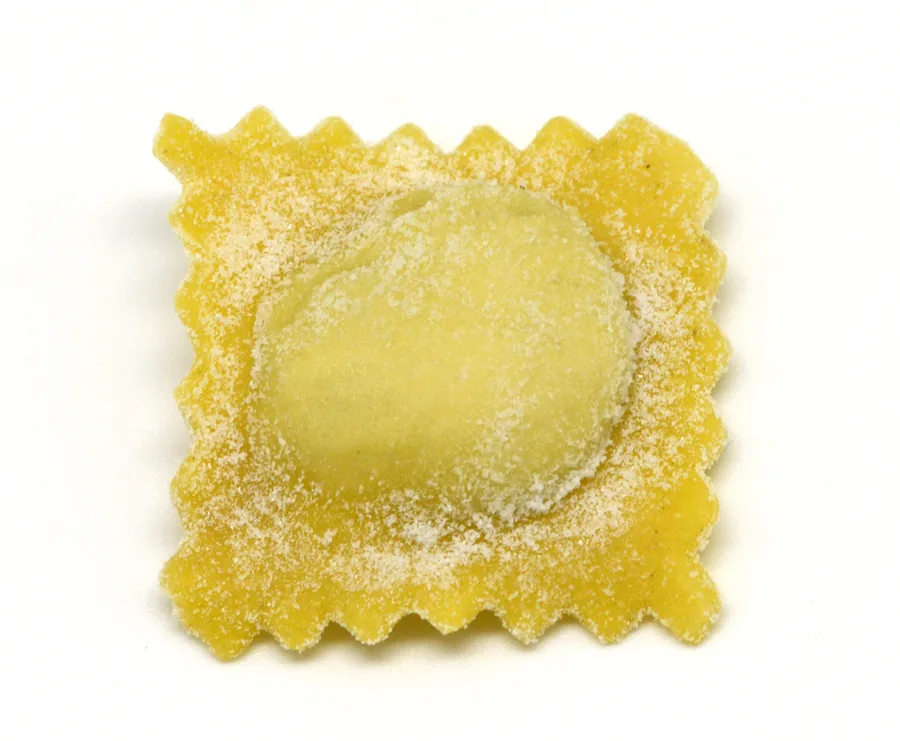 Popo le Chien · CC0
piemonte · 18-28 €/kg
Piedmontese, filled with three leftover roasts and greens, because they began as a Monday dish. The plin version is tiny and is closed with a pinch between one mound of filling and the next, with no edges to trim. They are dressed with roasting juices, or eaten bare on a folded napkin.
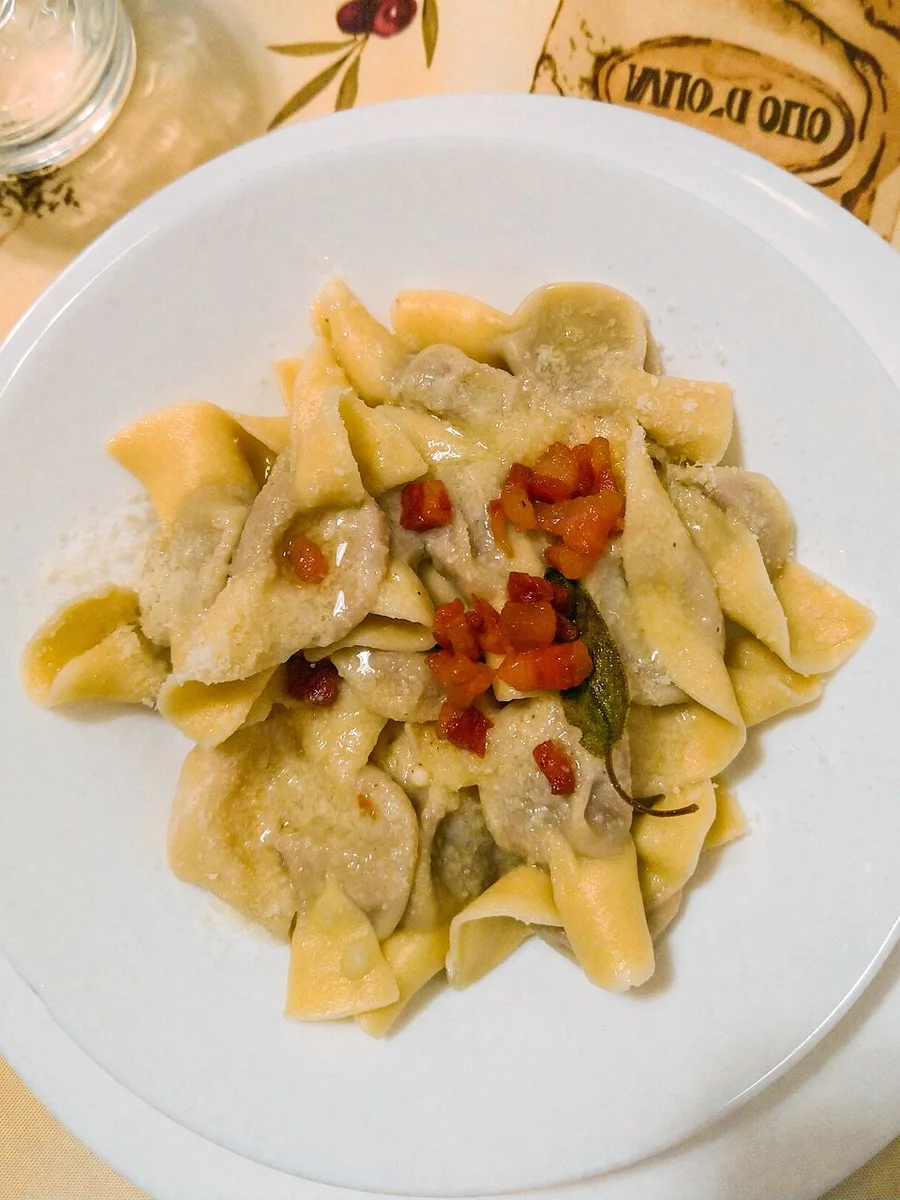 Florixc · Public domain
lombardia · 14-20 €/kg
From Bergamo, wrapped like a sweet, with a sweet-savoury filling that catches people out: roast meat, salami, amaretti, raisins and pear. Hazelnut butter, crisp pancetta and sage on top. The amaretti must stay under ten per cent of the filling, or the dish turns into a dessert.
 Marica Massaro · CC BY-SA 4.0
sardegna · 12-18 €/kg
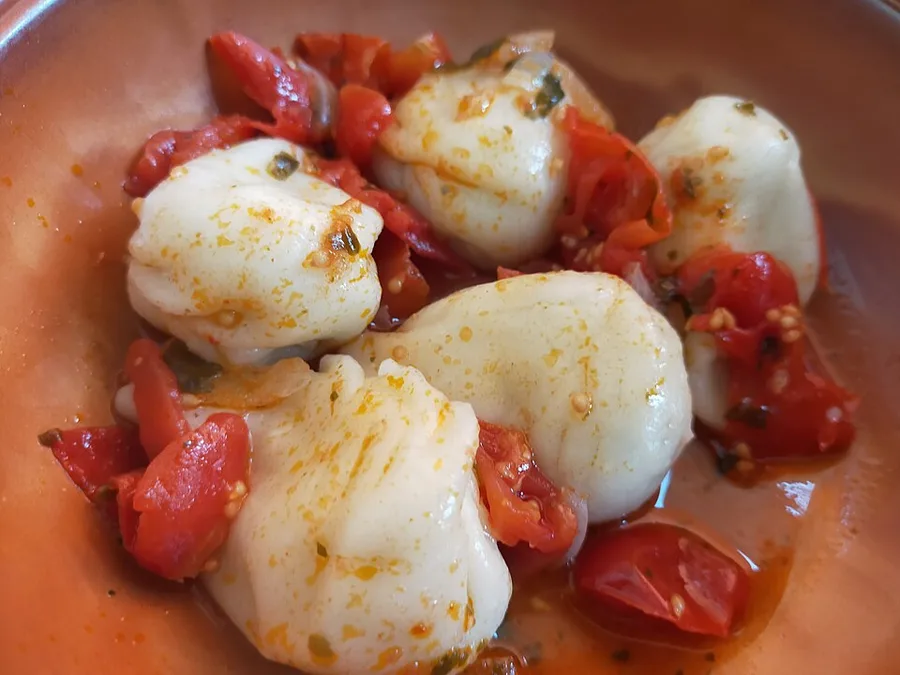
From the Ogliastra, filled with potato, pecorino and mint, closed in an ear-of-wheat seam of twelve or sixteen alternating pleats: that gesture is protected by the IGP rules, which is rare. The closure is not decoration, it holds the raviolo together without any egg in the dough.
One last thing
One thing holds for all of them. Fresh pasta does not want water salted like dried pasta: it absorbs faster and the salt arrives sooner. And the times are very short, two to six minutes depending on thickness, so you taste rather than watch the clock. Filled pasta is lifted out with a skimmer and never into a colander, which crushes it, and none of these shapes should be tossed long in a pan: thirty seconds with a spoonful of cooking water is the maximum.
The questions this list answers
These are real questions put to an AI assistant, in the period when Bing cited this site among its sources to answer them. The number is how many times we were cited. We read them in Bing Webmaster Tools, under AI performance, and they decide what goes on this page rather than the other way round.
- tortelli di zucca mantovani, la ricetta originale217 citations
- what is agnolotti pasta127 citations
- agnolotti al pomodoro120 citations
- what is pappardelle pasta105 citations
- tortellini ricetta originale93 citations
- tortellini in brodo ricetta60 citations
- maccheroni alla chitarra50 citations
- what is agnolotti36 citations
- tortelloni pasta24 citations
- tajarin al tartufo bianco d'alba16 citations
- culurgiones12 citations
Frequently asked questions
What is the difference between egg pasta and semolina pasta?
The flour and the fat. Northern egg pasta uses soft wheat and yolks, is rich and goes with butter and meat sauces. Southern semolina pasta is water and durum wheat, rough and neutral, and carries bitter greens, fish and tomato. They are not two grades, they are two cuisines.
How long does fresh pasta cook?
Two to six minutes depending on thickness: thin sheets two or three, thick shapes like pici five or six, filled pasta three or four from the moment they surface. You taste, because hand-made thickness varies from one batch to the next.
Why are orecchiette thin in the middle?
Because the centre and the rim are meant to cook differently: the centre softens and the rim stays al dente, and the sauce settles in the hollow. It is the result of the gesture, dragging with a knife and flipping over the thumb, not a decorative choice.
Can fresh pasta be frozen?
Yes, and it is the best way to keep filled pasta: freeze it raw and well apart on a semolina-dusted tray, then bag it once hard. Cook it from frozen with an extra minute. In the fridge it holds a day, no more.