Sixteen Italian products that cost little and are worth a lot
Semolina pasta at a euro and a half a kilo, DOP bread at four, Sila potatoes at two, blood oranges at one twenty. The good shop is almost never the dearest one, and this is it.
The relationship between price and quality in food is full of holes. Some products cost twenty times the average for reasons of yield or labour, and some recognised products, with rules behind them, cost one or two euro a kilo because their production is efficient and the harvest is large.
Semolina pasta is the clearest case. Spaghetti, rigatoni, bucatini and maccheroni sit between one euro and two twenty a kilo, and that price contains durum wheat, extrusion and drying. The difference between a good pasta and an ordinary one, that is a bronze die and slow drying, doubles the price: two euro instead of one, for a kilo that feeds ten.
The same holds for vegetables, where many IGP products cost the same as their anonymous equivalents: Sicilian blood oranges at one twenty to two fifty a kilo, Val di Non apples the same, Sila potatoes under two fifty. Here the mark is not paid for, and the reason is simple: these are large harvests, in areas that live on them.
 Andy Li · CC0
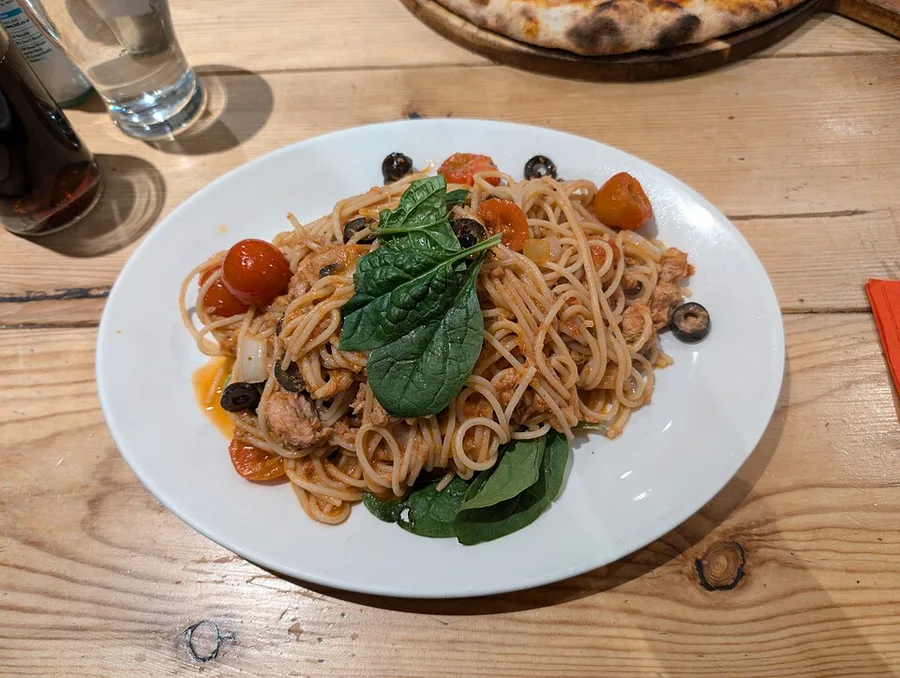
campania · 1-2.2 €/kg
One to two euro twenty a kilo: semolina and water, round section, between 1.7 and 2 millimetres. A bronze die and slow drying double the price and are visible on the dry pasta.
 Popo le Chien · CC002
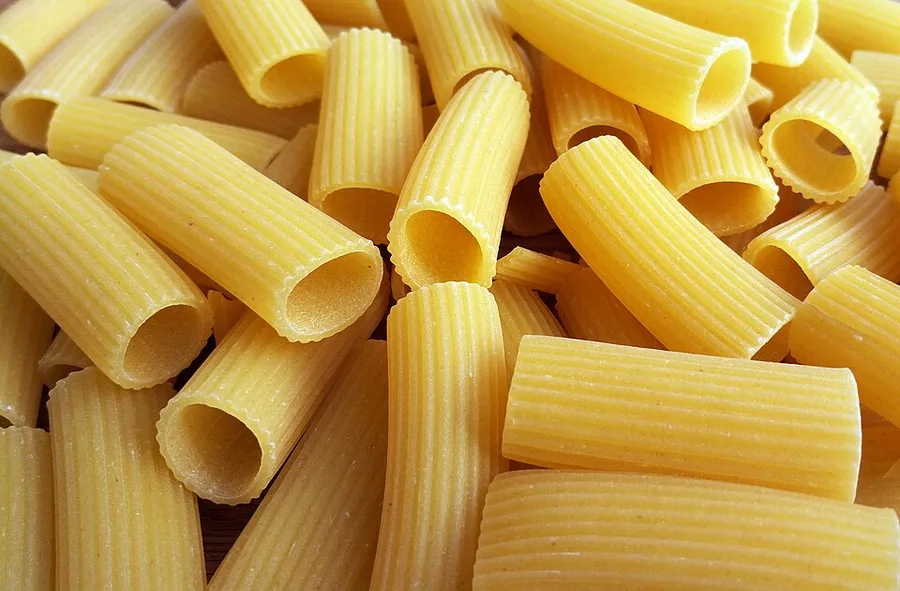
Rigatoni
lazio · 1.1-2.2 €/kg
One euro ten to two euro twenty a kilo. The ridges and the straight cut add a quarter to the usable surface: engineering that costs a few cents and changes which sauces cling.
 Holapaco77 · CC BY-SA 4.0
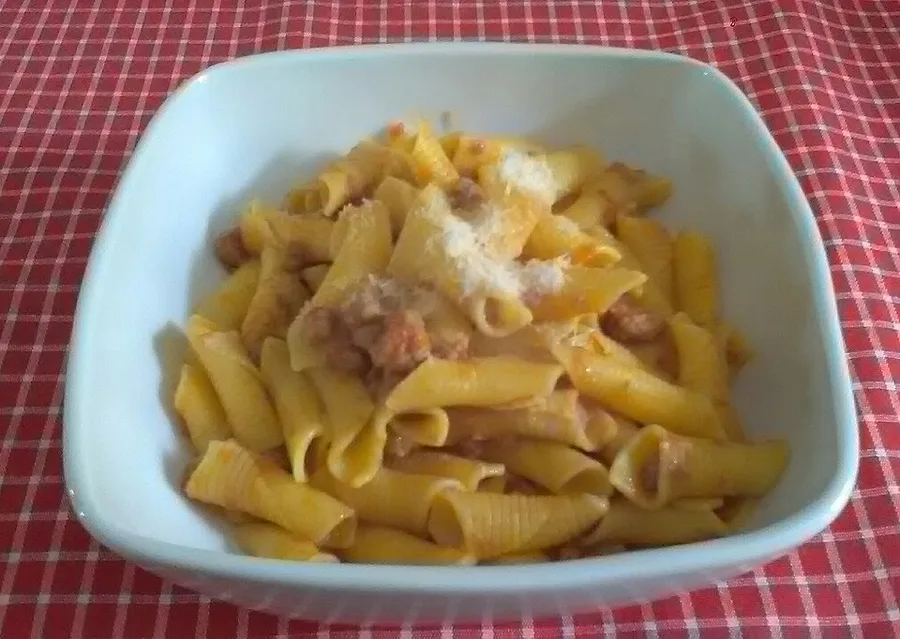
campania · abruzzo · 1.1-2.2 €/kg
One euro ten to two euro twenty a kilo, and a name that changes meaning every two hundred kilometres: semolina pasta in general in Naples, a square egg shape in Abruzzo, a ferretto-rolled tube in the inland south.
 Nnaluci · CC BY-SA 3.004
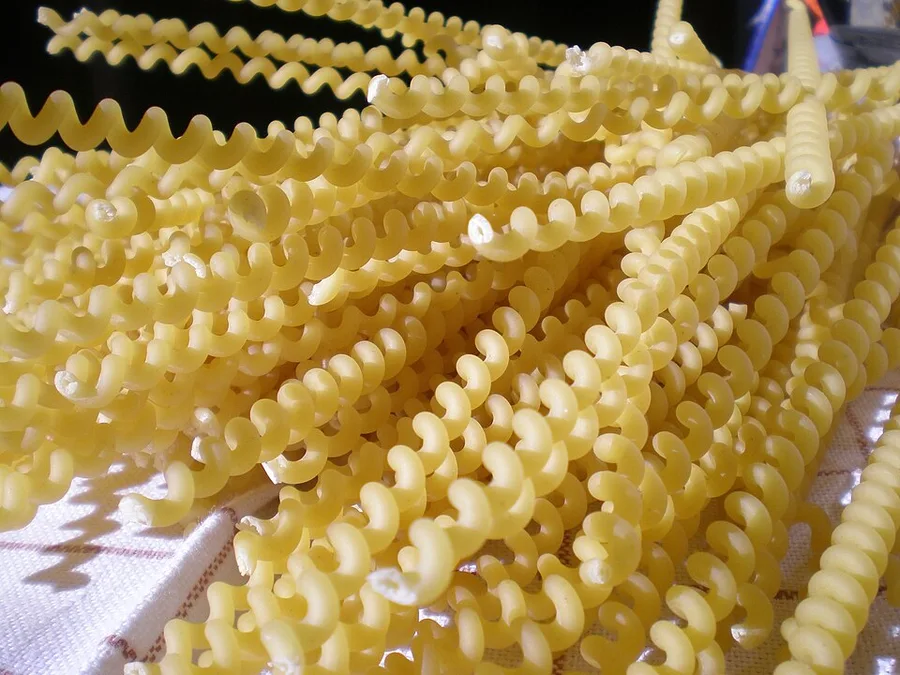
Fusilli
campania · molise · 1.1-2.2 €/kg
One euro ten to two euro twenty a kilo for the industrial helix. The hand-rolled fusillo on a ferretto is another product at another price, and it holds sauce inside rather than outside.
 Ivanbranco · CC BY-SA 4.0
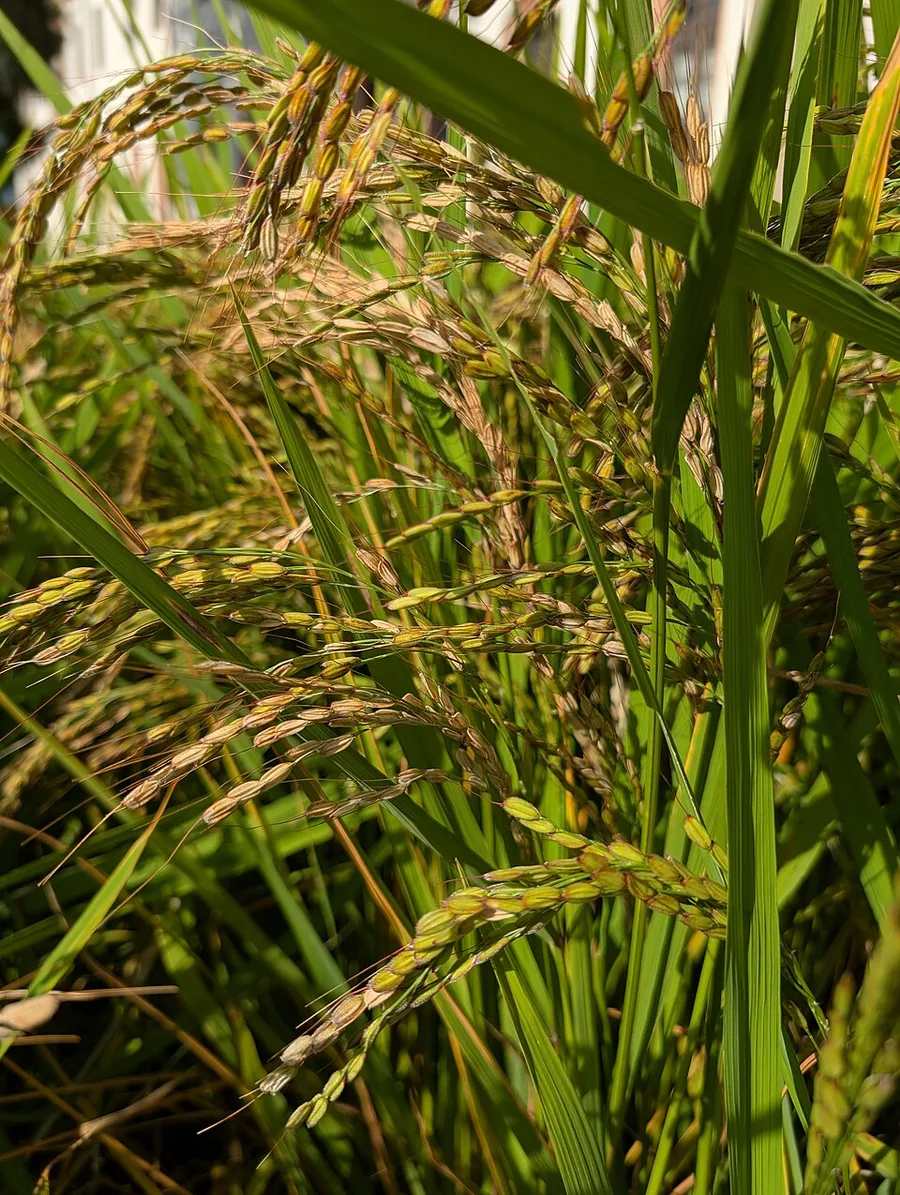
lombardia · piemonte · 2.5-4 €/kg
Two euro fifty to four a kilo for the risotto rice with the most amylose around: it holds the grain even ten minutes past time. It forgives more mistakes per euro than anything else.
lombardia · 3.5-7 €/kg
Three euro fifty to seven a kilo: maize and buckwheat flour, the base of a dish that with cheese becomes a whole dinner for four for a few euro.
 Nikotota · CC BY-SA 4.0
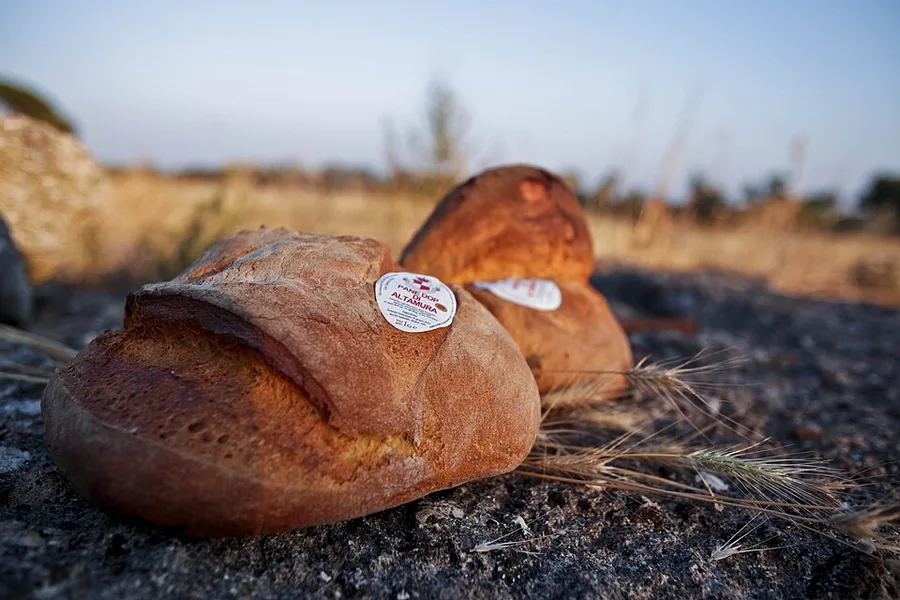
puglia · 3.5-5 €/kg
Three euro fifty to five a kilo for a DOP bread of re-milled semolina, mother dough and a wood oven. It keeps for a week: the product on this list with the best ratio of rules to price.
 Luigi Mancini at Italian Wikipedia · CC BY-SA 3.0
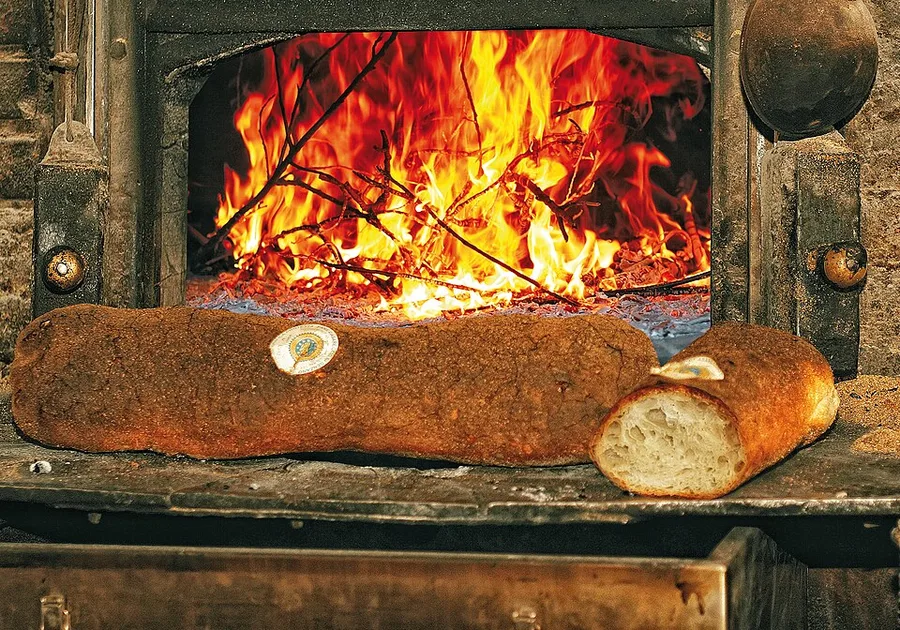
lazio · 3.5-5 €/kg
Three euro fifty to five a kilo, IGP, naturally leavened and wood-fired, with bran on the crust that keeps the loaves from sticking. The bread of Roman sandwiches.
calabria · 1.2-2.5 €/kg
One euro twenty to two euro fifty a kilo, IGP, above a thousand metres on granite soils: thick skin, little water, and firm flesh that neither breaks up nor soaks up oil.
sicilia · 1.2-2.5 €/kg
One euro twenty to two euro fifty a kilo for three IGP varieties whose colour depends on the cold nights of Etna. A European mark at the price of an ordinary orange.
 Xaura · CC BY-SA 3.0
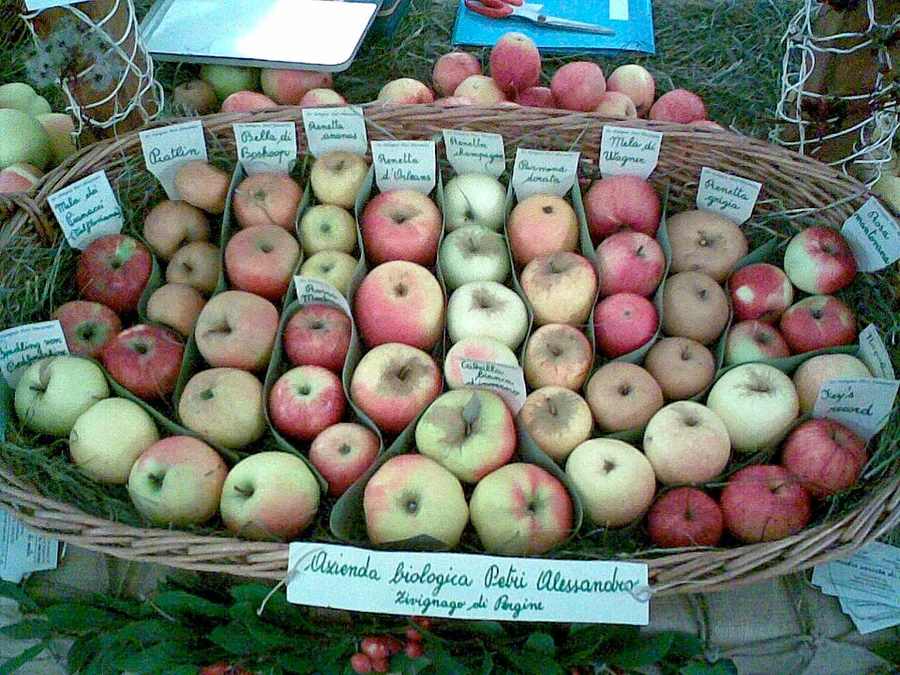
trentino alto adige · 1.2-2.2 €/kg
One euro twenty to two euro twenty a kilo, DOP, grown between six hundred and a thousand metres: altitude gives more acidity and more crunch, and the price stays that of a lowland apple.
sicilia · 1.2-2.5 €/kg
One euro twenty to two euro fifty a kilo, IGP, Italia grapes picked as late as December thanks to sheets over the pergolas. The late harvest is precisely what the mark protects.
campania · 1.5-3 €/kg
One euro fifty to three a kilo: the flowering shoots of a turnip, picked before the flower opens. With garlic, chilli and a sausage they make a main course for two.
 JP · CC0
lazio · 2-3.5 €/kg
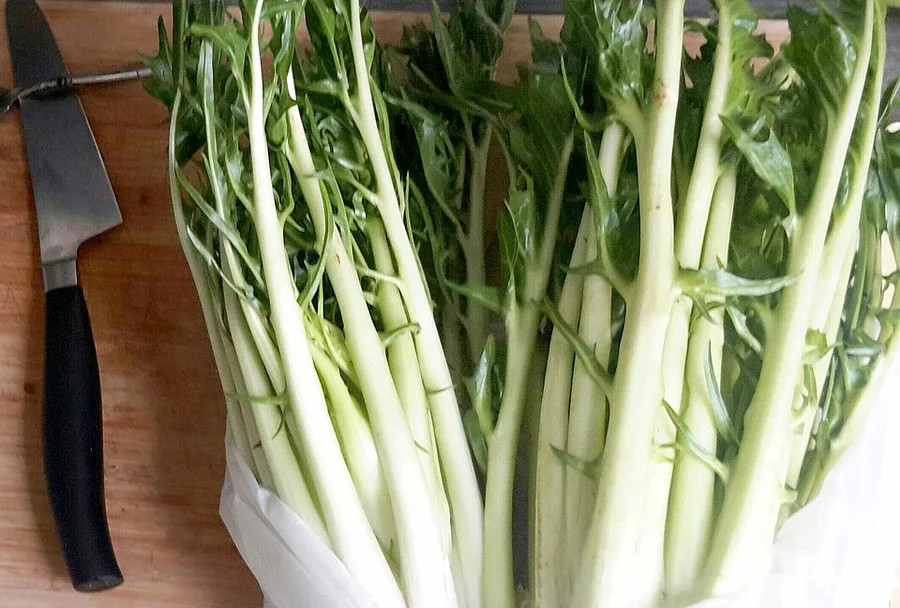
Two to three euro fifty a kilo, November to March, and half the head is discarded: the real yield has to be reckoned with, but it remains one of the cheapest winter vegetables in Rome.
 Massimiliano Ruggieri · CC BY-SA 4.0
puglia · 1.5-3 €/kg
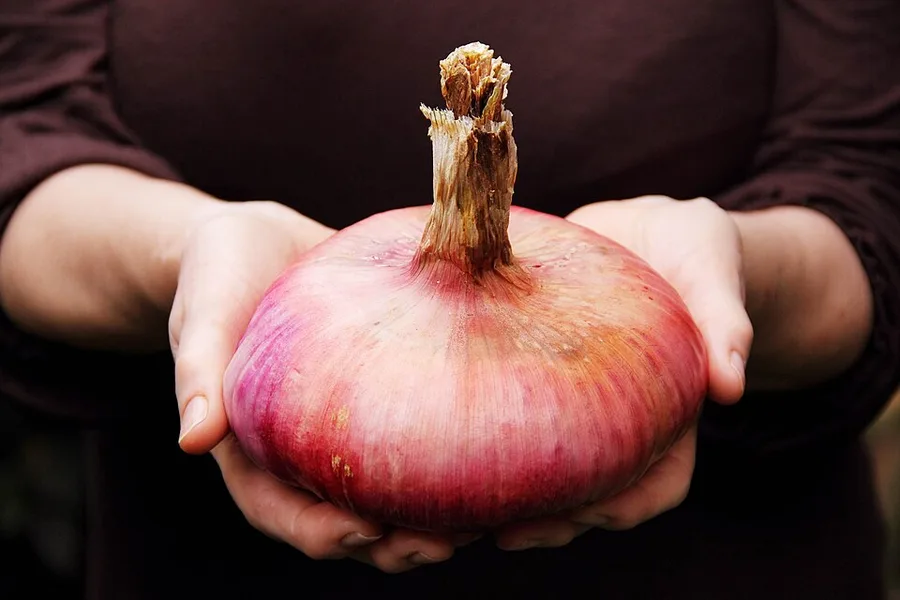
One euro fifty to three a kilo: broad, flattened, sweet enough to eat raw with salt and oil. No mark, and a price that shows how little the mark matters here.
 Haragayato · Public domain16
Taralli
puglia · 8-14 €/kg
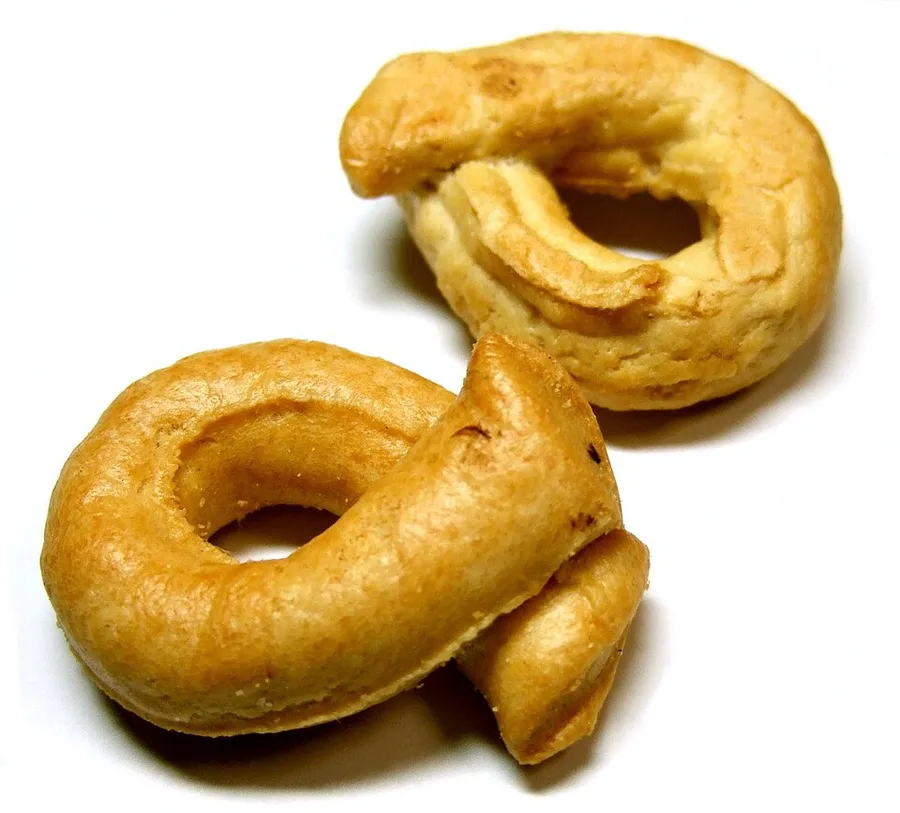
Four ingredients, blanched and baked: flour, dry white wine, oil and salt. They keep for weeks out of the fridge, and they are the cheapest thing to put on the table before dinner.
One last thing
There is one place where spending more changes everything, and it is semolina pasta. Between an industrial pasta at a euro a kilo and a bronze-cut, slow-dried one at two fifty lies a euro and a half across ten portions, that is fifteen cents a plate. In exchange you get a rough surface that holds the dressing and a cooking that releases more starch into the water, which is what binds the sauce. For fifteen cents it is the best bargain in the Italian larder, and you can spot it on the dry pasta: matt and rough instead of smooth and shiny.
The questions this list answers
These are real questions put to an AI assistant, in the period when Bing cited this site among its sources to answer them. The number is how many times we were cited. We read them in Bing Webmaster Tools, under AI performance, and they decide what goes on this page rather than the other way round.
- taralli738 citations
- altamura bread135 citations
- pane di matera95 citations
- matera bread24 citations
- riso carnaroli148 citations
- arancia rossa135 citations
- carnaroli rice46 citations
- friarielli cosa sono16 citations
- cosa sono le puntarelle60 citations
- arancia rossa di sicilia16 citations
- tropea onion50 citations
Frequently asked questions
Is bronze-cut pasta worth buying?
In cost per plate, yes: the difference between an industrial pasta and a bronze-cut one is about a euro and a half a kilo, which is fifteen cents a portion. In exchange the rough surface holds the dressing and the cooking releases more starch, which helps the sauce bind.
Why do some IGP products cost so little?
Because the price depends on the harvest and on production efficiency rather than on the mark. Sicilian blood oranges, Val di Non apples, Sila potatoes and Canicattì grapes come from areas producing large volumes, and the mark does not add costs large enough to move the retail price.
What does a kilo of puntarelle really cost?
Two to three euro fifty at the stall, but only the heart of the catalogna chicory head is used: the real yield is about half. So the per-portion price doubles, and it still remains one of the cheapest winter vegetables.
Which products offer the best value?
Semolina pasta, the DOP and IGP breads of the south, Carnaroli rice and dried pulses. In all four cases you buy a product with precise production rules at a price that does not reflect the quality difference from the generic equivalent.