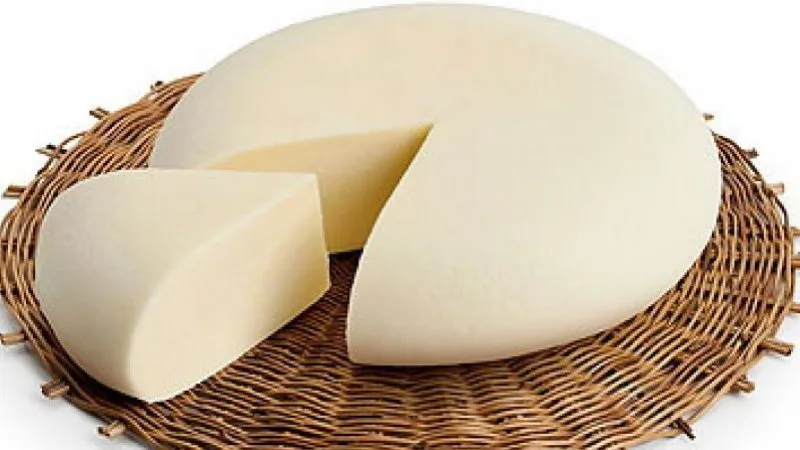
What is Vastedda del Belice?
Vastedda della Valle del Belìce DOP is a fresh raw sheep's milk cheese from the Belice valley in western Sicily, across the provinces of Trapani, Agrigento and Palermo. It was protected in 2010, and it is a genuine technical outlier: everywhere else in the world, pasta filata (mozzarella, provola, caciocavallo, scamorza) is made from cow's or buffalo milk. This one is made from sheep's milk, and nobody else does it commercially.
The shape is a squashed disc, 15 to 17 centimetres across and 3 to 4 thick, weighing 500 to 800 grams. The surface is smooth, white and faintly glossy. There is no rind.
The milk comes from Valle del Belice sheep, a local dairy breed developed in this valley from Pinzirita, Comisana and Sarda stock. The rennet is lamb paste, as in all Sicilian cheesemaking.
There is no aged version and there never will be. Vastedda is eaten fresh, within days of production, which is exactly why it is almost impossible to find outside Sicily: it cannot survive a long journey, a warehouse and a shelf.
What does it taste like?
Imagine mozzarella made by someone who wanted it to taste of something. The texture is the same family (elastic, layered, tearing into sheets rather than crumbling), but the flavour is sheep's milk: sweeter, fattier, with a soft lanolin warmth and a grassy note that cow's milk simply does not carry.
It is mild but not blank. There is a clean lactic tang at the finish, a measured saltiness from a short brine, and a richness on the palate that comes from sheep's milk having roughly twice the fat of cow's milk. It coats the mouth in a way mozzarella does not.
Eaten at room temperature it is at its best. Straight from the fridge the paste tightens and most of the aroma stays locked in. And it changes fast: a Vastedda on day one is sweet and milky, on day four it is noticeably more acidic and more interesting, and by day six it has gone.
How to use it
Eat it raw, at room temperature, and keep the plate short: extra virgin olive oil from Valle del Belice DOP (the Nocellara cultivar, from the same fields), black pepper and durum wheat bread. The green Castelvetrano olives that come off those same trees are the local accompaniment and the obvious one.
It works with tomatoes the way mozzarella does but with more to say, and it takes fruit well: peaches, figs, melon. With fresh broad beans and oil it is a whole lunch.
Heat it carefully. A short spell in the oven on a focaccia or inside a sfincione is fine, but sustained heat makes it release fat and split, because sheep's milk is far richer than cow's. Add it in the last few minutes rather than at the start.
In Castelvetrano you also see it crumbed and fried in slices, or thrown onto a grill for a few seconds a side, where it behaves like a much finer halloumi. Both work better with a Vastedda that is a day or two old and slightly drier.
How long it keeps
This is a fresh cheese with days rather than weeks in it, and the date on the pack is the whole answer. In Sicily it is eaten within two or three days of being made; abroad, after a flight, the window is shorter still. Keep it in the fridge in its own liquid or in the sealed pack it came in, and take it out an hour before serving, because cold makes a sheep milk paste tight and mute. If it has left its liquid, a closed box with a splash of lightly salted water slows the drying.
The changes come fast. The surface loses its gloss and firms into a skin, the disc tightens and gives up whey, acidity rises so the flavour sharpens, and the fat, which is high in sheep milk, starts to read heavier. Sicilian cooks put that to work: a Vastedda a day or two old, slightly drier, is the one they crumb and fry or throw on a grill, because it holds its shape. Freezing is not an option here, since ice crystals cut the stretched curd and it thaws grainy and watery.
Spot the real thing
The shape is a small flat disc like a focaccia, fifteen to seventeen centimetres across and three or four thick, weighing half a kilo to seven hundred grams, with no rind at all and a smooth ivory white skin that looks slightly wet. It is a stretched curd cheese made from sheep milk, which is unique in Italy, so a slice pulls apart in soft layers rather than crumbling, and it tastes lactic and gently sour with a sheep note behind it. Fresh ones weep a little whey.
Two name clashes catch people out. In Palermo, vastedda is a bread roll, the one filled with spleen in pani ca meusa, and it has nothing to do with the cheese. And a fresh sheep cheese labelled primosale or tuma is not this either: those are simple curd cheeses, granular and crumbly, never stretched. The DOP label reads Vastedda della Valle del Belìce with the consortium mark. Outside Italy it is a rare import with a short life, so it arrives by air at specialist shops, priced around $30 to $45 a pound when it appears at all.
How to pronounce Vastedda del Belice
vah-STED-dah del beh-LEE-cheh
Hold the double 'd' in Vastedda for a beat: Italian double consonants are real, and 'vas-TED-ah' sounds wrong to a Sicilian ear. In Belìce the accent is on the 'i', so 'beh-LEE-cheh', and the 'c' before 'e' is soft, as in 'chair'. The final 'e' is pronounced. Not 'BELL-iss'.
Vastedda del Belice compared
vsMozzarella
Same technique, different animal, and that changes everything downstream. Both are stretched in hot water and eaten fresh, but mozzarella is cow's or buffalo milk and is usually kept in its own whey or brine; Vastedda is sheep's milk, shaped in a ceramic dish and sold dry. Sheep's milk carries about twice the fat, so Vastedda is richer, denser and less watery, and it does not have mozzarella's squeaky bounce. If mozzarella is a blank canvas, this is already a painting.
| This | Mozzarella | |
|---|---|---|
| Milk | Raw sheep's milk | Cow's or buffalo |
| Fat | High: sheep's milk is about 7% | Lower: cow's milk about 3.5% |
| Sold | Dry, on a plate | In whey or brine |
| Shape | Flat disc, 500-800 g | Ball, braid or bocconcini |
| Flavour | Sweet, grassy, lanolin-warm | Mild, milky, clean |
| Melting | Splits if overheated | Melts and strings readily |
| Shelf life | 3-5 days | Up to 2 weeks (cow's milk) |
vsOrdinary pecorino
The comparison that shows how far one technique can move a cheese. Every Sicilian pecorino starts as tuma, fresh curd drained in a rush basket. Normally that tuma is salted, pressed and aged for months into a hard, salty grating cheese. Vastedda takes the same tuma, lets it acidify for a day or two, and then stretches it in boiling water, which resets the protein structure entirely. Same milk, same rennet, same valley, and the end products have nothing in common: one crumbles and grates, the other tears and stretches.
| This | Ordinary pecorino | |
|---|---|---|
| Curd handling | Acidified, then stretched hot | Salted and pressed cold |
| Ageing | None: eaten fresh | 4 months to 2 years |
| Texture | Elastic, layered, sliceable | Firm, granular, flaking |
| Salt | Light, short brine | Heavy, dry-salted repeatedly |
| Use | Table cheese, eaten raw | Grating, cooking, board |
| Rind | None | Hard, basket-marked |
Vastedda del Belice substitutes
- Fior di latte (cow's milk mozzarella)
The structural match: same stretch, same tear, same fresh use. It is markedly leaner and blander, so dress it more aggressively (better olive oil, more pepper, a little salt) to close the gap.
1:1 - Mozzarella di bufala DOP
The closest substitute overall, because buffalo milk brings fat and a lactic tang that cow's milk lacks. Drain it well before serving: Vastedda is a dry cheese and bufala arrives wet.
1:1 - Primo sale or tuma siciliana
Same milk, same island, same age, but never stretched, so it crumbles rather than tears. Right when the recipe wants fresh sheep's cheese flavour, wrong when it wants the texture.
1:1 - Fresh Greek or Cypriot sheep's cheeses (anthotyro, manouri, unbrined halloumi)
For flavour these are the nearest thing outside Italy: unaged, sheep-based, sweet and mild. Manouri is softer and richer, anthotyro drier. None of them stretch, and halloumi is far saltier, so rinse it if you use it.
1:1, halloumi 0.7:1 because of the salt - Vegetarian: no version exists
The specification requires lamb paste rennet (dried stomach from a milk-fed lamb) for the initial tuma, as every Sicilian cheese DOP does. Vegetarian cooks have to move to a microbial-rennet fresh mozzarella and accept that the milk, and therefore the point, will be different.
Where to buy it
Honestly: in Sicily, or not at all. In the valley itself a whole disc costs 8 to 16 euros, which works out at 14 to 20 euros a kilo: one of the most affordable DOP cheeses on the island, which fits its status as everyday food.
Elsewhere in Italy it appears in good cheese shops at 28 to 40 euros a kilo, often with only a few days of life left. In the US it essentially does not exist: a fresh raw sheep's milk cheese cannot clear the import rules. In the UK a handful of specialist cheesemongers will order it in at roughly 40 to 55 pounds a kilo, usually on request rather than from stock.
Total production is a few dozen tonnes a year from a small number of certified dairies in a handful of towns. It was a Slow Food Presidium before it became a DOP, and without that protection it would probably have disappeared.
If you do order it online, only do so with refrigerated 24-hour shipping, and ask for the production date rather than the sell-by date. On this cheese, the two are not close together.
Where to eat it in Italy
Castelvetrano is the natural base: dairies, the town's dark Timilia bread, the green olives, and Selinunte a few kilometres away, where the Greek temples face the sea. The Thursday market is where producers bring the morning's discs.
Menfi, Santa Margherita di Belice, Partanna and Sambuca di Sicilia all have working farms that process their own sheep's milk and take visitors. Several stretch the curd first thing in the morning, and it is worth seeing: sheep's milk curd stretching in boiling water looks like something that should not work.
Gibellina is worth the detour for the Cretto di Burri, the vast sheet of white concrete poured over the ruins of the town destroyed by the 1968 earthquake (the largest land-art work in Italy) and for the contemporary art museum in the rebuilt town. Santa Margherita di Belice has the Filangeri di Cutò palace of Il Gattopardo, now a museum.
Palermo, Trapani and Agrigento all sell it in their historic markets. Ask what day it was made; here the date matters more than the label.
Recipes with it
Further reading
 GuideHow long food keeps once openedThe date on the label describes the sealed package. After that, four things govern everything: water, salt…
 ExplainerWhich Italian cheeses contain no lactoseItaly sets a legal threshold, and long-aged cheeses clear it on their own, with no treatment involved.
 InvestigationWhich Italian cheeses are vegetarianWe counted what rennet the 43 cheeses in our atlas declare: 35 out of 43 say animal, none say otherwise.
Frequently asked questions
What does vastedda mean?
In Sicilian it means a flat loaf of bread, which describes the cheese's disc shape. The word also echoes guasta, spoiled or ruined, which describes its origin, since it was invented to rescue pecorino wheels that had gone wrong. The double meaning is almost certainly deliberate.
Is it really the only stretched-curd sheep's cheese?
Yes, as a commercial product. Sheep's milk is difficult to stretch: its caseins have a very narrow window of acidity in which the curd will pull, and outside that window it either refuses to move or falls apart. The Belice cheesemakers learned to find that window by hand because they had ruined wheels to save.
How long does it keep?
Three to five days from purchase, refrigerated. There is no aged version and there cannot be one: no rind, little salt, high moisture. If yours is getting on, grill it or fry it rather than throwing it away: heat suits an older Vastedda well.
Can I buy it outside Italy?
In the UK, occasionally, on order from specialist cheesemongers. In the US, essentially never, because a fresh raw sheep's milk cheese does not meet import requirements. This is a cheese to eat where it is made, which is a real answer rather than an evasive one.
Is Vastedda vegetarian?
No. Lamb paste rennet is required by the specification for the initial curd, as it is for every Sicilian cheese DOP. There is no microbial-rennet alternative within the denomination.
Sources
Where to check what you just read.
- 1
L'atto del 28 ottobre 2010 che ha iscritto «Vastedda della valle del Belìce» fra i formaggi DOP: il nome protetto include la valle, non è la sola «vastedda».
- 2
Il PDF del disciplinare vigente, dove si controllano la razza ovina ammessa, il periodo di produzione, la filatura della cagliata e i tempi brevissimi di consumo.
- 3Consortium · interested partyConsorzio di tutela della Vastedda della Valle del Belìce DOP
L'ente attivo dal 2001 con i dati sulla pecora autoctona Valle del Belìce e sui volumi prodotti: utile per capire quanto è raro davvero questo formaggio.
Related foods
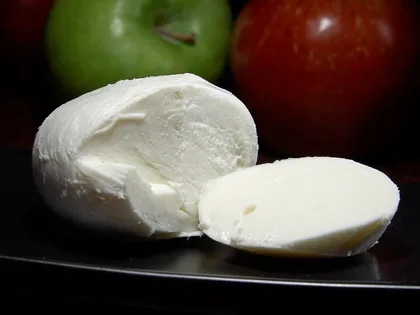 CheeseMozzarellaThe name is a verb before it is a cheese: mozzare means to lop off, which is what the cheesemaker does by…
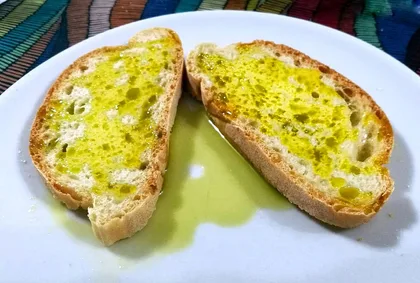 Oil and preservesExtra Virgin Olive OilTwo exams have to be passed, and one of them is carried out by people.
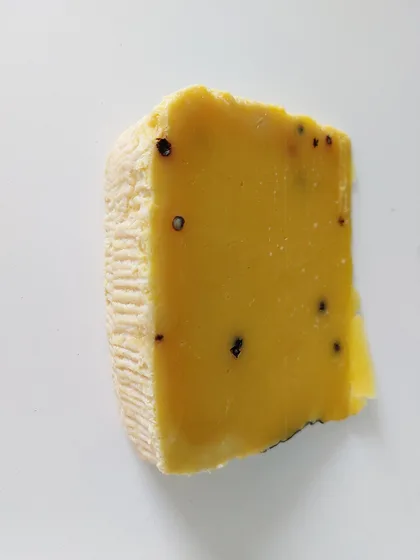 CheesePiacentinu EnnesePiacentinu Ennese is the only Italian cheese whose specification requires saffron: the paste is egg-yolk…
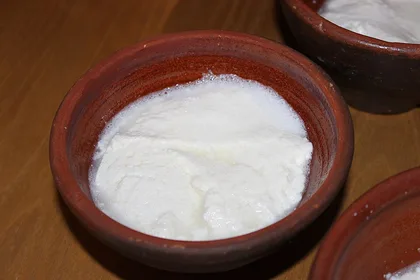 CheeseRicottaRicotta is not a cheese. It is a dairy product made from whey, the liquid left over after cheese has been…
 CheeseRicotta SalataRicotta salata is sheep's milk ricotta that has been salted, pressed and aged for at least three months…
 CheeseProvola dei NebrodiProvola dei Nebrodi is a raw cow's milk pasta filata cheese from the mountains of north-eastern Sicily…
 CheeseGirgentana Goat CheeseThe Girgentana is the corkscrew-horned goat of Agrigento, in south-western Sicily: white, spiral-horned…