What is Pecorino Crotonese?
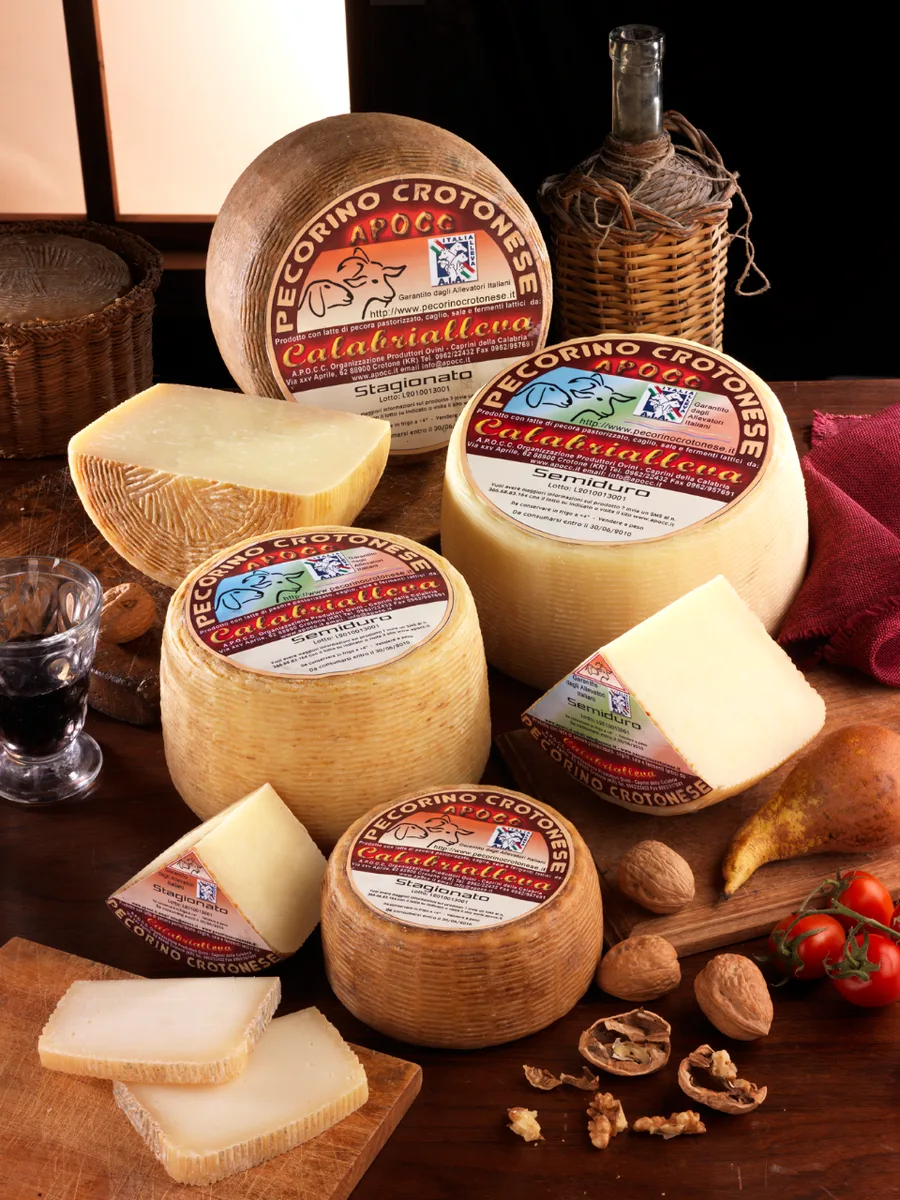
Pecorino Crotonese is a whole sheep's milk cheese coagulated with kid rennet paste and drained in rush baskets that print their weave onto the rind. Wheels are cylindrical with flat faces and weigh from half a kilo to five.
The DOP is recent, granted by the EU in 2014, for a very old cheese. The zone covers the entire province of Crotone plus a number of municipalities in the provinces of Catanzaro and Cosenza: in practice, the whole vertical strip from the Sila plateau down to the Ionian Sea.
The rules define three types, and the distinction is worth taking seriously. Fresco, a few weeks old, is white, springy, sweet and still moist. Semiduro, two to six months, is the table cheese: straw-coloured, firm, with the piquancy just beginning. Stagionato, over six months and often well beyond, turns hard, yellow and granular, with a clear building sharpness that comes from the kid rennet.
The milk comes from Gentile di Puglia, Comisana and Sarda ewes and their crosses, all pasture-grazed. Some dairies work raw milk, others thermised; the rules allow both, and the difference shows most in the long-aged wheels.
What does it taste like?
Sheep's milk without the barnyard. The fresh type tastes of warm milk, yoghurt and cut grass, with a squeaky, elastic bite and almost no salt, closer to a young Spanish or Sicilian fresh sheep cheese than to anything Roman.
At three to five months it fills out: butter, toasted almond, dry hay, a faint bitterness from the oiled rind, and a warmth at the back of the palate that is the kid rennet starting to work. This is the age most people find the most useful, and it slices cleanly.
Past eight or ten months it turns hard and flaking, the colour deepens to yellow, tyrosine crystals appear, and the piquancy becomes a real peppery finish that lingers. Even then the salt stays moderate, roughly half what Pecorino Romano carries, which is why it can be eaten in quantity rather than used purely as a seasoning. Wheels made in summer, when the flocks are up on the Sila, carry a distinctly herbal note that winter wheels do not.
How to use it
Fresco is a slicing and grilling cheese. Cut it thick, cook it on a dry hot pan until it crusts and the inside softens, and eat it with bread and oil, or with broad beans in spring and tomatoes in summer. It also goes into Calabrian frittate and stuffed savoury pies.
Semiduro is the board cheese and the one to pair with 'nduja: the spicy spreadable sausage and the firm salty sheep cheese hold each other up. Shave it over vegetables, work it into meatballs, layer it into stuffed aubergines.
Stagionato grates. It is milder and sweeter than Pecorino Romano, so you can be generous, but you must then salt the pasta water and the sauce yourself. It belongs on maccheroni al ferretto with goat ragù, on pasta with fried breadcrumbs, over bean soups, and on roasted Sila potatoes with oil and oregano.
Like all semi-cooked sheep cheeses it does not melt gracefully. Add it off the heat, or use it under a grill where it gratinates rather than strings.
How long it keeps
Three cheeses, three clocks. The fresh one is a ten-day piece, the semi-hard runs a good month, and the aged holds two or three and goes on maturing slowly while it sits. All of them go in the least cold part of the refrigerator, wrapped in waxed paper or a slightly damp cloth. Plastic film against an oiled rind makes it sweat, which is the one wrapping to skip. Whole aged wheels are kept differently, in a cellar between 8 and 12 degrees, turned and rubbed with oil every two or three weeks.
What you see over time is drying. The cut face goes glassy and darker, and a millimetre scraped off brings back the fresh surface underneath; the wedge as a whole loses weight, hardens, flakes rather than slices, and tastes saltier and sharper because everything in it is more concentrated. Freezing suits only cheese headed for the grater, in small chunks and for no more than six months; frozen young Crotonese thaws grainy and loses the springiness that is the point of it. Dates belong to the label and the dairy.
Spot the real thing
The rind gives it away. A real one is shaped in a rush basket, so the marks are irregular lines of uneven depth rather than the neat grid of a plastic mould, and the colour runs from dirty white on young wheels to dark amber on aged ones rubbed with oil. Cut it and the stage is obvious: the young cheese is white, slightly springy and sparsely holed, the semi-hard pale straw and compact, the aged yellow, hard, flaking, sometimes with crunchy crystals. It should smell of clean sheep and hay, with dried fruit and cooked butter on older wheels.
Salt is the giveaway in the mouth. Crotonese is moderately salted, well below Pecorino Romano, and its heat climbs slowly, so a cheese that arrives salty and aggressive on the first bite is a different one. On the label look for Pecorino Crotonese DOP and the ageing category; the denomination is recent, and a great deal of generic pecorino calabrese is still sold alongside it. American delis often stock a semi-hard sheep cheese called Crotonese, which may or may not be the DOP. Expect 15 to 25 dollars a pound.
How to pronounce Pecorino Crotonese
peh-koh-REE-noh kroh-toh-NEH-zeh
Stress the third syllable of each word: peh-koh-REE-noh kroh-toh-NEH-zeh. Every vowel is pronounced separately and the final 'e' is always sounded. The name refers to Crotone, the ancient Greek colony of Kroton where Pythagoras taught: kroh-TOH-neh, stress on the second syllable.
Pecorino Crotonese compared
vsPecorino Romano
The comparison every English-language recipe forces, and the one that misleads most. Pecorino Romano is dry-salted by hand for eighty to a hundred days and lands near 5% salt: it was built as a seasoning that ships well. Pecorino Crotonese is salted for days, comes in wheels a tenth of the size, and exists in three ages, two of which are meant to be eaten in slices. Swapping one for the other without adjusting the salt ruins the dish in either direction.
| This | Pecorino Romano | |
|---|---|---|
| Zone | Province of Crotone and neighbours | Lazio, Sardinia, province of Grosseto |
| Wheel | 0.5-5 kg | 20-35 kg |
| Salting | Days, dry salt or brine | 80-100 days of hand-applied dry salt |
| Salt content | Roughly 2-3% | Roughly 5% |
| Rennet | Kid rennet paste | Lamb rennet paste |
| Ages sold | Fresco, semiduro, stagionato | One, from 5 months |
| Role | Table cheese first, grating second | Grating cheese and seasoning |
vsPecorino Sardo
The closest widely available comparison, and a fair one. Pecorino Sardo DOP also comes in two registers: Dolce, young and mild, and Maturo, firm and savoury. The technical difference is the rennet: Sardo uses calf rennet, so it never develops the lipase-driven piquancy that the Crotonese picks up after six months. Sardo is rounder and sweeter; Crotonese has more edge with age and a stronger grassy character in summer wheels.
| This | Pecorino Sardo | |
|---|---|---|
| Rennet | Kid rennet paste, lipase-rich | Calf rennet, liquid |
| Curd | Broken fine and semi-cooked for aged types | Semi-cooked (Maturo), uncooked (Dolce) |
| Mould | Rush basket, woven imprint | Smooth cylinder |
| Young version | Fresco: white, springy, milky | Dolce: soft, sweet, mild |
| Aged version | Yellow, flaking, building piquancy | Firm, nutty, mild to savoury |
| Availability abroad | Rare | Widely stocked |
vsGeneric 'pecorino calabrese'
Most sheep's cheese sold in and from Calabria carries no designation at all. Some of it is excellent farm cheese; none of it is bound by rules on breed, feed, rennet, basket or ageing, and quality swings wildly. The DOP was granted in 2014 and is still so little known that producers gain almost nothing commercially from using it, which means the wheels that do carry it are usually from dairies that care.
| This | Generic 'pecorino calabrese' | |
|---|---|---|
| Breed and feed rules | Defined by the DOP | None |
| Rennet | Kid rennet paste, required | Any, including microbial |
| Mould | Rush basket | Often ridged plastic |
| Ages | Three defined types | Undeclared |
| Rind pattern | Irregular hand-woven weave | Regular machine grid |
Pecorino Crotonese substitutes
- Pecorino Sardo (Dolce for fresco, Maturo for semiduro)
The easiest match abroad, and structurally close. Made with calf rennet, so it stays milder with age; where a recipe wants the sharp finish of an aged Crotonese, it will fall short.
1:1 - Pecorino Toscano DOP
Similar salt level, similar sliceable paste, sold both young and aged. It is sweeter and nuttier and lacks the herbal edge of summer Sila milk, but it substitutes cleanly in almost any dish.
1:1 - Pecorino Siciliano or Sicilian canestrato
Also basket-drained, also kid or lamb rennet, so it develops the same kind of building piquancy. Choose the version without peppercorns, and taste before salting: it usually runs saltier.
1:1 - Pecorino Romano, with adjustment
Available everywhere and about twice as salty. Use noticeably less and add salt to the dish separately. It cannot stand in for fresco or semiduro at the table at all; it is a grating substitute only.
0.6:1, and re-salt the recipe - Manchego semicurado, or a fresh Spanish sheep cheese
For the fresco and semiduro types, young Spanish sheep's milk cheeses give the right texture and mildness. The flavour is nuttier and less grassy, and they grill well, which is how Calabrians eat the fresh type.
1:1 - Vegetarian: Berkswell or a microbial-rennet sheep's milk cheese
Pecorino Crotonese cannot be vegetarian: kid rennet paste is required by the DOP and is the source of the aged cheese's piquancy. Berkswell ages hard and grates well; for the fresh type, a microbial-rennet fresh sheep or goat cheese is closer in texture.
1:1
Where to buy it
This is a hard cheese to find outside Calabria, and the DOP is young enough that even Italian counters may not stock it. Look for the full wording Pecorino Crotonese DOP plus the type (fresco, semiduro or stagionato) printed on the label.
In Italy, buy in Crotone and its hinterland, in the Sila villages, or online from the certified dairies. Expect EUR 10 to 14 per kilo for fresco, EUR 14 to 19 for semiduro, EUR 18 to 28 for stagionato, and up to EUR 34 for wheels held eighteen to twenty-four months.
In the US, importers specialising in Calabrian products carry it occasionally at roughly USD 14 to 24 per pound; ask at Italian specialists rather than expecting it in a supermarket. In the UK, GBP 20 to 32 per kilo from Italian delicatessens and online importers.
At the counter, check the rind for the irregular imprint of a hand-woven rush basket, and ask which season the wheel was made in. Summer milk from the Sila and winter milk from the Marchesato produce noticeably different cheeses, and a good seller will know which one they are selling.
Where to eat it in Italy
Crotone and its hinterland are the obvious base. Santa Severina, a hilltop village with a Norman castle, is among the finest in Calabria; Cutro, Isola Capo Rizzuto, Verzino and Savelli fill in the map inland.
Up on the plateau, San Giovanni in Fiore, the largest town in the Sila, founded around the abbey of the mystic Joachim of Fiore, is where the mountain dairies are. Camigliatello Silano and Lorica, on the lakes, are the tourist bases, with shops that carry the DOP alongside Sila potatoes and porcini.
The Marchesato, the belt of bare clay hills between the plateau and the sea, is the winter landscape of the flocks: empty, treeless, dotted with isolated farms that sell directly.
And go to Capo Colonna outside Crotone, where a single standing column of the temple of Hera Lacinia looks over the Ionian. It sits a few kilometres from the pastures, and it makes the age of this particular sheep-farming economy very easy to grasp.
Further reading
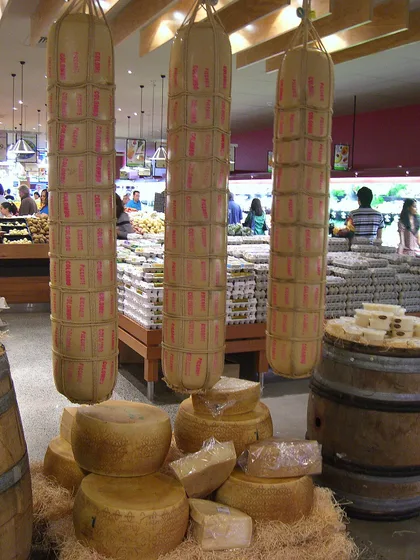 ExplainerWhich Italian cheeses contain no lactoseItaly sets a legal threshold, and long-aged cheeses clear it on their own, with no treatment involved.
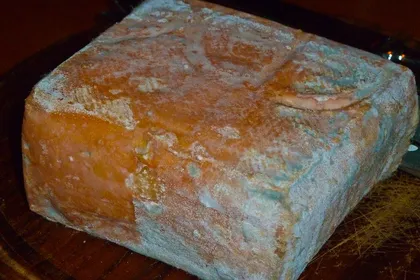 GuideCan you eat cheese rind?On some wheels the rind is the same paste, dried out. On others it is paraffin.
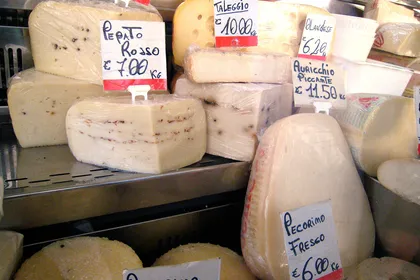 GuideHow long food keeps once openedThe date on the label describes the sealed package. After that, four things govern everything: water, salt…
Frequently asked questions
What are the three types, and how do they differ?
Fresco is a few weeks old: white, springy, sweet, eaten in slices or grilled. Semiduro is two to six months: straw-coloured, firm, the everyday table cheese. Stagionato is over six months: hard, yellow, flaking, with a clear kid-rennet piquancy, used for grating or on a board.
How is it different from Pecorino Romano?
Chiefly salt and scale. Romano is dry-salted for eighty to a hundred days and reaches about 5% salt, designed as a seasoning. Crotonese is salted for days, made in wheels a tenth of the size, and two of its three types are meant to be eaten as cheese rather than sprinkled on food.
Is it vegetarian?
No. The DOP requires kid rennet paste, an animal product whose enzymes create the aged cheese's sharpness. Berkswell and other microbial-rennet sheep's milk cheeses are the practical alternatives.
Why is it named after Crotone if the sheep graze on the Sila?
Because the flocks do both. They summer on the Sila plateau above a thousand metres and winter in the Marchesato hills, which belong to the province of Crotone. The DOP zone covers that whole vertical transhumance route, plus parts of the Catanzaro and Cosenza provinces.
How do you pronounce Pecorino Crotonese?
peh-koh-REE-noh kroh-toh-NEH-zeh, with the stress on the third syllable of both words and the final 'e' clearly sounded.
Sources
Where to check what you just read.
- 1
L'atto del 18 novembre 2014 che iscrive «Pecorino Crotonese» fra i formaggi DOP.
- 2
Da qui si scarica il disciplinare: solo latte intero di pecora, comuni ammessi e stagionature che separano fresco, semiduro e stagionato.
- 3Consortium · interested partyConsorzio di tutela
La dimensione reale della filiera (allevamenti e caseifici certificati) e la cronologia del riconoscimento DOP.
Related foods
 CheesePecorino RomanoPecorino Romano DOP is a hard, dry-salted sheep's milk cheese aged at least five months, made in Sardinia…
 CheesePecorino SardoPecorino Sardo DOP is Sardinia's table cheese: whole sheep's milk, calf rennet, two official types.
 Cured meats'Nduja'Nduja is a soft, spreadable Calabrian pork salume that is up to 40% chilli.
 CheeseCaciocavalloCaciocavallo is a stretched-curd cow's milk cheese from southern Italy, aged in a distinctive gourd shape…
 Cured meatsSoppressataSoppressata is a coarse-ground dry salami from southern Italy, pressed flat between boards while it dries…
 Cured meatsCapocolloCapocollo is the pork neck muscle, salted whole and aged in casing.Vegetables and fruitBergamotBergamot is the most geographically concentrated citrus on earth: around 90 per cent of world production…
 Vegetables and fruitTropea Red OnionTropea red onions are grown on a narrow strip of sand along Calabria's Tyrrhenian coast, and they are sweet…