Gargano: where to eat and stay
A promontory with a beech forest inside it, a cattle breed that gives five litres of milk a day and citrus that ripens when everywhere else has finished. In August the coast is another thing: people who come to eat come in May or October.
The Gargano is the spur: a block of limestone in the province of Foggia, geologically detached from the Tavoliere plain around it and therefore unlike anywhere else in Puglia. It has a high, jagged coast to the east (Mattinata, Vieste, Peschici), a low lagoon coast to the north with the lakes of Lesina and Varano, and an interior between five hundred and a thousand metres holding Monte Sant'Angelo, San Marco in Lamis, Vico del Gargano, Carpino and Ischitella. Offshore are the Tremiti islands. Since 1991 almost all of it has been a national park.
At the centre is the Foresta Umbra: some ten thousand hectares of beech between six hundred and eight hundred metres, twenty minutes from the sea, which since 2017 has been part of the UNESCO site of ancient European beech forests. A beech wood at that low an altitude and that close to the coast is a climatic anomaly, and it is why the Gargano has a biodiversity with nothing to do with the rest of the South, wild orchids included, of which dozens of species are counted here.
There are two economies and they do not talk to each other much. The coast lives on July and August, on holiday villages, full board and beach clubs; the interior lives on olives, citrus, pasture and pilgrims. San Giovanni Rotondo, with Padre Pio, receives millions of visitors a year and is, from the point of view of anyone looking for something to eat, the least interesting place on the promontory: it has the catering you would expect from somewhere with those numbers. Monte Sant'Angelo, ten kilometres further on, has the Lombard sanctuary of San Michele, also UNESCO, and a bread worth the climb. One last practical warning: the Gargano is large and slow. Vieste to Peschici is twenty kilometres and forty minutes; Vieste to Foggia is a hundred kilometres and two hours.
How people eat here
From the mountain comes caciocavallo podolico, the most serious thing on the Gargano and the most misunderstood. The podolica is a rustic grey breed with long horns that lives almost wild and gives around five litres of milk a day against thirty from a Friesian, and gives them mostly in spring, when it grazes wild herbs, berries and leaves. That milk becomes pasta filata, worked by hand, tied in pairs over a pole, and aged from six months to several years, sometimes in a cave. It is a Slow Food Presidium, costs 30 to 40 euro a kilo for the young ones and a great deal more for the old, and in the mouth it is something between a cheese and a spirit. The honest point: almost all the caciocavallo sold on the coast is not podolico, it is made with ordinary cow's milk and costs a third. That is not a fraud as long as nobody writes podolico, but the word is used loosely. Ask for the producer's name and village: anyone who has one tells you straight away.
Beside it are the bread of Monte Sant'Angelo (re-milled durum semolina, sourdough, loaves of two to five kilos baked in a wood oven, with a thick dark crust that keeps a week; it is not a protected name, that is Altamura's and belongs to another province, but it is real bread) and pancotto, which is where that bread naturally ends up, with field chicory and potatoes. The Carpino broad bean, small and thin-skinned, is also a Presidium, and is eaten puréed with bitter greens. The olive trees of Mattinata are monumental, the variety is the ogliarola garganica, and the new oil in November is when this cooking makes most sense. To drink, it should be said plainly, you do not come here: the Gargano is not a wine district. The bottles come from the Tavoliere: San Severo DOC, Cacc'e mmitte di Lucera, nero di Troia. A few small growers on the promontory exist and are worth seeking out, but do not build the trip around cellars.
From the sea come the paranze and the trabucchi, and two clarifications are needed. Paranza is both the boat and the fry: fritto di paranza is small mixed fish, and it is good when the fish is local and just landed, while elsewhere it is a frozen product that is perfectly fine as long as you know what it is. By law frozen fish must be flagged on the menu with an asterisk or a note: if a card with twenty fish dishes carries no indication at all, that absence is information. The trabucco is the wooden fishing machine on stilts, with two long arms and a net, that dots the rocky coast between Mattinata, Vieste and Peschici; some have been licensed as restaurants. It is worth eating on one at least once, but for the structure and the sunset rather than for provenance: a trabucco catches very little, and nobody can run an evening service on it. The same honesty applies to the fishing stop, the trawling ban that in the lower Adriatic usually falls for a month between August and September: in those weeks the local catch on the menu is not local, and it happens in exactly the month when everyone arrives. As for the rest: cuttlefish from Manfredonia, octopus, mussels and oysters from Lake Varano, Lesina eel grilled or marinated, anchovies and sardines. Always ask the price per kilo before ordering a whole fish: the grilled platter offered according to the catch is where bills inflate.
Citrus deserves a paragraph of its own because it is the most Gargano thing of all. The Agrumi del Gargano IGP covers two products: the Gargano orange, the duretta, which is late and picked from April to June, when oranges elsewhere have been finished for months, and the femminello lemon, which fruits nearly all year and has a thin, intensely scented skin. They grow in giardini, walled citrus gardens terraced by hand and sheltered by tall trees, between Rodi Garganico, Vico del Gargano and Ischitella. In the nineteenth century these oranges left by ship for New York; today half the gardens are abandoned and a few families keep them going, some of whom take visitors. At Vico del Gargano you eat paposcia, a thin bread baked at the mouth of the wood oven and filled hot with oil and cheese or with greens. For pasta: troccoli, cavatelli, orecchiette. For sweets: cartellate at Christmas, scarcelle at Easter, pettole, and lemon ice cream, which here is not a banality.
Working farms that take guests
Real places in this territory, checked one by one on their own site. What you read is what they state: the editorial visit has not happened yet, and when it does we will say so.
Le Fronde
Vieste (FG)A family farm with a centuries-old olive grove overlooking the sea, producing organic extra virgin oil. The guest side, opened in 2020, has seven rooms inside the grove and a kitchen built on local produce.
lefrondevieste.itAgriturismo Giorgio
Mattinata (FG)The Bisceglia farm at contrada Giorgio, with its own mill for extra virgin oil and a line of jams. Rooms spread among the olive trees, a restaurant using the farm's produce and a pool.
agriturismogiorgio.itAgriturismo Falcare
Cagnano Varano (FG)About a hundred and thirty hectares at 550 metres on the Gargano plateau, farmed entirely organically with cereals, pulses, vegetables and an orchard, plus cattle, sheep, goats, pigs and horses and a dairy. Rooms and apartments with their own entrances and a farm restaurant.
agriturismofalcare.comOlio della Valle
Vieste (FG)A farm on the SS89 producing extra virgin oil from Ogliarola and other Puglian varieties, sold directly. Farm meals among the olive groves above Vieste.
oliodellavalle.itThe foods of this territory
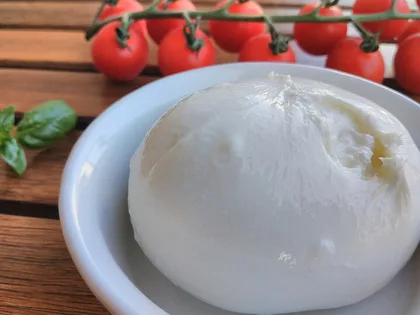 IGPBurrataIt began as a way of using offcuts: leftover shreds of pasta filata, drowned in cream and…
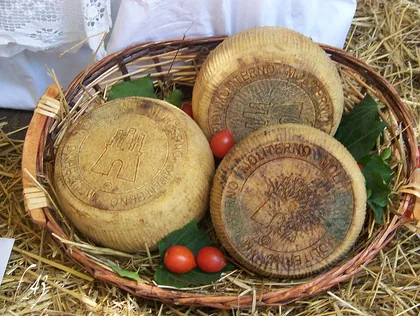 DOPCanestrato PuglieseCanestrato Pugliese DOP is a hard sheep's milk cheese from the Tavoliere plain of northern…
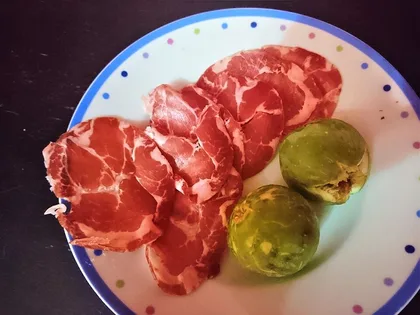 FoodCapocolloCapocollo is the pork neck muscle, salted whole and aged in casing.
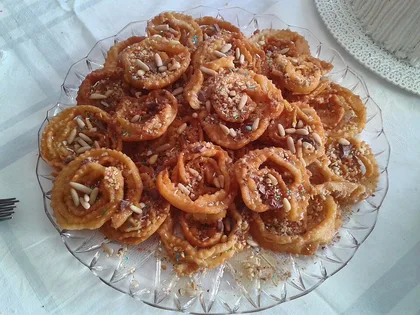 PATCartellatePaper-thin ribbons of dough, pinched into pockets and wound into roses, deep-fried and…
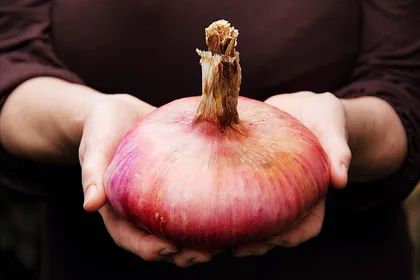 FoodAcquaviva Red OnionThe Acquaviva red onion is wide, flat as a discus and sweet enough to eat raw in thick…
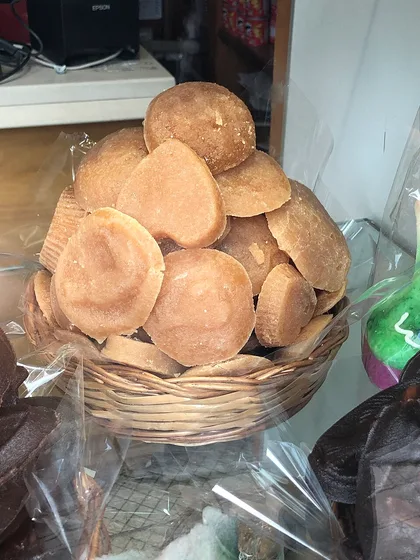 FoodCotognata (Quince Paste)Cotognata is quince pulp cooked with sugar and then air-dried for days in moulds until it…
What to do here
The Foresta Umbra is walked on waymarked paths from the visitor centre and the little lake: routes from an hour to half a day, total shade, temperatures ten degrees below the coast. The best moment is October, when the beeches turn, and May for the orchids. The road through it is slow and full of bends and should be driven calmly: there are wild boar and roe deer, and at dawn and dusk they cross.
A podolica farm can be visited only in spring and only by direct arrangement: you arrive on gravel roads, you watch the morning milking and the curd being pulled, and there is no online booking system. You telephone the producers or ask at a dairy. The same goes for the citrus gardens between Vico, Rodi and Ischitella, visited with the families who keep them, best between January and June.
On the sea: boat trips from Vieste or Peschici to the sea caves and the arches cost 25 to 40 euro a head for half a day; the Tremiti are reached by ferry or hydrofoil from Termoli all year and from Vieste, Rodi and Peschici in season, in one to two hours. A trabucco at sunset is worth the stop, with the caveat above. At Monte Sant'Angelo there is the sanctuary of San Michele cut into the rock, the tomb of Rotari and the Junno quarter, as well as the bakeries; at Carpino, in August, the Gargano tarantella festival is serious folk music rather than resort entertainment. To skip: the off-road excursions sold on the seafront and the trulli tours, given that there is not one trullo here.
The year, month by month
January and February are cold and windy, with the coast largely closed; but the lemons are on the tree, the oil is new and on 14 February Vico del Gargano covers its patron, Saint Valentine, with branches of oranges and lemons: that week the village is worth the trip. March and April bring the first podolica cheeses and the orchids; Easter fills Monte Sant'Angelo and San Giovanni Rotondo.
May is the best month along with October: the coast is still empty, the duretta orange is at its peak, the sea begins to be usable and on the eighth San Michele is celebrated at Monte Sant'Angelo. June works until the twentieth, then the season starts.
July and August are full: Vieste and Peschici multiply their population, the coast road clogs, prices double or triple and many places switch to set menus and full board. The fishing stop also falls in those weeks. September is when the sea is warmest and the crowd has already left after the first week, with Padre Pio's feast on the 23rd at San Giovanni Rotondo and San Michele again on the 29th. October and November bring yellow beeches, the olive harvest and new oil, and an almost empty promontory: check openings, though, because on the coast after the first week of October almost everything closes.
Getting there and getting around
Airports: Bari about two hours from Vieste and an hour and a half from Manfredonia, Pescara two and a half hours from the northern Gargano, Naples three. Foggia has a small airport with few connections. By train Foggia is on the Bologna to Bari main line and is served by fast trains; from there buses run to Manfredonia, Monte Sant'Angelo and Vieste, and there is the Ferrovie del Gargano line from San Severo to Rodi Garganico and Peschici Calenella, useful only for the north coast and with reduced services out of season.
Realistically you need a car. The roads are the SS89 along the southern coast and up to Vieste, the provincial road through the Foresta Umbra and the Mattinata to Vieste coast road: all beautiful and all slow, with hairpins, gradients and, in August, real queues. Read distances in hours rather than kilometres: it is the mistake everyone makes on a first visit, and it produces impossible days.
Two final warnings. On the inland roads filling stations and shops thin out considerably, and many close on Sundays: you fill up when you can rather than when you need to. And the ferries to the Tremiti from Vieste, Rodi and Peschici are seasonal and cancel in rough seas, while from Termoli they run all year with a reduced winter service: if the islands are a goal, keep a spare day.
Frequently asked questions
When is the best time to visit the Gargano?
May and October. In May the coast is still empty, the duretta orange is at its peak, the podolica cheeses are there and the heat is manageable; in October the Foresta Umbra turns, the olives are picked and the sea is still mild. September after the first week is an excellent compromise for anyone who wants to swim. July and August are the absolute peak, with double or triple prices and traffic on the coast road. From November to March the interior stays alive (pilgrims, oil, citrus) while much of the coast closes.
How do you recognise real caciocavallo podolico?
By the producer and the season. The podolica gives very little milk and almost only in spring, so a young podolico caciocavallo available in quantity all year does not add up. The price starts at 30 to 40 euro a kilo and climbs steeply with age. In the mouth it is intense, with notes of dried fruit and sometimes almost sharp, a long way from the mildness of a caciocavallo from ordinary milk. Ask for the name of the farm and the village: anyone working with podolica answers at once, anyone reselling does not.
Is it worth eating on a trabucco?
Yes, once, for what it is: a wooden fishing machine on stilts, with its arms and its net, on one of the most beautiful stretches of coast in Italy. But do not expect the fish you eat to have come out of that net: a trabucco catches tiny quantities and no restaurant could run a service on it. Ask what was landed that day, check the notes about frozen fish, which by law must be there, and remember that between August and September the fishing stop sharply reduces the local Adriatic catch.
Do you need a car, and how many days do you need?
You need a car, unless you intend to settle in one coastal town and not move. Public links exist between Foggia, Manfredonia, Vieste and the north coast, but they do not reach the farms, the citrus gardens or the paths of the Foresta Umbra. On length, five nights is the minimum to see the coast, the interior and the forest together without spending the days in the car; with a week you can add the lakes of Lesina and Varano or a trip to the Tremiti. Two bases, one on the coast and one up high, work better than one.