Fourteen Italian products named after a village
Altamura, Matera, Genzano, Colonnata, Norcia, Varzi, Felino, Zibello, Bronte, Tropea, Castelluccio, Moena, Bassano, Bagnara. Small villages that gave their name to a product known across half the world.
Among Italy's protected names there are many cases where the product is better known than the place. Colonnata is a hamlet of Carrara with a few dozen inhabitants; Castelluccio di Norcia, before the earthquake, had little more than a hundred; Felino is a village of four thousand in the hills of Parma. All three give their name to a product sold across Europe.
This happens when the name describes a condition that exists only there. The lardo of Colonnata cures in the marble troughs of the Canaloni, inside that village; the lentils of Castelluccio grow on the Pian Grande at thirteen hundred metres; the culatello of Zibello matures in the fog of the Bassa Parmense. Moving production ten kilometres would mean another product.
In other cases the village is where a technique was codified. Varzi, in the Oltrepò, steeps its garlic in wine and then strains it out; Bagnara Calabra makes the only Italian torrone with a European denomination; Moena washes its cheese rind every two or three days throughout the ageing. In these cases the village name is the name of a method.
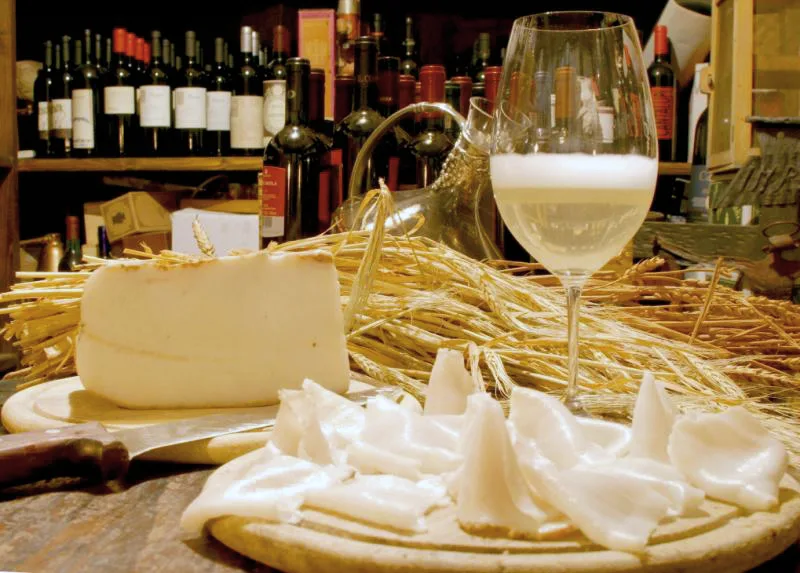 OneArmedMan · Public domain
toscana · 28-40 €/kg
Colonnata is a hamlet of Carrara, and the lardo cures at least six months in the marble troughs of the Canaloni, which are in the village. IGP: the name is the place and the place is the container.
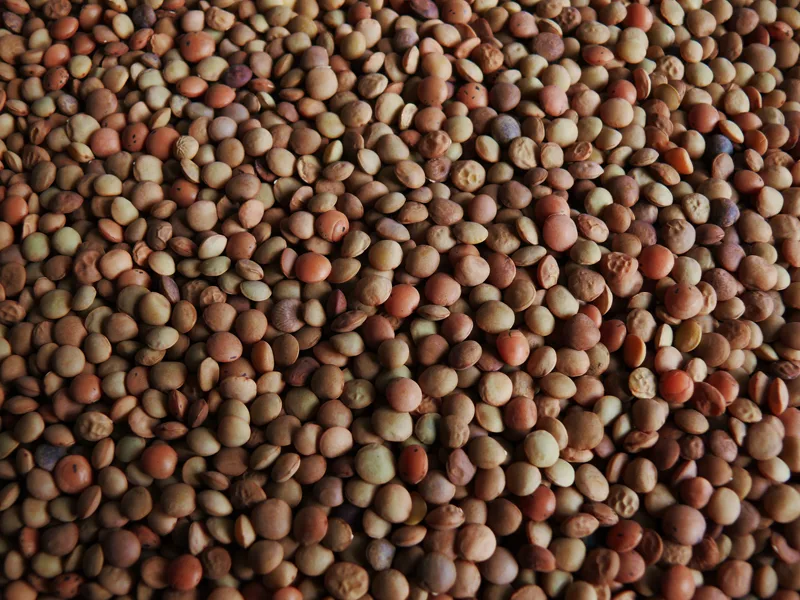 Zyance · CC BY-SA 2.5
umbria · 18-25 €/kg
Castelluccio di Norcia sits at thirteen hundred metres on the Pian Grande, inside the Sibillini park: a place where wheat does not ripen. The lentil is the crop that made it habitable.
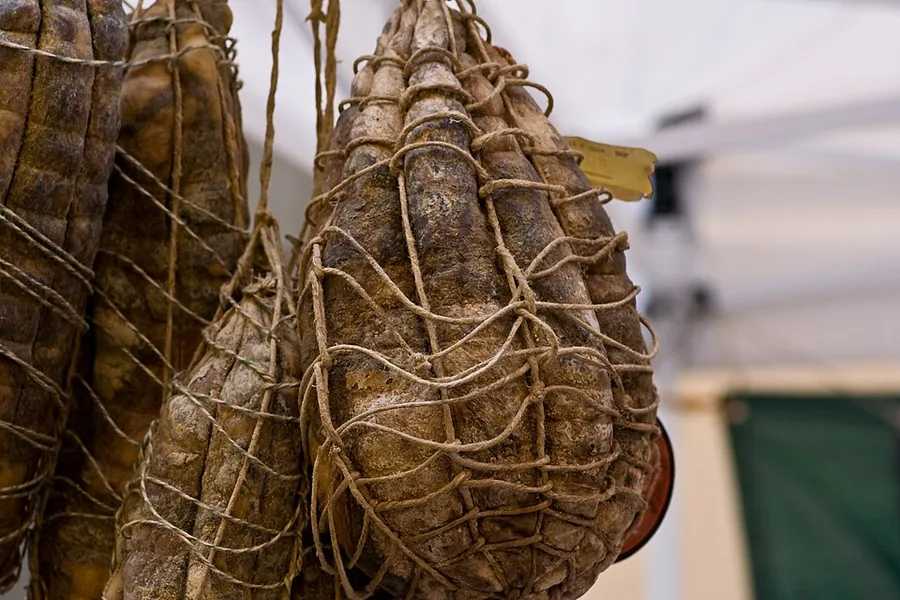 Francesco P · CC BY-SA 2.0
emilia romagna · 60-90 €/kg
Zibello and the comuni of the Bassa Parmense: the fog off the Po is part of the process, and the cellars of that strip of plain are why culatello is not made elsewhere.
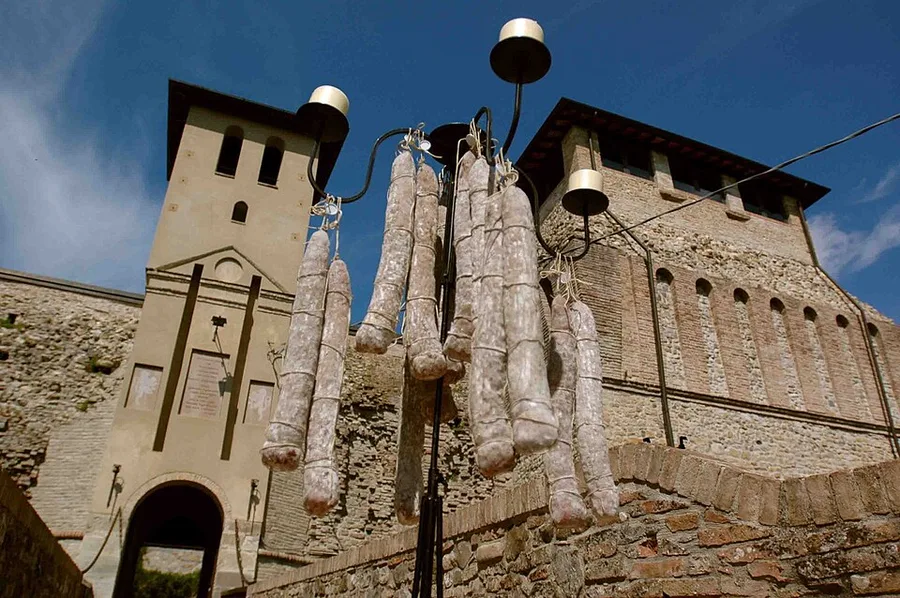 Margheritapollini · CC BY-SA 3.0
emilia romagna · 18-26 €/kg
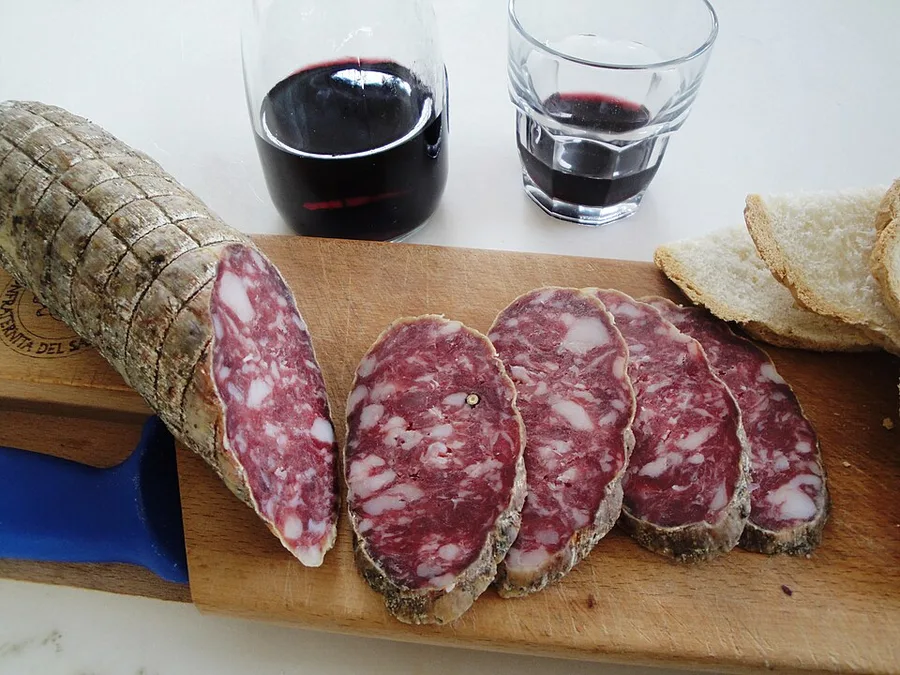
Felino is a village of four thousand people in the hills of Parma: natural casing, a grind cut with the point of a knife, very little garlic and dry white wine. IGP.
 Gperdoni · CC BY-SA 4.0
lombardia · 20-28 €/kg
Varzi, in the Staffora valley of the Oltrepò Pavese: the garlic does not go in chopped, it is steeped in red wine and then strained out. DOP, and the village name is the name of the method.
 Peter Forster from Centobuchi, Italy · CC BY-SA 2.0
umbria · 20-28 €/kg
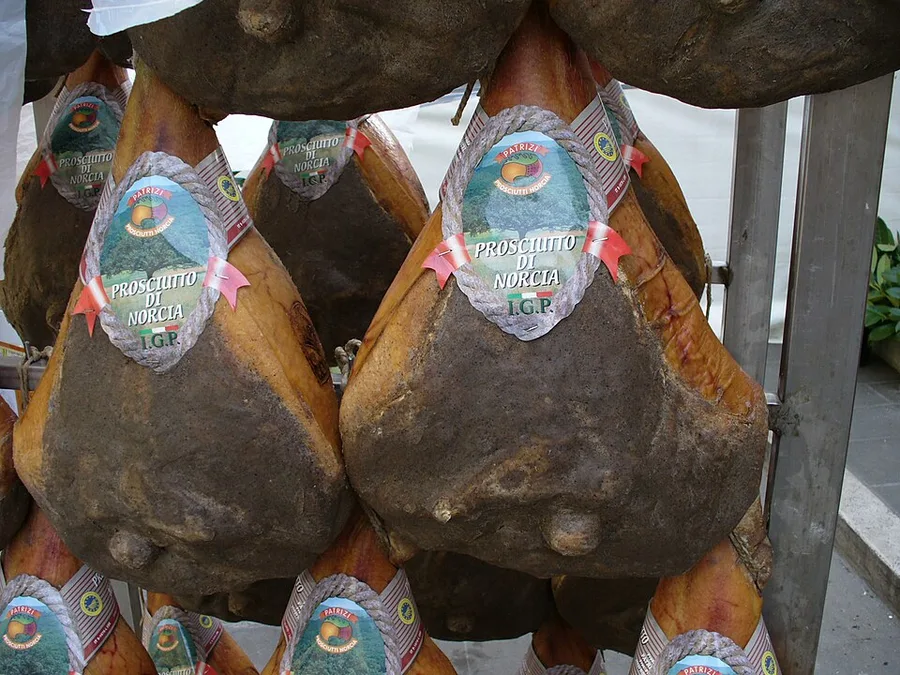
Norcia gave its name to the trade, because the norcini were the pork butchers who travelled central Italy. The ham cures between four hundred and nine hundred metres in the Valnerina.
 Nikotota · CC BY-SA 4.0
puglia · 3.5-5 €/kg
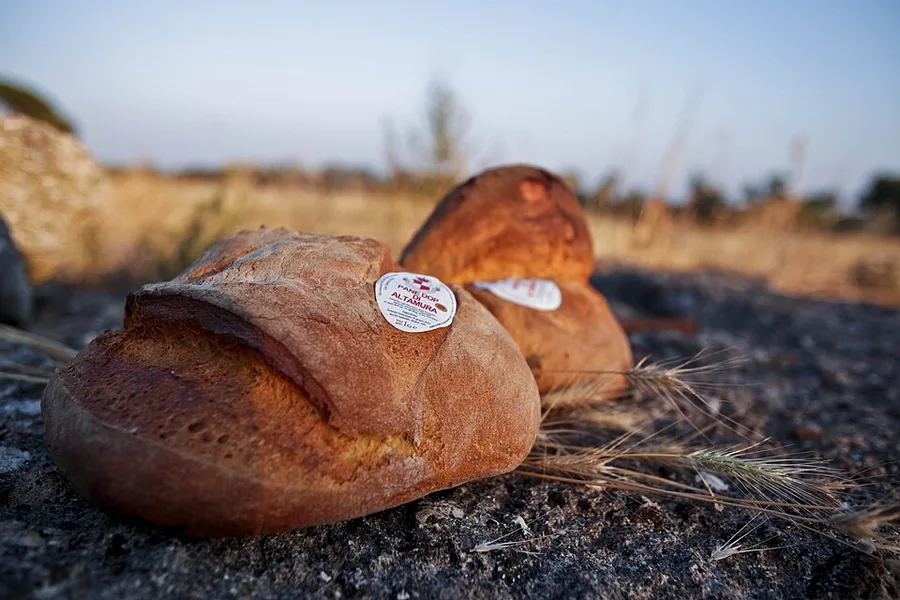
Altamura, on the Murgia: only re-milled durum semolina from the area, mother dough, water and salt, a wood oven, a minimum weight of half a kilo. DOP, one of the few on a bread.
 Kars Alfrink · CC BY 2.0
basilicata · 3-5 €/kg
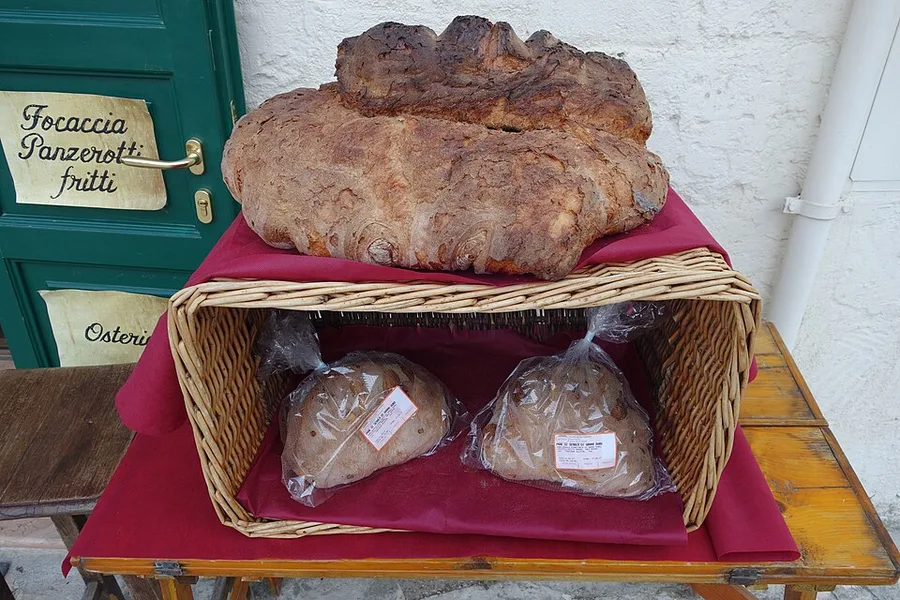
Matera, and the neighbourhood ovens dug into the tufo: one for every few clusters of houses, where the baker worked in turns. The horn shape protects the crumb, because this was bread for a week.
 Luigi Mancini at Italian Wikipedia · CC BY-SA 3.0
lazio · 3.5-5 €/kg
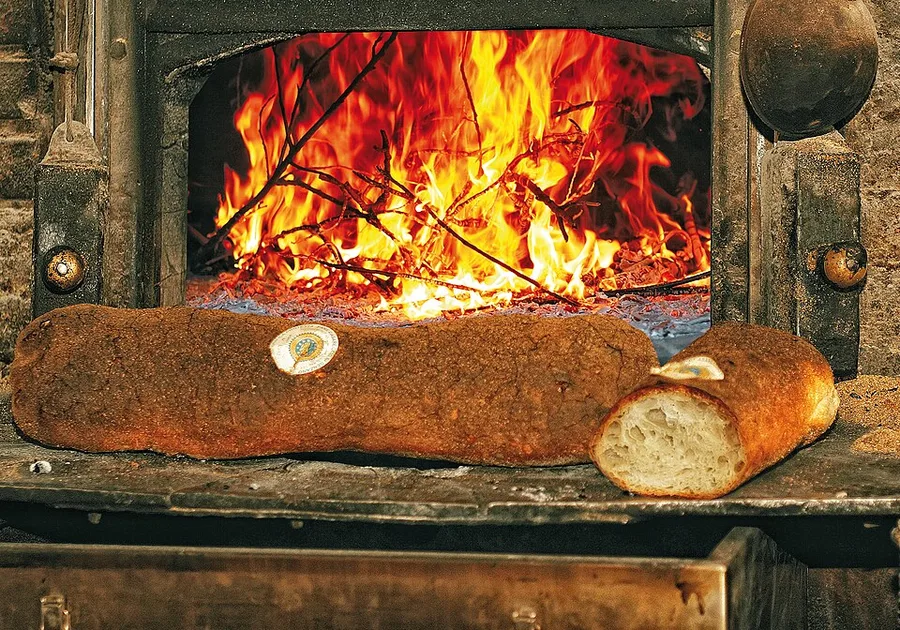
Genzano, in the Colli Albani: natural leavening, a wood oven, bran on the crust and the water of the local volcanic springs in the dough. IGP, and the bread of Roman sandwiches.
 Paolo Galli · CC BY-SA 3.0
sicilia · 25-40 €/kg
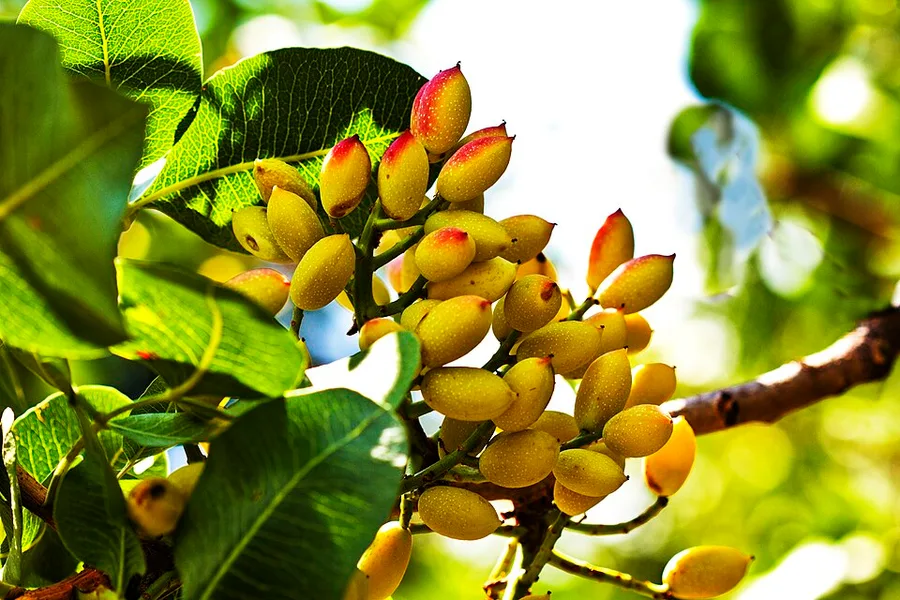
Bronte, on the western flank of Etna: lava terraces no machine can enter, picked by hand every other year. DOP, and the village name carries the product's price.
 kajikawa · CC BY 3.0
calabria · 2.5-4.5 €/kg
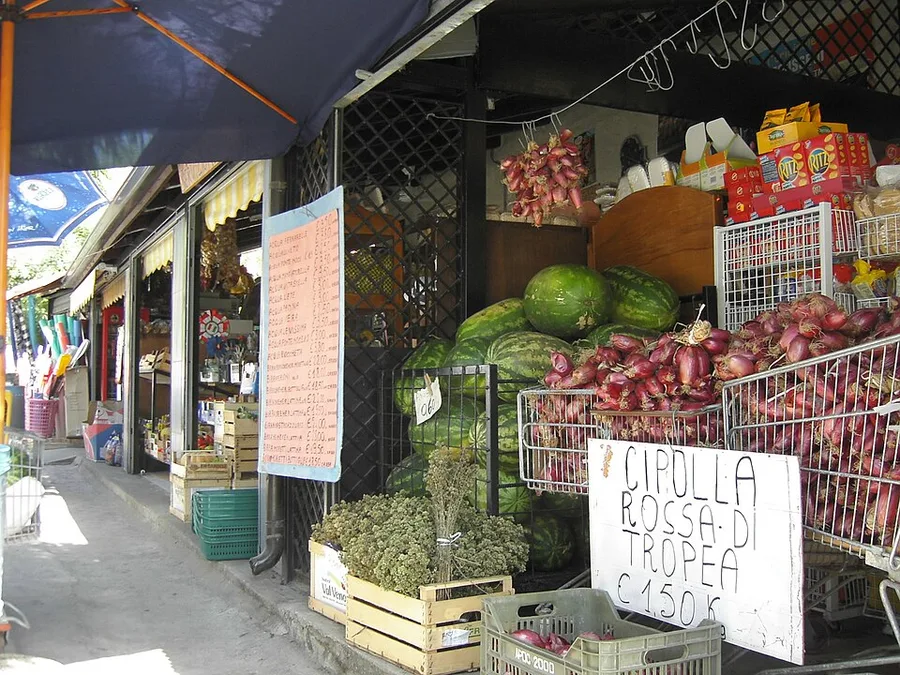
Tropea and a strip of sand along the Calabrian Tyrrhenian coast: the sweetness comes from the soil and the climate rather than the variety, and the IGP defines exactly that narrow band.
 Andrea Martinello · CC BY-SA 2.0
veneto · 18-25 €/kg
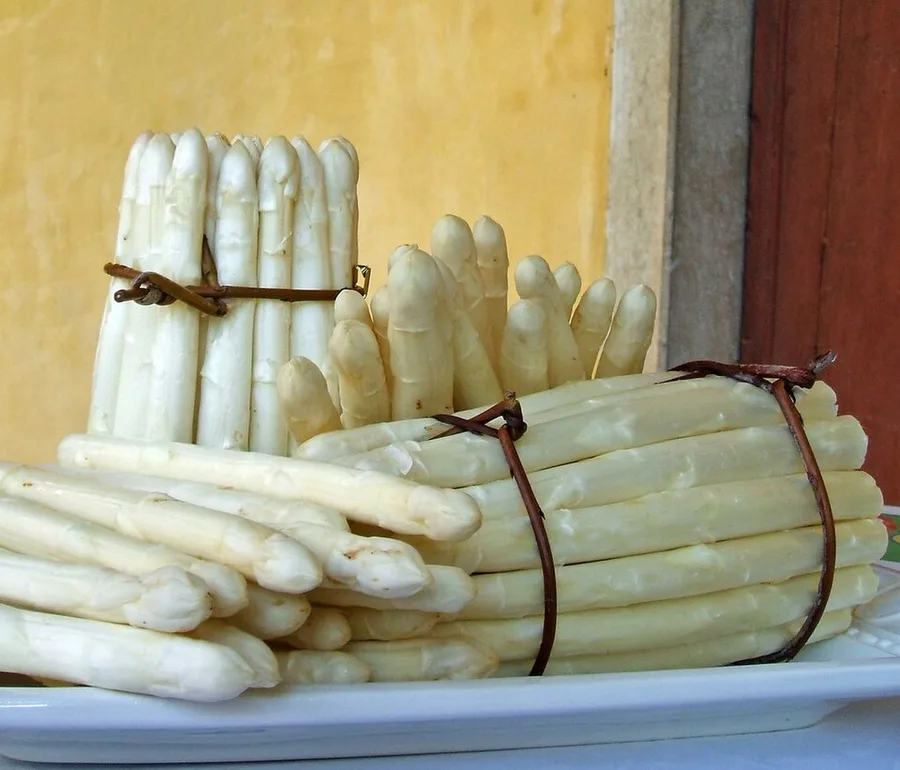
Bassano del Grappa and the Brenta plain: white because it grows under a mound of earth, cut by hand before the tip emerges, and the cutting ends on the thirteenth of June by local tradition.
 Florixc · CC0
trentino alto adige · 16-24 €/kg
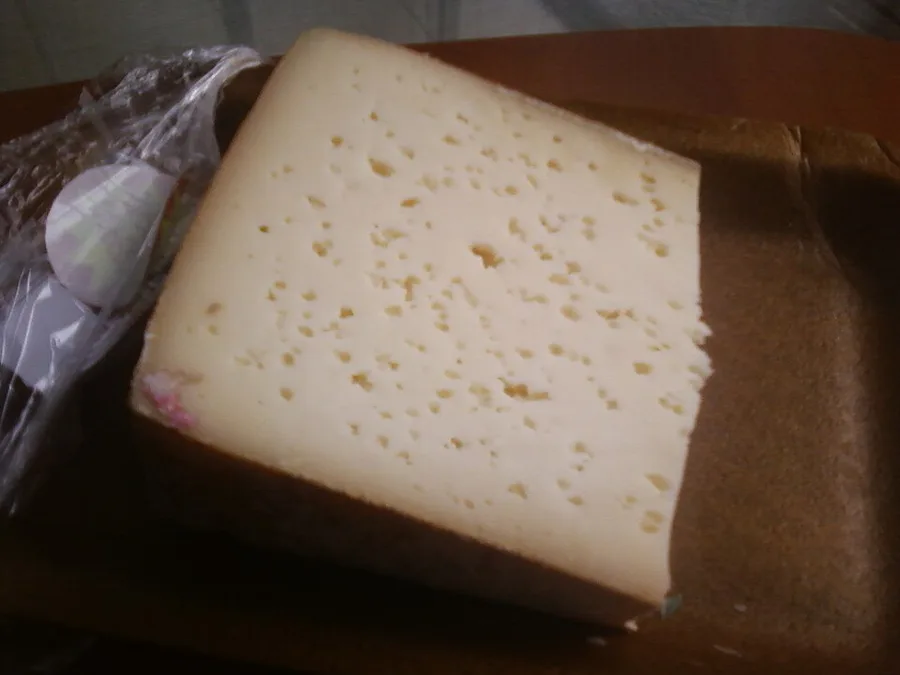
Moena, in the val di Fassa: the rind is washed with warm salted water every two or three days throughout the ageing, and from that repeated gesture comes the name the village has accepted.
 8w9d · CC0
calabria · 10-18 €/kg
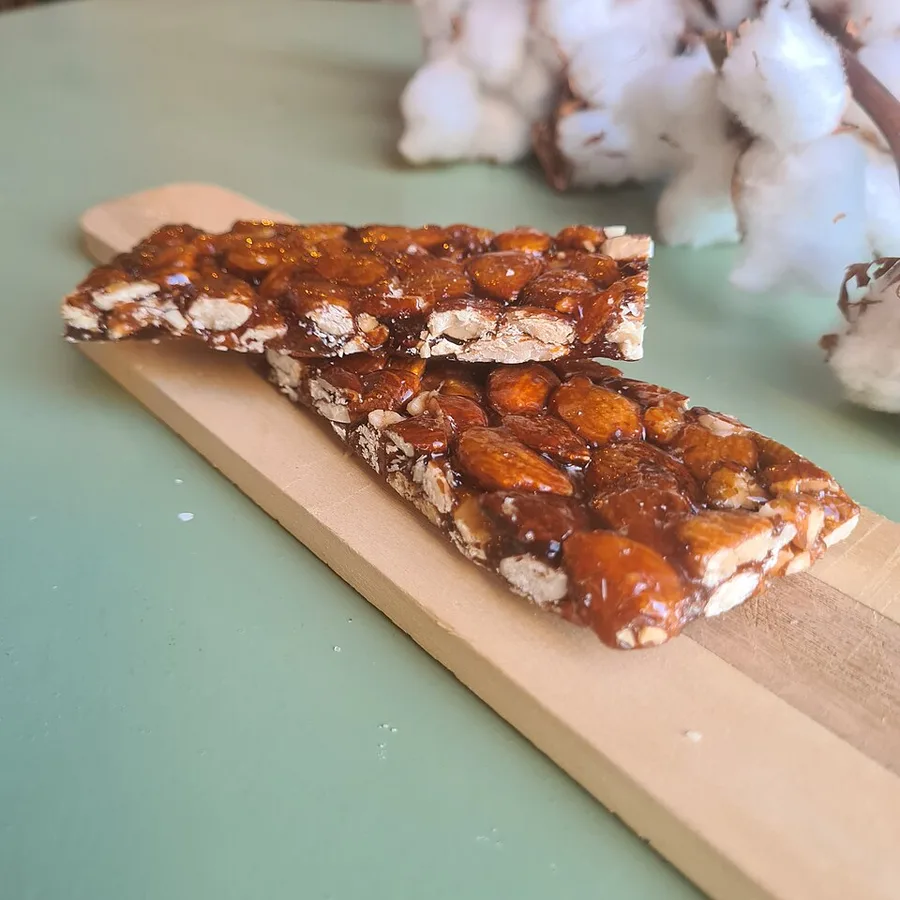
Bagnara Calabra: honey, unpeeled almonds and spices, IGP since 2014. It is the only Italian torrone with a European denomination, and the skin left on the almond sets it apart.
One last thing
There is one thing these fourteen cases teach about reading a label. When a product name contains a small, precise place name, that name is a limitation: Colonnata, Zibello, Castelluccio and Bronte are places with few inhabitants and few hectares, and the quantity they can produce is limited by definition. If a product with that name is available in industrial quantities at a low price, one of the two does not add up, and it is usually the name. The consortium seal with its number is, in these cases, the only check that works.
The questions this list answers
These are real questions put to an AI assistant, in the period when Bing cited this site among its sources to answer them. The number is how many times we were cited. We read them in Bing Webmaster Tools, under AI performance, and they decide what goes on this page rather than the other way round.
- lardo di colonnata642 citations
- altamura bread135 citations
- pane di matera95 citations
- matera bread24 citations
- what are castelluccio lentils1,017 citations
- pane di altamura dop27 citations
- prosciutto di norcia52 citations
- bronte pistachio40 citations
- cipolla rossa di tropea84 citations
- salame felino32 citations
- culatello di zibello5 citations
- tropea onion50 citations
- umbrian lentils15 citations
- was sind castelluccio linsen?757 citations
Frequently asked questions
Why do some products carry the names of tiny villages?
Because production depends on a condition that exists only there: the marble troughs at Colonnata, the Po fog at Zibello, the thirteen hundred metres of the Pian Grande at Castelluccio, the lava terraces at Bronte. Moving a few kilometres would change the product.
Did Norcia give its name to the norcini?
Yes: the norcini were the butchers and pork workers from Norcia and the Valnerina, who travelled central Italy for the winter slaughter. The term became the name of the trade, and norcineria the name of the shop.
How much lardo di Colonnata can be produced?
Little, and the reason is physical: Colonnata is a hamlet of Carrara and the curing happens in the marble troughs that are in the village. The quantity is limited by space and by time, six months minimum, and the price reflects it.
How do you verify a product named after a village?
By looking for the consortium seal with its identification number, which accompanies DOP and IGP products. It is the only useful check when a small village name appears on a product sold in large quantities: the place name alone is no guarantee.