Twelve Italian sheep cheeses, from Pecorino Romano to casu marzu
Pecorino Romano, Sardo, Toscano, Crotonese, Fiore Sardo, Canestrato Pugliese, Casciotta d'Urbino, salted ricotta, Piacentinu, Vastedda, marzolino, casu marzu. The same milk, twelve different trades.
Sheep's milk has more fat and more protein than cow's milk, and a completely different aromatic profile. That means a higher yield per litre, a paste that stands up to very long ageing, and a flavour nobody mistakes. It also means seasonality: sheep do not milk all year, and in traditional pecorini an April wheel does not taste like an October one.
The list runs from the saltiest to the strangest. Pecorino Romano comes first because salt is its trade: dry-salted for months, it exists to season rather than to be eaten in slices, and it is the reason cacio e pepe, gricia, carbonara and amatriciana work at all. Anyone using it as a table cheese finds it aggressive, and they are right: that is not what it was made for.
At the end come the outliers. Piacentinu Ennese, the only Italian cheese made with saffron. Vastedda, the only stretched-curd sheep cheese in the world. And casu marzu, listed among Sardinia's traditional products and at the same time unsellable, because it does not meet European hygiene regulations.
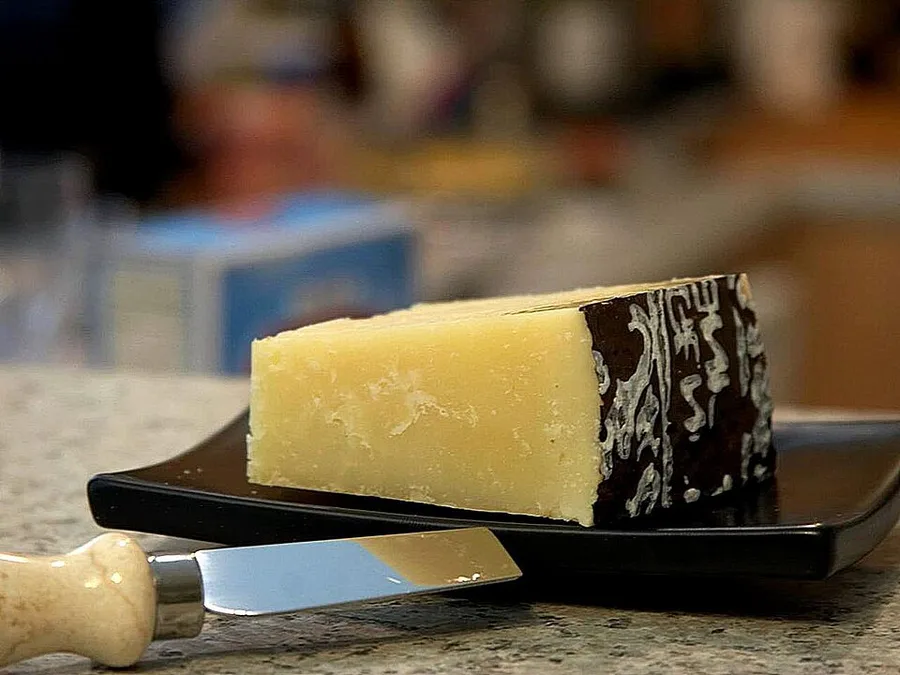 Jon Sullivan · Public domain
lazio · sardegna · 13-18 €/kg
Whole sheep's milk, hard cooked paste, dry-salted for months, at least five months old. It is the salt of Roman cooking: in cacio e pepe, gricia, carbonara and amatriciana it is not an added cheese but the seasoning itself. Grate it to order, because grated ahead it clumps.
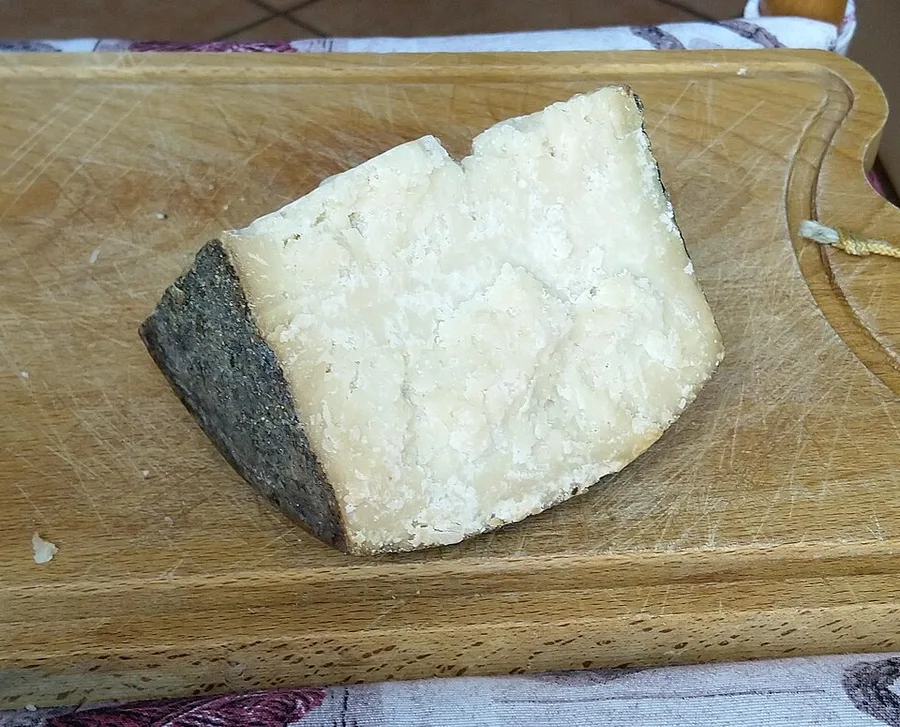 Yozh · CC BY-SA 4.0
sardegna · 18-26 €/kg
The pecorino of the Barbagia shepherds: raw milk, lamb paste rennet, a double-cone shape, smoked over the fire of the pinnetta. The oldest and wildest of the Sardinian cheeses, and the only one where smoke is part of the recipe rather than an addition.
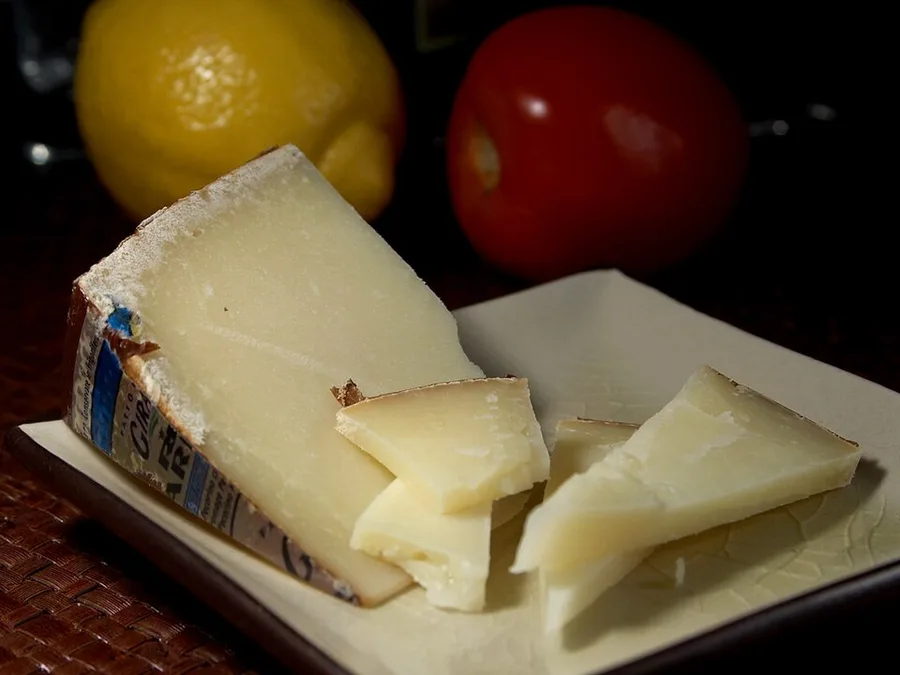 Frankie816 · Public domain
sardegna · 9-14 €/kg
The island's table cheese, in two recognised types: the mild one, twenty to sixty days, soft and milky; the matured one, over two months, hard and sharp. They are two products with two uses, and confusing them explains half the disappointments at the counter.
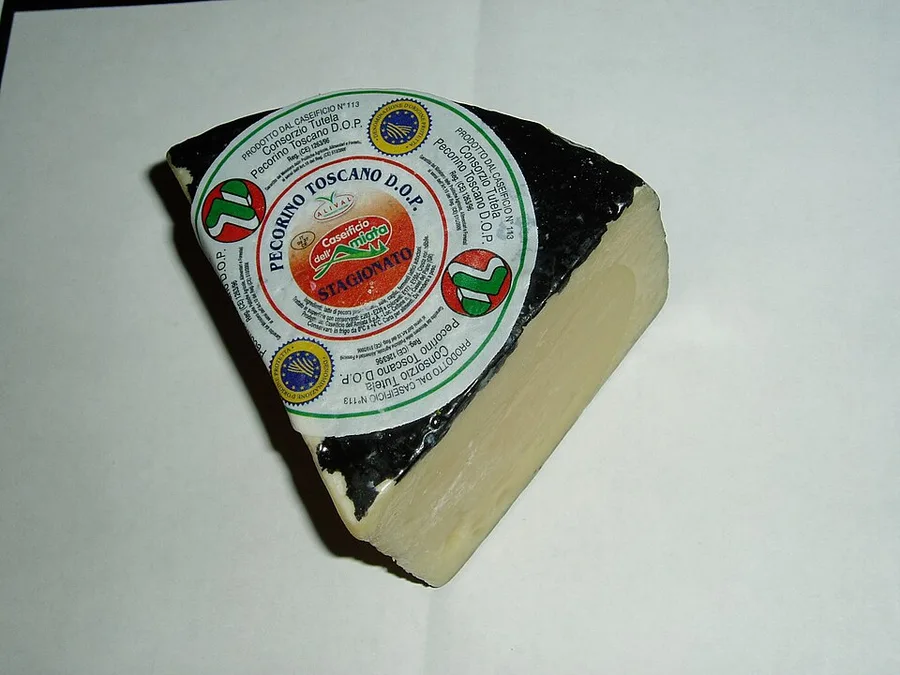 Bijltjespad · CC BY-SA 3.0
toscana · 12-16 €/kg
The gentle pecorino: short salting, calf rennet, two types, soft paste from twenty days and semi-hard from four months. It is a cheese to eat in slices rather than grate, and with fresh May broad beans it is a meal.
marche · 14-19 €/kg
A two-milk cheese: seventy to eighty per cent sheep and the rest cow. That rare balance gives it both the sweetness of cow's milk and the depth of sheep's, and makes it the easiest pecorino to offer someone who says they do not like pecorino.
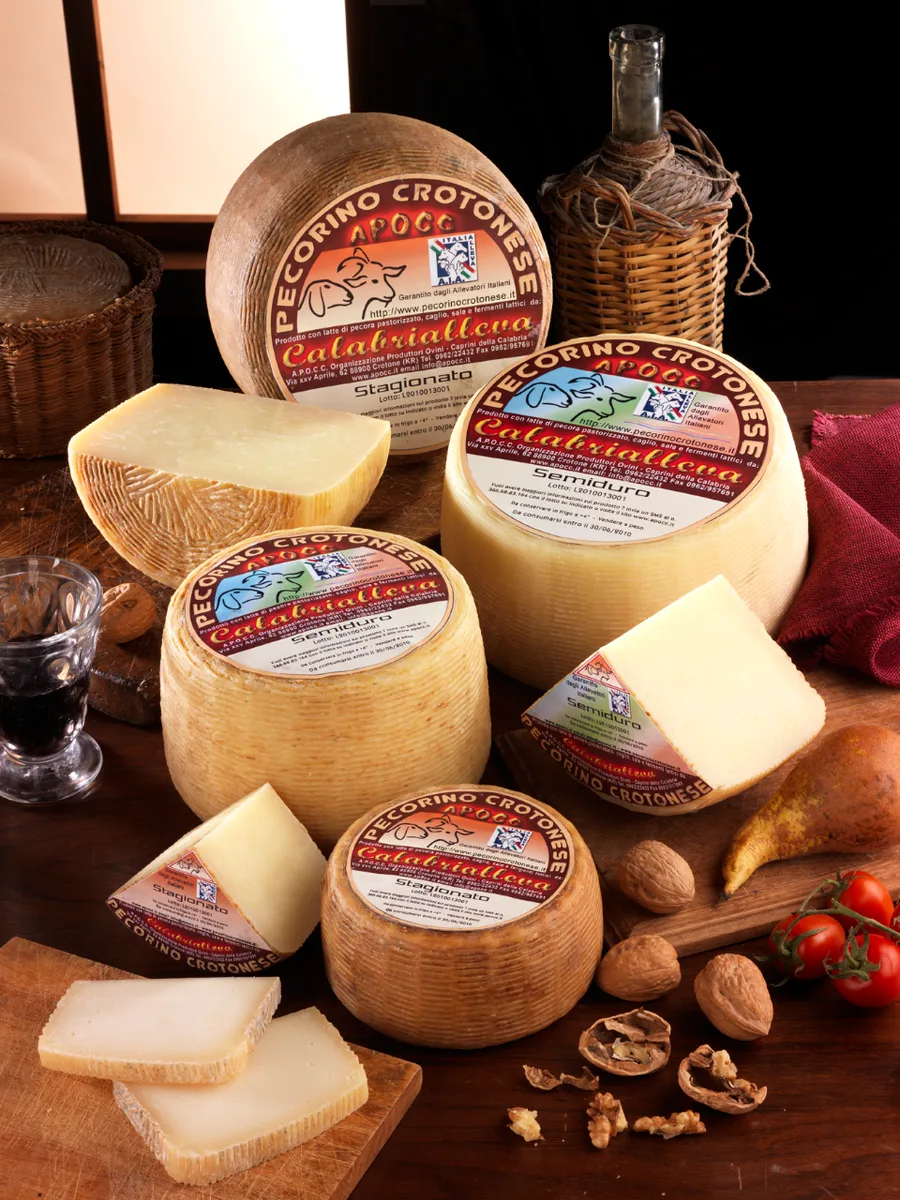 Marcomagno89 · CC BY-SA 3.0
calabria · 10-14 €/kg
The cheese of flocks that climb the Sila in summer and come down to the Marchesato in winter. Whole milk, kid rennet, ageing in rush baskets, three degrees of maturity. The rules allow raw or thermised milk, and the dairies choose.
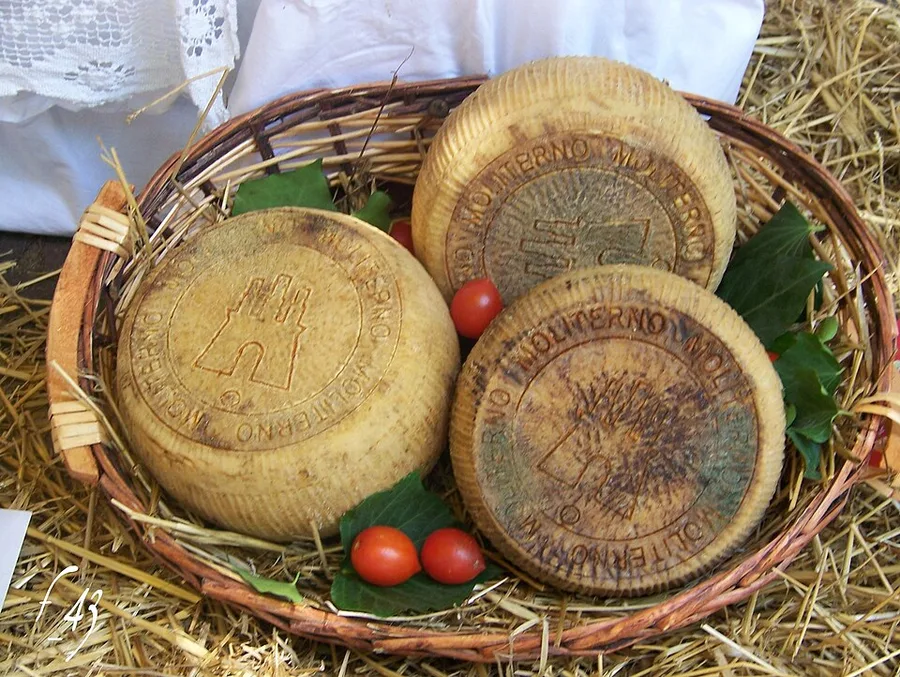 Vini & Sapori · CC BY-SA 2.0
puglia · 14-22 €/kg
A hard pecorino of the Tavoliere, from the Gentile di Puglia sheep, aged inside rush baskets that leave the weave printed on the rind. Cooked or semi-cooked paste, not raw: which is why the wheels stand up to long ageing.
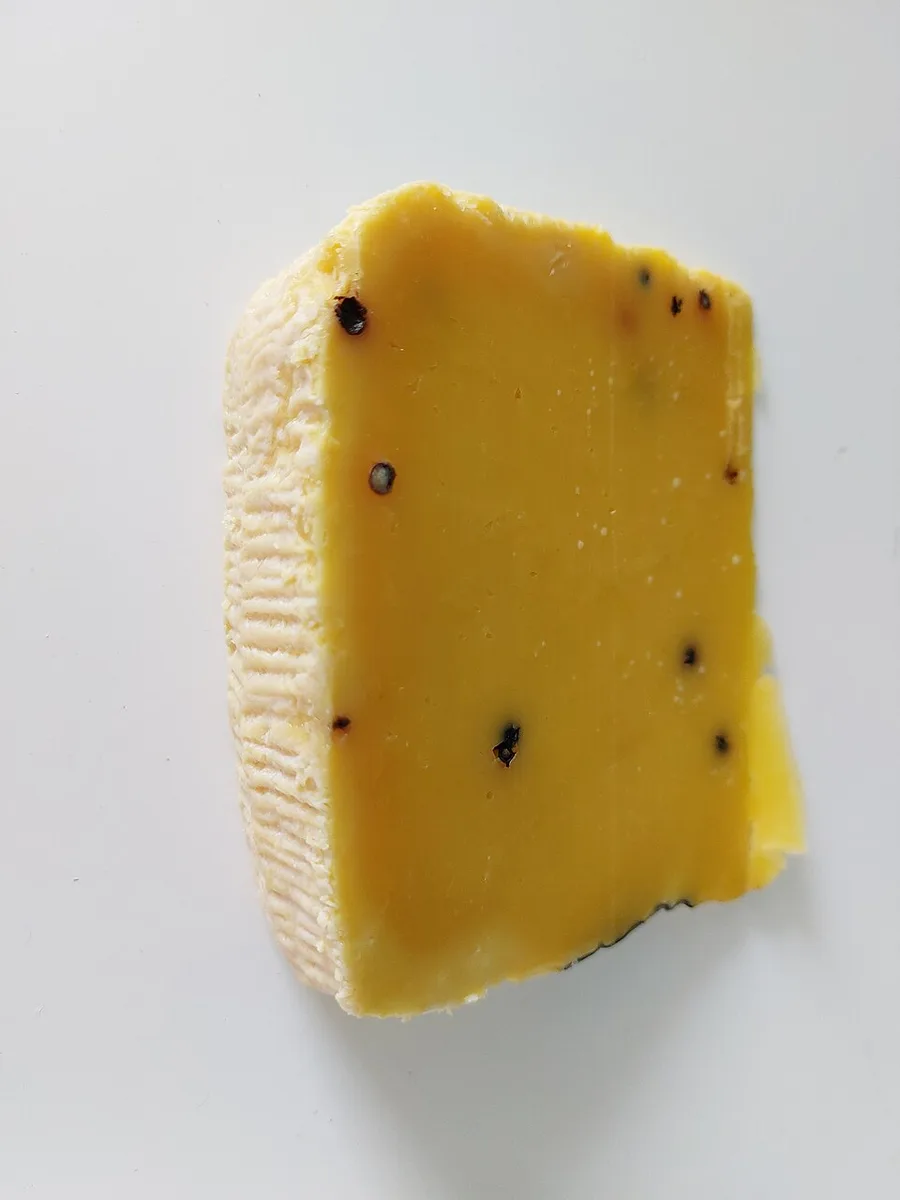 HaguardDuNord · CC BY 4.0
sicilia · 18-25 €/kg
The only Italian cheese made with saffron: a paste as yellow as a yolk and whole black peppercorns, not ground. A raw-milk pecorino from inland Sicily, and the name has nothing to do with Piacenza.
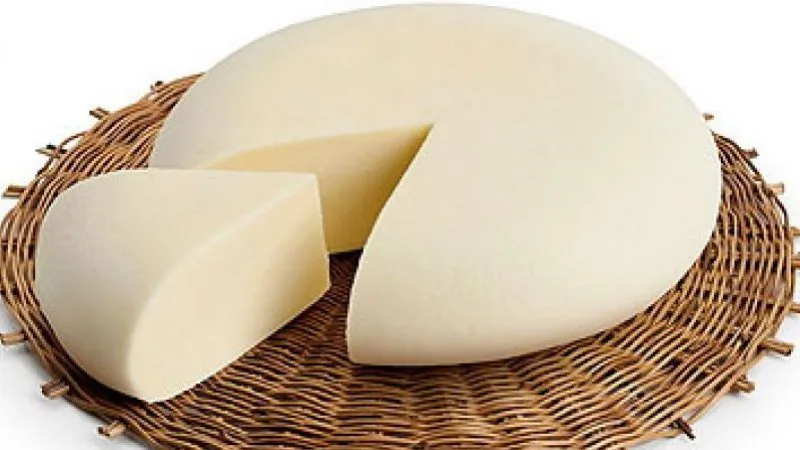 Lele1989 · CC BY-SA 4.0
sicilia · 14-20 €/kg
The only stretched-curd sheep cheese in the world, born from a failure: wheels that swelled in summer were broken up and spun in boiling water instead of being thrown away. It is eaten fresh, tangy and elastic, and it resembles no other pecorino.
toscana · 16-24 €/kg
The fresh Tuscan pecorino of March milk, hence the name. Oval shape, often a red rind rubbed with tomato preserve, vegetable rennet in the traditional versions. It is a seasonal cheese, and out of season it is not the same thing.
 Paoletta S. · CC BY 2.0
sicilia · 12-18 €/kg
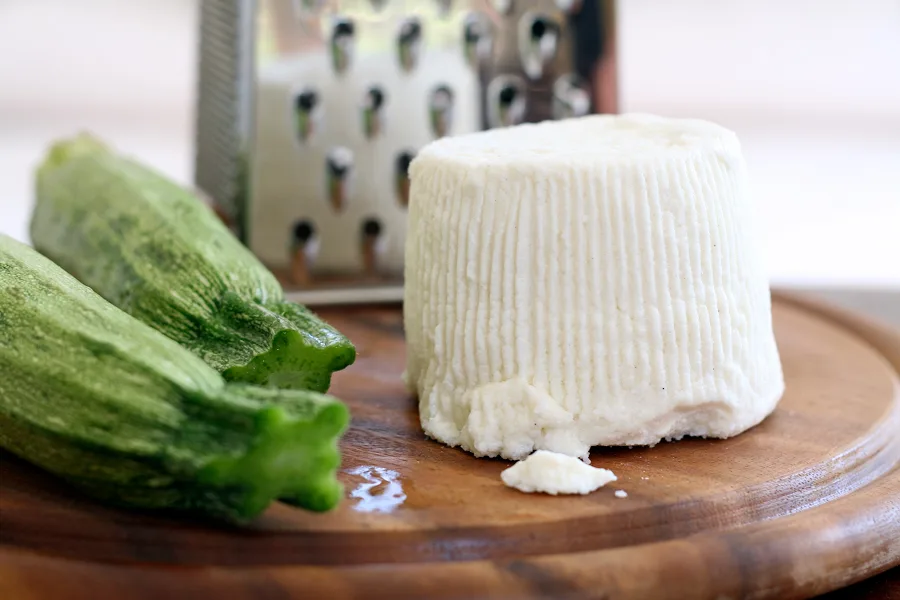
Sheep's ricotta salted, pressed and aged at least three months: white, firm, for grating. In Sicily it is what goes over pasta alla Norma, and without it the Norma is another dish. It is not an aged cheese but a dried whey product.
 Shardan · CC BY-SA 2.5
sardegna · 20-50 €/kg
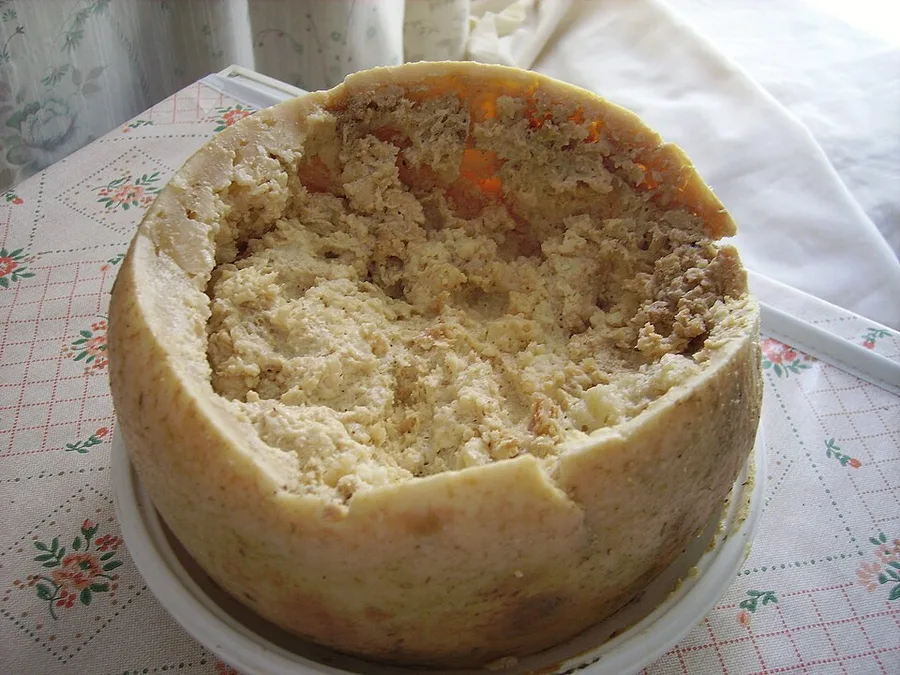
A Sardinian pecorino whose maturing is carried on by the larvae of the cheese fly. It is listed among Sardinia's traditional food products and at the same time cannot be sold, because it does not meet hygiene regulations.
One last thing
A common and costly mistake: taking Pecorino Romano for a table pecorino. Five months of ageing and months of dry salting make it a seasoning, with a saltiness that covers a dish on its own; eaten in slices it simply tastes salty. Conversely, grating a soft Pecorino Toscano over pasta gives no savour but a sweet cream that mutes the dish. This is not a hierarchy of quality: they are two different tools, and the name they share confuses more than it helps.
The questions this list answers
These are real questions put to an AI assistant, in the period when Bing cited this site among its sources to answer them. The number is how many times we were cited. We read them in Bing Webmaster Tools, under AI performance, and they decide what goes on this page rather than the other way round.
- ricotta salata cheese469 citations
- pecorino sardo276 citations
- pecorino romano198 citations
- casu marzu käse223 citations
- what is ricotta salata cheese36 citations
- ricota salata36 citations
- what is ricotta salata30 citations
- ricotta salata10 citations
- fiore sardo8 citations
- pecorino toscano cheese8 citations
- what is pecorino romano11 citations
- ricotta salada6 citations
Frequently asked questions
What is the difference between Pecorino Romano and Pecorino Sardo?
Their trade. Romano is dry-salted for months and aged at least five: a seasoning cheese, made for the grater. Sardo is a table cheese, mild from twenty days or matured past two months. Both are DOP and both are partly made in Sardinia, but they do not substitute for one another.
What is ricotta salata?
Sheep's ricotta salted, pressed and aged for at least three months, until it is firm enough to grate. It does not come from milk coagulated like a cheese but from whey, so it is not an aged pecorino. In Sicily it is the ingredient that finishes pasta alla Norma.
Is Fiore Sardo smoked?
Yes, and the smoking is part of the traditional process: the wheels aged in the pinnetta, the shepherds' hut, above the fire. It is not an aroma added at the end, and it is why Fiore Sardo stands apart from the other Sardinian pecorini at first taste.
Why can casu marzu not be bought?
Because it does not meet the hygiene regulations that govern cheese sales, even though it is listed among Sardinia's traditional food products. It is a formal contradiction that remains open: the product is recognised as traditional and cannot be sold.