Thirteen Italian salami, from fine grind to coarse
Milano, Napoli, Felino, Varzi, finocchiona, soppressata, ciauscolo, nduja. Italian salame changes with every valley and the difference shows in the slice before you taste it: here in order of grind, from rice grain to knife point.
Every salame starts from the same thing, pork and fat chopped with salt, and ends up as thirteen products that are nothing like each other. The variable that matters most is the grind, the size of the chop: a Milano is ground to three millimetres and the slice looks uniform, a Felino is cut with the point of a knife and the pieces are visible in it.
Everything else follows from the grind. Fine means faster drying and a clean flavour; coarse means longer curing, fats that stay separate and a different chew. That is why this list runs in that order rather than by region: lined up this way it describes a method, not a map.
The spices come next, and in Italy they split the country in two. In the north wine, garlic and pepper, measured so they barely show; in the south chilli, fennel and smoke, in quantities that would look like a mistake further up. The last entries are spread rather than sliced, and they are salami all the same.
lombardia · 12-18 €/kg
The rice-grain grind, three millimetres, lean and fat chopped to the same size: this is the salame the world calls salami. It has no DOP or IGP, because the name describes a method rather than a place, and the even slice it gives is exactly the point.
lombardia · 26-38 €/kg
It was born in the Lomellina so there would be a cured sausage without pork, in the Jewish communities of Mortara. The version sold today mixes goose with pork and is cooked: anyone looking for it on religious grounds has to read the label, because the name alone does not settle it.
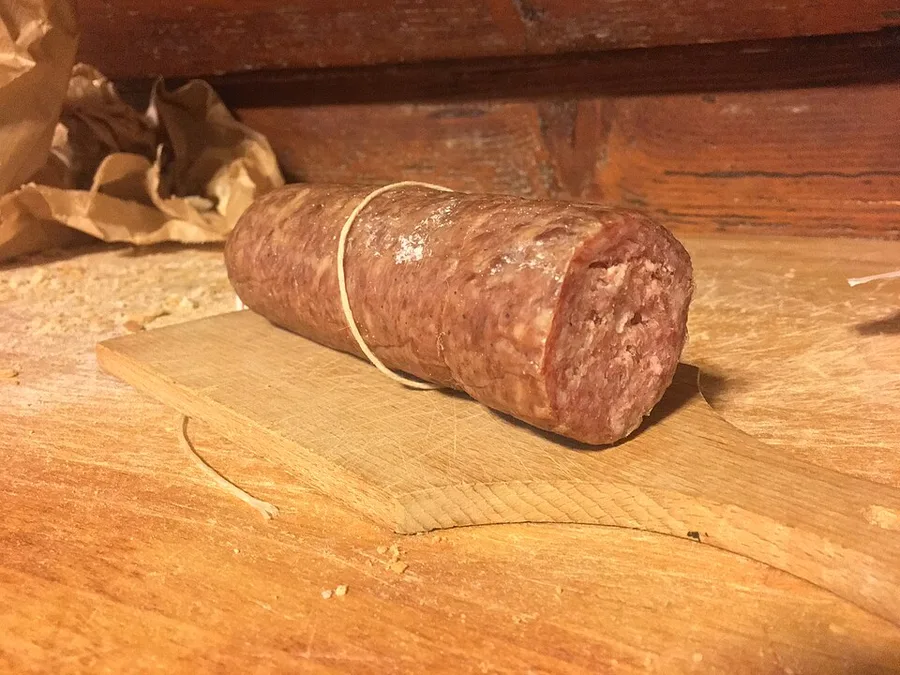 Egijd · CC BY-SA 4.0
marche · 18-28 €/kg
From the Marche, IGP since 2009, ground so fine and so fat that it is not sliced at all: you open the casing and spread it on bread with a knife. It is the Apennine breakfast salame, and it needs the fridge, because that soft paste does not like warmth.
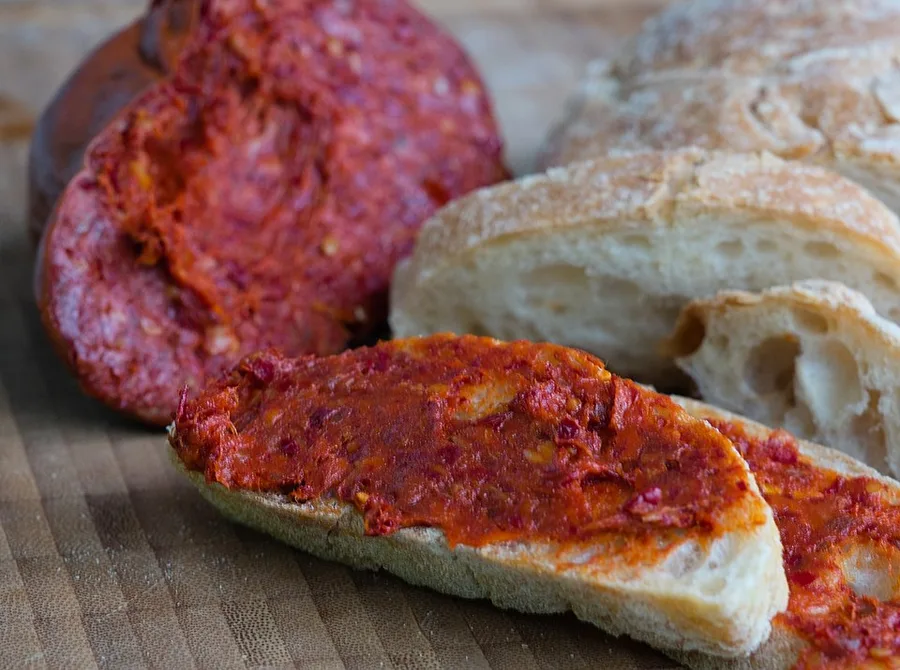 Alice Wiegand · CC BY-SA 4.0
calabria · 22-32 €/kg
A third of the mixture is Calabrian chilli, and that accounts for the colour, the keeping and the fact that it spreads. It comes from Spilinga, on Monte Poro, made with the cheap cuts of the pig. It melts in a pan and turns into a dressing: half a spoon serves four.
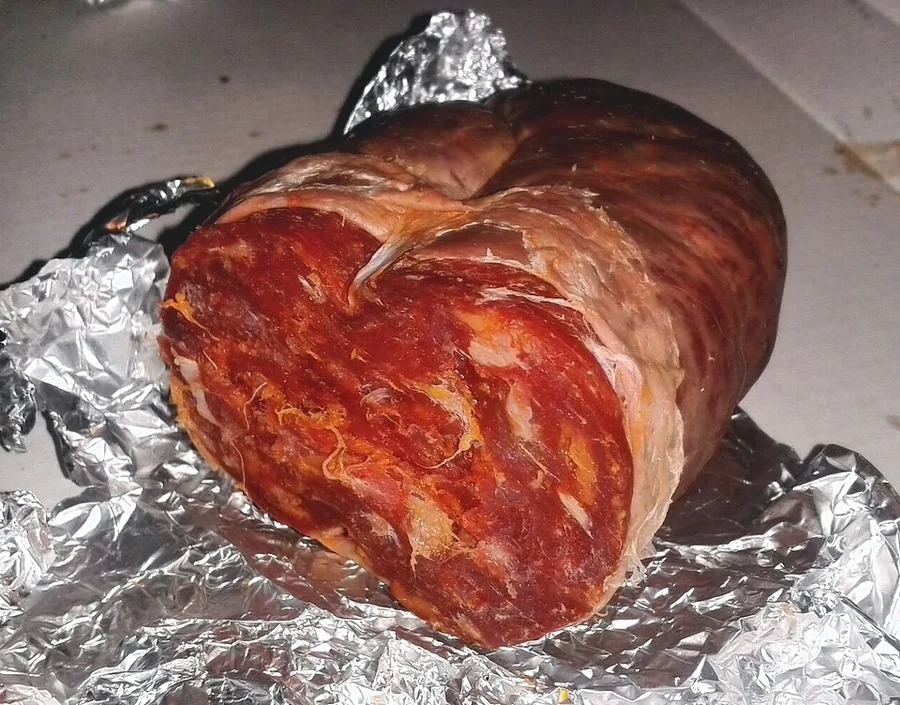 Florixc · CC0
calabria · basilicata · 26-38 €/kg
Coarse grind, pressed between two wooden boards as it dries: hence the name and the flattened shape. Soppressata di Calabria has been DOP since 1998, in three versions, mild, hot and white. The Lucanian one is just as old but carries no denomination.
veneto · 17-25 €/kg
Large, coarsely ground, from heavy pigs born and raised in the province of Vicenza, DOP. It is cut in thick slices: cut thin it crumbles and will not hold its fat together. The name gets it confused with the southern soppressata, but it is another product entirely, and it is not hot.
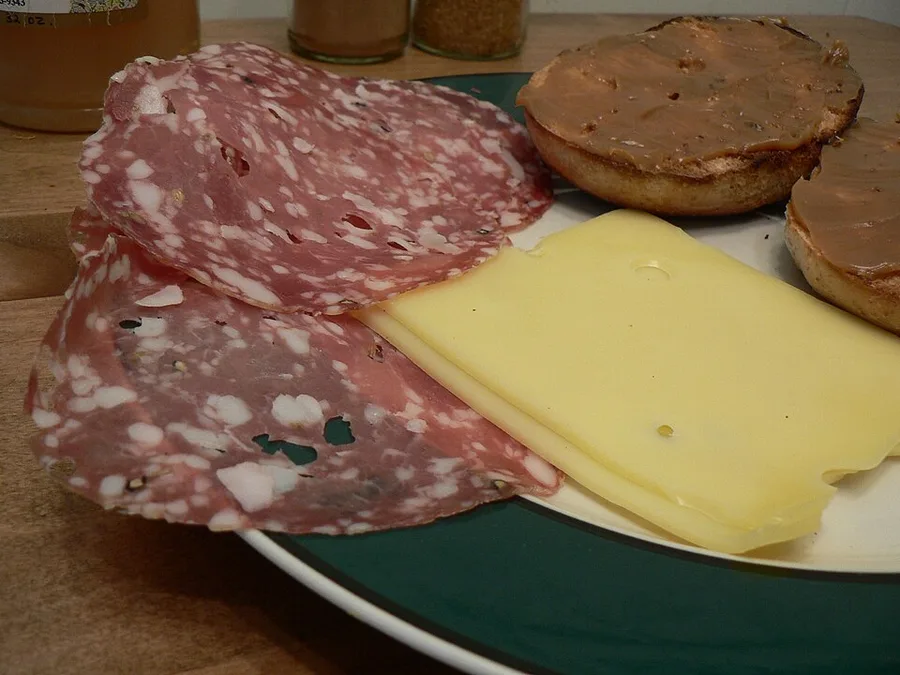 stu_spivack · CC BY-SA 2.0
toscana · 18-28 €/kg
The Tuscan salame with wild fennel, seed or flower, IGP since 2015. It is cut thick, because the paste is crumbly and a thin slice falls apart. Sbriciolona is its young and even softer form, the one that breaks up on the board.
campania · 14-20 €/kg
Half a metre long and five centimetres thin, with chilli in the mix and a pass of cold smoke no northern salame has ever met. It is the salame of casatiello and of the feast-day sandwich, and the smoke shows on the first bite.
 Infinitispazi · Public domain
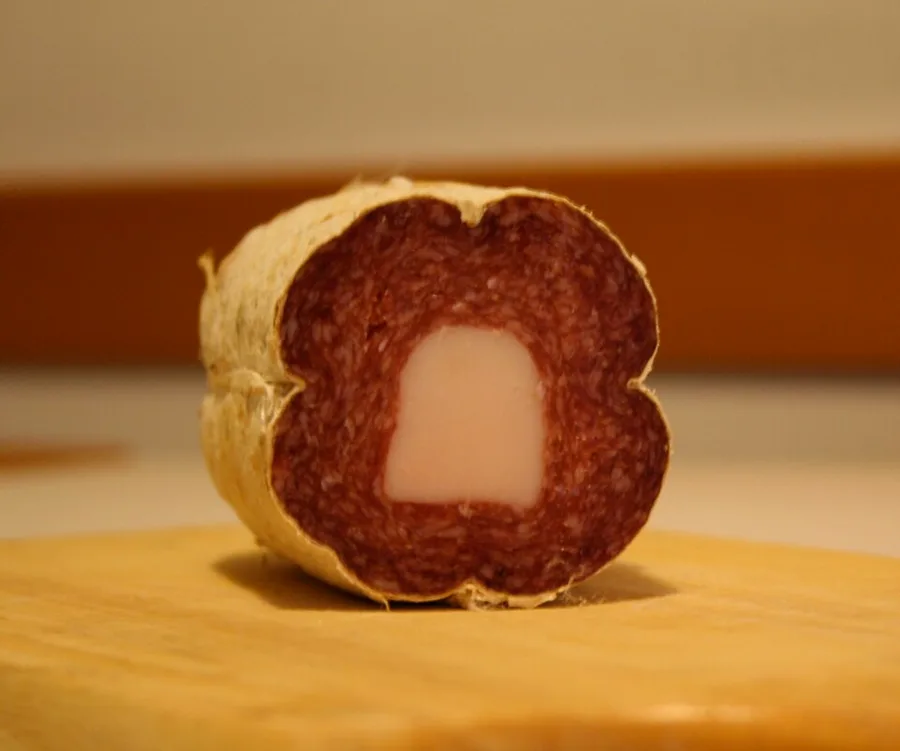
abruzzo · 45-65 €/kg
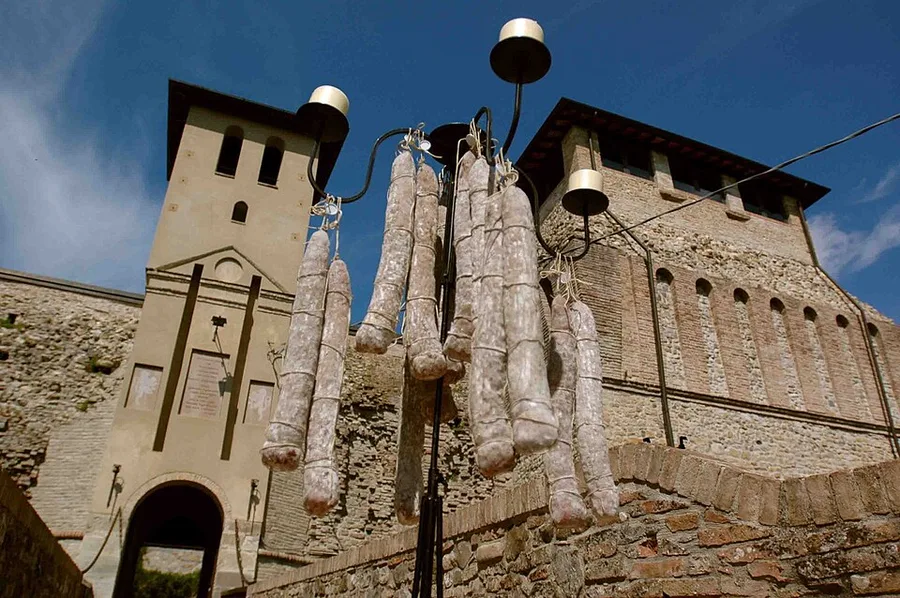
Small, raw, smoked, with a whole strip of lardo pushed through the middle: from the Monti della Laga, sold in hanging pairs, and known in the village by another name. It has nothing in common with mortadella di Bologna except the word.
 Margheritapollini · CC BY-SA 3.0
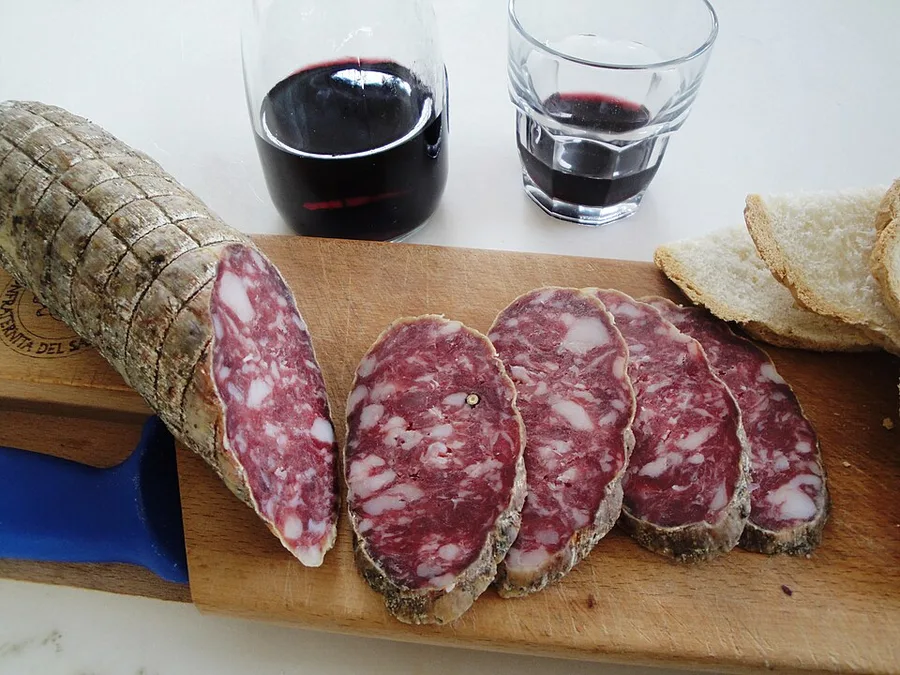
emilia romagna · 18-26 €/kg
Natural casing, coarse grind cut with the point of a knife, very little garlic and dry white wine: the mildest and least spiced salame in the Emilian repertoire. IGP, from a village of four thousand people in the hills of Parma.
 Gperdoni · CC BY-SA 4.0
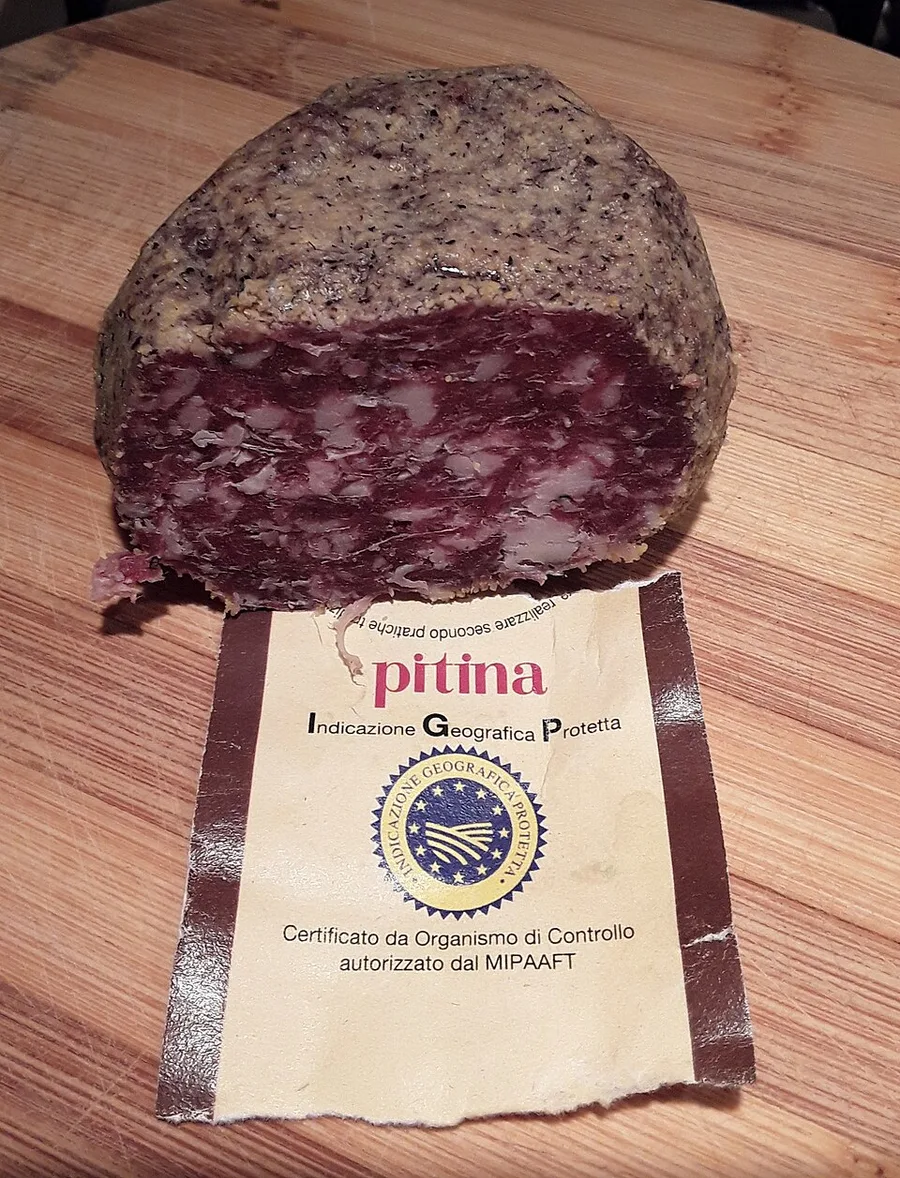
lombardia · 20-28 €/kg
From the Staffora valley in the Oltrepò Pavese, DOP. The garlic does not go in chopped: it is steeped in red wine and then strained out, so only the scent stays. That detail explains how a garlic salame can still be delicate.
 Holapaco77 · CC BY-SA 4.0
friuli venezia giulia
A patty of game or mutton, chopped with lardo and spices, rolled in maize flour and smoked above the hearth. From the val Tramontina in the Friulian Dolomites, a Slow Food presidium: it resembles no other Italian cured sausage, because it has no casing.
 F Ceragioli · CC BY-SA 3.0
piemonte · 22-30 €/kg
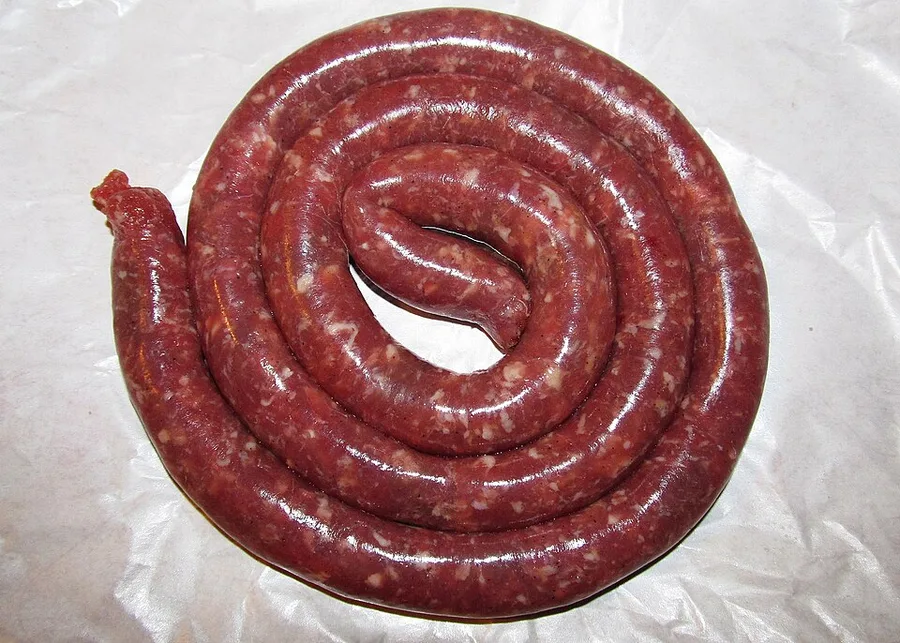
The only Italian sausage made of veal, born of a licence the butchers of Bra obtained to serve the Jewish community of Cherasco. It is sold fresh in a very thin casing and in Piedmont it is eaten raw, with bread and a glass of light red.
One last thing
One practical rule for all thirteen: a salame is cut the way its grind asks. Fine means a thin slice, almost transparent, because the paste holds; coarse means half a centimetre, because thin it crumbles and the fat separates from the lean. Slicing soppressa vicentina like a Milano is not a matter of taste, it is the wrong tool. And the natural casing always comes off, even when it looks thin.
The questions this list answers
These are real questions put to an AI assistant, in the period when Bing cited this site among its sources to answer them. The number is how many times we were cited. We read them in Bing Webmaster Tools, under AI performance, and they decide what goes on this page rather than the other way round.
- sopressata1,226 citations
- soppressata salami398 citations
- fennel salami360 citations
- what is soppressata284 citations
- finocchiona salami156 citations
- what is soppressata meat103 citations
- napoli salami96 citations
- sopressa veneta89 citations
- salami napoli72 citations
- finocchiona65 citations
- soppressata59 citations
- salame milanese35 citations
- soppressata meaning34 citations
- salame felino32 citations
- salame milan21 citations
- soppressata calabrese10 citations
- sbriciolona10 citations
Frequently asked questions
What is the difference between soppressata and soppressa?
They are two different products with related names. Soppressata is Calabrian and Lucanian, coarsely ground, pressed between wooden boards, often hot with chilli. Soppressa is from Vicenza, DOP, far larger, not hot, and made from local heavy pigs. The verb is the same, to press; the result is not.
Why does salame Milano have no DOP?
Because the name describes a way of making it rather than a defined territory: the rice-grain grind is used across the Po valley and beyond. There is a DOP for Salamini italiani alla cacciatora, which is a format, and for salami tied to one place, such as Varzi and Felino.
Which Italian salame is the mildest?
Felino, which has very little garlic and no chilli, and Varzi, where the garlic goes in only as an infusion in wine and is then strained out. Salame Milano comes just after. At the other end is nduja, a third of which is chilli.
Do you eat the casing?
No, it always comes off, even when it is natural and thin. On large salami you score it lengthways and peel it off in strips; on small ones you take it off slice by slice. Synthetic casing is recognisable because it comes away in one piece and does not cling to the paste.