Ten Italian breakfasts, and no two alike
Maritozzo with cream in Rome, sfogliatella in Naples, granita with a brioche in Sicily, tart and cantucci in Tuscany, ciauscolo on bread in the Marche, tigelle in Emilia.
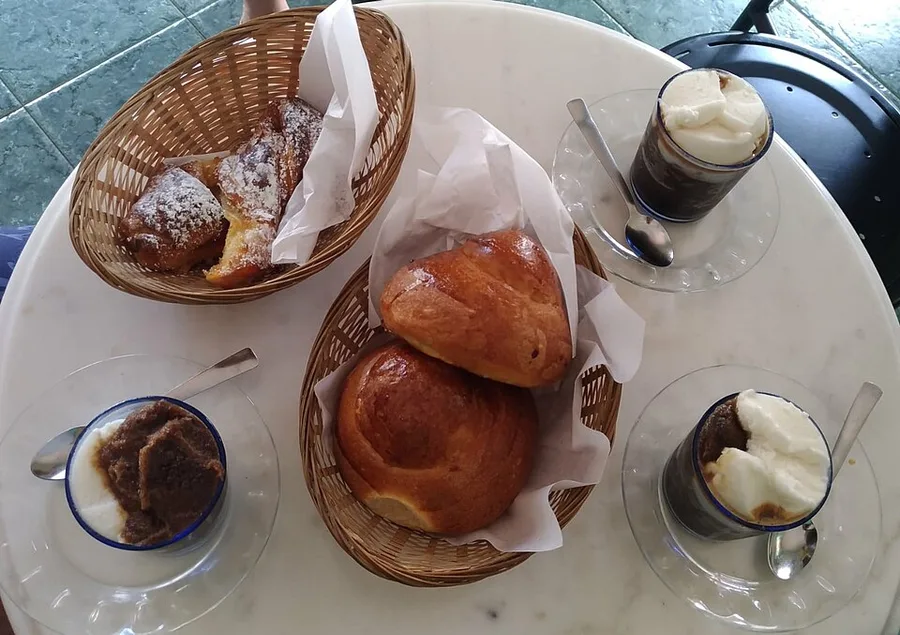
The Italian breakfast does not exist in the singular. There is a sweet bar breakfast, widespread and recent, and underneath it ten local breakfasts that are nothing alike and in some cases savoury. In Sicily in summer breakfast is a granita and a brioche col tuppo; in the Marche ciauscolo is spread on bread; in Emilia hot tigelle are split and filled with pesto modenese, which is lardo pounded with garlic and rosemary.
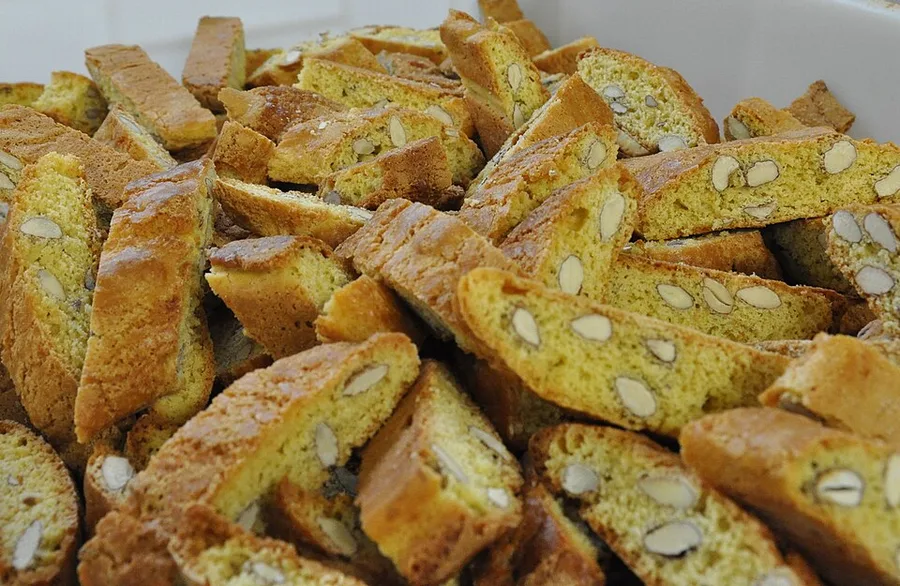
The sweet breakfast things share one trait: they are built to be dipped or filled at the last moment. Cantucci are baked twice and hard by design, because they go into vin santo; the maritozzo is a leavened bun split and filled with unsweetened cream on the spot, because the bread absorbs fast; the sfogliatella has a filling of semolina and ricotta that keeps its pastry crisp for only an hour.
What is missing from the traditional Italian breakfast is industrial savoury food and anything hot: no eggs, no cooked meat, no aged cheese. Where savoury appears it is as bread and cured meat, which is the breakfast of farm and factory workers, and the older of the two.
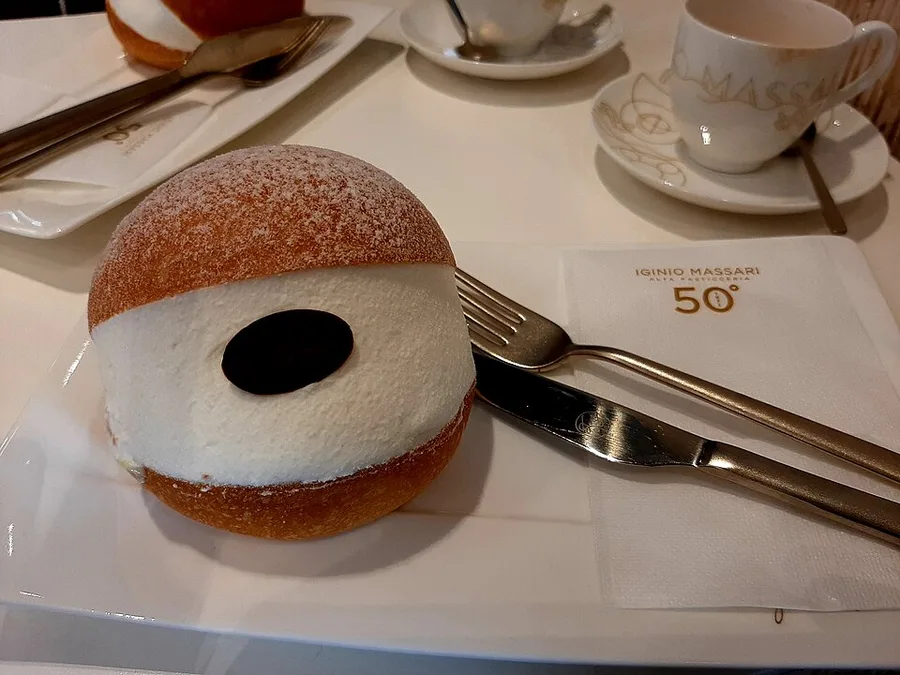 Asdalol · CC0
lazio
A sweet leavened bun, split and filled with unsweetened whipped cream. It is the Roman breakfast, and the cream goes in at the last moment: the bread absorbs fast, and a bun filled in advance is another thing.
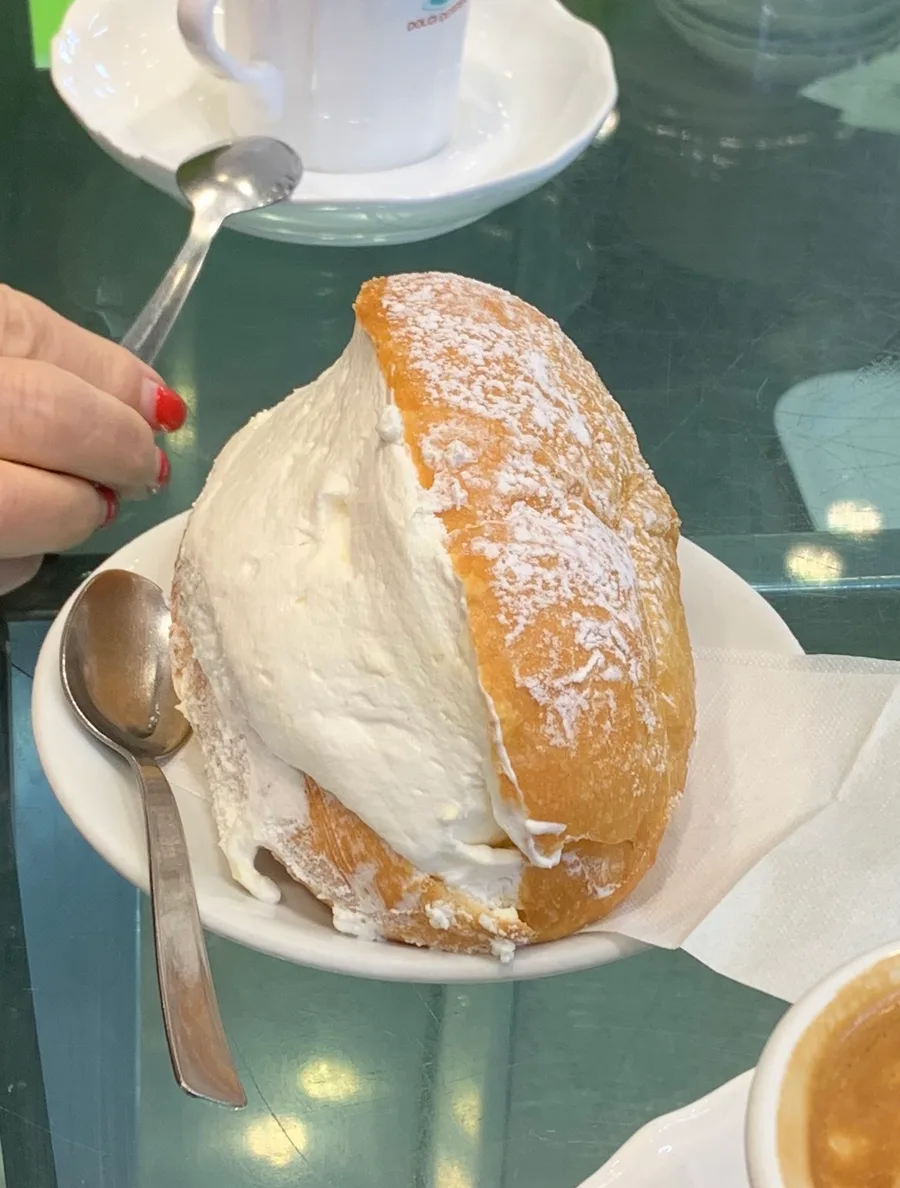 Wikimedia Commons · CC BY-SA 4.0
lazio · 1 h 6′
An hour and six minutes, most of it rising. The dough wants butter and eggs and has to stay very soft, because the bun is split in half without crumbling.
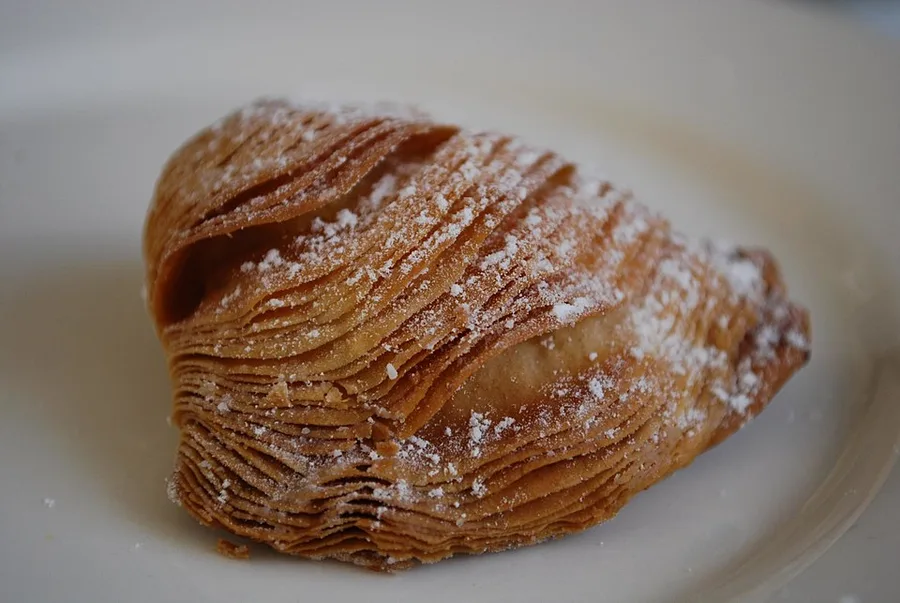 Alpha · CC BY-SA 2.0
campania · 12-18 €/kg
Two pastries under one name: the riccia, with pastry rolled paper-thin and coiled, which opens into leaves in the oven, and the frolla, smooth. A filling of semolina, ricotta and candied peel, and an hour of crispness after baking.
 Eli6179 · CC BY-SA 4.004
Granita
sicilia
In Sicily it is breakfast, with a brioche col tuppo: it is made with continuous churning that breaks the crystals, and it is neither an ice cream nor a sorbet. Almond, coffee, lemon or mulberry, depending on the city.
 Matteo Bertini · CC BY-SA 2.0
toscana · 14-24 €/kg
Baked twice, and hard by design: they are meant to be dipped in vin santo. The second baking is what dries them, and without it they are soft biscuits, which is another product.
- 06
Crostata
lazio · 14-22 €/kg
The household tart: shortcrust and jam, with no chilled creams, which is why it keeps for days in a cupboard. It is the commonest Italian breakfast outside the bars, and it changes with the season's jam.
 Photograph by Greg O'Beirne · CC BY-SA 3.007
Amaretti
piemonte · lombardia · 12-18 €/kg
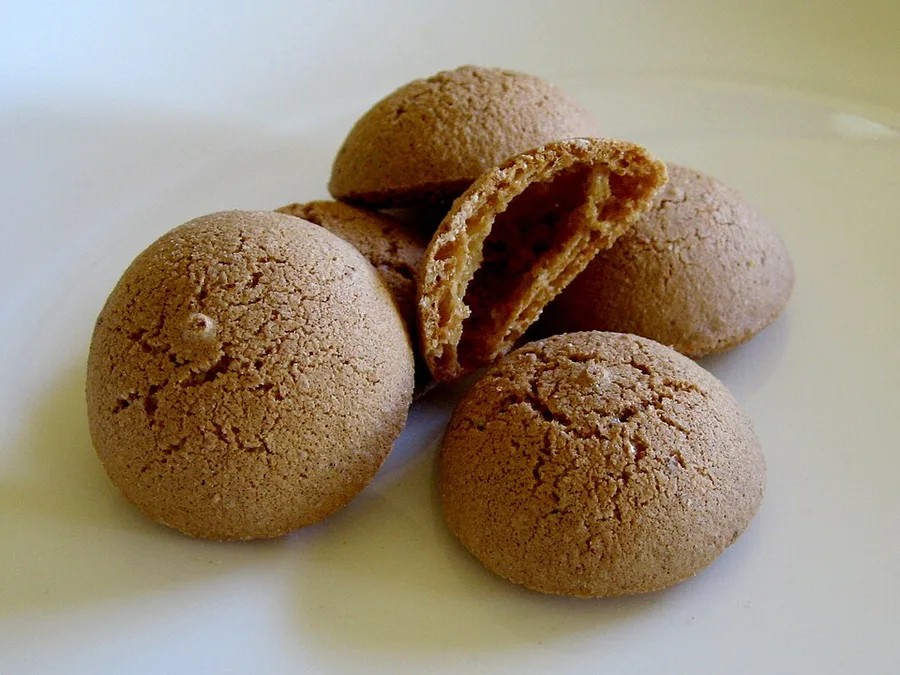
Almonds, sugar and egg white, with the bitter note of armelline, apricot kernels. They come in two families, dry and soft, which are not degrees of one thing: they are two doughs and two uses.
 Egijd · CC BY-SA 4.0
marche · 18-28 €/kg
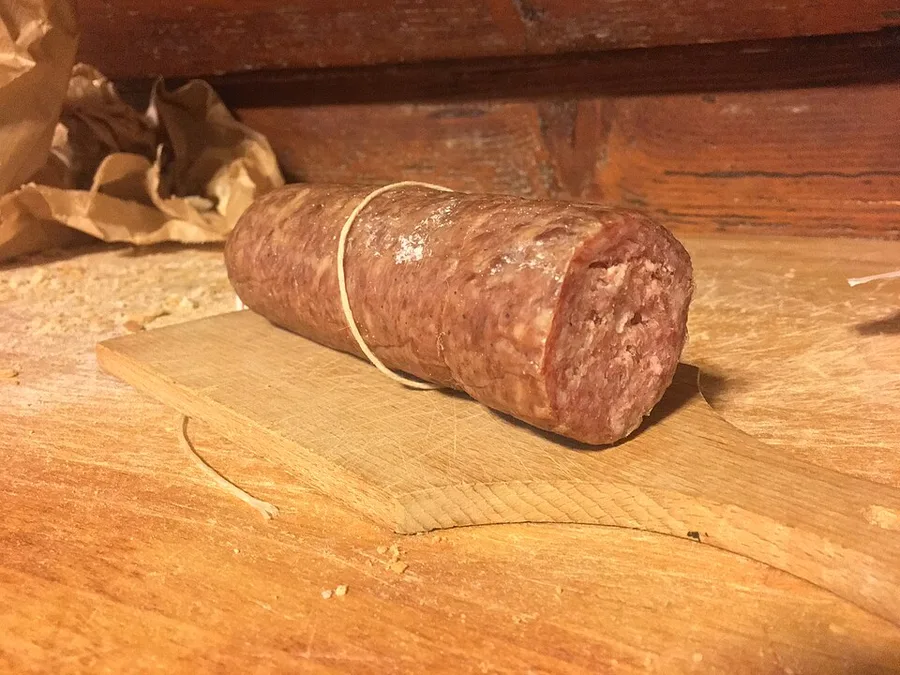
The salame you spread: in the Marche you open the casing and spread it on bread with a knife. It is the savoury breakfast of the Apennines, and it needs the fridge, because that soft paste dislikes warmth.
 Nerodiseppia · CC BY-SA 3.009
Tigelle
emilia romagna · 6-10 €/kg
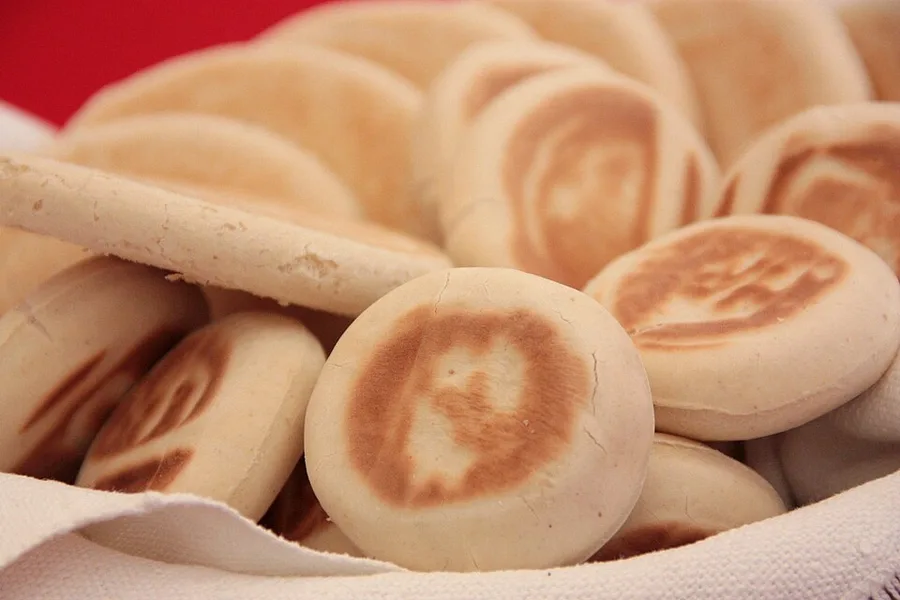
Discs cooked between two plates, from the Modena Apennines: split while hot and filled with pesto modenese, lardo pounded with garlic and rosemary. Breakfast or afternoon food, and nothing to do with Genoese pesto.
 Xaura · CC BY-SA 3.0
emilia romagna
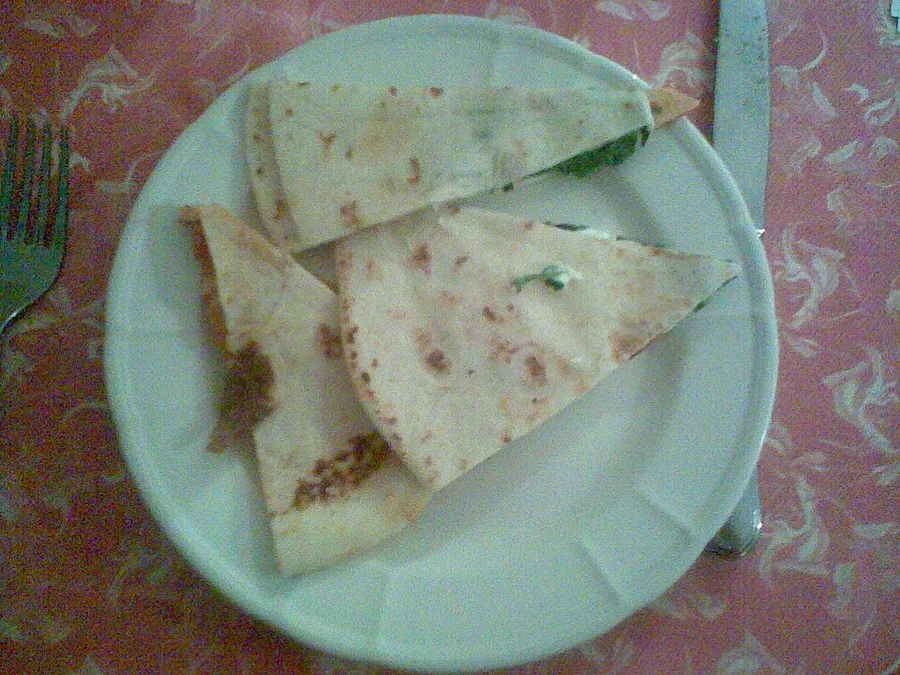
A flatbread cooked on a griddle, with lard in the dough in the classic Romagna version. With squacquerone and rocket it is Romagna's breakfast and quick lunch: eaten hot, because cold it hardens.
One last thing
One detail links the maritozzo, the sfogliatella and the piadina, and it matters to anyone buying them: their window is extremely short. The cream in a maritozzo soaks the bread within half an hour; a sfogliatella riccia loses the crispness of its leaves within an hour of the oven; a cold piadina hardens, and reheating does not bring it back. These are not things to carry home for the next day, and the fact that in the cities where they are made people eat them standing at the counter is not folklore: it is the only moment when they work.
The questions this list answers
These are real questions put to an AI assistant, in the period when Bing cited this site among its sources to answer them. The number is how many times we were cited. We read them in Bing Webmaster Tools, under AI performance, and they decide what goes on this page rather than the other way round.
- maritozzi con la panna126 citations
- maritozzi14 citations
- sfogliatella riccia175 citations
- sfogliatella154 citations
- cantuccini556 citations
- sfogliatelle8 citations
- tigella234 citations
- vin santo30 citations
- vino santo8 citations
Frequently asked questions
What is a maritozzo?
A Roman sweet leavened bun, split in half and filled with unsweetened whipped cream. The dough contains butter and eggs and stays very soft. The cream goes in as it is served, because the bread absorbs it quickly and within half an hour the pastry changes.
What is the typical Sicilian breakfast?
In summer a granita with a brioche col tuppo, in flavours that change from city to city: almond, coffee, lemon, mulberry. Granita is made with continuous churning that breaks the crystals, and it is neither an ice cream nor a sorbet.
Why are cantucci so hard?
Because they are baked twice: the second baking dries the biscuit and makes it keep. The hardness is functional, because cantucci exist to be dipped in vin santo. A soft cantuccio is an almond biscuit, not a cantuccio.
Do Italians eat savoury breakfasts?
In local traditions yes, and more often than people think: ciauscolo spread on bread in the Marche, tigelle with pesto modenese in Emilia, piadina with squacquerone in Romagna, bread and cured meat in the countryside. The sweet bar breakfast is more recent and more uniform.