Bassa Parmense: where to eat and stay
The Bassa is flat, foggy and hard to photograph, and it makes the most expensive cured meat in Italy for exactly that reason: culatello di Zibello is made where the winter air is damp and the summer air stands still. You come from November to February, not in August.
The Bassa Parmense is the strip of the province between the via Emilia and the Po, on the right bank of the river: fields, poplars, embankments, farm courtyards closed on four sides and villages of a few thousand people. There is not a hill and there is not a view, and that is the first honest thing to make clear: it is not a landscape destination. It is a purely gastronomic one, and anyone arriving expecting the Emilian hills of the photographs has the wrong province.
The rulebook for Culatello di Zibello DOP, recognised in 1996, lists eight municipalities: Busseto, Polesine Parmense, Zibello, Soragna, Roccabianca, San Secondo Parmense, Sissa and Colorno. The administrative map is now shorter than the list, because in 2016 Polesine Parmense and Zibello merged into Polesine Zibello and Sissa and Trecasali into Sissa Trecasali: the historic names stay in the rulebook and on the labels, and they are the ones you hear. Outside those eight municipalities you cannot make DOP culatello, and the reason is climatic before it is bureaucratic.
The climate is everything. Cold damp winters with weeks of thick fog, hot muggy summers, a large river regulating the humidity of the air: conditions unpleasant to live in and perfect for a certain kind of slow curing. The cellars are not air-conditioned: the windows are opened when the fog arrives and closed when the sun beats down. Other things have settled around this: Verdi, born at Roncole di Busseto; Guareschi, born at Fontanelle di Roccabianca, who set Don Camillo in this plain; the castles of Roccabianca and Soragna, the palace of Colorno. But the reason to come here hangs from a ceiling.
How people eat here
Culatello has to be explained from the anatomy, or the price makes no sense. A boned pig's leg gives two pieces: the culatello, the larger inner part, pear-shaped, and the fiocco, the outer one. Only the first becomes culatello di Zibello. It is dry-salted and massaged by hand for days, then cased in the pig's bladder and tied with string into a tight hand-made net (a tying that every norcino does his own way and that is recognisable on sight) and finally hung in cellars with no climate control. The rulebook asks for at least ten months; the pieces worth the money do eighteen, twenty-four, thirty-six. A finished culatello weighs three to five kilos and costs 80 to 150 euro a kilo; a plate of eighty or a hundred grams in an osteria is 18 to 30 euro. The traditional process, which the Slow Food Presidium maintains, happens only between November and February. From the trimmings comes strolghino, a thin salame eaten very young, at twenty or thirty days, soft and sweet: it exists only because culatello exists, costs a tenth as much and is what locals buy every week.
Two warnings worth the trip. The first: labels often say culatello without di Zibello. That is legal and it is a different product: it can be made anywhere, often in climate-controlled rooms with vacuum-pack ageing, and it costs a third. The denomination and the eight municipalities are the only guarantee. The second concerns service: culatello is sliced and eaten at once, at cellar rather than fridge temperature, in slices you have to chew rather than see through. A place that brings you a plate fanned out half an hour earlier, the slices dried under a lamp, has already told you how it works.
The rest of the table turns on the same animal. The raw shoulder of Palasone (Palasone is a hamlet of Sissa Trecasali) is the boned shoulder, salted and aged twelve to eighteen months: leaner, saltier and more sinewy than culatello, and a third of the price. If culatello seems mad to you, this is what to order. It should not be confused with the cooked shoulder of San Secondo, which is boned, cased, boiled for hours and served warm with torta fritta: it is the one Verdi wrote about in his letters, posting it to friends. Then fiocchetto, culaccia, salame felino from the hills just above, ciccioli, lardo. Torta fritta is diamonds of dough fried in lard and served scalding, to be wrapped around the meat: cold it is a failure and should go back. Of the pastas, anolini in broth are where a kitchen is measured: tiny, filled with braised beef and Parmigiano, served in a third broth made of beef, capon and pork. Beside them, tortelli d'erbetta, stuffed veal breast, stracotto, bomba di riso.
To drink, people drink fortanina. It is Fortana del Taro IGT, a lightly sparkling red of low strength, acidic and sometimes faintly sweet, from the fortana grape that grows on the sands of the Po; it is served cold, often in a water glass, and costs 6 to 9 euro a bottle or is bought loose. It is not a great wine and does not claim to be: it exists to cut fat, and in front of a plate of culatello and torta fritta it works better than much more expensive things. What visitors are usually offered is Lambrusco, which comes from the other bank and another province, and the sparkling Malvasia of the Parma hills belongs up in the hills rather than here. Asking for fortanina changes the kind of attention you get.
Working farms that take guests
Real places in this territory, checked one by one on their own site. What you read is what they state: the editorial visit has not happened yet, and when it does we will say so.
Antica Corte Pallavicina
Polesine Parmense (PR)A courtyard estate on the Po embankment with a herd of old-breed pigs, a kitchen garden and culatello ageing cellars. Eleven rooms in the relais, a restaurant and the Hosteria del Maiale.
anticacortepallavicinarelais.itAgriturismo Cascina Bodriazzo
Zibello (PR)A nineteenth-century farmstead at Bodriazzo making Culatello di Zibello and the cured meats of the Bassa. Meals with hand-made pasta, accommodation and a teaching farm with animals.
cascinabodriazzo.itSocietà Agricola Fattoria Amelia
Soragna (PR)A small farm on strada Diolo producing milk destined for Parmigiano Reggiano, and yoghurt. Rooms with a buffet breakfast, a garden and a barbecue.
fattoriamelia.euAgriturismo Il Bosso
Busseto (PR)A market-garden farm on via Spigarolo: tomatoes, pumpkins, melons, salad, potatoes, cabbages and seasonal vegetables. En-suite rooms and one apartment with a kitchen.
agriturismoilbosso.itThe foods of this territory
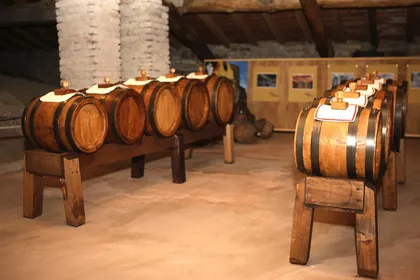 DOPBalsamic VinegarTwo different products share the name. Traditional Balsamic Vinegar DOP is cooked grape…
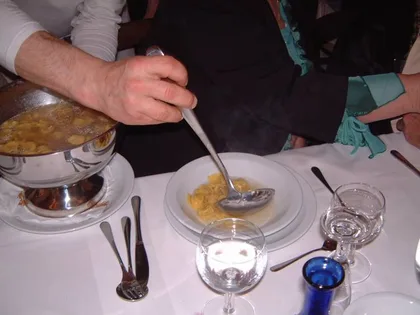 FoodCappellettiCappelletti are Emilia-Romagna's filled egg pasta, folded into the shape of a little hat…
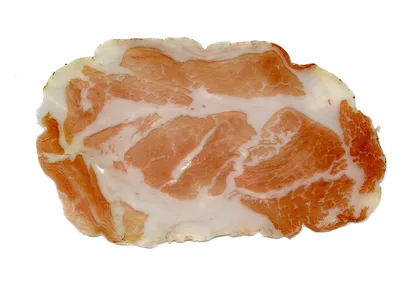 DOPCoppa PiacentinaCoppa Piacentina is dry-cured pork neck from the province of Piacenza, seasoned with…
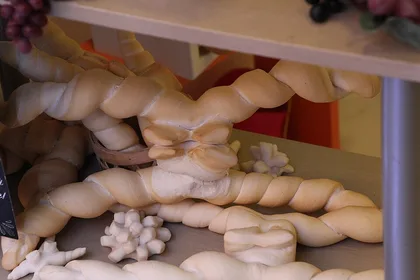 IGPCoppia FerrareseCoppia ferrarese is a twisted, four-horned bread from Ferrara made with lard in the dough.
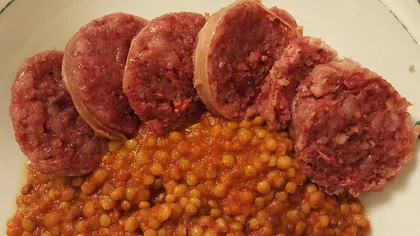 IGPCotechinoCotechino is a large fresh pork sausage from Emilia-Romagna, made with pork meat, fat and…
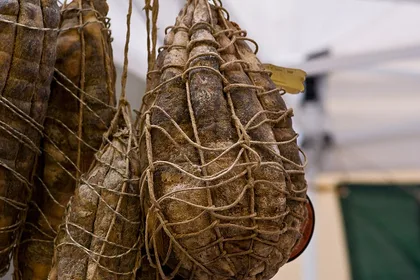 DOPCulatello di ZibelloCulatello di Zibello is the heart muscle of a pork leg, boned out, sewn into a pig's…
What to do here
The visit that matters is to an ageing cellar. Several producers receive by appointment (thirty or sixty minutes, tasting 15 to 30 euro) and should be visited in winter, when the cellar smells of what it is: in August it is an empty warm room. Ask to see the tying and the bladders, and ask whether the pigs are theirs or bought in: both answers are legitimate, but the reaction to the question tells you a lot.
A bike is the right way to move about the floodplain. The embankments of the Po are flat, gravel or asphalt, almost traffic-free, and the cycle route linking Turin to Venice along the river passes through: October and April are the best months, with the warning that in summer the floodplain mosquitoes are a serious matter. This stretch of river is part of the Po Grande UNESCO biosphere reserve, and in season boat trips leave from the landings.
As for the rest: Verdi is followed at Roncole di Busseto, where he was born, at Casa Barezzi and the theatre in central Busseto, and at Villa Verdi at Sant'Agata, which is however over the border in the Piacenza province and has had years of closures. Check before going. Guareschi has a museum at Roncole and his roots at Fontanelle di Roccabianca, while the Don Camillo films were shot at Brescello, on the other bank, in the province of Reggio. The castles are Roccabianca, Soragna (lived in by its owners, visitable only with a guide) and the palace at Colorno; just outside the area is Fontanellato with the room frescoed by Parmigianino. One last practical note: there is no organised tourist circuit here, opening hours are short and often limited to weekends, and half of what you read online is out of date. You telephone.
The year, month by month
November is the month. For four consecutive weekends the villages of the Bassa pass the baton of November Porc (one per weekend, between Sissa Trecasali, Polesine, Zibello and Roccabianca) with the streets full of stalls, torta fritta fried on the spot and the cured meats of the season just begun. It is crowded, it is a street party rather than a refined tasting, but it is real: the village does it for itself as well.
From December to February come the fog, the anolini, the cellars at work and the pigs being butchered. It is the coldest and the most correct time to be here, with the one caution of booking the osterie: the tables are few and the good places fill even on a Tuesday. March and April lift the fog, bring asparagus and chard and, some years, the Po floods, which cover the floodplain and close the embankment roads.
May and June are bearable, with torta fritta coming out into the courtyards. July and August are the wrong season: humid heat, mosquitoes, and a large share of the osterie closed for two or three weeks. If you can only come in August, check every single opening before booking a room, because the concrete risk is finding everything shut. September and October reopen everything, the air begins to dampen, the cellars start breathing again and the village fairs resume.
Getting there and getting around
Parma is the hinge: the A1 exits at Parma or Fidenza, and from there you go north-west along the via Emilia and the provincial roads. From Parma to any of the eight municipalities is thirty or forty minutes. The useful airports are Bologna and Bergamo at an hour and a half, Milan Linate and Verona at an hour and three quarters.
By train Parma is on the Milan to Bologna line, served by fast and regional trains. From Parma the local line to Brescia stops at Colorno, and the Parma to Fidenza and Cremona line serves Busseto with few services a day. Realistically, though, you need a car: the villages are eight or fifteen kilometres apart across the fields, the buses are built for schoolchildren, and the osterie you want are in hamlets with no stop.
One thing about the fog, which is not folklore. Between December and January visibility on the provincial roads can drop below fifty metres for hours; the roads often run on embankments with ditches on both sides, they are unlit, and the people who know them drive fast. Allow double the time, keep your fog lights on and do not plan a nine o'clock dinner forty kilometres from your room. It is the most useful advice on this page.
Frequently asked questions
Why does culatello di Zibello cost so much?
Because a whole pig's leg yields a single piece of three to five kilos, while the rest becomes fiocco and trimmings; because it is cased in a bladder and tied by hand one at a time; and because it ages in cellars with no climate control for a minimum of ten months, with the good pieces reaching eighteen, twenty-four or thirty-six. In that time it loses a substantial share of its starting weight. The real price is 80 to 150 euro a kilo depending on age, and a plate in an osteria is 18 to 30 euro.
What is the difference between culatello and culatello di Zibello DOP?
Culatello di Zibello DOP can only be made in the eight municipalities named in the rulebook (Busseto, Polesine Parmense, Zibello, Soragna, Roccabianca, San Secondo Parmense, Sissa and Colorno) and only by that method and those timings. Culatello without the qualifier is a different cured meat, legal, that can be made in any Italian plant, often aged in climate-controlled rooms and finished under vacuum, and it costs about a third. It is not a fake, it is another product: the full wording on the label is the only way to tell them apart.
When is the best time to visit the Bassa Parmense?
From November to February, without hesitation. November has the four November Porc festivals; December and January have the fog, anolini in broth and the cellars in full work, which is the reason everything else exists. July and August are to be avoided: humid heat, mosquitoes and many osterie closed for holidays. If you can only come in summer, check every single opening before booking.
What should you order if culatello is out of budget?
The raw shoulder of Palasone: boned pork shoulder, salted and aged twelve to eighteen months, leaner and saltier, at about a third of the price. Or the cooked shoulder of San Secondo, served warm with torta fritta, which is a different and complete dish. And in any case strolghino, the soft salame made from culatello trimmings, eaten at three weeks and costing very little: it is what residents buy, and the cheapest way to understand what sort of pigs they work with here.