Twelve things from Puglia, where durum wheat does everything
Altamura bread, orecchiette, taralli, puccia, burrata, canestrato, capocollo, Taranto mussels, Acquaviva onion, tiella, broad bean purée, cartellate.
Puglia is durum semolina, and everything else follows from it. Altamura bread DOP is made only with re-milled Murgia semolina, natural leaven, water and salt, weighs at least half a kilo and bakes in a wood oven; orecchiette are semolina and water, no egg, with a hollow made by knife and thumb; taralli have four ingredients and are blanched before baking.
The absence of egg in the pasta is not poverty, it is a climate. Durum wheat grows well where rain is scarce and sun is strong, and a pasta of semolina alone stands up to boiling without falling apart. Orecchiette with turnip greens cook in the same pot as the vegetable, and that is the region's other signature: one dish, one pot, no extra step.
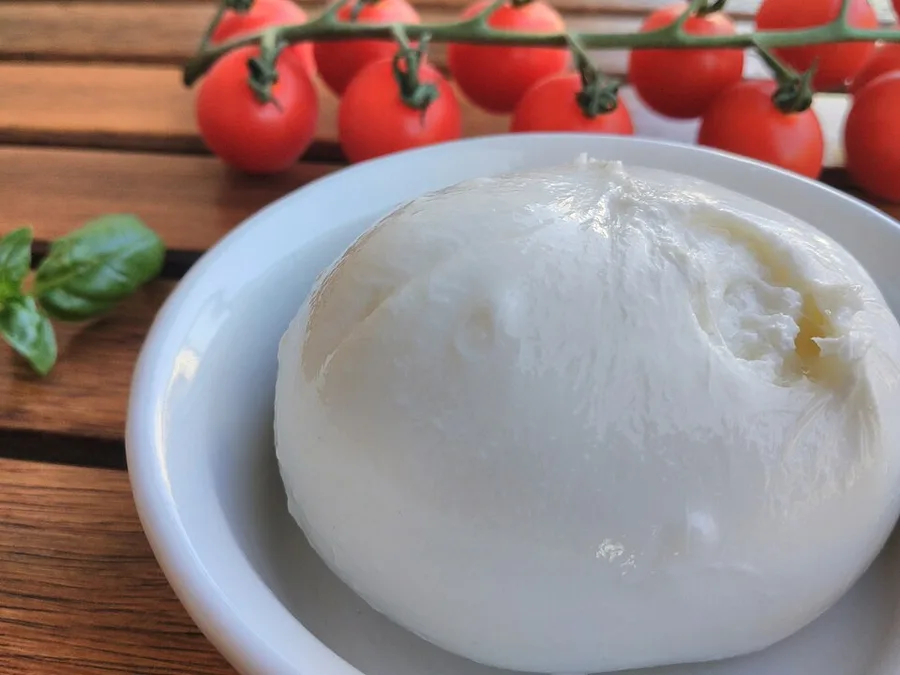
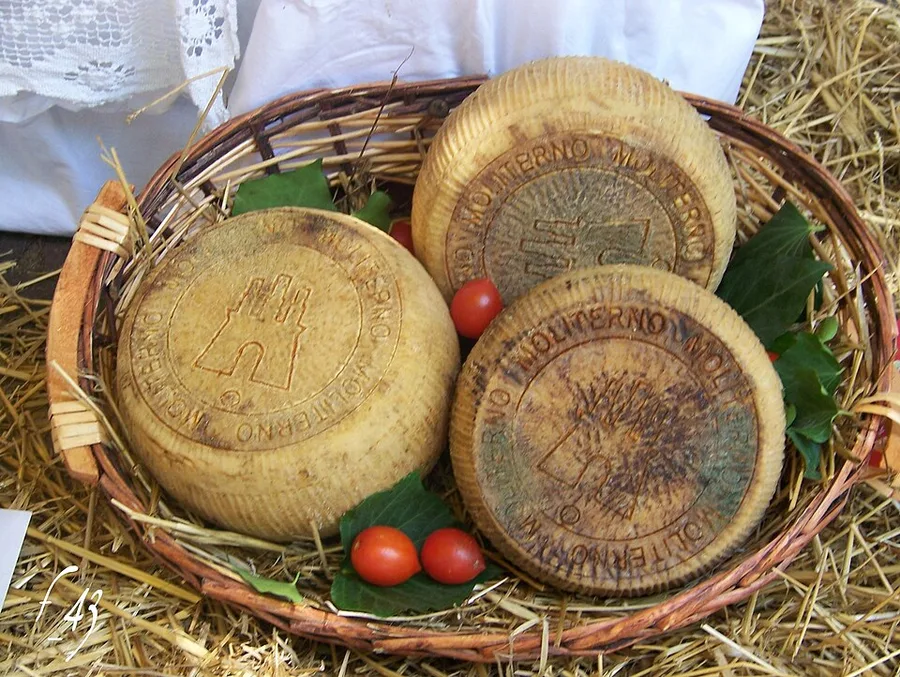
Milk comes later, and always as stretched curd: burrata, mozzarella, canestrato from the Gentile di Puglia sheep aged in rush baskets. Burrata in particular was born in Andria in the nineteen twenties to use up the trimmings of spinning: a pouch of stretched curd filled with stracciatella and cream. It was not conceived as a luxury cheese; it became one.
 Nikotota · CC BY-SA 4.0
puglia · 3.5-5 €/kg
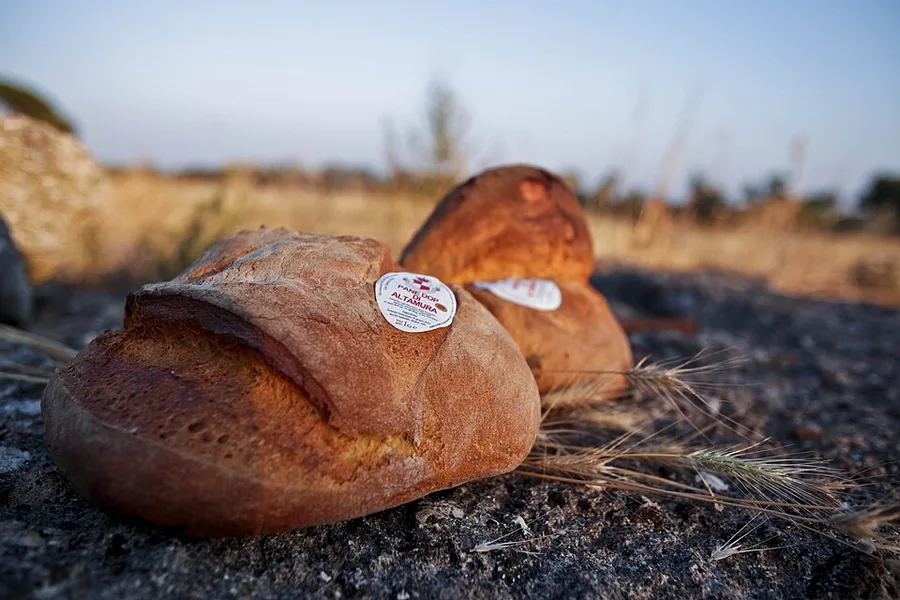
Only re-milled durum semolina from the Murgia, natural leaven, water and salt, baked in a wood oven. It weighs at least half a kilo, is DOP, and the thick crust is what kept it a week in shepherds' houses.
 Original uploader was Signorealex at it.wikipedia · Public domain
puglia · 5-9 €/kg
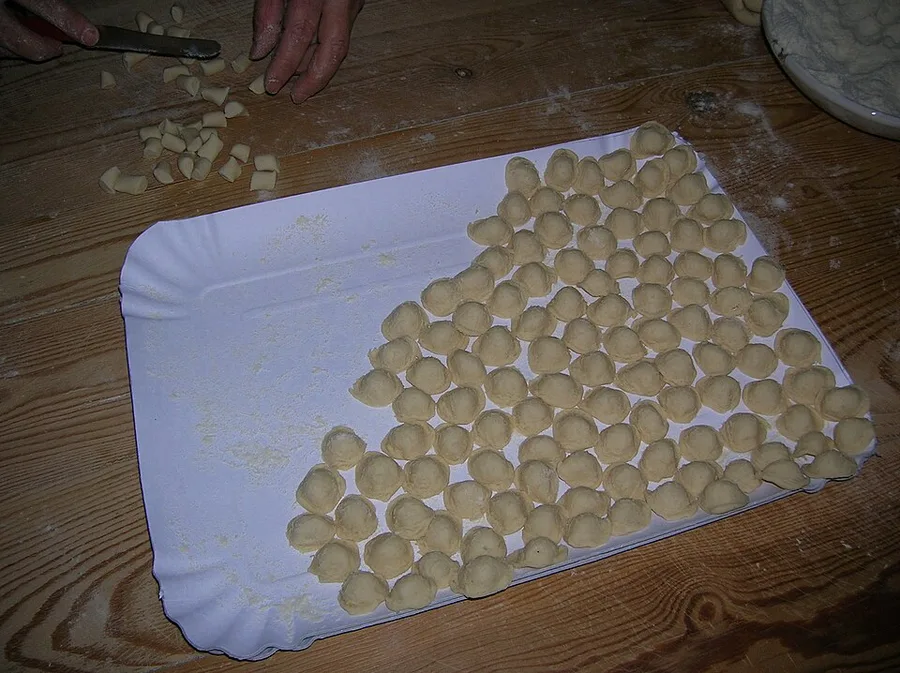
Semolina and water only: a concave disc with a thin centre and a thick rim, made by dragging a cube of dough with a knife and flipping it over the thumb. Two cooking times in one piece of pasta.
 Haragayato · Public domain03
Taralli
puglia · 8-14 €/kg
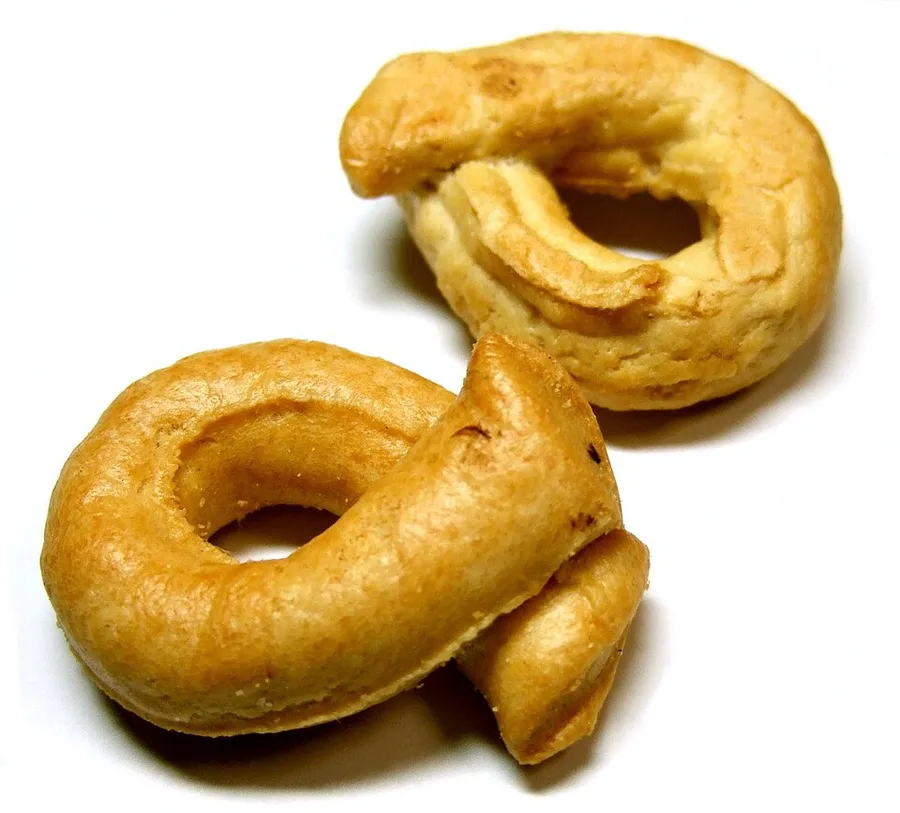
Four ingredients, flour, dry white wine, extra virgin olive oil and salt, blanched in water and then baked. No eggs, no milk, no butter: the snack that keeps for weeks and needs no fridge.
puglia
The round bread of the Salento, baked in a wood oven and made to be split and filled: the classic version contains only flour, water, leaven and salt. It is a container bread, and the compact crumb is there for that.
 Benoît Prieur · CC0
puglia · 6-10 €/kg
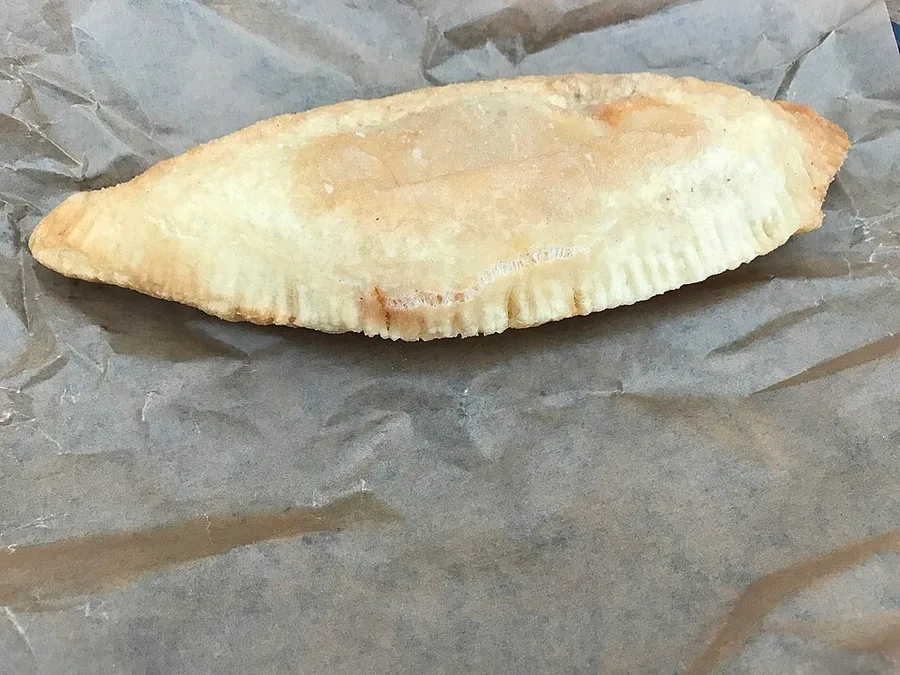
A half-moon of pizza dough filled with tomato and mozzarella, deep-fried. It is not a small calzone: a calzone is baked, and the difference shows on the first bite.
 Popo le Chien · CC0
puglia · 14-20 €/kg
Born in Andria in the nineteen twenties from a by-product: shreds of stretched curd drowned in cream and closed in a pouch of the same cheese. IGP. It is opened as it is served, not before.
 Vini & Sapori · CC BY-SA 2.0
puglia · 14-22 €/kg
A hard pecorino of the Tavoliere, from the Gentile di Puglia sheep, aged in rush baskets that leave the weave printed on the rind. Cooked or semi-cooked paste: which is why it stands up to long ageing.
 AntonioCaso93 · CC BY-SA 4.0
puglia · calabria · 22-35 €/kg
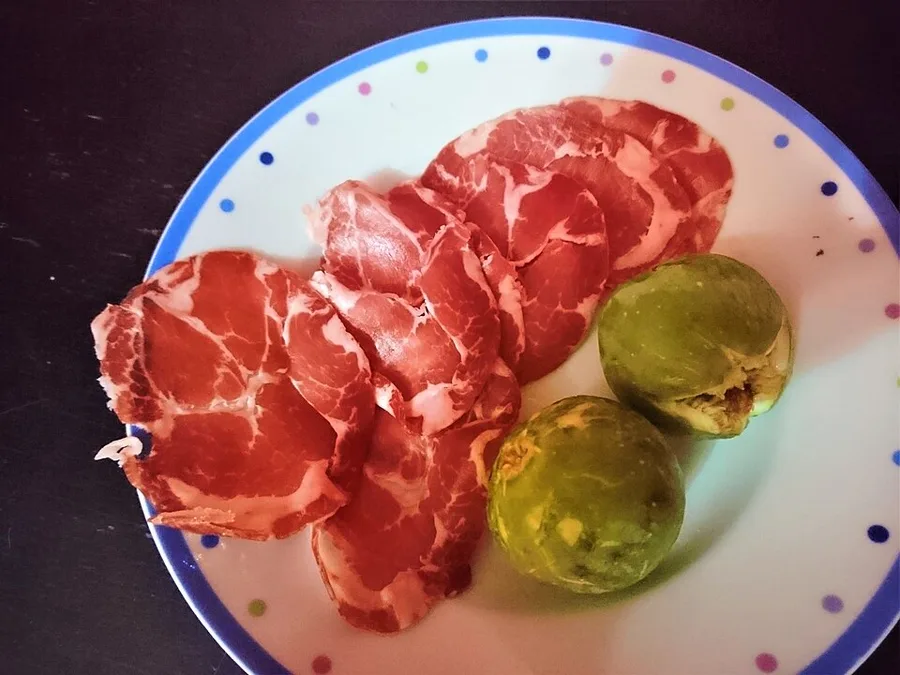
The neck muscle salted whole and cured in casing. In Puglia it takes chilli and sometimes cooked must: the same cut Emilia calls coppa, with another dressing and another result.
 Andy Li · CC0
puglia · 3-6 €/kg
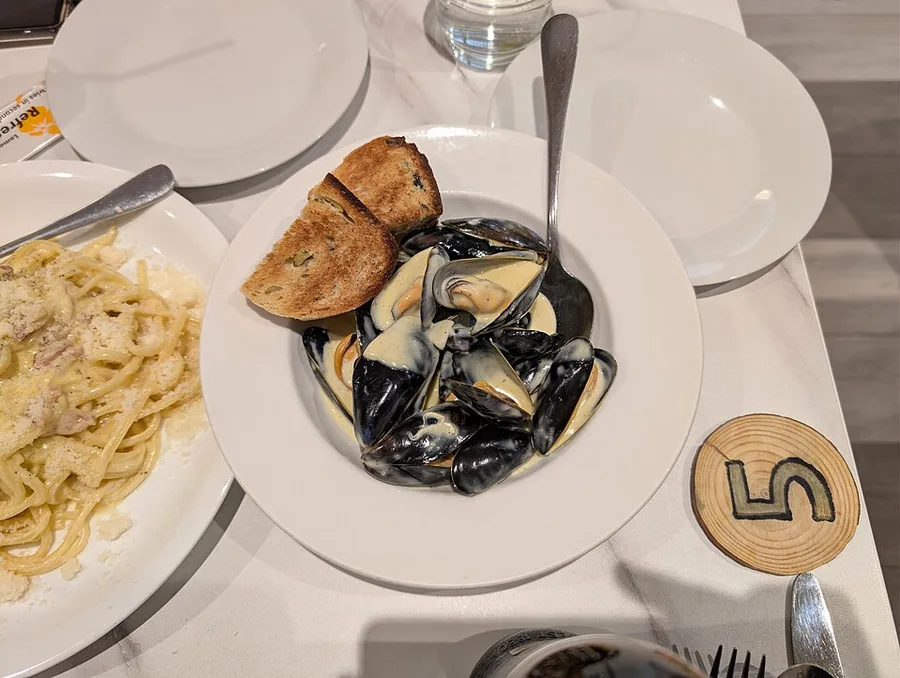
They grow in the Mar Piccolo, a lagoon where freshwater springs, the citri, rise from the bottom. Less salt and more nourishment give a sweeter, fatter mussel than open-sea ones.
 Massimiliano Ruggieri · CC BY-SA 4.0
puglia · 1.5-3 €/kg
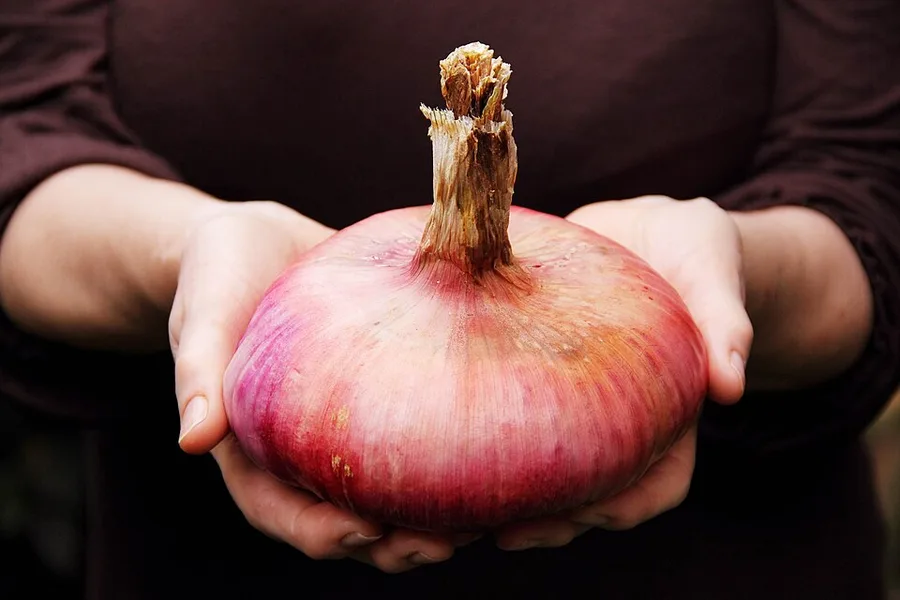
Broad, flattened like a disc, sweet enough to eat raw with salt and oil. It grows on the Murgia near Bari in red earth and is picked between late May and July: the onion of Apulian baked dishes.
puglia · 1 h 15′
An hour and a quarter: pasta and greens in the same pot, anchovies melted in oil, garlic, chilli. The greens go in before the pasta, and the timing is worked backwards from the semolina's cooking.
puglia · 1 h 45′
Potato, mussels and rice layered in a pan and baked, never stirred: the rice goes in raw and cooks in the mussels' liquor. An hour and three quarters, and the amount of liquid cannot be corrected later.
One last thing
Durum semolina behaves differently from soft wheat flour, and in Puglia that explains three things at once. It absorbs more water, so the doughs want more hydration and more time. Its gluten is more tenacious, so pasta of semolina alone holds up in the pot and needs no egg to stay together. And it gives a crust that dries and protects, which is why Altamura bread lasted a week when the oven was lit only once. These are not three traditions: they are one raw material.
The questions this list answers
These are real questions put to an AI assistant, in the period when Bing cited this site among its sources to answer them. The number is how many times we were cited. We read them in Bing Webmaster Tools, under AI performance, and they decide what goes on this page rather than the other way round.
- taralli738 citations
- panzerotto373 citations
- altamura bread135 citations
- Altamura Vodka bread ingredients premium quality535 citations
- Altamura bread characteristics premium quality476 citations
- Altamura bread premium quality characteristics126 citations
- capocollo ham61 citations
- pane di altamura dop27 citations
- altamura vodka bread premium ingredients40 citations
- cotognata590 citations
- ricetta tradizionale orecchiette cime di rapa5 citations
- matera bread24 citations
- capocollo6 citations
Frequently asked questions
What makes Altamura bread different?
Its ingredients and method, fixed by the DOP: only re-milled durum semolina grown in a defined area of the Murgia, natural leaven, water and salt, baking in a wood oven, a minimum weight of half a kilo. The thick crust and the yellow, compact crumb come from that, not from an additive.
Why do orecchiette have no egg?
Because they are pasta of durum semolina and water alone, like almost all hand-made pasta of the south. Semolina gluten is tenacious enough to hold the shape in boiling water without egg, which in northern pastas is there precisely to give structure to a weaker flour.
What is the difference between burrata and mozzarella?
Burrata is a pouch of stretched curd filled with stracciatella and cream: inside it is liquid and creamy. Mozzarella is firm stretched curd, and under that name live both cow's milk fiordilatte and Mozzarella di Bufala Campana DOP. Burrata was created in Andria to use the trimmings of spinning.
Why are Taranto mussels different?
Because of the water of the Mar Piccolo, where freshwater springs called citri rise from the floor of the lagoon. Lower salinity and more nourishment give a sweeter, fatter mussel than those farmed in open sea, and they are recognised traditional products.