Thirteen Italian summer things, with their harvest windows
San Marzano from the thirtieth of July to the thirtieth of September, piennolo in July, Sulmona garlic in late June, Cilento figs from mid-August, hazelnuts from late August, Bitto only from the first of June to the thirtieth of September.
The Italian food summer is the season of narrow windows. The San Marzano tomato DOP is hand-picked from the thirtieth of July to the thirtieth of September, and outside those nine weeks the year's preserve is already made. Bitto can only be produced from the first of June to the thirtieth of September, up on the pastures, because the rules follow the herd rather than the commercial calendar.
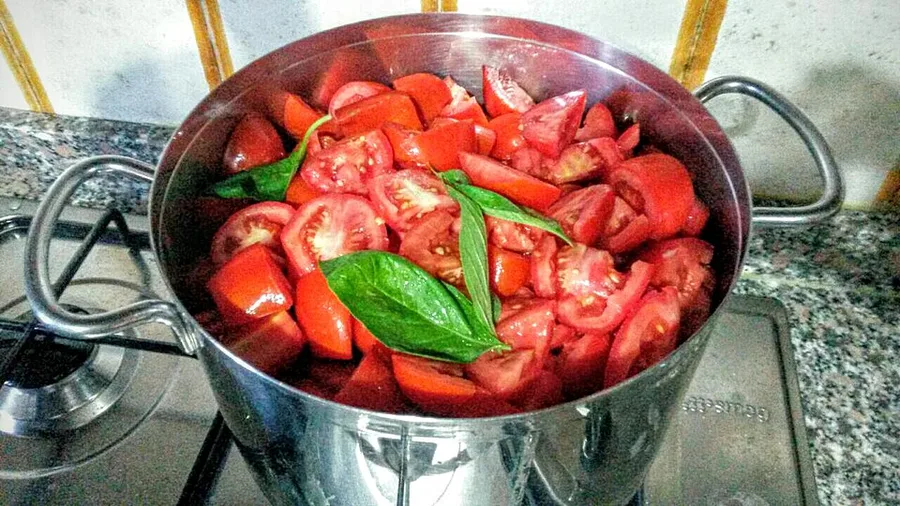
The tomato is the lead and it is not one product. The San Marzano is long, low in water and made for preserving; the piennolo tomato of Vesuvius is small, concentrated, grows on lava ash without irrigation and is hung in bunches that last into winter. Two tomatoes, two uses, and in Campania nobody confuses them.
The other half of summer is nuts and figs. The Langhe hazelnut is gathered between late August and September, and it is not pulled from the tree: you wait for it to fall. The white fig of the Cilento is picked from mid-August to late September and sun-dried on cane racks. The Bronte pistachio, every other year, in July and August.
 Assianir · CC BY-SA 3.0
campania
Hand harvest only, from the thirtieth of July to the thirtieth of September: nine weeks in which a year's preserve is made. A long peeling tomato, thin skinned, few seeds, on volcanic soils between Salerno and Naples.
campania · 6-12 €/kg
Picked in whole bunches in July and hung in the cellar: a thick skin and high acidity keep it good until winter. It grows on the ash of Vesuvius without a drop of water.
 Marica Massaro · CC BY-SA 4.0
abruzzo · 20-30 €/kg
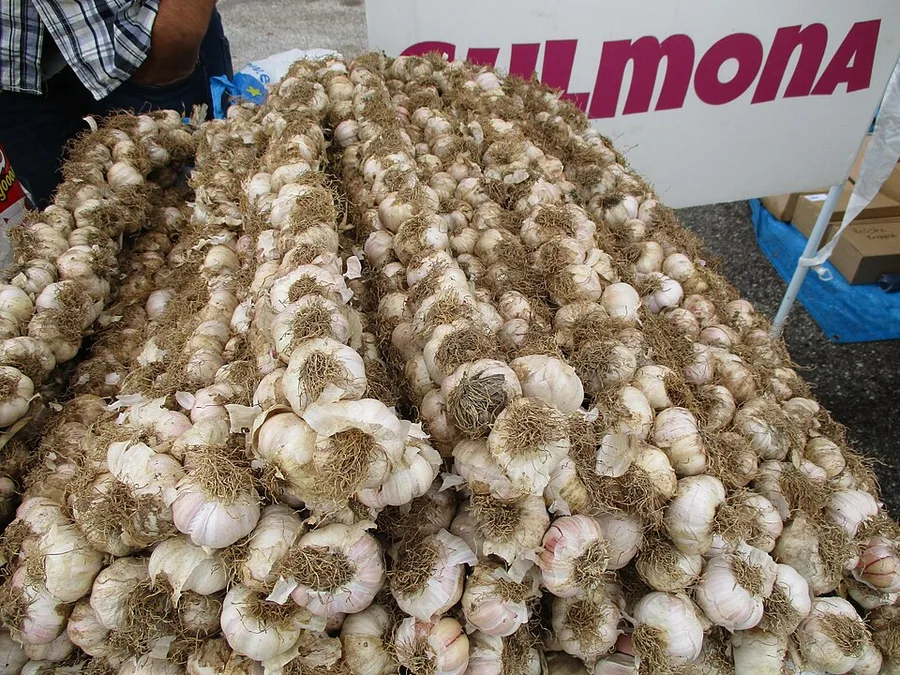
Lifted between late June and mid-July in the Valle Peligna and sold in plaits. A white skin with red cloves underneath, high in essential oils: a dish needs less of it.
 Massimiliano Ruggieri · CC BY-SA 4.0
puglia · 1.5-3 €/kg
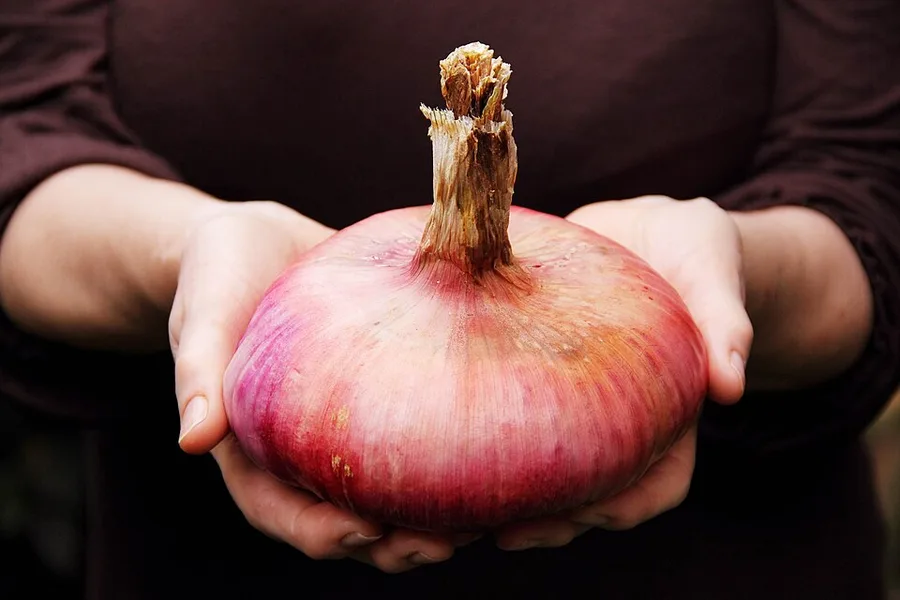
Lifted between late May and July on the Murgia near Bari, in red earth. Broad, flattened like a disc and sweet enough to eat raw with salt and oil: the onion of Apulian baked dishes.
umbria · marche
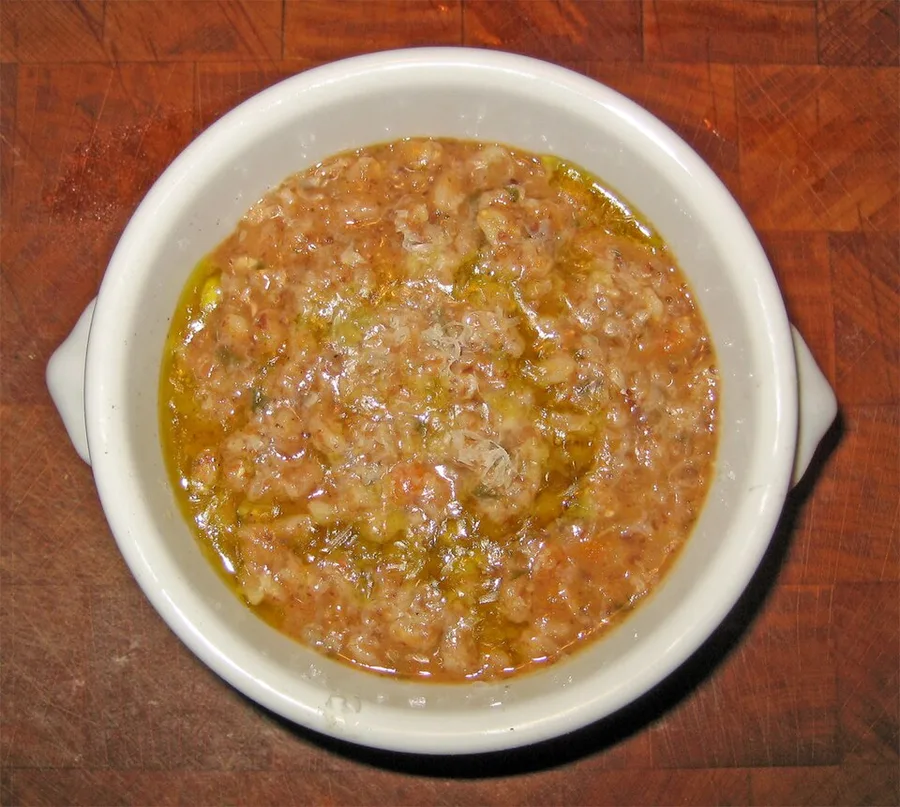
The harvest falls in July, when the plant is completely dry. It is the oldest and most awkward pulse in Italy, and its own page explains the long soak with changes of water it requires.
 fugzu · CC BY 2.0
toscana · 4-8 €/kg
It winters in the field, tillers in spring and ripens in high summer, in a cold, rainy valley above Lucca. It is the grain of winter soups, harvested when the heat is greatest.
 Paolo Galli · CC BY-SA 3.0
sicilia · 25-40 €/kg
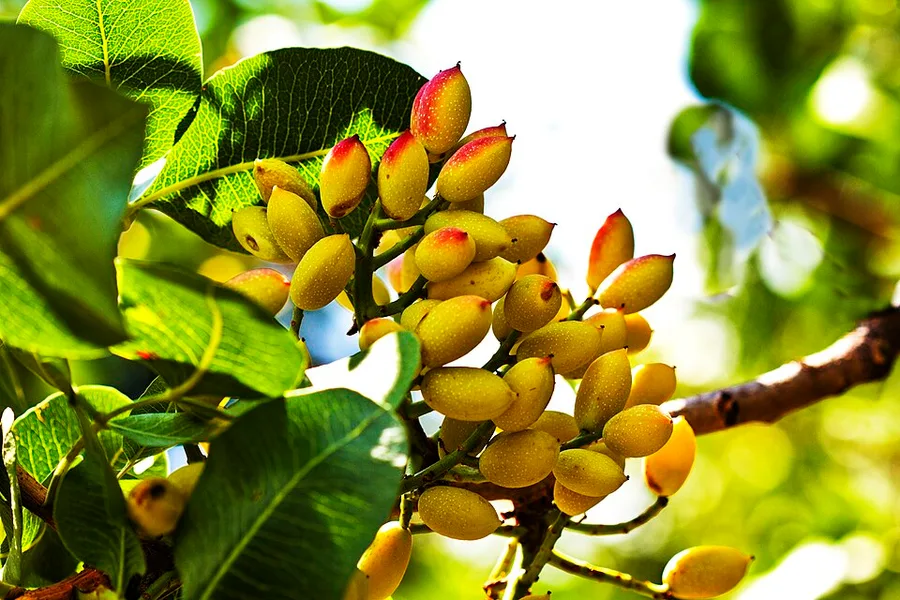
Picked by hand in July and August, every other year, because the tree is rested: real production is half the theoretical figure. It grows on the lava terraces of Etna.
 Bodulinek · CC BY-SA 2.0
campania · 18-28 €/kg
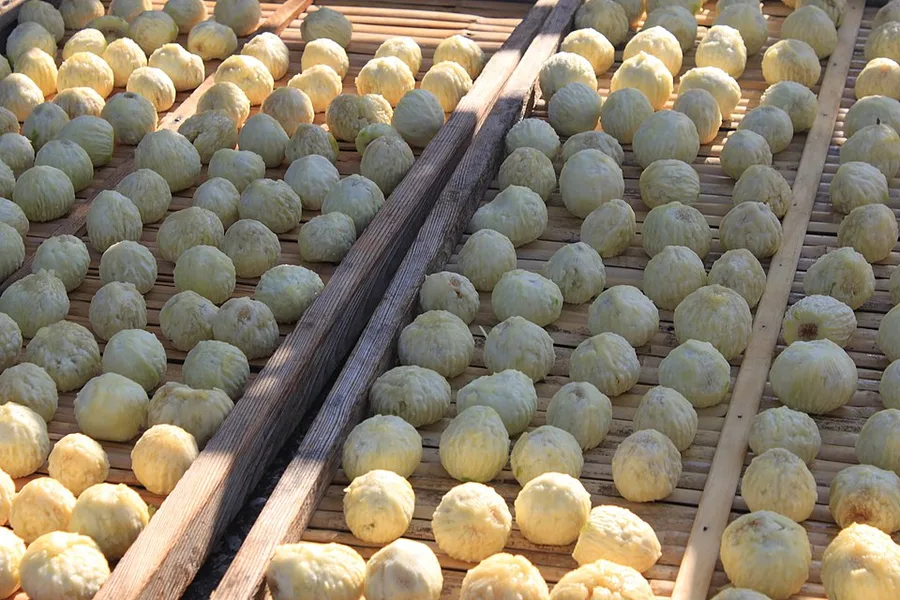
The harvest runs from mid-August to late September, by hand, one fruit at a time, and then the figs are sun-dried on cane racks. They are eaten as they are, stuffed with a walnut, or in chocolate.
 WINELINKITALY - Barbara D'Agapiti · CC BY-SA 2.0
piemonte · 6-10 €/kg
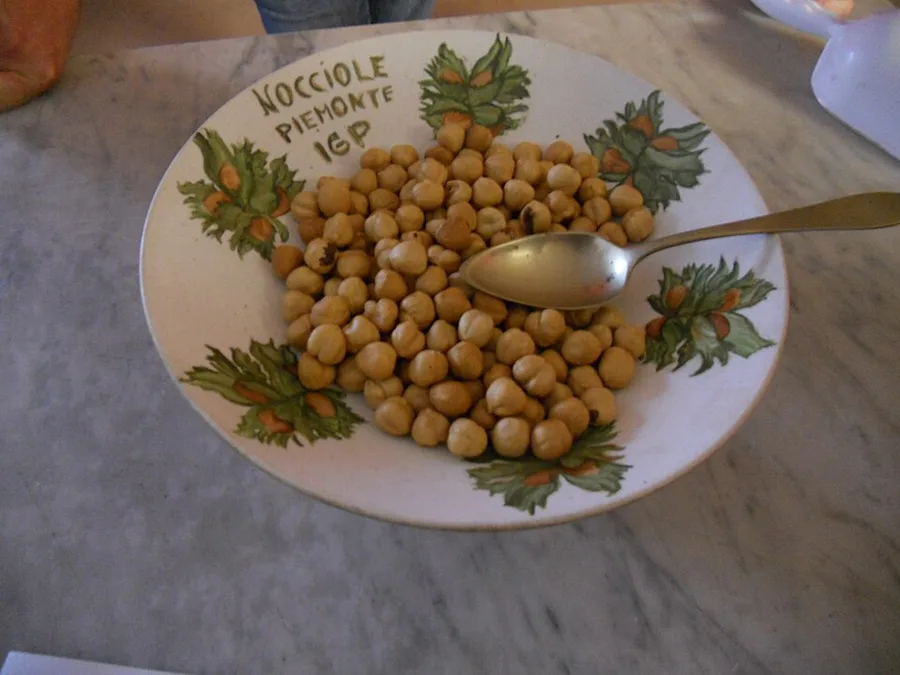
Picked between late August and September under a precise rule: the hazelnut is not pulled from the tree, you wait for it to fall. A single cultivar, the Tonda Gentile Trilobata of the Langhe.
 Andy Li · CC0
puglia · 3-6 €/kg
They can be gathered all year, but the full season runs April to September, peaking between May and August. They grow in the Mar Piccolo, where freshwater springs lower the salinity.
marche · 10-18 €/kg
Wild mussels that grow on the rocks of the Conero and are gathered free-diving, by hand, from May to September. Nobody seeds them and nobody hangs them on ropes: out of season they do not exist.
 Fabio · CC BY 2.0
lombardia · 18-28 €/kg
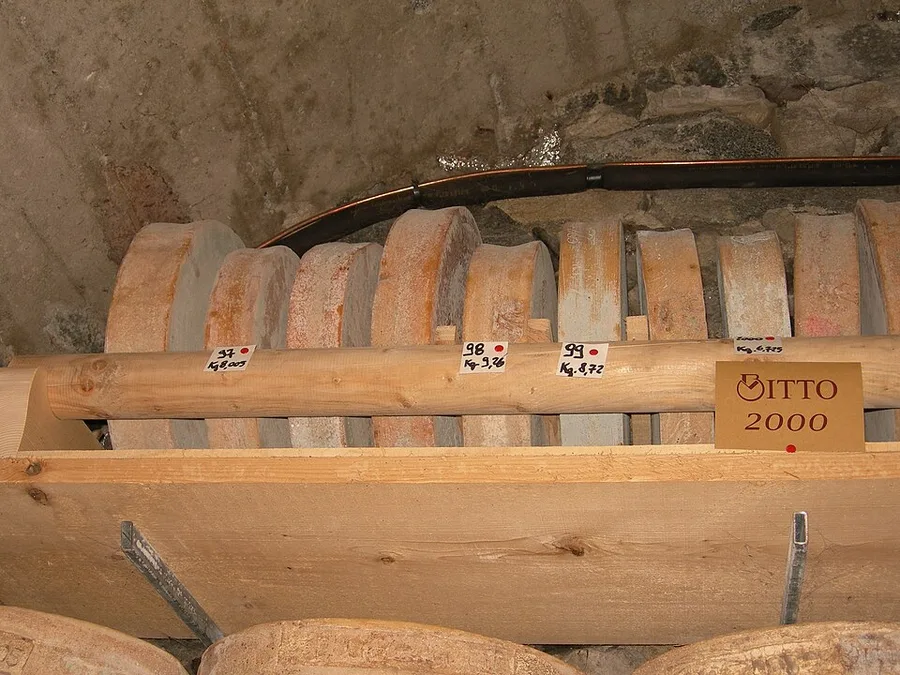
Made only on the high pastures, from the first of June to the thirtieth of September, working the milk straight from the udder in the calècc that follows the herd. At the end of the season the wheels come down to the casera.
 Eli6179 · CC BY-SA 4.013
Granita
sicilia
Made with continuous churning that breaks the crystals: it is not an ice cream and not a sorbet. In Sicily it is breakfast, with a brioche col tuppo, and its season is the one when it is needed.
One last thing
Summer is also the season when the winter shopping gets done, and two products say so better than the rest. The piennolo is picked in July in whole bunches and hung: a thick skin and high acidity keep it until January, and that bunch in the cellar is a preserve without a jar. The peperone crusco of Senise is picked in summer and sun-dried in hanging strings, ready to be fried for two seconds when needed. Both solve the same problem, holding summer until spring, with no glass and no fridge.
The questions this list answers
These are real questions put to an AI assistant, in the period when Bing cited this site among its sources to answer them. The number is how many times we were cited. We read them in Bing Webmaster Tools, under AI performance, and they decide what goes on this page rather than the other way round.
- san marzano tomatoes dop20 citations
- pomodori del piennolo7 citations
- dop san marzano tomatoes12 citations
- bronte pistachio40 citations
- nocciola piemonte igp36 citations
- aglio rosso di sulmona12 citations
- bitto formaggio40 citations
- cipolla rossa6 citations
- cicerchie legumi10 citations
Frequently asked questions
When is the San Marzano tomato harvested?
From the thirtieth of July to the thirtieth of September, by hand only: a narrow window, set because the fruit ripens unevenly and has to be picked at the right point. The whole year's preserve is made in those nine weeks.
Why is Bitto made only in summer?
Because the rules tie it to the high pastures: it may only be produced from the first of June to the thirtieth of September, working the milk straight from the udder in the calècc, the dismountable hut that follows the herd. At the end of the season the wheels come down and age in the casera.
How are hazelnuts harvested?
They are not pulled from the tree: you wait for them to fall, between late August and September, and gather them from the ground. That is why the hazel groves of the Langhe keep the soil beneath the trees cut short and clean.
Is the Bronte pistachio available every year?
The harvest is biennial: the tree is rested one year and produces the next, in July and August. The product stays available all year because it keeps, but the quantity harvested is half the theoretical figure, and the price reflects it.