Salento: where to eat and stay
The tip of the heel, with two seas, the baroque of Lecce and a cuisine of durum wheat, pulses and frying built on scarcity. In the last ten years a bacterium has killed millions of olive trees and changed the landscape: anyone describing the Salento without saying so is selling an old postcard.
The Salento is the peninsula that closes Italy, on average forty kilometres wide, with the Ionian on one side and the Adriatic on the other and no high ground worth the name: the Serre hills barely pass two hundred metres. Administratively it is the province of Lecce plus the southern parts of Brindisi and Taranto. It is a limestone plain with little surface water, a great deal of wind, and a surprising density of villages: the municipalities are very close together, and every five kilometres the dialect, the sauce recipe and the patron saint change.
History has left readable layers. The Messapians before the Romans, the Byzantines for five centuries, then the Normans, the Angevins, the Spanish. From that long Greek phase comes the Grecìa Salentina, nine municipalities around Martano, Calimera, Sternatia and Melpignano where griko, a dialect of Greek origin, was spoken until yesterday and survives today among a few hundred elderly speakers and in a lot of bilingual signage. Lecce is the provincial capital and has the most coherent baroque centre in the South, built of a soft stone that cuts like cheese and turns golden with the years.
On the scale of tourism it is best to be clear. In twenty years the Salento has gone from a minor destination to one of the most crowded summer places in Italy, and it is concentrated in six weeks: from mid-July to the end of August the coast is saturated, Gallipoli is a night market of beach clubs and discos, prices triple and the average quality of coastal restaurants collapses, because the customer passes once and does not come back. In the other ten months it is a quiet territory, with empty villages, deserted sea and normal prices. Anyone who can choose should come in May, in June or from mid-September: the water in September is warmer than in June.
How people eat here
Salento cooking is durum wheat, vegetables, pulses and oil, with meat kept for feast days and fish a matter only for those who lived on the coast. Frying is everywhere because it was the way to make substantial what was not. Pasta is made at home with semolina and water: orecchiette, called stacchiodde here, and above all sagne 'ncannulate, long strips wound into a spiral, dressed with tomato and ricotta forte. Ricotta forte, or ricotta schianta, is ricotta left to ferment for months and stirred: sharp, aggressive, with a smell that divides people, and it is the ingredient that marks out a Salento table more than any other.
Two dishes tell the rest. Ciceri e tria is chickpeas with pasta, where part of the pasta is boiled and part fried in oil until crisp, and both textures end up in the same bowl: the name of the pasta comes from the Arabic itriyya, the first documented word for dried pasta, which tells you how old the dish is. It is traditionally eaten on the nineteenth of March. Pittule are balls of very wet leavened dough fried in hot oil, plain or holding cauliflower, salt cod, olives or tomato: they are made for the eve of the Immacolata on the eighth of December, though now they are found all year. Beside them are white broad beans cooked to a purée with wild chicory, pitta di patate, puccia with olives, the friseddha of wheat or barley that is moistened and dressed with tomato and oil, and horse meat pezzetti cooked for hours in a spicy sauce, which in Lecce is eaten in a trattoria the way Milan eats a cutlet.
From the sea, the most characteristic thing is scapece gallipolina: small fish fried and then layered in wooden tubs with breadcrumbs soaked in vinegar and coloured with saffron, which preserves it and dyes it bright yellow. It is sold by weight from carts, eaten cold, and it is one of the few Italian street foods surviving in its original form. For the rest: octopus, black mussels, sea urchins in spring when the harvest is allowed, and a lot of frying. On fish one realistic note is due: much of what is served on the coast in summer was not caught there, and octopus in particular almost always arrives frozen from other oceans. That is not a problem in itself; it becomes one when the price is that of the local catch.
The sweet is the pasticciotto: shortcrust made with lard, filled with custard, baked in small oval tins and eaten warm at breakfast. It was born at Galatina, where local tradition credits an eighteenth-century pastry cook, and the version with a sour cherry at the bottom has another name. It should be eaten straight from the oven: the cold pasticciotto in a seafront bar is a different product. On wine, the Salento is the land of Negroamaro and Primitivo. Negroamaro is the historic grape of the villages around Lecce and Brindisi and underpins the denominations of Salice Salentino, Copertino and Squinzano; bottled Italian rosé was also born here, in the 1940s, and Negroamaro rosé remains one of the best and most underrated in Italy. Primitivo di Manduria belongs instead to the Taranto area, has high alcohol and a naturally sweet version with its own guaranteed denomination. To grasp the historic scale, one fact helps: until a few decades ago almost all this wine left in bulk for northern Italy and France to strengthen weaker wines. Bottling under its own name is a recent achievement.
And then there is the oil, which is the painful chapter. The Salento was covered with centuries-old and thousand-year-old olive trees, enormous things with hollow trunks, which made the landscape and produced a great deal. Since 2013, when it was identified at Gallipoli, Xylella fastidiosa has killed millions of trees moving up the peninsula: whole municipalities in the lower Salento now have fields of grey skeletons, and the province's olive output has collapsed. It was an agricultural, landscape and economic catastrophe, made worse by years of denial, litigation and delays in felling. Anyone arriving today sees it at once, and no guide should avoid saying so. Rebuilding is under way with replanting of tolerant varieties, and the mills that remain work largely with olives bought elsewhere. So: extra virgin oil sold in the Salento is not automatically Salento oil, and asking where the olives come from is a serious question rather than pedantry.
Working farms that take guests
Real places in this territory, checked one by one on their own site. What you read is what they state: the editorial visit has not happened yet, and when it does we will say so.
L'Astore Masseria
Cutrofiano (LE)Eighty hectares of vineyard, olive grove and arable land belonging to the Benegiamo family, with Negroamaro, Primitivo, Malvasia nera, old Malvasia bianca and Susumaniello under organic certification. Rooms in the old masseria, with an eighteenth-century underground mill and a sunken barrel cellar open to visitors.
lastoremasseria.itMasseria Stali
Caprarica di Lecce (LE)About three hundred hectares under certified organic management since 1996, with olives, vines, cereals and vegetables, and its own mill, cellar and flour mill. Twenty rooms and a restaurant open to non-residents.
masseriastali.itAgriturismo Masseria Saittole
Carpignano Salentino (LE)Fifteen hectares entirely under olives, more than six thousand Leccino and Favolosa trees, farmed organically since 1992. Rooms in the old part of the masseria.
masseriasaittole.comAgriturismo Le Creste
Otranto (LE)An organic masseria with its own dairy: mozzarella, burrata, giuncata, ricotta, fresh and aged cheeses, caciocavallo and ricotta forte. Rooms and apartments, plus a restaurant of Salento cooking.
agriturismolecreste.itThe foods of this territory
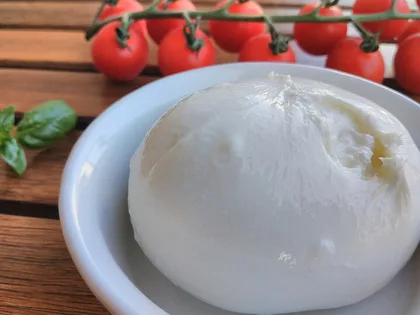 IGPBurrataIt began as a way of using offcuts: leftover shreds of pasta filata, drowned in cream and…
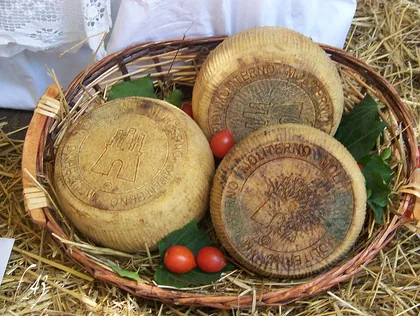 DOPCanestrato PuglieseCanestrato Pugliese DOP is a hard sheep's milk cheese from the Tavoliere plain of northern…
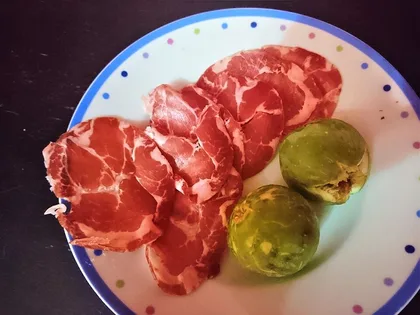 FoodCapocolloCapocollo is the pork neck muscle, salted whole and aged in casing.
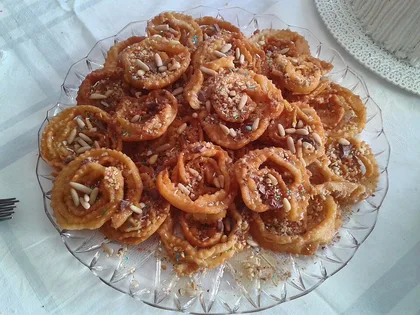 PATCartellatePaper-thin ribbons of dough, pinched into pockets and wound into roses, deep-fried and…
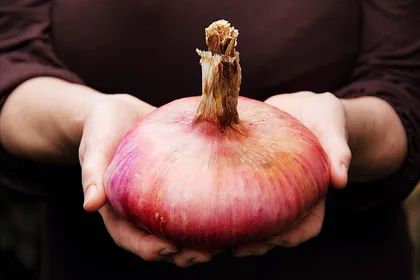 FoodAcquaviva Red OnionThe Acquaviva red onion is wide, flat as a discus and sweet enough to eat raw in thick…
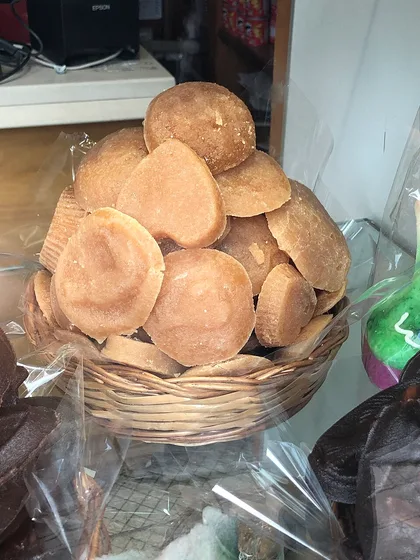 FoodCotognata (Quince Paste)Cotognata is quince pulp cooked with sugar and then air-dried for days in moulds until it…
What to do here
The two coasts should be treated as two different things. The Ionian, from Porto Cesareo to Santa Maria di Leuca, has pale sand, shallow water and a sea that turns warm in summer: it is the side of families and crowds, with Gallipoli and Porto Cesareo as the most intense poles. The Adriatic, from Otranto to Leuca, is rock, with cliffs, caves and cold water even in August: it is more beautiful and less convenient, and the stretch between Castro and Santa Cesarea Terme is the best part. In between are Otranto, whose cathedral holds a medieval floor mosaic that is among the most extraordinary things in the South, and the coast of Torre dell'Orso and Roca.
The underground oil mills are the most specific visit in the territory. They are mills cut into the limestone below ground level, used from the sixteenth to the nineteenth century because the steady temperature helped the yield; there are dozens, mostly in the lower Salento, and some can be visited at Presicce, Gallipoli, Vernole and Morciano. Many are privately owned and open only on request or on fixed days, so calling ahead is essential. The oil that came out of those caves for two centuries was not for the table: it was lamp oil, shipped to Venice, Amsterdam and London to light the cities. That is the real economic history of the Salento, and the mills explain it better than any museum.
On food, the things to do are simple: a fresh pasta class at a masseria to understand sagne, shopping at the covered market in Lecce, scapece bought from the cart in old Gallipoli. The cellars of Salice Salentino, Guagnano, Copertino and Manduria receive by appointment and several have proper reception facilities, because wine here is an industry rather than a craft.
At the end of August, at Melpignano, the big Notte della Taranta concert closes a pizzica festival that tours all summer: tens of thousands of people in a field, with traffic and queues, and anyone who wants the folk music without the crowd would do better to look for the village feasts of the preceding days, where the same groups play to two hundred people. On heritage, besides Lecce and Otranto, Acaya with its bastioned walls is worth the trip, along with Galatina and the frescoed basilica of Santa Caterina, and the Byzantine mosaics and crypts scattered through the villages.
The year, month by month
The Salento winter is mild but windy, with the grecale off the Adriatic making it feel much colder than the thermometer says. The seaside is closed, the villages live their normal lives and the trattorie serve pittule, pulses and horse pezzetti. On the eighth of December pittule are fried in every house. It is the season of turnip tops, cabbages and oranges.
March and April bring fresh broad beans, wild chicory and the first days by the sea without swimming. On the nineteenth of March ciceri e tria is eaten at the tables of Saint Joseph, which in some villages are still ritual displays with long tables offered to neighbours. It is the best period to tour the interior and see the underground mills without queues.
May and June are the ideal months: clean empty sea, temperatures between twenty-five and thirty degrees, everything open and prices still reasonable. June brings the first small tomatoes and the first watermelons. The first half of July is still manageable.
From mid-July to the end of August what happens, happens: the coastal population multiplies, Gallipoli becomes a nightlife machine, beach clubs are on booking, the coast roads queue and the restaurants work two or three sittings. Average quality falls because demand exceeds supply. Anyone coming then should sleep inland, at Nardò, Martano, Specchia or Tricase, where you spend half as much and eat better, and go down to the sea early in the morning.
September is the best month of all. The sea is at its warmest, the crowds vanish within the first ten days, and the harvest begins. October and November bring new oil (with all the caution about provenance), the first rain and a territory that goes back to being itself: quiet, with villages empty by nine in the evening and value for money that is unthinkable in summer.
Getting there and getting around
By car you take the A14 to Bari and then the free, fast-moving expressway to Brindisi and Lecce: Bari to Lecce is about two hours. From Lecce southwards you use trunk and provincial roads, with Otranto forty minutes away, Gallipoli forty, Leuca an hour and a half. In August all those times double on the coastal routes.
By train Lecce is the terminus of the Adriatic main line, with direct fast and Intercity services from Milan, Bologna, Rome and Bari. From Lecce the Ferrovie del Sud Est network serves Otranto, Gallipoli, Maglie, Galatina, Nardò and many inland villages: slow trains with irregular frequencies and bus replacements, though in summer there are extra services to the coast. It is not a network to build a whole holiday on, but for moving between Lecce, Otranto and Gallipoli it works.
The airports are Brindisi, forty minutes from Lecce with a direct shuttle, and Bari, two hours. Brindisi is the obvious choice but in summer has high fares and hire cars sold out months ahead: booking the car before the flight is practical advice that saves the holiday.
Without a car the coastal Salento is manageable, the interior much less so. The masserie are out in the country, often kilometres from the village and down white roads, and taxis outside Lecce are rare and expensive. Anyone not driving should choose somewhere inside a village served by the railway.
One last note: in August the coast roads between Gallipoli and Santa Maria al Bagno, and between Otranto and Torre dell'Orso, are congested from ten in the morning to eight at night, with paid parking along the whole coast and enforcement on unauthorised areas. Moving before nine is the only way not to lose hours.
Frequently asked questions
What happened to the olive trees of the Salento?
In 2013 Xylella fastidiosa was identified near Gallipoli, a bacterium carried by an insect vector that blocks the plant's vascular system and causes rapid desiccation of the olive. Since then it has spread north killing millions of trees, many of them centuries or a thousand years old: whole municipalities in the lower Salento now have dead groves, and the province's olive output has collapsed. Managing the emergency was slowed by litigation, resistance to felling and distrust of the scientific diagnosis. Replanting with tolerant varieties is under way, but young trees give back neither the landscape nor the previous yields. It is the most important thing to have happened in this territory in decades.
Is oil bought in the Salento actually Salento oil?
Not necessarily, and it is worth asking. After the collapse in production caused by the desiccation, many local mills also or mainly work olives bought elsewhere, in northern Puglia or outside the region, and bottle them legitimately, indicating the origin on the label as the rules require. An extra virgin sold in a shop in Otranto or Gallipoli can therefore be excellent and have nothing Salentine about it. Anyone who wants genuinely local oil has to buy from estates that name their own groves, accept limited quantities and higher prices, and bear in mind that production of some historic varieties is now residual.
When should you visit the Salento for the sea?
The first half of June and the whole of September. In June the water is still fresh on the Adriatic but already pleasant on the Ionian, the beaches are free, the clubs have just opened and prices have not yet risen. In September the water is at its warmest, numbers collapse after the first ten days and the restaurants go back to working calmly. From mid-July to the end of August the coast is saturated: tripled prices, queueing roads, beach clubs on booking and an average restaurant quality that drops noticeably. Anyone tied to that period should sleep inland and use the sea in the early morning.
What is the difference between Primitivo and Negroamaro?
They are the two red grapes of the Salento and they give very different wines. Primitivo, grown mainly around Manduria in the province of Taranto and on the Murgia, ripens early, accumulates a lot of sugar and gives warm, alcoholic, soft wines with obvious ripe fruit; it also exists in a naturally sweet version with its own guaranteed denomination. Negroamaro is the historic grape of the provinces of Lecce and Brindisi, more tannic, more saline, with a bitter note at the end that gives it its name, and it underpins the denominations of Salice Salentino, Copertino and Squinzano. Negroamaro also gives the Salento rosé, which is the most interesting and least known chapter of local production.