Colli Euganei: where to eat and stay
An archipelago of volcanic cones in the middle of the Padua plain, holding the largest thermal basin in Europe and a sweet wine almost nobody outside the Veneto can name. The food is good, but hotel spa cooking and hill cooking are two worlds that never touch.
The Colli Euganei are a hundred or so volcanic hills rising out of the plain twenty kilometres from Padua, with no mountains around them to prepare you. The highest, Monte Venda, is a little over six hundred metres; many are perfect cones of two hundred. It is not a range but a compact group some fifteen kilometres across: you can drive through all of it in an hour, and that changes how you visit. You do not need a strategic base, you only need to know where to eat. The regional park that protects them dates from 1989, the first created in the Veneto, and it is the reason the trachyte quarries (the grey stone that paves half of Venice) stopped eating the summits.
What confuses arrivals is that two economies coexist here without speaking to each other. To the east, Abano and Montegrotto form the largest thermal basin in Europe: over a hundred hotels, salt-bromine-iodine water surfacing at very high temperatures after an underground journey of decades from the Lessini mountains, mud matured in tanks, a largely German and Austrian clientele, full board. To the west and in the middle (Torreglia, Cinto Euganeo, Vo', Baone, Arquà Petrarca, Galzignano) are the vineyards, the olive groves, the farm restaurants and the trattorie where people from Padua go on Sundays. The two zones are ten minutes apart and have different prices, hours and kitchens. A thermal hotel serves hotel food designed for someone staying twelve days and taking mud treatments in the morning: correct, without edges, often with a diet menu. That is not where you eat the territory.
A few practical notes before setting off. The cellars receive by appointment and are almost all small family businesses: an email the week before is enough and changes the day completely. At weekends the hill osterie fill with people from Padua and Vicenza, so book for lunch too. Arquà Petrarca has restricted traffic and paid parking outside the village, and on an October Sunday it becomes impassable. Finally: this is not a week-long territory unless you are here for the spa. Two or three days are enough to see it properly and eat in it six times.
How people eat here
Euganean cooking is Veneto plain cooking corrected by the hills: butter and lard more than oil, white and farmyard meat, little sea fish and a lot of salt cod, which arrives here by the Venetian route and has nothing to do with the salted cod of the south. The territory's signature, though, is a cured meat: Prosciutto Veneto Berico-Euganeo DOP, aged at Montagnana on the plain south of the hills. It is a very small protected name with very few producers inside the rulebook, and you look for it by the brand burned into the skin with the lion of Saint Mark: without that mark it is a different ham, possibly good, but not that one. The salting is light and the ageing around a year: the result is sweet, soft, far less salty than a San Daniele and a world away from a Tuscan. It is eaten with white bread and nothing else. Anyone serving it with melon or mostarda is working for passing trade.
At table the backbone is this: bigoli extruded through a press, thick and porous, dressed with duck or with sardines on lean days; risotto with bisi, the peas that have always been grown around Baone and Arquà and that arrive fresh for two weeks in May and then stop; the crested Padovana hen and its Polverara cousin, breeds brought back from near extinction, boiled, stewed or in broth; oca in onto, goose preserved under its own fat, a memory of an area that had Jewish communities and raised geese instead of pigs; bollito with pearà, the sauce of bread, marrow and pepper that is Veronese by birth but is made in half the trattorie here. In spring come the field herbs: bruscandoli, wild hop shoots, and carletti. In autumn the chestnuts of Teolo and Galzignano. The hills' extra virgin oil exists, sits inside a Veneto protected name and is scarce and expensive: almost all of it is sold on the spot, and you will barely find it in a Padua wine shop.
Then there are the two things worth coming for specifically. The first are the jujubes of Arquà Petrarca: small fruit, dark red skin, flesh that goes from crisp and faintly apple-like to mealy and almost date-like as it withers. They are picked in early October and last a very short time. Brodo di giuggiole is neither a broth nor a soup: it is a thick syrup made by cooking jujubes at length with grapes, quinces and sometimes a little wine, drunk at the end of a meal or poured over puddings. The Italian expression for bliss comes from exactly there. Beware, though: during the October festival half the little bottles on sale are industrial preparations with flavouring, and the way to tell is to ask who made it and see whether they can answer. The second is Fior d'Arancio Colli Euganei DOCG, from yellow Moscato, promoted to guaranteed denomination in 2011: it exists in three versions (sweet sparkling, passito and dry still) and what circulates in bars is almost only the first. The passito is the serious one, made from dried grapes, and it is the wine for jujubes and aged cheese. The rest of the denomination is less known and more useful at the table: Serprino, lightly sparkling and saline, which works on bigoli better than any still white, and the Bordeaux reds (Cabernet, Merlot, Carmenère) planted here from the early nineteenth century and therefore anything but a recent fashion.
Working farms that take guests
Real places in this territory, checked one by one on their own site. What you read is what they state: the editorial visit has not happened yet, and when it does we will say so.
Podere Villa Alessi
Cinto Euganeo (PD)An estate in the Valle di Faedo producing wine, extra virgin oil, vinegar, jams and honey. Four rooms, meals at weekends and a teaching farm recognised by the Veneto region.
villalessi.itLe Volpi & Monte Fasolo
Baone (PD)A farm on via Gemola bottling Cabernet, Prosecco Brut and sparkling Fior d'Arancio. Bed and breakfast in rooms converted from the farm buildings, with a wine shop for tastings.
levolpiwinerelais.itQuota 101
Arquà Petrarca (PD)An organic cellar based at Torreglia: Serprino, Manzoni bianco, Garganega, Merlot, Cabernet, Fior d'Arancio and extra virgin oil. Accommodation is four apartments in the old centre of Arquà Petrarca, with a cellar tasting instead of breakfast.
quota101.comAgriturismo Il Castagneto
Vo' (PD)An organic farm at the foot of Monte della Madonna, inside the Colli Euganei regional park, with a kitchen garden, orchard and farmyard animals. Accommodation in apartments converted from the old farm buildings.
agriturismoilcastagneto.itThe foods of this territory
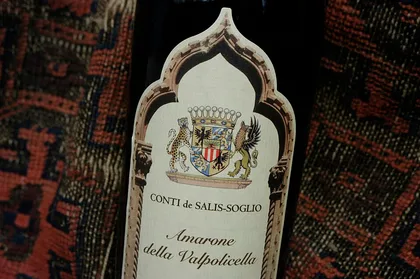 DOPAmarone della ValpolicellaAmarone is made from Corvina, Corvinone and Rondinella dried on racks for 100 to 120 days…
 DOPAsiagoOne name covers two cheeses nobody would mistake for each other at the counter.
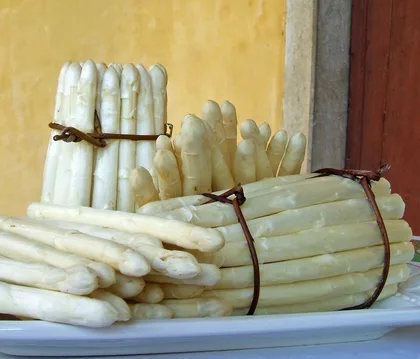 DOPBassano White AsparagusBassano white asparagus is white because it never sees daylight: the spear grows inside a…
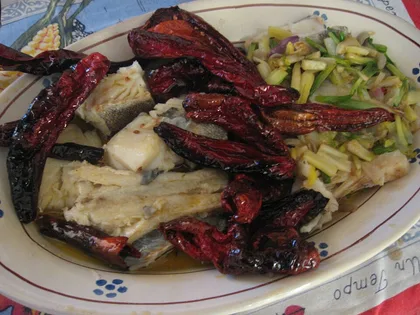 FoodBaccalàBaccalà is North Atlantic cod preserved in salt. It is not the same thing as stoccafisso…
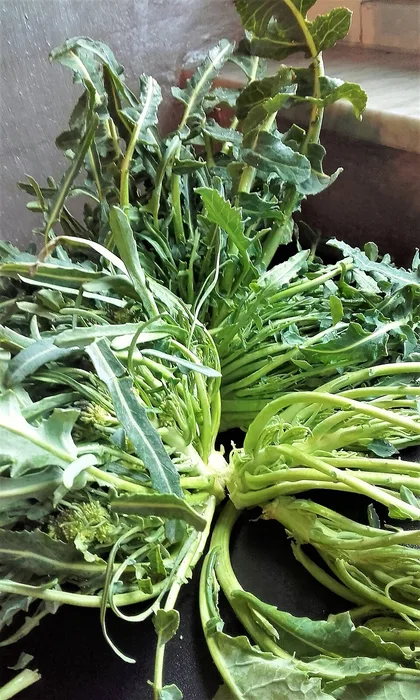 FoodFiolaro BroccoliFiolaro broccoli is not grown for its head but for the fioi, the side shoots that sprout…
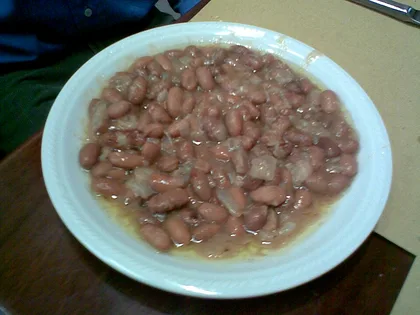 IGPLamon BeansLamon beans are mountain-grown borlotti with a skin so thin it disappears in the mouth and…
What to do here
The cellars are the main activity and all work the same way: you write, you agree a time, you are received by a member of the owner's family. The classic circuit takes in Vo', Baone and Cinto Euganeo, three villages half an hour apart. One unromantic tip: always ask whether the board of food accompanying the tasting is made of the estate's own produce or bought in, because in several cases it is the second, and knowing the difference changes what you are willing to pay.
The spas need explaining because the system is not intuitive. The real treatment (mud matured in a tank, application, thermal bath, sweating reaction, massage) is a medical protocol lasting several days that the hotels sell in weekly packages, often with a doctor's assessment on arrival and partly covered by the health service. Anyone with two days instead buys a day pass to the thermal pools, which is another thing: pleasant, but it is a warm pool. It is worth knowing before booking, because the price difference describes exactly that difference in content.
On foot the territory is harder than it looks. The path up Monte Venda starts at Teolo and Galzignano and reaches the top in a little over two hours, where the ruins of a monastery and the military antennas remain; Monte Rusta and Monte Cinto have shorter routes and similar views. By bike the loop of the hills can be done in a day, but it has ramps over ten per cent and some stretches on busy provincial roads: it is not a family route, and anyone selling it as one has not ridden it.
Of the things to see, three really hold up. Villa dei Vescovi at Luvigliano di Torreglia, sixteenth century and in the care of the FAI, is the finest architecture in the hills and has a loggia from which you understand the geography of the place in ten seconds. The baroque garden of Valsanzibio, with its box maze and water tricks, is seventeenth century and privately owned, so ticketed with strict hours. The museum of river navigation at Battaglia Terme tells the story of the canals that linked these hills to Venice, and is run by former bargemen: it is the least touristic and the most informative place in the area. At Arquà Petrarca the poet's house is ticketed, but the village is walked in twenty minutes and on an October Sunday it is full beyond endurance.
The year, month by month
January and February are the void: damp cold, many hill trattorie closed for holidays, while the spas work because the northern European clientele comes precisely in winter. On the table there are radicchio, cabbages, boiled meats and the previous season's ham just released. It is the period with the lowest prices and the narrowest choice.
March and April reopen everything. The asparagus of the lower Padua plain arrives, and the bruscandoli, which last three weeks and are found almost only in osterie with someone who goes out to pick them. It is also the best time to walk: the hills are green, the mugginess has not arrived and neither have the plain's mosquitoes.
May is the month of the Baone and Arquà peas, with the very short window described above, and late spring is when Montagnana celebrates its ham with days of stalls and carving in the square: a good moment to buy, a poor one to lunch in peace. June, July and August are hot and humid on the plain and slightly more breathable on the hills; the spas are half empty and cheaper, the evening village festivals multiply and are often the most direct way to eat goose, guinea fowl and bigoli without pretension.
September brings the harvest, with the yellow Moscato destined for passito picked among the last. October is the best month of all: jujubes at Arquà with the festival taking the first Sunday, chestnuts at Teolo and Galzignano, the right temperatures. November and December mean new oil (little of it, to be bought at the mill), mushrooms, low fog that the hills poke through halfway up, and the thermal hotels full again.
Getting there and getting around
By car it is easy: the A13 Padua to Bologna runs along the eastern flank of the hills, with the Terme Euganee and Monselice exits feeding Abano-Montegrotto and the southern part respectively. From Milan or Venice you take the A4 to Padua and then the ring road. Internal distances are tiny (Abano to Arquà is twenty-five minutes) but the hill roads are narrow and winding, and unlit in the evening.
By train the Padua to Bologna line stops at Terme Euganee-Abano-Montegrotto, Battaglia Terme and Monselice; from Monselice the line to Mantua serves Este and Montagnana. These are real stations with frequent services, and it is entirely possible to arrive here without a car. The problem starts afterwards: the cellars and farms sit among the vineyards, the country buses run on school frequencies and on Sundays are almost absent. Anyone arriving by train who wants to tour the hills should budget for a hire car or a bike.
The useful airports are Venice Marco Polo at about seventy kilometres, with a direct bus to Padua, and Treviso at eighty; Verona and Bologna are around a hundred and are real alternatives if the flight is cheaper. From Padua station buses run to Abano and Montegrotto about every twenty minutes, and that is how most of the spa clientele arrives.
One last practical note: at Arquà Petrarca the centre is a restricted traffic zone and the car parks outside the walls are paid and fill by eleven on autumn weekends. At Montagnana you park outside the walled circuit, which is among the best preserved in Europe and has to be walked anyway.
Frequently asked questions
What exactly is brodo di giuggiole?
It is not a broth: it is a thick, sweet syrup made by cooking the jujubes of Arquà Petrarca at length with grapes, quinces and sometimes a little wine, reducing it to a liqueur-like consistency. It is drunk at the end of a meal in small glasses or poured over ice cream and dry biscuits. The Italian expression for bliss comes from it. The jujubes are picked in early October and artisan production is limited: during the village festival industrial flavoured versions also circulate, so buy from someone who can tell you which orchard the fruit grew in.
Better to sleep at the spa or up in the hills?
It depends what you are here for, and the two are not interchangeable. The hotels of Abano and Montegrotto have thermal pools, mud protocols and half board included, and are the right choice if the treatment is the reason for the trip: the food, though, is hotel food designed for long stays and diets. The farm stays and inns of the hills (Cinto, Vo', Baone, Torreglia, Arquà) generally cost less, have few rooms and serve the cooking of the place, but have neither spa nor medical services. Many people solve it by sleeping in the hills and buying a day pass to the thermal pools.
Is Fior d'Arancio only a sweet wine?
No, although that is what you find most easily. Colli Euganei Fior d'Arancio DOCG is made from yellow Moscato and the rulebook provides for three types: the sweet sparkling, the most common and the one served in bars; the passito, from dried grapes, more concentrated and the most interesting with aged cheese and jujube sweets; and a dry still version, much less made, aromatic on the nose but dry in the mouth, which surprises anyone expecting sweetness. To understand the denomination it is worth tasting all three at a cellar.
How many days do you need for the Colli Euganei?
Two or three are enough to tour the area calmly, visit two cellars, climb a summit, see Arquà and Montagnana and eat well several times. The area is compact, internal transfers almost never exceed half an hour, and there is no risk of having to choose between distant zones. The sum changes only for anyone coming for the spa: mud cycles run over one or two weeks, and in that case the hills become the activity of the free afternoons rather than the reason for the trip.