Alta Langa: where to eat and stay
The hills above the Barolo Langhe: higher, colder, poorer, with no great reds and no luxury hotels. There are hazelnuts, goat and sheep cheeses, a classic-method sparkling wine that carries the area's name, and villages of two hundred people where the season lasts three months.
The Alta Langa begins where the lower Langa stops being photogenic. Past Serravalle coming up from Alba, or Bossolasco arriving from Dogliani, the hills rise above six hundred metres, the vineyards disappear, chestnut woods and hazelnut groves begin, and the villages turn very small. Mombarcaro, the highest point of the Langhe at almost nine hundred metres, has a few dozen inhabitants. Cortemilia, the main town of the hazelnut country, has fewer than two thousand. That is the essential geography, and it is also the economic history: there was never any income from great wine here, and for a century and a half people left.
The difference from the Barolo Langa should be stated plainly, because it is what matters most to anyone planning a trip. Thirty kilometres from here, between La Morra, Barolo and Serralunga, the landscape is a UNESCO site, a hectare of vineyard costs millions, the hotels have pools and a room in October costs two hundred euro. In the Alta Langa the same nights cost half or less, the restaurants are village osterie, and from mid-November to March half the places close. It is not the cheap version of the Langhe: it is another territory, with other products, and anyone coming expecting Barolo and truffles at low prices will be disappointed. Anyone coming for hazelnuts, cheese, woods and silence finds exactly that.
Literature described this place better than any guidebook. Beppe Fenoglio set the story of a sharecropping family that does not make it in these villages, and his title, the dialect word for destitution, is what the inhabitants called their own condition. Cesare Pavese was from Santo Stefano Belbo, on the Moscato side. Anyone who reads one of the two before coming understands the abandoned stone houses along the ridge roads better.
How people eat here
Alta Langa cooking is the same as the rest of the Langhe in structure (meat, butter, eggs, little oil) but with less abundance and more cheese. The run of antipasti is here too: raw beef chopped with a knife, vitello tonnato with egg sauce, Russian salad, tomini elettrici, anchovies in green sauce. The tajarin are thin ribbons with many yolks, the agnolotti al plin are pinched by hand. The difference is in the main courses, where instead of Nebbiolo-braised beef you find kid, rabbit, hare in civet, tripe, and boiled meats on occasions. Anchovies have a precise historic role: they were the goods that merchants from these valleys fetched in Liguria and resold across lower Piedmont, and bagna cauda (garlic, desalted anchovies, oil, slow cooking) is the edible residue of that trade. It is eaten from November to February and it is not a dish to have before a social engagement.
On cheese the Alta Langa has two denominations of its own that do not exist in the Barolo Langa. Robiola di Roccaverano DOP is a fresh lactic-set cheese, small and round, made between the Asti and Alessandria Langa around the village that names it. The rulebook requires a minimum share of goat's milk, with the option of adding cow's or sheep's milk, while the version made only with goat's milk from local breeds is the one protected as a Presidium and has to be asked for explicitly. It is eaten very fresh, at two or three days, when it is sharp and milky; aged a few weeks it becomes harder and spicier. The second is Murazzano DOP, which is mainly from the milk of the Langhe sheep, a native breed almost lost and brought back in recent decades: small format, white paste, a mild taste that grows more assertive with the days. Both end up in bruss, the leftover cheese fermented with grappa and stirred for weeks: sharp, spreadable, and hard going at first for anyone who does not know it.
Then there is the hazelnut, the identity product. The variety is the Tonda Gentile Trilobata, grown on these hills for at least a century and a half, and it sits inside the geographical indication protecting the Piedmont hazelnut. The technical qualities genuinely matter: a thin shell, a high yield when cracked, a spherical shape that allows even roasting, and above all a skin that comes away easily. That is why the confectionery industry wants it. At Cortemilia the groves sit on terraces held up by dry stone walls built to win land on steep slopes, an agricultural landscape expensive to maintain and being lost where there is nobody to work it. The hazelnuts are picked between late August and September, now largely with suction machines, and end up in nougat, in tozzetti and above all in the hazelnut cake, which in the local version has very little flour or none and is served with warm zabaione. One commercial warning: world hazelnut consumption vastly exceeds Piedmont's output, which is a tiny fraction of Turkey's, and tourist shops sell products packed in Italy with imported nuts. The wording that counts is the origin of the nut, not of the factory.
On wine, the Alta Langa has an interesting case. The Alta Langa denomination is a classic-method sparkling wine from Pinot noir and Chardonnay, always vintage-dated, with long months on the lees, born from a 1990s project that wanted to bring sparkling bases back to Piedmont after the big houses started buying grapes elsewhere; it became a guaranteed denomination in 2011. The production zone is much wider than the geographical Alta Langa and takes in hills across three provinces. So: a bottle of Alta Langa does not necessarily come from here, and the name indicates a denomination rather than a precise origin. That said, it is one of the best Italian classic-method sparkling wines and with goat's cheese it works better than any still white.
Working farms that take guests
Real places in this territory, checked one by one on their own site. What you read is what they state: the editorial visit has not happened yet, and when it does we will say so.
Cascina Barroero
Cortemilia (CN)The Manzone family's estate devoted to hazelnuts, which it works in its own pastry laboratory (biscuits, cakes, spreads, chocolates) alongside acacia, chestnut and wildflower honey. Accommodation in apartments, with an inn and guided visits to the groves.
barroero.itTenuta Pian d'Attesio
Castelletto Uzzone (CN)A farmhouse in the Bormida valley among vineyards and hazelnut groves, with organic wines and the estate's own ingredients used in the kitchen. Nine rooms and suites.
tenutapiandattesio.itBio Agriturismo Tenuta Antica
Cessole (AT)A certified organic estate in the Asti Langa: Dolcetto, Barbera and Pinot Noir, plus hazelnut groves. Rooms and apartments, with a seasonal restaurant menu.
tenuta-antica.itBorghetto la Radice
Roccaverano (AT)A farmhouse open to the public since 2020, with a market garden supplying its own restaurant with seasonal produce. Three rooms.
borghettolaradice.itThe foods of this territory
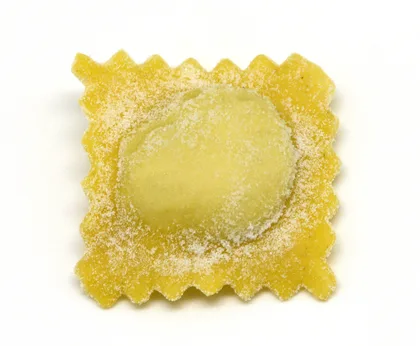 PATAgnolottiAgnolotti are Piedmont's stuffed pasta: thin egg dough around a filling of roasted meat…
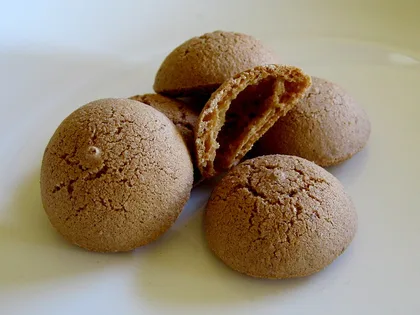 FoodAmarettiAmaretti are flourless almond cookies whose bitter edge comes from apricot kernels, not…
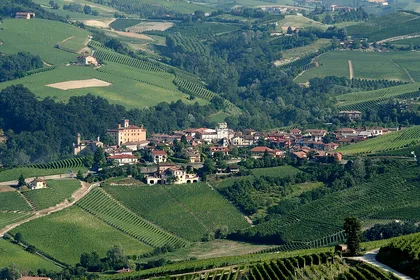 DOPBaroloBarolo is one hundred per cent Nebbiolo from eleven villages in the Langhe hills of…
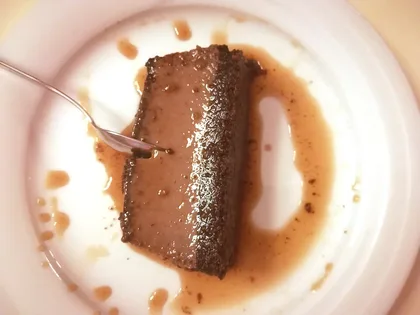 FoodBonetBonet is the baked custard of Piedmont's Langhe hills: eggs, milk, bitter cocoa, crushed…
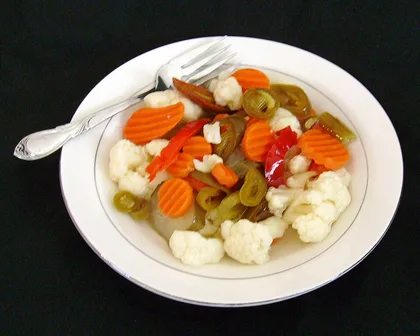 FoodGiardinieraGiardiniera means two very different jars. In Italy it is a mild mix of vegetables pickled…
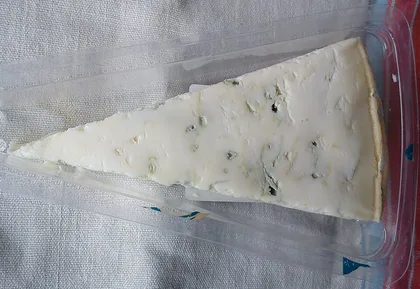 DOPGorgonzolaThe green veining is the product, not a flaw anyone tolerates: it grows from a mould added…
What to do here
The central activity here is not tasting but walking. The Alta Langa is crossed by a network of ridge paths linking the villages along the old mule tracks: from ten-kilometre stages to multi-day routes with nights in the villages. The climbing is constant and never enormous, the surface mixes gravel and minor asphalt, and the waymarking is patchy: a GPS track helps. In autumn, with the chestnuts and hazelnut groves yellow, it is the right season.
On food there are three concrete things. Visiting the dairies at Roccaverano and Murazzano, done early in the morning while the cheese is being made and arranged in advance: seeing a robiola a few hours old and tasting it beside one of two weeks explains the product better than any description. The hazelnut harvest in late August and September, which can be watched at farms around Cortemilia, where a fair is also held at the end of summer. And truffle hunting: the Alta Langa has the white, less abundant than in the lower Langa, and the black, and local diggers will take you out on request. A practical tip: an outing with a trifolau is worth it if he is a real digger taking his own dog into his own woods, and if you buy what is found by weight; when it becomes a show with a truffle buried beforehand it is another thing, and it happens.
There are few Alta Langa DOCG cellars in the strict sense, because most producers are based in the lower Langa or the Asti area, but some estates up here vinify and receive by appointment. For anyone wanting to combine, Dolcetto di Dogliani is at the foot of the northern slope and Moscato d'Asti in the Belbo valley towards Santo Stefano.
Of the villages, Bergolo is built entirely in Langa stone and is tiny; Cortemilia is split in two by the Bormida and has a museum about the terraces; Murazzano has its tower and a view over the whole valley. At Sale San Giovanni, between June and July, lavender, helichrysum and other medicinal plants flower across dozens of hectares: it has become a much photographed place and on full-bloom weekends there are lines of cars on roads that cannot take them. Going midweek solves it.
The year, month by month
From December to March the Alta Langa is shut. It snows above six hundred metres, the villages have one bar open if you are lucky, and many places take long holidays. Anyone who finds somewhere open eats very well: it is the season of bagna cauda, boiled meats, tripe, bruss and aged cheese. It is also the cheapest period of all, and the one with the year's only real logistical problem, which is iced ridge roads in the morning.
April and May reopen the territory. The woods fill with wild asparagus and spring mushrooms, the goats go back to pasture and the robiole reach their best moment, with spring milk the most aromatic of the year. The walking is good and there is nobody about.
June and July are the months of flowering and long evenings. At Sale San Giovanni the lavender flowers between late June and mid-July. The village festivals begin and are often the only way to eat in certain municipalities, with long tables in the square and minimal prices. At altitude the nights stay cool even in July, which is this area's competitive advantage over the lower Langhe.
August and September are the hazelnut months: the harvest starts towards the end of August and runs for weeks, with the farms working flat out and a fair at Cortemilia. October and November bring chestnuts, mushrooms, truffle and the best colours of the year, but they are also when the lower Langa explodes with tourism and its prices partly spill over here. The advantage of sleeping in the Alta Langa in those weeks is still clear: half an hour more driving and half the bill.
Getting there and getting around
By car you come from Alba heading south on the road to Cortemilia, or from Ceva and Millesimo climbing from the Ligurian side, or from Acqui Terme and Canelli on the Asti side. Alba to Cortemilia takes a little under an hour on a continuously winding road following the Bormida valley floor; from Savona and the Ligurian coast it is an hour and a half over the Apennine passes. Distances in kilometres here are completely unreliable: fifteen kilometres of ridge can mean forty minutes.
By train you do not arrive. The line that served the Bormida valley has reduced services and does not cover the inland villages; the useful stations are Alba, on the line from Turin, and Ceva on the Turin to Savona line, and both are a good hour from the upper villages. Local buses link Alba to Cortemilia and some municipalities on school timetables, so sparse and absent at weekends and in summer.
The airports are Turin Caselle at about two hours, Genoa at an hour and three quarters, Milan Malpensa at two and a half. Nice is a little under two and a half hours and is a realistic option for anyone coming from abroad.
Without a car the Alta Langa is not practicable. The farmhouses are on ridge roads or gravel tracks, the villages have few services, and there are no taxis in the usual sense. Anyone arriving by train at Alba should hire there. By bike the area is superb and severe: constant climbs at six to twelve per cent, little traffic, almost nowhere to resupply on weekdays. It is territory for experienced cycle touring, not for a family ride.
One last winter note: from November to April winter equipment is compulsory on most of the provincial network, and on ridge roads above seven hundred metres morning ice is the norm rather than the exception.
Frequently asked questions
What is the difference between the Alta Langa and the Barolo Langhe?
Altitude, economy and products. The great wine Langhe sit between two hundred and five hundred metres around Alba, have the UNESCO-listed winegrowing landscape, very high land prices and upmarket accommodation. The Alta Langa starts above six hundred metres and climbs to almost nine hundred: vines are nearly absent, woods, hazelnut groves and pasture dominate, the villages are tiny and often depopulated, and the accommodation is farmhouses and inns. A night costs on average half as much. It is not the budget version of the famous Langhe: it is a territory with a history of poverty and a different cuisine, built on hazelnuts and cheese rather than truffle and Nebbiolo.
Are the hazelnuts sold here really from Piedmont?
Not always, and it is worth checking. The local variety is the Tonda Gentile Trilobata, protected by the geographical indication for the Piedmont hazelnut, and sought by the confectionery industry for its thin shell, spherical shape and skin that comes off in roasting. Piedmont's production, though, is a tiny fraction of world demand, which is largely covered by Turkey, and many products packed in Italy contain imported nuts entirely legally. In a souvenir shop the wording to read is the origin of the nut, not the place of packing. Buying directly from a farm that cracks and roasts its own harvest is the simplest way to be sure.
Does a bottle of Alta Langa come from the Alta Langa?
Not necessarily. Alta Langa is a classic-method sparkling wine from Pinot noir and Chardonnay, always vintage-dated and with long lees ageing, which became a guaranteed denomination in 2011 after a project launched in the 1990s to bring sparkling bases back to Piedmont. The permitted production zone, however, is much wider than the geographical area of that name and takes in hills across several Piedmontese provinces. So the name indicates a denomination and a method, not a precise village. It is in any case one of the best Italian classic-method wines, and with fresh goat's robiole it works far better than a still white.
Is it worth sleeping in the Alta Langa and visiting the Barolo Langhe?
Yes, and many people do it in autumn. From Cortemilia or Bossolasco to Barolo and La Morra is between forty minutes and an hour of winding roads, and the price difference for a room during harvest and truffle season is substantial. There are two drawbacks: the ridge roads in the evening are dark and demanding, which makes dining in the lower Langa after a tasting impractical; and in winter many Alta Langa places close. Anyone choosing this formula should arrange cellar visits in the morning and come back for dinner in the Alta Langa, where you eat well and spend less anyway.