Twelve things from Sardinia, where the sheep matters more than the sea
Pane carasau, Pecorino Sardo, Fiore Sardo, casu marzu, Cabras bottarga, malloreddus, culurgiones, saffron, bitter strawberry-tree honey, IGP lamb, suckling pig, seadas.
Sardinia is an island that lived facing inland. The coasts were unhealthy and exposed to raids, the villages sit in the hills and mountains, and the cooking is a shepherd's rather than a fisherman's: sheep, goat, bread that keeps for months, cheeses that carry the year. Fish enters through two doors only, the bottarga of Cabras and tuna, and in both cases it is preserved.
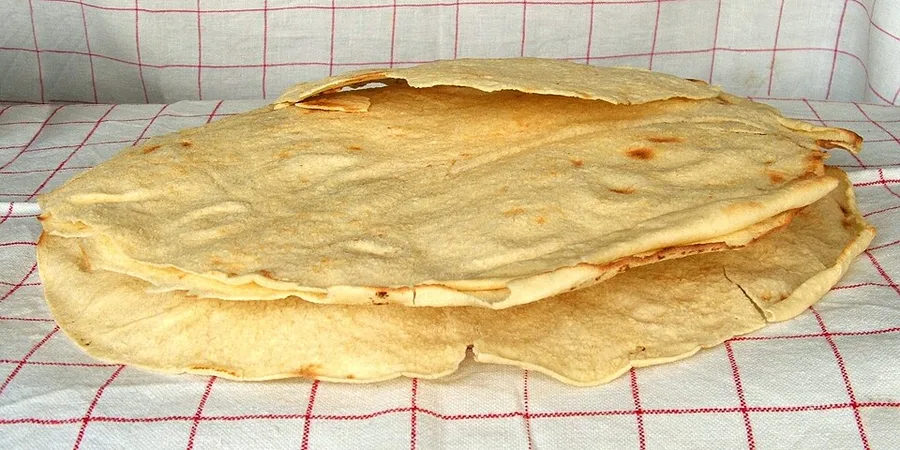
Pane carasau explains the rest. It is a disc of semolina less than a millimetre thick, baked twice because it had to last months in the bags of people out with the flocks: it snaps like a sheet of glass and softens with water when needed. A bread designed for being away from home, not for the table.
The cheeses are the other half. Fiore Sardo is the pecorino of the Barbagia shepherds, smoked over the fire of the pinnetta; Pecorino Sardo is the table cheese, in two versions; casu marzu is the extreme case, listed among the island's traditional products and at the same time unsellable, because it does not meet hygiene regulations.
 Luigi Chiesa · CC BY 3.0
sardegna · 6-12 €/kg
A disc of semolina less than a millimetre thick, baked twice because it had to last months in shepherds' saddlebags. It snaps like glass and softens with a film of water when a dish needs it.
 Frankie816 · Public domain
sardegna · 9-14 €/kg
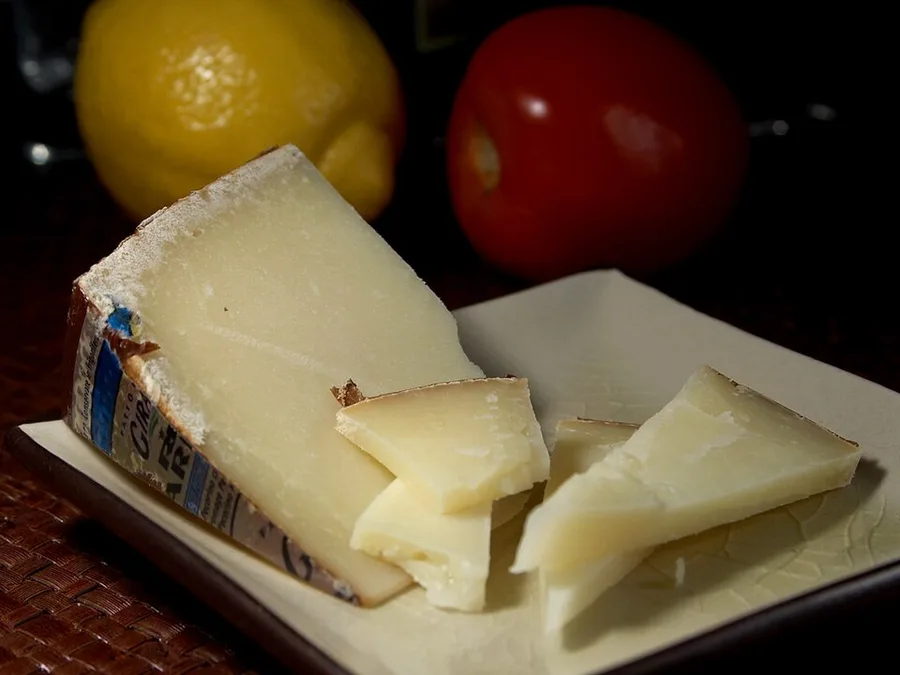
The island's table cheese, in two recognised types: mild, twenty to sixty days, soft and milky; matured, over two months, hard and sharp. Confusing them explains half the disappointments at the counter.
 Yozh · CC BY-SA 4.0
sardegna · 18-26 €/kg
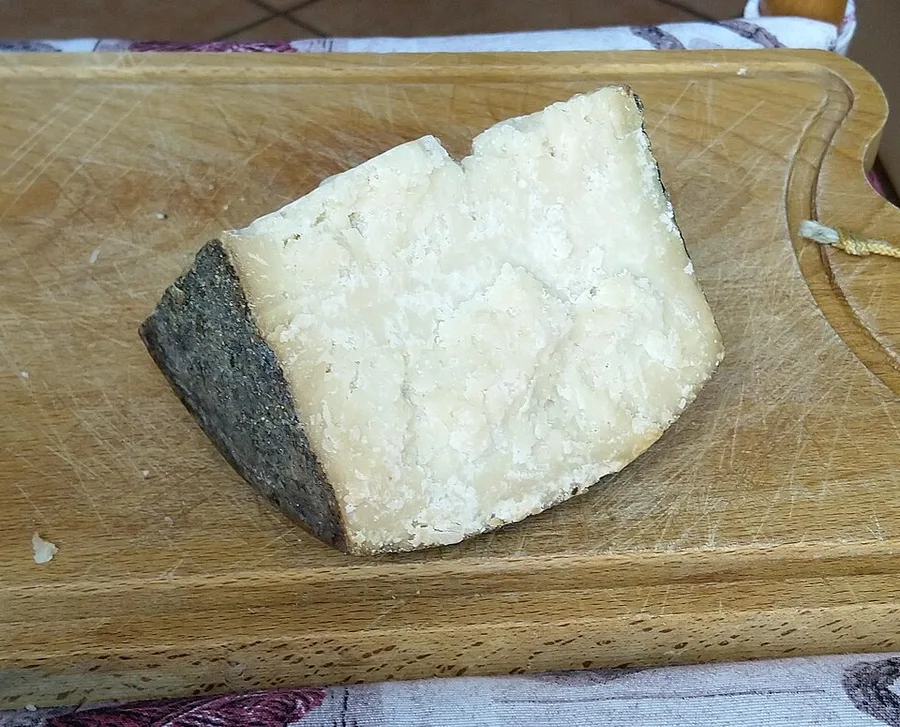
The pecorino of the Barbagia shepherds: raw milk, lamb paste rennet, a double-cone shape, smoked over the fire of the pinnetta. The smoking is part of the process, not an added flavour.
 Shardan · CC BY-SA 2.5
sardegna · 20-50 €/kg
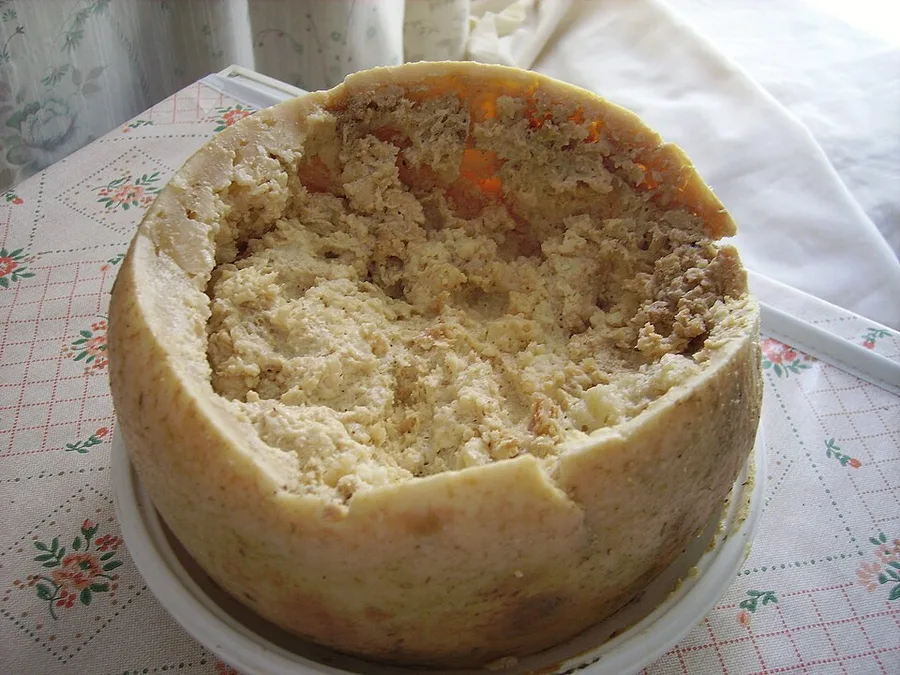
A pecorino whose maturing is carried on by the larvae of the cheese fly. It is listed among Sardinia's traditional food products and at the same time cannot be sold.
 Radobera · CC BY-SA 3.0
sardegna · sicilia · 200-320 €/kg
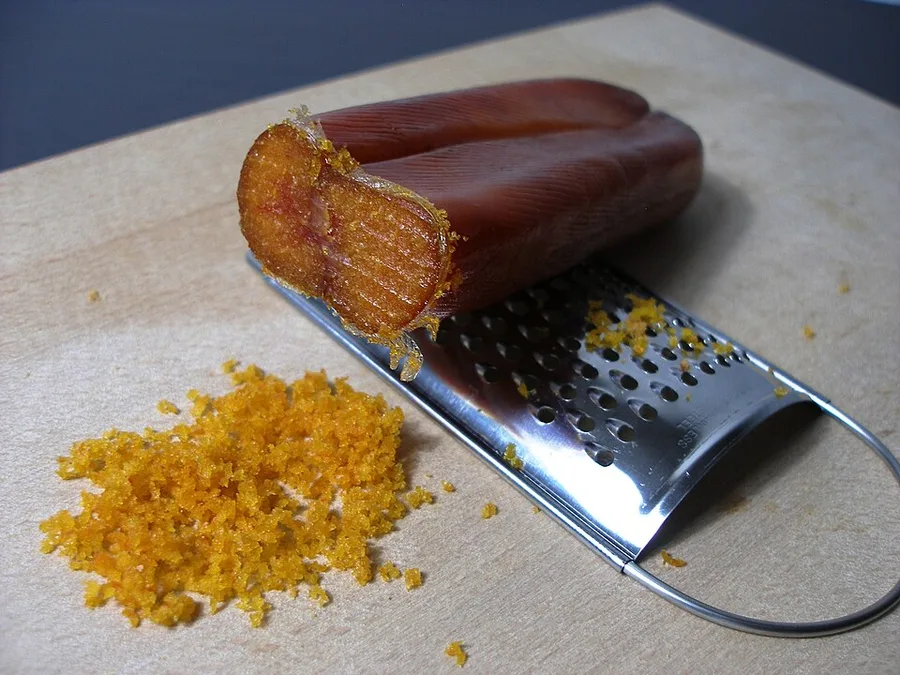
Mullet or tuna roe, salted, pressed and cured. The Cabras mullet bottarga is waxy and delicate and is grated off the heat, because above sixty degrees it turns bitter.
 Popo le Chien · CC0
sardegna · 2.4-4.6 €/kg
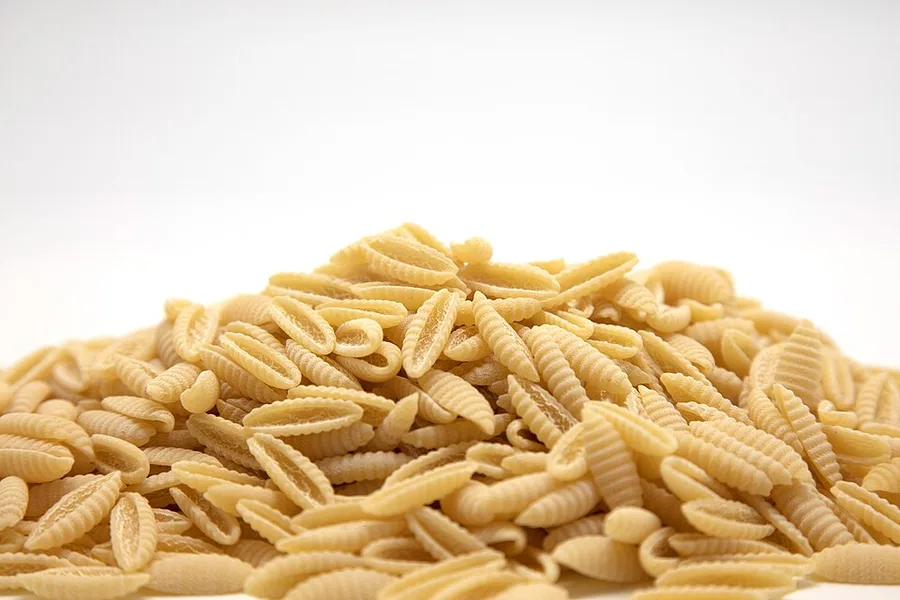
Little gnocchi of two or three centimetres, curved like shells, semolina and water only. The ridges on the back are not decoration: they hold sauce on a pasta that would otherwise be smooth and slippery.
 Marica Massaro · CC BY-SA 4.0
sardegna · 12-18 €/kg
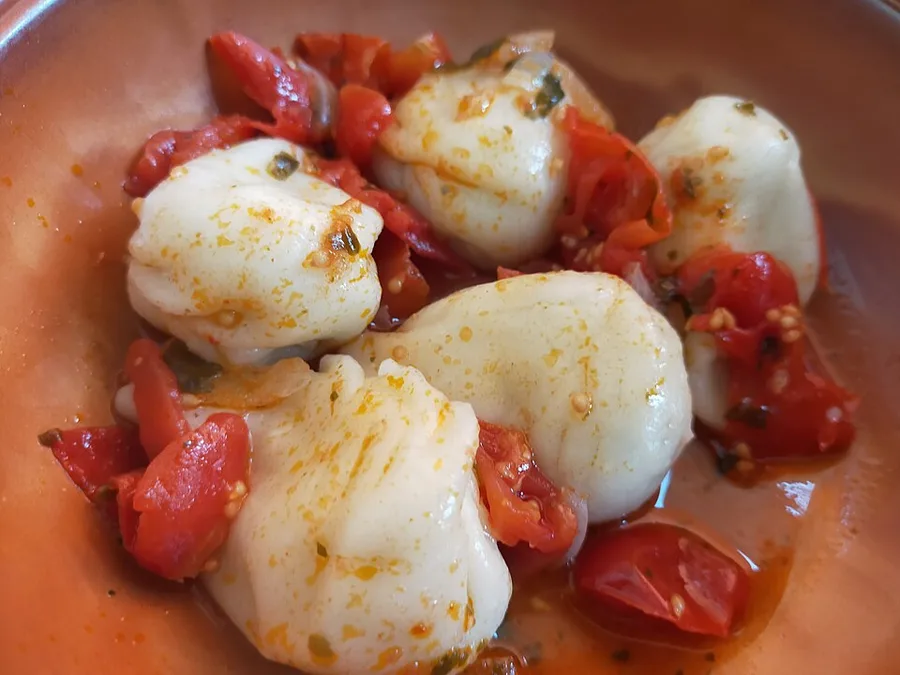
Ravioli of potato, pecorino and mint, closed by hand with a wheat-ear seam that is the real mark of recognition. Culurgionis d'Ogliastra carry the IGP, and a machine closure is visible at a glance.
 Rainer Zenz · Public domain08
Saffron
abruzzo · sardegna · 15000-40000 €/kg
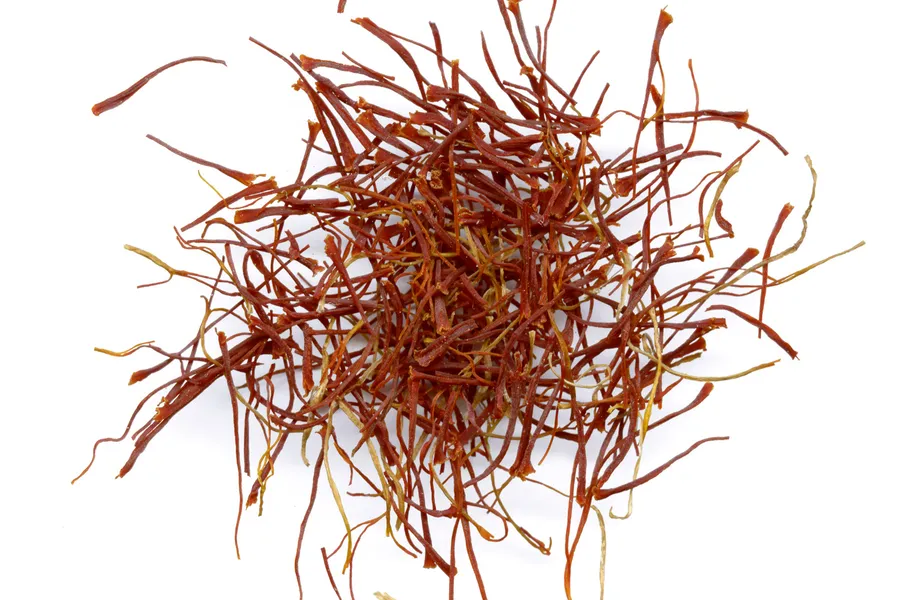
A kilo takes between a hundred and fifty and two hundred thousand flowers, and each flower gives three stigmas to be picked by hand. It is the most expensive agricultural product in the world by weight, and Sardinia has grown it for centuries.
sardegna · 45-50 €/kg
Bitter, and not by fault: it is one of the very few bitter honeys in the world. It comes from an autumn flowering, when bees barely fly, and the yield is tiny: hence the price and the rarity.
 Roger469 · CC BY-SA 4.0
sardegna · 14-22 €/kg
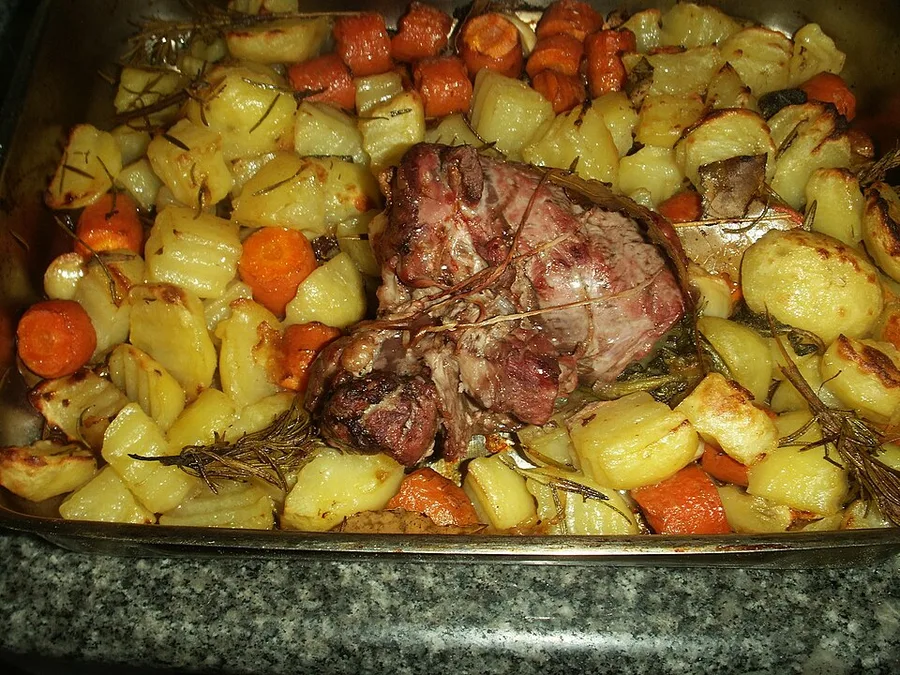
The Sardinian breed at pasture, slaughtered young, IGP, in three weight categories: milk-fed, light and cutting lamb. Very pale, mild meat, the opposite of the grown northern European lamb.
sardegna · 22′
Twenty-two minutes: oil, garlic, grated bottarga, bound off the heat with pasta water. Part of the bottarga is kept raw for the plate, because that is where it gives its scent.
- 12
Seadas
sardegna · 1 h 20′
Discs of very thin semolina pastry enclosing fresh tangy pecorino with lemon zest, fried in lard and covered with strawberry-tree honey. An hour and twenty, and the cheese must string without escaping.
One last thing
One detail explains Sardinian cooking better than any list: cheese goes into the sweets. Seadas are large ravioli filled with fresh tangy pecorino, fried and covered with bitter honey; they count as a dessert by convention, but they are fried cheese with honey on top. The same holds for many of the island's ricotta sweets. This is not eccentricity: in a shepherd's kitchen the sweet is made from what there is, and what there is is milk.
The questions this list answers
These are real questions put to an AI assistant, in the period when Bing cited this site among its sources to answer them. The number is how many times we were cited. We read them in Bing Webmaster Tools, under AI performance, and they decide what goes on this page rather than the other way round.
- pecorino sardo276 citations
- casu marzu käse223 citations
- spaghetti bottarga51 citations
- bottarga cos'è47 citations
- malloreddus pasta16 citations
- Bottarga15 citations
- fiore sardo8 citations
- miele amaro9 citations
- bottarga cos'e6 citations
Frequently asked questions
What is the difference between Pecorino Sardo and Fiore Sardo?
Pecorino Sardo DOP is the table cheese, with calf rennet, in two types, mild and matured. Fiore Sardo DOP is the shepherds' traditional pecorino: raw milk, lamb paste rennet, a double-cone shape and smoking over a fire. They are two distinct products with different rules.
What is bottarga?
The roe sac of grey mullet or tuna, salted, pressed and cured until firm. The Cabras mullet kind is more delicate and waxy, the tuna kind more intense. It must never be cooked: above sixty degrees it turns bitter, so it is grated off the heat.
Why is strawberry-tree honey bitter?
Because the nectar of the strawberry tree is. It is one of the few bitter honeys in the world, and the flowering comes in autumn, when bees fly little: the yield is very low and the price reflects it. The bitterness is not a sign of a fault in the making.
Can casu marzu be bought?
No. It is listed among Sardinia's traditional food products and at the same time cannot be sold, because it does not meet hygiene regulations. It is a formal contradiction that remains open, and it is worth stating plainly.