Eleven pasta shapes, and the sauce each was invented for
Spaghetti, bucatini, rigatoni, paccheri, maccheroni, fusilli, pappardelle, pici, orecchiette, trofie, malloreddus. Every shape solves a problem of grip: understanding which explains why some pairings work and others do not.
A pasta shape is a tool, and there is only one question to ask it: how does it hold the dressing. There are three possible answers. On the outside, like spaghetti, where surface and therefore the extrusion die matter; inside, like paccheri and bucatini, where the sauce goes into the tube; or around, like pappardelle, where a wide ribbon drapes over pieces of meat.
From this come the pairings that look like arbitrary rules and are not. A meat sauce in large pieces wants a ribbon or a wide tube, because on a round strand it slides off and ends up at the bottom of the plate. A liquid, fatty sauce like carbonara wants a shape that keeps it on the surface. Cacio e pepe, which is a cream, wants starch: pasta cooked in little water, and that water in the plate.
The last part of the list is pasta of semolina and water alone, made by hand: orecchiette, trofie, malloreddus, pici. They come from places with no eggs, and they all use the same technical solution, a rough or hollow surface made with the fingers, doing the job that a bronze die does in factory pasta.
 Andy Li · CC0
campania · 1-2.2 €/kg
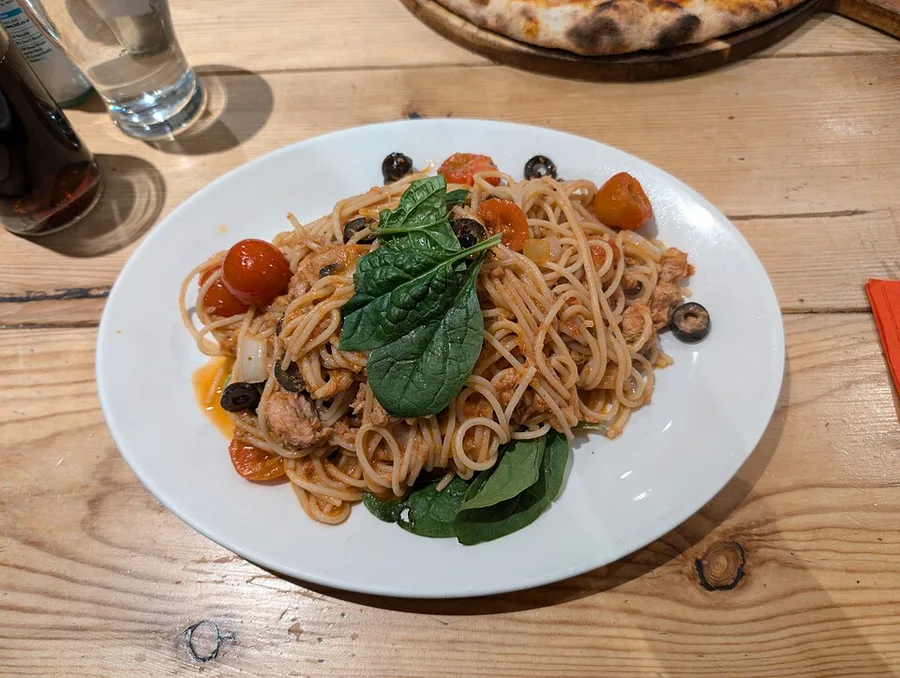
A solid strand of semolina and water, round in section, between 1.7 and 2.0 millimetres. It looks like the most neutral shape there is, and it is not: a round solid section decides which sauces cling and which end up at the bottom of the plate.
 Popo le Chien · CC002
Bucatini
lazio · 1.2-2.2 €/kg
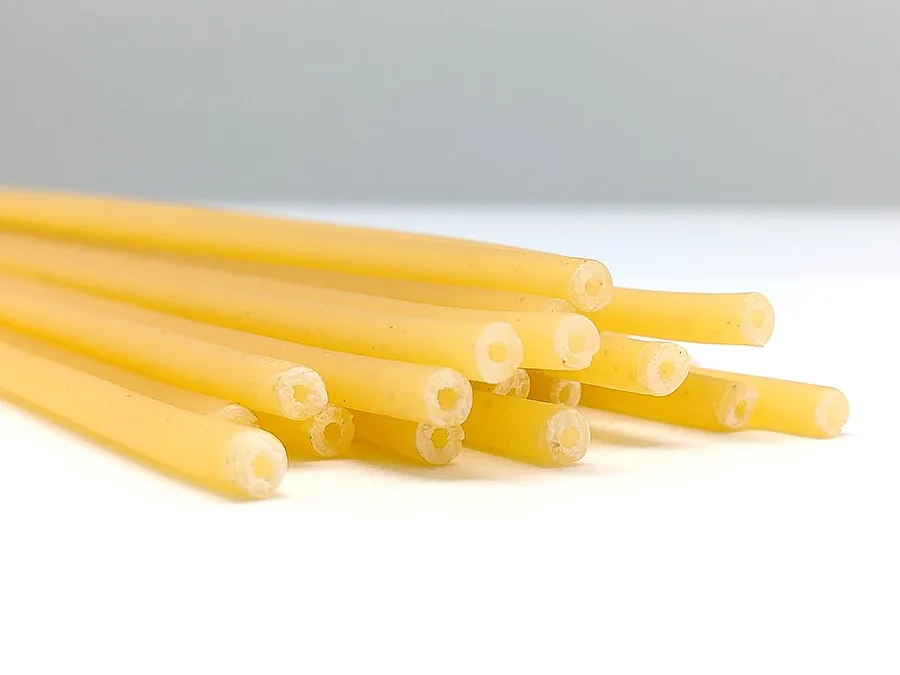
Spaghetti with a hole, about three millimetres thick, run through by a central channel. They are the shape of amatriciana, and the hole is not a flourish: it changes how the sauce wets the pasta, because some gets inside while the surface stays smooth.
 Popo le Chien · CC003
Rigatoni
lazio · 1.1-2.2 €/kg
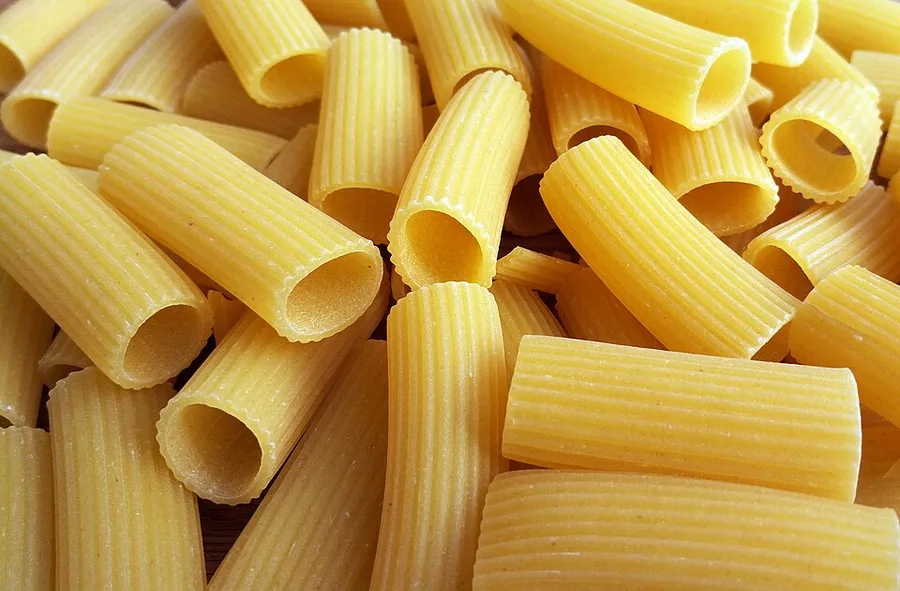
Wide tubes cut straight across and ridged on the surface. The ridges and the perpendicular cut add a quarter to the usable surface and keep the tube open, so the sauce goes in instead of sliding off: this is the shape for minced meat sauces.
 Popo le Chien · CC004
Paccheri
campania · 7-12 €/kg
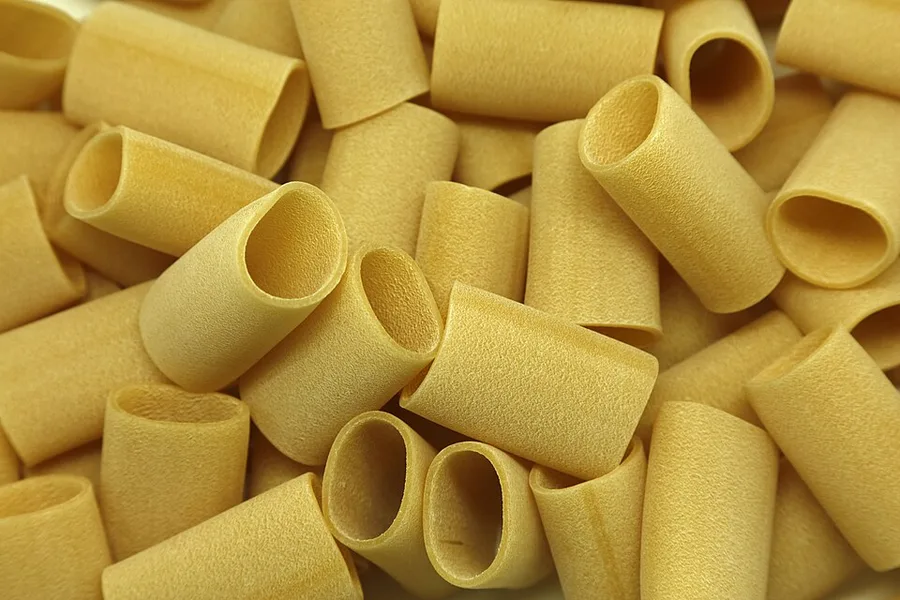
Smooth tubes four or five centimetres long and three or four wide, with a thick wall: the big shape of Neapolitan cooking. They gather sauce inside the tube, cook for thirteen to sixteen minutes, and need draining with care, because full of sauce they are heavy.
 Holapaco77 · CC BY-SA 4.0
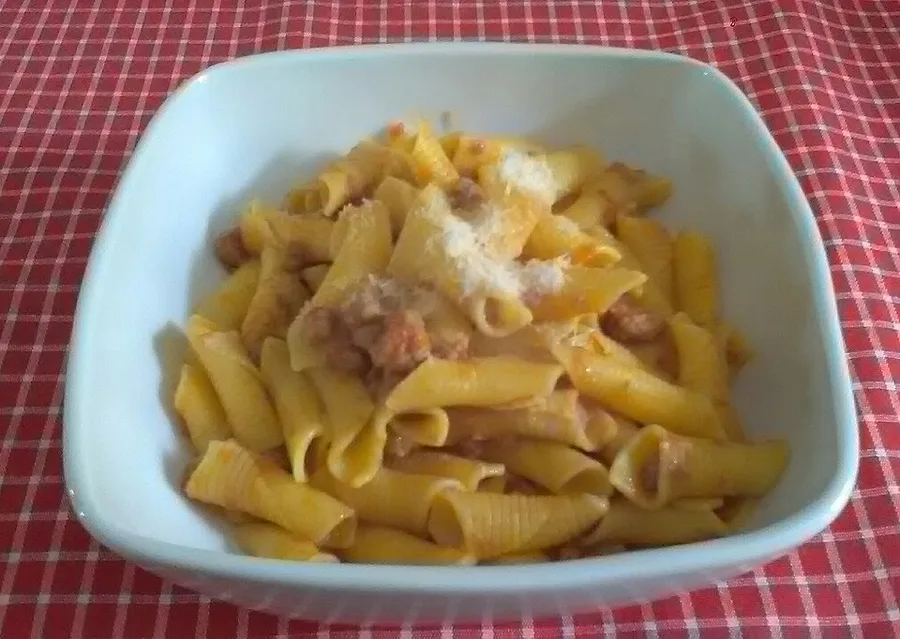
campania · abruzzo · 1.1-2.2 €/kg
The most misunderstood word in Italian pasta: in Naples it means semolina pasta in general, in Abruzzo a square egg shape cut on a chitarra, in the inland south a tube rolled by hand on a ferretto. Asking for maccheroni without saying more gets you nowhere.
 Nnaluci · CC BY-SA 3.006
Fusilli
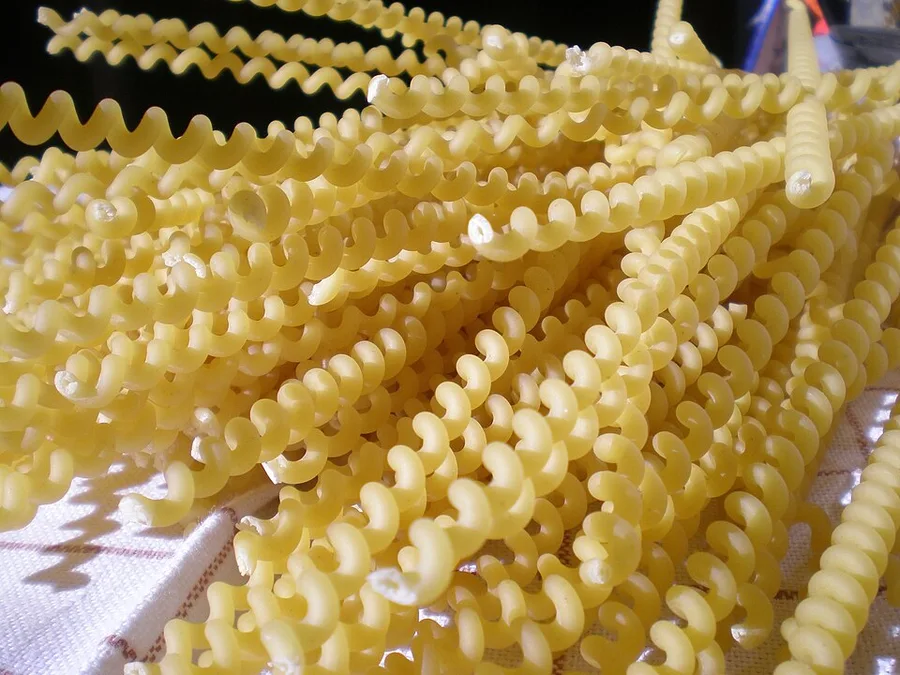
campania · molise · 1.1-2.2 €/kg
Two pastas live under one name: the industrial helix, solid, which holds sauce on the outside, and the hand-rolled fusillo on a ferretto, hollow and twisted, which collects it inside. Choosing the wrong one for a sauce changes the dish.
 Popo le Chien · CC0
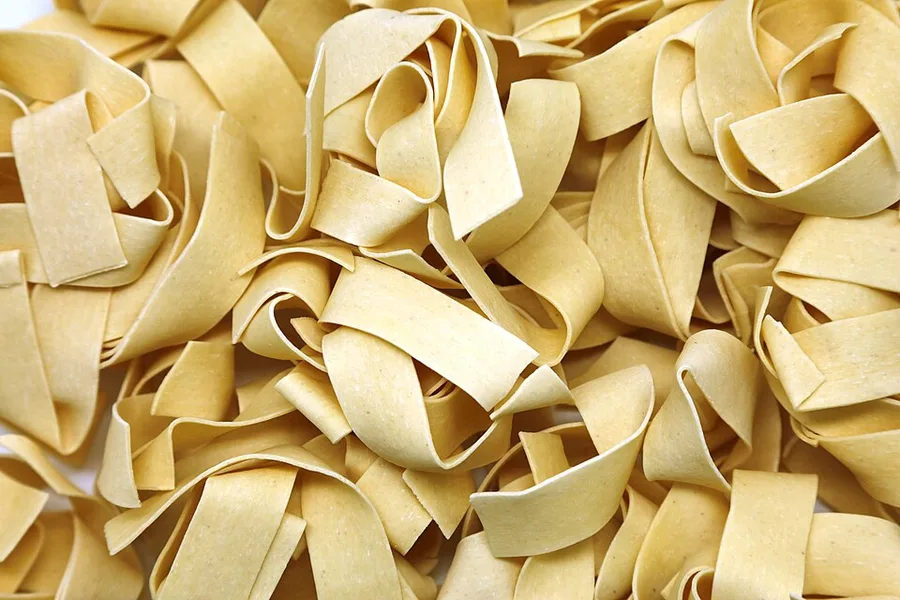
toscana · 8-16 €/kg
Ribbons of egg dough two or three centimetres wide, the widest shape still eaten wound onto a fork. The width is technical: only a ribbon that size drapes around the large pieces of a game sauce.
 Popo le Chien · CC008
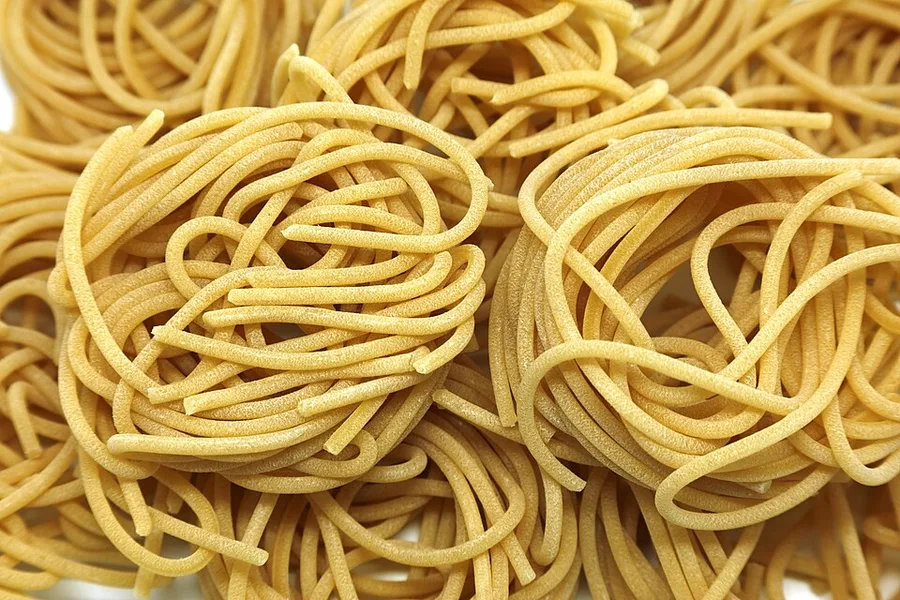
Pici
toscana · 8-14 €/kg
Fat strands of water and flour rolled out by hand one at a time, without egg and without a die, from southern Tuscany. The thickness is irregular by construction, and that is why they hold sauce as no factory pasta does: the dressing catches where the strand is thickest.
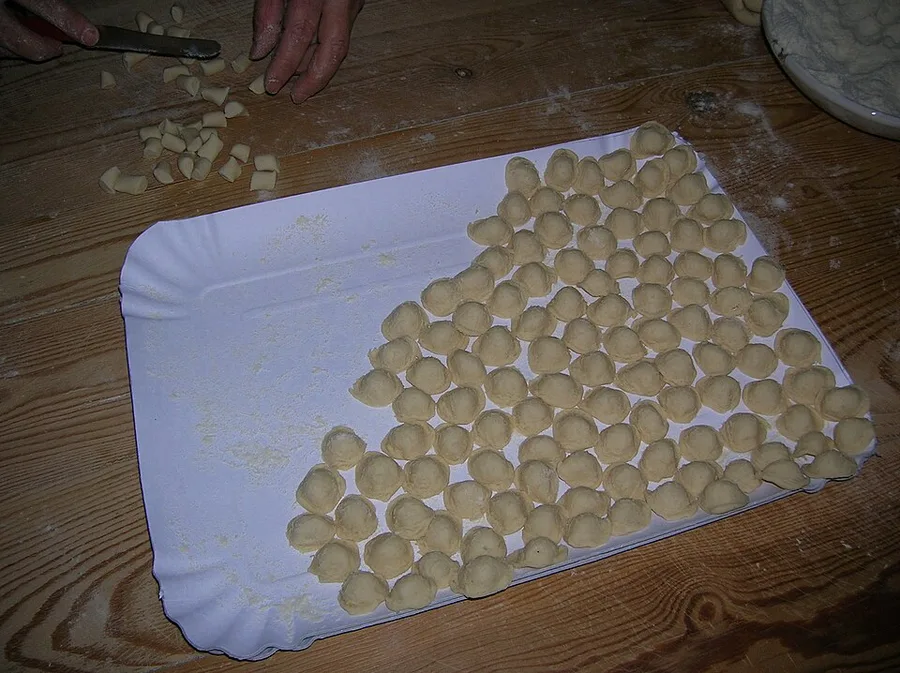 Original uploader was Signorealex at it.wikipedia · Public domain
puglia · 5-9 €/kg
Semolina and water only: a concave disc with a thin centre and a thick rim, made by dragging a cube of dough with a knife and turning it over the thumb. The hollow collects, the rim holds its bite: two cooking times in one piece of pasta.
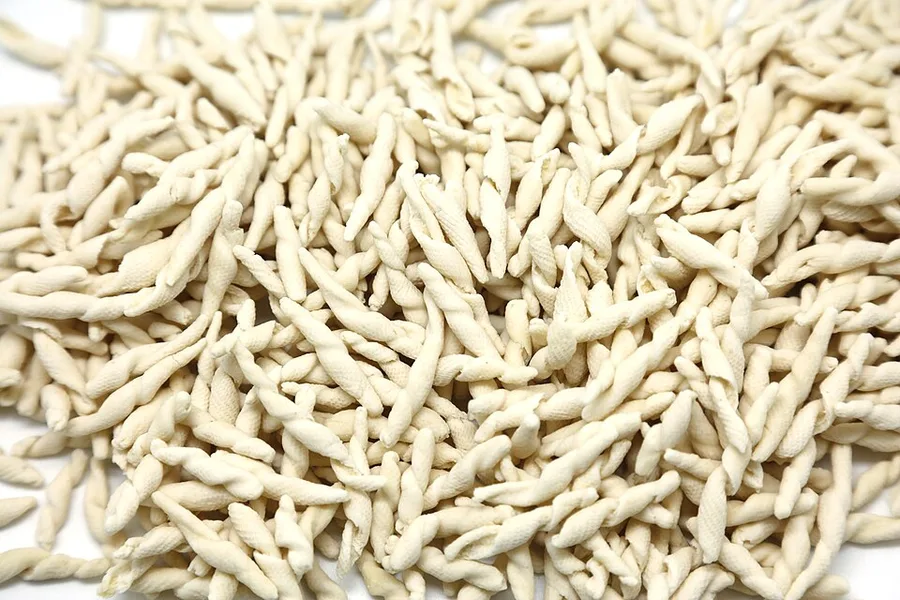 Popo le Chien · CC010
Trofie
liguria · 8-12 €/kg
Little cylinders of semolina and water three centimetres long, rolled on the board with the edge of the hand into a tapered spiral. They are the pasta of pesto, and they are served with green beans and potato in the same dish: not a side, the recipe.
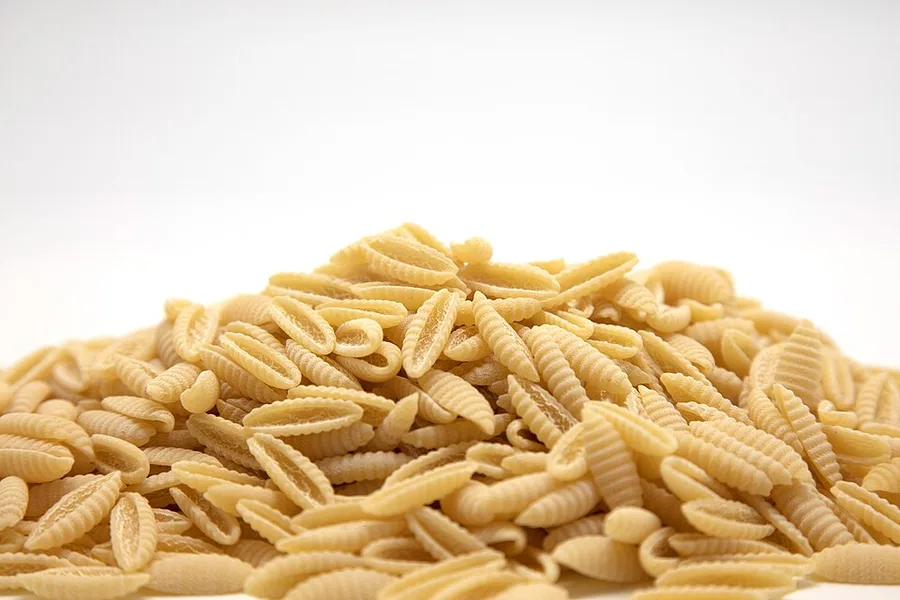 Popo le Chien · CC0
sardegna · 2.4-4.6 €/kg
Sardinian gnocchetti of two or three centimetres, curved like little shells, semolina and water only. The ridges on the back are not decoration: they hold sauce on a pasta that would otherwise be smooth and slippery.
One last thing
Two things matter more than the shape, and both show in the plate. The first is the die: bronze leaves the surface matt and rough, teflon leaves it smooth and shiny, and the difference in grip is plain. You can see it on the dry pasta rather than read it on the packet. The second is the cooking water: thick with starch, it is what binds pecorino, egg and pesto without cream or butter. Always keep a ladle back, and in cacio e pepe cook the pasta in half the usual water precisely to make that water starchier.
The questions this list answers
These are real questions put to an AI assistant, in the period when Bing cited this site among its sources to answer them. The number is how many times we were cited. We read them in Bing Webmaster Tools, under AI performance, and they decide what goes on this page rather than the other way round.
- what is pappardelle pasta105 citations
- pappardelle is a variety of which italian pantry staple?86 citations
- what is pappardelle52 citations
- what is paccheri46 citations
- malloreddus pasta16 citations
- maccheroni pasta12 citations
- pappardelle pasta type7 citations
- fusilli pasta type3 citations
- differenze cottura pasta barilla classica al bronzo3 citations
Frequently asked questions
What is pappardelle?
Ribbons of egg pasta two or three centimetres wide, the widest shape still eaten wound onto a fork. They are Tuscan and were made for meat sauces in large pieces, game in particular: the width lets them drape around the meat instead of sliding past it.
What is paccheri?
Smooth durum semolina tubes four or five centimetres long and three or four wide, with a thick wall. They are the big shape of Neapolitan cooking: they gather sauce inside the tube and stand up to fillings and baking without splitting.
What difference does a bronze die make?
It leaves the pasta surface rough and matt instead of smooth and shiny, and that roughness holds the dressing. You can see it on the dry pasta. It also changes the cooking: bronze-cut pasta releases more starch into the water, which helps when a sauce has to bind.
Why does each sauce have its own shape?
Because every shape solves a different problem of grip. Liquid, fatty sauces stay on round strands; minced meat sauces lodge in ridges and tubes; sauces with large pieces want wide ribbons that wrap around the meat. It is not etiquette: it is why the same sauce on two shapes gives two dishes.