Twelve Italian pizzas and flatbreads, and why they are not the same
Neapolitan pizza, Roman tray pizza, pinsa, sfincione, Genoese focaccia, schiacciata, panzerotti, gnocco fritto, farinata. The same starting point, flour and water, and twelve different rules about height, heat and fat.
Every Italian city has its own flat, low dough, and none of them calls it what the next one does. The confusion comes from the words looking like synonyms while describing opposite technical choices: Neapolitan pizza wants sixty seconds at four hundred degrees, Roman tray pizza wants an oiled pan and a long bake, farinata has no leavening at all.
There are three variables, and they explain everything. Height, because a tall dough cooks by conduction and a thin one by radiation. Fat, because the oil in Genoese focaccia is in and on the dough while in gnocco fritto it is the cooking medium. And hydration, which decides whether the result is chewy, spongy or glassy.
The list starts with the two pizzas that have rules, or nearly, runs down through the focacce and ends with the three chickpea-flour batters, which are neither bread nor pizza: Ligurian and Tuscan, baked in copper pans, they come from places where wheat flour cost more than pulse flour.
 Robot8A · CC BY-SA 4.0
campania
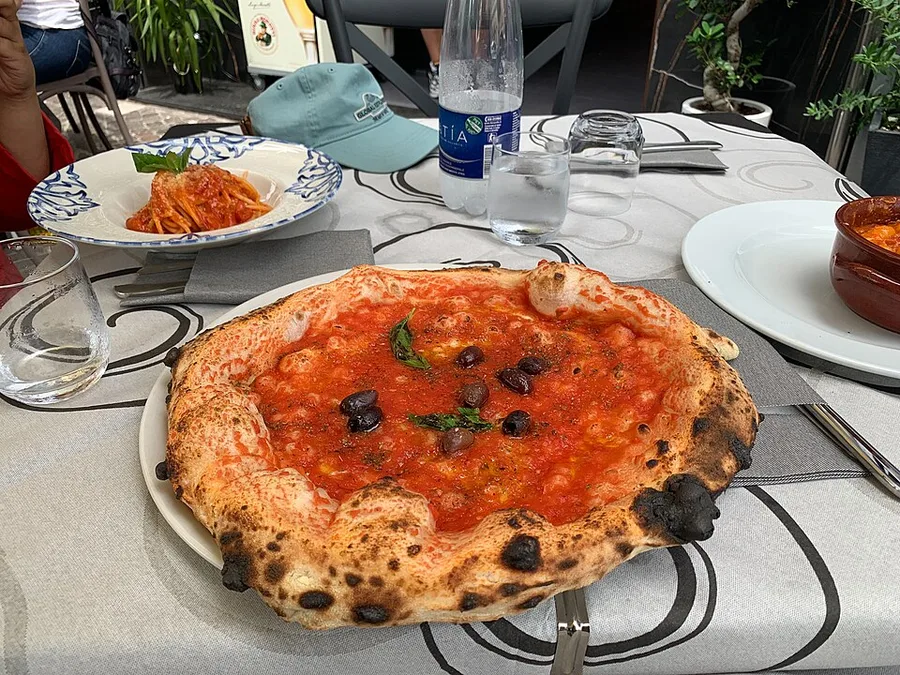
A Traditional Speciality Guaranteed since 2010: four ingredients in the dough, hand shaping only, sixty to ninety seconds on a floor at 380 to 430 degrees. The rules admit two variants, marinara and margherita: everything else is Neapolitan pizza only loosely speaking.
 JIP · CC BY-SA 4.0
lazio · 12-22 €/kg
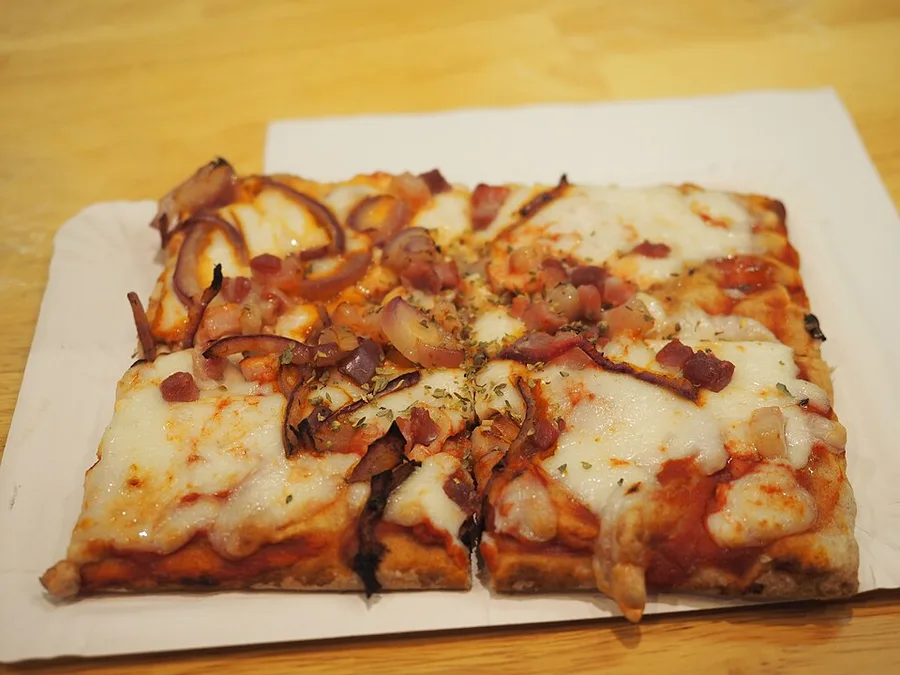
The Roman tray pizza: rectangular, very high hydration, baked on an oiled sheet. You buy it by weight, point at the piece you want and it is cut with scissors. The oil underneath fries the base while the oven bakes the rest, and that is where the crisp bottom comes from.
 Ensahequ · CC BY-SA 4.0
lazio · 2.5-4 €/kg
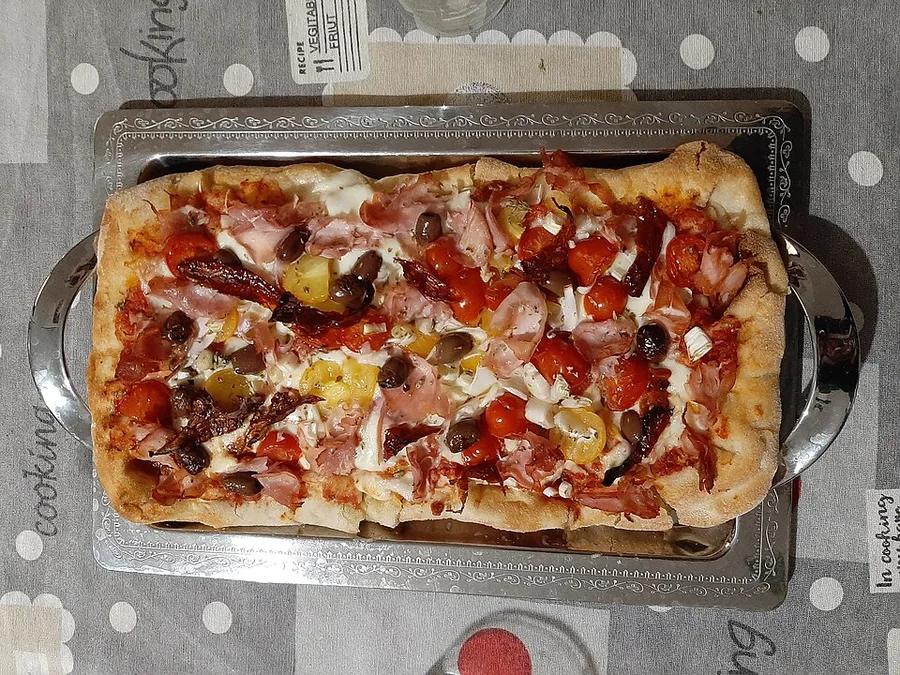
Not a pizza, and the difference is the flour: wheat, rice and soy mixed, very high hydration, one to three days in the fridge before the oval base is shaped. It is a recent Roman recipe, and the Latin-sounding name should not suggest otherwise.
 Rino Porrovecchio · CC BY-SA 2.0
sicilia · 8-14 €/kg
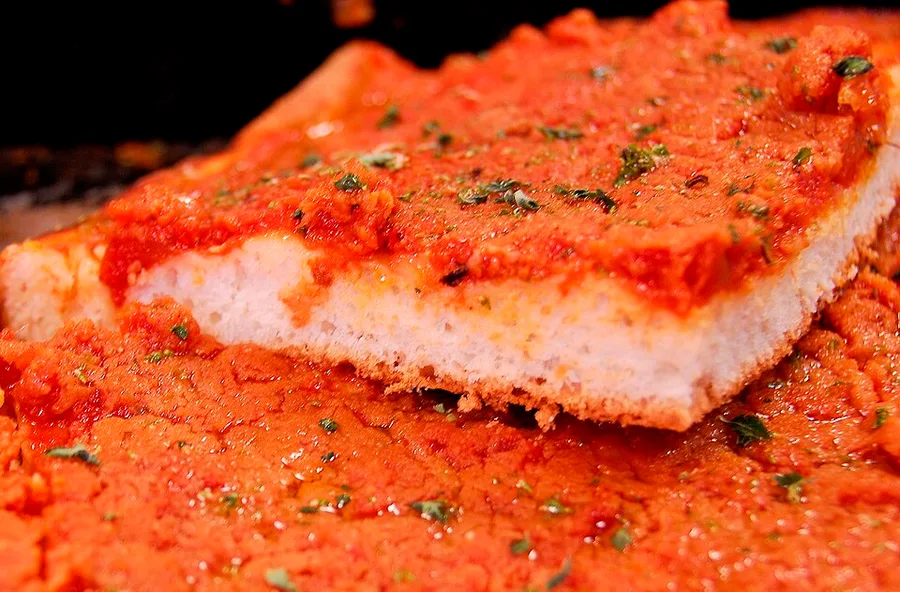
The tall, spongy focaccia of Palermo: onion and tomato sauce, melted anchovies, cubes of caciocavallo pushed into the dough and a blanket of toasted breadcrumbs. No mozzarella, ever: the breadcrumbs do the job that stretchy cheese does elsewhere.
- 05
Focaccia
liguria · 8-14 €/kg
Two centimetres tall, the dimples made with the fingers, and a brine of water, salt and oil poured over before baking. That is the whole of the Genoese one. It is not pizza bianca and it is not the cheese focaccia of Recco, which is another recipe at another thickness.
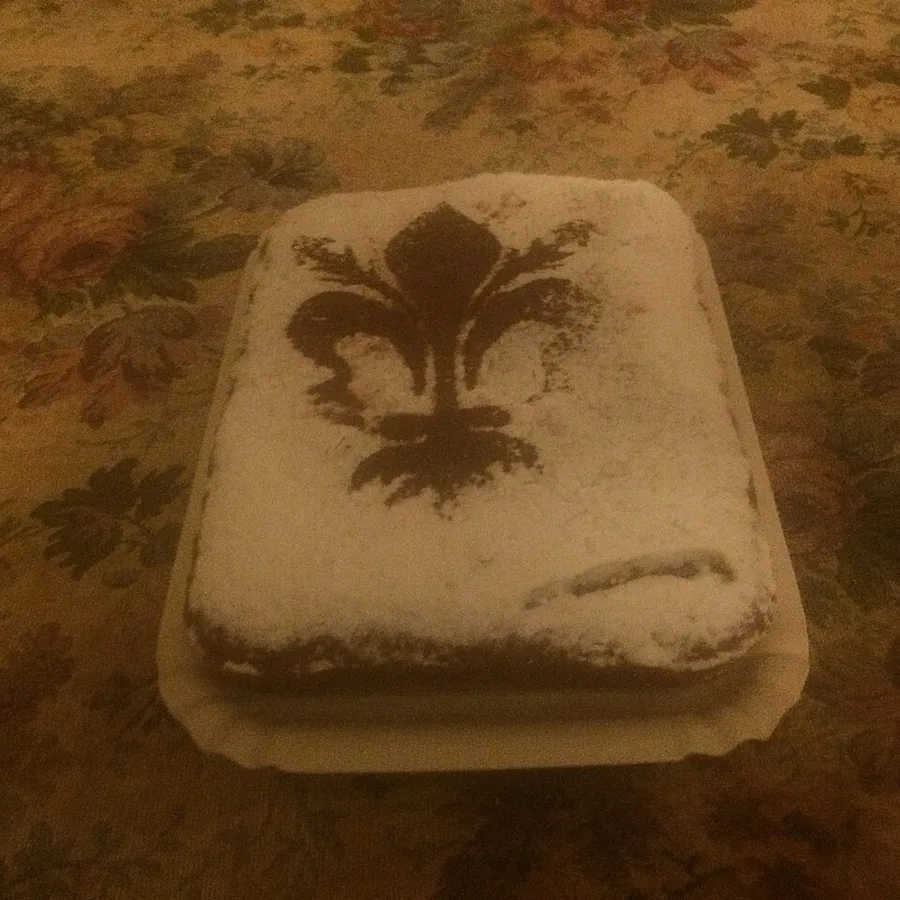 WILO-MA · CC BY-SA 4.0
toscana · 8-14 €/kg
The name is the gesture: stiacciare, to press the dough down with the fingers until it stays low, then oil and coarse salt on top. Thinner and crisper than the Ligurian focaccia, in Florence it is above all the bread you eat cured meats with.
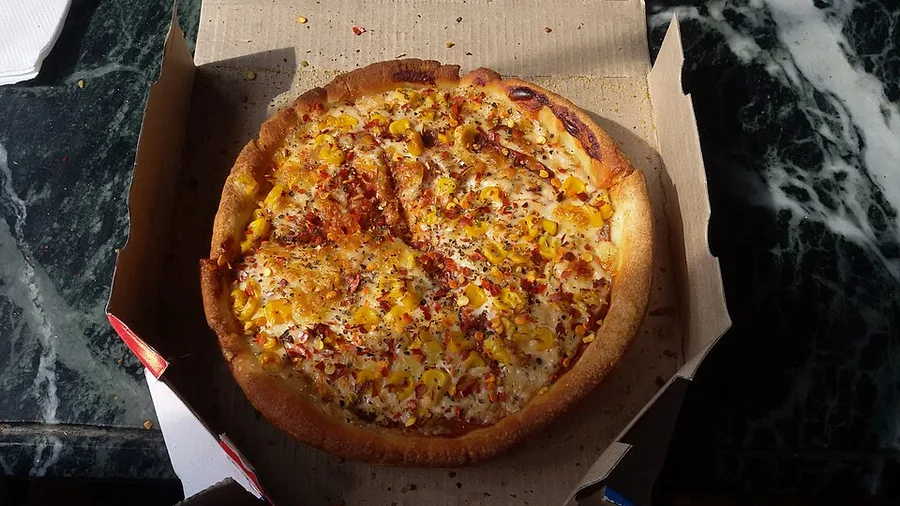 SreeramKalyan · CC0
campania · 2-3 €/kg
The savoury pie of Christmas Eve in Naples: bread dough, stewed escarole, Gaeta olives, capers, pine nuts, raisins, anchovies. Sweet and salt together, it is one of the oldest dishes in the city and is eaten warm rather than hot.
 Benoît Prieur · CC0
puglia · 6-10 €/kg
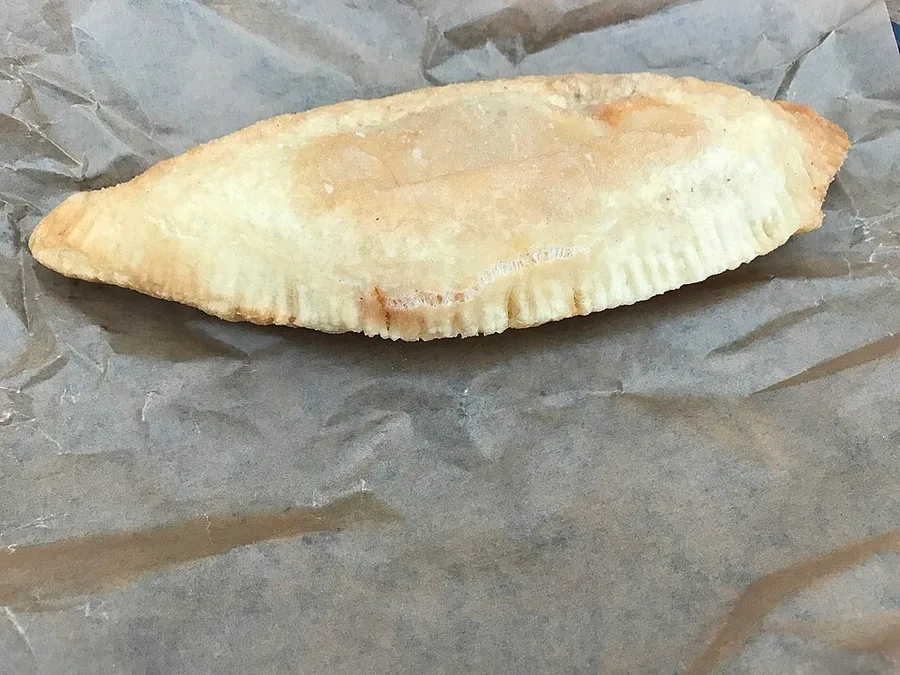
A half-moon of pizza dough, twelve or fifteen centimetres, filled with tomato and mozzarella and deep-fried. It is not a small calzone: a calzone goes in the oven, a panzerotto does not, and the difference shows on the first bite.
 Nerodiseppia · CC BY-SA 3.0
emilia romagna · 5-8 €/kg
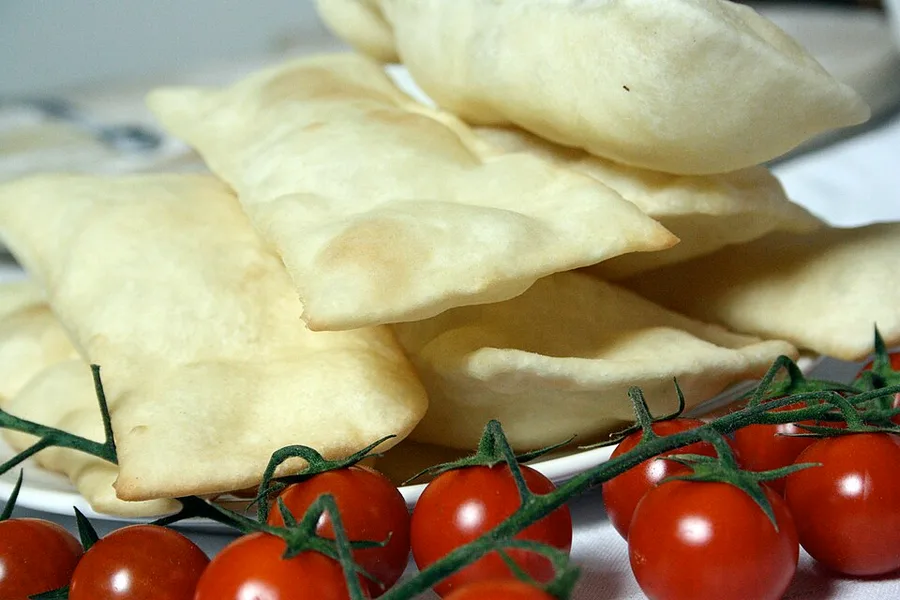
A diamond of bread dough fried in lard, which puffs up like a cushion. It has to be eaten within a minute of the pan, because once it collapses it is over. It is Emilian and changes name every twenty kilometres, which explains half the arguments at table.
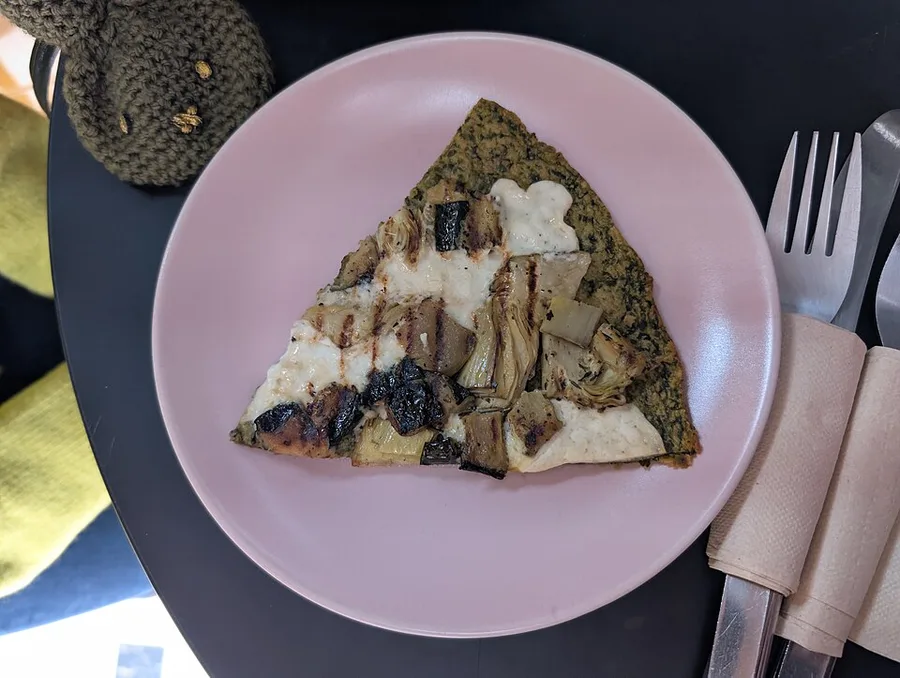 Andy Li · CC010
Farinata
liguria · 3-6 €/kg
A thin sheet of chickpea flour, water and oil baked in a copper pan in a wood oven. Three ingredients, no leavening, fierce heat and a few minutes: it is the street food of Genoa, eaten standing up with pepper on top.
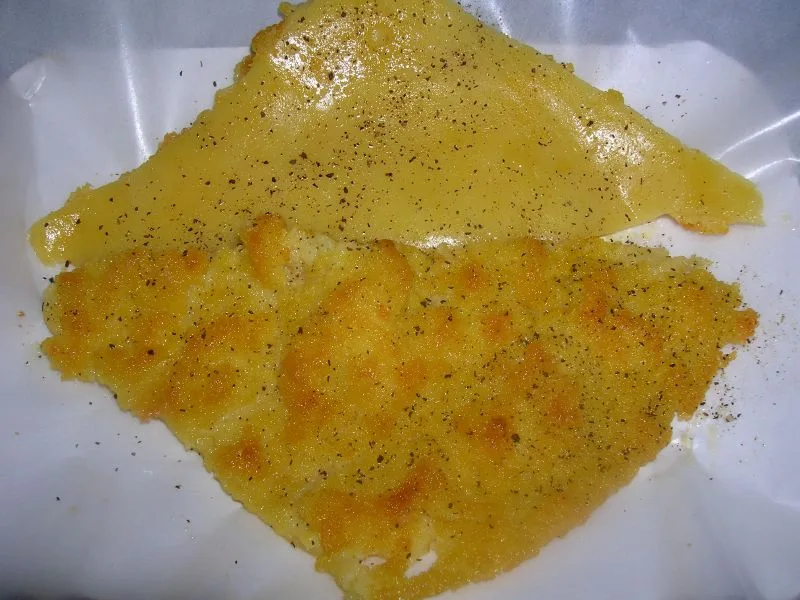 Emiliano Dominici (Loungerie) from Livorno, Italy · CC BY-SA 2.0
toscana · liguria · 10-16 €/kg
The same batter as farinata, but with the city the name and the thickness change: in Livorno it is torta, in Pisa cecìna, in Carrara calda calda. Inside bread, with pepper, it becomes the cinque e cinque, a chickpea sandwich.
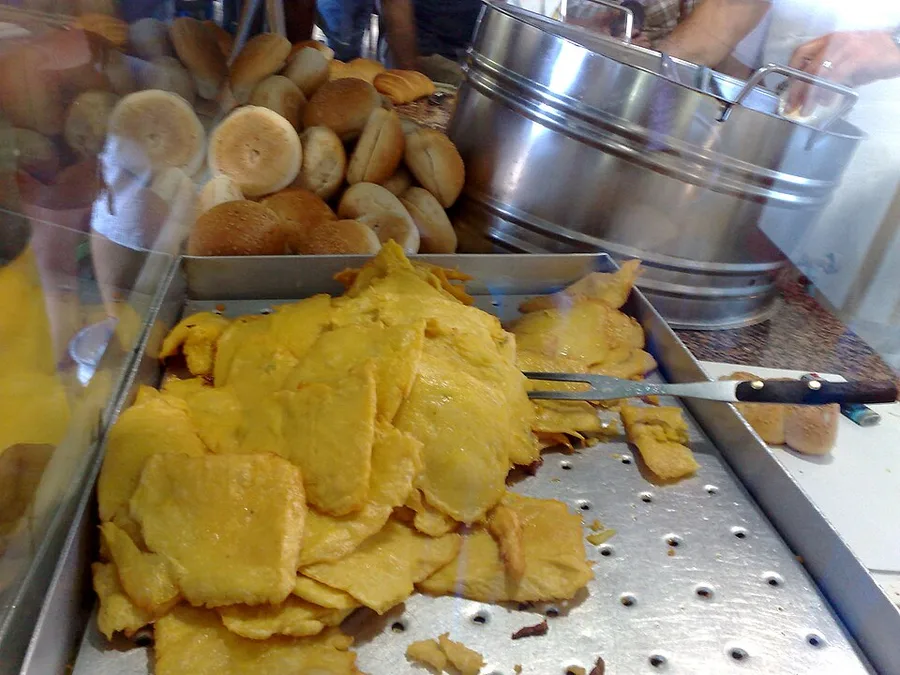 Dedda71 · CC BY 3.0
sicilia · 4-7 €/kg
Chickpea fritters: a porridge of chickpea flour and water, cooked, spread very thin, cooled, cut and fried. In Palermo they are eaten inside soft bread with lemon squeezed over, and they cost about as much as a coffee.
One last thing
Of all of these, Neapolitan pizza is the only one with written rules, and the only one with a temperature a home oven cannot reach. The others survive domestic conditions well: Roman tray pizza wants an oiled pan and the oven at full heat, Genoese focaccia wants its brine poured over, farinata wants a wide shallow pan and the grill on for the last minutes. The common error is the same in every case: baking in an oven that has only just been turned on. A low dough wants heat that has already arrived, because the baking is a matter of minutes rather than average degrees.
The questions this list answers
These are real questions put to an AI assistant, in the period when Bing cited this site among its sources to answer them. The number is how many times we were cited. We read them in Bing Webmaster Tools, under AI performance, and they decide what goes on this page rather than the other way round.
- panzerotto373 citations
- tuscan schiacciata bread95 citations
- schiacciata co to jest75 citations
- farinata ricetta19 citations
- ricetta farinata di ceci12 citations
- come fare la farinata di ceci6 citations
- schiaccata10 citations
- panzerotti pasta5 citations
Frequently asked questions
What is the difference between a panzerotto and a calzone?
The cooking. A calzone is baked, a panzerotto is deep-fried, and everything else follows: the panzerotto dough stays soft and puffs, the calzone dough dries and crusts. A panzerotto is also smaller, twelve or fifteen centimetres.
Does Neapolitan pizza have official rules?
Yes, it has been a Traditional Speciality Guaranteed since 2010: four ingredients in the dough, hand shaping, sixty to ninety seconds on a floor at 380 to 430 degrees, and two permitted variants, marinara and margherita. It restricts the method rather than the place, which is what separates it from a DOP.
What is Tuscan schiacciata?
A bread dough pressed down with the fingers until it stays low, dressed with oil and coarse salt. In Florence it is the bread you eat cured meats with, and it is thinner and crisper than Genoese focaccia, which is taller and carries a brine of water, salt and oil.
Can you make farinata at home?
Yes, it is one of the simplest batters: chickpea flour, water, oil, salt, a few hours' rest to skim the foam, a wide shallow pan, oven at maximum. What cannot be reproduced is the wood oven, which sets the surface before the inside dries: at home you compensate by turning on the grill for the last minutes.