Ten Italian products made above a thousand metres
Castelluccio lentils at 1,300 metres, Bitto on the high pastures, Norcia ham between 400 and 900, Sila potatoes above a thousand, Val di Non apples between 600 and 1,000, Fontina in its caves.
Altitude changes three things, and all three end up in the product. The day-night temperature swing, which concentrates sugars and acidity; drier, colder air, which dries rather than moulds; and a short season, which reduces quantities and forces preserving.
In plants it shows in the timing. Castelluccio lentils grow at thirteen hundred metres on the Pian Grande, where wheat does not ripen and snow lies for months, and their skin is so thin they cook in twenty minutes; the Val di Non apple, between six hundred and a thousand metres, has more acidity and more crunch than a lowland apple.
In cured meats and cheeses the air is what counts. Prosciutto di Norcia is the only major Italian raw ham cured in the mountains, between four hundred and nine hundred metres in the Valnerina; Bitto is made only on the high pastures between June and September; Fontina matures eighty days in the caves of the Aosta valley. In every case the environment does work that in the lowlands would require a chamber.
 Zyance · CC BY-SA 2.5
umbria · 18-25 €/kg
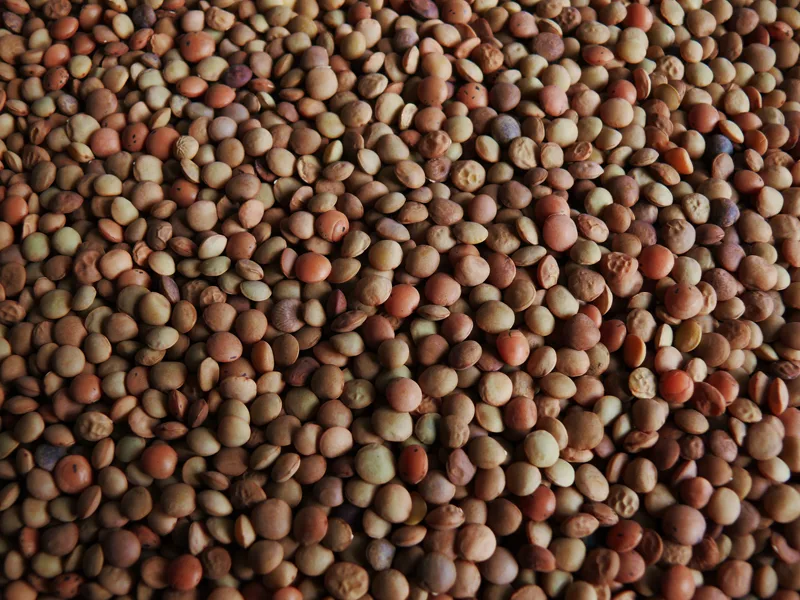
Thirteen hundred metres on the Pian Grande, inside the Sibillini park, where wheat does not ripen and snow lies for months. A very thin skin, no soaking, twenty or thirty minutes' cooking.
 Fabio · CC BY 2.0
lombardia · 18-28 €/kg
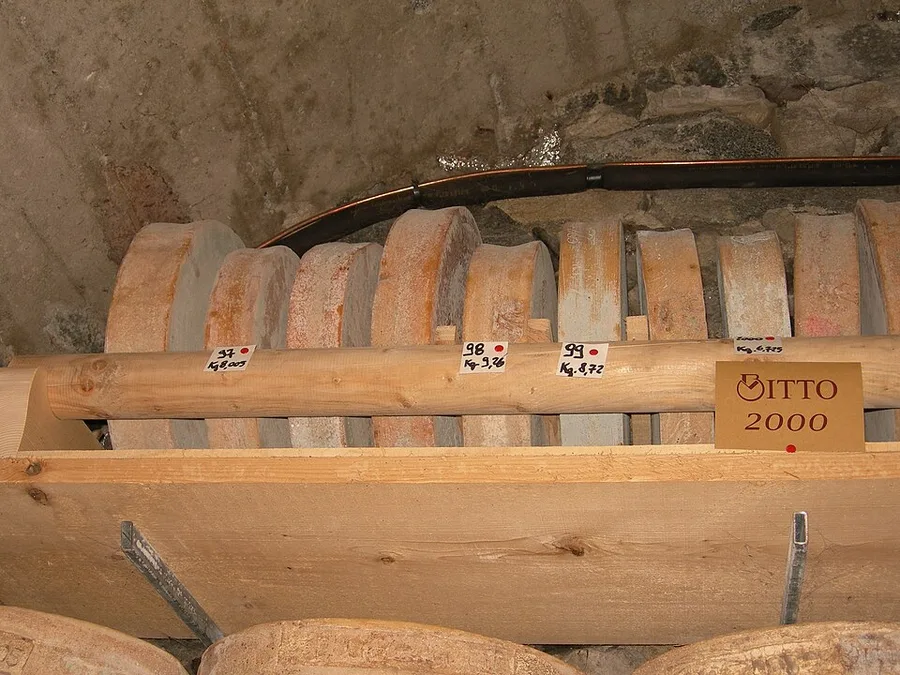
Only on the high pastures, from the first of June to the thirtieth of September, in the calècc that follows the herd: at the end of the season the wheels come down to the casera. Ageing that reaches ten years.
 Luigi Chiesa · CC BY 3.0
valle d aosta · 14-20 €/kg
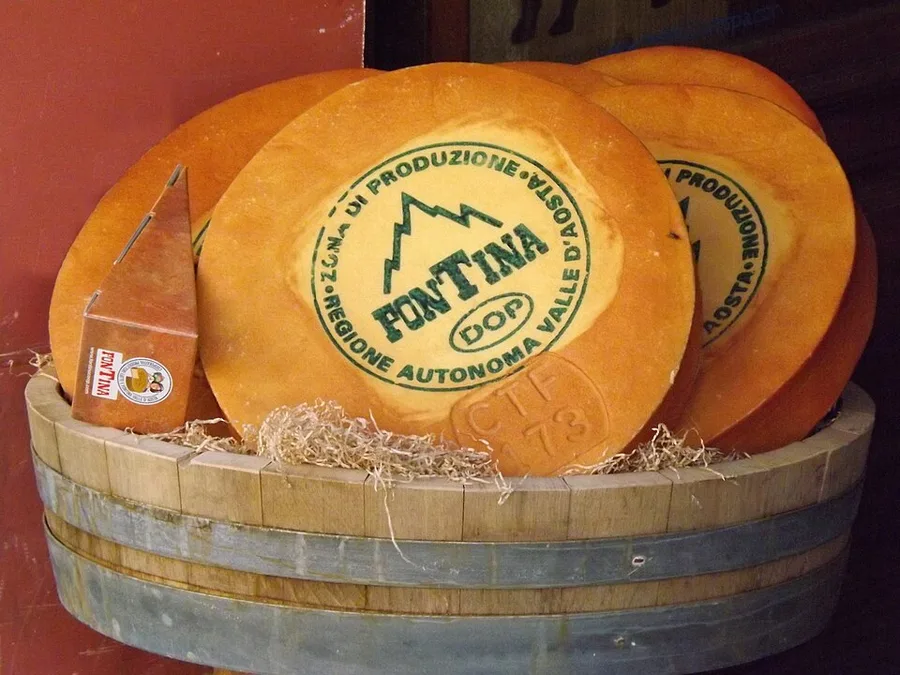
Whole raw milk from a single milking worked within two hours, then eighty days minimum in mountain caves. The time constraint only works where the barn is near the dairy.
piemonte · 22-32 €/kg
Three comuni of the upper Valle Grana, in the province of Cuneo: crumbly and sharp, with blue veins that arise on their own. The high-pasture versions become another cheese from the valley ones.
 MOs810 · CC BY-SA 3.0
lombardia · 14-20 €/kg
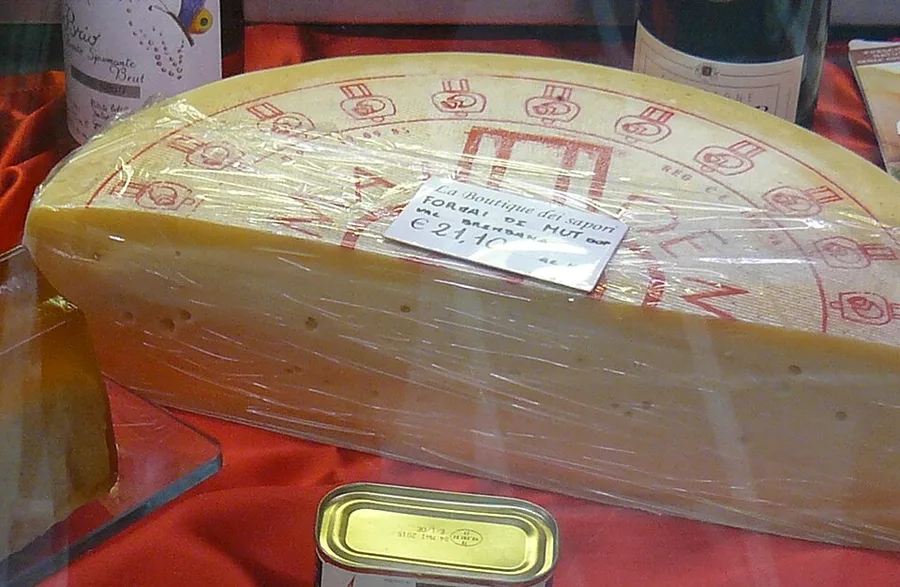
Mut in the Bergamo dialect means high pasture: a semi-cooked paste of raw milk from the upper Val Brembana. The summer version made up there and the valley-floor one share the same name.
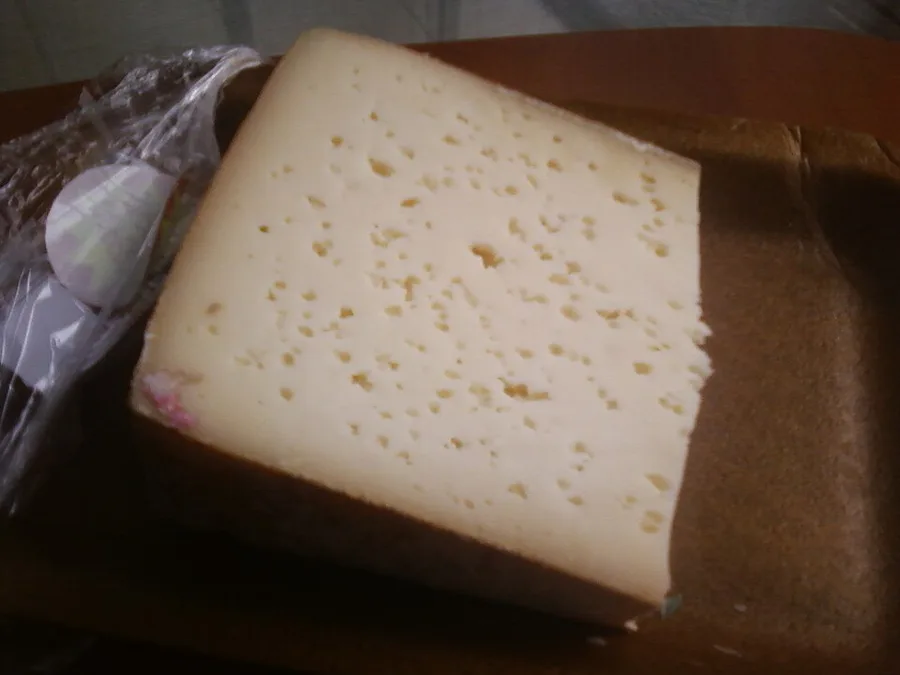 Florixc · CC0
trentino alto adige · 16-24 €/kg
Raw milk from two milkings in the val di Fassa, and a rind washed every two or three days throughout the ageing: at that altitude the air is cold and damp, which is exactly what the rind wants.
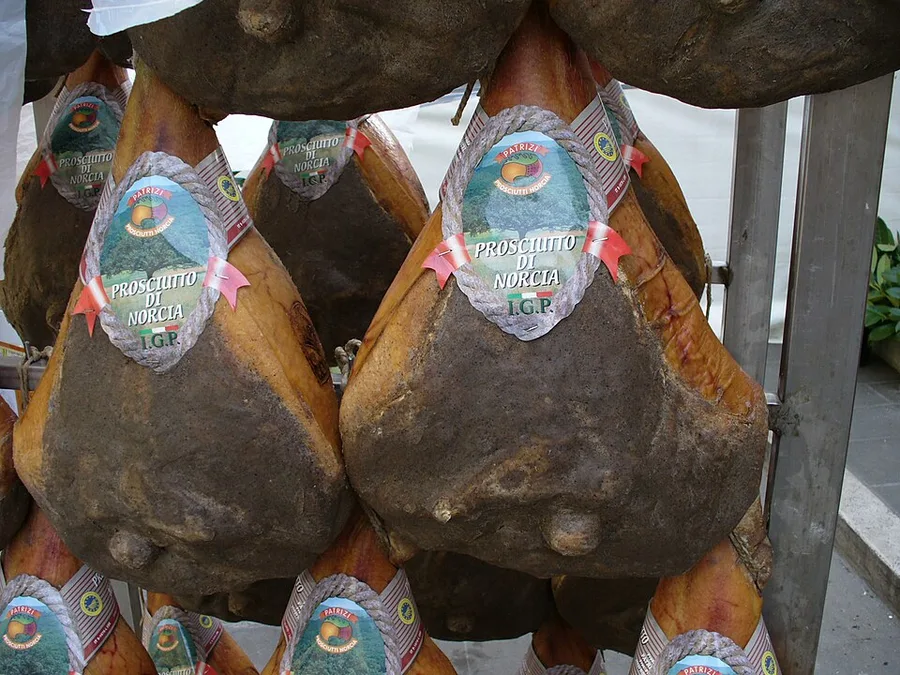 Peter Forster from Centobuchi, Italy · CC BY-SA 2.0
umbria · 20-28 €/kg
The only major Italian raw ham cured in the mountains, between four hundred and nine hundred metres in the Valnerina: dry air, long winters, twelve months minimum and pepper on the surface.
calabria · 1.2-2.5 €/kg
Above a thousand metres, on the acid granite soils of the Calabrian plateau: thick skin, very little water, firm yellow flesh that neither breaks up nor soaks up oil.
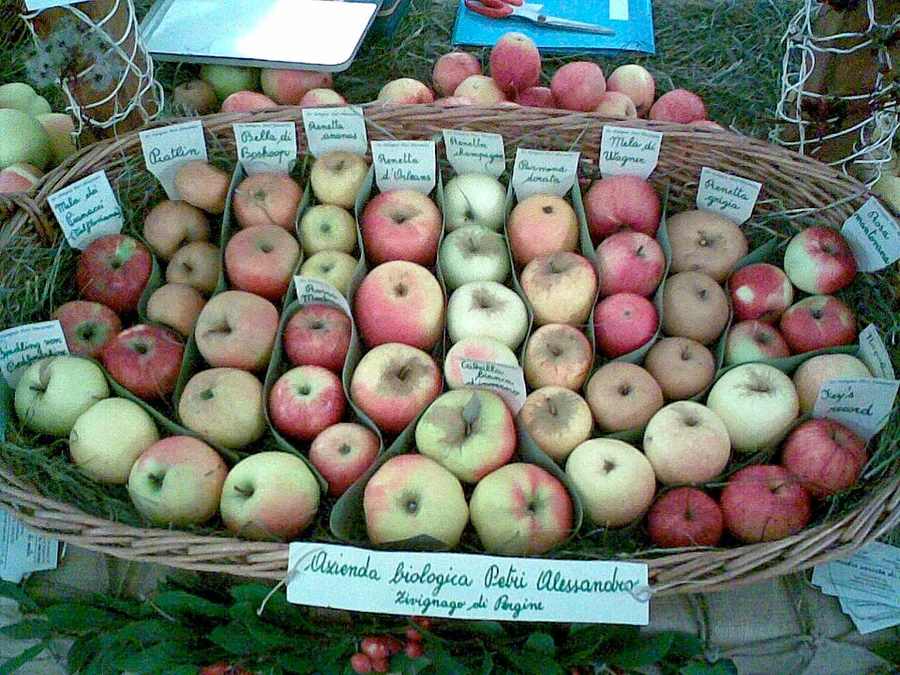 Xaura · CC BY-SA 3.0
trentino alto adige · 1.2-2.2 €/kg
Three varieties between six hundred and a thousand metres, in a Trentino valley that lives on little else. Altitude is what sets them apart: a wider temperature swing, more acidity, more crunch.
 Rainer Zenz · Public domain10
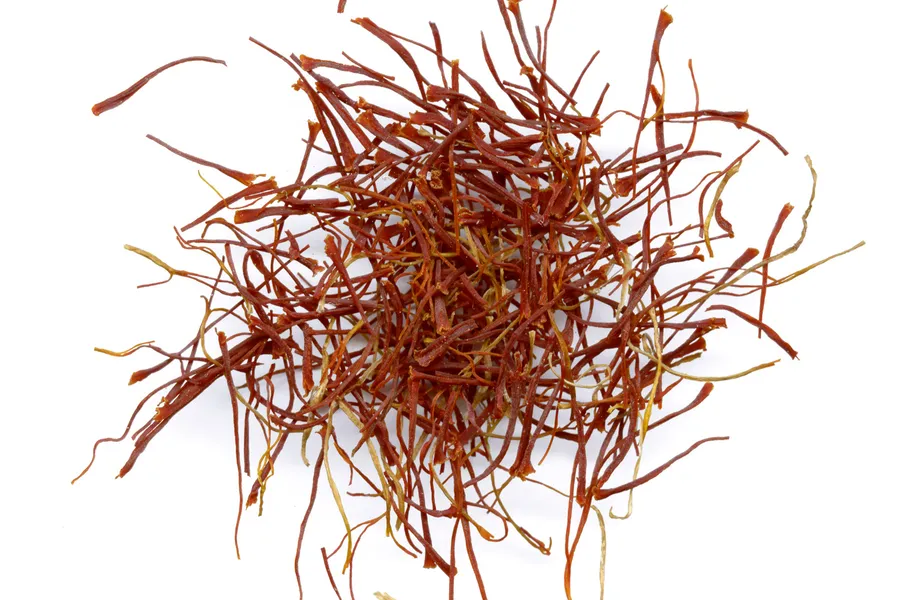
Saffron
abruzzo · sardegna · 15000-40000 €/kg
In Abruzzo it is grown on the Navelli plateau, where the winter is long: the harvest is in October, by hand, flower by flower, for twenty consecutive days, because the flower does not wait.
One last thing
Of altitude, the thing worth remembering when buying is the season. Alpine cheeses exist only if the herds have gone up, that is between June and September, and what is on sale in spring comes from the previous season or from the valley floor; where the DOP separates the two, as with Ossolano d'Alpe or Formai de Mut, the mention is on the label. For high-altitude vegetables the reverse holds: the harvest window is narrow, the Sila potato arrives between late August and October, and outside that window the product is stored, which is legitimate and different.
The questions this list answers
These are real questions put to an AI assistant, in the period when Bing cited this site among its sources to answer them. The number is how many times we were cited. We read them in Bing Webmaster Tools, under AI performance, and they decide what goes on this page rather than the other way round.
- what are castelluccio lentils1,017 citations
- was sind castelluccio linsen?757 citations
- prosciutto di norcia52 citations
- umbrian lentils15 citations
- bitto formaggio40 citations
- castelmagno formaggio43 citations
- formaggio montasio118 citations
- toma cheese18 citations
- formaggio castelmagno7 citations
Frequently asked questions
What changes in high-altitude products?
The day-night temperature swing concentrates sugars and acidity; drier, colder air dries rather than encouraging moulds, which matters in cured meats; the short season reduces quantities. Three measurable effects, not a suggestion about scenery.
Why does Norcia ham cure in the mountains?
Because the Valnerina, between four hundred and nine hundred metres, has dry air and long winters, conditions that favour an even cure. It is the only major Italian raw ham produced at those altitudes, and the result is more savoury and more aromatic than hill-cured hams.
Are alpine cheeses available all year?
They are, but they come from the previous season, because production up there is limited to the summer months: Bitto, for instance, can only be made from the first of June to the thirtieth of September. Where the DOP separates alpine from valley production, the label says so.
Do Castelluccio lentils really grow at 1,300 metres?
Yes, on the Pian Grande of Castelluccio di Norcia, inside the Monti Sibillini national park, at around thirteen hundred metres: a plateau where wheat does not ripen and snow lies for months. It is the crop that made the place habitable.