Ten Italian raw cures, from the whole leg to the loin
Parma, San Daniele, Norcia, Toscano, culatello, shoulder, speck, coppa, capocollo, lonzino. Ten products that are all the same gesture, salt and air on a whole piece of meat: change the piece and everything changes.
A raw cure is not a mixture. There is no chopping, no stuffing, nothing to add: you take a whole muscle, cover it in salt and wait. That is why a raw cure tastes of the meat rather than of a recipe, and why the ten products below differ first of all in the cut they come from.
The list runs from the largest piece to the smallest. At the top the whole leg with the bone, which needs a year or more because the salt has to reach the centre through the meat. At the bottom the loin, the chop cut, lean and slim and ready in a few months. In between sit the boned and pressed ones, where a bladder or a casing replaces the skin.
Salt is the one variable the maker fully controls, and geography explains it. Parma is mild because the hill air dries well; Toscano is saltier and dressed with pepper, garlic and herbs because it was made for pane sciocco, the bread without salt. Without that bread, tasted on its own, it simply seems salty.
 Scott Brenner · CC BY 2.0
emilia romagna · 26-34 €/kg
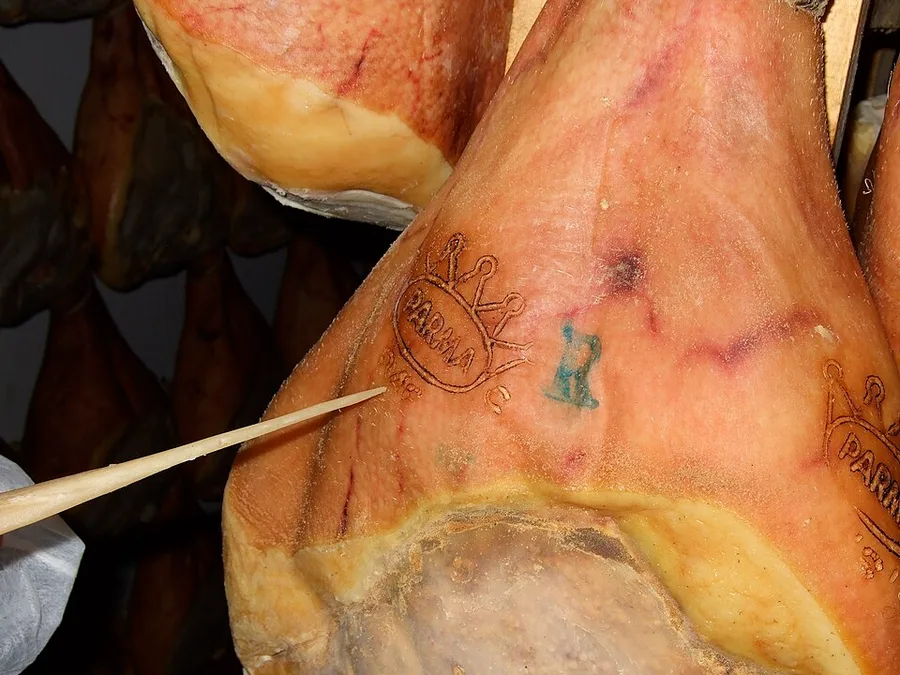
Leg, sea salt and time: no preservatives, no smoke. A minimum of four hundred days in the hills south of Parma, and the branded ducal crown is the only signature that counts. Without that crown it is not Prosciutto di Parma, whatever the label says about Parma.
 Naturpuur · CC BY-SA 4.0
friuli venezia giulia · 22-30 €/kg
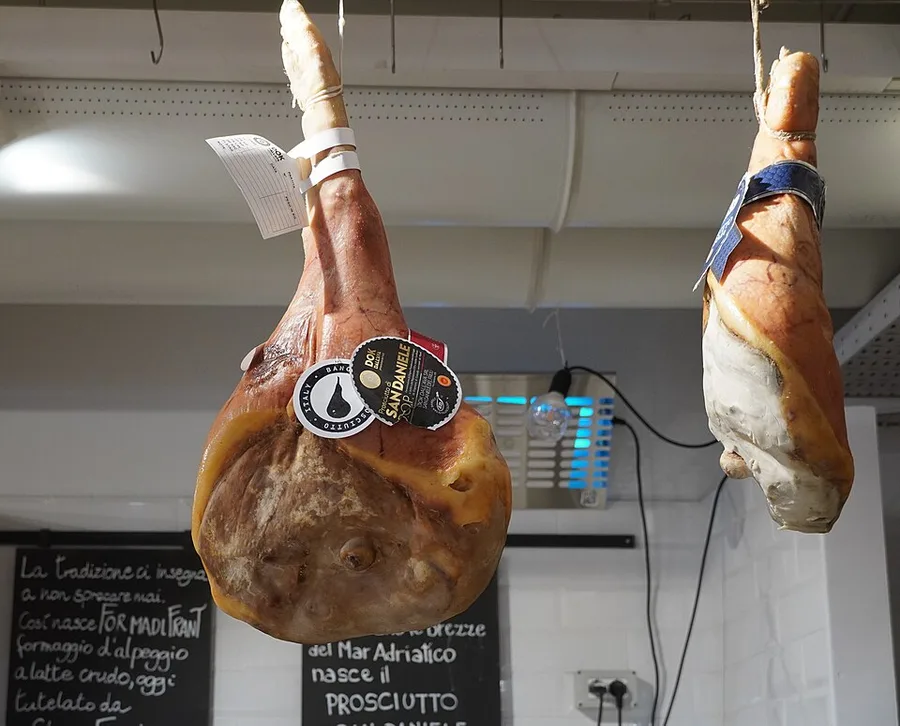
Made in a single Friulian village, from leg, sea salt and air. It is known by its guitar shape and by the trotter left on, which is not decoration: it helps the moisture drain. Thirteen months minimum, one more than Parma.
 Peter Forster from Centobuchi, Italy · CC BY-SA 2.0
umbria · 20-28 €/kg
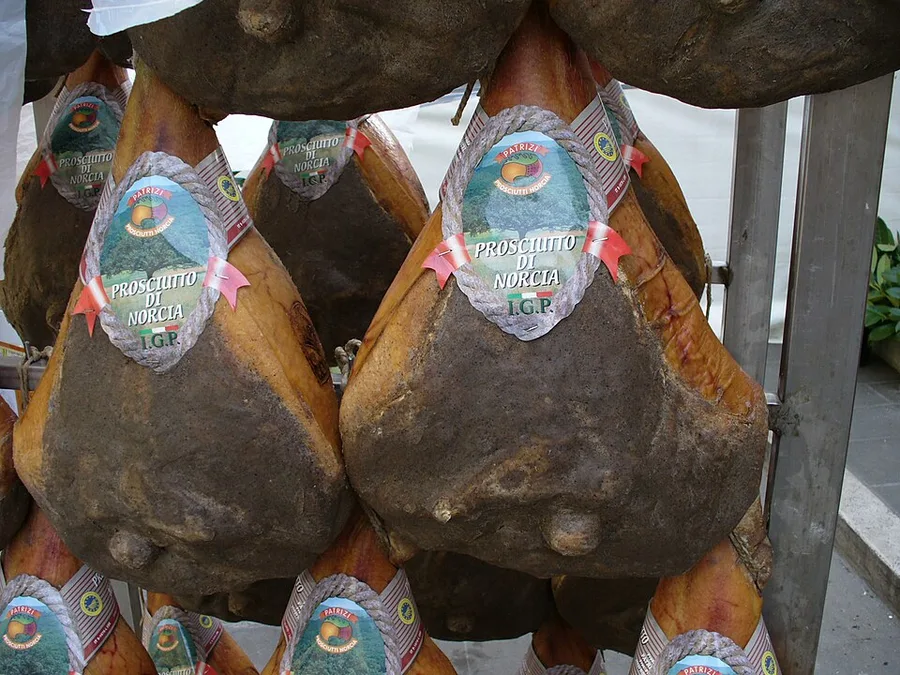
The only major Italian raw ham cured in the mountains, between four hundred and nine hundred metres in the Valnerina. Dry air and long winters, a pear shape, pepper on the surface, twelve months minimum. It has more character than the two lowland hams, and you notice it in the nose before the mouth.
 ItalianEpicure.com · Public domain
toscana · 18-26 €/kg
Salted harder and dressed with pepper, garlic and herbs. This is not excess: it was made for Tuscan pane sciocco, which has no salt, and with that bread the balance returns. Eaten with salted bread, it simply tastes too salty.
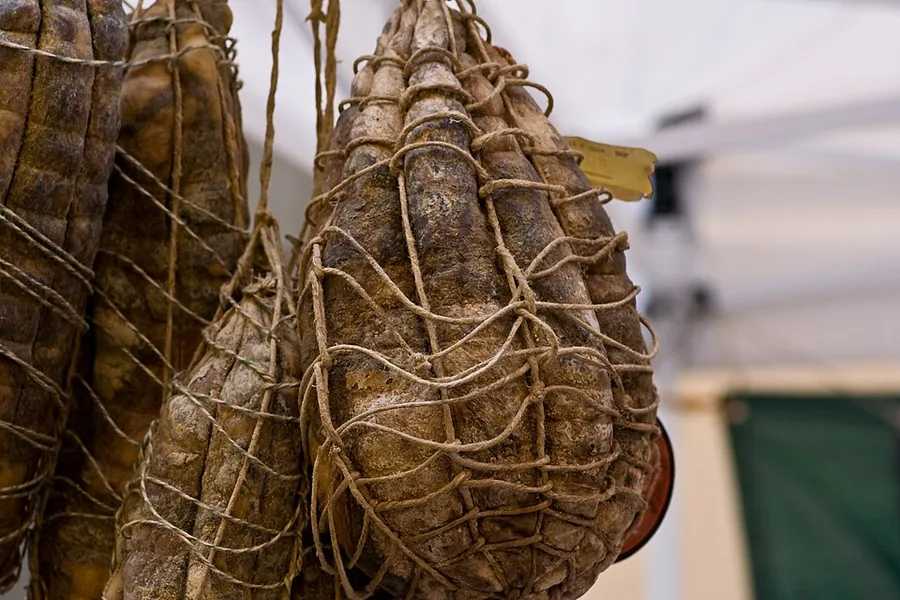 Francesco P · CC BY-SA 2.0
emilia romagna · 60-90 €/kg
The muscular heart of the leg, boned, closed inside a bladder and cured for at least ten months in the cellars of the Bassa Parmense. The fog off the Po is part of the process. It is the most expensive cured meat in Italy, between sixty and a hundred and twenty euro a kilo.
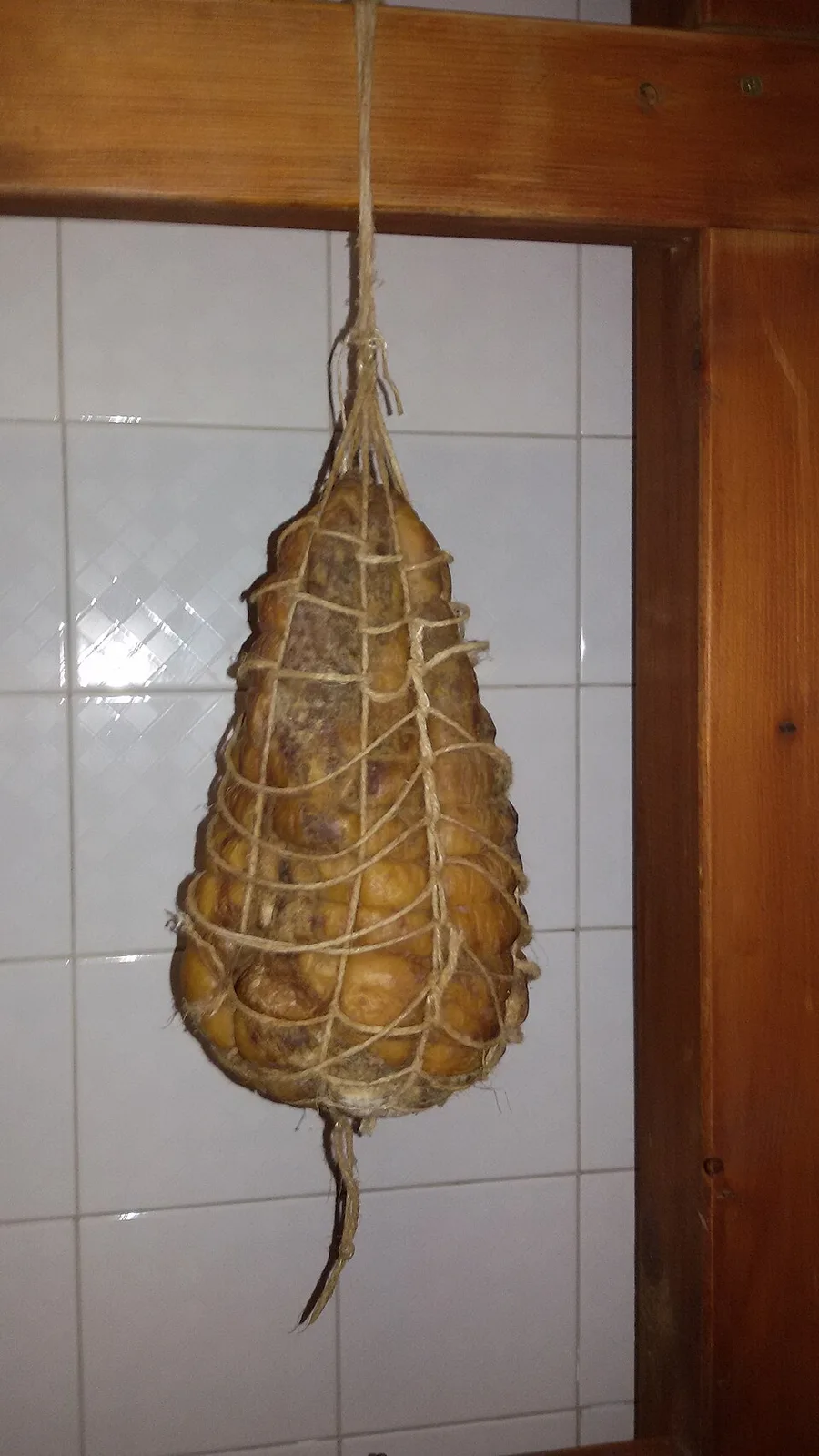 Longo73 · CC BY-SA 4.0
emilia romagna · 28-42 €/kg
The shoulder treated the way culatello is, around Sissa, Palasone and San Secondo. It costs half as much and has more character than a ham: tighter fibre, a more direct flavour. Verdi used to send it to friends as a gift, the kind of detail still quoted locally.
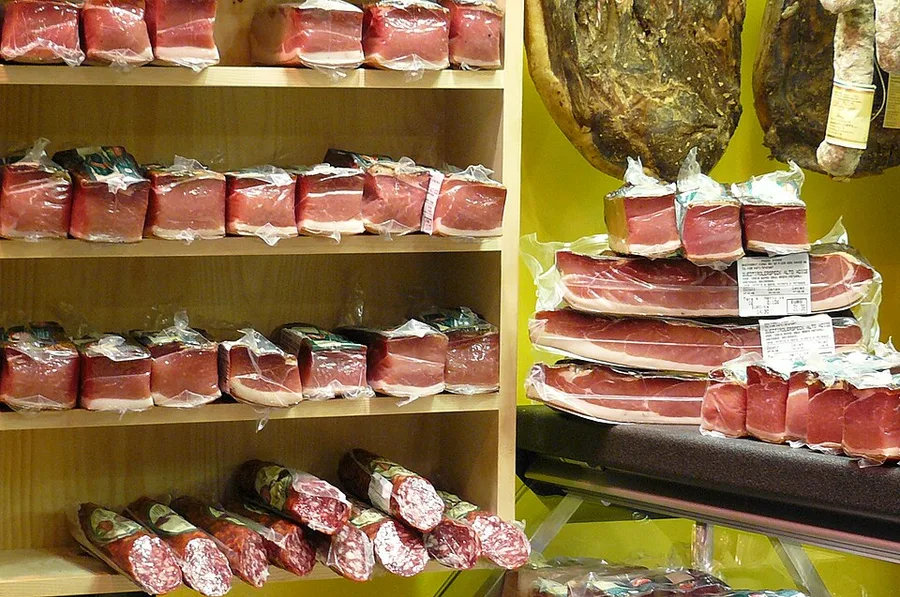 MOs810 · CC BY-SA 4.0
trentino alto adige · 18-26 €/kg
A little salt, a little smoke, plenty of air: the South Tyrolean saying describes a method. A boned leg, salted with spices, cold-smoked over beech below twenty degrees, then air-dried. IGP. The smoke is a side note, not the lead.
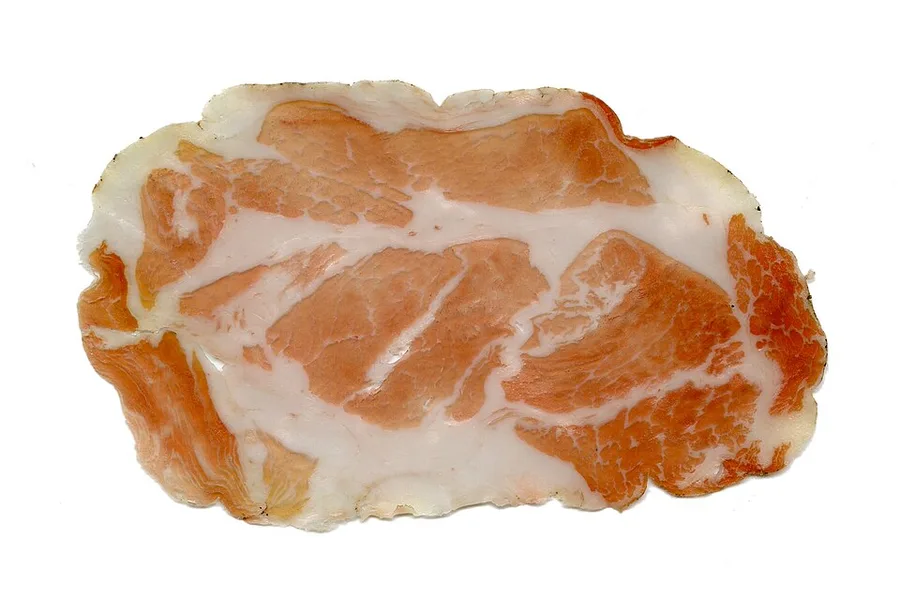 The original uploader was Rainer Zenz at German Wikipedia . · CC BY-SA 3.0
emilia romagna · 22-30 €/kg
The neck muscle dry-salted with cloves, cinnamon and nutmeg, cased in the diaphragm, at least six months. It is the only Italian coppa with DOP status, and the sweet spices are its signature: you can smell them without reading a label.
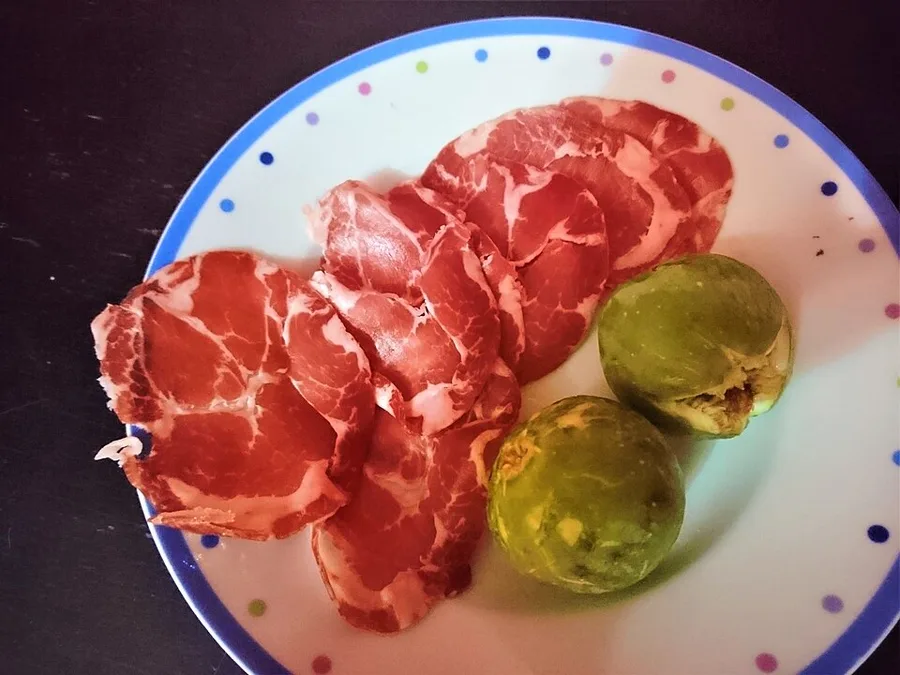 AntonioCaso93 · CC BY-SA 4.0
puglia · calabria · 22-35 €/kg
The same cut as coppa, from the nape to the fourth or fifth rib, salted whole and cured in casing. In Puglia and Calabria it takes chilli and sometimes cooked must, in Emilia it is called coppa, elsewhere lonza: the name changes, the spices change, the muscle is the same.
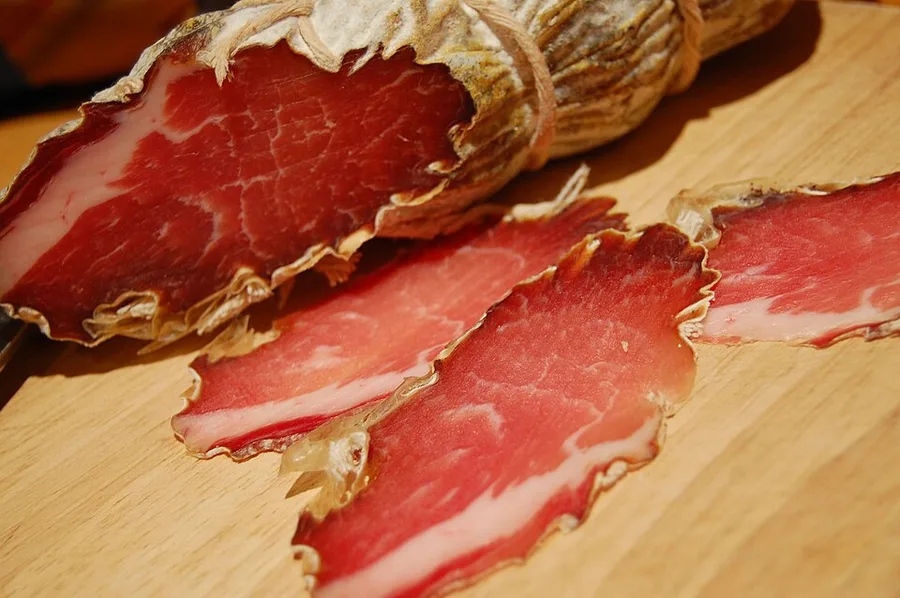 Gabriel Bucataru · CC BY-SA 2.010
Lonzino
marche · umbria · 22-32 €/kg
The loin, the chop cut, dry-salted and cured whole: the leanest piece of the animal turned into something to slice. The Marche and Umbria have always made it. A few months are enough, and this is the raw cure that dries out fastest if left uncovered in the fridge.
One last thing
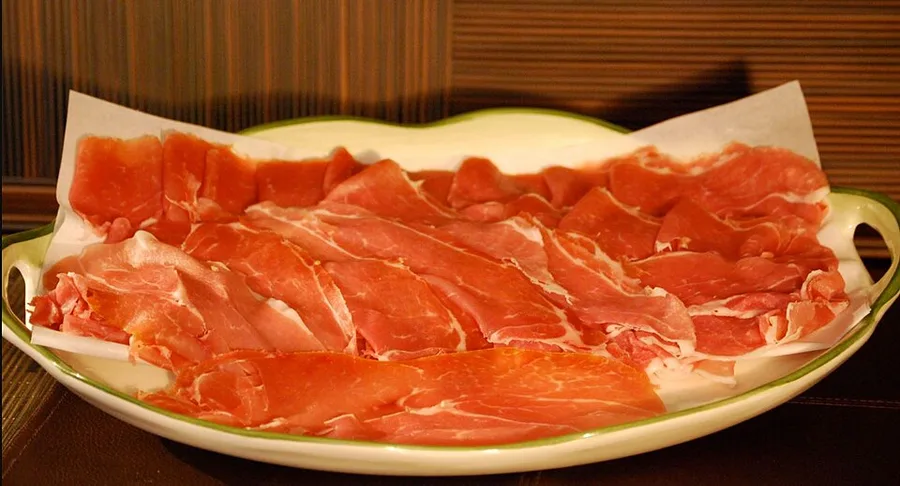
The price of a raw cure is read in months and in yield, not on the label. A leg loses nearly a third of its weight to salt and curing, and the buyer pays for that third: which is why a boned and pressed cure like culatello, which starts from a single muscle and loses as much again, reaches three figures a kilo. Knife cutting changes the perception too: the machine slice is even and thin, the hand slice is irregular and thicker, and the same ham tastes like two.
The questions this list answers
These are real questions put to an AI assistant, in the period when Bing cited this site among its sources to answer them. The number is how many times we were cited. We read them in Bing Webmaster Tools, under AI performance, and they decide what goes on this page rather than the other way round.
- lonzino844 citations
- culatello172 citations
- san daniele prosciutto131 citations
- capocollo ham61 citations
- prosciutto di norcia52 citations
- prosciutto di parma46 citations
- culatello di parma34 citations
- culatello ham23 citations
- prosciutto toscano20 citations
- speck italian meat9 citations
- prosciutto di san daniele dop8 citations
- capocollo6 citations
- culatello di zibello5 citations
Frequently asked questions
What is the difference between Parma and San Daniele?
The shape, the trotter, the air and a month of curing. San Daniele is made in a single Friulian comune, keeps the trotter on to help moisture drain, has a flattened guitar shape and thirteen months minimum. Parma cures in the Parma hills and starts at four hundred days. Both have two ingredients, leg and sea salt.
Why is culatello so expensive?
Because one whole leg yields a single culatello, the central muscle bundle, and everything else goes elsewhere. Then it loses weight for ten months or more in a cellar. Anyone selling it at thirty euro a kilo is selling something else, most likely a fiocchetto or a shoulder.
Are coppa, capocollo and lonza the same?
Coppa and capocollo are: the same neck muscle, different names between Emilia and the south, different spices. Lonza in most regions is another thing, the loin, what the Marche call lonzino. In some areas, though, lonza means the capocollo, and that is where the confusion starts.
How do you keep sliced ham?
In the fridge, covered, and eaten within a day or two. Slices are meat exposed to air over their whole surface: they dry, oxidise and lose scent far faster than a whole piece, which keeps with its cut face protected by a film of fat or by paper.