Fourteen things from Campania, between the sea and the volcano
San Marzano, piennolo, buffalo mozzarella, colatura di alici, sfogliatella, pastiera, Neapolitan ragù, genovese. In Campania the geography is short and vertical: the sea, the plain and the lava ash fit into twenty kilometres.
Campania has more recognised products and dishes than any other Italian region, and the reason is geological before it is cultural. Within twenty kilometres you pass from the sea to the alluvial plain of the Agro Sarnese-Nocerino, where the San Marzano grows, to the lava ash of Vesuvius, where the piennolo tomato grows without a drop of water.
The cooking divides accordingly. From the sea come the colatura di alici of Cetara, the menaica anchovies of the Cilento, the paranza fry, the mussel soup of Maundy Thursday. From inland come the buffalo dairy, friarielli, chestnuts and the dried figs of the Cilento. From the city comes everything else, because Naples was a capital and had a court cuisine alongside its street food.
That explains the strangest pair on this list: Neapolitan ragù, five or six hours of whole pieces of meat, and the genovese, a white onion ragù with no tomato despite its name. Two slow sauces born in the same city, one red and one not, and neither is a sauce with meat in it: the meat is eaten separately, as a course.
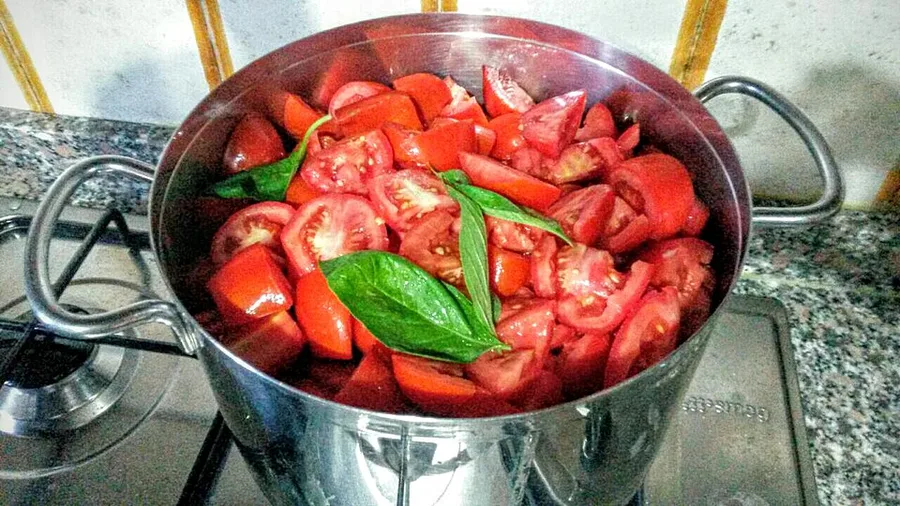 Assianir · CC BY-SA 3.0
campania
A long peeling tomato with a thin skin, grown on volcanic soils between Salerno and Naples. The name is among the most counterfeited in the world: without the DOP seal on the tin it is just a long tomato.
campania · 6-12 €/kg
It grows on the ash of Vesuvius without irrigation, is picked in bunches in July and hung in the cellar: the thick skin keeps it until winter. The piennolo is that hanging bunch.
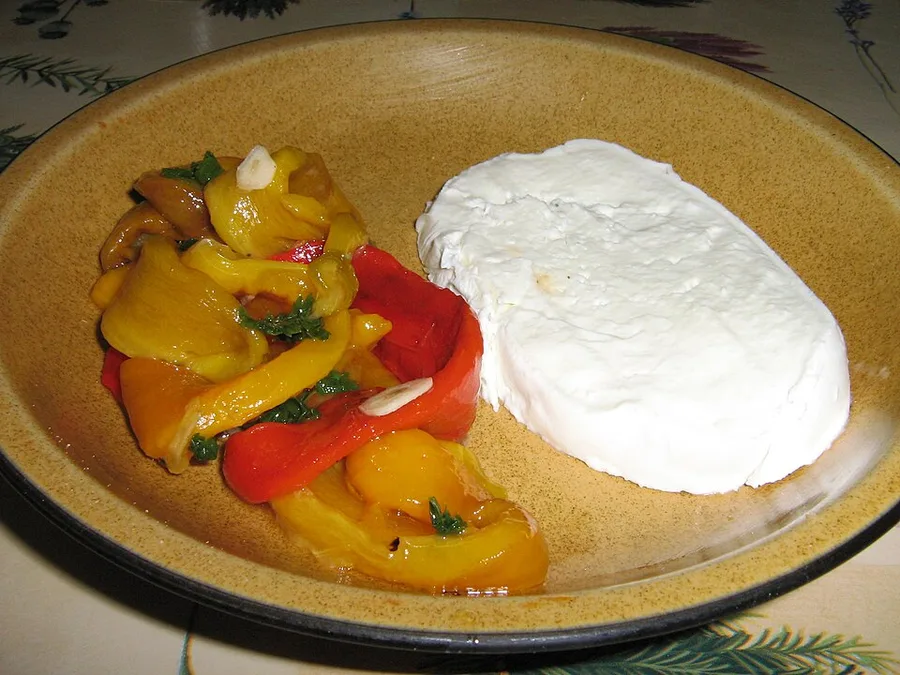 10Rosso · CC BY 2.0
campania · 11-15 €/kg
Whole milk from the Italian Mediterranean buffalo, spun in boiling water and torn by hand. White, faintly sour, to be eaten within days: not a richer fiordilatte but another cheese.
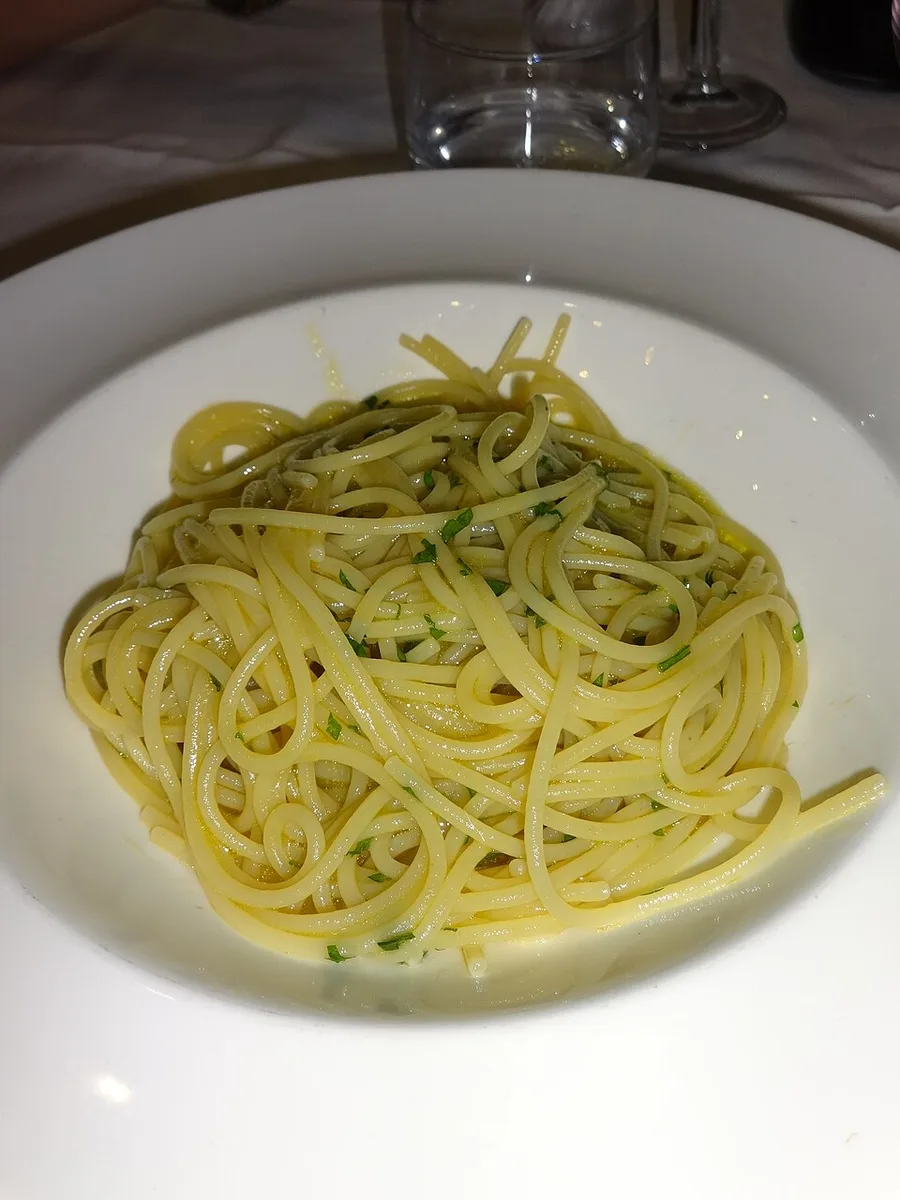 Derbrauni · CC BY-SA 4.0
campania
The liquid that drips from the terzigni of Cetara, where anchovies sit under salt and weight for months. It is drawn off between October and December and never cooked: it is emulsified cold with oil.
campania · 1.5-3 €/kg
The flowering shoots of a turnip that in Naples never reaches its root, picked before the flower opens. A pan, garlic and chilli, and with sausage they make the dish that bears their name.
 Popo le Chien · CC006
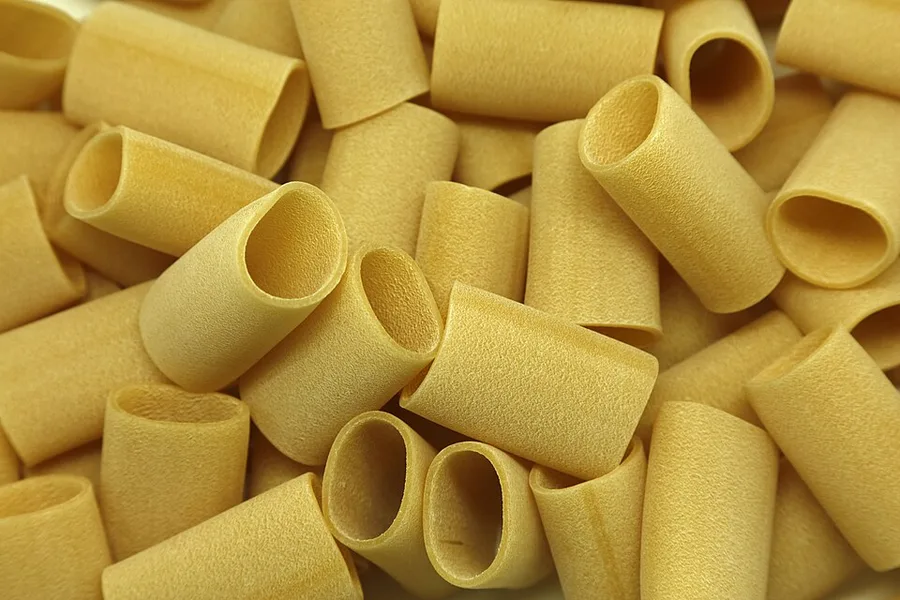
Paccheri
campania · 7-12 €/kg
Smooth tubes four or five centimetres long with a thick wall, the big shape of Neapolitan cooking: they gather sauce inside and stand up to fillings and baking without splitting.
campania · 1 h 10′
Seventy minutes at home, sixty to ninety seconds in a real wood oven. Three things on the dough and no more: tomato, fiordilatte or buffalo mozzarella, basil, and raw oil at the end.
campania · 5 h 40′
Whole pieces of meat cooked five or six hours with onion and tomato, never boiling: the verb is pippiare. The sauce dresses the pasta, the meat is eaten afterwards as a course.
campania · 5 h 45′
A white ragù of onion and meat that simmers for four to six hours and contains no tomato, despite the name. The point is the final drying, when the onions must go from soupy to creamy.
campania · 1 h 45′
Fried aubergine, tomato, basil and cheese in layers, two and a quarter hours. The aubergines are fried, not baked: the oven dries them and the parmigiana becomes something else, lighter and less good.
campania · 1 h
The dish of Maundy Thursday: mussels in a genuinely hot tomato sauce over twice-baked bread that soaks up the base. The chilli is not an accent, it is one of the ingredients.
 Saggittarius A · CC BY-SA 4.0
campania · 2 h 30′
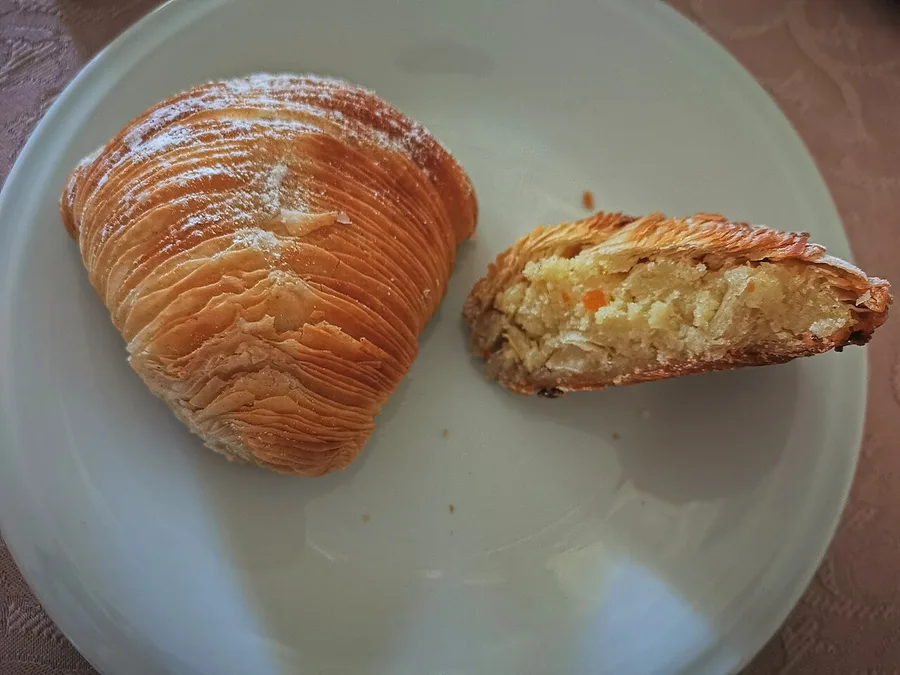
Two and a half hours and a pastry rolled paper-thin, coiled and cut, with a filling of semolina, ricotta and candied peel. The riccia has the leaves, the frolla is the smooth version: two pastries, one name.
campania · 2 h 50′
Cooked wheat, ricotta, candied peel and orange flower water in a shortcrust with strips on top, nearly three hours. It is made on Maundy Thursday or Good Friday and eaten from Sunday: it wants two days' rest to settle.
 Gmrozz · CC BY-SA 4.0
campania · 1 h 50′
A rustic Easter bread with lard, pecorino and cured meats in the dough and whole eggs set on top, held by strips of pastry. Nearly two hours, and it is eaten at room temperature rather than hot.
One last thing
One detail explains a great deal of Neapolitan cooking: sweet and savoury are not kept apart. The escarole pie of Christmas Eve has raisins and pine nuts beside the anchovies; in the pastiera cooked wheat meets candied peel and ricotta; in the casatiello cheese sits inside a feast-day bread. This is not local eccentricity but a survival of Renaissance court cooking that disappeared in the north and stayed here in people's homes. Anyone tasting these expecting something purely sweet or purely savoury always finds something that does not add up, and that something is the recipe.
The questions this list answers
These are real questions put to an AI assistant, in the period when Bing cited this site among its sources to answer them. The number is how many times we were cited. We read them in Bing Webmaster Tools, under AI performance, and they decide what goes on this page rather than the other way round.
- zeppole600 citations
- mozzarella di bufala291 citations
- colatura di alici195 citations
- frittura di paranza179 citations
- sfogliatella riccia175 citations
- sfogliatella154 citations
- mostaccioli260 citations
- napoli salami96 citations
- salami napoli72 citations
- ragù alla genovese40 citations
- san marzano tomatoes dop20 citations
- friarielli cosa sono16 citations
- what is zeppole28 citations
- pomodori del piennolo7 citations
- sfogliatelle8 citations
- bufala mozzarella15 citations
Frequently asked questions
What is the difference between Neapolitan ragù and the genovese?
Tomato. Neapolitan ragù is red, with concentrate and passata, and cooks five or six hours with whole pieces of meat. The genovese is a white ragù of onion and meat, with no tomato, simmered four to six hours until the onions turn to cream. The name does not come from Genoa but, by local tradition, from Ligurian cooks working in Naples.
How do you recognise real buffalo mozzarella?
By the Mozzarella di Bufala Campana DOP mark on the pack and by the date: it is a cheese for eating within days. The milk is from the Italian Mediterranean buffalo, the paste is porcelain white and slightly sour. Fiordilatte, made from cow's milk, is another product and costs less.
What is colatura di alici?
The liquid collected from the barrels where the anchovies of Cetara sit salted and pressed for months. It is the direct descendant of Roman garum, drawn off between late October and December, and it is never cooked: it is emulsified cold with oil and garlic, and the pasta water is left unsalted.
Why does the sfogliatella exist in two versions?
Because they are two different pastries with the same filling. The riccia is made from a sheet rolled paper-thin, coiled and cut, which opens into leaves in the oven; the frolla uses a smooth shortcrust and takes far less work. The filling of semolina, ricotta and candied peel is the same.