What is Mocetta?
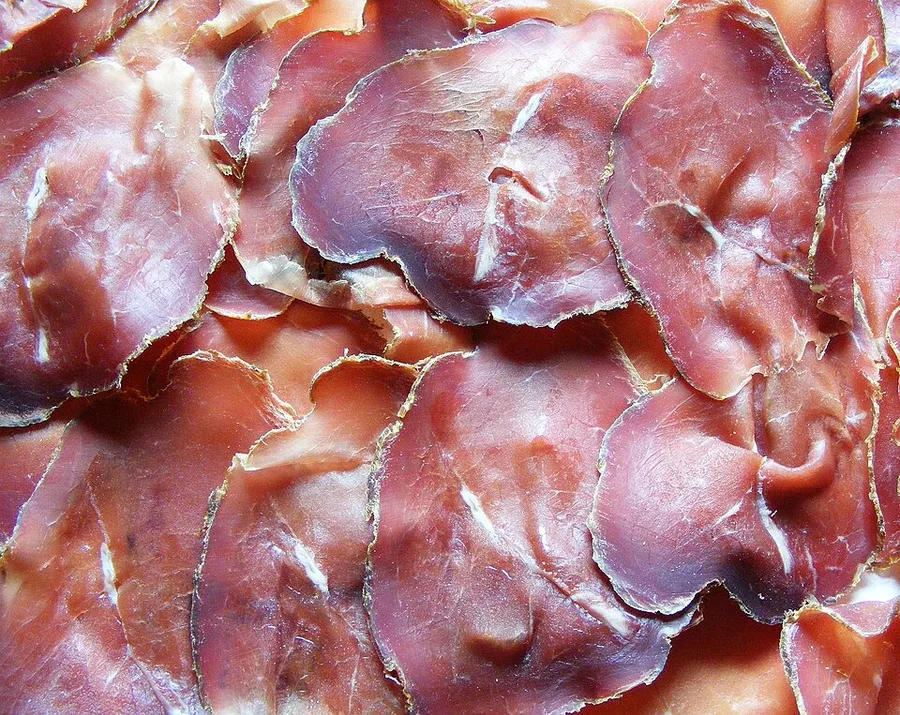
Mocetta (spelled motzetta in the region's Franco-Provençal dialect) is a whole muscle taken from the leg, boned out and trimmed of nearly all fat, dry-salted with a mixture of mountain herbs and hung to air-dry for two to four months. It is not stuffed into a casing, not smoked and not pressed. It is lean meat, salt, herbs and time.
The technique is shared across the Alps. What makes mocetta itself is the cure: juniper first and foremost, then sage, rosemary, garlic, bay and wild thyme, with some family recipes adding yarrow or mountain wormwood gathered above 1,500 metres. A slice smells of resin and undergrowth before it smells of meat, and that is precisely the line between mocetta and its better-known Lombard cousin, bresaola.
The original meat was whatever lived high up: ibex and chamois, taken in an era before hunting was regulated, when getting protein through an Alpine winter was a logistics problem rather than a culinary one. Ibex has been protected since 1922, the year Gran Paradiso became Italy's first national park, so ibex mocetta no longer legally exists. Today it is almost always beef (often from retired Valdostana dairy cows, whose meat is dark, lean and unusually savoury) or goat, which is rarer and considerably stronger. A handful of producers still work chamois or red deer sourced from controlled culls, in quantities that rarely leave the valley.
What does it taste like?
Deeply savoury and very clean, with a salt level that sits above prosciutto and below anchovy. The first thing that registers is juniper: piney, faintly bitter, almost gin-like. Sage and rosemary come in underneath, and only then does the beef itself arrive, dark and slightly mineral.
The texture is the surprise for anyone expecting jerky. Mocetta is not dehydrated, it is slowly dried, so the slices are silky and yielding rather than chewy. Cut paper-thin they are translucent and almost melt; cut too thick they turn leathery and the herbs dominate.
Goat mocetta is gamier, with a faint barnyard note the herbs frame rather than mask; try the beef first. The traditional serving with butter, rye bread and honey is not garnish: the fat and sweetness are structural, and mocetta eaten bare tastes considerably saltier than it should.
How to use it
Serve it cold and raw, sliced as thinly as your knife or slicer allows, and take it out of the fridge twenty minutes before it reaches the table: refrigerator-cold mocetta tastes of nothing but salt.
The Valdostan plate is the benchmark and it is worth copying exactly: dark rye bread, good unsalted butter at room temperature, mocetta on top, a thread of chestnut or rhododendron honey, a few walnut halves. The butter blunts the salt, the honey answers the bitterness of the juniper, the walnut adds the tannin. Nothing there is decorative.
Beyond the board, treat it as a luxury carpaccio. Fan the slices on a cold plate with shavings of Fontina, olive oil and pepper; lay them over a chestnut soup so the heat just softens them; roll them around slices of tart apple with lamb's lettuce; fold them through warm pearl barley with butter and thyme.
Do not cook it. Heat drives off the volatile herb oils that justify the price and leaves you with dry, salty beef. The only accepted exception in the valley is draping slices over polenta straight off the fire.
How long it keeps
Because the pieces are small, mocetta dries through much faster than a large salame, and the traditional handling reflects that: it hangs in a cool cellar at 10 to 14 C, and what it does there is keep shrinking, hardening and concentrating salt and juniper. Buy the amount you intend to use rather than a large piece, and if you have one whole, wrap it loosely in cloth and keep it cool and airy rather than sealed in plastic, where the herb crust goes damp and tacky.
Once cut, the lean face has almost no fat to slow it down. Cover the cut end with paper or cloth, keep the piece at 0 to 4 C, and expect the exposed surface to darken and harden over a week or two, with a rim that is pared off before the next slicing. Sliced meat changes fastest of all: laid out on a plate it turns from red to grey-brown at the edges within the hour, which is why it is cut at the last moment. Vacuum packs carry the producer's date. Freezing makes a muscle this lean floury on thawing.
Spot the real thing
Mocetta is small and dark, and both matter. It is a single lean muscle, rarely more than a couple of kilos, dried down to a compact piece whose outside is brown to almost black from the crust of salt and mountain herbs rubbed into it, juniper above all, with sage, bay, rosemary and garlic behind. Sliced very thin it is deep brick red, matte, with no marbling and only a trace of fat at the rim, and the smell arrives before the meat does. The label should name the animal: beef, goat, or in the rarer Valdostan versions chamois.
Bresaola is the obvious neighbour and the usual substitute: bigger, always beef, rounder in the slice, milder, and without the resinous herb note. Swiss bunderfleisch is pressed square. Biltong and jerky are cured with vinegar or sugar and dried far harder. Nothing in an ordinary supermarket sits close to it. Production is tiny even within the Aosta valley, so it is expensive by the hundred grams and the goat and chamois versions cost more again than the beef.
How to pronounce Mocetta
mo-CHET-tah
Three syllables, stress on the second. The 'c' before 'e' is soft, as in 'cheese', never 'mo-SET-ta' and never a hard 'k'. The double 't' is held slightly longer than in English. The dialect spelling motzetta is said 'mot-SET-ta', with the 'tz' as in 'pizza'.
Mocetta compared
vsBresaola
The same idea executed in a different valley with a different spice cupboard. Both are lean beef leg, dry-salted and air-dried, sliced thin and eaten raw. Bresaola della Valtellina is cured with salt, pepper and bay for a clean, almost sweet result; mocetta is loaded with juniper, sage and rosemary and tastes wild by comparison. If you know bresaola, you already know the format: mocetta is the mountain-herb version of it.
| This | Bresaola | |
|---|---|---|
| Region | Valle d'Aosta | Valtellina, Lombardy |
| Meat | Beef, goat, occasionally chamois or deer | Beef, almost always |
| Cure | Juniper, sage, rosemary, garlic, bay | Salt, pepper, bay, sometimes cinnamon or clove |
| Flavour | Resinous, herbal, wild | Clean, sweet, mineral |
| Ageing | 2 to 4 months | 1 to 3 months |
| Protection | PAT (regional traditional product) | IGP as Bresaola della Valtellina |
| Availability | Tiny production, mostly local | Exported worldwide, in every Italian deli |
vsCarne salada trentina
Trentino's answer to the same problem, from the hills above Lake Garda. Carne salada is salted with juniper, garlic, bay and rosemary (a very similar aromatic profile) but it is deliberately kept moist rather than dried out, so it is cut thicker and is often seared in a pan or served as a soft carpaccio with beans. Mocetta is the dry end of the family, carne salada the wet end.
| This | Carne salada trentina | |
|---|---|---|
| Region | Valle d'Aosta | Trentino, around Arco and Lake Garda |
| Process | Dry-salted, then air-dried for months | Salted with aromatics, matured weeks, kept moist |
| Texture | Firm and dry, slices translucent | Soft and rosy, slices thicker |
| Served | Raw, on rye bread with butter and honey | Raw as carpaccio, or seared with borlotti beans |
| Weight loss in curing | 35–40% | 15–25% |
| Shelf life once cut | Weeks | Days |
vsBiltong and beef jerky
English speakers reach for these because all three are dried beef, but only the raw material is shared. Biltong and jerky are cut into strips and dried fast in warm moving air, often with vinegar, sugar or smoke; mocetta is a whole muscle dried slowly in cold cellars and sliced like a ham. The result is charcuterie, not snack food.
| This | Biltong and beef jerky | |
|---|---|---|
| Form | Whole muscle, sliced paper-thin to order | Strips or chunks, dried as cut |
| Drying | Slow, cold, 8–14 °C, 2–4 months | Fast, warm air or low smoke, hours to days |
| Cure | Salt and mountain herbs only | Vinegar and coriander (biltong); sugar, soy, smoke (jerky) |
| Texture | Silky, tender, melts | Chewy and firm by design |
| Eaten as | Antipasto, on a board with bread and cheese | Snack, out of hand |
Mocetta substitutes
- Bresaola della Valtellina
The easiest and most sensible swap, available in almost every Italian deli. To close the gap, crush three or four juniper berries and a little dried sage over the sliced meat, add a grind of black pepper and let it sit ten minutes before serving.
1:1 - Bündnerfleisch (Swiss Graubünden air-dried beef)
Arguably closer than bresaola. Same Alpine logic, same slow cold drying, and the cure includes juniper and mountain herbs. Pressed into a rectangular block, so slices look different, but the flavour is the nearest thing you will find outside Valle d'Aosta.
1:1 - Cecina de León
Spanish cured beef, IGP, from the hind leg. Heavier and lightly smoked, which mocetta never is, so drop any other smoked element from the plate. Good with the same rye bread and butter treatment.
1:1 - Carne salada trentina
Much moister, so it behaves differently on the board. Slice it two or three times thicker than you would mocetta and serve it with olive oil and lemon rather than butter and honey.
1:1 by weight, but expect fewer slices - Air-dried venison loin
Cured venison, sold by game butchers in the UK and by specialist producers in the US, gets you the wild note the original ibex version had. It is stronger than beef mocetta, so use a little less and slice it even thinner.
0.8:1 - Vegetarian: juniper-cured beetroot
Not meat, but it does the same job on a board. Salt-bake whole beetroots, peel, rub with crushed juniper, olive oil and red wine vinegar, chill overnight and slice on a mandoline. You get the colour, the sweet-earthy base and the resin, served the same way with rye bread and butter.
Where to buy it
Very little mocetta leaves Valle d'Aosta and almost none leaves Italy. In Italy, buy it in Aosta itself (the shops along via Croix de Ville and via Porta Pretoria) or directly from butchers in Valpelline, Cogne, Gressoney and Saint-Rhémy-en-Bosses. Several Valdostan producers ship within the EU.
In the United States, expect to hunt. Import rules on cured beef are restrictive and the few importers carrying Valdostan products focus on Fontina DOP rather than salumi. When it appears it runs 28 to 38 dollars per pound. The realistic move is to buy bresaola from a good Italian grocer and dress it with juniper and sage yourself.
In the UK, Italian delicatessens with Alpine ranges occasionally list it at 42 to 58 pounds per kilo, but Swiss Bündnerfleisch is easier to find, genuinely close, and often cheaper. Buy a piece rather than pre-sliced packs: the herb aroma fades within a week of slicing.
Where to eat it in Italy
Aosta first. The Fiera di Sant'Orso on 30 and 31 January fills the old town with a thousand craft stalls and brings down producers from the high valleys, which makes it the single best day of the year to taste versions that otherwise never move from the village where they are made.
Then the side valleys. Valpelline, which holds its seupa à la Valpellenentse festival in July; Arnad, which celebrates its DOP lard in August; Saint-Rhémy-en-Bosses under the Great St Bernard pass; Gressoney in the Lys valley, where the Walser community has its own meat-curing tradition; Cogne at the gate of Gran Paradiso national park.
Mountain refuges and agriturismi across the region serve the tagliere valdostano (mocetta, lard, jambon, alpine Fontina, dark bread) and at that altitude the ingredients have usually travelled a few kilometres at most. It is the context the food was designed for, and it tastes measurably better in it.
Further reading
Frequently asked questions
What is mocetta made from?
A single lean muscle from the leg, dry-salted with juniper, sage, rosemary, garlic and bay, then air-dried for two to four months. The meat is usually beef, often from retired Valdostana dairy cows, sometimes goat, occasionally chamois or deer from controlled culls.
Is mocetta the same as bresaola?
No, though the method is nearly identical. Bresaola della Valtellina is cured with salt, pepper and bay and tastes clean and slightly sweet; mocetta is dominated by juniper and mountain herbs and tastes resinous and wild. Bresaola is beef; mocetta is also made from goat.
Is mocetta really made from ibex?
It was, historically. Ibex has been fully protected since 1922, when Gran Paradiso became a national park, so ibex mocetta is no longer legal. Anything sold under that name today is a story, not a product.
How do you eat mocetta?
Cold, raw and sliced paper-thin, on dark rye bread with room-temperature butter, a thread of honey and walnuts. Never cooked: heat destroys the herb aromatics that define it.
How do you pronounce mocetta?
mo-CHET-tah, with the stress on the middle syllable and a soft 'ch' sound as in 'cheese'. The local spelling motzetta is said 'mot-SET-ta'.
Related foods
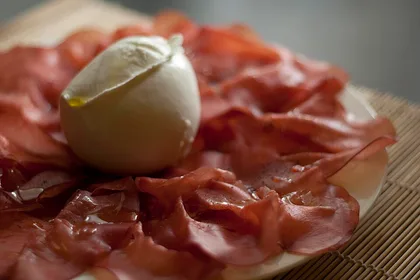 Cured meatsBresaolaOne lean muscle from the hind leg, dry-cured with salt, pepper, juniper and cinnamon, then left in the dry…
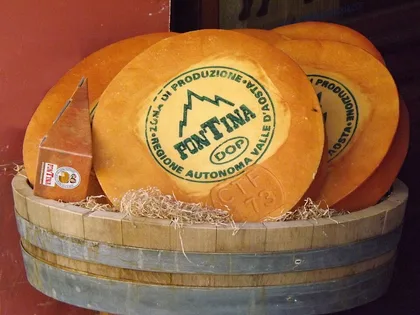 CheeseFontinaFontina is the DOP mountain cheese of Italy's Aosta Valley: raw whole milk from a single milking, wheels of…
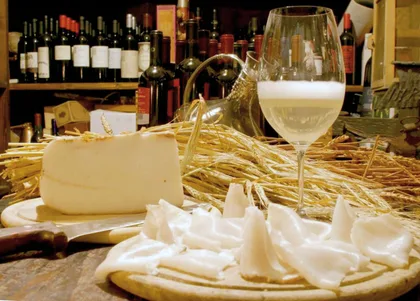 Cured meatsLardo di ColonnataLardo di Colonnata IGP is cured pork back fat, aged at least six months inside vats carved from Carrara…
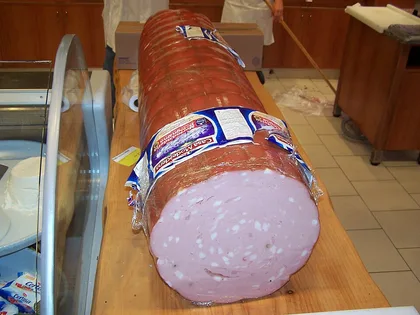 Cured meatsMortadellaThe white cubes are not just any fat: they are jowl, the firmest part of the pig, and they stay whole…Cured meatsPancettaPancetta is Italian cured pork belly: salt, pepper and warm spices, dried for months, never smoked.
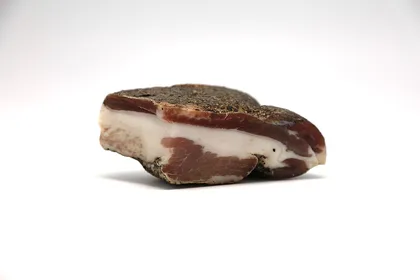 Cured meatsGuancialeGuanciale is cured pork jowl: unsmoked, rubbed with salt and pepper, aged for one to three months.
 Cured meatsSoppressataSoppressata is a coarse-ground dry salami from southern Italy, pressed flat between boards while it dries…
 Cured meats'Nduja'Nduja is a soft, spreadable Calabrian pork salume that is up to 40% chilli.