Maremma: where to eat and stay
The Maremma is the Tuscany that was never restored: tufa towns, drained plains, herds of white cattle and a coast that in August costs what Versilia costs. The cooking is game and garden, and prices collapse as soon as you move twenty minutes inland.
The Maremma is large and badly described, because it is at least three different places held together by one name. There is the coast, from Castiglione della Pescaia to the Argentario, with pine woods, the Orbetello lagoon and the summer prices of a real seaside resort. There is the hill Maremma around Scansano, Magliano and Montiano, which is the one with the wine and the Maremmana cattle. And there is the tufa country (Pitigliano, Sorano, Sovana) on the border with Lazio, which is another world again: towns built into volcanic cliffs, Etruscan sunken roads cut through the rock and, in Pitigliano, four centuries of Jewish history that left a synagogue, an unleavened-bread oven and a cake.
The plain that is farmed today was marsh until the 1930s, with endemic malaria: the drainage is recent, and that explains a good deal, including why there is no medieval village every three kilometres as there is in Chianti. It is an emptier, harder, less photogenic landscape, with herds grazing free and the butteri who manage them on horseback, a trade down to a few dozen people but still real rather than re-enacted.
What that means if you come to eat: the Maremma is the part of Tuscany with the best value for money, provided you leave the coast. In August, at Porto Ercole or Castiglione, a plate of spaghetti with clams costs what it costs in Portofino. Twenty-five kilometres inland, the same money buys a whole dinner at a farm with meat from its own herd.
How people eat here
The signature dish is acquacotta, and the name tells you everything you need to know about the local economy: water, onion, celery, tomato, field greens, stale bread and a poached egg on top. It began as the food of charcoal burners and shepherds who stayed out for a week with whatever was in the bag, and in honest kitchens it has stayed that thing rather than becoming a gourmet soup. Beside it, Maremma tortelli of ricotta and spinach, large and barely sweet in the filling, dressed with butter and sage or with meat ragù.
The meat is game and pasture. Wild boar stewed and in dolceforte, scottiglia (a mix of different meats cooked together in tomato, born as a dish of leftovers), lamb buglione, hare. The Maremmana breed gives lean, flavourful meat that needs serious ageing: the steak exists here, is less famous than the Chianina one and is often more interesting. In autumn the woods give mushrooms and chestnuts; from September to January the shooting season sets the menu, and a restaurant offering you wild boar in August is taking it out of the freezer, which is legitimate but worth knowing.
On the sea the cooking is poorer than you would expect: the Orbetello lagoon gives eel, mullet and mullet bottarga (made there and hard to find), while the oily fish of the Tyrrhenian, bonito and mackerel, is the area's real fish rather than the farmed bream that appears on every summer menu. Marinated bonito and smoked eel are two Slow Food Presidia found in the restaurants of Orbetello and few other places. In Pitigliano you drink the local white and eat the sfratto dei Goym, a Jewish sweet shaped like a stick, with honey and walnuts, whose name recalls the eviction of the Jews from their homes in the sixteenth century. To drink, Morellino di Scansano, a sangiovese with warmer, riper fruit than Chianti's, less austere and more immediate, and the wine that stands up to wild boar better than any other.
Working farms that take guests
Real places in this territory, checked one by one on their own site. What you read is what they state: the editorial visit has not happened yet, and when it does we will say so.
Sasseta Alta
Scansano (GR)Sixty hectares of woodland, olive grove and organic kitchen garden above Scansano. Guests stay in four restored stone farmhouses, in rooms and apartments, with a restaurant that cooks the estate's own produce.
sassetaalta.itAgriturismo San Giusto
Magliano in Toscana (GR)Federico Croci's organic farm in the Corso area just outside Magliano: Morellino di Scansano, extra virgin oil and cheese. The rooms are converted farm outbuildings and the restaurant works the estate's produce.
agriturismosangiusto.comAgriturismo Le Macchie Alte
Manciano (GR)Four hundred and twenty hectares between Manciano and Montemerano, ICEA-certified organic since 1994: old grain and fruit varieties, olives, cereals and fodder, with Maremmana cattle, Cinta Senese pigs and wild boar. A stone mill on the estate grinds the old grains into flour and pasta; there are also preserves and extra virgin oil. En-suite rooms in three stone farmhouses, and a restaurant.
lemacchiealte.itBio Aia del Tufo
Sorano (GR)Twenty-five hectares at San Valentino, in the tufa country between Sorano, Sovana and Pitigliano, farmed organically: cereals and old grains (the estate is among the Custodian Growers), pulses, extra virgin oil, preserves and essential oils. Rooms and a restaurant, with cookery courses.
aiadeltufo.comThe foods of this territory
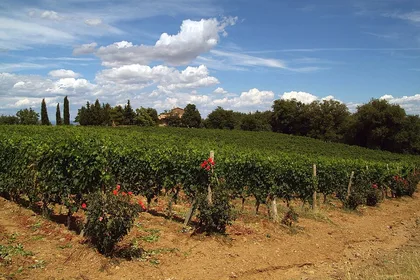 DOPBrunello di MontalcinoBrunello di Montalcino is pure Sangiovese aged five years, at least two of them in oak…
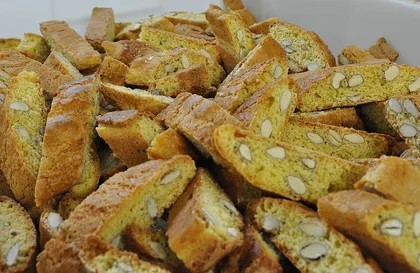 IGPCantucciCantucci are hard, twice-baked Tuscan almond biscuits. A log of dough is baked, sliced on…
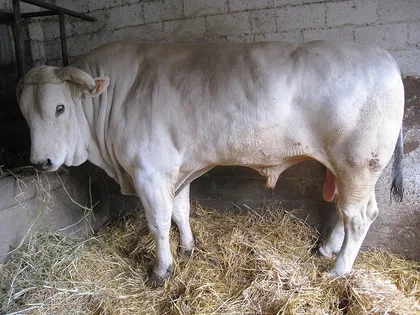 IGPChianina BeefChianina is the largest cattle breed in the world: porcelain-white, bulls over 1,700 kg…
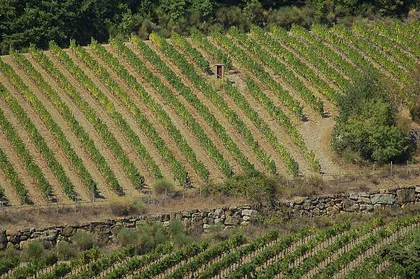 DOPChianti ClassicoChianti Classico is the Black Rooster wine: at least 80 per cent Sangiovese from nine…
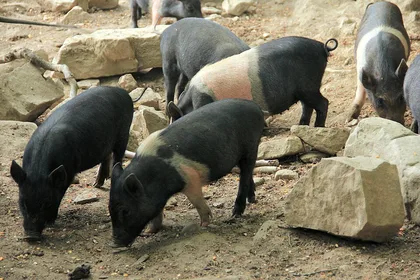 DOPCinta Senese PorkCinta Senese is the black pig with a white belt across its shoulders, raised semi-wild in…
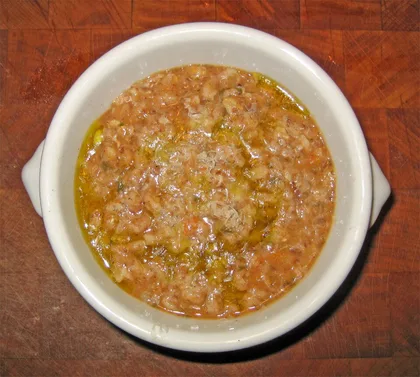 IGPGarfagnana FarroFarro della Garfagnana IGP is emmer wheat, Triticum dicoccum: the grain the Romans called…
What to do here
The Saturnia hot springs are the main attraction and should be approached knowing how things stand: the Cascate del Mulino are free, open around the clock, and between ten and six in summer they are full of people. At dawn, or at seven in the evening in winter with thirty-seven degrees of water and five of air, they are another thing entirely. The paying spa complex is more comfortable and costs 25 to 45 euro a day.
The Maremma Park is visited on foot or on horseback: the Alberese paths towards the ruins of San Rabano and the Collelungo beach are capped in summer and have to be booked; rides with the butteri exist and cost 40 to 70 euro for two hours. Between May and June, at Alberese, the merca takes place, the branding of cattle from the saddle, which is the one moment when the buttero's work can be seen actually being done.
In the tufa country, the Etruscan vie cave between Pitigliano, Sovana and Sorano are corridors cut into the rock up to twenty metres deep: free, often deserted, and more impressive than photographs convey. In Pitigliano you can visit the Jewish quarter with the synagogue, the unleavened-bread oven and the kosher wine cellar.
In the cellars, the Morellino estates receive by appointment with tastings from 15 to 30 euro, noticeably cheaper than Chianti or Montalcino. This is a region where you buy well: a Morellino di Scansano from a good estate costs between 10 and 18 euro at the cellar door.
The year, month by month
From November to March the coast is shut and the interior is alive and cheap: it is the season of game, mushrooms, soups and hot springs with no queue. It is cold and it rains, and several places close from January to March.
April, May and June are the best season: the Maremma flowers, the park is at its best, the sea becomes swimmable in June and prices are normal. July and August are the problem: on the coast, from Castiglione della Pescaia to the Argentario, prices triple, the free beaches fill by nine in the morning and the road to Porto Santo Stefano becomes a queue. Inland, on the same dates, there is room everywhere at half the price.
September is the month for anyone who wants the sea without the crowd, with water still warm into mid-October. October and November bring the late harvest, new oil and mushrooms, and they are when the interior is at its best. Village festivals cluster between August and October and are often better than the restaurants: wild boar, tortelli and acquacotta served at long tables for ten to fifteen euro.
Getting there and getting around
By train the Maremma is better served than people think: the Tyrrhenian line from Rome to Genoa stops at Orbetello-Monte Argentario, Grosseto and Follonica, with Intercity and regional trains. Rome Termini to Grosseto is just under two hours; from Florence, changing at Pisa or going via Siena, about three.
The airports are Rome Fiumicino (an hour and three quarters from Orbetello) and Pisa (two hours from Grosseto). The Aurelia, the SS1, crosses the whole territory north to south and is fast but monotonous; on August weekends the stretch towards the Argentario is congested.
Beyond the station you need a car, more than elsewhere: internal distances are long and cross-country links almost non-existent. Grosseto to Pitigliano is eighty kilometres and an hour and a half of provincial roads; Scansano to the coast is forty minutes. Regional buses link the main towns but not the farms. If you are counting on the evening festivals inland, bear in mind that taxis outside Grosseto barely exist and have to be booked a day ahead.
Frequently asked questions
Are the Saturnia waterfalls free?
The Cascate del Mulino are: free, open day and night, no ticket and no hours. There are no changing rooms and the car park charges in high season. The spa complex next door, with pools, treatments and services, is paid and costs 25 to 45 euro a day. For the falls, dawn and winter evenings are the only times without a crowd.
Better to sleep on the coast or inland?
Inland, unless the sea is the only reason for the trip. In July and August the price gap between Castiglione della Pescaia and a farm twenty minutes inland is fifty to seventy per cent, and the quality of what you eat moves the other way. The coast is half an hour away for a day at the beach.
What is Morellino di Scansano?
It is the red of the Maremma, DOCG since 2007, made from at least 85 per cent sangiovese. Against Chianti Classico it has riper, warmer fruit and softer tannins and is drunk younger: less austere, and very good with wild boar, scottiglia and grilled meat. At the cellar door it costs 10 to 18 euro, which for the quality is one of the best deals in Tuscany.
Can you watch the butteri at work?
Partly. The butteri are a few dozen men who genuinely work rather than perform. Some estates in the Maremma Park organise rides with them, 40 to 70 euro for two hours. The real moment is the merca, the cattle branding held at Alberese between spring and early summer: a working event open to the public, not a re-enactment.