Cilento: where to eat and stay
The Cilento is where an American physiologist looked at what the farmers of Pioppi ate and drew the Mediterranean diet out of it. That diet was bread, pulses and oil: not the mixed fry sold under the same name on the seafront today.
The Cilento is large: the national park that carries its name, with the Vallo di Diano and the Alburni, covers more than a hundred and eighty thousand hectares and is the second largest in Italy. On a map it looks like one seaside destination; in fact it is two worlds. There is the coast (Agropoli, Castellabate, Acciaroli, Pioppi, Ascea, Pisciotta, Palinuro) and there is the interior, twenty kilometres up and forty minutes of hairpins: the Alburni with Aquara and Controne, the Vallo di Diano with Padula.
In August the coastal towns triple their population and the seafronts fill with four-language menus and frozen mixed fry. On the same days, half an hour away by car, a mountain farm serves what it raises at half the price and ten degrees cooler. Much of the coast then closes from October to Easter, while the interior works all year.
How people eat here
In 1962 the American physiologist Ancel Keys moved to Pioppi, a hamlet of Pollica, and spent much of the next forty years there studying what the local farmers ate: out of that, and the Seven Countries Study, came the model we call the Mediterranean diet, recognised by UNESCO in 2010 with Pollica among the emblematic communities. What it actually looked like is close to the opposite of what is now sold under that name: durum wheat bread and pasta, pulses every day (Cicerale chickpeas, Controne beans), vegetables, oil in quantity, cheese in small doses, oily fish as an ingredient rather than a course. The dish that represents it is lagane e ceci.
From the sea come the menaica anchovies, a Slow Food Presidium of Marina di Pisciotta. The menaica is a wide-meshed net dropped at night between April and July: it holds only the larger anchovies, which bleed out in the net, which is why the flesh stays white, and they are filleted by hand ashore and salted in terracotta. The boats still using it are a handful. Beside them are goat's cacioricotta, grated over pasta here the way parmesan is elsewhere, and the soppressata of Gioi.
The pasta is durum wheat and water: fusilli rolled on a rod, cavatelli, lagane. The sweet thing is the white fig of the Cilento DOP, the Dottato variety, sun-dried on racks in September and then stuffed with walnuts and wild fennel: the protected name covers the dried fig, and the market is full of dried figs from elsewhere sold as local. The oil is the other serious matter: the pisciottana variety makes enormous trees, is picked late and gives a sweet extra virgin, the opposite of the bitter Tuscans.
Working farms that take guests
Real places in this territory, checked one by one on their own site. What you read is what they state: the editorial visit has not happened yet, and when it does we will say so.
Agriturismo I Moresani
Casal Velino (SA)A family-run organic farm inside the Cilento national park: extra virgin oil, goat's cacioricotta, cured meats, preserves in oil, jams and cracked olives. Rooms and apartments in three rural clusters, plus a farm restaurant.
agriturismoimoresani.comAgriturismo San Basilio
Salento (SA)Some twenty hectares of olives, vines, vegetable plots and orchards; they make wine, oil, cured meats, cheese and honey, including mozzarella nella mortella, a Slow Food Presidium. Rooms, a restaurant and a teaching farm.
agriturismosanbasilio.itAgriturismo Tempa del Niglio
Ascea (SA)Pisciottana olives, Cilento white figs, vegetables and its own livestock, with the local ucchicieddo r'Ascia bean brought back into cultivation. Rooms, studios and one and two-bedroom units, and a restaurant using the farm's produce.
tempadelniglio.itTenuta Agricola Le Favate
Ascea (SA)A hundred hectares with centuries-old olive groves and a working water mill, a few kilometres from the archaeological site of Velia. Rooms and apartments in three restored rural buildings.
lefavate.itThe foods of this territory
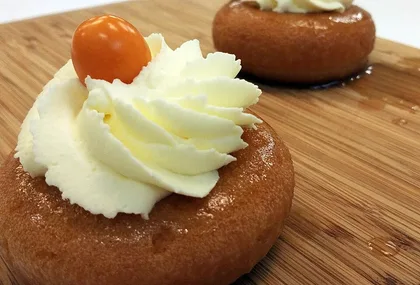 FoodBabàBabà is a yeasted, egg-and-butter-rich cake baked in a mushroom shape, dried out, then…
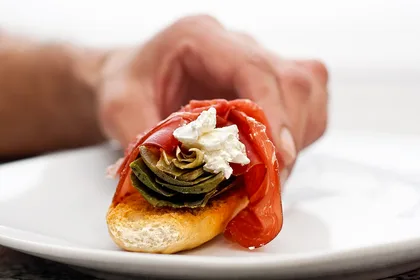 IGPPaestum ArtichokeThe Paestum artichoke is round, tightly closed, completely spineless and dimpled at the…
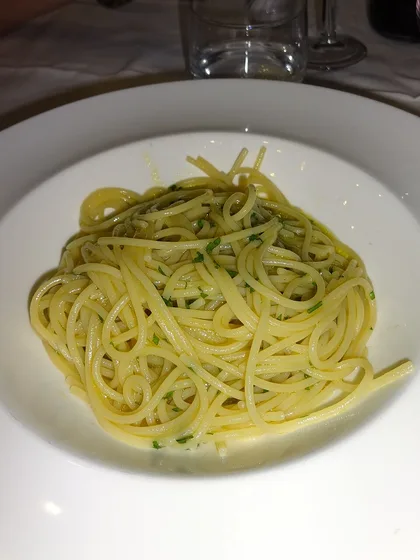 DOPColatura di Alici (Italian Anchovy Sauce)Colatura di alici is the amber liquid that drains from anchovies packed in salt in chestnut…
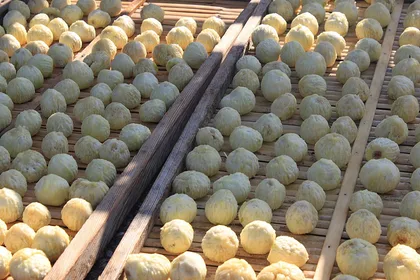 DOPCilento White FigThe Cilento white fig is a Dottato fig dried in the sun on cane racks in the hills south of…
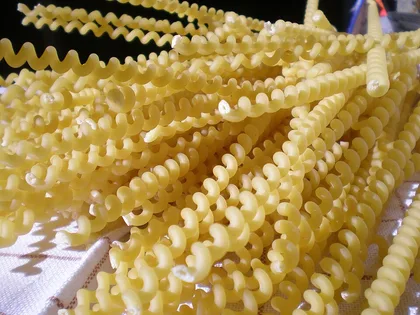 FoodFusilliTwo different pastas share this name. The industrial spiral is solid and holds sauce on its…
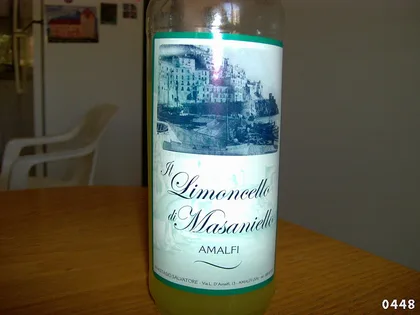 FoodLimoncelloLimoncello is made from lemon peel steeped in alcohol, never from the juice.
What to do here
From Palinuro the boats leave for the Blue Grotto and the coves under the cape: in August it is a queue, in June or September the same trip is another thing and costs less. At Marina di Pisciotta, between April and July, some fishing families take guests out to watch the menaica being set: you leave in the evening and come back at dawn.
Paestum is half an hour from Castellabate and its three Doric temples are among the best preserved in the world; go early, because there is no shade on the site. Less visited is Velia, at Ascea; up on the Alburni, Roscigno Vecchia is a village abandoned after a landslide and left standing with its square intact.
The year, month by month
From April to June the Cilento is at its best: paths, a sea swimmable from mid-June, normal prices and towns that function. It is also the season of the menaica anchovies, fished from April to July.
July and August are the month and a half when everything is full and expensive: a crowded coast, queues on the Cilentana, restaurants rushing service. Anyone going then should make two choices: sleep inland and go down to the sea early, and look for the village festivals, which in August are everywhere in the hill villages and often feed you better than the seafront.
September is the best month of all: warm sea, the crowds gone, figs drying on the racks in the sun. In October come the chestnuts (the marrone di Roccadaspide IGP) and between November and December the pisciottana olives are picked, because they ripen late.
Getting there and getting around
By train you come down to Salerno on the fast line and continue towards Sapri, with stops at Agropoli-Castellabate, Vallo della Lucania-Castelnuovo, Ascea, Pisciotta-Palinuro and Centola. The airports are Naples Capodichino, an hour and a half from Agropoli, and Salerno-Costa d'Amalfi, closer but with few connections.
From the Battipaglia exit you take the Cilentana, the inland expressway with junctions down to the coastal towns; the coast road is beautiful and slow, and in August both clog. The twenty kilometres between a hill village and the beach are forty minutes of bends.
Frequently asked questions
What is the Cilento Mediterranean diet really?
The regime Ancel Keys observed at Pioppi in the 1960s: durum wheat bread and pasta, pulses almost every day, vegetables, oil in abundance, oily fish as an ingredient, meat rarely. It was the diet of poor farming families: menus with mozzarella, fried fish and dessert are not part of it.
Menaica anchovies: how do you recognise them and what do they cost?
They are fished only between April and July with a wide-meshed net that holds the larger fish, and you recognise them because they are headless, opened flat and pale-fleshed. Salted, they cost several times what ordinary anchovies cost.
Better to sleep on the coast or inland?
If the trip is about food, inland: the farms grow and raise what they serve, prices are half, and in summer you sleep ten degrees cooler. The coast is worth it with small children, choosing a town whose old centre sits high, such as Castellabate or Pisciotta.
Should August be avoided?
Not entirely, but it has to be managed: book months ahead, stay inland, avoid the seafronts at dinner time. If you can choose, June and September give you the same sea with half the people and much lower prices.