Fourteen things from Tuscany, and the saltless bread that explains them
Lardo di Colonnata, finocchiona, Tuscan ham, pecorino, panforte, cantucci, chianina beef, zolfino beans, farro, ribollita, panzanella, bistecca. In Tuscany the bread has no salt, and half the cooking follows from that choice.
Tuscan bread is sciocco, without salt, and this is not a curiosity: it is the hinge of the regional cooking. Tuscan ham is salted harder and dressed with pepper, garlic and herbs because it was meant to be eaten with that bread; finocchiona is cut thick because neutral bread can carry a scented salame. Eaten with salted bread, those same products seem excessive.
The second consequence is reuse. Bread without salt goes stale quickly and does not mould at once, so it becomes an ingredient: panzanella soaks it, pappa al pomodoro dissolves it, ribollita cooks it twice, acquacotta puts it under an onion soup. Four dishes from a leftover, and in three of them the bread is the only thing holding them together.
The rest is meat and pulses. The chianina, the huge white breed of the Val di Chiana, is the beef of the fiorentina and gives a lean cut that wants high heat and short times. Zolfino beans and Garfagnana farro are the other half of the larder, and their rule is the same: salt only at the end.
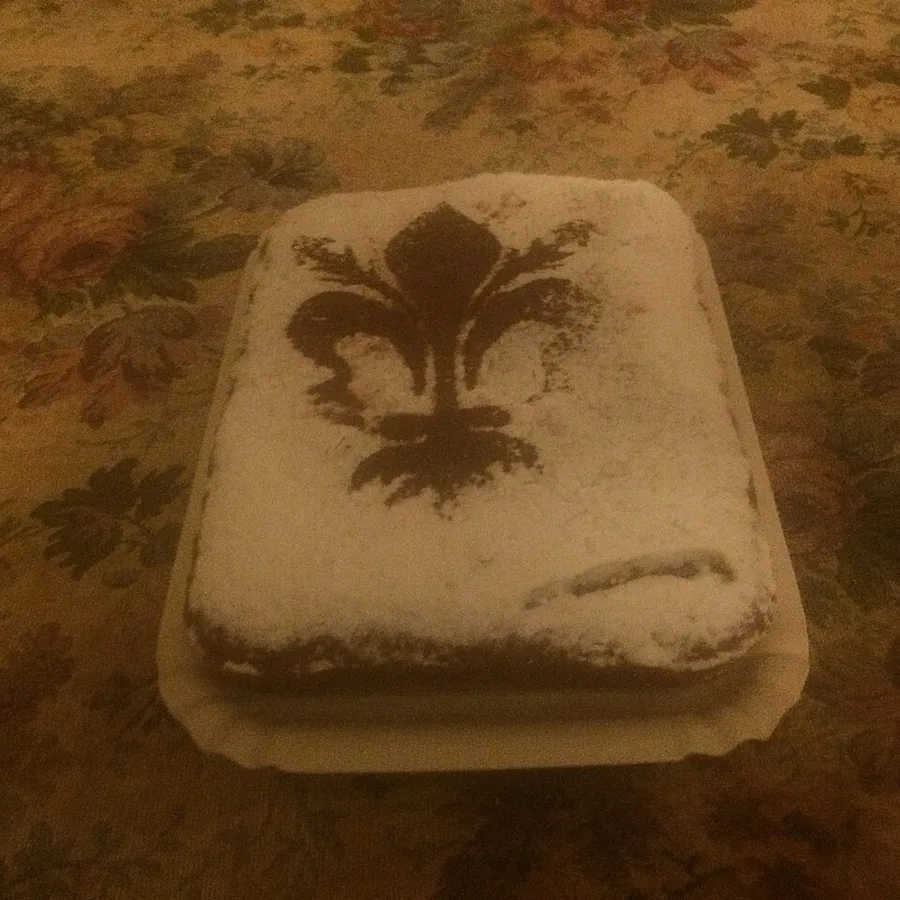 WILO-MA · CC BY-SA 4.0
toscana · 8-14 €/kg
The name is the gesture: pressing the dough down with the fingers until it stays low, then oil and coarse salt. It is the bread Florence eats cured meats with, thinner and crisper than Ligurian focaccia.
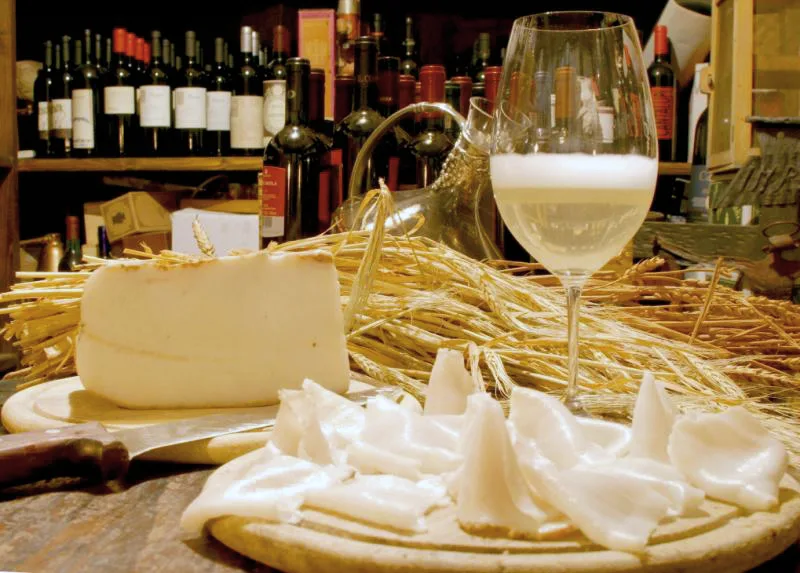 OneArmedMan · Public domain
toscana · 28-40 €/kg
Back fat cured at least six months in the marble troughs of the Canaloni, rubbed with garlic and layered with salt, pepper, rosemary and spices. IGP. It began as quarrymen's food and is eaten raw on warm bread.
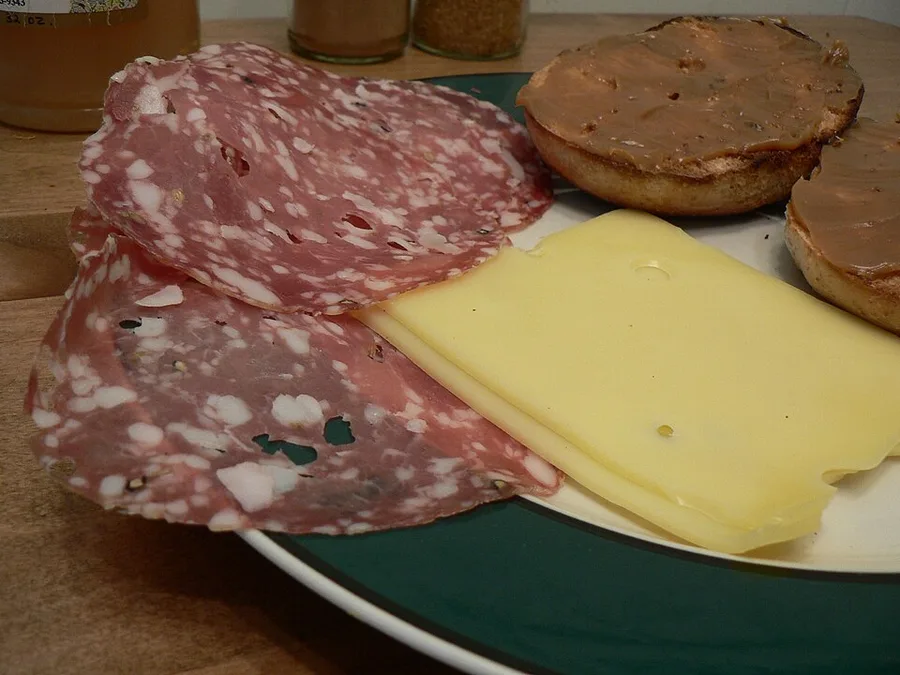 stu_spivack · CC BY-SA 2.0
toscana · 18-28 €/kg
The wild fennel salame, seed or flower, IGP since 2015. It is cut thick because the paste is crumbly: thin it falls apart. Sbriciolona is its young form, which breaks up on the board.
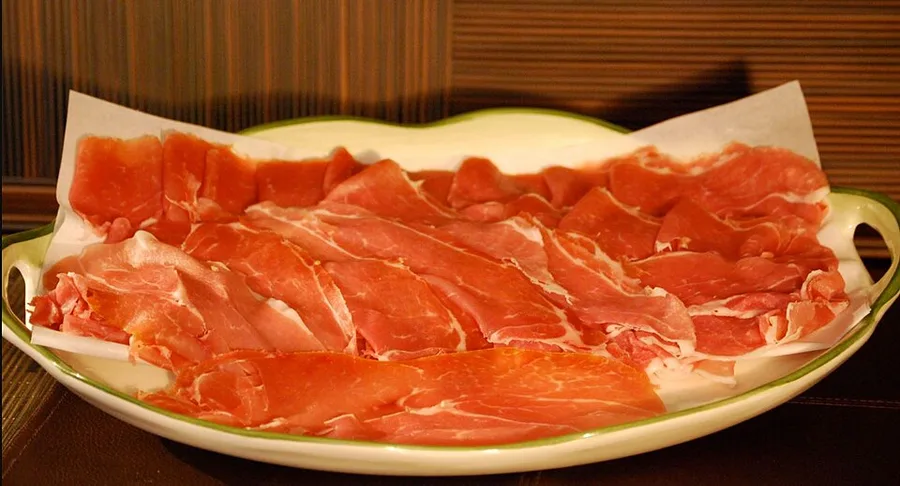 ItalianEpicure.com · Public domain
toscana · 18-26 €/kg
Salted harder than Parma and dressed with pepper, garlic and herbs. Not a flaw: it was made for unsalted bread, and with that bread the balance returns. With salted bread it simply tastes salty.
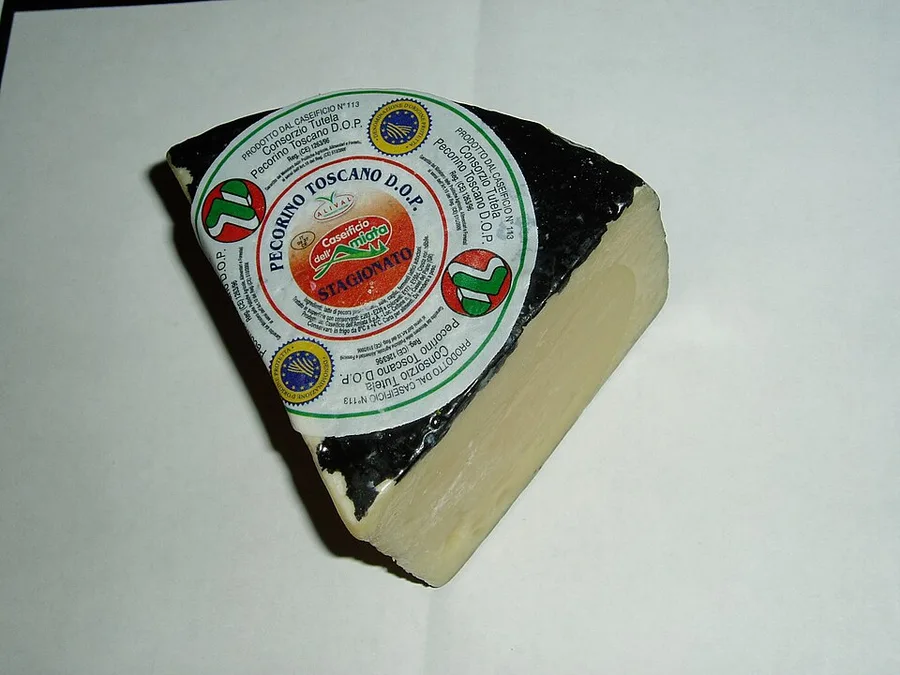 Bijltjespad · CC BY-SA 3.0
toscana · 12-16 €/kg
The gentle pecorino: short salting, calf rennet, two types, soft from twenty days and semi-hard from four months. A cheese for slicing rather than grating, and with fresh May broad beans it is a meal.
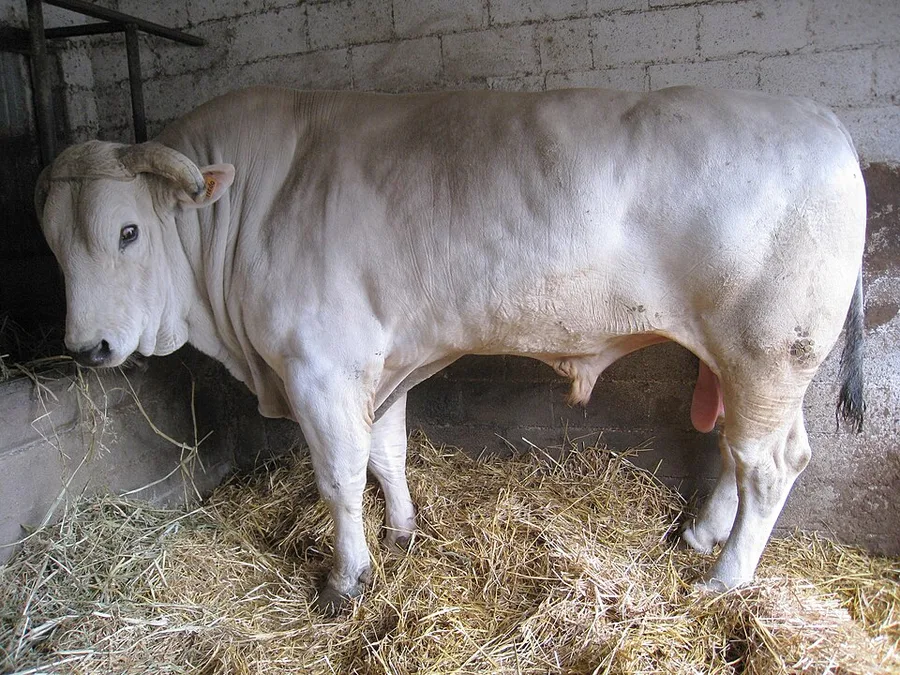 Peter von Wesendonk at German Wikipedia · Public domain
toscana · 32-45 €/kg
The largest cattle breed in the world, porcelain white, from the Val di Chiana. IGP. It is the beef of the fiorentina and it is lean: the fat sits around the cut rather than inside, so it wants high heat and short times.
toscana
Small, round, sulphur yellow, with a very thin skin: it grows on the Pratomagno and is cooked without stirring, in an earthenware pot, because it breaks. It costs four times a cannellino and gives a natural cream.
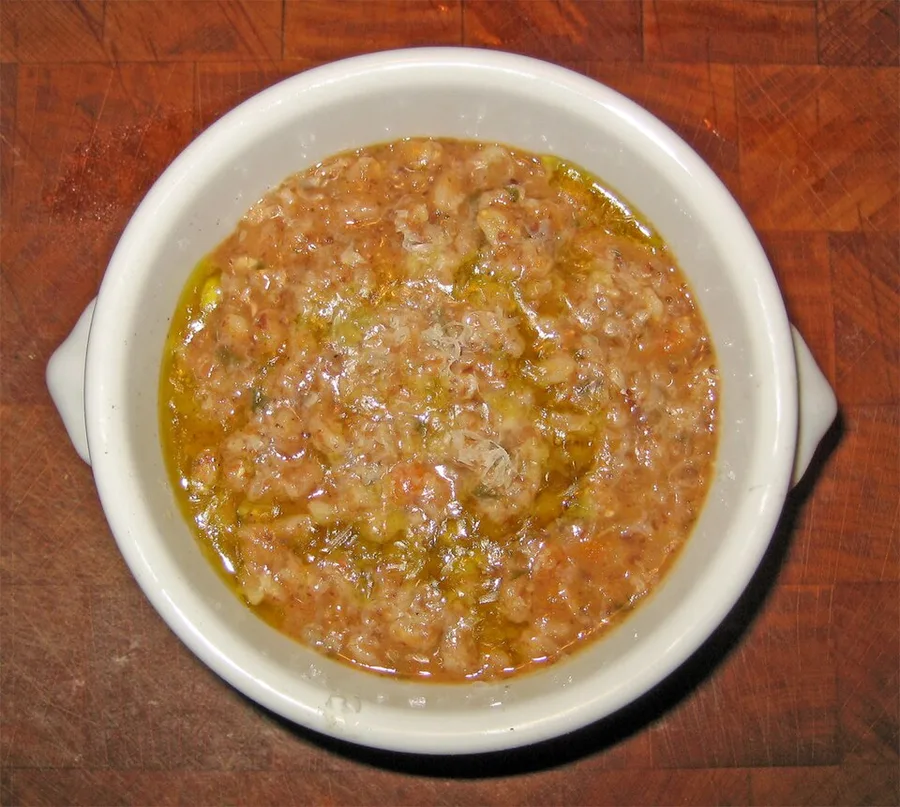 fugzu · CC BY 2.0
toscana · 4-8 €/kg
Hulled farro IGP grown in a cold, rainy valley above Lucca. It wants hours of soaking: without them it stays hard while the beans beside it collapse, which is why many farro soups fail.
toscana · 30′
Stale bread soaked and squeezed, tomato, onion, basil, oil: half an hour and no cooking. The bread must be soaked and squeezed properly, because excess water dilutes the dressing and leaves the dish flat.
toscana · 35′
Thirty-five minutes, and the meat comes out of the fridge an hour before. Fierce heat, three or four fingers thick, salt after cooking and five minutes resting standing on the bone.
toscana · 1 h 5′
Stale unsalted bread dissolved into tomato, garlic, basil and oil, an hour and five minutes. It is not a soup with bread in it: the bread has to break down completely, which is why it needs Tuscan bread and not sliced loaf.
toscana · 4 h 10′
Unsalted bread, cannellini and black kale, cooked as a soup and boiled again the next day. The second cooking is the recipe: it is what melts the bread into the broth, and without it the dish is another soup.
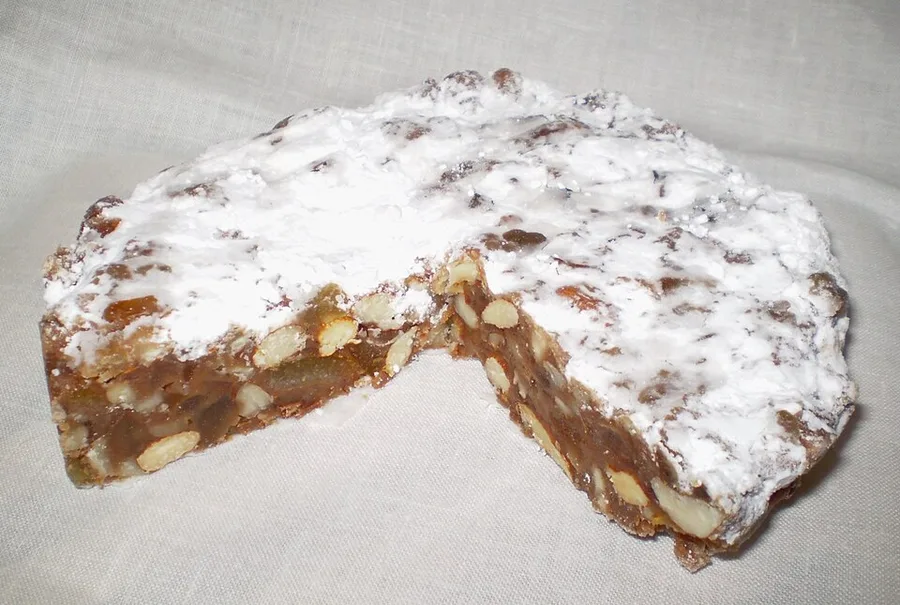 Lucarelli · Public domain
toscana · 32-48 €/kg
From Siena, IGP: honey, sugar, almonds, candied peel and spices, almost no flour, baked low and cut in wedges. A medieval apothecary's sweet, and the sticky paste is not a flaw but its texture.
 Matteo Bertini · CC BY-SA 2.0
toscana · 14-24 €/kg
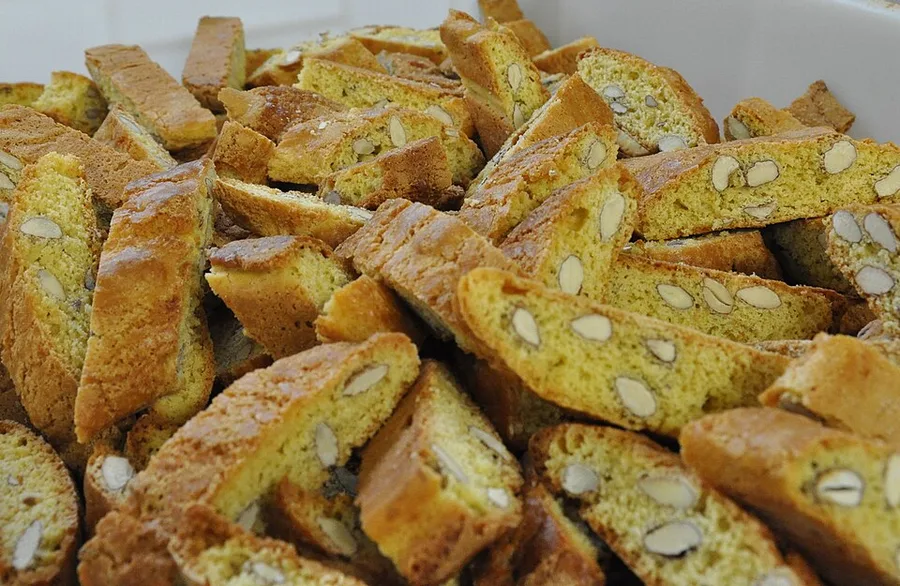
Almond biscuits baked twice, hence their hardness and their keeping. IGP. They are dipped in vin santo, and the second baking is what dries them: without it they are soft biscuits and another thing entirely.
One last thing
If there is one Tuscan technique above all it is the reuse of bread, and it has a single rule: the bread has to be the right bread. Stale unsalted bread dissolves in liquid and turns to cream, because it is made only of flour, water and leaven and contains no fat or milk. A sliced loaf or an oil-enriched bread will not dissolve; they turn rubbery and stay in pieces. That is why a good pappa al pomodoro or ribollita can be recognised before tasting: you cannot see where the bread ended and the soup began.
The questions this list answers
These are real questions put to an AI assistant, in the period when Bing cited this site among its sources to answer them. The number is how many times we were cited. We read them in Bing Webmaster Tools, under AI performance, and they decide what goes on this page rather than the other way round.
- lardo di colonnata642 citations
- cantuccini556 citations
- fennel salami360 citations
- finocchiona salami156 citations
- what is panforte123 citations
- panforte99 citations
- tuscan schiacciata bread95 citations
- schiacciata co to jest75 citations
- finocchiona65 citations
- fagioli zolfini48 citations
- vin santo30 citations
- prosciutto toscano20 citations
- carne Chianina17 citations
- chianina beef10 citations
- pecorino toscano cheese8 citations
- vino santo8 citations
- schiaccata10 citations
Frequently asked questions
Why does Tuscan bread have no salt?
The two most commonly repeated historical explanations are the cost of salt and tax disputes between cities, and neither is conclusively documented. What is certain is the effect: a neutral bread that carries savoury, well-seasoned cured meats, and which on going stale becomes the ingredient of four regional dishes.
What is panforte?
A Sienese sweet of honey, sugar, almonds, candied peel and spices, with almost no flour, baked low in a round tin and cut into wedges. IGP. It began as an apothecary's preparation, with pepper and spices that were then medicine, and the dense, sticky texture is intended.
Does a fiorentina steak have to be chianina?
Tradition calls for chianina, the white breed of the Val di Chiana, and that is the historic beef of the dish. Butchers sell fiorentine from other breeds, and they are fiorentine as a cut, that is a T-bone loin. So the useful question at the counter is twofold: the cut and the breed.
How do you cook zolfino beans?
In an earthenware pot, covered with cold water, without stirring and without salt until the end, over the lowest heat. The skin is extremely thin and breaks easily: one stir too many turns the beans to purée. Salt added at the start, here as with all pulses, toughens the skin.