Nine Italian products born from shepherding
Pane carasau for the saddlebag, Fiore Sardo smoked in the pinnetta, Crotone pecorino of the transhumance, goat violin, mocetta, pitina, canestrato in its baskets, casu marzu, ricotta.
Shepherding produced a recognisable cuisine, and the reason is that the shepherd was away from home for months. What was needed was food that would not spoil, weighed little and could be made from what the animal gave: milk, and nothing else.
Pane carasau is the perfect object of that logic: a disc of semolina less than a millimetre thick, baked twice because it had to last months in a saddlebag, snapping like glass and softening again with a film of water. Fiore Sardo is the other: raw milk, lamb paste rennet, a double-cone shape and smoking over the fire of the pinnetta, the hut the shepherds lived in.
Transhumance, the seasonal movement of flocks, explains the rest. Pecorino Crotonese comes from flocks that climb the Sila in summer and come down to the Marchesato in winter; the Abruzzese drovers' roads took sheep as far as the Tavoliere, and arrosticini are what remains of that meat; Canestrato Pugliese was born where those flocks arrived, and it ages in the rush baskets that were its mould.
 Luigi Chiesa · CC BY 3.0
sardegna · 6-12 €/kg
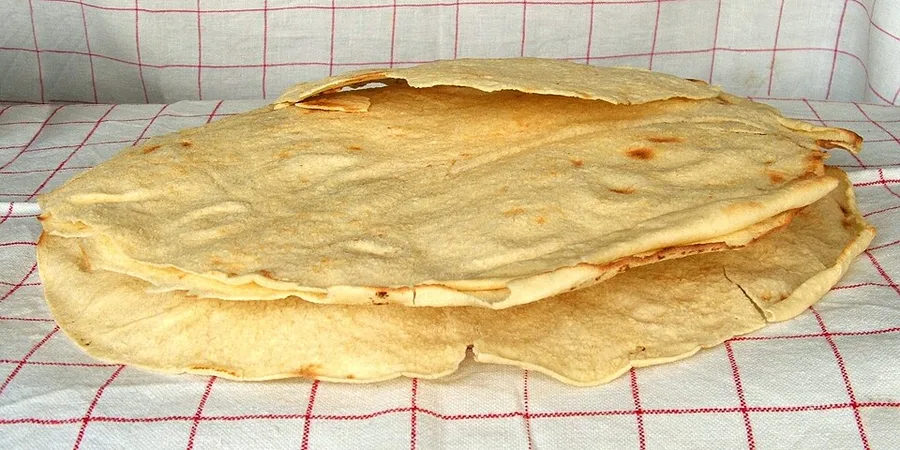
A disc of semolina less than a millimetre thick, baked twice because it had to last months in a saddlebag. It snaps like glass and softens with a film of water: bread designed for being away from home.
 Yozh · CC BY-SA 4.0
sardegna · 18-26 €/kg
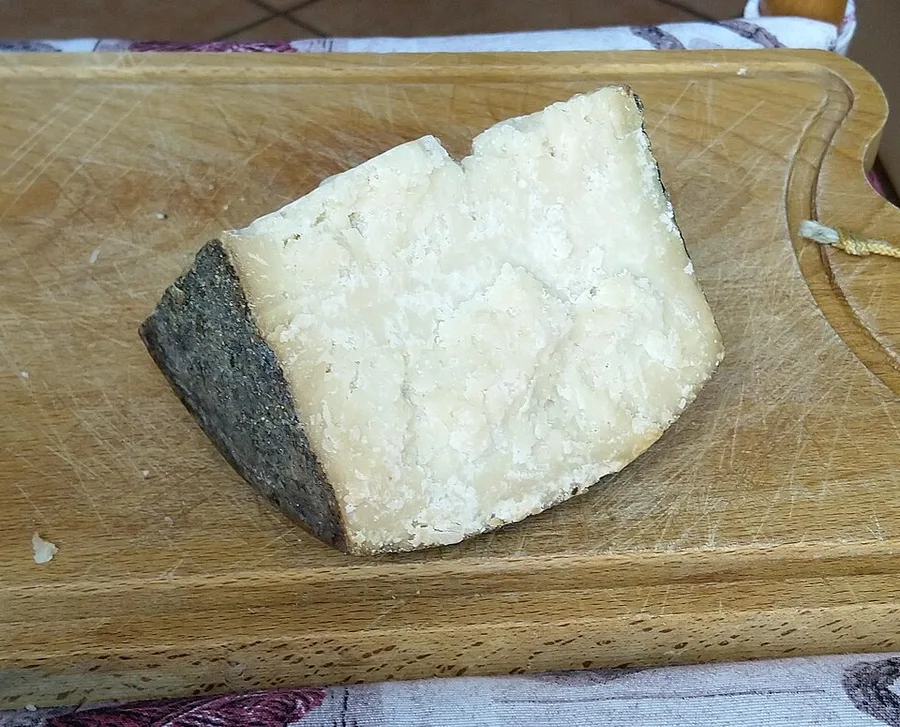
Raw Sardinian sheep's milk, lamb paste rennet, a double-cone shape and smoking over the fire of the pinnetta, the shepherds' hut. It predates dairies, and the method shows it.
 Marcomagno89 · CC BY-SA 3.0
calabria · 10-14 €/kg
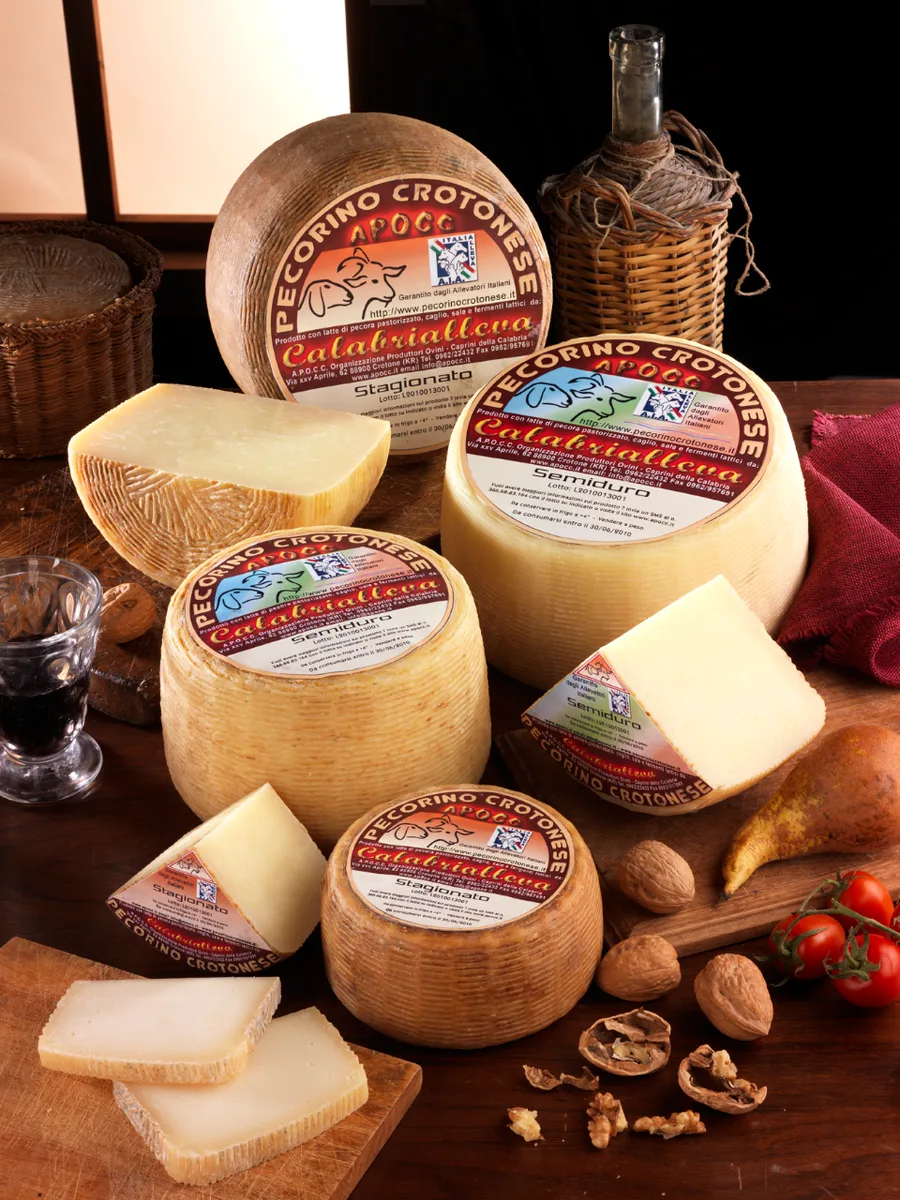
The cheese of flocks that climb the Sila in summer and come down to the Marchesato in winter: transhumance is written into its seasonality, and the ageing happens in rush baskets.
 Vini & Sapori · CC BY-SA 2.0
puglia · 14-22 €/kg
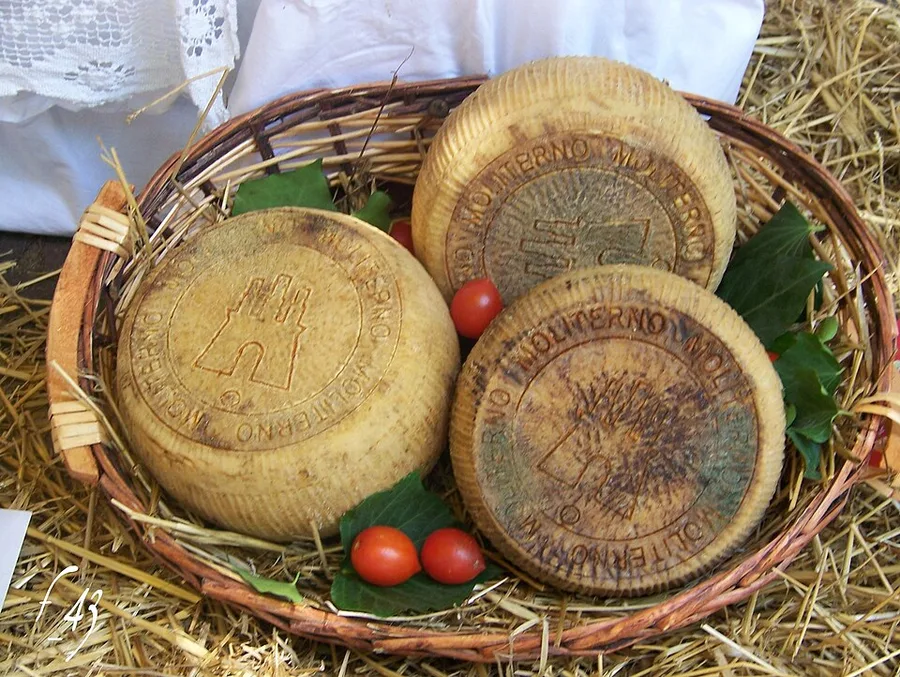
A hard pecorino of the Tavoliere, from the Gentile di Puglia sheep, aged in the baskets that gave it its name and the print on its rind. The Tavoliere was the end of the Abruzzese drovers' roads.
lombardia · 70-95 €/kg
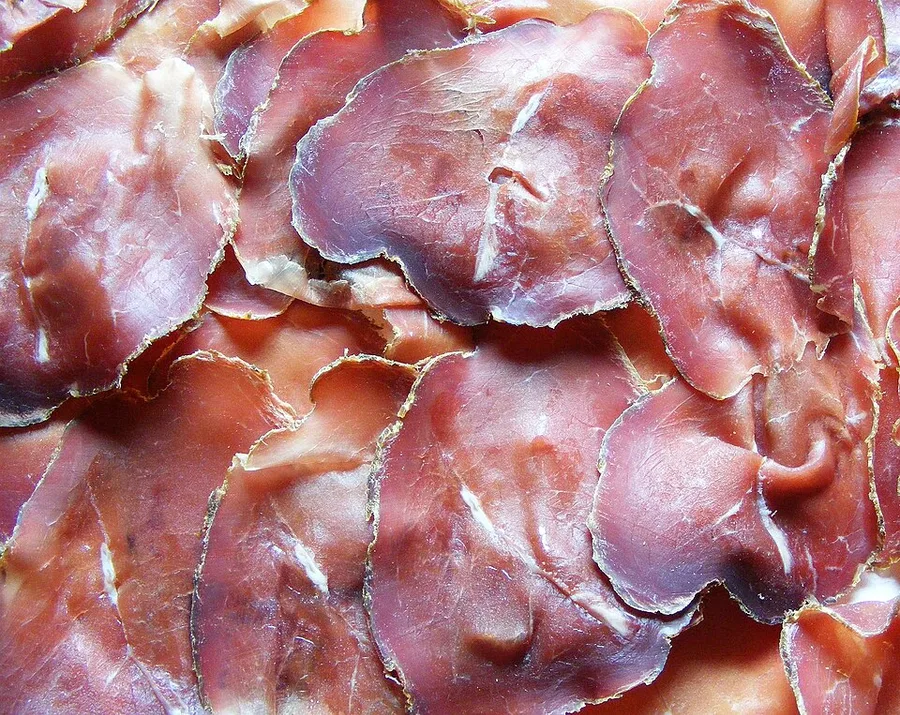
A goat leg salted and cured in the crotti of the Valchiavenna, sliced held against the shoulder like an instrument. A Slow Food presidium, and a meat that is not pork because up there pigs were not kept.
 F Ceragioli · CC BY-SA 3.0
valle d aosta · 38-48 €/kg
A leg dressed with the mountain herbs of the Aosta valley, born with ibex and chamois and now made with beef or goat. It is eaten on dark bread with butter, because lean meat asks for fat.
 Holapaco77 · CC BY-SA 4.0
friuli venezia giulia
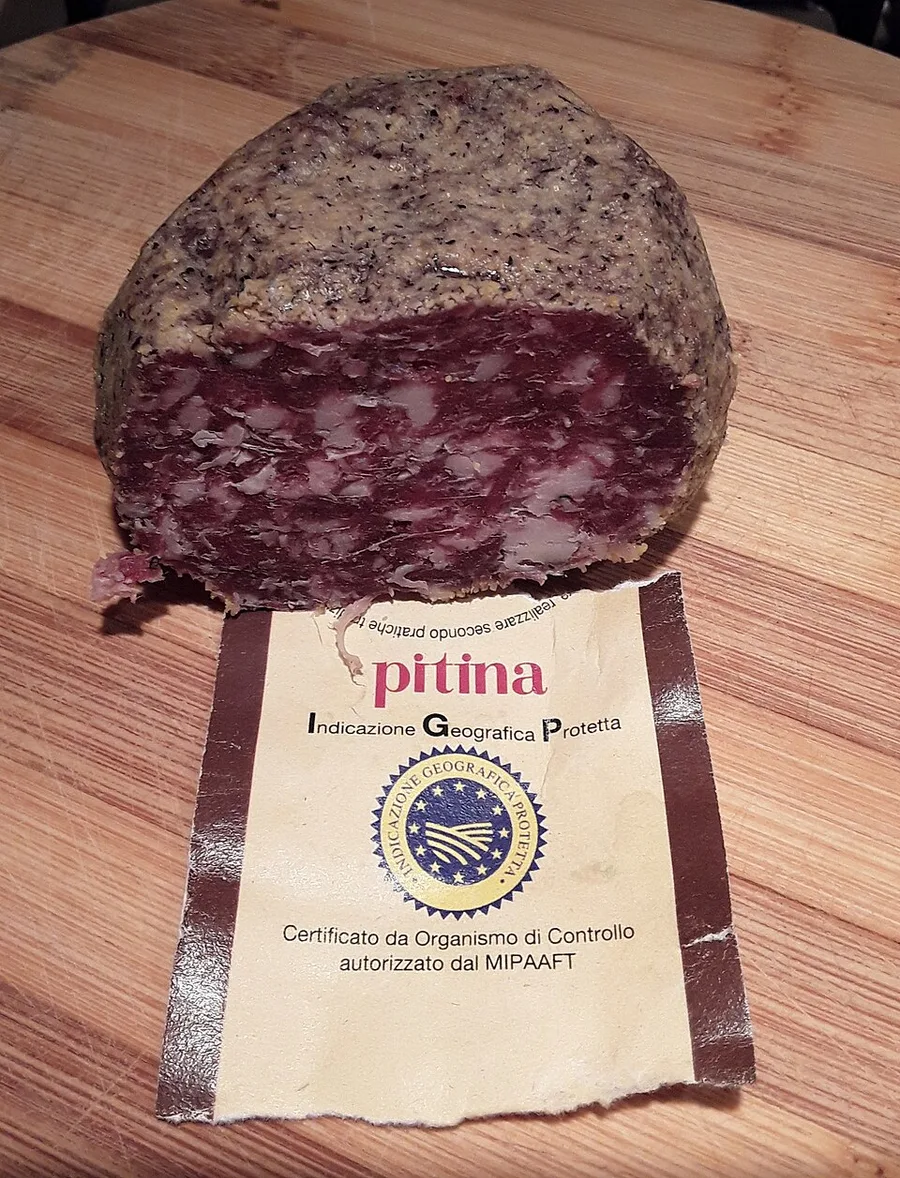
Game or mutton chopped with lardo and spices, rolled in maize flour and smoked above the hearth: no casing, because in the val Tramontina pork was a luxury and casings were not available.
 Shardan · CC BY-SA 2.5
sardegna · 20-50 €/kg
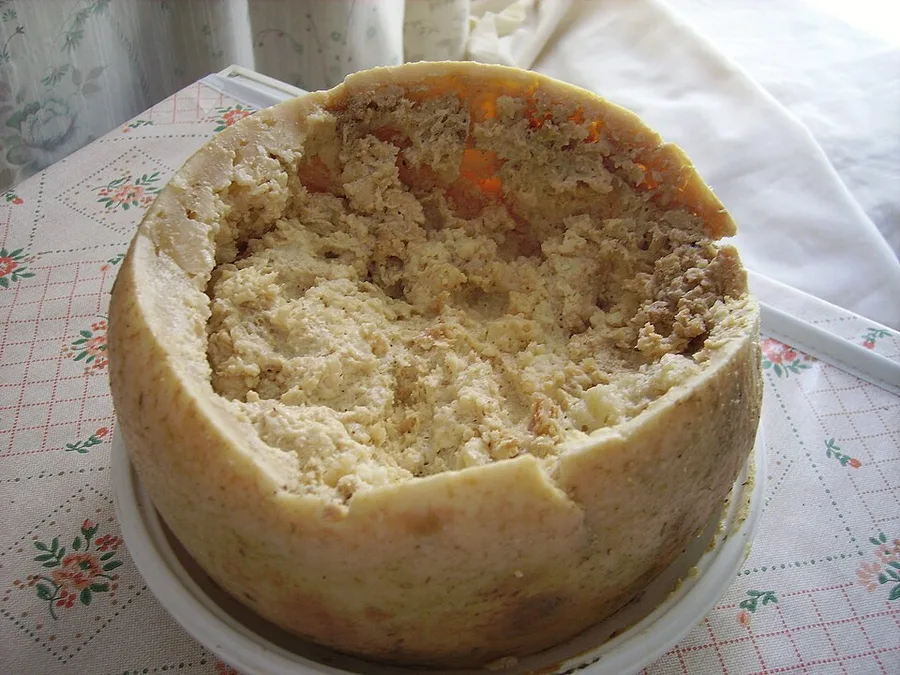
A pecorino whose maturing is carried on by the larvae of the cheese fly: listed among Sardinia's traditional products and at the same time unsellable, because it does not meet the regulations.
 8w9d · CC009
Ricotta
lazio · sicilia · 5-9 €/kg
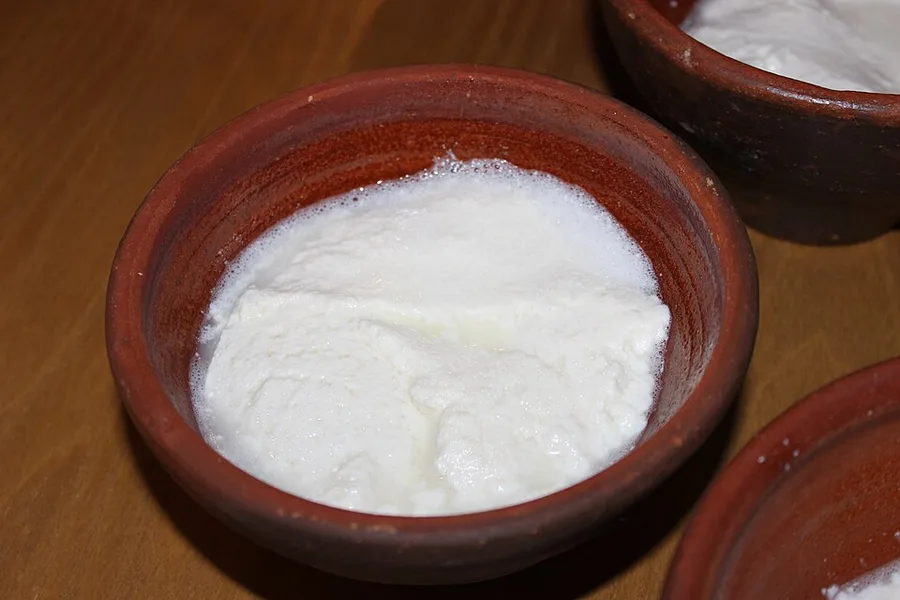
Not a cheese but the recovery of whey: ri-cotta, cooked a second time. In a pastoral economy throwing whey away was unthinkable, and from that refusal comes half the pastry of the south.
One last thing
One technical thread holds nearly the whole list together, and its name is lamb or kid paste rennet. It is rennet taken from the stomach of a kid or lamb, used as a paste rather than a liquid, and it carries lipases, enzymes that break down fats: the result is the sharp, persistent taste that distinguishes Fiore Sardo and Pecorino Crotonese from pecorini made with calf rennet, which are milder. It is a matter of enzyme rather than ageing, and it shows at first taste even in a young cheese.
The questions this list answers
These are real questions put to an AI assistant, in the period when Bing cited this site among its sources to answer them. The number is how many times we were cited. We read them in Bing Webmaster Tools, under AI performance, and they decide what goes on this page rather than the other way round.
- pecorino sardo276 citations
- fiore sardo8 citations
- casu marzu käse223 citations
- violino di capra160 citations
- mocetta76 citations
- ricotta salata cheese469 citations
- pecorino romano198 citations
- what is ricotta salata30 citations
Frequently asked questions
What is paste rennet?
Rennet taken from the stomach of a kid or lamb and used as a paste rather than a liquid. It carries lipases, enzymes that break down fats, and gives cheeses a sharp, persistent taste that calf rennet does not.
Why is pane carasau baked twice?
Because the second baking dries it out completely, and a product without water does not mould: it had to last months in the saddlebags of shepherds away from home. It softens with a film of water when a dish needs it.
What is transhumance?
The seasonal movement of flocks between mountain and lowland pastures, along fixed routes called tratturi in Abruzzo and Puglia. It explains the distribution of many sheep cheeses and the presence of ovine products in areas where flocks do not live year round.
Why is there no pork in mountain cured meats?
Because at altitude pigs were rare and expensive to keep: people salted what they had, that is goat, mutton and game. Hence the goat violin of the Valchiavenna, the mocetta of the Aosta valley and the pitina of Friuli.