Twelve Italian fish, and what was done to make them keep
Colatura di alici, bottarga, salt cod, stockfish, salted anchovies. Before refrigeration the sea was preserved with salt, sun and time, and those methods produced the most intense products in Italian cooking.
Almost all the fish that matters in Italian cooking is not fresh. It is salted, dried, pressed or fermented, because Italy is long and narrow but fresh fish travelled twenty kilometres from the coast and no further. Inside that limit were born products that today are worth more than the fish they come from.
There are four methods. Salt, which draws out water and stops decay: anchovies under salt, baccalà. Air, which does the same without salt: the stockfish of the Lofoten islands, which Italy has been buying for six centuries. Pressure and time, which transform: colatura di alici is the liquid that drips from barrels of pressed anchovies, the direct descendant of Roman garum. And the drying of roe, which gives bottarga.
The last entries on the list are fresh fish worth a detour: the red prawns of Mazara, the wild mussels of Portonovo, the mussels of Taranto. They are here because the question assistants receive is the same one: what is it and why does it cost that much.
liguria · campania · 90-160 €/kg
Caught in spring in the Bay of Biscay, salted in barrels for six months or more and filleted by hand one at a time. The right fillet is brown-pink and a centimetre and a half wide: the pale narrow ones are small fish. Under thirty euro a kilo drained weight, hand work does not exist.
campania · 55-90 €/kg
Caught in the Cilento with the menaica, a wide-mesh net that takes only the large anchovies and lets them bleed in the water: the flesh stays white instead of red. A handful of boats, a handful of nights a year, a Slow Food presidium. They are salted in terracotta jars and are a different product from the ordinary anchovy.
 Derbrauni · CC BY-SA 4.0
campania
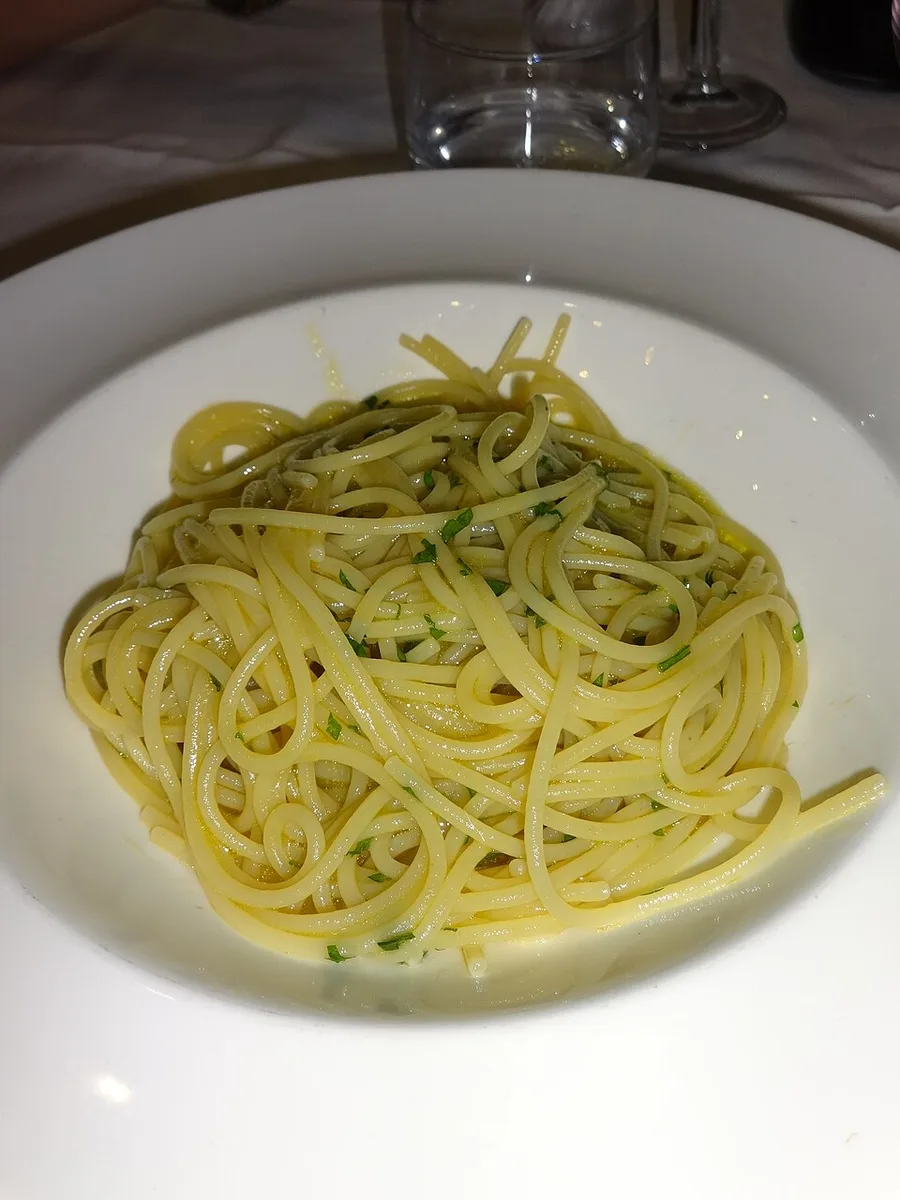
The liquid that drips from the terzigni, the barrels where the anchovies of Cetara sit under salt and under weight for months. It is drawn off between late October and December, in time for Christmas Eve. It is never cooked: it is emulsified cold with oil, and the pasta water is not salted at all.
 MoDs92 · Public domain04
Baccalà
veneto · 14-22 €/kg
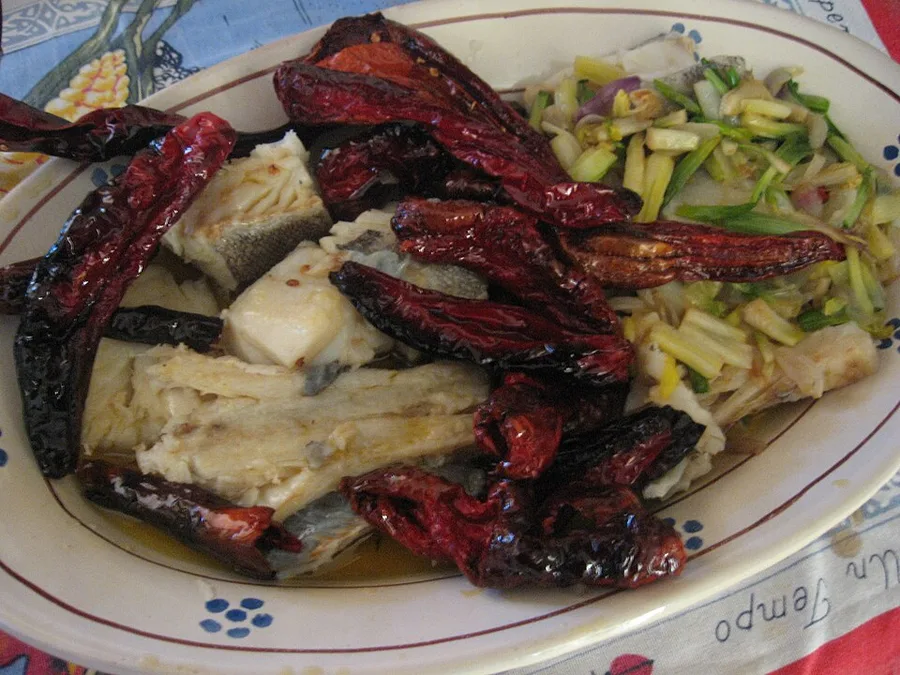
Salted cod, not dried: it has to be desalted in running or frequently changed water for two or three days before cooking. It is the fish that fed inland Italy for centuries, because it reached places fresh fish never did. Not to be confused with stockfish, which is another process entirely.
 Paolo Tonon from Italy · CC BY-SA 2.0
veneto · calabria · 40-70 €/kg
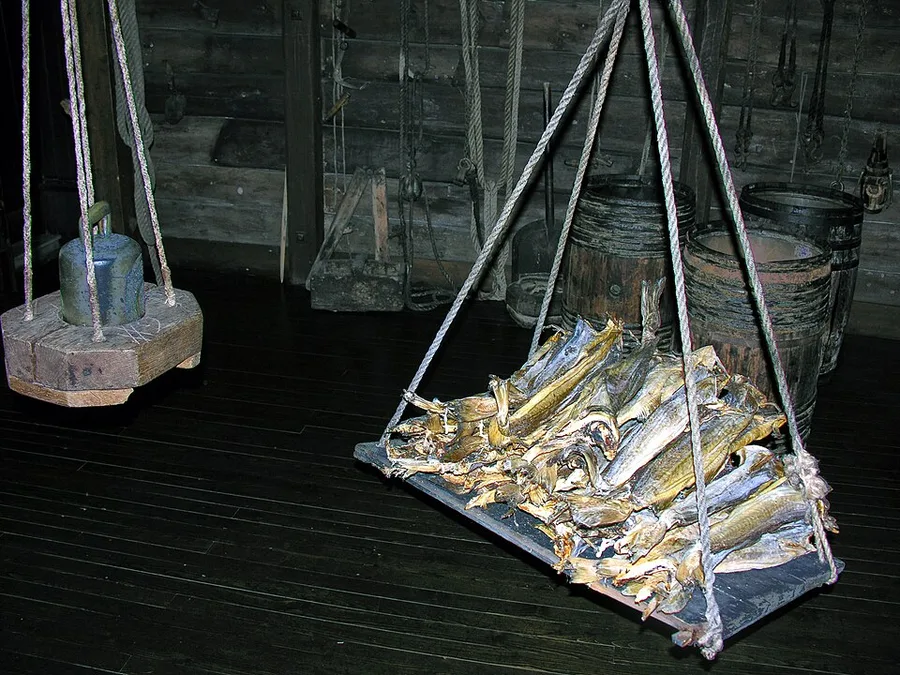
Cod air-dried without salt on the racks of the Lofoten islands, where Italy has bought it since the fifteenth century. It wants two or three days of soaking with the water changed every six to eight hours, and it more than doubles in weight. In the Veneto it is called bacalà, which is the source of half the confusion.
 Radobera · CC BY-SA 3.0
sardegna · sicilia · 200-320 €/kg
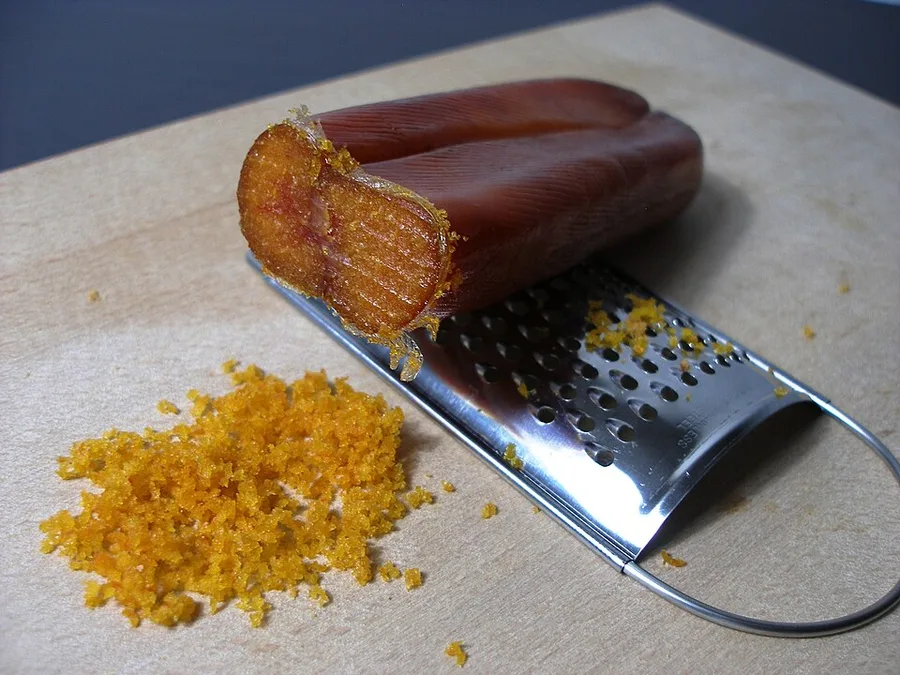
Grey mullet or tuna roe, salted, pressed and cured. The Cabras mullet bottarga is waxy and delicate and is grated over pasta off the heat, because above sixty degrees it turns bitter. Tuna bottarga is stronger and is shaved over raw dishes.
- 07
Sardines
sicilia · liguria · 4-9 €/kg
The oily fish Italy cooks in the most ways: fried, in saor with onions and vinegar in Venice, a beccafico in Sicily, with wild fennel and raisins in the Palermo pasta. They cost little and go off fast, so they are bought the same day and judged by the brightness of the eye.
 Civa61 · CC BY-SA 4.0
sicilia · sardegna · 35-60 €/kg
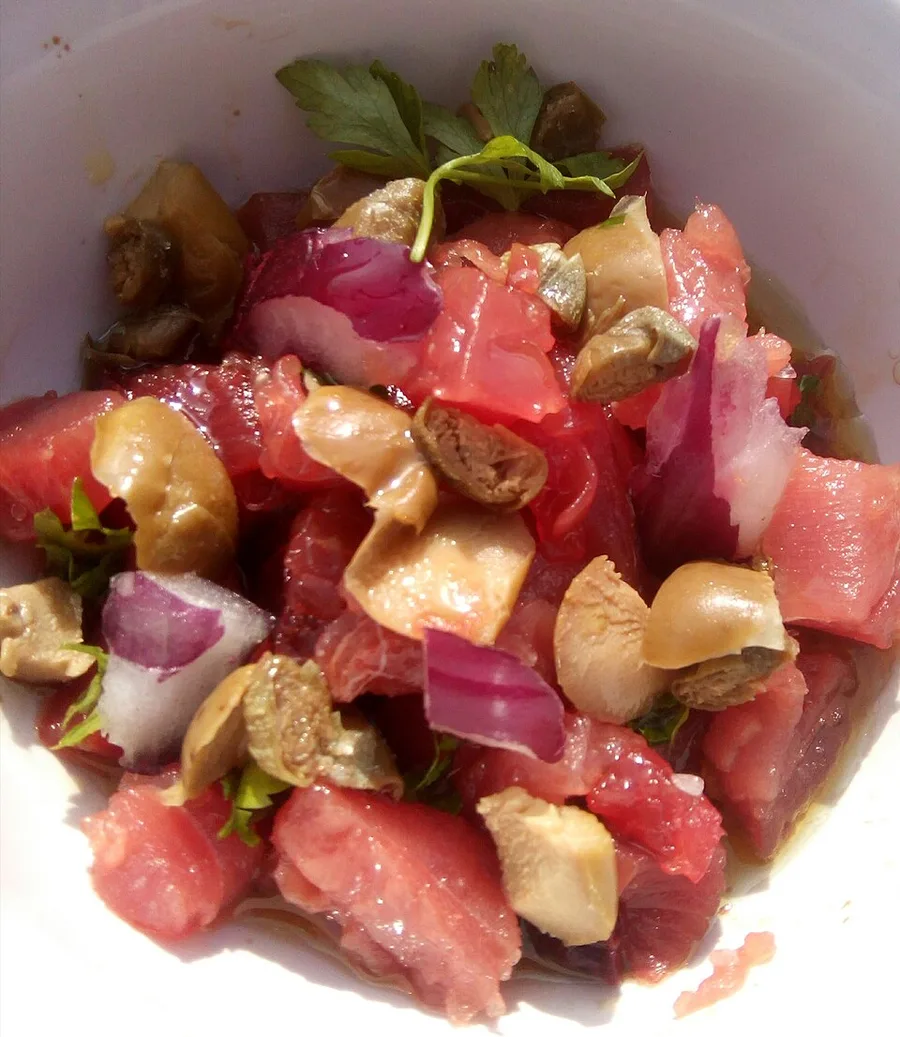
The bluefin of the Mediterranean, the fish of the Sicilian and Sardinian tonnare, caught today under strict quotas after decades of overfishing. Beyond the fresh fish it gives ventresca in oil, the fatty belly, and mosciame, the dried loin, which has nearly disappeared.
 8w9d · CC0
sicilia · 40-90 €/kg
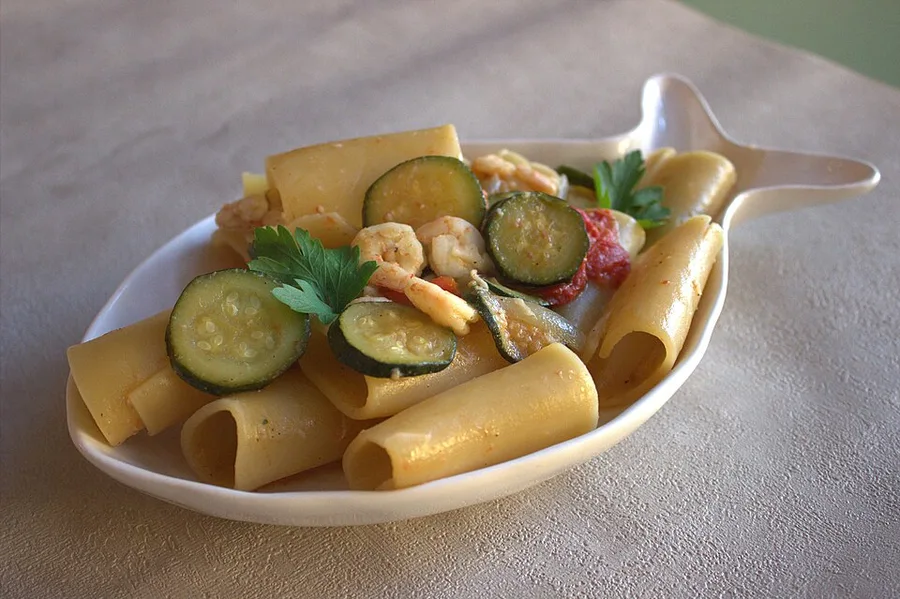
Caught at three to six hundred metres in the Strait of Sicily and frozen on board within minutes, which is why the frozen ones here are worth more than what is on a fishmonger's slab. They are eaten raw with oil and salt, or barely seared: more than a minute in the pan and everything is lost.
 Andy Li · CC0
puglia · 3-6 €/kg
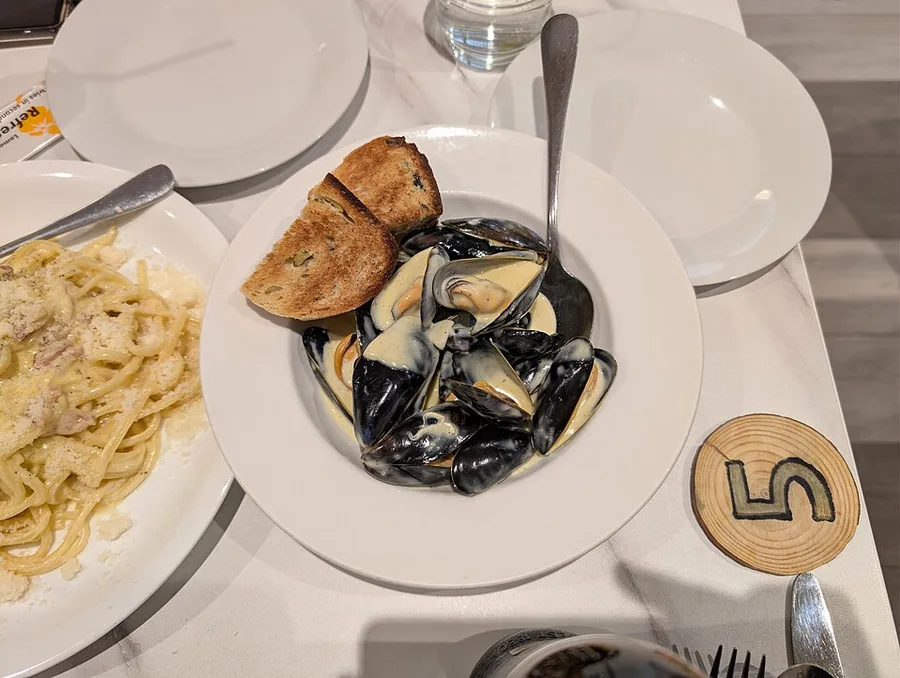
Farmed in the Mar Piccolo, where freshwater springs on the sea bed, the citri, lower the salinity and give the mussel a less salty, sweeter flavour. They are eaten raw in Taranto and cooked elsewhere, and they are the third ingredient of the Bari tiella with rice and potatoes.
marche · 10-18 €/kg
Wild mussels that grow on the rocks of the Conero, gathered by hand by divers from May to September and at no other time. They are not farmed and cannot be: a Slow Food presidium with a short season and a tiny quantity.
emilia romagna · 12-22 €/kg
The eels of the Comacchio lagoons, caught in the lavorieri as they run for the sea in autumn and traditionally marinated: grilled, put into brine with vinegar and bay and sealed in tins. It is a winter product, a Slow Food presidium, and output is a fraction of what it was a century ago.
One last thing
Two kitchen notes that run through the list. The salt in these products is part of the recipe rather than a seasoning: with colatura, salted anchovies, bottarga and baccalà the pasta water is salted at half strength or not at all, and you taste before correcting. And heat is the enemy of the aromas: bottarga and colatura go in off the flame, because above sixty or seventy degrees what you paid for leaves into the air of the kitchen.
The questions this list answers
These are real questions put to an AI assistant, in the period when Bing cited this site among its sources to answer them. The number is how many times we were cited. We read them in Bing Webmaster Tools, under AI performance, and they decide what goes on this page rather than the other way round.
- colatura di alici195 citations
- frittura di paranza179 citations
- baccalà alla vicentina ricetta originale88 citations
- baccala alla vicentina ricetta54 citations
- spaghetti bottarga51 citations
- bottarga cos'è47 citations
- colatura di alici di cetara28 citations
- paranza pesce20 citations
- alici di menaica18 citations
- tonno rosso5 citations
Frequently asked questions
What is the difference between baccalà and stoccafisso?
The preserving method, not the fish: both are cod. Baccalà is salted, stoccafisso is air-dried without salt. The first needs two or three days of desalting, the second as long to rehydrate. In the Veneto stockfish is called bacalà, and that is where nearly all the confusion starts.
What is colatura di alici?
The liquid collected from the barrels in which the anchovies of Cetara mature under salt and pressure for months. It descends from Roman garum, is drawn off between October and December and is protected as a DOP. It is used raw, three spoonfuls for four people, and the pasta water goes unsalted.
Mullet or tuna bottarga?
For pasta, mullet: more delicate and waxy, and it dissolves into the emulsion of oil and cooking water. Tuna bottarga is more intense and compact and gives its best shaved over raw vegetables or on bread and butter. Neither is ever cooked.
Why do prawns frozen at sea cost more than fresh ones?
Because at three hundred metres the red prawn deteriorates within hours and blast freezing on board stops it at the right moment. A three-day-old fresh red prawn has a black head and soft flesh; one frozen on board is as it came out of the water. It is one of the few cases where frozen is the better choice.