Ten fresh Italian cheeses, and how many days they have
Mozzarella, buffalo mozzarella, burrata, squacquerone, robiola, ricotta, scamorza, quartirolo, vastedda, marzolino. None of these improves by waiting: the date is part of the product, and the counter should be read like a train timetable.
A fresh cheese is a cheese with no second life. No rind protects it, no ageing transforms it: what it is on the day it leaves the dairy is the best it will be, and from then on it loses. So the choice is made on the calendar before it is made on taste.
What separates one from another is whey and acidity. Buffalo mozzarella is eaten within days and is faintly sour; squacquerone matures for one to four days and will not even stand up; ricotta, which is not a cheese but a whey product, keeps the shortest of all. Burrata exists only because somebody found a use for the trimmings of spinning before they spoiled.
At the end of the list are two exceptions, scamorza and quartirolo: a week or two of drying for the first, a few weeks for the second, enough to change the texture without becoming aged cheeses. They are the bridge between this list and all the others.
 8w9d · CC001
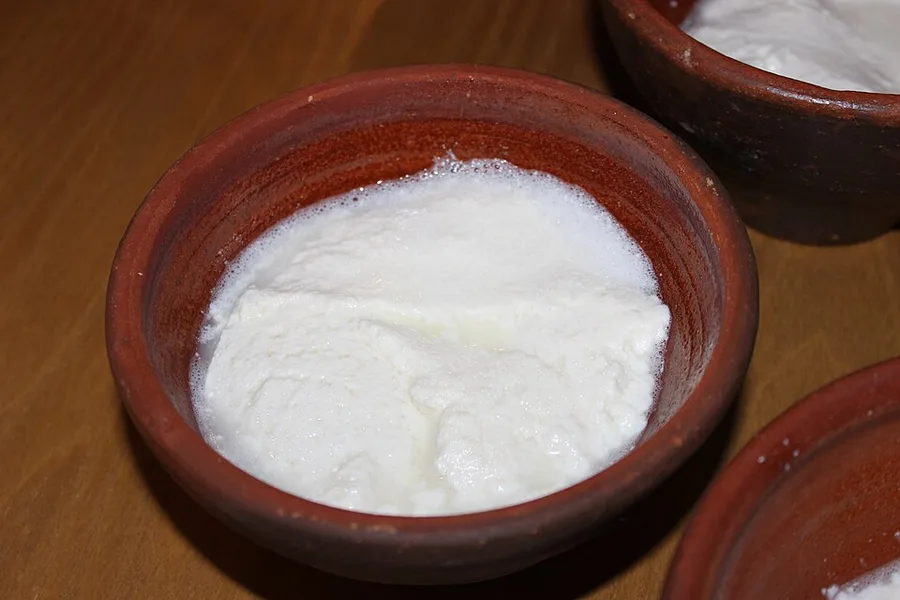
Ricotta
lazio · sicilia · 5-9 €/kg
Not a cheese: a dairy product made from whey, from what is left over after cheesemaking. The name describes the process, ri-cotta, cooked a second time. It keeps for barely any time, costs little, and tastes of milk more than any aged wheel.
 WILO-MA · CC BY-SA 4.0
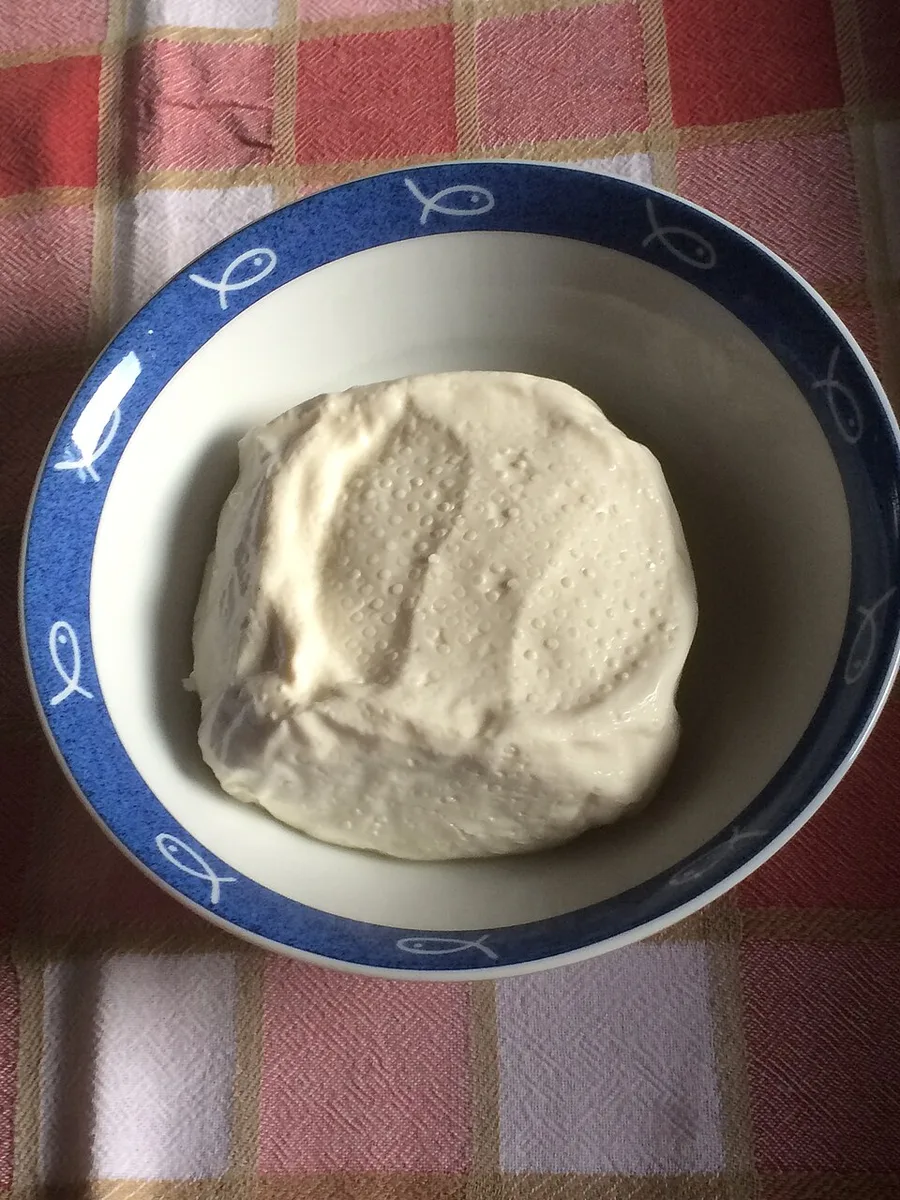
emilia romagna · 10-16 €/kg
Fresh cow's milk cheese, no rind, so soft it takes the shape of its container. It matures for one to four days, is DOP, and is eaten within days of buying. It is the filling of the Romagna piadina, and with rocket it does its job.
 10Rosso · CC BY 2.0
campania · 11-15 €/kg
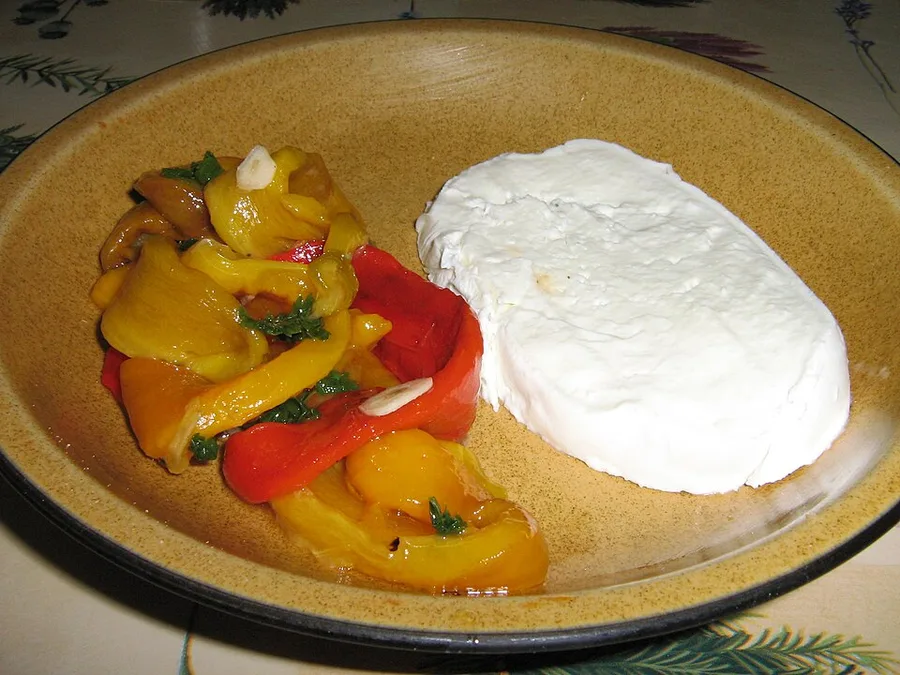
Whole milk from the Italian Mediterranean buffalo, spun in boiling water and torn off by hand. Porcelain white and slightly sour, it has to be eaten within days. It is not a richer fiordilatte: it is another cheese, from another animal.
 Jon Sullivan · Public domain
campania · puglia · 12-18 €/kg
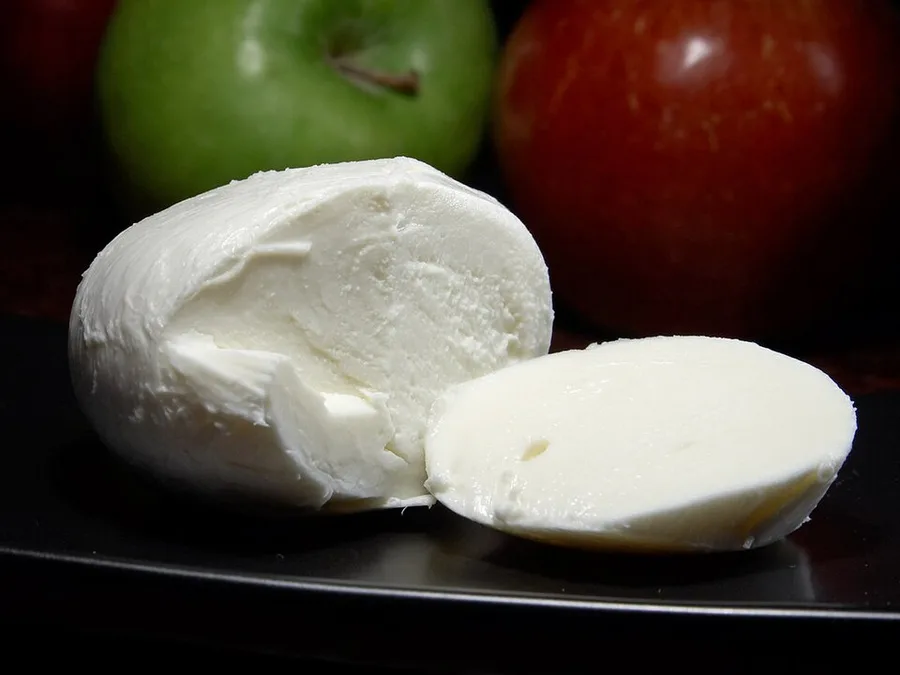
The name is a verb before it is a cheese: mozzare, to tear off cleanly, which is what the cheesemaker does by hand after spinning. Two distinct products live under the name, cow's milk fiordilatte and buffalo, and at the counter it is worth asking which.
 Popo le Chien · CC0
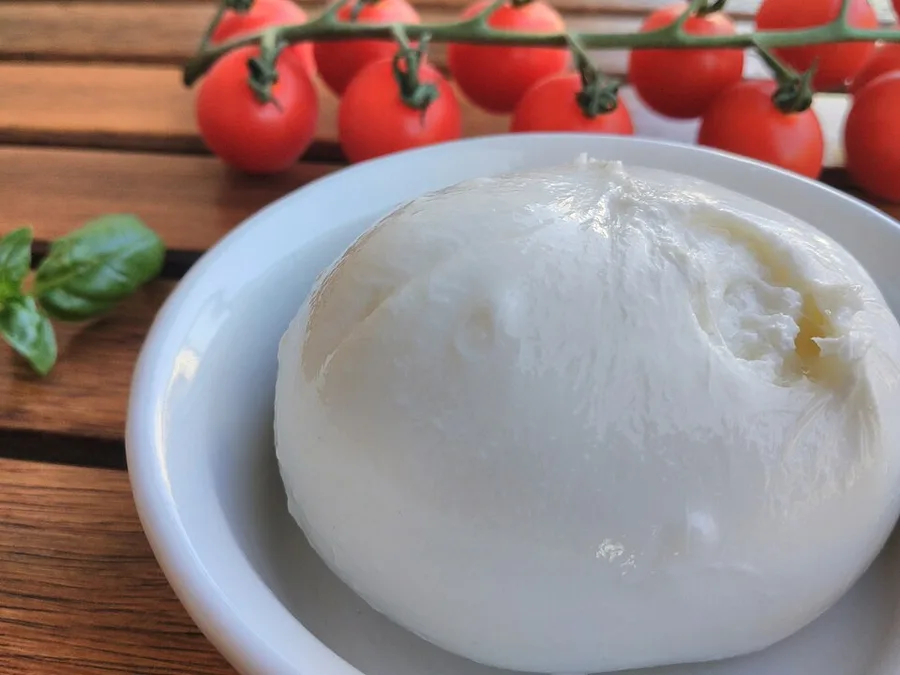
puglia · 14-20 €/kg
It was born from a by-product: shreds of stretched curd drowned in cream and closed inside a pouch of the same cheese. Andria, the nineteen twenties, IGP. It is opened at the table: opened early, the cream runs out and the pouch is all that is left.
 Prof.lumacorno · CC006
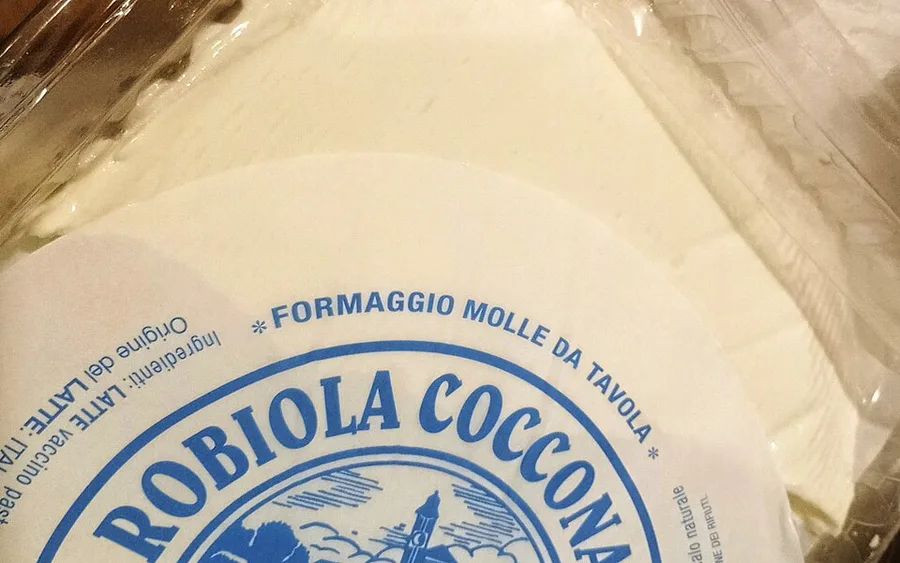
Robiola
piemonte · lombardia · 20-32 €/kg
Not one cheese but a family of soft young cheeses from the north-west. At the top end is Robiola di Roccaverano DOP, the only Italian one made from raw goat's milk; at the other, the creamy cow's milk blocks of the chiller. Between them lies ten euro a kilo.
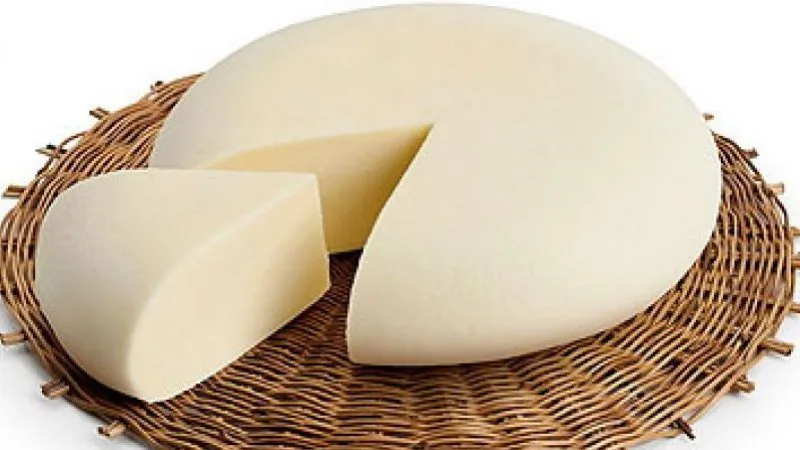
toscana · 16-24 €/kg
The fresh Tuscan pecorino made from the first spring milk, March milk, hence the name. Oval rather than cylindrical, often with a red rind rubbed with tomato preserve, and in the traditional versions the rennet is vegetable.
 Lele1989 · CC BY-SA 4.0
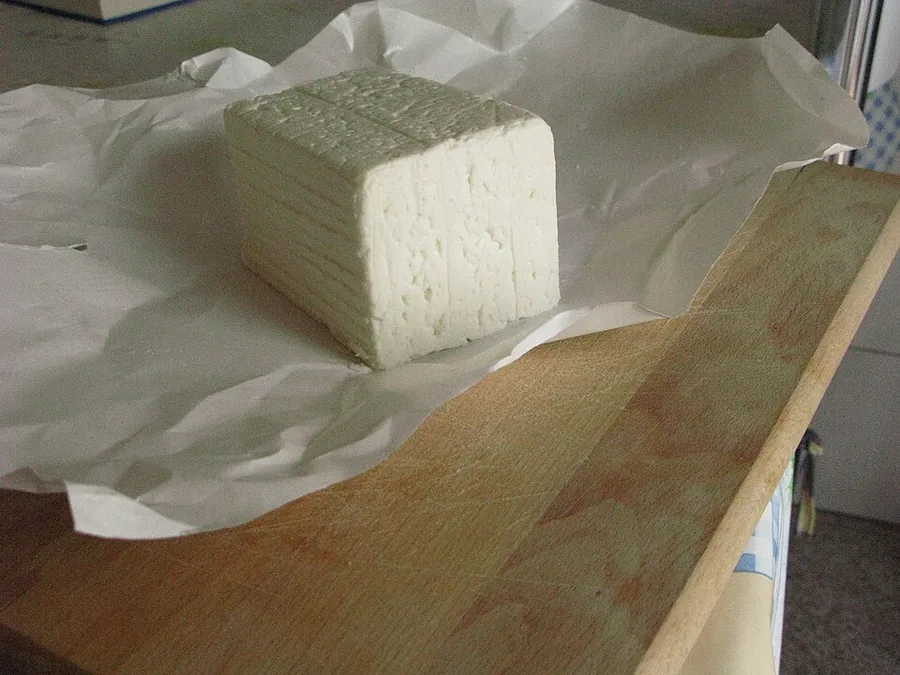
sicilia · 14-20 €/kg
The only stretched-curd sheep cheese in the world, DOP, from the Belìce valley. It is eaten fresh, within days: spinning in boiling water began as a way to save pecorino wheels that swelled in summer, and the result is an elastic, tangy cheese.
 Crillion · Public domain
lombardia · 9-14 €/kg
Named after quartirola grass, the fourth hay cut of September: it was the cheese of milk from cows back down off the high pastures. Today it is made all year in two types, fresh and matured, and the fresh one is tangy and crumbles.
 Andy Li · CC010
Scamorza
abruzzo · molise · 9-13 €/kg
Stretched curd pinched in the middle and hung to dry for a week or two: the pear shape with its tied head is the signature. White or smoked, it is the cheese that holds on a hot plate instead of melting into a puddle.
One last thing
The wrong fridge ruins a fresh cheese faster than anything else. Mozzarella should stay in its liquid and come out half an hour early, because at four degrees the paste is rubbery and the flavour does not show; tipping the water away and putting it in a dry box hardens it within a day. Squacquerone and ricotta need covering, because they take on the smell of everything beside them. Burrata is not opened until it is served. None of this lengthens a fresh cheese's life: it keeps you from shortening it.
The questions this list answers
These are real questions put to an AI assistant, in the period when Bing cited this site among its sources to answer them. The number is how many times we were cited. We read them in Bing Webmaster Tools, under AI performance, and they decide what goes on this page rather than the other way round.
- mozzarella di bufala291 citations
- scamorza189 citations
- squacquerone183 citations
- robiola cheese179 citations
- squacquerone di romagna93 citations
- mozzarella bufala63 citations
- squaquerone62 citations
- bufala mozzarella15 citations
- scamorza cheese14 citations
- scamorza cheese taste description6 citations
- robiolina cheese6 citations
- formaggio Quartirolo3 citations
- capra girgentana8 citations
Frequently asked questions
How long does buffalo mozzarella keep?
A few days, and the product says so itself: its rules were written for immediate eating. After forty-eight hours the acidity rises, the paste softens and the milk turns sharp in the mouth. Keep it in its whey and bring it to room temperature before eating.
What is the difference between mozzarella and fiordilatte?
The animal. Fiordilatte is cow's milk; mozzarella di bufala campana DOP is made from Italian Mediterranean buffalo milk. In many regions mozzarella is used as a generic name, which is why it pays to ask at the counter rather than trust the word.
Is ricotta a cheese?
Technically no: it is made by heating the whey left over from cheesemaking, not by coagulating milk with rennet. Hence the name, cooked a second time, and hence both the low price and the very short life.
Why is burrata sold in a pouch?
Because the pouch is cheese: a sheet of stretched curd holding the stracciatella, the shredded trimmings drowned in cream. It is there to contain a liquid filling. Opened too early, a burrata empties out and loses the reason it was invented.