Twelve things from the Italian Easter, from casatiello to pastiera
Neapolitan casatiello with whole eggs set into it, pastiera with cooked wheat, colomba, Sardinian lamb, abbacchio a scottadito, crescia sfogliata, Sicilian cassata, the zeppole of the nineteenth of March.
The Italian Easter table is built on two ingredients Lent had forbidden: eggs and lamb. The eggs return literally in the Neapolitan casatiello, where they sit whole on top of the bread, held down by strips of pastry; lamb is the main course of almost the whole peninsula, with Agnello di Sardegna IGP and Roman abbacchio a scottadito.
The pastiera explains the logic of the feast best. Cooked wheat, ricotta, candied peel and orange flower water: the wheat is the seed that germinates, the ricotta is spring milk, and the orange flowers are the season. It is made on Maundy Thursday or Good Friday and eaten from Sunday, because it wants two days' rest to settle: it is not a cake to make in the morning.
The week before, on the nineteenth of March, comes the feast that opens the period: Saint Joseph, with zeppole. Choux pastry, custard and a sour cherry, fried or baked, which are two different sweets. In Sicily the same date is marked with other fried things, and in Tuscany and Umbria Easter brings savoury breads with cheese inside.
campania · 1 h 20′
The nineteenth of March: choux pastry, confectioner's custard, a sour cherry. An hour and twenty, and the choice between fried and baked gives two different sweets, one richer and one drier. The custard goes on cold.
 Gmrozz · CC BY-SA 4.0
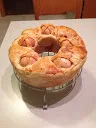
campania · 1 h 50′
A rustic bread with lard, pecorino and cured meats in the dough and whole eggs set on top, held by strips of pastry. Nearly two hours, eaten at room temperature, and it keeps three days: it was made for the Easter Monday outing.
campania · 2 h 50′
Cooked wheat, ricotta, candied peel and orange flower water in a shortcrust with strips on top. It is made on Maundy Thursday or Good Friday and eaten from Sunday: two days' rest let the filling settle.
lombardia · 5-12 €/kg
The Easter leavened cake: the same principle as panettone, another shape and another topping, with almond glaze and sugar nibs. It wants mother dough and long rising, and the same label checks apply.
 Roger469 · CC BY-SA 4.0
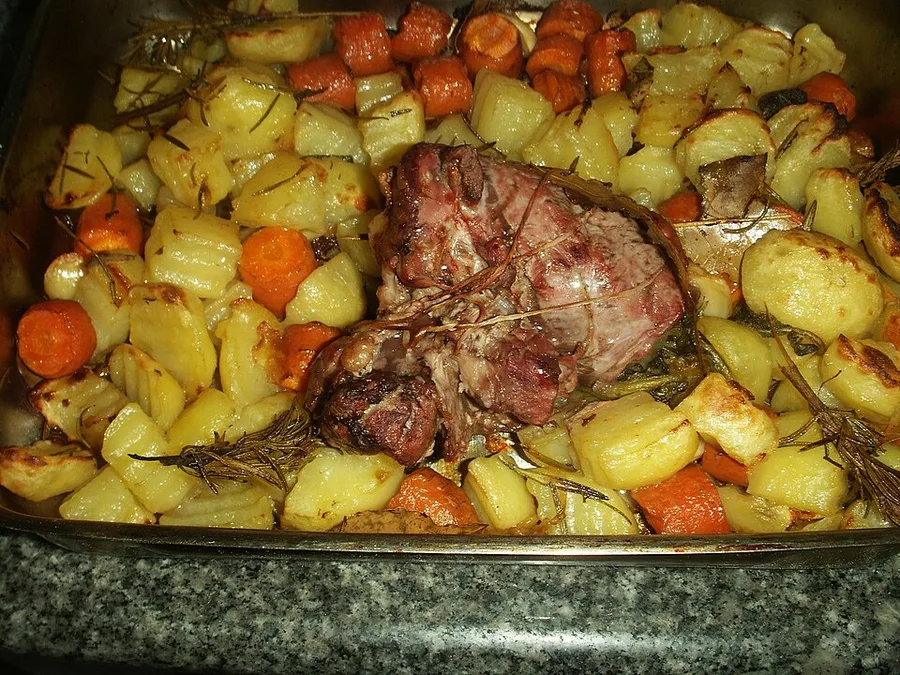
sardegna · 14-22 €/kg
The Sardinian breed at pasture, slaughtered young, IGP, in three weight categories. The meat is very pale and mild, which is why it takes simple seasoning: rosemary, oil, potatoes, no strong spices.
lazio · 28′
Twenty-eight minutes: small lamb cutlets on the grill, eaten with the hands as soon as they come off. The name says the method: they scald, and waiting for them to cool is exactly the opposite of the recipe.
marche · 8-12 €/kg
The Urbino flatbread with eggs and pepper in the dough and lard between the layers: in the Marche it is the Easter bread, filled with cured meats and eaten with pan-dressed wild greens.
umbria · 12-20 €/kg
The ring cake of Perugia, with candied citron, raisins, pine nuts and aniseed, and five cuts on the surface standing for the city's five districts. It is made for feast days and keeps for days.
 Controllore Fiscale · Public domain09
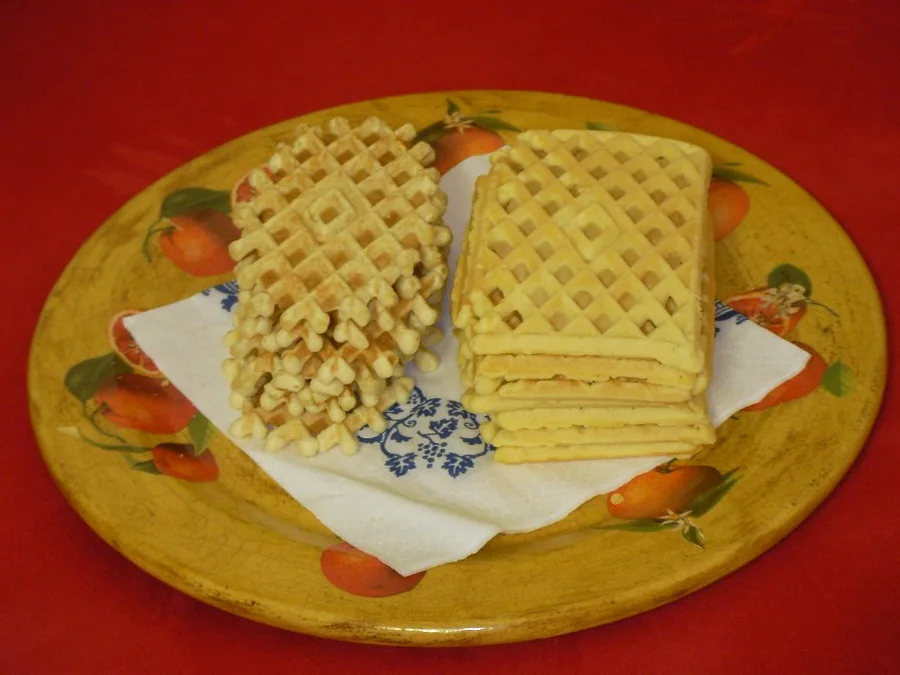
Pizzelle
abruzzo · 18-28 €/kg
Thin aniseed wafers cooked between two engraved iron plates, in Abruzzo also called ferratelle: each family had its own iron, sometimes with initials. They are made for Easter and for Christmas.
sicilia · 2 h 25′
Two and a half hours: sieved and sweetened sheep's ricotta, sponge, green marzipan, candied fruit. The ricotta is sieved twice and worked as little as possible, or it releases whey and the cassata weeps.
campania · 1 h 30′
Semolina, ricotta and eggs, an hour and a half: the Neapolitan Carnival cake that stays on the table until Easter. With no pastry and no sheets, it is the easiest of the feast-day sweets to make at home.
campania · 1.5-3 €/kg
At Easter and through the cold months they are the Neapolitan side dish: flowering shoots picked before the flower opens, tossed with garlic and chilli. With sausage they become the household main course.
One last thing
Two sweets on this list have ricotta as their main ingredient, and ricotta is why they have to be made a day ahead. In the pastiera and the cassata the sheep's ricotta is sieved, sweetened and left to rest: sugar draws out water, and if that whey does not come out before baking it comes out afterwards, soaking the pastry or collapsing the cassata. In the pastiera the rest also serves the cooked wheat, which keeps absorbing. That is why it is made on Good Friday and cut on Sunday, and not the other way round.
The questions this list answers
These are real questions put to an AI assistant, in the period when Bing cited this site among its sources to answer them. The number is how many times we were cited. We read them in Bing Webmaster Tools, under AI performance, and they decide what goes on this page rather than the other way round.
- zeppole600 citations
- what is zeppole28 citations
- cassatella20 citations
- sfogliatella riccia175 citations
- sfogliatella154 citations
- maritozzi con la panna126 citations
- maritozzi14 citations
- friarielli cosa sono16 citations
Frequently asked questions
What is casatiello?
A rustic Neapolitan Easter bread, with lard, pecorino and cured meats in the dough and whole eggs set into the surface, held by strips of pastry. It is eaten at room temperature and keeps three days: it was made for the Easter Monday picnic.
When is pastiera made?
On Maundy Thursday or Good Friday, to be eaten from Sunday: it wants two days' rest so the filling of cooked wheat and ricotta can settle and the scents spread. Made on Easter morning it is another cake, wetter and less firm.
What is the difference between colomba and panettone?
The method is the same, mother dough and successive doughs; what changes is the shape, a dove instead of a dome, and the topping, with almond glaze and sugar nibs. A colomba usually has no raisins and carries candied orange.
Why is lamb eaten at Easter?
For religious reasons and for seasonality: the lamb is the animal of the Passover sacrifice in Jewish and Christian tradition, and in spring it is also the only young animal available. Agnello di Sardegna IGP is slaughtered young and gives pale, mild meat.