Ten Italian cured meats you cook rather than slice
Guanciale, pancetta, lardo, nduja, cotechino, zampone, sausage, liver sausage, head cheese. These do not belong on a board: they belong in a pan, in a pot or on warm bread, and each brings a different fat.
Half of Italy's cured pork was never meant to be sliced. It was meant to melt: into a pasta, under a pot of lentils, onto a piece of toasted bread. These are the cures that do the work of butter and oil in the kitchen, with the difference that they bring meat and salt as well.
The way to choose between them is the fat. Cheek fat renders slowly and stays creamy, belly fat renders sooner and dries more, back fat, lardo, is almost pure and is used raw. They are not synonyms: in a carbonara the swap is audible, and not for reasons of local pride.
At the end of the list come the ones to boil, which are a family of their own: cotechino, zampone, liver sausage, head cheese. They come from the pista, the day the whole animal was worked, and they use the parts that could not be cured. They cook long in barely moving water, and they are winter food.
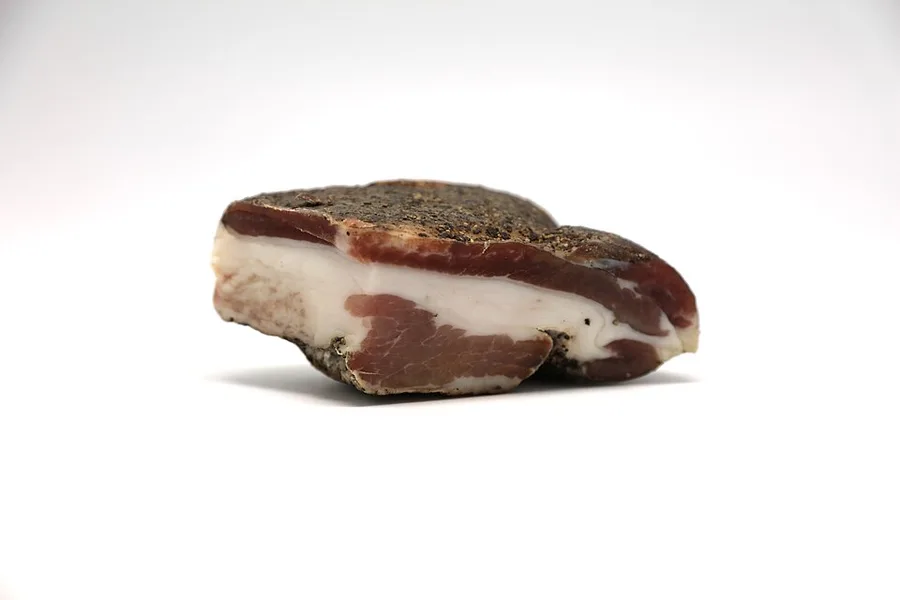 Popo le Chien · CC BY-SA 4.0
lazio · umbria · abruzzo · 16-24 €/kg
The cheek, salted and cured without smoke. It belongs in carbonara and amatriciana for a technical reason: its fat renders slowly and stays creamy instead of drying out. Cut it into thick strips and start from a cold pan, with no oil.
emilia romagna · lombardia · 14-22 €/kg
The belly, salted and cured, not smoked, in two shapes: flat, which stays as a slab, and rolled, sewn into a casing. The flat one is the cooking cut. The only northern DOP version is the Piacentina, and what separates it from guanciale is the fat, not the flavour.
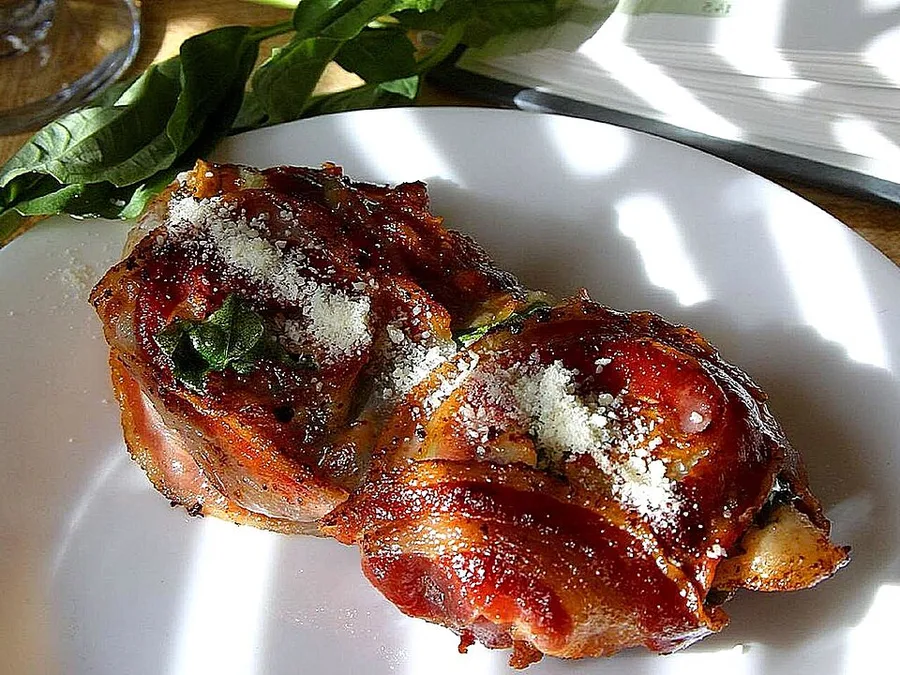 Jon Sullivan · Public domain
emilia romagna · 16-24 €/kg
Belly dry-salted, rolled on itself, cased, at least four months. Unlike the flat kind, this one is made to be sliced thin and eaten raw: you can put it in a pan, but it is like cooking a ham.
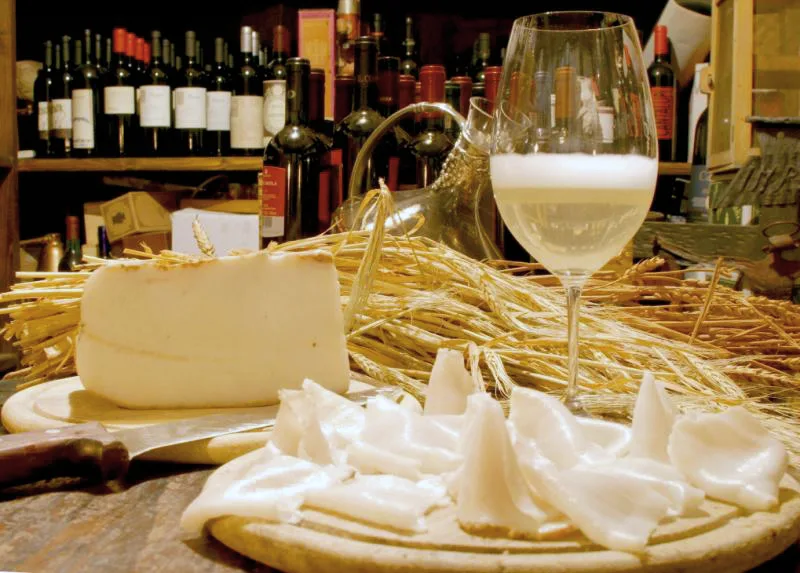 OneArmedMan · Public domain
toscana · 28-40 €/kg
Back fat cured for at least six months in the marble troughs of the Canaloni, rubbed with garlic and layered with salt, pepper, rosemary and spices. IGP. It began as the food of the marble quarrymen and is eaten raw, on warm bread, in transparent slices.
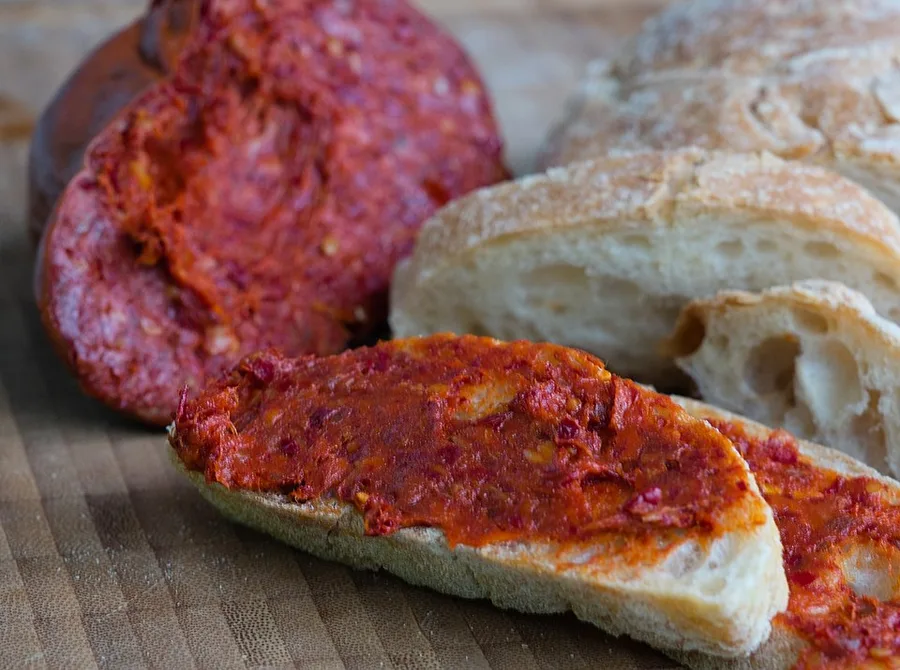 Alice Wiegand · CC BY-SA 4.0
calabria · 22-32 €/kg
A third Calabrian chilli: spread it cold or melt it in a pan, where it becomes a red, hot dressing in thirty seconds. Half a spoon dresses pasta for four, and more than that is not cooking hot, it is covering everything up.
 stu_spivack · CC BY-SA 2.0
lombardia · umbria · 9-13 €/kg
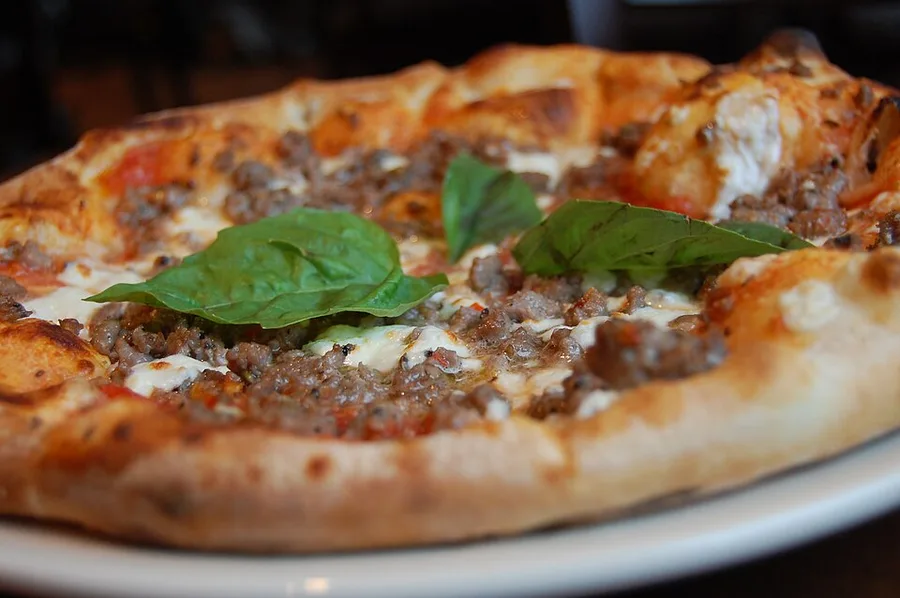
Minced meat, seasoned and stuffed into natural casing: fresh, to be cooked. It is not one product but a family, from Lombard luganega sold by the metre to the Norcia sausage cut with a knife point. You prick it only if you want to lose the fat, which is almost never.
 Popo le Chien · CC BY-SA 3.0
emilia romagna · 12-20 €/kg
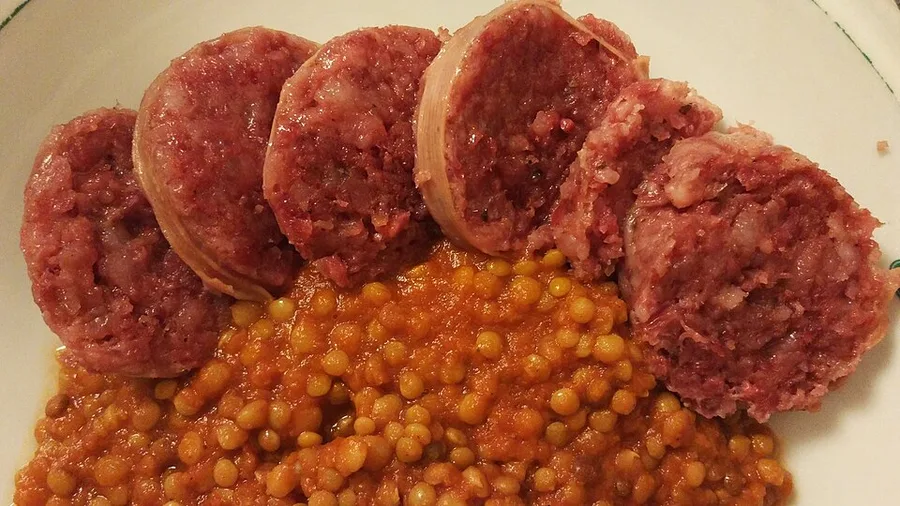
Meat, fat and rind, the rind in the proportion that gives it both its name and its gelatinous texture. It is simmered long in barely moving water and cut thick. At New Year it goes with lentils, and the reason is a wish for the year ahead, not a flavour pairing.
 avlxyz · CC BY-SA 2.0
emilia romagna · 9-16 €/kg
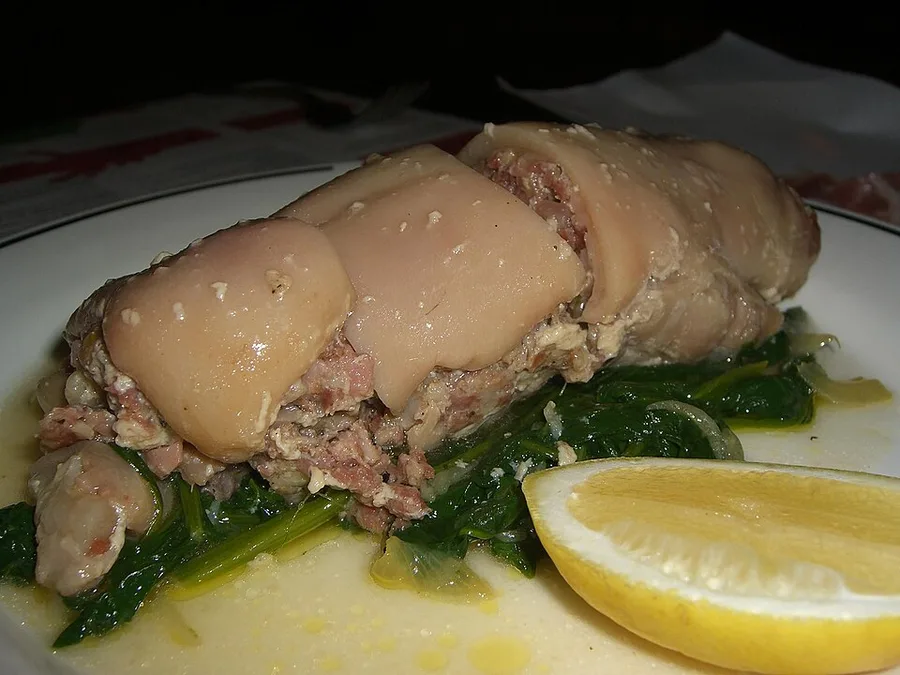
The same mixture as cotechino in a different container: the front trotter, emptied and filled. IGP. The result differs because the trotter skin is tighter and gives a compact slice, with a gelatinous rim that a cotechino tends to lose.
basilicata · umbria · 12-18 €/kg
Coarsely chopped liver, fat, salt and spices in natural casing: the sausage of the slaughter day. It comes in two opposite versions, sweet with honey or raisins and hot with chilli, and it is cooked in a pan or over coals, never for long.
piemonte · liguria · 12-20 €/kg
The head boiled, boned while hot, seasoned and pressed in a wooden box until the gelatine binds it. It slices as a mosaic, sometimes studded with pistachios, and costs a quarter of other cured meats because it uses what the others discard.
One last thing
One detail that decides the outcome more than the brand: the cold pan. Guanciale, pancetta and sausage go into a pan with no added fat and come up to heat slowly, so the fat runs out and fries the meat in its own lard. In an already hot pan the surface seals, the fat stays in, the meat turns stringy, and the plate has oil where it should have cream. The same applies in reverse to cotechino: barely trembling water, never a boil, or the rind splits and the fat ends up in the pot.
The questions this list answers
These are real questions put to an AI assistant, in the period when Bing cited this site among its sources to answer them. The number is how many times we were cited. We read them in Bing Webmaster Tools, under AI performance, and they decide what goes on this page rather than the other way round.
- what is pancetta1,326 citations
- lardo di colonnata642 citations
- what is pancetta?50 citations
- pancetta44 citations
- guanciale di maiale18 citations
- what is panceta16 citations
- cotechino13 citations
- is pancetta pork12 citations
- pancetta definition11 citations
- pancetta meaning4 citations
- guanciale4 citations
Frequently asked questions
What is the difference between guanciale and pancetta?
The cut and the fat. Guanciale is the cheek, with a compact fat that renders slowly and stays creamy. Pancetta is the belly, with alternating layers of fat and lean: it renders sooner and dries more. In carbonara and amatriciana the difference shows in the sauce rather than in the taste of the meat.
Is pancetta pork?
Yes, it is pork belly, salted and cured. It is not smoked, unlike English-speaking bacon, which is the same cut but smoked and usually cut thinner. The two do not substitute for each other without changing the dish.
Do you cook lardo?
Lardo di Colonnata IGP is eaten raw, cut transparent over warm bread, because six months in the marble trough have made it a cured meat rather than an ingredient. Plain unaged pork fat is the kitchen material, pounded with garlic and herbs for soffritti and roasts.
Are cotechino and zampone the same thing?
The mixture is, the container is not: cotechino sits in a casing, zampone in the hollowed-out front trotter. The slice differs, firmer in the zampone, and so does the cooking, slightly longer because the skin is thicker.