What is Sardinian Suckling Pig?
Porceddu is a piglet slaughtered at four to six weeks, weighing four to six kilos, occasionally seven. It has drunk nothing but its mother's milk (no feed, no cereal) and that is why the meat is so pale and the fat so mild.
It is not a protected name. Porceddu is a preparation and a tradition rather than a designation, and anyone can put the word on a menu. What varies enormously is where the animal came from.
That distinction is worth making, because menus never do. Sardinia has its own native pig breed (small, black or grey, bristly, kept semi-wild in the interior and protected as a Slow Food Presidium) which produces better and more strongly flavoured animals. Most porceddu served on the island is not that breed but commercial-line piglets raised indoors. Both are called porceddu; they are not the same thing and they do not cost the same.
The cooking is part of the definition. A piglet roasted in an oven with potatoes is a good dish, but it is not porceddu: this one is made on a spit or in the ground.
What does it taste like?
Two textures and almost one flavour. The skin is the point: thin, lacquered, brittle, shattering rather than chewing, with a savoury toasted quality that is closer to good crackling than to anything else in Italian cooking.
The meat under it is pale, soft and remarkably mild: milk-fed pork with a delicate sweetness and none of the barnyard edge of adult pork. There is very little fat, and what there is has almost no flavour of its own.
The aroma is the third element and the one people remember. Resting the animal on fresh myrtle for half an hour lays a resinous, faintly bitter, juniper-adjacent perfume over the meat. It is the only seasoning the dish takes, and it is added after cooking rather than during.
What you should not taste is smoke. Porceddu is cooked by radiant heat at a distance from embers, never over flame, and a smoky flavour means it was done badly.
How to use it
The honest answer is that this is a dish to eat where it is made. Without a spit and an open wood fire you are cooking something else.
If you want to try, an oven gets you a good roast piglet: 160C for two and a half hours, then 220C for the last fifteen minutes to set the skin, with no liquid in the tin and no lid at any stage. Do not season inside. Salt the skin only at the end.
On a real fire, the rules are distance and patience. Keep the animal fifty to sixty centimetres from the embers, turn it constantly, manage the heat by moving coals rather than building flames, and baste the skin with a piece of lard set alight on a skewer so it drips. Three to four hours.
Rest it on fresh myrtle for twenty to thirty minutes, covered with more myrtle. This is not decoration: the residual steam pulls the resin out of the leaves and into the meat, and it is the only aroma the dish carries.
Serve it torn and cut into irregular pieces on a wooden board, with carasau bread, olives and nothing else. Eat it with your hands. Share the skin.
How long it keeps
Raw, it behaves like any fresh pork: two days in the fridge under a cover, or up to a week in an intact vacuum pack, with the date on the pack as the reference. Frozen it holds three or four months, but the skin never returns to what it was, because ice crystals break through the collagen layer and it comes out leathery rather than glassy, so a piglet bought for roasting is best fresh.
Cooked, the roast keeps two or three days in the fridge, and the way it is covered matters more than the time. Do not wrap it tight or seal it in a box: the moisture that collects goes straight into the crackling, which softens and stays soft, and that is the one part that cannot be brought back. Loosely covered on a rack, with air moving round it, the skin stays dry while the meat cools. To reheat, 220 C for five to eight minutes directly on the oven rack; a microwave steams it and finishes the skin. The myrtle leaves from the resting stage have given up what they had and are used once.
Spot the real thing
The skin is the first and best indicator. It should be thin, golden, glossy and glassy, and break with a dry crack under the blade; rubbery or soft skin means the animal cooked too close to the embers, or was too big to start with. Weight decides the rest. Above seven or eight kilos it is no longer a milk-fed piglet: the meat goes pinker, the fat thickens and the dish becomes an ordinary pork roast. Under three kilos the meat dries before the skin sets. The flesh should be white-pink and moist, the fat thin and white, with no smoke flavour.
Ordering one from a butcher abroad takes a conversation about weight, because a hog roast animal is 20 to 40 kilos and nothing like this. Spanish cochinillo, killed at around four and a half kilos, is the nearest relative you will find abroad. In a restaurant the myrtle bed should reach the table with the meat rather than being lifted off in the kitchen, and it is fair to ask whether the animal is a Sardinian breed and where it came from: in serious places they know.
How to pronounce Sardinian Suckling Pig
mah-yah-LEE-noh SAR-doh, por-CHED-doo
'Maialino' is four syllables with the stress on 'LEE': mah-yah-LEE-noh. The Sardinian name porceddu is por-CHED-doo, soft 'ce' as in 'cello', with the double d held slightly. In the north of the island you will hear porcheddu, with a hard k: por-KED-doo.
Sardinian Suckling Pig compared
vsCochinillo de Segovia
The two great suckling pig traditions of the western Mediterranean, and they diverge on method. Segovian cochinillo is roasted in a shallow earthenware dish in a wood-fired bread oven, sitting in a little water, basted and turned, and served so tender it is carved with the edge of a plate. Sardinian porceddu is spit-roasted in the open air in front of the embers, never in liquid, and finished on myrtle. The cochinillo is softer and more uniformly succulent; the porceddu is drier, more roasted, and carries an aromatic finish the Spanish version does not attempt.
| This | Cochinillo de Segovia | |
|---|---|---|
| Weight | 4-6 kg | 4-6.5 kg |
| Method | Vertical or horizontal spit, open fire | Clay dish, wood-fired oven |
| Liquid | None: basted with burning lard | A little water in the dish |
| Seasoning | Salt at the end, myrtle after | Salt, lard, sometimes garlic and bay |
| Skin | Glassy, dry, shatters | Crisp but thinner and more fragile |
| Protection | None: a tradition, not a mark | Cochinillo de Segovia IGP |
vsOrdinary suckling pig
Suckling pig is sold across Europe, the US and Latin America, usually from commercial breeds at eight to twelve kilos rather than four to six. The larger animal changes everything: more fat, pinker and more assertive meat, thicker skin that needs different handling, and a roast that behaves like young pork instead of like milk-fed pork. It is cheaper, easier to source and easier to cook, and it will not give you the paper-thin glassy crackling that makes porceddu what it is.
| This | Ordinary suckling pig | |
|---|---|---|
| Weight | 4-6 kg | 8-12 kg typical |
| Age | 4-6 weeks | 6-12 weeks |
| Diet | Mother's milk only | Milk plus starter feed |
| Meat | Very pale, delicate | Pink, closer to young pork |
| Skin | Thin, shatters | Thicker, chewier |
| Price | EUR 12-25 per kg | EUR 8-14 per kg |
vsPorchetta
Constantly confused abroad and completely different. Porchetta is an adult pig, boned out, seasoned heavily inside with garlic, rosemary, wild fennel and pepper, rolled into a cylinder and roasted in an oven, then sliced and eaten cold or warm in bread. Porceddu is a whole milk-fed piglet, unseasoned, spit-roasted and eaten hot with your hands. One is street food from central Italy; the other is a feast dish from the Sardinian interior.
| This | Porchetta | |
|---|---|---|
| Animal | Piglet, 4-6 kg whole | Adult pig, boned loin and belly |
| Seasoning | Salt only, myrtle after cooking | Garlic, rosemary, fennel, pepper |
| Cooking | Spit or buried pit | Oven, rolled and tied |
| Served | Hot, in pieces, at a table | Sliced, often cold, in a roll |
Sardinian Suckling Pig substitutes
- Any milk-fed suckling pig under 6 kg
The substitution that works. Order from a butcher rather than a supermarket and specify the weight: under six kilos matters more than the country of origin. Spanish, Portuguese and Latin American suppliers all sell at this size.
1:1 - Cochinillo, cooked the Sardinian way
Same animal, different tradition. Buy a Segovian-style piglet and spit-roast it instead of using the clay dish, then rest it on myrtle. You will be very close.
1:1 - Pork belly with the skin on, scored
For domestic cooking without a spit, a thick piece of skin-on belly gives you the crackling and the fat-to-meat ratio. Slow oven for two hours, then a blast at maximum heat for the skin.
1 kg belly per 2 people - Whole shoulder of milk-fed lamb or kid
In parts of Sardinia the same fire cooks both. Kid and milk-fed lamb behave similarly on a spit, with the same rule about distance from the embers.
1:1 - Myrtle branches, or bay and juniper together
Not a substitute for the pig but for the finish, which is what most people cannot replicate. If fresh myrtle is unavailable, resting the meat on bay leaves with a few crushed juniper berries gets closer than nothing.
A generous armful for a whole animal
Where to buy it
Outside Italy, look for suckling pig rather than for porceddu. African swine fever restrictions kept Sardinian pork on the island for decades and, although those controls have been progressively lifted in recent years, no export chain has developed. Nothing labelled porceddu abroad is likely to be Sardinian.
In the US, Latin American and Chinese butchers, and specialist online suppliers, sell whole suckling pigs at 8 to 14 dollars a pound; ask for one under six kilos. In the UK, most quality butchers will order one in with a few days' notice, typically 12 to 20 pounds per kilo.
In Sardinia, a whole animal costs 12 to 18 euros a kilo at a butcher, so 60 to 110 euros for a piglet, more in feast weeks. Native Sardinian breed animals raised outdoors run up to 25 euros a kilo when you can find them, and it is worth asking specifically.
Wherever you buy, weight is the specification that matters. Above seven or eight kilos it is no longer milk-fed pork and the skin will not behave.
Where to eat it in Italy
The Barbagia, the mountainous interior, and specifically the triangle between Oliena, Orgosolo and Mamoiada with Nuoro as a base. Agriturismi there spit-roast daily, and village feasts cook in the open over fire trenches tens of metres long.
Fonni, the highest town in Sardinia, and the villages of the Gennargentu massif; Ogliastra around Ulassai, Baunei and Villagrande; the Sarcidano around Laconi; the Marmilla toward Barumini and its nuraghe.
The big occasions are the summer patron saint festivals and the Barbagian carnival at Mamoiada and Ottana, where porceddu is the communal dish.
Cagliari and Sassari have good traditional restaurants, but this is an interior dish and it loses something on the coast, where space and regulations usually mean an oven rather than a fire.
One practical thing: book an agriturismo a day ahead. Nobody puts a piglet on a spit when the guests arrive.
Further reading
Frequently asked questions
What is the difference between porceddu and porchetta?
They are unrelated dishes. Porceddu is a whole milk-fed piglet of four to six kilos, spit-roasted without seasoning and rested on myrtle. Porchetta is an adult pig, boned and stuffed with garlic, rosemary and wild fennel, rolled, oven-roasted and usually eaten sliced in bread.
What is carraxiu cooking?
The old pit method: a hole lined with myrtle branches, the animal laid inside, covered with more myrtle and then with earth, and a fire lit on top for three or four hours. Shepherds say it was a way of cooking without showing smoke or flame. It survives at a few festivals and at agriturismi that will do it on request.
How do you tell a good porceddu?
By the skin. It should be thin, golden, glassy and shatter with a dry crack under the knife. Rubbery or soft skin means it was cooked too close to the embers or the animal was too big. The meat should stay pale and moist, with no smoky flavour at all.
Is porceddu always from the native Sardinian breed?
No, and menus almost never say. Sardinia has a protected native pig breed, black and semi-wild, but most porceddu comes from commercial lines raised indoors. Asking where the animal came from is entirely reasonable, and in serious places you get a precise answer.
Can I make it at home?
In an oven you can make a good roast piglet, not a porceddu: 160C for two and a half hours, then 220C for the last quarter hour, no liquid in the tin. What is missing is the spit, the embers and the rest on myrtle, which is most of the dish.
Related foods
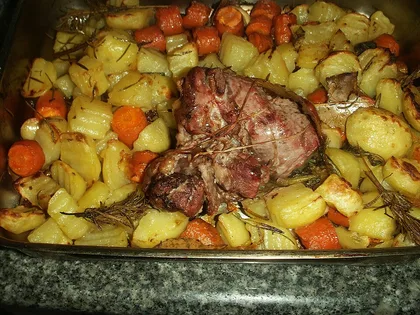 Cured meatsSardinian LambAgnello di Sardegna IGP is milk-fed lamb from the Sarda dairy sheep, slaughtered young and sold in three…
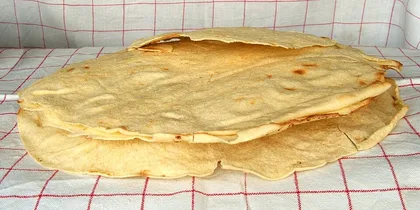 Pasta and breadPane carasauBaked twice because it had to survive months in a shepherd's saddlebag: a paper-thin disc of durum semolina…
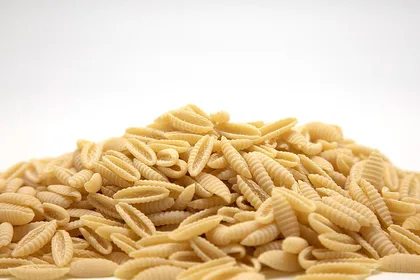 Pasta and breadMalloreddusThe ridges are not decoration: they hold sauce on a shape that would otherwise be smooth and slippery.
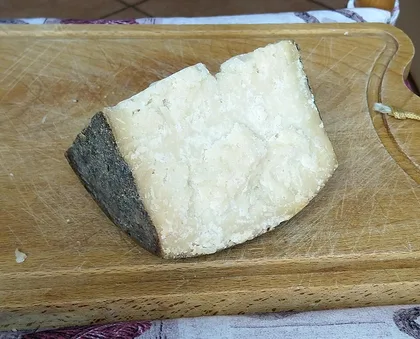 CheeseFiore SardoFiore Sardo DOP is the shepherd's pecorino of Sardinia: raw sheep's milk, lamb rennet paste, an uncooked…
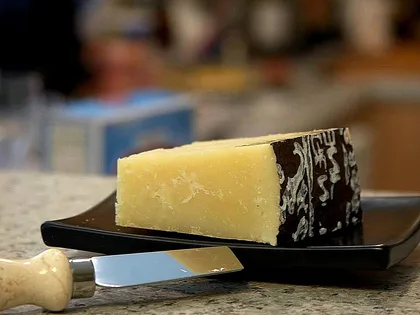 CheesePecorino RomanoPecorino Romano DOP is a hard, dry-salted sheep's milk cheese aged at least five months, made in Sardinia…
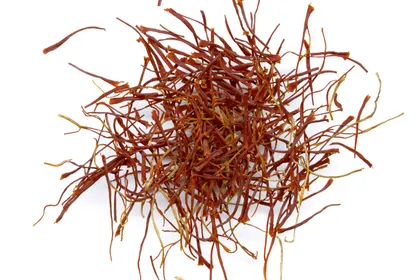 Oil and preservesSaffronOne kilo takes between 150,000 and 200,000 flowers, and every flower gives up three stigmas that have to be…
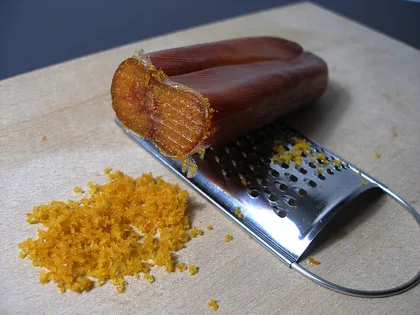 Fish and seafoodBottargaFifteen grams a head is enough, and that is not meanness: bottarga is the salted, pressed, air-dried roe sac…
 CheeseCasu MarzuCasu marzu is a Sardinian sheep's cheese whose ripening is carried on by the larvae of the cheese fly.